Warum die meisten KI-Frameworks Betreibern nicht helfen
Turn this article into takeaways for your work.


Each assistant summarizes the article only for you and suggests best practices for your work.
Googeln Sie „AI transformation framework", und Sie ertrinken in Material, das eine einfache Frage nicht beantworten kann.
Das meiste, was zurückkommt, ist ein 47-seitiges Beratungs-PDF über den Umbau Ihrer Organisation, ein Harvard-Business-Review-Beitrag über KI-Reifegrad, ein Gartner-Quadrant hinter einer Paywall und ein LinkedIn-Karussell mit „Die 5 Ps des KI-Erfolgs" (Potential, People, Process, Platform, Performance). Nichts davon sagt Ihnen, welches KI-Tool Sie zuerst an einem bestimmten Workflow ausprobieren sollten oder was dabei wahrscheinlich schiefgeht.
Das ist das Betreiber-Problem. Jemand in einem mittelgroßen Team hat eine konkrete Frage: Kann KI unsere Kunden-Support-E-Mails bearbeiten, und wo würden wir anfangen? Er sucht nach einem Framework, das die Entscheidung orientiert. Was er findet, ist Material, das für Transformationsprogramme von Fortune-500-Konzernen geschrieben wurde, akademische Aufsätze, die 18-monatige Forschungszyklen erfordern, Anbieterleitfäden, die auf den Verkauf eines Produkts zugeschnitten sind, oder Inhalte, die nur Geschäftsfloskeln mit „KI" davor sind. Nichts davon holt ihn dort ab, wo er steht.
Und deshalb scheitern die meisten KI-Frameworks an den Menschen, die sie am dringendsten brauchen.
Die vier Arten von Frameworks (und warum jede versagt)
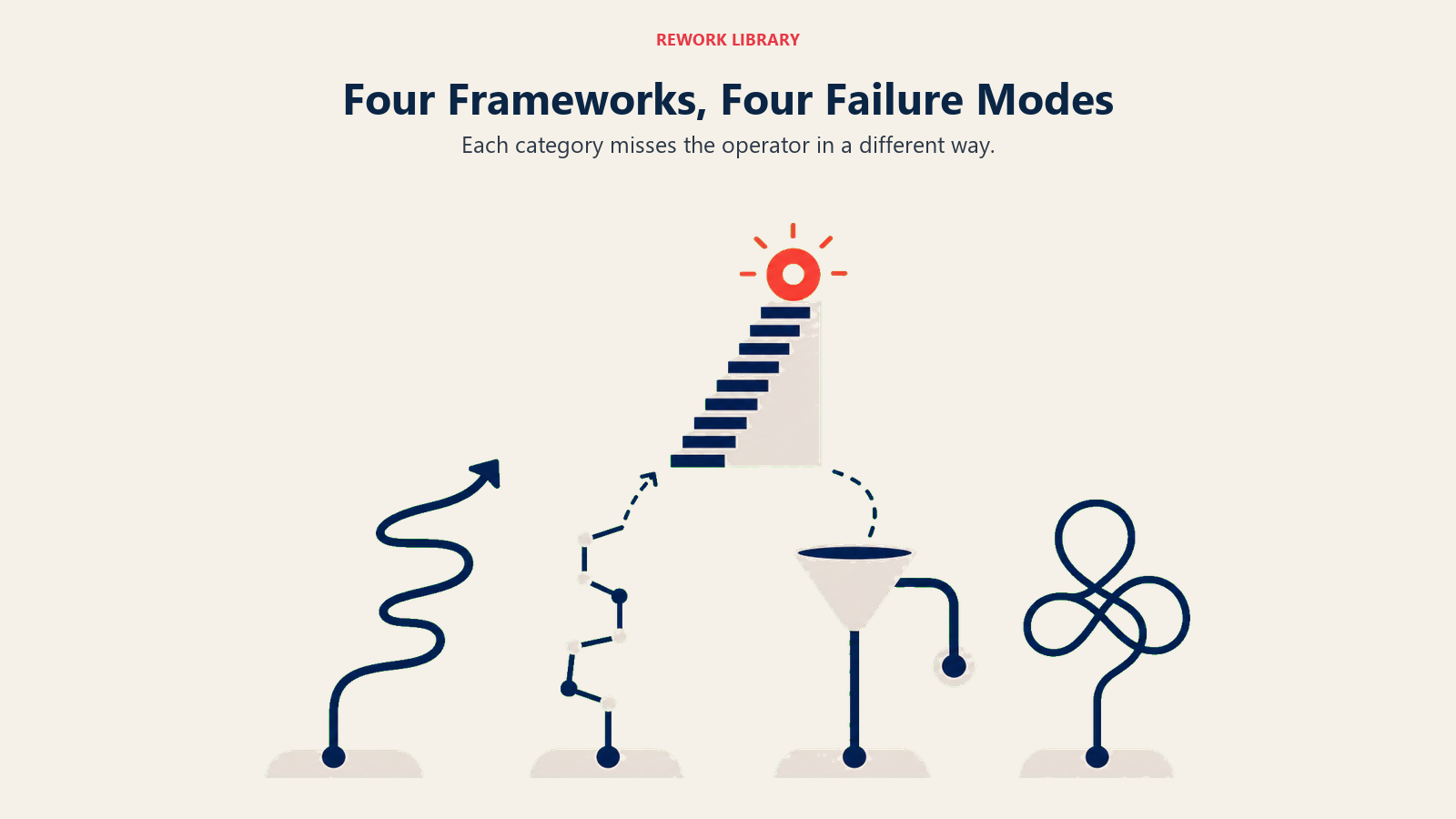
Es gibt derzeit Hunderte von KI-Frameworks im Umlauf. Sie lassen sich in vier grobe Kategorien einteilen, jede mit ihrer eigenen Fehlerquelle.
Beratungsframeworks: für Vorstandssitzungen gebaut
McKinsey veröffentlicht Frameworks wie „Steer-Scale-Institutionalize." BCG hat seine „AI Transformation Roadmap" und die bekannte 10-20-70-Regel (10 % Technologie, 20 % Geschäftsneugestaltung, 70 % Menschen und Kultur). Deloitte bringt detaillierte „State of AI"-Berichte mit Reifestufen und Fähigkeitskarten heraus.
Diese sind wirklich nützlich für einen Fortune-500-CIO mit einer Drei-Jahres-Transformations-Roadmap und einem Budget in achtstelliger Höhe. Die Frameworks setzen ein dediziertes KI-Center of Excellence, ein mehrjähriges Programmmanagement, ein Change-Management-Team und einen Vorstand voraus, der die Geduld hat, vier Quartale auf ROI-Signale zu warten.
Für ein mittelgroßes Logistikunternehmen mit einem Operations-Leiter, der KI für Support-E-Mails ausprobieren möchte, sagt das BCG 10-20-70-Framework, dass 70 % der Herausforderung Menschen und Kulturwandel sind. Das ist wahrscheinlich wahr. Es ist nicht umsetzbar. Das Team braucht kein Kulturwandel-Programm. Es muss wissen, ob es Intercom Fin, Zendesk AI oder etwas anderes ausprobieren soll, und wie die Fehlerquellen aussehen.
Beratungsframeworks werden auch auf der Ebene von „Fähigkeit" im strategischen Sinne geschrieben, nicht auf der Ebene von KI-Fähigkeit im operativen Sinne. Wenn McKinsey von „GenAI-Fähigkeit" spricht, meinen sie die organisatorische Fähigkeit, generative KI im großen Maßstab einzusetzen. Sie reden nicht vom Unterschied zwischen einem Generate-Ergebnis (ein E-Mail-Entwurf) und einer Execute-Aktion (das tatsächliche Senden). Diese Granularität passt nicht in eine Vorstandspräsentation.
Beratungsframeworks sind also im großen Bild korrekt und in der Praxis nutzlos. Sie beschreiben, wie Transformation aussieht, wenn sie fertig ist. Sie helfen Ihnen nicht dabei, anzufangen.
Akademische Frameworks: rigoros, aber zu spät
Akademische Frameworks von MIT Sloan, HBR und Forschungsgruppen sind sorgfältiger mit Belegen und ehrlicher gegenüber Unsicherheit. Sie liegen aber auch typischerweise zwei bis drei Jahre hinter dem aktuellen Stand der Tools, weil Peer-Review Zeit braucht. Ein Anfang 2024 veröffentlichtes akademisches Framework wurde wahrscheinlich für LLM-Fähigkeiten aus dem Jahr 2022 entwickelt: bevor GPT-4-Klasse-Modelle zu Commodity-APIs wurden, bevor Multi-Modal zur Standardausstattung wurde, bevor die Predictive-Generative-Spaltung zu etwas wurde, über das jeder SaaS-Anbieter spricht.
Akademische Frameworks messen auch tendenziell Dinge, die schwer auf einen Unternehmenskontext anzuwenden sind: „KI-Absorptionskapazität", „organisatorische Lernkultur", „dynamische Fähigkeitsentwicklung". Das sind echte Konzepte. Sie lassen sich schwer in ein quartalsweises OKR übersetzen.
Zudem setzen akademische Frameworks voraus, dass Sie mit dem Material sitzen, Experimente durchführen, Daten sammeln und 18 Monate iterieren. Betreiber haben keine 18 Monate. Sie haben donnerstags eine Anbieterdemo und müssen bis Freitag eine Entscheidung treffen.
Anbieter-Frameworks: getarnte Produktkarten
Jedes große KI-Softwareunternehmen veröffentlicht sein eigenes Framework. Salesforce hat seine „Trusted AI Principles." Microsoft hat das AI Transformation Playbook. SAP, Oracle, ServiceNow und HubSpot haben alle eins. Google Cloud veröffentlicht KI-Bereitschaftsbewertungen.
Diese existieren, um Produkte zu verkaufen. Das ist keine Kritik an ihrer Integrität. Es ist einfach die Wahrheit über die Anreizstruktur. Wenn Salesforce „die vier Säulen der KI-Bereitschaft" beschreibt, entsprechen diese vier Säulen erwartungsgemäß Salesforce-Produkten. Wenn Microsofts KI-Framework die Integration von Microsoft 365 Copilot betont, ist das kein Zufall.
Anbieter-Frameworks sind gut für eine Sache: zu verstehen, wie ein Anbieter die Rolle seines Produkts in Ihrem KI-Stack denkt. Sie sind aber keine objektive Karte davon, was Business-AI tatsächlich ist. Sie sind ein Verkaufsinstrument in Form eines Frameworks.
Das Erkennungszeichen: Anbieter-Frameworks nennen fast nie Wettbewerber. Ein gutes Framework sollte Ihnen sagen, wann Sie das Tool eines anderen verwenden sollen. Anbieter-Frameworks können das nicht.
Hype-Frameworks: die 5 Ps der KI-Leere
Die vierte Kategorie ist kein wirkliches Framework. Es ist ein Inhaltsformat. LinkedIn-Karussells, Newsletter-Posts und YouTube-Thumbnails erzeugen einen endlosen Strom von „KI-Frameworks", die bei näherer Betrachtung Business-Gemeinplätze mit „KI" sind.
„Das ADAPT-Modell für KI-Erfolg" (Assess, Design, Adopt, Pilot, Transform). „Die 6 Cs der KI-Führung" (Clarity, Context, Curiosity, Culture, Capability, Commitment). Das ist nicht falsch, genau genommen. Es ist nur nicht spezifisch für KI. Sie könnten „KI" durch „digitale Transformation" oder „Agile" oder „Cloud" ersetzen, und das Framework wäre gleichermaßen anwendbar, was bedeutet, dass es nichts Besonderes erklärt.
Der Fehler des Hype-Frameworks ist das Gegenteil des Beratungs-Frameworks. Beratungs-Frameworks sind korrekt, aber unzugänglich. Hype-Frameworks sind zugänglich, aber leer. Keines von beiden trifft den Betreiber dort, wo er tatsächlich ist.
Was Betreiber wirklich brauchen
Die Person, die ein KI-Framework anwendet in einem realen Unternehmen, ist kein CIO, der ein Transformationsprogramm leitet. Sie ist die Head of Sales Operations, die herausfinden möchte, bei welchen Workflows ihrer Mitarbeiter KI tatsächlich helfen kann. Oder der Head of Finance eines 60-köpfigen Unternehmens, der sich fragt, ob KI den Monatsabschluss beschleunigen kann. Oder ein Operations-Leiter mit einer konkreten Frage: Welches KI-Tool sollten wir zuerst für den Kunden-Support ausprobieren?
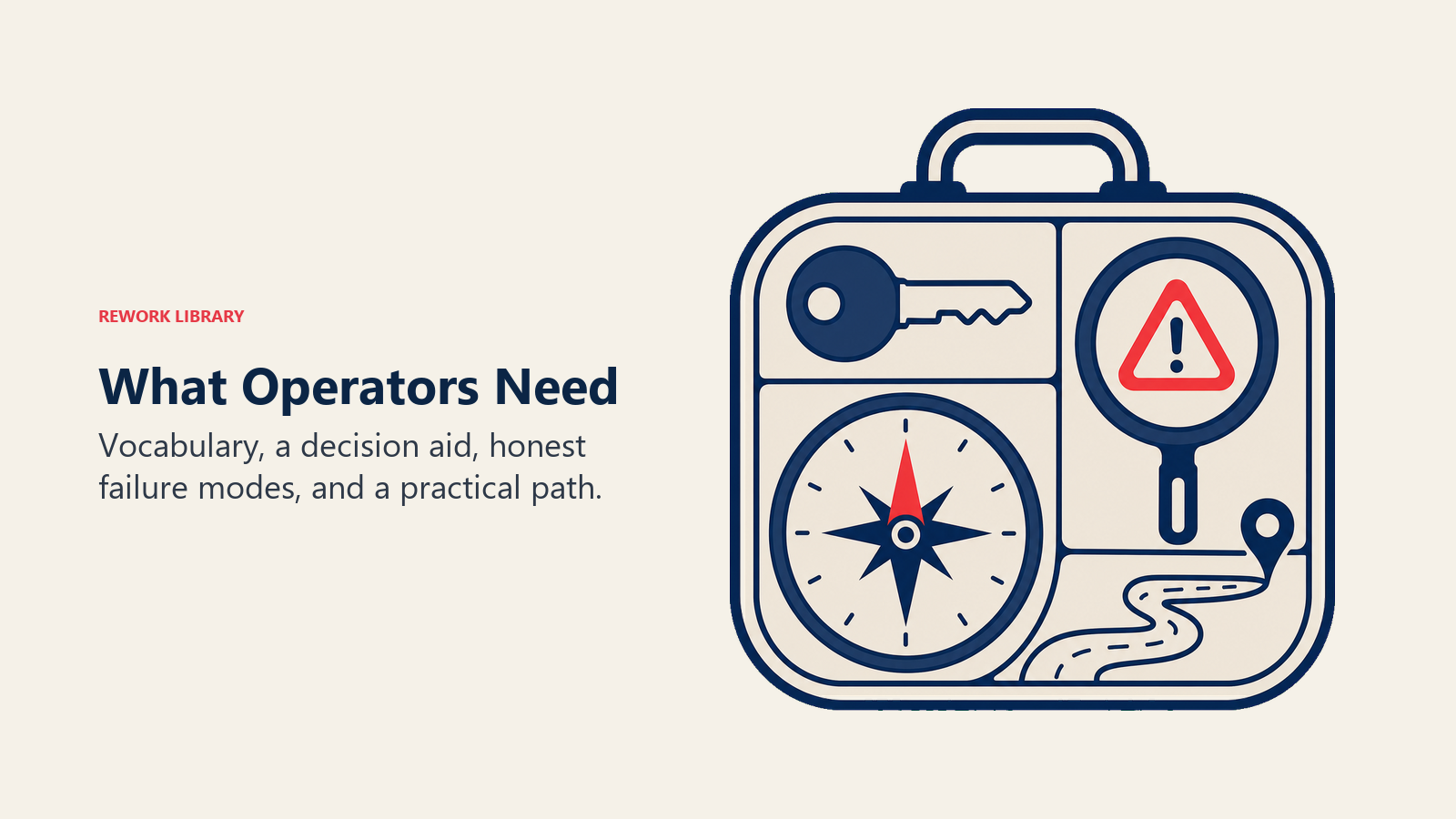
Hier ist, was Betreiber wirklich von einem Framework brauchen. Es ist eine kurze Liste.
Ein Vokabular. Wörter, die es ihnen ermöglichen, das, was ein KI-Tool tut, in denselben Begriffen zu beschreiben, die sie für jedes andere Geschäftstool verwenden würden. Nicht „intelligente Automatisierung" oder „kognitive Enterprise", sondern Verben. Was nimmt dieses Ding auf? Was gibt es aus? Was ändert sich in der Welt, wenn es läuft? Ein Vokabular wie die fünf ACE-Fähigkeiten lässt Sie jedes KI-Tool in einheitlichen Begriffen beschreiben.
Eine Entscheidungshilfe. Keine 12-Schritte-Roadmap. Eine Frage: Welche Fähigkeit oder Kombination von Fähigkeiten erfordert das, was ich erreichen möchte? Wenn Sie Kunden-Support-E-Mails klassifizieren müssen, ist das Analyze. Wenn Sie sie basierend auf Priorität automatisch weiterleiten müssen, fügen Sie Predict und Execute hinzu. Das ist eine Entscheidung, kein Reifegradmodell.
Ehrliche Fehlerquellen. Beratungsframeworks dokumentieren „Risiken" in abstrakten Begriffen („Change-Management-Herausforderungen", „Data-Governance-Lücken"). Betreiber brauchen Spezifika. Wenn Sie ein KI-Tool einsetzen, das Aktionen ohne menschliche Prüfung ausführt, was geht typischerweise schief? Wie sieht eine schlechte Datenannahme aus, wenn sie scheitert? Die Generate-to-Execute-Grenze ist der Unterschied zwischen einem E-Mail-Entwurf und einer gesendeten E-Mail. Das ist die Art von Fehlerquelle, die jemandes Quartal ruiniert.
Ein Pfad, der keinen Berater erfordert. Die meisten Betreiber, die dieses Framework brauchen, werden McKinsey nicht beauftragen. Sie müssen von „Ich möchte KI für diesen Workflow ausprobieren" zu „So evaluiere ich Tools, führe einen Pilot durch und entscheide, was als Nächstes kommt" gelangen, ohne ein sechsstelliges Engagement. Dieser Weg sollte aus einer Artikelbibliothek erlernbar sein, nicht hinter einer Beratungsbeziehung versteckt.
Wo Frameworks schiefgehen: die vier häufigen Fehler
Die meisten Frameworks, auch gut gemeinte, geraten in vorhersehbare Fallen.
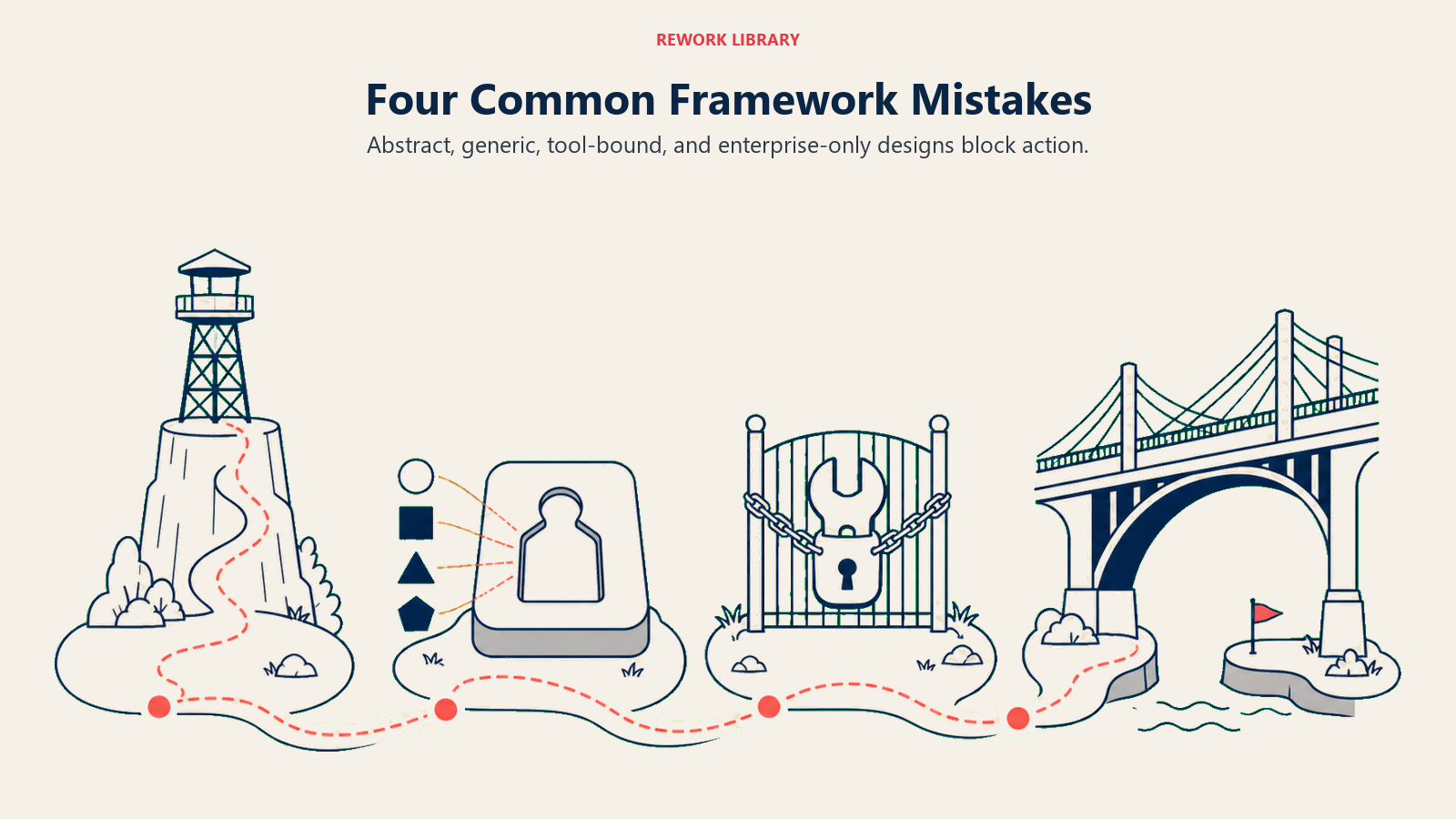
Zu abstrakt. Strategische Diagramme, die KI-Reifestufen oder Transformations-Journeys zeigen, sagen Ihnen nicht, was Sie am Montag tun sollen. Sie sind korrekt aus 10.000 Metern Höhe und nutzlos auf Bodenhöhe. Ein Framework muss das Konzeptionelle mit dem Konkreten verbinden, und die meisten tun das nicht.
Zu generisch. Gesundheits-KI ist nicht Einzelhandels-KI ist nicht Logistik-KI. Die Datentypen unterscheiden sich, die Compliance-Anforderungen unterscheiden sich, die Fehlerfolgen unterscheiden sich. Ein Framework, das diesen Unterschied nicht anerkennt, ist nicht falsch, aber es lässt die schwere Arbeit dem Betreiber: generische Prinzipien in branchenspezifische Praxis übersetzen. Gute Frameworks haben ein branchenneutrales Fundament und verdienen dann das Recht, spezifisch zu sein.
Zu technologiespezifisch. Jedes Framework, das um „GPT-4" oder „das LangChain-Ökosystem" oder „Stable Diffusion" herum gebaut ist, wird in 18 Monaten teilweise veraltet sein. Die Evolution von Business-AI ist schnell genug, dass Frameworks in Fähigkeiten und Mustern verwurzelt sein müssen, die jeden spezifischen Tool oder Modell überdauern. Verben überdauern Produktnamen.
Zu enterprise-fokussiert. Das ist das Größte. Frameworks, die für Unternehmen mit CIOs, dedizierten Datenteams und mehrjährigen Roadmaps gebaut sind, lassen sich nicht auf Unternehmen mit 30 bis 500 Mitarbeitern übertragen. KMUs haben andere Einschränkungen: engere Budgets, weniger technische Tiefe, weniger Datenbereitschaft und schnellere Entscheidungszyklen. Sie können sich keinen 6-monatigen Pilot leisten, bevor sie Wert sehen. Ein Framework, das diese Lücke nicht adressiert, ist kein Framework für die meisten Unternehmen. Es ist ein Framework für eine Teilmenge, die die Hilfe nicht so dringend braucht.
Was in einem KI-Framework funktioniert
Damit ein Framework Betreibern tatsächlich dient, braucht es einige Eigenschaften, die den meisten Frameworks fehlen.
Einfaches Vokabular. Fünf bis sieben Konzepte, nicht fünfzig. Wenn das Framework mehr Begriffe hat, als Sie während einer Anbieterdemo im Arbeitsgedächtnis halten können, hilft es Ihnen in dem Moment nicht, in dem es am wichtigsten ist.
Kompositorisches Design. Die Konzepte sollten sich zu allem kombinieren lassen. Datentypen kombinieren mit Fähigkeiten. Fähigkeiten kombinieren zu Mustern. Muster kombinieren zu Agenten-Workflows. Ein Framework, das kompositorisch ist, ist ein Werkzeugkasten, keine feste Karte. Es kann Dinge beschreiben, die noch nicht existierten, als das Framework geschrieben wurde.
Ehrlich über Grenzen. Ein Framework, das behauptet, alles zu lösen, löst nichts. Die besten Frameworks sagen Ihnen klar, was sie nicht adressieren, damit Sie wissen, wann Sie anderswo nachschauen sollen.
Branchenneutrales Fundament, branchenspezifische Anwendung. Das Kernvokabular sollte in jedem Unternehmen funktionieren. Aber gute Frameworks verdienen Vertrauen, indem sie bereit sind zu sagen: „In Ihrer Branche spielt das anders aus." Generischer Kern, spezifische Beispiele.
Regelmäßig aktualisiert. KI entwickelt sich schnell genug, dass jedes 2023 veröffentlichte Framework 2026 Lücken hat. Ein Framework, das sich zu vierteljährlicher Überprüfung und ehrlicher Versionskontrolle verpflichtet, ist vertrauenswürdiger als eines, das sich als permanente Wahrheit präsentiert.
Wie das ACE Framework versucht, es besser zu machen
Das ACE Framework wurde mit diesen Fehlerquellen im Hinterkopf gebaut. Hier ist, was es anders versucht.
Es verwendet fünf Fähigkeiten statt siebenundzwanzig: Ingest, Analyze, Predict, Generate, Execute. Jedes KI-Tool macht eines oder mehrere davon. Sie können jeden KI-Anwendungsfall lesen in fünf Minuten mit diesem Vokabular.
Es ist kompositorisch. Die fünf Fähigkeiten kombinieren zu rund zehn wiederkehrenden Mustern (RAG-Assistent, Scoring und Routing, Meeting-Intelligence und andere). Muster kombinieren zu rollenspezifischen KI-Agenten. Der Stack baut sich auf, aber das Fundament ist klein genug, um es sich zu merken.
Es nennt echte Produkte und ihre Fehlerquellen. Nicht „ein führender KI-Anbieter", sondern Gong, Intercom Fin, Salesforce Einstein, Stripe Radar. Nicht „KI-Risiken", sondern spezifische Fehlergeschichten: was passiert, wenn Sie Execute ohne ein menschliches Prüfungsgate verwenden, was schlechte Datenqualität tatsächlich mit einem KI-Deployment macht.
Es ist für mittelständische Betreiber gebaut, nicht für Fortune-500-CIOs. Die Beispiele laufen auf der Skala von 30-, 90-, 500-köpfigen Unternehmen. Die Entscheidungshilfen gehen davon aus, dass Sie ein SaaS-Tool evaluieren, kein proprietäres Modell bauen.
Es verpflichtet sich zu regelmäßigen Updates. KI entwickelt sich. Das Framework sollte es auch. Das bedeutet, ehrlich zu sein, wenn Teile Revision benötigen, statt veraltete Behauptungen zu verteidigen, weil sie gedruckt sind.
Wo das ACE Framework ebenfalls scheitern könnte
Das ist der Teil, den die meisten Frameworks überspringen. Aber er ist der, der den Rest unserer Aussagen vertrauenswürdig macht.
Es ist neu und unbewiesen. Das ACE Framework wurde 2026 veröffentlicht. Es wurde nicht über mehrere Jahre erprobt. Die Beratungsunternehmen, die wir kritisiert haben, haben Jahrzehnte von Kundeneinsätzen hinter ihrem Denken. Wir haben ein fundiertes Design und klare Grundprinzipien. Das ist nicht dasselbe wie empirische Validierung. Die Zeit wird zeigen, welche Teile standhalten.
Es ist ein Vokabular, keine Vorschrift. Wenn Sie jemanden wollen, der Ihnen genau sagt, welche drei Tools Sie in welcher Reihenfolge kaufen sollen, ist das ACE Framework das nicht. Es gibt Ihnen ein mentales Modell zur Evaluierung von Tools und zur Gestaltung von Workflows. Sie müssen immer noch die Entscheidungen treffen. Wenn Sie „tue X, Y, Z" suchen, brauchen Sie auf diesem Fundament aufbauende Playbooks, nicht das Fundament selbst.
Die Fähigkeiten könnten sich aufteilen oder zusammenführen. Wir sind heute sicher bezüglich der fünf. Aber „Execute" könnte mit zunehmender Verbreitung autonomer Agenten unterteilt werden müssen, der Unterschied zwischen einer E-Mail senden und einem mehrstufigen agentischen Workflow navigieren ist real und wächst. „Ingest" könnte mit „Analyze" in Systemen zusammenführen, wo Wahrnehmung und Verständnis in einem einzigen Modell-Durchlauf stattfinden. Das Framework sollte sich entwickeln. Wir behaupten nicht, die endgültige Antwort zu haben.
Wir können nicht jede Branche abdecken. Mittelstand Logistik, SaaS, Gesundheitswesen, Fertigung, Professional Services: Jede hat genug spezifische Einschränkungen, dass ein allgemeines Framework etwas Wichtiges verpassen wird. Wir werden branchenspezifische Artikel veröffentlichen, aber wir werden immer partiell bleiben. Betreiber in Branchen, die wir noch nicht abgedeckt haben, müssen einige Übersetzungsarbeit leisten.
Es ist immer noch Inhalt. Einen Framework-Artikel zu lesen, macht Sie nicht besser in der KI-Adoption. Tun macht Sie besser. Das ACE Framework gibt Ihnen ein Vokabular, um klarer über die Arbeit nachzudenken. Aber die Arbeit ist die Arbeit.
Die richtige Beziehung zu jedem Framework
Frameworks sind Werkzeuge. Ein Hammer baut kein Haus. Das ACE Framework baut auch keine KI-Strategie. Aber ein Zimmermann, der nicht versteht, was ein Hammer ist, kann nichts bauen.
Der Betreiber, der beschreiben kann, was ein KI-Tool in Bezug auf Fähigkeiten tut, der den Unterschied zwischen einem Entwurf und einer Aktion kennt, der eine Anbieter-Präsentation lesen und fragen kann: „Welche Fähigkeiten sind hier tatsächlich aktiv?" Dieser Betreiber trifft bessere Entscheidungen als einer, der das nicht kann. Nicht weil er ein Framework gelesen hat, sondern weil er ein Vokabular hat, um die richtigen Fragen zu stellen.
Verwenden Sie das ACE Framework, wenn es Ihnen hilft, bessere Fragen zu stellen. Legen Sie es beiseite, wenn die Frage eine ist, die es nicht adressiert. Und wenn Sie Stellen entdecken, wo es nicht standhält, möchten wir das wissen.
Das ACE Framework ist ein lebendes Dokument. Diese Kritik ist Teil davon.

Principal Solution Architect
On this page
- Die vier Arten von Frameworks (und warum jede versagt)
- Beratungsframeworks: für Vorstandssitzungen gebaut
- Akademische Frameworks: rigoros, aber zu spät
- Anbieter-Frameworks: getarnte Produktkarten
- Hype-Frameworks: die 5 Ps der KI-Leere
- Was Betreiber wirklich brauchen
- Wo Frameworks schiefgehen: die vier häufigen Fehler
- Was in einem KI-Framework funktioniert
- Wie das ACE Framework versucht, es besser zu machen
- Wo das ACE Framework ebenfalls scheitern könnte
- Die richtige Beziehung zu jedem Framework