Best Coupa Alternatives in 2026: 15 Procurement and Spend Platforms Compared
Turn this article into takeaways for your work.


Each assistant summarizes the article only for you and suggests best practices for your work.
If you are shopping Coupa alternatives, the fastest way to sort the list is by who actually tells you a price. Precoro and BILL post real numbers on their own pricing pages, Payhawk and Ramp let you see at least part of what you would pay, and everyone else on this list, including Zip, Stampli, AvidXchange, Spendesk, Airbase (now Paylocity for Finance), SAP Ariba, Ivalua, Jaggaer, Basware, and SAP Concur, wants a call before you see a figure at all. If your Coupa problem is a mid-market procure-to-pay tool that is bigger and slower than you need, Precoro or Procurify are the closest published-price match. If procurement governance was never really your job and accounts payable was, BILL, Stampli, or AvidXchange get you moving faster. If you are genuinely enterprise-scale and just want a different enterprise vendor, SAP Ariba, Ivalua, and Jaggaer compete in the same weight class Coupa does. Evaluated on published pricing, exact ICP fit, and module depth against Coupa's actual scope (sourcing, contracts, procurement, invoicing, expenses, and supply chain); pricing.
Coupa itself will not tell you what any of this costs. There is no pricing page, no plan name, no starting figure, just a demo request and a sales conversation, and that has been true since long before Thoma Bravo took the company private in an $8 billion deal in 2023 and pulled it off Nasdaq entirely. That is not unusual for enterprise source-to-pay software, but it does mean the real work of building a Coupa alternatives shortlist is figuring out which of the 15 platforms below will put an actual number in front of you and which ones are asking for the same blind conversation Coupa does. Three vendors here publish something close to a real price. The other twelve are quote-only, and this guide tells you exactly what each one is quote-only about, so you are not the fourth CFO this year to get four different numbers for the same category.
Key Facts
Key Facts: What Procurement Software Actually Changes
- Digital World Class procurement teams achieve 2.6 times greater ROI than peers, operate with 31% fewer full-time employees, run at 19% lower cost as a percentage of spend, and cut requisition-to-purchase-order cycle times by 58%, per The Hackett Group's July 2025 research (The Hackett Group).
- Procurement teams now manage about 71% of total enterprise spend on average, the first time this figure has topped 70% in two decades of Ardent Partners' research, and each additional dollar brought under management yields 6% to 12% in savings during the initial contract period, per Ardent Partners' CPO Rising research (CPO Rising).
- AI-enabled procurement functions could become 25% to 40% more efficient, and companies already manage 50% more spend per employee than they did five years ago, per McKinsey's research on transforming procurement for an AI-driven world (McKinsey).
- Gartner named Coupa, GEP, and Ivalua as Leaders among the 13 vendors it evaluated in its January 2026 Magic Quadrant for Source-to-Pay Suites, a reminder that even the top of this category has no single dominant platform (Coupa's own summary of the report).
- A Forrester Total Economic Impact study commissioned by Coupa modeled its composite customer as a global manufacturer with 60,000 employees and $80 billion in annual revenue, reaching a 276% ROI over three years with a 10-month payback, which tells you plainly what scale Coupa's own commissioned research assumes (Forrester TEI of Coupa).
Quick Comparison Table
| Tool | Best For | Starting Price | Key Strength | Key Limitation |
|---|---|---|---|---|
| Precoro | Mid-market P2P with a real published number | Core $499/mo, Automation $999/mo (per company, billed annually) | Modern procure-to-pay you can actually price out | Per-company floor is still real money under 50 people |
| Procurify | Purchasing-first teams that want unlimited viewers | Quote-only, unlimited Basic users | Free-to-view Basic seats, pay only for Pro users | Nothing published to budget against |
| Zip | An intake front door without replacing your ERP | Quote-only, scoped to company size | Orchestrates existing systems instead of replacing them | No price, and it is another system layered on top |
| BILL | A lighter AP and AR bundle instead of full S2P | Essentials $49/user/mo, Corporate $89/user/mo | AP and AR together, huge accountant channel | Per-seat pricing, no real sourcing or contracts module |
| Stampli | Fixing invoice approvals without leaving your ERP | Quote-only, no list price | Every invoice conversation lives on the invoice itself | No procurement, sourcing, or contract layer at all |
| AvidXchange | Property, construction, and HOA finance | Quote-only, platform fee plus per-transaction fee | Vertical coding workflows, large supplier network | No sourcing or procurement governance layer |
| Payhawk | Multi-entity teams buying procurement by module | Procurement from $499/mo per company | Per-company pricing that ignores headcount | High floor for teams under 50 people |
| Ramp | Teams already on Ramp who want purchase requests | Add-on to Plus ($15/user/mo) or Enterprise, no separate price | Purchase requests inside a card platform you already use | Not a standalone system, add-on price unpublished |
| Spendesk | European mid-market teams buying spend by module | Quote-only, platform fee plus transaction fees | Unlimited users, no active-user fee | No published price at all |
| Airbase | Finance teams that also want HR and payroll tied in | Quote-only | Guided procurement now sits inside an HCM suite | No price, and now a module of a payroll vendor |
| SAP Ariba | Existing SAP or S/4HANA shops needing full S2P governance | Quote-only, module plus spend plus network volume | Deepest supplier network of anything on this list | Enterprise cost and timeline, tied to SAP's sales motion |
| Ivalua | Enterprises wanting a fully configurable, modular suite | Quote-only, scoped by users and modules | Named a 2026 Gartner Leader alongside Coupa and GEP | Nothing published, long configuration cycles |
| Jaggaer | Higher education, public sector, and healthcare procurement | Quote-only, JAGGAER ONE modules | Decades of sector-specific depth in those verticals | Nothing published, interface feels dated in places |
| Basware | Regulatory e-invoicing compliance at scale | Quote-only, commitment-based tiering | Deep global e-invoicing and tax compliance network | Nothing published, enterprise sales process |
| SAP Concur | Travel and expense at any company size | Quote-only across three named tiers | The default T&E answer for large, distributed teams | Nothing published, expense and travel scope only |
Why Companies Actually Leave Coupa
Coupa rarely loses on capability. Full source-to-pay coverage in one suite is genuinely rare, and its supplier risk and benchmarking data across a large customer base is real. It loses on fit and on friction, which are cheaper problems to fix than most buyers expect once they know what they are actually solving for.
| Pain point | Who feels it most | How often it triggers a switch |
|---|---|---|
| No pricing anywhere, every quote starts from zero | Finance and procurement leaders trying to budget before a sales call | Very common |
| Implementation timelines measured in quarters, not weeks | Companies under 2,000 people that need to be live this year | Very common |
| Full suite scope when the actual gap is just AP or just intake | Teams that only ever needed one of sourcing, contracts, or invoicing | Very common |
| Enterprise-grade configuration overhead for a mid-market catalog | Procurement teams of 1 to 3 people running the whole program | Common |
| Governance built for thousands of requesters, not hundreds | Growing companies that outgrow spreadsheets before they need Coupa's scale | Common |
| A separate system of record when the ERP already has a ledger | Finance teams that would rather orchestrate their existing stack | Moderate |
The honest read: Coupa is not overpriced for what a genuinely enterprise-scale, governance-heavy buyer gets. It is frequently oversized for the buyer evaluating it, and that buyer is the one this guide is written for. The spend management software roundup covers the same shape-versus-scope tradeoff across the wider category, and the AP automation software roundup is the place to start if your actual gap is invoicing rather than procurement.
Why Nobody Will Tell You What This Costs
Coupa's own pricing page has no plan names, no tiers, and no dollar figures anywhere on it. That is not a broken page. It is a category convention, and eleven of the fourteen alternatives below follow the exact same convention. Only Precoro, BILL, and Payhawk (for its Procurement module specifically) put a real number on their own site that you can compare before you ever talk to a salesperson.
| Publishes a real price | Quote-only, contact sales |
|---|---|
| Precoro (Core, Automation, AP Module) | Coupa |
| BILL (Essentials, Team, Corporate) | Procurify |
| Payhawk (Procurement module) | Zip |
| Ramp (Plus base rate, not the Procurement add-on itself) | Stampli |
| AvidXchange | |
| Spendesk | |
| Airbase (Paylocity for Finance) | |
| SAP Ariba | |
| Ivalua | |
| Jaggaer | |
| Basware | |
| SAP Concur |
That three-out-of-fifteen ratio is the real story of this category, not a footnote in it. When a vendor prices by spend under management, module mix, entity count, and named-user bands, a single list price genuinely would not describe what most customers pay, which is the honest reason procurement and source-to-pay suites default to quote-only far more than most SaaS categories do. Treat any specific dollar figure you find for the quote-only column in a third-party roundup as somebody's guess, not a confirmed number, and get anything you are quoted in writing before you build a budget around it.
Stage Fit Matrix
| Company stage | Strongest fits | Why |
|---|---|---|
| Under 50, first real P2P tool | Precoro, Procurify | Published or near-transparent pricing, built for a first purchasing system |
| 50 to 200, adding structure without a full suite | BILL, Payhawk, Spendesk | Modules stay lighter than a full source-to-pay deployment |
| 200 to 1,000, want an intake layer over messy systems | Zip | Orchestrates existing tools instead of replacing them |
| 100 to 2,000, vertical AP need | AvidXchange (property, construction, HOA), Stampli (ERP-native approvals) | Depth in one specific workflow, not full governance |
| 500 to 5,000, already inside an HCM or payroll ecosystem | Airbase (Paylocity for Finance) | Spend management as a module of the HR system already in place |
| 1,000 to 10,000+, SAP-native, full S2P governance | SAP Ariba | Deepest supplier network, ties directly to S/4HANA |
| 1,000 to 10,000+, wants configurability over an off-the-shelf suite | Ivalua | Modular, heavily configurable, on-prem or hybrid options |
| 1,000 to 10,000+, higher education, public sector, or healthcare | Jaggaer | Decades of sector-specific product development |
| 500 to 10,000+, regulatory e-invoicing exposure across countries | Basware | Compliance-first network built for tax mandates |
| Any size, travel and expense specifically | SAP Concur | The default large-organization T&E answer |
| 1,000+, full governance and willing to pay for it | Coupa stays the strongest fit | Full source-to-pay coverage as one controlled process |
Sizing and Persona Table
| Tool | Team size sweet spot | Primary buyer | Who else signs off |
|---|---|---|---|
| Precoro | 25 to 500 | Head of Procurement or Controller | CFO |
| Procurify | 50 to 1,000 | Procurement or finance ops leader | Controller |
| Zip | 500 to 10,000+ | CPO or VP of Finance | IT, existing ERP owner |
| BILL | 1 to 500 | Controller or founder | Accountant, CFO |
| Stampli | 50 to 1,000 | AP manager | Controller |
| AvidXchange | 100 to 2,000 | AP director | CFO, IT |
| Payhawk | 50 to 1,000 | Finance director | Group CFO |
| Ramp | 10 to 500 | CFO or founder | Controller |
| Spendesk | 50 to 2,000 | Head of Finance | Group CFO |
| Airbase (Paylocity for Finance) | 100 to 1,500 | Controller or VP Finance | HR, since it now sits inside the HCM |
| SAP Ariba | 1,000 to 50,000+ | CPO | IT, Legal, existing SAP owner |
| Ivalua | 1,000 to 10,000+ | CPO | IT, Legal, Procurement |
| Jaggaer | 1,000 to 20,000+ | Procurement director | IT, department heads (higher ed and public sector) |
| Basware | 500 to 10,000+ | Controller or Head of AP | Tax, Compliance, IT |
| SAP Concur | 500 to 50,000+ | Travel manager or Controller | HR, CFO |
1. Precoro: The Closest Thing to a Priced-Out Coupa
Precoro is the cleanest answer to "I want 80% of what Coupa does at a number I can see on a website." It covers purchase requests, approvals, purchase orders, receiving, and a three-way match against invoices, priced per company rather than per seat, and it publishes the exact figure on its own pricing page.
Methodology: Precoro sells Core (procure-to-pay) and Automation (procure-to-pay, marketed as the best-value tier) as two flat, per-company monthly plans billed annually, with a separate AP module and an Enterprise tier for unlimited users. Reputation check worth stating plainly: several older roundups still quote Precoro at "$35 per user per month." That tier does not exist anymore. Precoro repriced to per-company, annual billing, and the current floor is $499 a month.
Target audience: Companies of roughly 25 to 500 that want a modern procurement interface, real approval workflows, and a number they can put in a budget before the first sales call.
| Pros | Cons |
|---|---|
| Real published pricing, per company not per seat | Enterprise tier is still a custom quote |
| Modern interface, fast implementation relative to a full suite | No global supplier network like Coupa's or Ariba's |
| Automation tier adds AI-assisted matching and workflows | Sourcing and contract management are thinner than Coupa's |
| Separate AP module if invoicing is the priority | $499 floor is real money for a very small team |
Pricing: Core is $499 per month, Automation is $999 per month, and the standalone AP Module is $499 per month, all billed annually, per company. Enterprise is a custom quote with unlimited users.
Best for: Mid-market procurement teams whose Coupa problem is scale and price opacity, not missing features. If accounts payable is the bigger gap, the AP automation software roundup covers that side of the comparison directly.
2. Procurify: Purchasing-First With Unlimited Viewers
Procurify takes a different angle on the seat problem than almost anything else on this list: every customer gets unlimited Basic users, and the bill is driven only by how many people need full Pro access. For a company where a hundred people need to see and request but only a dozen need to approve and configure, that math matters.
Methodology: Every deployment starts with the Purchasing product, then layers on Accounts Payable and Expense & Card as needed, with add-ons for Guided Intake and Contracts. Procurify does not publish a single dollar figure anywhere on its pricing page; the entire page is structured around explaining the Basic-versus-Pro user split rather than quoting numbers.
Target audience: Companies of 50 to 1,000, often nonprofits, healthcare, and education organizations, that need broad visibility into spend requests without paying for every viewer as a full seat.
| Pros | Cons |
|---|---|
| Unlimited Basic (viewer) users on every plan | No published pricing anywhere |
| Modular growth path: Purchasing, then AP, then Expense & Card | Sourcing and contract management are not the product's focus |
| Strong fit for nonprofit, healthcare, and education budgeting cycles | No global supplier network for sourcing-led buyers |
| Guided Intake add-on mirrors part of what Zip does standalone | Pricing scales with Pro users in a way you cannot model until you quote |
Pricing: Procurify publishes no dollar figures. The model is Pro-user-based, with unlimited free Basic users, and pricing is scoped in a quote based on Pro user count and which of Purchasing, AP, Expense & Card, Guided Intake, and Contracts you select.
Best for: Teams whose Coupa evaluation is really about controlling who can request versus who can approve, without paying per viewer.
3. Zip: An Intake Layer That Doesn't Replace What You Already Run
Zip approaches the Coupa problem from the opposite direction of most of this list. Instead of asking you to move your ERP, your AP system, and your contract repository onto one new platform, Zip sits on top of what you already run and orchestrates the intake, routing, and approval steps across those systems.
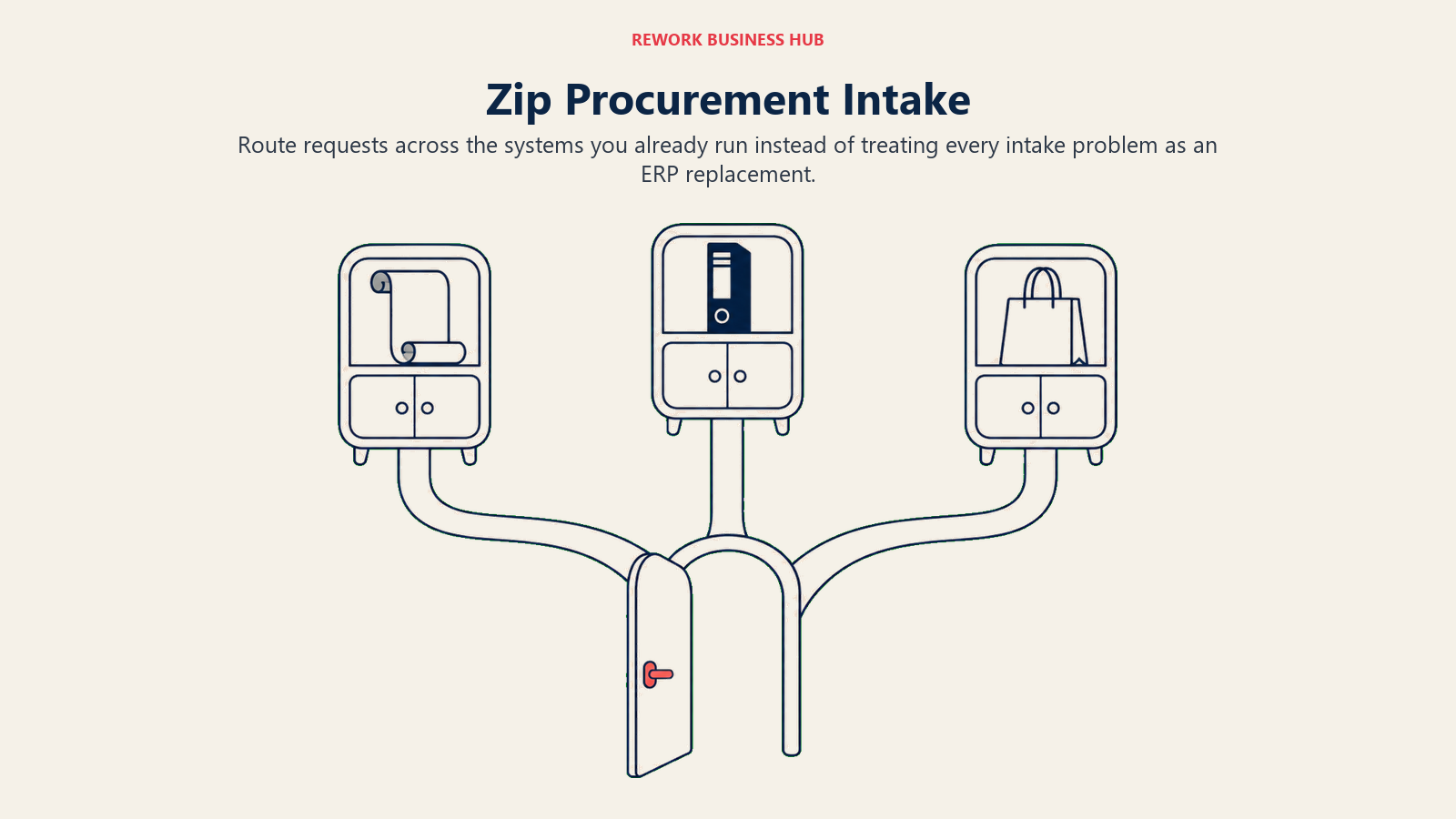
Methodology: Zip calls this "procurement orchestration" rather than procure-to-pay, and it was one of the first vendors to get its own Gartner-adjacent category recognition for the approach: IDC named Zip a Leader in its 2024 MarketScape for Worldwide SaaS and Cloud-Enabled Spend Orchestration, the first time IDC treated spend orchestration as its own market. Zip closed a $190 million Series D in October 2024 at a $2.2 billion valuation, which Goodwin Law and multiple outlets described as the largest single investment in procurement technology in more than two decades, funding expansion into EMEA and a new AI lab. An IDC Business Value report on Zip's platform found large-enterprise customers realizing benefits worth 3.6% of total spend under management, a 55% acceleration in purchasing cycles, and a 25% productivity gain for procurement teams.
Target audience: Companies of 500 to 10,000 or more that already run a real ERP and AP stack and want a better front door for requests without a system-of-record migration.
| Pros | Cons |
|---|---|
| Orchestrates existing ERP, P2P, and contract systems instead of replacing them | No published pricing anywhere |
| No-code workflow builder for intake and approval routing | Adds a system rather than consolidating onto one |
| IDC-recognized leader in its own category, backed by a record funding round | Newer entrant relative to Coupa's tenure and reference base |
| Strong fit alongside an ERP you have no plan to leave | Third-party pricing guesses online range widely and are unverified |
Pricing: Zip publishes no list pricing. Quotes are scoped to company size, number of users, and which modules and integrations you deploy. Treat any specific dollar figure you see elsewhere as an estimate, not a confirmed number.
Best for: Procurement teams whose real complaint about Coupa is "we don't want to replace our ERP, we want a better way in."
4. BILL: The Per-Seat AP and AR Bundle Most Evaluators Land On
BILL is the tool most procurement-adjacent Coupa evaluators end up comparing against once they realize their actual gap is accounts payable, not sourcing or contract governance. It is a lighter, US-first landing spot that also happens to include accounts receivable, something Coupa does not attempt at all.
Methodology: BILL prices AP and AR per user per month, and layers a separate free product, BILL Spend & Expense (formerly Divvy), for cards and budgets. Its Corporate tier adds purchase requests, purchase orders, and two-way matching, which is basic procurement functionality bolted onto an AP-first product rather than a governed sourcing process.
Target audience: US companies of 1 to 500 that want AP and AR together, already work with an accountant who knows BILL, and never needed Coupa's sourcing, contract lifecycle, or supplier risk modules in the first place.
| Pros | Cons |
|---|---|
| AP and AR in one subscription, plus a free card product | Per-seat pricing raises the bill as approvers grow |
| Largest accountant and bookkeeper channel in SMB software | No real sourcing, RFP, or contract lifecycle management |
| Corporate tier adds basic PO and two-way matching | Supplier network is nowhere near Coupa's or Ariba's scale |
| Deep QuickBooks, Xero, NetSuite, and Sage Intacct sync | No unlimited-user plan at any tier |
Pricing: Essentials is $49 per user per month, Team is $65, and Corporate is $89, with Enterprise on a custom quote. BILL Spend & Expense is $0 per user per month. Payment fees apply separately: standard ACH $0.59, mailed check $1.99, virtual card free, international USD wire $19.99, pay by card 2.9%.
Best for: Companies whose Coupa problem is really an AP and light-PO problem. See best BILL alternatives if BILL itself is also on your shortlist to replace.
5. Stampli: ERP-First Approvals Without Coupa's System-of-Record Ambition
Stampli takes the narrowest swing on this list and hits it cleanly. Instead of asking you to move procurement, invoicing, and payments onto a new platform the way Coupa does, it wraps a collaboration layer around each invoice: the conversation, the approvals, the coding questions, and the audit trail all live on the invoice itself, sitting on top of your existing ERP.
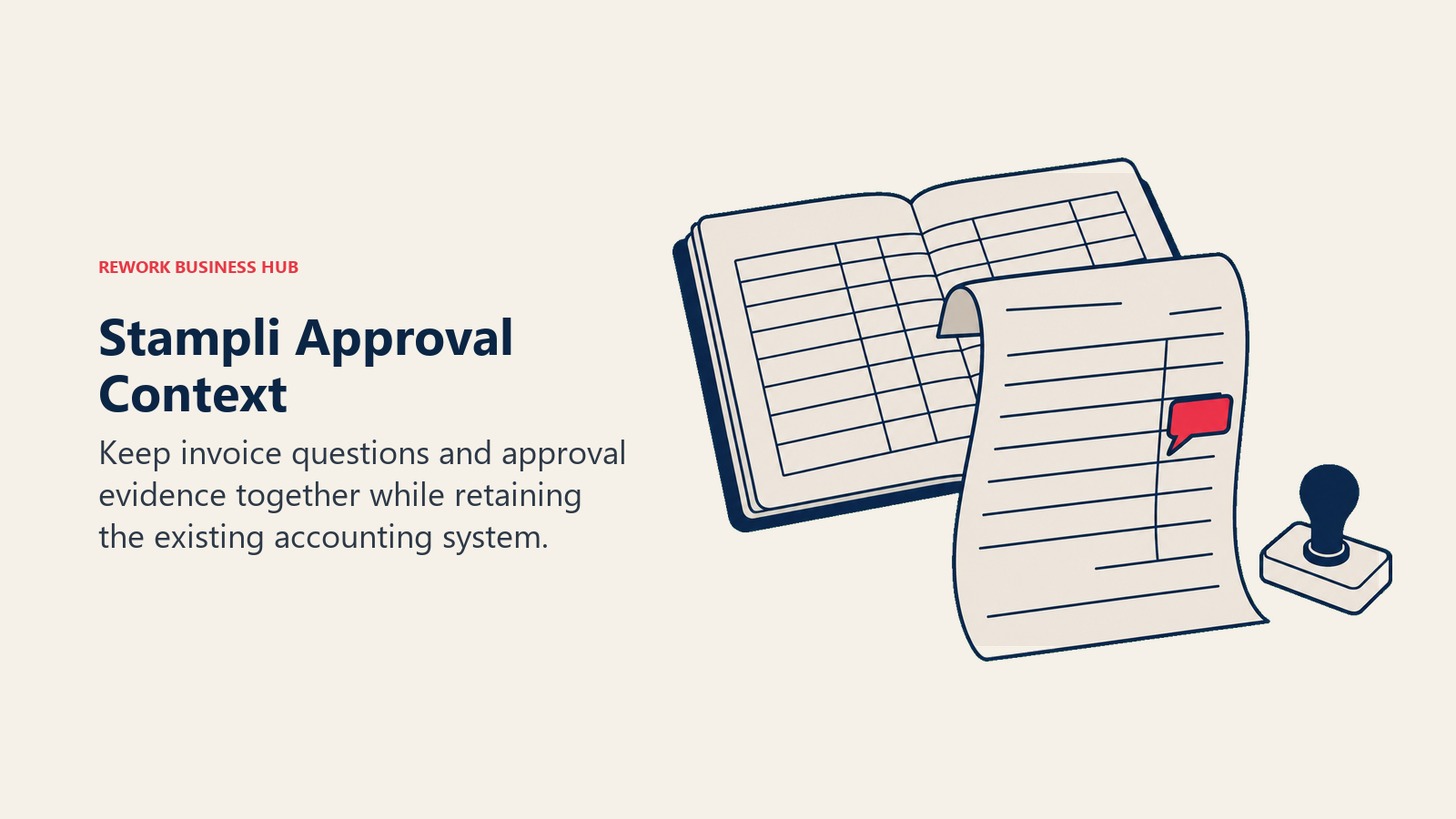
Methodology: Every question about an invoice happens in the invoice's own thread, and Stampli's AI assistant learns coding and approver patterns over time. In March 2026, Stampli launched Deep Finance, turning accumulated invoice history into executive-level spend intelligence rather than just a processing log, without ever asking you to leave your ERP.
Target audience: Companies of 50 to 1,000 that like their ERP, have a real AP function, and were evaluating Coupa for invoice approval speed rather than for sourcing or contract governance.
| Pros | Cons |
|---|---|
| Deploys on top of your existing ERP, not instead of it | No published pricing whatsoever |
| Approval conversations attached to each invoice | No sourcing, RFP, or supplier risk management at all |
| Deep Finance turns invoice history into spend intelligence | Remains independent, roughly $148 million raised, smaller reference base than Coupa |
| Optional Procurement, Direct Pay, and Expense Management modules | Narrower scope than any full source-to-pay evaluation needs |
Pricing: Stampli publishes no prices. Its pricing page is a request-a-quote form, scoped to invoice volume, entity count, and which modules (Procurement, Direct Pay, Credit Card, Advanced Vendor Management, Expense Management) you add.
Best for: AP teams whose bottleneck is approvals and coding questions, not governance before the purchase happens. See best Stampli alternatives if Stampli itself is also under evaluation.
6. AvidXchange: Vertical AP Depth for Property and Job-Costed Industries
AvidXchange is the option most Coupa-focused shortlists miss entirely, and most mid-market real estate, construction, and community association finance teams already know it well. It is built around a large supplier network and around industries where an invoice has to be coded to a property, a job, or a unit before it means anything, which is a narrower and more specific problem than Coupa's general-purpose governance model.
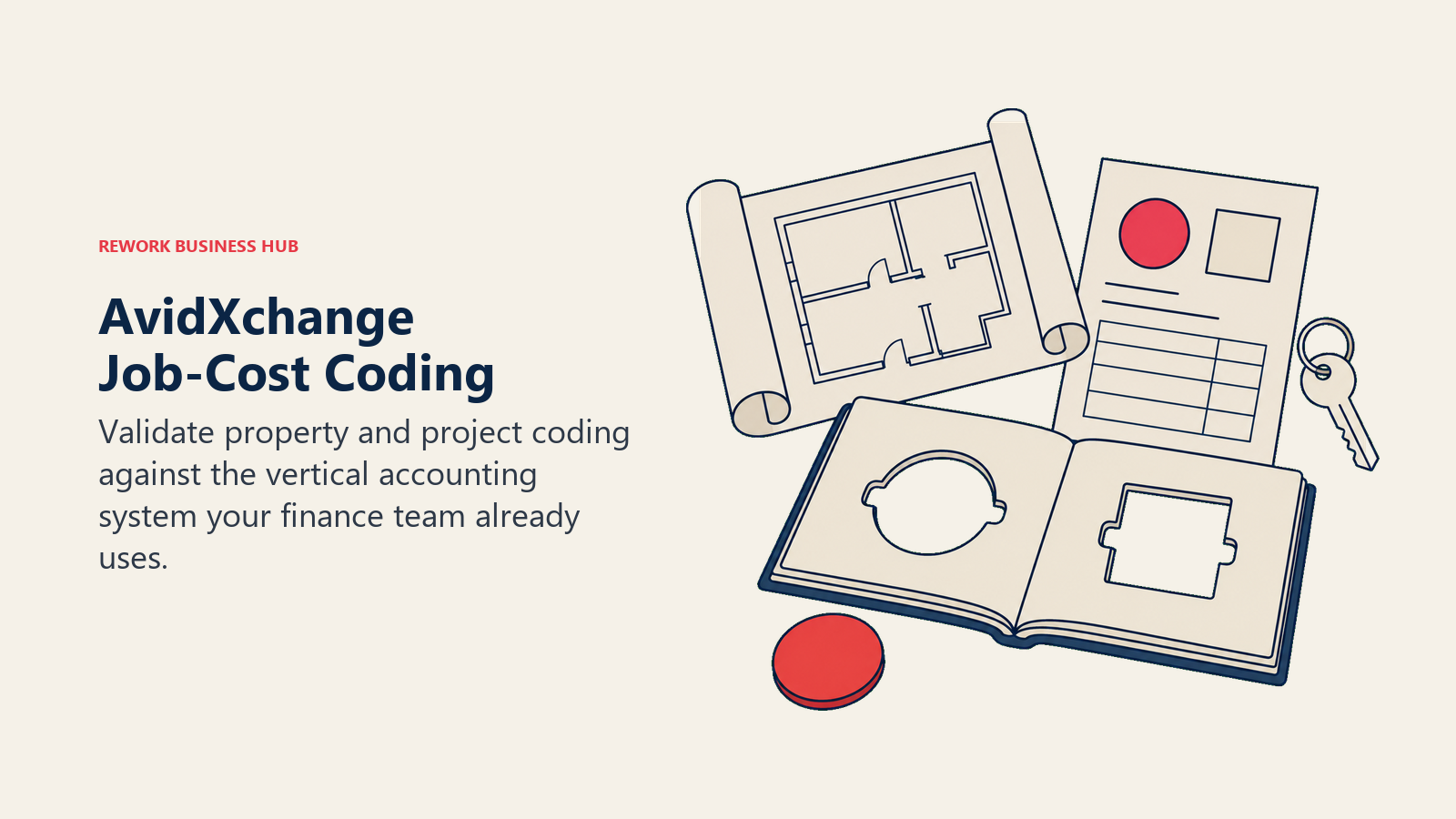
Methodology: AvidXchange pairs invoice automation with its own payment execution and supplier network, integrating with vertical accounting systems its customers actually run. One ownership fact matters for anyone comparing it: TPG and Corpay closed a take-private acquisition of AvidXchange at $10.00 per share on October 15, 2025, valuing it at roughly $2.2 billion, with Corpay investing about $550 million for a 34% stake.
Target audience: Mid-market companies of roughly 100 to 2,000 in real estate, construction, HOA and community management, and other property-heavy or job-costed industries that never needed Coupa's sourcing or contract governance layer.
| Pros | Cons |
|---|---|
| Vertical workflows for property and job costing | No published list pricing at all |
| Large existing supplier payment network | Per-transaction model needs volume modeling |
| AvidPay can run at no cost above a 50% electronic-payment threshold | No sourcing, RFP, or contract lifecycle management |
| Integrates with vertical accounting systems Coupa does not target | Now privately held, less public financial visibility |
Pricing: AvidXchange does not publish list pricing. The model is a platform fee plus per-transaction or per-invoice pricing, and the vendor states AvidPay can run at no direct cost where a customer routes at least half of its payments through AvidXchange.
Best for: Property managers, contractors, and association managers whose invoice volume is high and whose coding rules are industry-specific rather than governance-specific.
7. Payhawk: Per-Company Procurement Across European and Multi-Entity Groups
Payhawk answers the "what does this actually cost" question better than almost anything else on this list except Precoro and BILL, and it does it closer to Coupa's size range. It sells Procurement, Cards & Expenses, Travel, and Accounts Payable as separate modules, each priced per company per month, which means a European group with several entities can add approvers freely without the bill moving.
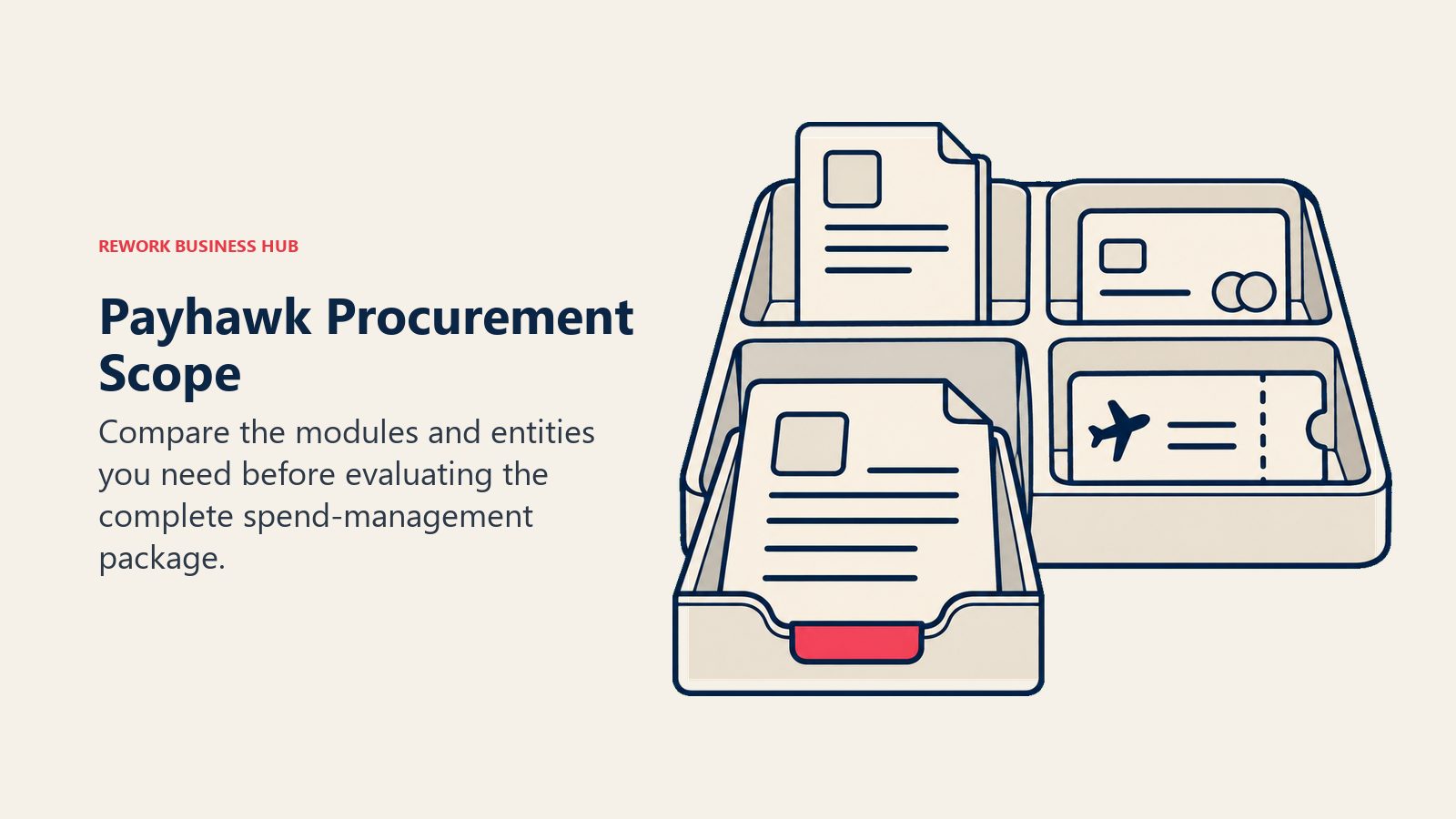
Methodology: Buy the modules you need rather than a bundle. Because pricing is per company rather than per user, the cost curve flattens the way Coupa's enterprise pricing does at much smaller scale, and multi-entity consolidation is a first-class feature rather than an enterprise upsell you have to negotiate for.
Target audience: European and multi-entity companies of 50 to 1,000, particularly groups with subsidiaries across several countries and currencies that found Coupa's governance model right but its price and timeline wrong.
| Pros | Cons |
|---|---|
| Published Procurement price, per company not per headcount | High monthly floor for teams under 50 |
| Strong multi-entity and multi-currency handling | Modules stack, so a full deployment adds up |
| Modular buying instead of one forced bundle | Sourcing and supplier risk depth is thinner than Coupa's |
| Cards, AP, travel, and procurement from one vendor | Weaker brand presence in the US than in Europe |
Pricing: Payhawk's US pricing page lists Procurement from $499 per month per company, alongside Accounts Payable from $349, Cards & Expenses from $449, and Travel from $299. Payhawk Complete, bundling all four plus an AI Office of the CFO layer, is quote-only. Its global pricing page does not publish those figures and quotes are tailored regionally.
Best for: Multi-entity finance teams where Coupa's governance model is closer to right but the price and the module mix are not. See Ramp vs Payhawk if a card-led spend platform is also on your shortlist.
8. Ramp: Purchase Requests Inside a Card Platform You Already Use
Ramp is not a source-to-pay suite, and it does not pretend to be one. What it offers instead is a Procurement add-on layered onto the card, bill pay, and close automation platform many finance teams already run, aimed at companies whose Coupa evaluation was really about purchase requests and approvals, not sourcing or supplier risk.
Methodology: Ramp makes money from card interchange and treasury rather than software subscriptions, and Procurement is sold as an add-on to the Plus or Enterprise plan rather than as a standalone product with its own price. That keeps the barrier to trying it low if you are already a Ramp customer, and effectively closes the door if you are not.
Target audience: US companies of 10 to 500 already using or evaluating Ramp for cards and bill pay that want basic purchase-request workflows without a separate procurement system.
| Pros | Cons |
|---|---|
| Purchase requests inside the same platform as cards and bill pay | Procurement add-on has no separate published price |
| Free tier for the base platform covers cards, AP, and close | No sourcing, RFP, or supplier risk management at all |
| Fastest month-end close workflow in this category | Requires being on Plus or Enterprise first |
| No per-approver charge on the free tier | Far shallower governance than Coupa or any true S2P suite |
Pricing: Ramp Free is $0 per user per month. Ramp Plus is $15 per user per month plus a platform fee based on team size that Ramp does not publish. Procurement is an add-on to Plus or Enterprise with no separate price listed. Annual billing takes 20% off Plus.
Best for: Companies whose Coupa evaluation was scoped too big from the start and really just needed purchase requests inside a platform they already use. See best Ramp alternatives if Ramp itself is also in the mix.
9. Spendesk: Modular European Spend Management With No Active-User Fee
Spendesk answers the "we're not enterprise, but we're not tiny either" gap with a modular platform sold around Foundations plus add-on modules, including Procurement and Accounts Payable, rather than a single suite you either buy whole or not at all.
Methodology: Spendesk's own pricing page states its model plainly: a fixed fee for platform access plus variable fees for transaction usage, unlimited users with no active-user fees, and no charge for card orders or monthly card fees. Its Business tier layers on advanced workflows, multi-entity management, HR and ERP integrations, AI automation, and fraud detection, still without a published dollar figure anywhere.
Target audience: European mid-market companies of 50 to 2,000, particularly ones with multiple entities, that want procurement and AP as modules rather than a single monolithic suite.
| Pros | Cons |
|---|---|
| Unlimited users, no active-user fee | No published price at all, not even a starting figure |
| Modular: buy Foundations plus only the modules you need | No sourcing, RFP, or supplier risk depth |
| Free card orders, no monthly card fees | Weaker US market presence than Ramp or Brex |
| Business tier adds multi-entity and fraud detection | Full modular deployment still requires a sales conversation |
Pricing: Spendesk publishes no dollar figures anywhere on its site. The published model is a fixed platform fee plus variable transaction fees, quoted based on which modules and tier you select.
Best for: European finance teams whose Coupa evaluation is really about procurement and AP modules, not a full governed source-to-pay process. If Spendesk itself is also on your list to replace, see best Spendesk alternatives.
10. Airbase (Paylocity for Finance): Guided Procurement Inside an HCM Suite
Airbase took the most unusual turn of anything on this list: it is no longer an independent spend management company. Paylocity announced a definitive agreement to acquire Airbase for roughly $325 million in September 2024, and by July 2025 the product had been folded into Paylocity's HCM suite and rebranded Paylocity for Finance.
Methodology: The pitch changed along with the ownership. Instead of standing alone as a guided procurement and AP platform, Paylocity for Finance now sells the promise of managing all payroll and non-payroll spend through one pane of glass inside the same system that already runs a company's HR and payroll. It was recognized as a Visionary in the 2025 Gartner Magic Quadrant for Accounts Payable Applications under its new name.
Target audience: Companies of 100 to 1,500 already running or considering Paylocity for HCM and payroll that want guided procurement and AP without adding a second vendor relationship.
| Pros | Cons |
|---|---|
| Guided procurement and AP tied directly into HR and payroll data | No published pricing anywhere |
| Single pane of glass across payroll and non-payroll spend | Only makes sense if you are already committed to Paylocity for HCM |
| Recognized as a Visionary in Gartner's 2025 AP Applications Magic Quadrant | Product identity is mid-transition after the rebrand |
| Real-time visibility across HR and finance in one system | No sourcing, RFP, or supplier risk management |
Pricing: Paylocity for Finance publishes no dollar figures. Pricing is quoted as part of a broader Paylocity HCM and payroll conversation, not as a standalone spend management purchase.
Best for: Finance teams already inside the Paylocity ecosystem who want procurement and AP without a separate best-of-breed purchase.
11. SAP Ariba: Enterprise Procurement Governance for Existing SAP Shops
SAP Ariba is the alternative most likely to feel like a lateral move rather than a downgrade, because it competes in exactly the same weight class Coupa does. Sourcing, contracts, and buying sit on the Ariba Network, one of the largest B2B trading networks in the world, and the whole platform is built to tie directly into an existing SAP or S/4HANA environment.
Methodology: SAP Ariba's commercial model bundles module subscriptions, named users, requisition volume, and Ariba Network document volume into one negotiated contract rather than a public rate card. That makes it a genuinely different evaluation than Coupa only when your company already runs SAP for its core ERP, since the two systems are designed to be sold and implemented together.
Target audience: Enterprises of 1,000 to 50,000 or more already running SAP or S/4HANA that want procurement governance tightly coupled to the ERP they already operate.
| Pros | Cons |
|---|---|
| Deepest supplier network of anything on this list | No public pricing, negotiated entirely through SAP's own sales process |
| Native integration with SAP and S/4HANA environments | Enterprise cost and implementation timeline, same as Coupa |
| Full sourcing, contracts, and buying coverage | Weaker fit for any company not already committed to SAP |
| Long track record and a large reference base | Module-plus-network pricing model is genuinely hard to estimate upfront |
Pricing: SAP Ariba publishes no list pricing. The commercial model is module subscription plus spend volume plus Ariba Network document volume, negotiated as part of a broader SAP contract.
Best for: Companies whose Coupa evaluation is really an "which enterprise S2P vendor" question and who already run SAP for their ERP.
12. Ivalua: The Configurable Enterprise Suite Gartner Ranks Alongside Coupa
Ivalua is the alternative to reach for when the honest answer to "why are we leaving Coupa" is not price or scope but flexibility: teams that need to configure workflows, data models, and approval logic more deeply than an off-the-shelf suite allows. Gartner named Ivalua a Leader in its January 2026 Magic Quadrant for Source-to-Pay Suites, in the same tier as Coupa and GEP.
Methodology: Ivalua sells sourcing, procurement, contract management, and supplier management as configurable modules on one platform, with deployment options including on-premises and hybrid setups that not every cloud-only competitor on this list offers. Pricing scales with the modules deployed, user count, and organizational scale, all negotiated rather than published.
Target audience: Enterprises of 1,000 to 10,000 or more, often in regulated industries, that need deep configurability and are willing to invest a longer implementation timeline to get it.
| Pros | Cons |
|---|---|
| Named a Leader in Gartner's 2026 Source-to-Pay Suites Magic Quadrant | No published pricing anywhere |
| Deep configurability across workflows and data models | Long configuration and implementation cycles |
| On-premises and hybrid deployment options, unusual on this list | Overkill for any company evaluating Coupa purely on price |
| Strong supplier and contract management depth | Requires real internal capacity to configure and maintain |
Pricing: Ivalua publishes no dollar figures. Pricing is quote-based, scoped to modules licensed, user count, and organizational scale, with implementation and configuration costs typically layered on top of the subscription.
Best for: Enterprises whose Coupa complaint is rigidity, not price, and who have the internal team to run a heavily configured deployment.
13. Jaggaer: Deep Vertical Strength in Higher Ed, Public Sector, and Healthcare
Jaggaer answers a version of the Coupa question that most general procurement guides skip: which enterprise S2P suite actually understands higher education, public sector, and healthcare procurement, with their specific approval chains, grant-fund tracking, and compliance requirements. Jaggaer's roots in those verticals run deep, built over decades of sector-specific product development.
Methodology: The JAGGAER ONE platform bundles eSourcing, spend analytics, supplier management, and procure-to-pay as modules, sold on a subscription model with pricing tiered by which modules and features an organization selects. Like the rest of the enterprise tier on this list, no dollar figures appear on its site.
Target audience: Enterprises of 1,000 to 20,000 or more in higher education, public sector, and healthcare, plus general enterprise buyers who value that vertical depth even outside those sectors.
| Pros | Cons |
|---|---|
| Decades of specific depth in higher ed, public sector, and healthcare | No published pricing at all |
| Full JAGGAER ONE suite covers sourcing through procure-to-pay | Interface feels dated relative to newer entrants like Zip |
| Strong spend analytics and supplier management modules | Enterprise sales process, not self-serve |
| Long track record in regulated, grant-funded environments | Less momentum in general commercial enterprise vs its core verticals |
Pricing: Jaggaer publishes no dollar figures for any JAGGAER ONE module. Pricing is scoped in a quote based on modules selected and organizational scale.
Best for: Higher education, public sector, and healthcare procurement teams whose Coupa alternative shortlist needs sector-specific credibility, not just general enterprise scale.
14. Basware: The Compliance-First Choice for E-Invoicing Mandates
Basware answers a different question than Coupa's general governance model. Where Coupa's depth is controlling the purchase before it becomes an invoice, Basware's depth is receiving and issuing compliant structured invoices across tax jurisdictions, an increasingly regulatory-driven problem in its own right.
Methodology: Basware combines invoice-centric AI with a global e-invoicing network and country-specific compliance handling, aimed at large, multi-ERP organizations that must meet evolving national e-invoicing mandates. Basware's own pricing page states its subscription model is "tailored to your organization's needs and requirements" and cites an 89% auto-match rate and a 10-month time to achieve ROI as its own benchmark claims, without publishing a dollar figure anywhere. That is directly relevant right now: from September 1, 2026, every VAT-registered business in France must be able to receive structured e-invoices, with the obligation to issue them starting the same day for large and medium enterprises.
Target audience: Enterprises of 500 to 10,000 or more operating across multiple countries with real e-invoicing and tax compliance exposure, rather than a general sourcing or catalog-buying need.
| Pros | Cons |
|---|---|
| Deep global e-invoicing and tax compliance network | Nothing published on pricing |
| Strong fit for mandates like France's 2026 e-invoicing rule | Enterprise sales process, not self-serve |
| Vendor-reported 89% auto-match rate on invoice processing | Weaker fit for sourcing-led or catalog-buying evaluations |
| Long track record with large, multi-ERP organizations | Overkill for a company only leaving Coupa on price |
Pricing: Basware publishes no dollar figures anywhere. Its own pricing page describes a subscription model tailored to organizational needs and requirements, with actual numbers requiring a sales conversation.
Best for: Companies whose real gap versus Coupa is regulatory: multiple entities, multiple countries, and e-invoicing mandates changing under them.
15. SAP Concur: The Default Answer for Travel and Expense at Scale
SAP Concur is not a Coupa competitor in sourcing or contracts, and it should not be evaluated as one. It answers a narrower, adjacent question: many companies leaving Coupa never needed its travel and expense coverage in the first place, and Concur is the tool most large organizations already run for exactly that slice.
Methodology: Concur Expense, Concur Travel, and Concur Invoice are sold as separate but integrable products, and Concur's own pricing page lists three named tiers, Base, Plus, and Premium, without a single dollar figure attached to any of them. The page states directly that "price can vary based on monthly commitment" and routes every visitor to either "Buy now" or "Request a quote."
Target audience: Companies of 500 to 50,000 or more, of any industry, that need mature, compliance-ready travel and expense management independent of a broader source-to-pay decision.
| Pros | Cons |
|---|---|
| Named tiers (Base, Plus, Premium) give some pricing structure | No dollar figures attached to any tier |
| Deepest, most established T&E product on this list | Not a sourcing, contracts, or procurement governance tool at all |
| Strong existing integration ecosystem with card issuers and ERPs | Sales-led buying process, not self-serve |
| Works alongside a full S2P suite or standalone | Scope is expense and travel only, a partial Coupa replacement at best |
Pricing: SAP Concur publishes no dollar figures. It names three tiers, Base, Plus, and Premium, and states that price varies with monthly commitment, quoted through a sales conversation.
Best for: Companies whose Coupa evaluation really only ever touched the expense and travel side. The expense management software roundup covers this slice of the category on its own terms.
True Cost Example: A Procurement Team of 25 Approvers
Most alternatives on this list price per company or stay quote-only, so the seat-based math that shapes BILL and Ramp does not apply across the board the way it would in a pure AP comparison. Here is what one month costs at 25 approvers, using each vendor's published rates where one exists.
| Platform | Monthly cost at 25 approvers | Basis |
|---|---|---|
| Precoro Core | $499, unlimited users included | Per company, flat regardless of headcount |
| Precoro Automation | $999, unlimited users included | Per company, flat regardless of headcount |
| BILL Essentials | $1,225 | $49 per user per month |
| BILL Corporate | $2,225 | $89 per user per month |
| Payhawk Procurement | From $499 | Per company, any headcount |
| Ramp Plus | $375 plus an unpublished platform fee | $15 per user per month |
| Procurify, Zip, Stampli, AvidXchange, Spendesk, Airbase, SAP Ariba, Ivalua, Jaggaer, Basware, SAP Concur, Coupa | Quote-only | No seat-based figure exists to compare |
Software cost is one input, not the whole picture. Implementation timeline, supplier network depth, and how much of sourcing versus contracts versus AP you actually need all belong in the real comparison. But an $1,726 monthly gap between BILL Corporate and Precoro's Core plan at the same headcount is $20,712 a year, before either vendor's transaction fees enter the picture, and that gap exists entirely because of a pricing model difference, not a feature difference.
What Changed in Procurement Software Since 2025
Several vendors on this list changed hands, changed products, or picked up new analyst recognition in the last eighteen months, and a shortlist built from an older article will get at least one of them wrong.
| Change | What happened | What it means for your evaluation |
|---|---|---|
| Coupa went private | Thoma Bravo completed an $8 billion acquisition in 2023, and Coupa delisted from Nasdaq | No public financials to review before a multi-year enterprise contract |
| Zip closed a record funding round | $190 million Series D in October 2024 at a $2.2 billion valuation, the largest procurement tech investment in over two decades | Zip has real staying power as an orchestration-first alternative, not a startup risk |
| AvidXchange went private | TPG and Corpay closed the take-private in October 2025 at roughly $2.2 billion | A vertical AP option with new ownership but the same product focus |
| Airbase became Paylocity for Finance | Paylocity closed its roughly $325 million acquisition and rebranded the product in July 2025 | Evaluate it as a module of a payroll platform now, not a standalone vendor |
| Gartner named its 2026 Source-to-Pay Leaders | Coupa, GEP, and Ivalua named Leaders among 13 vendors evaluated, published January 2026 | Confirms Ivalua as a genuine enterprise peer to Coupa, not a second-tier option |
| France's e-invoicing mandate arrives | From September 1, 2026, VAT-registered French businesses must be able to receive structured e-invoices | Vendors with real compliance depth, especially Basware, matter more if you operate in France |
The pattern underneath all of this is consolidation moving in two directions at once. Payroll and HCM vendors are absorbing spend management products (Paylocity and Airbase), payments networks are absorbing vertical AP platforms (Corpay and AvidXchange), and pure orchestration players are raising record capital to stay independent (Zip). Ask who owns the product now in every demo you take. It predicts your experience two years out better than the feature list does.
Integration Fit: What Your ERP Allows
The ledger you already run narrows a Coupa alternatives shortlist faster than the feature list does, especially at the enterprise end of this list.
| Your ERP | Strongest Coupa alternatives |
|---|---|
| SAP or S/4HANA | SAP Ariba, SAP Concur |
| NetSuite | Precoro, Stampli, Payhawk, Ivalua |
| QuickBooks Online or Xero | Precoro, BILL, Ramp, Procurify |
| Sage Intacct | Stampli, AvidXchange, Payhawk, Basware |
| Microsoft Dynamics 365 | Stampli, Payhawk, Ivalua, Jaggaer, Basware |
| Vertical systems (property, construction) | AvidXchange |
| Multiple ERPs across entities or countries | Ivalua, Jaggaer, Basware |
| Paylocity for HCM and payroll | Airbase (Paylocity for Finance) |
If your ERP itself is still in play alongside the procurement decision, settle that first. Choosing a procurement platform around an ERP you are about to leave is how companies end up paying for two implementations in the same year.
Buying Mistakes to Avoid
| Mistake | What it costs you |
|---|---|
| Comparing Coupa's full-suite governance to a single-module AP tool | You compare two different scopes and both look like the wrong price |
| Assuming any alternative matches Coupa's supplier network size | Ariba's Business Network and Coupa's own network took decades to build; most of this list is younger and smaller |
| Buying a card platform to solve a sourcing or contract governance problem | Ramp and Spendesk's procurement layers are add-ons, not full sourcing suites |
| Ignoring implementation timeline differences | SAP Ariba, Ivalua, and Jaggaer take months to a year; Precoro and Procurify can be live in weeks |
| Assuming a reported price is a real price | Zip, Ivalua, Jaggaer, GEP, and SAP Ariba all publish nothing; treat any figure elsewhere as an estimate |
| Dropping regulatory e-invoicing coverage without checking the replacement | Only Basware and the two SAP products carry serious compliance-network depth on this list |
That regulatory point catches more buyers than it should. If you operate in a country with an active or upcoming e-invoicing mandate, most of the mid-market tools on this list were never built for that compliance layer, and swapping without checking is how a "simpler" switch turns into a second project a year later.
What Coupa Still Does Best
| Coupa strength | Who it matters for |
|---|---|
| Full source-to-pay coverage in one governed suite | Enterprises that genuinely need sourcing, contracts, procurement, invoicing, and expenses controlled as one process |
| Supplier risk and benchmarking data across a large customer base | Procurement teams that lean on peer benchmarking to negotiate |
| Governance that starts before the purchase request, not after | Companies where maverick spend is a real, measured cost |
| Guided buying and catalog experience built over a long product history | Requesters who need a consumer-grade shopping experience for company purchases |
| Mature integration ecosystem across major ERPs, not just SAP | Multi-ERP enterprises that need one S2P layer across different ledgers |
If your organization is genuinely enterprise-scale, if procurement governance is a board-level concern, and if the cost and timeline still pencil out against running two or three tools instead, staying with Coupa is a defensible call. The gap between "defensible" and "right for you" is exactly the sizing and pricing-transparency work this guide is meant to help with.
Decision Framework
| If you need... | Pick | Why |
|---|---|---|
| A modern P2P suite with a real published price | Precoro | Core at $499/mo per company, Automation at $999/mo |
| Unlimited viewers, pay only for approvers | Procurify | Free Basic users, priced only on Pro seats |
| An intake layer without replacing your ERP | Zip | Orchestrates existing systems, IDC-recognized leader |
| A lighter US-first AP and AR bundle | BILL | Per-seat pricing from $49, plus AR in the same subscription |
| Better invoice approvals without leaving your ERP | Stampli | Sits on top of your existing accounting system |
| Vertical AP for property, construction, or HOA | AvidXchange | Job and property coding with a large supplier network |
| Multi-entity procurement priced per company | Payhawk | Modules from $499 per month, ignores headcount |
| Purchase requests inside a platform you already run | Ramp | Procurement add-on to Plus or Enterprise |
| Modular European spend management, unlimited users | Spendesk | Platform fee plus transaction fees, no active-user charge |
| Guided procurement tied into HR and payroll | Airbase (Paylocity for Finance) | Single pane of glass across payroll and non-payroll spend |
| Full S2P governance native to an existing SAP stack | SAP Ariba | Deepest supplier network, ties directly to S/4HANA |
| A configurable enterprise suite, on-prem or hybrid | Ivalua | 2026 Gartner Leader, deep configurability |
| Sector depth in higher ed, public sector, or healthcare | Jaggaer | Decades of vertical-specific development |
| Regulatory e-invoicing compliance across countries | Basware | Deep global e-invoicing network built for tax mandates |
| Travel and expense at large-organization scale | SAP Concur | The default T&E answer, three named tiers |
| Full source-to-pay governance and the scale to justify it | Coupa | Sourcing, contracts, procurement, invoicing, and expenses as one process |
Frequently Asked Questions about Coupa Alternatives
What is the best Coupa alternative in 2026?
It depends on which Coupa problem you actually have. Precoro and Procurify fit mid-market teams that want a real procure-to-pay tool at a smaller scale, BILL, Stampli, and AvidXchange fit teams whose real gap was AP rather than sourcing, and SAP Ariba, Ivalua, and Jaggaer are the genuine enterprise peers if you need Coupa's scope but a different vendor. There is no single winner because Coupa is oversized for some buyers and exactly right for others.
How much does Coupa actually cost?
Coupa publishes no pricing anywhere on its site. Every plan is quote-based, scoped to spend under management, module mix, and entity count, and a Forrester study commissioned by Coupa modeled its composite customer as a 60,000-employee, $80 billion-revenue global manufacturer, which tells you roughly what scale its own research assumes. Get a written quote before budgeting anything.
Is there a free alternative to Coupa?
Not one that matches Coupa's scope. Ramp's base platform and BILL Spend & Expense are free, but Procurement itself is an add-on to Ramp's paid Plus tier with no separate published price, and none of the free tiers here include sourcing, contract management, or supplier risk the way Coupa does.
Which Coupa alternative is best for small or mid-market companies?
Precoro and Procurify are built for that range, with Precoro publishing real numbers starting at $499 a month per company and Procurify pricing only on Pro users with unlimited free viewers. BILL and Payhawk are strong picks if your actual need is AP or multi-entity spend rather than full procurement governance.
Can I replace Coupa without losing supplier network depth?
Only partially. SAP Ariba runs on the Ariba Network, one of the largest B2B trading networks in the world, and is the closest match to Coupa's network scale. AvidXchange has a large network for property and construction vendors specifically. None of the mid-market tools on this list, including Precoro, Procurify, and Zip, attempt to match that network depth, because it took decades to build.
Why do so many procurement vendors refuse to publish pricing?
Zip, Stampli, AvidXchange, Spendesk, Airbase, SAP Ariba, Ivalua, Jaggaer, Basware, and SAP Concur all price on spend under management, module mix, user count, and entity structure, so a single list price would not describe what most customers actually pay. Treat any figure you find in a third-party roundup for these vendors as an estimate, not a confirmed number, and get a written quote before building a budget.
How much does weak procurement discipline actually cost a company?
Digital World Class procurement teams achieve 2.6 times greater ROI than peers and operate with 31% fewer full-time employees, per The Hackett Group's 2025 research. Ardent Partners separately found that procurement teams now manage about 71% of enterprise spend on average, and every additional dollar brought under formal management yields 6% to 12% in savings during the initial contract period.
What is changing in procurement software going into 2026?
Gartner named Coupa, GEP, and Ivalua Leaders in its January 2026 Magic Quadrant for Source-to-Pay Suites among 13 vendors evaluated. Ownership is also shifting: Airbase became Paylocity for Finance in mid-2025, AvidXchange went private under TPG and Corpay in October 2025, and Zip raised the largest single funding round in procurement technology in over two decades to stay independent. If you operate in France, the September 2026 e-invoicing mandate also makes compliance-first vendors like Basware more relevant.
What to Do Next
Start by naming which Coupa problem you actually have. Write one sentence: "our problem is that nobody will tell us what this costs, and we don't need enterprise-scale governance," or "our real gap was always AP, not sourcing," or "we're actually enterprise-scale and just want a different vendor in the same weight class." That sentence eliminates most of the 15 options above before you book a single demo.
Then run a two-week parallel test with your top two picks, not a demo. Push 15 real purchase requests through each, one that needs three levels of approval, one from a new supplier that needs onboarding, one over your standard spend threshold, one that should get flagged as duplicate or off-contract, and one urgent purchase. Count how many needed manual intervention outside the tool. The platform with the fewest exceptions wins, whatever the sales deck claimed.
If price and scope are the issue, start with Precoro or BILL. If your real gap is AP rather than procurement, the AP automation software roundup is the better starting point. And before you sign anything with any quote-only vendor on this list, ask for the pricing model in writing, not just the number, because the model (per company, per user, per module, per spend under management) is what determines whether next year's renewal looks like this year's quote.
Camellia writes about finance and spend tooling for B2B teams. Last updated August 2026.

Principal Product Marketing Strategist
On this page
- Key Facts
- Quick Comparison Table
- Why Companies Actually Leave Coupa
- Why Nobody Will Tell You What This Costs
- Stage Fit Matrix
- Sizing and Persona Table
- 1. Precoro: The Closest Thing to a Priced-Out Coupa
- 2. Procurify: Purchasing-First With Unlimited Viewers
- 3. Zip: An Intake Layer That Doesn't Replace What You Already Run
- 4. BILL: The Per-Seat AP and AR Bundle Most Evaluators Land On
- 5. Stampli: ERP-First Approvals Without Coupa's System-of-Record Ambition
- 6. AvidXchange: Vertical AP Depth for Property and Job-Costed Industries
- 7. Payhawk: Per-Company Procurement Across European and Multi-Entity Groups
- 8. Ramp: Purchase Requests Inside a Card Platform You Already Use
- 9. Spendesk: Modular European Spend Management With No Active-User Fee
- 10. Airbase (Paylocity for Finance): Guided Procurement Inside an HCM Suite
- 11. SAP Ariba: Enterprise Procurement Governance for Existing SAP Shops
- 12. Ivalua: The Configurable Enterprise Suite Gartner Ranks Alongside Coupa
- 13. Jaggaer: Deep Vertical Strength in Higher Ed, Public Sector, and Healthcare
- 14. Basware: The Compliance-First Choice for E-Invoicing Mandates
- 15. SAP Concur: The Default Answer for Travel and Expense at Scale
- True Cost Example: A Procurement Team of 25 Approvers
- What Changed in Procurement Software Since 2025
- Integration Fit: What Your ERP Allows
- Buying Mistakes to Avoid
- What Coupa Still Does Best
- Decision Framework
- What to Do Next