Ahrefs vs Moz: Domain Rating, Domain Authority and a Three-Seat Price Check
Turn this article into takeaways for your work.


Each assistant summarizes the article only for you and suggests best practices for your work.
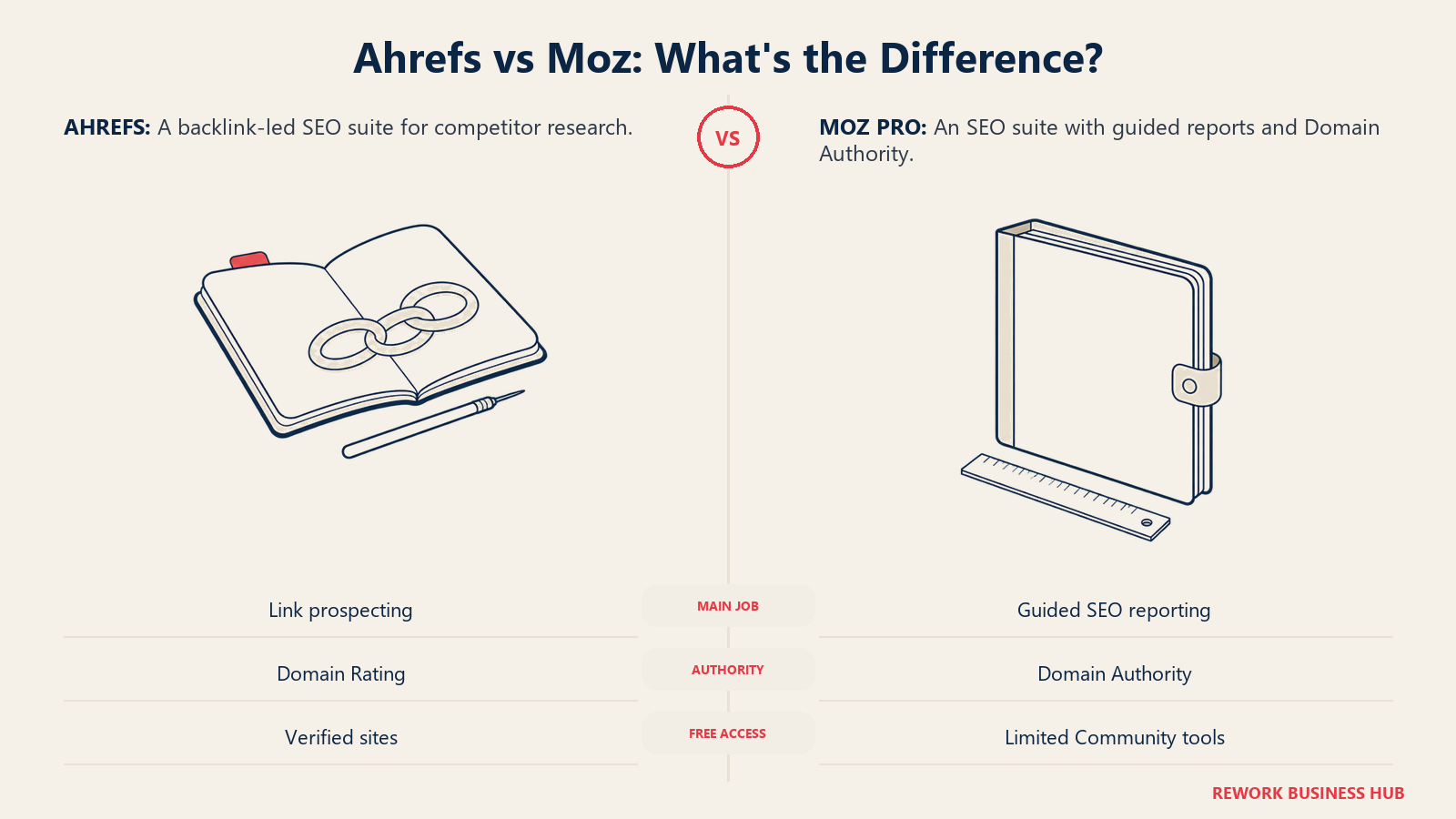
Ahrefs vs Moz usually starts with one question: which authority score should we trust? Ahrefs gives you Domain Rating (DR). Moz gives you Domain Authority (DA). They sound like two names for the same idea, and they aren't. Each one is computed by its own vendor from its own link data, on its own method, so a DR of 45 and a DA of 45 for the same site can mean different things and move at different speeds.
This comparison is for marketing managers, founders and SEO leads at small teams who are choosing between the two. It covers what each authority metric measures, how the platforms differ for keyword research and backlinks, and what a three-person team pays once seats, tracked keywords and projects are counted. Prices are the vendors' printed figures, and where a vendor doesn't print a number, the table says so.
If you're comparing against a wider field, see best Ahrefs alternatives and best Moz alternatives. This page covers classic SEO only: keywords, rankings, links and audits. For AI search visibility, see AEO vs SEO.
Key Facts
- Ahrefs is priced from Lite at $129 a month, Standard at $249 and Advanced at $449, each with one user included, per its pricing page.
- Moz Pro's Standard plan is $99 a month billed monthly (or $79 a month billed annually, a first-year price), with 1 user, 3 campaigns and 300 tracked keywords, per Moz's pricing page.
- Ahrefs describes Domain Rating as a 0 to 100 logarithmic measure of a site's backlink profile strength, based only on followed links.
- Moz describes Domain Authority as a 1 to 100 score that predicts how likely a site is to rank compared with competitors, and says it isn't a direct Google ranking factor.
- For three people, Ahrefs Lite costs $209 a month for 750 tracked keywords. Moz Pro Standard costs $197 for 300.
TL;DR
| Ahrefs | Moz Pro | |
|---|---|---|
| Authority metric | Domain Rating (DR), 0 to 100, backlink-only | Domain Authority (DA), 1 to 100, predictive score |
| Entry price | Lite $129/mo (Starter is listed at $29/mo) | Starter $49/mo; Standard $99/mo billed monthly |
| Tracked keywords on the first full plan | 750 on Lite | 300 on Standard |
| Seats | 1 included; extra $40 (Lite) to $80 (Advanced) | 1 on Standard; extra seats $49/mo |
| Rank tracker updates | Weekly on every plan | Not stated on the pricing page |
| Best for | Link research and keyword research depth | Beginners who want guided reports and DA for client reporting |
| Weakest fit | Teams that need a daily rank tracker | Teams that need many tracked keywords per dollar |
DR vs DA: What Each Authority Metric Measures
This is the part most comparisons skip, and it's the part that causes the most confusion in client calls.
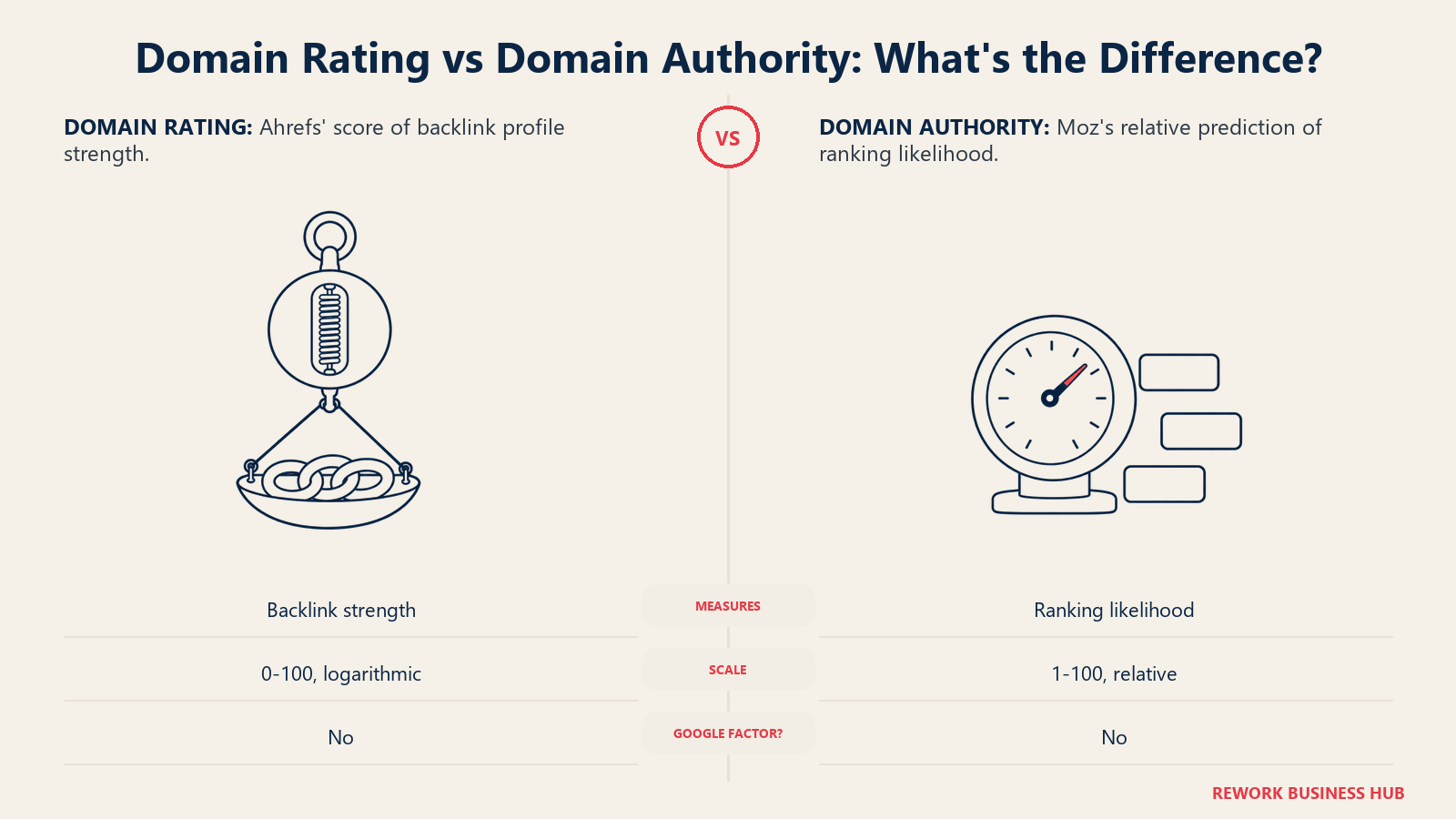
Domain Rating is Ahrefs' own metric. Ahrefs defines it as a measure of the relative strength of a website's backlink profile on a 0 to 100 scale. It's logarithmic, so each point is harder to earn as the number climbs. It's calculated from followed links only: Ahrefs finds the domains that link to a target with at least one followed link, and each of those passes a share of its own strength based on how many other domains it links to. Ahrefs states that DR is purely link-based, ignores search traffic, and doesn't filter out spam, so low-quality links can raise it. It also says Google ranks pages, not websites, and advises against chasing DR directly.
Domain Authority is Moz's own metric. Moz describes it as a search engine ranking score from 1 to 100, built to predict how likely a site is to rank compared with competitors. Moz says it's calculated from its Link Explorer index using dozens of factors, that link quality and quantity heavily influence it, and that it's relative, so it's most useful for benchmarking against other sites. Moz also says plainly that it isn't a direct Google ranking factor.
Put side by side:
| Domain Rating (Ahrefs) | Domain Authority (Moz) | |
|---|---|---|
| Vendor | Ahrefs | Moz |
| Scale | 0 to 100, logarithmic | 1 to 100 |
| Stated purpose | Strength of a site's backlink profile | Predicts likelihood to rank vs competitors |
| Inputs | Followed links from linking domains | Link Explorer data and dozens of factors |
| Counts nofollow links | No | Not specified in Moz's guide |
| Google ranking factor | No, per Ahrefs | No, per Moz |
| Computed where | Ahrefs only | Moz only |
Three practical consequences follow.
- You can't convert between them. The same site can score quite differently in each, because each vendor sees a different slice of the web and weighs it differently. Don't average them, don't compare a DR to a DA, and don't set a goal in one metric using a benchmark from the other.
- Pick one and track it consistently. Both vendors call their scores relative. The useful comparison is your site against competitors in the same tool, and your own score over time.
- Neither is a ranking factor. Both vendors say so. Use them for prioritising link prospects and benchmarking, not for forecasting traffic.
If your clients already ask for DA in reports, that's a real reason to keep Moz, because Moz is the only place it's computed. If you prospect for links and want a link-only strength number, DR does that job.
Backlink Research
Both platforms lead with a link database, and both vendors publish their own claims about index size. Those numbers are marketing figures from each side, and neither pricing page prints a link-database size that you can hold the vendor to. The honest way to compare them is on a site you know well.
| Backlink job | Ahrefs | Moz Pro |
|---|---|---|
| Link tool | Site Explorer | Link Explorer |
| Authority score | Domain Rating | Domain Authority |
| Best use | Competitor link prospecting, finding who links to rivals | Benchmarking a domain against competitors, DA-based reporting |
| Free access | Ahrefs Free: limited Site Explorer and Site Audit for sites you verify | Free Moz Community account with limited Link Explorer, Keyword Explorer and MozBar |
Ahrefs lists no explicit backlink index limits on its pricing page, and its Lite plan caps usage at 1,000 credits per user while Standard and Advanced are unlimited per user. On Moz, the practical limit is campaigns and tracked keywords more than lookups.
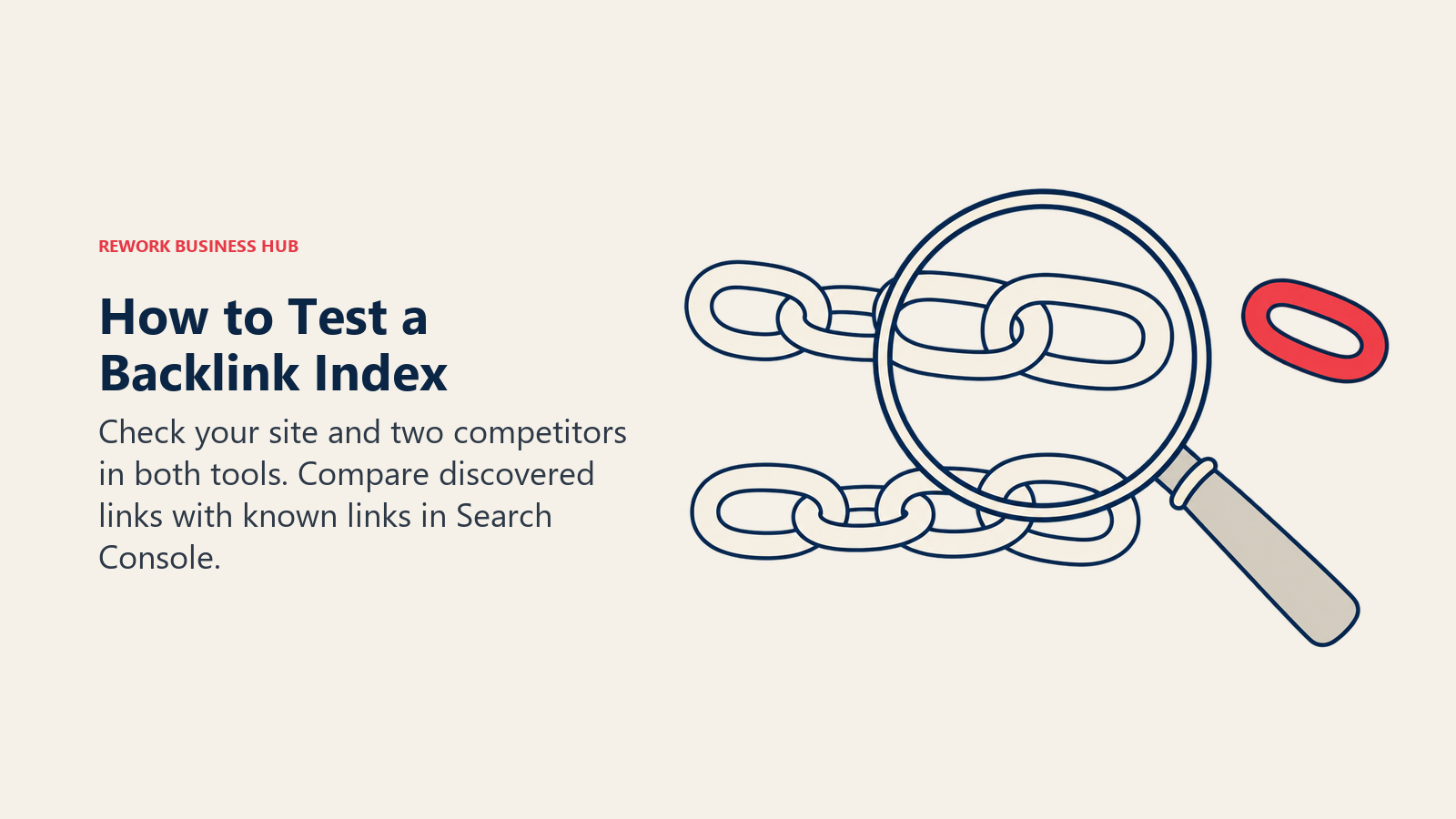
A fair test takes an hour. Pull the referring domains for your own site and for two competitors in each tool's free access or trial. Compare the lists with each other and with your own Google Search Console links report. The tool that finds more of the links you already know exist, and surfaces useful ones you don't, is the better index for your niche.
Keyword Research
Both platforms include a keyword research tool, Keywords Explorer at Ahrefs and Keyword Explorer at Moz. Neither pricing page prints per-search limits for it, so treat keyword research as a trial test too.
| Keyword job | Ahrefs | Moz Pro |
|---|---|---|
| Research tool | Keywords Explorer | Keyword Explorer |
| Free access | Ahrefs Free is limited | Free Moz Community account, limited |
| Rank tracking | Weekly updates on every plan | Campaign-based tracking on every plan |
| Tracked keywords, entry plan | 750 (Lite) | 300 (Standard) |
| Tracked keywords, mid plan | 2,000 (Standard) | 1,500 (Medium) |
| Tracked keywords, upper plan | 5,000 (Advanced) | 3,000 (Large) |
The difference you'll feel in daily use is tracking capacity per plan and the weekly rank update on Ahrefs. If you need daily position changes for a launch or a recovery, neither is the right fit, and a dedicated tracker will serve you better. Our rank tracker roundup and keyword research tools guide cover that.
Tracked Keywords, Projects and Seats
This is where the two plans differ most in price terms.
| Plan | Price (billed monthly) | Tracked keywords | Projects or campaigns | Users included | Extra seats |
|---|---|---|---|---|---|
| Ahrefs Lite | $129 | 750 | 5 non-verified projects, unlimited verified | 1 | $40/mo, up to 2 more |
| Ahrefs Standard | $249 | 2,000 | 20 non-verified, unlimited verified | 1 | $60/mo, up to 5 more |
| Ahrefs Advanced | $449 | 5,000 | 50 non-verified, unlimited verified | 1 | $80/mo, up to 10 more |
| Moz Pro Standard | $99 | 300 | 3 campaigns | 1 | $49/mo |
| Moz Pro Medium | $179 | 1,500 | 10 campaigns | 2 | $49/mo |
| Moz Pro Large | $299 | 3,000 | 25 campaigns | 3 | $49/mo |
Ahrefs' "verified" projects are sites you own and confirm, which Ahrefs lets you add without limit. The capped numbers are for sites you don't own, such as competitors. Moz's campaigns each track one site, and additional campaigns cost $10 a month apiece. Moz Starter is $49 a month for one website, and its limits aren't printed on the pricing page.
A Three-Seat Cost Table
Entry prices flatter both vendors. A small team has three people who each need to log in. The table prices a three-seat setup using only printed figures and monthly billing. Totals are sums of the printed prices.
| Setup | What's included | Monthly total |
|---|---|---|
| Ahrefs Lite plus 2 users | 5 non-verified projects, 750 keywords, 3 seats | $129 + 2 x $40 = $209 |
| Ahrefs Standard plus 2 users | 20 non-verified projects, 2,000 keywords, 3 seats | $249 + 2 x $60 = $369 |
| Moz Pro Standard plus 2 seats | 3 campaigns, 300 keywords, 3 seats | $99 + 2 x $49 = $197 |
| Moz Pro Medium plus 1 seat | 10 campaigns, 1,500 keywords, 3 seats | $179 + $49 = $228 |
Dividing each total by its tracked keywords gives a rough monthly cost per tracked keyword. That's arithmetic on the figures above, not a vendor price.
| Setup | Monthly total | Tracked keywords | Cost per tracked keyword per month |
|---|---|---|---|
| Ahrefs Lite, 3 seats | $209 | 750 | about $0.28 |
| Ahrefs Standard, 3 seats | $369 | 2,000 | about $0.18 |
| Moz Pro Standard, 3 seats | $197 | 300 | about $0.66 |
| Moz Pro Medium, 3 seats | $228 | 1,500 | about $0.15 |
Three things to read from this.
- Moz Standard is the weak point. At three seats it's cheaper than Ahrefs Lite in dollars, but you get 300 keywords and 3 campaigns for it, which most small teams outgrow within a quarter.
- Moz Medium is the value plan. At $228 for three seats and 1,500 keywords it's the cheapest per keyword here. Ahrefs Lite at $209 has half the keywords.
- Ahrefs Standard is the capacity plan. $369 for 2,000 keywords, 20 projects and unlimited per-user credits. It costs $141 more than Moz Medium for 500 more keywords and a different toolset.
Annual billing lowers the base prices, but the vendors print this differently:
| Plan | Billed monthly | Billed annually |
|---|---|---|
| Ahrefs Lite | $129/mo | Savings of up to 17% advertised; no annual dollar figure printed |
| Moz Pro Standard | $99/mo | $79/mo ($950 billed for the first year) |
| Moz Pro Medium | $179/mo | $143/mo (first-year price) |
Moz's annual figures are first-year prices, so ask what renewal looks like. Ahrefs says annual saves up to 17% but doesn't print the resulting dollar amount, so ask for the exact figure before you assume it. Ahrefs also doesn't offer a free trial and says refunds aren't given in general, which makes the first month a real commitment.
Site Audit and On-Page Checks
Both include a site crawler. Ahrefs lists crawl credits of 100,000 on Lite, 500,000 on Standard and 1,500,000 on Advanced. Moz Pro includes Site Crawl, with allowances that vary by plan.
For most small sites, either crawler finds the usual problems: broken links, redirect chains, missing titles. If audits are your main job, a dedicated tool may serve you better. See best SEO audit tools and best Screaming Frog alternatives.
When Ahrefs Is the Right Call
Choose Ahrefs when link research is the job. If you prospect for links, study competitors' backlink profiles weekly, or need a link-only strength score to rank outreach targets, Site Explorer and DR are built for that. It's also the stronger fit if you want to start free: Ahrefs Free lets you look at your own verified sites before you pay.
The honest limits are seats and trial terms. Each plan includes one user, extra seats are $40 to $80 each and capped by plan, there's no free trial, and the rank tracker updates weekly. A team of three on Lite pays $209 for 750 keywords, which tightens quickly across several sites.
When Moz Pro Is the Right Call
Choose Moz when your clients or managers already read Domain Authority, or when you're training someone new to SEO and want reports that explain themselves. DA is only computed by Moz, so if it appears in your reporting template, switching tools means switching the metric.
Medium is the plan that fits a two- or three-person team: 1,500 tracked keywords and 10 campaigns for $179, or $228 with a third seat. The honest limits are Standard's thin 300 keywords and the $49 seat price, which stacks up quickly beyond three people.
Decision Framework
| Situation | Reasonable move |
|---|---|
| Link prospecting and competitor backlink research are your main jobs | Ahrefs, starting with Ahrefs Free |
| DA already appears in client reports | Moz Pro, since only Moz computes it |
| You want the most tracked keywords per dollar at three seats | Moz Pro Medium at $228 for 1,500 keywords |
| You need 2,000 or more tracked keywords and 20 projects | Ahrefs Standard at $369 for three seats |
| You're one person with one site and a tight budget | Moz Starter at $49, or Ahrefs Free plus Search Console |
| You need daily rank updates | Neither. See best rank trackers |
| You want a wider suite in one product | Compare Semrush. See Semrush vs Ahrefs |
What to Do Next
Write down your setup before you compare: how many people need a login, how many sites, how many keywords you'll track in the first year, and whether anyone reports DA. Then run both free options on your own domain and two competitors, and compare the backlink lists against Google Search Console. If you want a wider view first, best SEO tools in 2026 lays out the field, and best AI SEO tools covers the AI-assisted side separately.

Principal Product Marketing Strategist