Juro vs Concord vs Agiloft: Contract Management for Teams Without a Legal Department in 2026
Turn this article into takeaways for your work.


Each assistant summarizes the article only for you and suggests best practices for your work.
Figures marked (reported) come from third-party pricing trackers, since Juro and Agiloft don't publish rates.*
Most contract management comparisons assume you already have a general counsel, a legal ops hire, and a budget line for enterprise redlining AI. If you're the COO signing every vendor agreement yourself, the founder who still owns the sales contract template, or the ops lead who inherited "contracts" as a side project on top of three other jobs, none of that applies. Ironclad, Icertis, and Sirion are built for a legal department that doesn't exist yet at your company, and pricing them out just to store an NDA and a handful of MSAs wastes a sales call you didn't need to take. See the Best Contract Management Software in 2026 roundup if that heavier tier is genuinely where you belong.
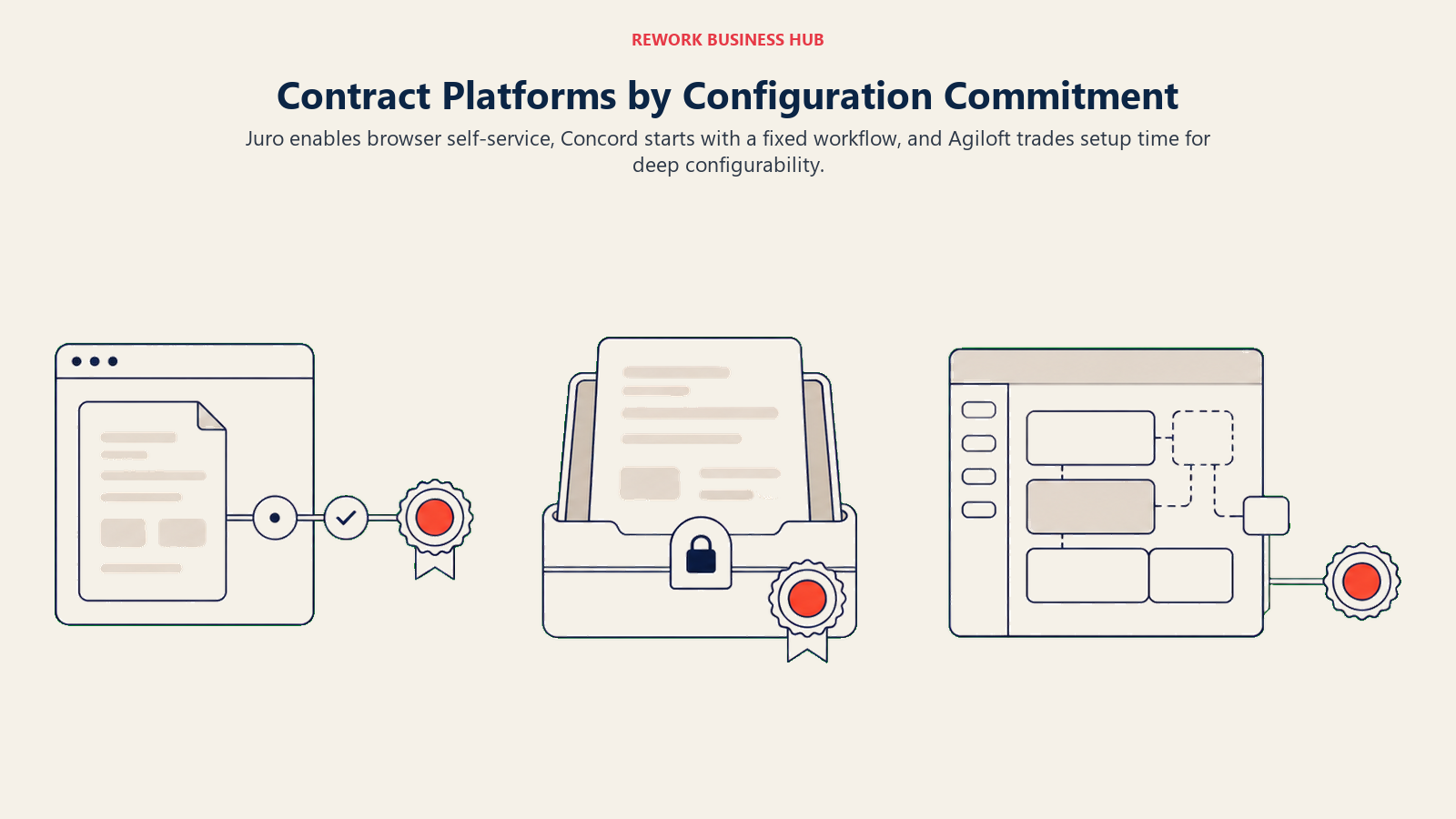
Juro, Concord, and Agiloft sit a full tier below that group, and they solve the same underlying problem in three genuinely different ways. Juro is built so a salesperson, not a lawyer, can draft and send a routine contract without ever opening Word. Concord is the transparent, all-in-one option: published pricing, unlimited e-signatures, and a same-day setup. Agiloft is the outlier: a no-code platform flexible enough to become almost anything, including, eventually, something that rivals enterprise-grade CLM, if you're willing to spend the time configuring it. Feature lists make these three look more alike than they are. The question that actually predicts which one you'll be happy with in a year is simpler: how much configuration work does your team want to own?
TL;DR
| Juro | Concord | Agiloft | |
|---|---|---|---|
| What it actually is | Browser-native CLM built for sales-led, non-lawyer contracting | All-in-one CLM with published pricing and unlimited e-signatures | No-code CLM platform you configure to your own process |
| Built for | Teams wanting business users to self-serve routine contracts | Small teams wanting one transparent, self-serve tool for the whole lifecycle | Teams willing to invest setup time for a system matching their exact workflow |
| Configuration required | Low. Opinionated templates work out of the box | Low to medium. Fixed statuses, more customization on higher tiers | High. Genuinely no-code, but real deployments still take real work |
| E-signature | Native, included in the base price | Unlimited, bundled into every tier | Not native. Integrates with your own DocuSign or Adobe Sign account |
| Pricing model | Quote-only, based on monthly contract volume, unlimited users | Published: $499 to $1,299/month, billed annually | Quote-only, reported from roughly $6,000 to $60,000-plus/year |
| Growth ceiling | Fast, but stays template-first even as you add contract types | Solid up to a point, then fixed statuses and thin reporting become the limit | Can scale into enterprise territory if you keep investing in configuration |
| Best for | Real contract volume (10+/month), no appetite for a build project | A small team or solo legal function wanting one predictable bill | A team with the admin time, or budget for a partner, to build its own model |
What Each Tool Is Actually Built For
Juro: Contracts That Never Leave the Browser
Juro's whole design philosophy is that a contract shouldn't require Word, PDF exports, or a legal degree to create. Drafting, negotiation, and e-signing all happen inside one editable document in the browser, and business teams (sales, HR, procurement) can generate a contract from a legal-approved template without pinging legal for something routine. That matters given how manual this work is by default: human-led contract review takes 92 minutes on average per contract, before negotiation even starts, according to Juro's own research. Its AI Assistant covers three jobs (Draft, Review, Extract), and in April 2026 Juro shipped Operator, a natural-language chat interface for querying contract data across the whole repository, per Artificial Lawyer.
The tradeoff is depth. Redlining stays at document-level accept-or-reject rather than clause-by-clause markup, a real ceiling once a deal needs more than a round or two of real negotiation, and templates that feel flexible at low volume get rigid once contract types multiply past NDAs and standard MSAs. If your actual documents turn out to be simple proposals rather than negotiated paper, Juro vs PandaDoc covers that narrower fork directly.
Concord: The Transparent All-Rounder
Concord's pitch is refreshingly plain: publish the prices, bundle in what most vendors charge extra for, and get out of the way. It's a genuine full-lifecycle tool, not just a repository. Draft inside its browser editor, get a first-pass AI Copilot review, route for approval, sign, and store, all without a sales call to find out what it costs. Concord holds a 4.6 out of 5 rating across 235 Capterra reviews, and reporting depth and workflow customization are the most repeated growth-ceiling complaints once a team scales past its natural size.
Concord's ceiling shows up in specifics: contract statuses are fixed and can't be edited, there's no way to add a custom approval stage, and batch actions like bulk sending sit behind higher tiers. None of that matters at low volume. All of it matters once you're running dozens of contracts a month instead of a handful.
Agiloft: Deep, No-Code, and Built to Be Reshaped
Agiloft has spent nearly three decades building the most configurable CLM on the market, and the analyst record backs it up: a sixth consecutive year as a Gartner Magic Quadrant Leader for CLM in 2025, and the highest possible score across 12 criteria, including configurability, in Forrester's Q1 2025 Wave. A business admin, not a developer, can define custom object types, fields, and approval logic that don't map to any template Agiloft shipped, which is why it turns up running procurement, HR, and sales contract workflows inside the same instance, not just legal's.
The honest tradeoff: no-code doesn't mean no-effort. A genuinely custom data model and multi-department approval logic is real configuration work, and most serious Agiloft deployments lean on Agiloft's own professional services or a certified partner to build well. In 2026 Agiloft lowered the barrier to trying it with Astra, a free AI-assisted contract review tier open to any legal, procurement, finance, or sales professional with no waitlist and, per Agiloft's own general availability announcement, an average time to first value of five minutes. If a Salesforce-native alternative to that configurability is on your shortlist too, Agiloft vs Conga CLM covers that specific fork.
| Capability | Juro | Concord | Agiloft |
|---|---|---|---|
| Contract drafting from templates | Yes, unlimited templates on every plan | Yes, browser-based editor | Yes, fully custom templates and clause library |
| Redlining depth | Document-level accept/reject | AI Copilot-assisted first-pass review, standard commenting | Word-based redlining via Astra, plus configurable review stages |
| Custom data model / object types | No, template-first | No, fixed contract statuses | Yes, genuinely open, no-code |
| Native e-signature | Yes | Yes, unlimited on every plan | No, requires a DocuSign or Adobe Sign integration |
| Free tier | No | No | Yes, Astra AI review (unlimited users, uncapped Word add-in) |
| Natural-language contract chat | Yes, Operator (launched April 2026) | No | No, but Prompt Lab lets you bring your own LLM |
| Ideal contract volume | Roughly 10+ contracts/month | Low to moderate, scales with team size rather than volume | Any volume, once configured; low value below real usage |
Key Facts
- Poor contract management costs the average organization 9.2% of annual revenue through missed deadlines, unfavorable renewals, and overlooked terms. (World Commerce & Contracting)
- 71% of organizations can't locate at least 10% of their own active contracts. (Procurement Tactics)
- The global CLM software market is valued at $3.39 billion in 2026 and is projected to reach $6.26 billion by 2031, a 13.06% compound annual growth rate. (Mordor Intelligence)
- Nearly half of legal teams (49%) still manage contracts through email, Word documents, and shared folders; automating the process cuts average cycle time from 19 days to 3. (SpotDraft's 2025 Contract Efficiency Benchmarking Survey, per Businesswire)
- Concord holds a 4.6 out of 5 rating across 235 Capterra reviews, a genuinely strong score at the SMB and lower mid-market scale it's built for.
The Real Decision: How Much Configuration Do You Want to Own
Feature checklists make these three look more alike than they are. The variable that actually predicts whether you'll be happy with your pick in a year is how much setup work you want, or are willing to pay someone else, to do.
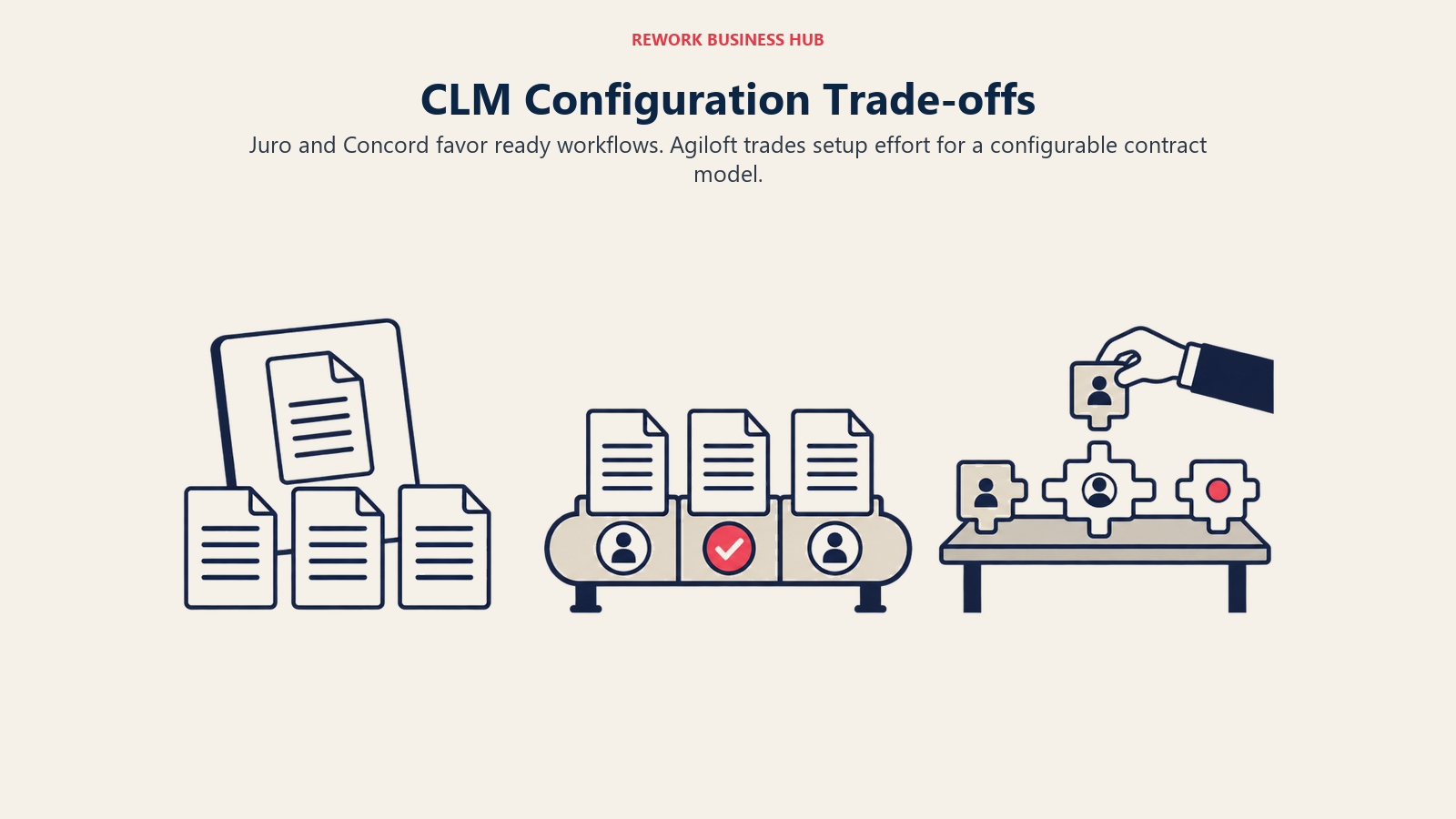
Juro rewards a team that wants zero build project. Its templates and workflow are opinionated by design: pick a template, fill in the smart fields, route it for approval, send it. That's the entire appeal for a sales-led org that wants routine contracting off legal's plate without hiring anyone to run a configuration project. The cost of that speed shows up later, once your contract types multiply (procurement paper, vendor MSAs with unusual terms, a partnership agreement that doesn't fit the mold), and you're working around Juro's template model rather than reshaping it.
Concord sits closer to Juro's end of the spectrum than Agiloft's. You get a working contract lifecycle tool on day one: no implementation project, no professional services engagement, just a signup and a browser tab. What you don't get is the ability to reshape it. Contract statuses are fixed. You can't add a stage to your approval chain. If your process is genuinely non-standard, you're adapting your process to Concord, not the other way around.
Agiloft asks for real investment and pays it back with real flexibility. You're not picking a template, you're defining what a "contract" even looks like in your system: which fields exist, which statuses a deal moves through, who approves what, and how procurement's process differs from legal's inside the same platform. Reported implementation timelines run 8 to 12 weeks for a simple, standard deployment, stretching to 6 months or longer for anything with real customization, with implementation services fees reported between $5,000 and $75,000 depending on complexity (reported, Hyperstart). Astra's free tier lowers the cost of trying Agiloft's AI specifically, but it doesn't remove the configuration work behind the full platform.
| Juro | Concord | Agiloft | |
|---|---|---|---|
| Setup model | Pick a template, go live in days to weeks | Sign up and start sending contracts the same day | Define your own data model and workflow from scratch |
| Time to first contract | Days | Same day | Weeks, once configuration begins |
| Who owns configuration | Nobody, templates are pre-built | You, working inside fixed statuses | You, usually paired with Agiloft's services or a partner |
| Add a custom approval stage | Not supported | Not supported | Core feature |
| Reshape the data model for an unusual contract type | Work around it | Work around it | Build it in |
| What you trade for the ease | A ceiling once contract types multiply | The same ceiling, at a lower entry price | Weeks of setup time and, often, a services budget |
AI Depth Across the Three
| AI capability | Juro | Concord | Agiloft |
|---|---|---|---|
| Drafting from a prompt | Yes (AI Draft) | Limited, template-based only | Yes, via Prompt Lab and your own connected LLM |
| Redlining or review against guardrails | Yes (AI Review) | Yes, AI Copilot first-pass review | Yes, via Astra inside Microsoft Word |
| Data extraction from existing contracts | Yes (AI Extract) | Basic term extraction | Yes, a core Astra capability |
| Natural-language chat over the archive | Yes, Operator | No | No |
| Free to try before buying | No | No | Yes, Astra's review tier |
| Choice of underlying model | Not published | Not published | Yes, bring your own LLM via Prompt Lab |
Decision by Business Goal
| Business goal | Best fit | Why |
|---|---|---|
| Get non-lawyers self-serving routine contracts fast, without a build project | Juro | Opinionated templates and smart fields are built for exactly this, no admin required |
| Keep one predictable bill and never pay extra for e-signature | Concord | Published pricing, unlimited e-signatures on every plan, no per-envelope fee |
| Build a contract process that matches how your specific team actually works | Agiloft | No-code data model reshapes around your process instead of the reverse |
| Try contract AI before committing budget to a full CLM | Agiloft (Astra) | Free tier, unlimited users, no waitlist, credit-based only for deeper analysis |
| Cut the number of vendor relationships and invoices you manage | Concord | Unlimited e-signature bundled removes a separate DocuSign or Adobe Sign line item |
| Support procurement, HR, and sales contracts on one platform, not just legal's | Agiloft | Genuinely department-agnostic data model, common across all three functions in one instance |
| Get contracts live for a sales team this quarter, not next | Juro or Concord | Both are self-serve or fast to implement; Agiloft's configuration work takes longer |
| Query your contract archive in plain language | Juro | Operator (launched April 2026) is a natural-language chat layer over your contract data |
Team and Role Fit
Each tool assumes a different owner, and getting that wrong is the most common reason a rollout stalls. Juro's natural champion is a head of legal or a commercial ops lead at a company with real contract flow: Juro's own pricing page frames roughly 10 or more contracts a month as the volume where a dedicated CLM starts paying for itself. Concord's buyer skews earlier: a founder, ops manager, or the one person wearing the "legal" hat alongside three other jobs, who wants a tool that works without becoming a project. Agiloft's buyer looks different again: a general counsel or legal ops lead (or, just as often, a procurement or IT lead) with the mandate, and the budget, to own a real configuration build.
| Juro | Concord | Agiloft | |
|---|---|---|---|
| Team size sweet spot | 20-500 employees | 20-500 employees, skewing toward the smaller end | 50-2,000+, can scale into enterprise with continued investment |
| Primary champion | Head of Legal, Commercial Ops Lead | Founder, Operations Manager | General Counsel, Legal Ops Lead, or IT/Procurement |
| Dedicated legal function assumed | Helpful, not required | Not required, often the actual selling point | Eventually, for a full deployment |
| Contract volume that justifies it | Roughly 10+ contracts/month, per Juro's own pricing framing | Any volume; priced by user, not volume | Justifies itself once configuration work is worth the payoff |
| Who else uses it inside the company | Sales, HR, and procurement self-serve within legal's guardrails | Whoever's on the team; simple enough for non-specialists | Legal, procurement, HR, and sales, often in the same instance |
Pricing at Real Team Sizes
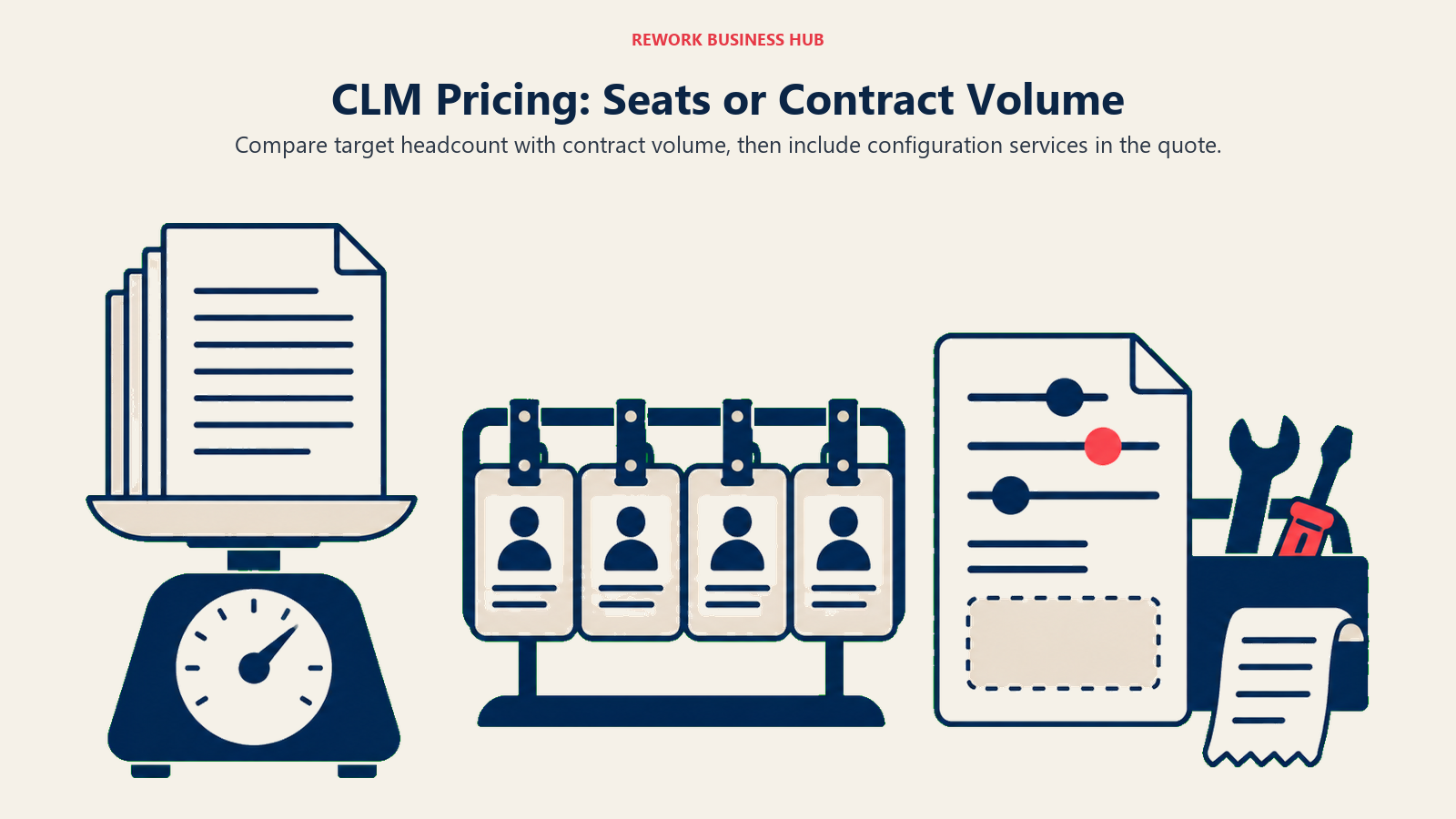
Concord is the only one of the three that publishes prices, so it's the only one you can model exactly before a sales call. Juro and Agiloft are both quote-only. Here's what's actually known, with every reported figure labeled as such.
Concord: What You'd Actually Pay
| Plan | Monthly (billed annually) | Users included | Additional user | What you get |
|---|---|---|---|---|
| Essentials | $499/month | 5 | $49/month | Core drafting, negotiation, unlimited e-signature |
| Business | $899/month | 5 | $69/month | Adds customizable reporting and deeper workflow |
| Enterprise | $1,299/month | 5 | $89/month | Adds open API access, volume discounts available |
Source: Concord's own pricing page.
True Annual Cost at 10, 25, and 100 Users
| Team size | Concord (Essentials, annual) | Juro (reported, annual) | Agiloft (reported, annual) |
|---|---|---|---|
| 10 users | $499 x 12 + (5 x $49 x 12) = $8,928 | Not seat-priced; volume-based quote, reported from roughly $15,000 | Reported Essentials tier, roughly $6,000 to $15,000, user mix dependent |
| 25 users | $499 x 12 + (20 x $49 x 12) = $17,748 | Not seat-priced; reported range still $15,000 to $60,000-plus, driven by volume, not headcount | Reported Advanced tier, roughly $30,000 |
| 100 users | $499 x 12 + (95 x $49 x 12) = $61,848, though Business or Enterprise is realistically needed at this scale | Not seat-priced; reported range unchanged unless contract volume grows alongside headcount | Reported Premium tier, $60,000-plus, split across power, licensed, and lower-cost portal users |
Reported ranges from Bind Legal's Juro pricing analysis and Hyperstart's Agiloft pricing analysis, not vendor-confirmed figures.
Run the math and a real pattern shows up. Concord's per-seat pricing looks unbeatable at 10 users and still solid at 25, but by 100 users its Essentials-tier math ($61,848 a year, and you'd realistically want Business or Enterprise's reporting and API access at that headcount anyway) lands in the same neighborhood as Agiloft's reported top tier, without Agiloft's configurability to show for it. If you're a 10-person team, Concord's per-seat model is a clear win. If you're heading toward 100 people fast, get a Concord quote at your target headcount before assuming it stays the cheap option, and weigh whether Juro's volume-based model (which doesn't charge more as you add users) or Agiloft's deeper configuration ends up being the better trade at that size.
E-Signature Economics: The Hidden Line Item
Paying for a signature tool separately from your CLM is one of the most common costs buyers miss when they compare sticker prices, and it's where these three diverge the most. For the fuller buying framework beyond these three vendors, see how to choose e-signature software.
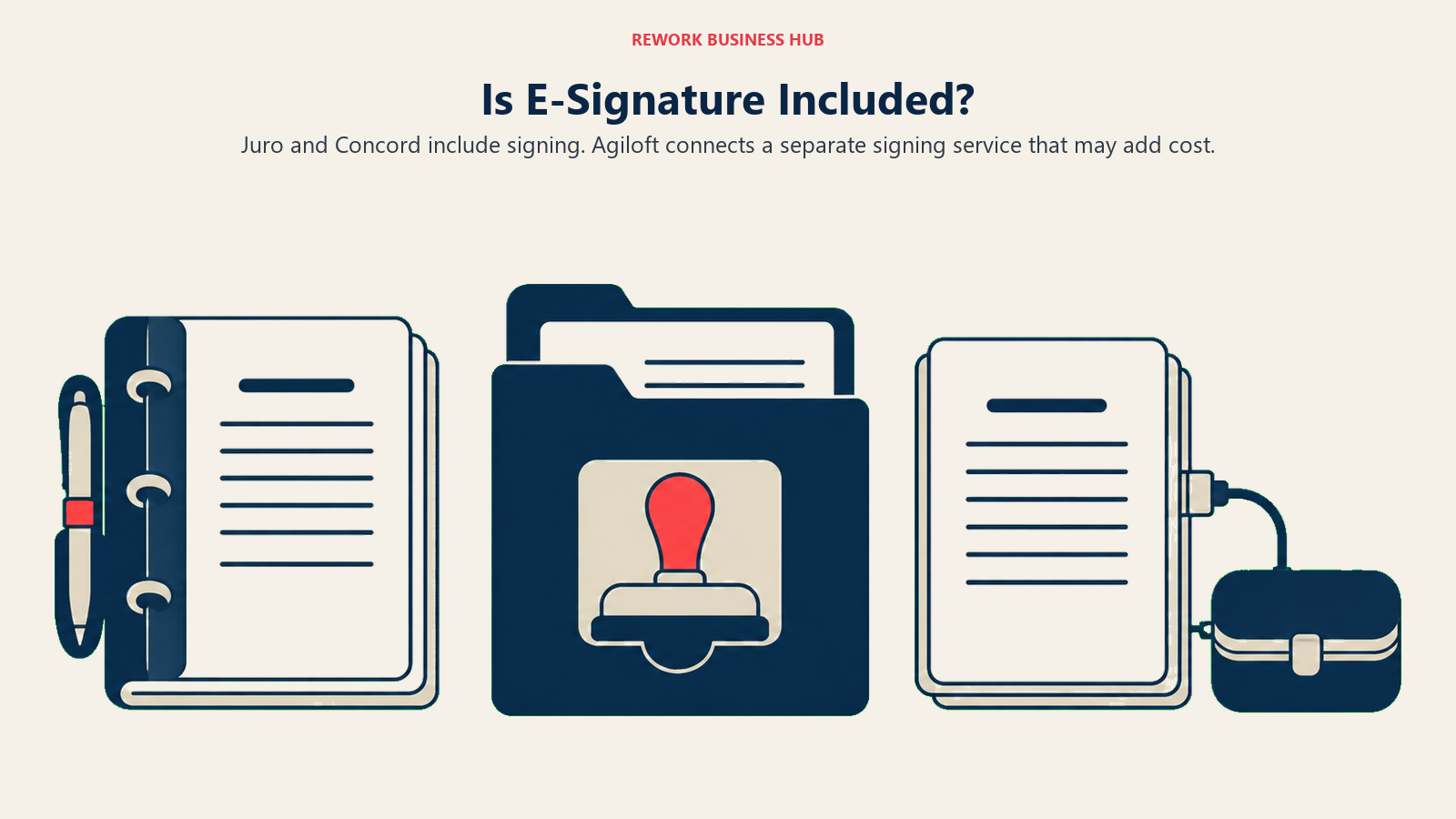
Concord bundles unlimited e-signatures into every tier, including Essentials at $499 a month. That's not a small thing. A standalone e-signature tool commonly runs $10 to $40 per user per month on its own, and Concord's own pricing page treats signing as a solved problem rather than an upsell.
Juro's e-signature is native and included in its base contract-volume price. Its Advanced Electronic Signature (AdES) is compliant with eIDAS in Europe and the ESIGN Act and UETA in the US, cryptographically bound to the document via a certificate from HARICA, a qualified trust service provider. You're not buying a separate signing tool, and Juro's own pricing FAQ only calls out deeper CRM integrations (Salesforce, HubSpot, Workday) as costing extra, not signature itself.
Agiloft doesn't have native e-signature at all. It integrates with your own DocuSign or Adobe Sign account instead, connected via JWT authentication so existing DocuSign users don't need a second login. That's a real, working integration, and if your company already pays for DocuSign, it's not a new cost. But if you don't, budget for a separate e-signature subscription on top of whatever Agiloft's CLM license costs, since that line item isn't included the way it is with Concord or Juro.
| Juro | Concord | Agiloft | |
|---|---|---|---|
| E-signature | Native, built into the platform | Native, unlimited on every tier | Not native, integrates with DocuSign or Adobe Sign |
| Extra cost if you don't already own a signature tool | None | None | Yes, a separate DocuSign or Adobe Sign subscription |
| Compliance standard | AdES, eIDAS/ESIGN/UETA, HARICA-certified | Legally binding e-signature, standard audit trail | Whatever your connected DocuSign or Adobe Sign account provides |
| Signature volume limits | Not published, tied to the contract-volume plan | Unlimited on every plan | Governed by your separate e-signature subscription |
Implementation and Change Management
Time to first signed contract tells you more about real adoption risk than any feature list. Juro and Concord both get a team live fast; Agiloft asks you to trade that speed for a system built around your actual process.
Concord is closest to zero implementation: sign up, use a template, send a document. There's no professional services engagement standing between you and a first sent contract. Juro's basic setup (templates, a first workflow) also runs days to a few weeks, though a full rollout, defining clause guardrails, building playbooks, wiring a Salesforce integration, is more realistically a one-to-three-month project with someone in legal or ops owning it.
Agiloft is the outlier here too. Reported implementation timelines run 8 to 12 weeks for a simple, standard deployment and 6 months or longer for anything with real cross-department customization, with implementation services fees reported between $5,000 and $75,000 depending on complexity (reported, Hyperstart). That's not really a criticism, it's the direct cost of the configurability the platform is built around. Astra's free tier is a genuine way to get value (AI-assisted review and redlining in Word) inside minutes while you decide whether the full platform's build is worth it.
| Juro | Concord | Agiloft | |
|---|---|---|---|
| Basic setup | Days to a few weeks | Same day | Configuration begins immediately, first live workflow in weeks |
| Full rollout | 1 to 3 months (guardrails, integrations, adoption) | Effectively immediate, no formal implementation phase | 8 to 12 weeks simple, 6 months or longer at real customization depth |
| Dedicated internal owner needed | Yes, typically legal or commercial ops | Helpful, not required | Yes, typically a dedicated admin or partner relationship |
| Reported implementation fee | Not separately published, bundled into the contract-volume quote | None | $5,000 to $75,000 (reported, Hyperstart) |
| Fastest way to get value before committing | Request a quote and pilot with a real contract type | Sign up and send your next contract today | Astra's free AI review tier, live in about five minutes |
Risk and Governance
Two governance questions matter more than most feature comparisons for a team this size: what happens to your executed contracts if the tool doesn't work out, and how much you can trust the platform's own compliance claims without a legal team to audit them.
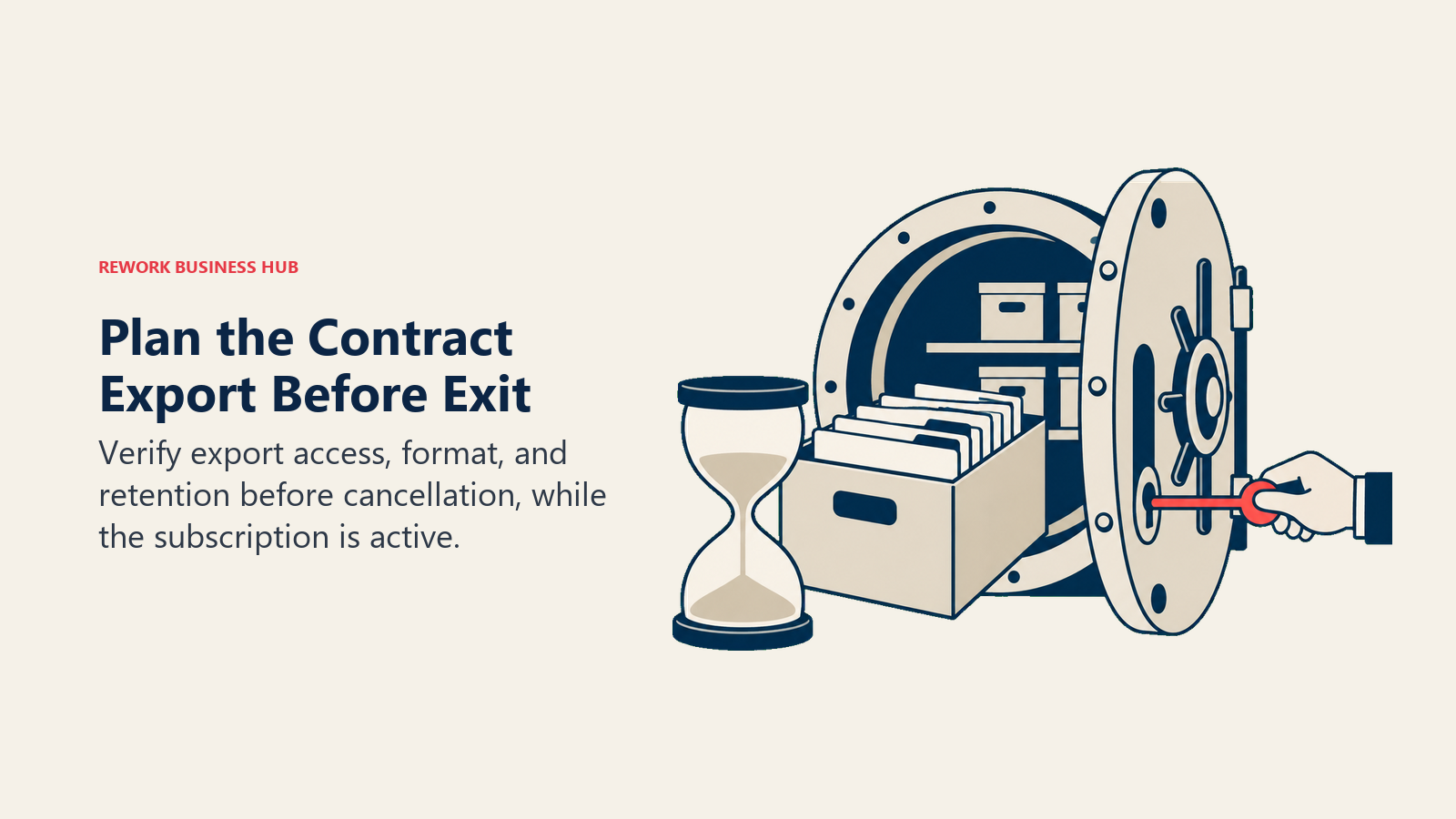
Concord is the most explicit of the three about what happens on exit, and it's worth reading carefully. Per Concord's own help center, once your subscription ends, your data is retained for 90 days and then permanently deleted, with no free long-term storage option. Concord's own guidance is to export your documents, summary sheets, and contract lists before your term concludes, not after.
Juro's export is self-serve but gated. Org admins can bulk-export the full repository (all contracts, fully signed only, non-signed, templates, or uploaded documents) as PDFs inside a password-protected zip file. The catch: the export function is disabled by default as a security precaution and has to be enabled through a support request, and once enabled, access stays open for five days before it needs re-enabling. That's a reasonable security tradeoff, but "exporting everything" isn't a one-click action the day you decide to leave; plan for a support ticket and a short window, not an instant download. Juro's EU Data Act Addendum also references formal data-portability terms at contract termination for customers who need that on record.
Agiloft doesn't publish a plain-language answer to this question at all. There's no public cancellation or data-retention policy comparable to Concord's 90-day statement. In practice, Agiloft's fully configurable, database-style architecture means most customers can build their own export via saved reports or the platform's open API while their subscription is active, which is a real capability, just not one spelled out anywhere you can point to before you sign. Get this in writing during the sales process rather than assuming it works like the other two.
| Juro | Concord | Agiloft | |
|---|---|---|---|
| Post-cancellation retention | Not publicly stated; formal data-portability terms exist under its EU Data Act Addendum | 90 days, then permanently deleted | Not publicly documented |
| Self-serve export while active | Yes, admin-triggered bulk export (PDF, zipped) | Yes, standard export tools | Yes, via reports and the open API, though it takes configuration know-how |
| Export gated or instant | Gated: off by default, needs a support request to enable, 5-day access window | Instant, available any time before cancellation | Depends on what you built; not a one-click default |
| E-signature legal standard | AdES, eIDAS/ESIGN/UETA compliant, HARICA-certified | Legally binding, standard audit trail | Whatever your connected DocuSign or Adobe Sign account provides |
When Each Is the Right Call
When Juro Is the Right Call
- You're signing roughly 10 or more contracts a month and want non-lawyers self-serving routine agreements inside legal-defined guardrails
- You want contracts to never leave the browser, no Word exports and no PDF round-trips, for either side of the negotiation
- E-signature needs to be included at no extra cost, without a separate vendor relationship for it
- You'd rather pay based on contract volume than watch a per-seat bill climb as more of the company gets access
- A natural-language way to query your contract archive (Operator) matters more than deep clause-level redlining
For more of this segment, see Best Juro Alternatives.
When Concord Is the Right Call
- You want to see the exact price before you ever talk to a salesperson
- Your team is small enough that fixed contract statuses and a simpler workflow aren't a real limitation yet
- Unlimited e-signature bundled into the price is worth more to you than deep AI or custom reporting
- You want to send your first contract today, not after a sales cycle and an implementation project
- You have no dedicated legal function, and the person managing contracts also owns three other jobs
For more of this segment, see Best Concord Alternatives.
When Agiloft Is the Right Call
- Your contract process is genuinely non-standard, and no vendor's template is going to fit it without genuine reconfiguration
- You're managing contracts across legal, procurement, HR, and sales, and want one configurable platform instead of separate tools per department
- You have the budget, or the internal admin time, to own a real configuration build, alone or with a partner
- Obligation tracking and governance depth matter enough that you're willing to trade setup speed for a system built to your exact spec
- You want room to grow into enterprise-grade contract management without re-platforming later, and you're willing to invest now to get there
For more of this segment, see Best Agiloft Alternatives.
If Contracts Are Really a Sales Problem, Not a Legal One
Worth naming plainly: all three of these tools assume your contract problem is a legal-adjacent one, drafting, negotiating, signing, and storing an agreement as its own workflow. For a team with no dedicated legal function, that's not always the accurate frame. If what actually happens is that a signed contract gets forwarded to a salesperson's inbox, half-copied into a CRM note, and never looked at again until renewal, the gap isn't clause libraries or configurability. It's that the contract and the deal that produced it live in two systems that don't talk to each other.
Rework's Contract module keeps agreements, renewals, and approvals on the same record as the customer, the deal, and the account, alongside its CRM/Sales, Lead Management, and Work Ops apps. It's a narrower tool than any of the three above on clause-level negotiation or configurable data modeling, and it isn't trying to replace them if your contract volume or complexity genuinely needs a dedicated CLM. But if the actual friction is a signed agreement sitting apart from the deal record nobody thinks to check, it's worth a look before you buy a standalone tool for a problem that isn't really standalone. Rework's Contract module isn't publicly priced; it's quoted per organization, see rework.com/pricing for current details.
Decision Framework
| If you are... | Pick |
|---|---|
| A sales-led team with real contract volume, wanting non-lawyers to self-serve | Juro |
| Wanting exact, published pricing and unlimited e-signature bundled in | Concord |
| Willing to invest setup time for a contract process built around your exact workflow | Agiloft |
| Running contracts across legal, procurement, HR, and sales on one configurable platform | Agiloft |
| A very small team or solo legal function wanting the simplest possible tool | Concord |
| Wanting to trial contract AI for free before committing to a platform | Agiloft (Astra) |
| Looking for contracts on the same record as the CRM deal, not a standalone CLM | Rework (see rework.com/pricing) |
| Comparing more of the category before narrowing down | See our full contract management software roundup |
The verdict: there's no universal winner here, only a better match for how much configuration work you want to own. If you want zero build project and already have real contract volume, Juro's browser-native speed is hard to beat. If you want the exact price before a sales call and unlimited e-signature without a second vendor, Concord is the honest, transparent choice, right up until your team outgrows its fixed workflow. If you're willing to spend real setup time, and likely a partner relationship, to get a contract system built around your own process, Agiloft's ceiling is the highest of the three, and it's the only one that can credibly grow with you into enterprise territory.
What to Do Next
- Count your actual monthly contract volume before you talk to anyone. Under 10 a month with routine, low-negotiation paper points toward Concord's simplicity; above that, with non-lawyers needing to self-serve, Juro's model starts making more sense.
- Ask each vendor for a quote at your real headcount and volume, not a hypothetical. Concord's math is public, run it yourself. Juro and Agiloft aren't, so get the number in writing before you compare.
- If e-signature is currently a separate line item in your budget, weigh that cost against Concord's bundled or Juro's native signing before assuming Agiloft's lower reported entry price is actually cheaper once you add DocuSign or Adobe Sign.
- Ask directly what happens to your contract archive if you cancel, especially with Agiloft, where that policy isn't published anywhere you can read before signing.
- Run a real contract through a trial or sandbox on your top pick, not a vendor's clean demo data, before you sign. That's where template rigidity, fixed statuses, or configuration overhead actually show up.
- Still comparing the category? Run whichever pick survives this framework through a broader SaaS vendor evaluation scorecard before signing. Best Juro Alternatives, Best Concord Alternatives, and Best Agiloft Alternatives each go deeper on their respective tool, and the Best Contract Management Software in 2026 roundup covers the wider field, including the enterprise tier this comparison deliberately sits below.
Related Resources:

Principal Product Marketing Strategist
On this page
- TL;DR
- What Each Tool Is Actually Built For
- Juro: Contracts That Never Leave the Browser
- Concord: The Transparent All-Rounder
- Agiloft: Deep, No-Code, and Built to Be Reshaped
- Key Facts
- The Real Decision: How Much Configuration Do You Want to Own
- AI Depth Across the Three
- Decision by Business Goal
- Team and Role Fit
- Pricing at Real Team Sizes
- Concord: What You'd Actually Pay
- True Annual Cost at 10, 25, and 100 Users
- E-Signature Economics: The Hidden Line Item
- Implementation and Change Management
- Risk and Governance
- When Each Is the Right Call
- When Juro Is the Right Call
- When Concord Is the Right Call
- When Agiloft Is the Right Call
- If Contracts Are Really a Sales Problem, Not a Legal One
- Decision Framework
- What to Do Next