Best CrewAI Alternatives in 2026: 12 Agent Frameworks Compared
Turn this article into takeaways for your work.


Each assistant summarizes the article only for you and suggests best practices for your work.
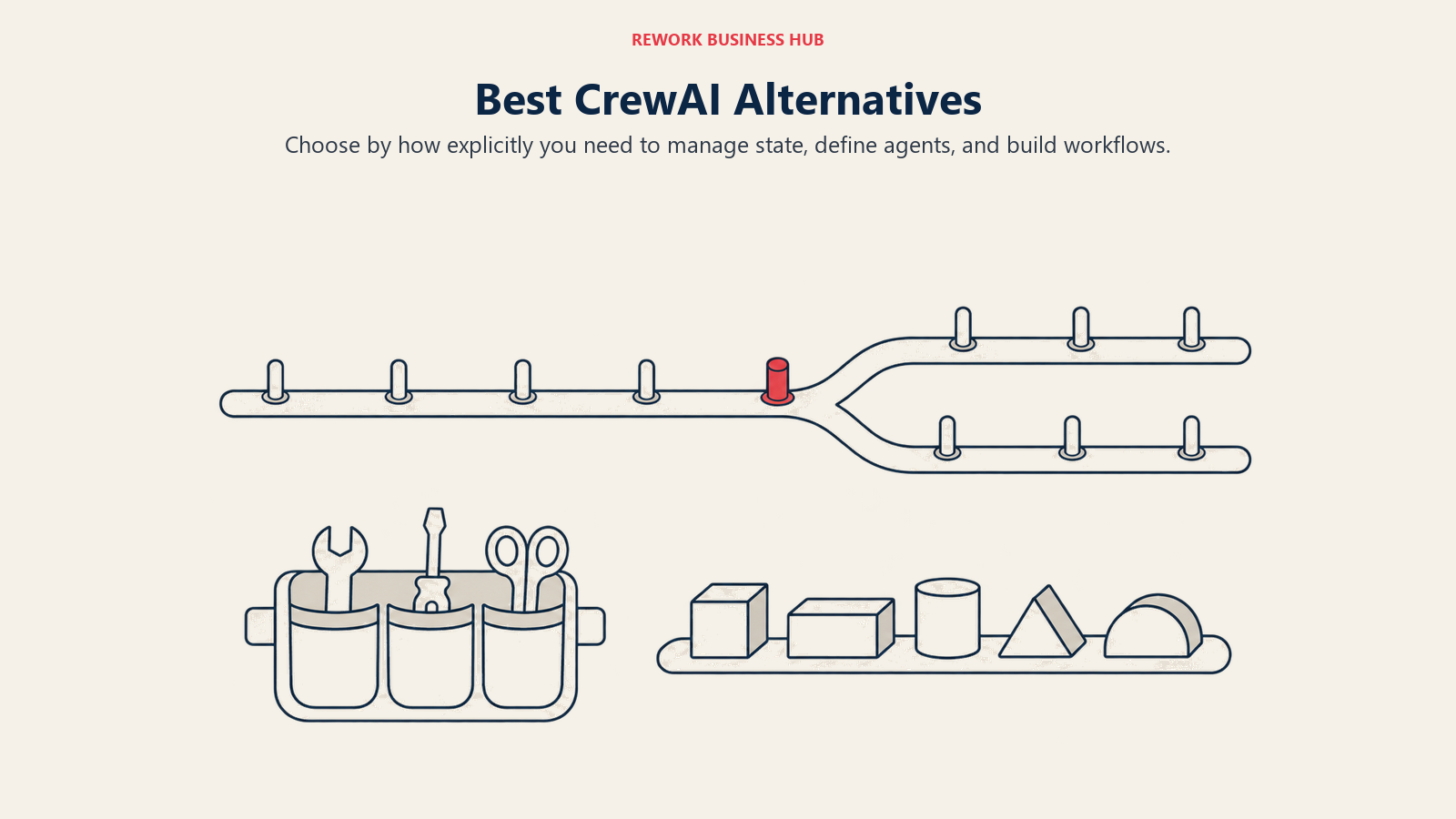
If you want more control over agent state than CrewAI's crews give you, start with LangGraph. For a lighter Python or TypeScript build, look at the OpenAI Agents SDK or Pydantic AI. For a .NET or enterprise Microsoft stack, Microsoft Agent Framework is the answer, and for TypeScript-only teams it's Mastra. This list covers 12 options, judged on published license, language, GitHub activity and the pricing each vendor puts on its own page.
CrewAI is a good framework with a clear idea: you describe agents as roles, give them tasks, and let them hand work to each other. People leave for ordinary reasons. They want graph-level control over execution, a language other than Python, a vendor with a bigger balance sheet behind it, or no framework at all. For the wider landscape, see our roundups of multi-agent frameworks and AI agent frameworks for developers.
Key Facts
- CrewAI's GitHub repository shows 60.4k stars, 9.0k forks and an MIT license, so licensing isn't a reason to leave.
- CrewAI's pricing page lists two plans: a free plan with 50 workflow executions a month and 2 automations, and a custom-priced Enterprise plan.
- Microsoft Agent Framework reached version 1.0 on April 3, 2026 for .NET and Python, combining Semantic Kernel's foundations with AutoGen's orchestration.
- Microsoft's AutoGen README says the project is archived and that Microsoft is not providing bug fixes, security fixes, new features or support.
- LangGraph (44.3k stars) describes itself as a low-level orchestration framework for stateful agents, the opposite end of the abstraction spectrum from CrewAI's role-based crews.
Quick Comparison Table
| Framework | Best For | Language | License | Core Framework Cost |
|---|---|---|---|---|
| LangGraph | Explicit control over agent state and flow | Python | MIT | Free |
| OpenAI Agents SDK | Lightweight multi-agent workflows | Python | MIT | Free |
| Microsoft Agent Framework | .NET and Python enterprise agents | .NET, Python | MIT | Free |
| Google ADK | Code-first Python agents, evaluation and deployment | Python | Apache 2.0 | Free |
| Pydantic AI | Typed agents in Python | Python | MIT | Free |
| Mastra | TypeScript-native agents and workflows | TypeScript | Apache 2.0 (ee/ code separately licensed) | Free (Mastra Platform paid) |
| Agno | Fast Python agent builds | Python | Apache 2.0 | Free |
| Strands Agents | Model-agnostic agents with Bedrock support | Python, TypeScript | Apache 2.0 | Free |
| LlamaIndex | Document-centric agent workflows | Python | MIT | Free |
| AG2 | Community continuation of AutoGen | Python | Apache 2.0 | Free |
| smolagents | Minimal agents that write code | Python | Apache 2.0 | Free |
| n8n | Visual workflows with AI steps | Node (visual builder) | Sustainable Use License | Free self-hosted, cloud from 20 EUR/mo |
Where CrewAI Stands Today
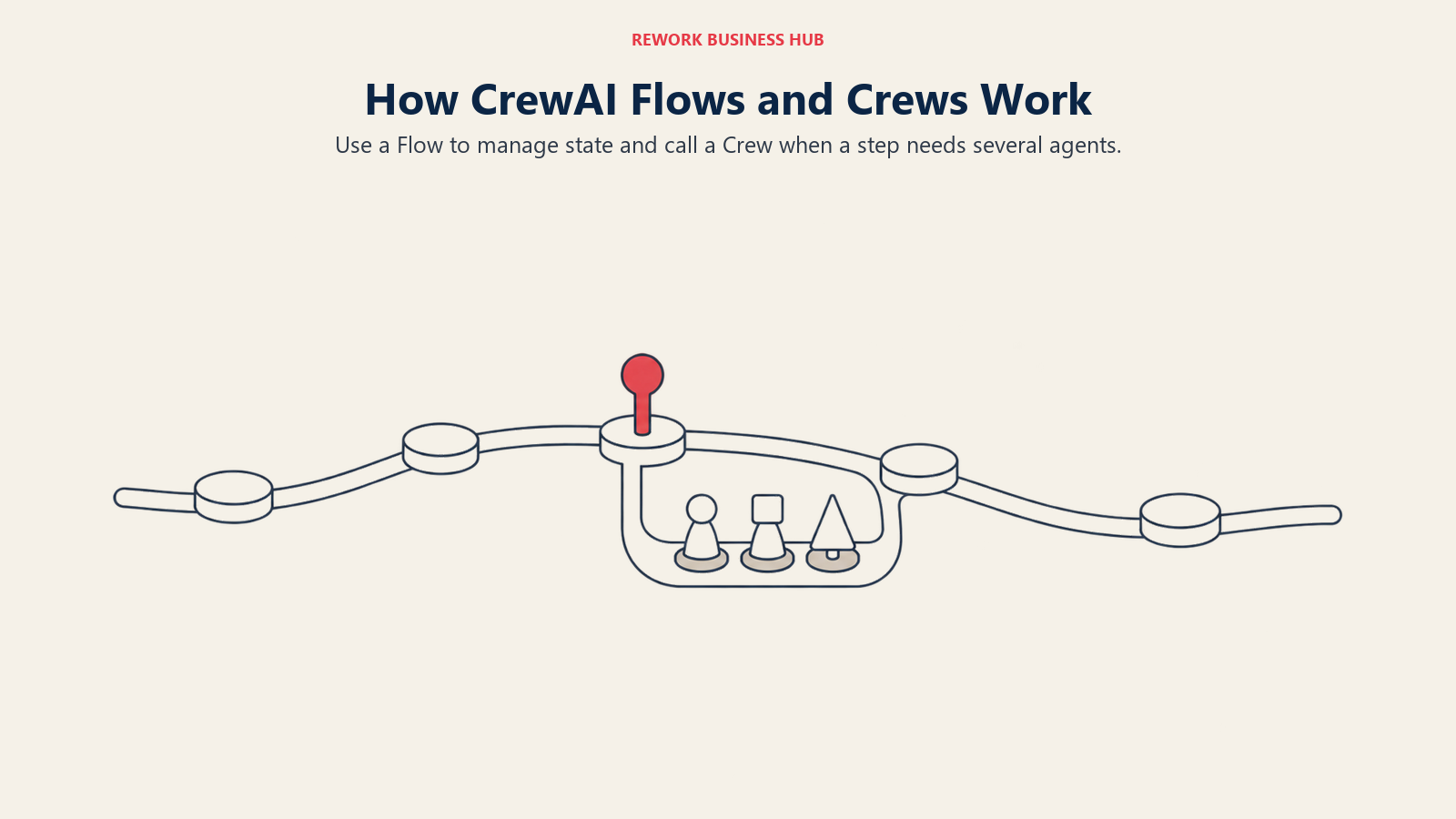
CrewAI's own documentation frames the product around two ideas. Flows are the backbone of an application, defining steps, state and control flow. Crews are teams of autonomous agents, each with a role, a goal and tools, that a Flow delegates complex tasks to. The docs recommend starting with a Flow for production apps and using Crews inside Flow steps where a team of agents helps.
The commercial side is narrower than most roundups assume. The pricing page shows a free plan with 50 workflow executions a month and 2 automations, and an Enterprise plan with custom pricing. Enterprise adds SSO (Microsoft Entra, Okta), role-based access control, PII redaction, policies, and a choice of CrewAI cloud, dedicated VPC or your own infrastructure. The page doesn't state a billing term or per-seat price for either plan.
| CrewAI Plan | Price | Included | Notes |
|---|---|---|---|
| Free (Basic) | Free | 50 workflow executions/month, 2 automations | Studio editor, GitHub integration, tracing, community support |
| Enterprise | Custom | Executions sized to workflow | SSO, RBAC, PII redaction, 45-day onboarding, dedicated support |
If your team needs to run production crews and hits the 50-execution cap, you're in an Enterprise sales conversation, not a self-serve upgrade. That's a real reason to price out the open-source route or a competitor. Our step-by-step CrewAI build tutorial shows what the framework looks like in practice.
Language and Licensing, Side by Side
| Framework | Primary Language | License | Stars (GitHub) |
|---|---|---|---|
| CrewAI (baseline) | Python | MIT | 60.4k |
| LangGraph | Python | MIT | 44.3k |
| OpenAI Agents SDK | Python | MIT | 30.5k |
| Microsoft Agent Framework | .NET, Python | MIT | 14.5k |
| Google ADK | Python | Apache 2.0 | 22.1k |
| Pydantic AI | Python | MIT | 21.0k |
| Mastra | TypeScript | Apache 2.0 plus enterprise license for ee/ code | 29.3k |
| Agno | Python | Apache 2.0 | 43.0k |
| Strands Agents | Python | Apache 2.0 | 9.0k |
| LlamaIndex | Python | MIT | 52.8k |
| AG2 | Python | Apache 2.0 | 5.0k |
| smolagents | Python | Apache 2.0 | 30.2k |
| n8n | TypeScript/Node | Sustainable Use License | 209.4k |
Stars track age and marketing reach more than fit, so treat them as a rough maintenance signal. The one license difference worth reading twice is n8n's: its repository describes it as fair-code under the Sustainable Use License plus an Enterprise License, which isn't the same as MIT or Apache for commercial redistribution. Mastra's repository is Apache 2.0 for the core, with code in ee/ directories under a Mastra Enterprise License that needs a valid license for production use.
Maintenance and Activity
| Framework | Commits on main | What to Know |
|---|---|---|
| CrewAI | 3,125 | Active, funded by the commercial platform |
| LangGraph | 7,264 | Active, sits in the LangChain ecosystem |
| OpenAI Agents SDK | 2,548 | Active, vendor-maintained |
| Microsoft Agent Framework | 3,792 | 1.0 since April 2026 |
| Google ADK | 5,114 | Active, vendor-maintained |
| Pydantic AI | 5,146 | Active |
| Mastra | 22,553 | Very active, funded team |
| Agno | 6,323 | Active |
| Strands Agents | 3,192 | Active |
| LlamaIndex | 7,962 | Active, now positioned as a document processing platform |
| AG2 | 5,665 | Active, independent fork of AutoGen |
| smolagents | 1,059 | Smaller, Hugging Face maintained |
| AutoGen (Microsoft) | n/a | Archived, successor is Microsoft Agent Framework |
1. LangGraph: Explicit Control Over State and Flow
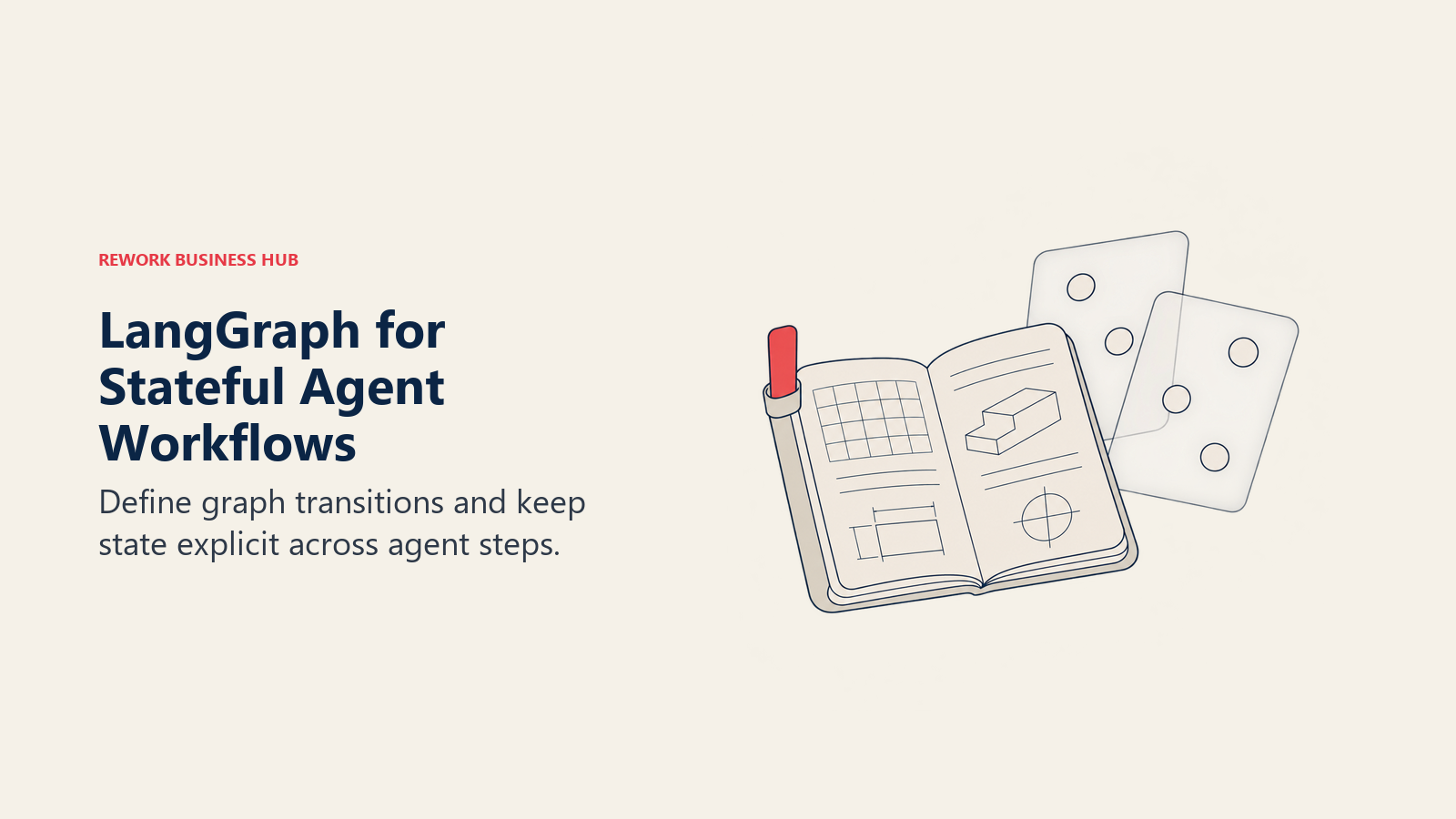
LangGraph is the usual first stop for teams that outgrow CrewAI's role metaphor. Its repository calls it a low-level orchestration framework for stateful agents. You define nodes and edges, decide exactly when control passes between them, and keep state explicit. That's more code than a crew definition, and it's also why debugging is easier when an agent loops or stalls.
The paid layer is LangSmith, not LangGraph. LangChain's pricing page lists Developer at $0 per seat per month with 5,000 base traces, Plus at $39 per seat per month with 10,000 base traces, and a custom annual Enterprise plan. Our LangGraph build guide walks through a first graph.
| LangGraph | |
|---|---|
| Best for | Teams that want to see and control every state transition |
| Not ideal for | Quick prototypes where role-based delegation is enough |
| License | MIT |
| Watch for | More boilerplate than CrewAI; observability costs live in LangSmith |
2. OpenAI Agents SDK: Lightweight Multi-Agent Workflows
The OpenAI Agents SDK describes itself as a lightweight, powerful framework for multi-agent workflows. It has fewer concepts to learn than CrewAI, and it's MIT-licensed with about 30.5k stars. The framework itself is free; your cost is model calls. Our OpenAI agents guide covers the migration from the older Assistants API.
| OpenAI Agents SDK | |
|---|---|
| Best for | Teams already on OpenAI models who want minimal abstraction |
| Not ideal for | Teams that want a hosted control plane and visual editor |
| License | MIT |
| Watch for | You assemble your own deployment and monitoring |
3. Microsoft Agent Framework: The Enterprise Successor
Microsoft's 1.0 announcement dated April 3, 2026 says the framework unifies Semantic Kernel's enterprise-ready foundations with AutoGen's orchestrations in one open-source SDK for .NET and Python. Its repository is MIT-licensed and describes support for building, orchestrating and deploying agents and multi-agent workflows.
If you were weighing CrewAI against AutoGen, note that the AutoGen README says the project is archived, that Microsoft isn't providing fixes or support, and that Microsoft Agent Framework is its enterprise-ready successor.
| Microsoft Agent Framework | |
|---|---|
| Best for | .NET shops and Microsoft-heavy enterprises |
| Not ideal for | Teams that want the biggest third-party tutorial base |
| License | MIT |
| Watch for | Newest of the major frameworks; fewer community examples |
4. Google ADK: Code-First Agents With Evaluation Built In
Google's Agent Development Kit for Python is an Apache 2.0, code-first toolkit for building, evaluating and deploying agents. It has about 22.1k stars. It's free to use; any deployment cost comes from the infrastructure you run it on. Choose it if evaluation is a first-class requirement or you already deploy on Google Cloud.
| Google ADK | |
|---|---|
| Best for | Teams that want built-in evaluation and a vendor-backed roadmap |
| Not ideal for | Teams wanting a visual editor like CrewAI Studio |
| License | Apache 2.0 |
| Watch for | Check language support for your stack before committing |
5. Pydantic AI: Typed Agents in Python
Pydantic AI is MIT-licensed and describes itself as typed end to end, covering agents, realtime voice, image generation and embeddings across models. If your team already trusts Pydantic for validation, the mental model carries over. It's a better fit for a single well-typed agent than for CrewAI-style crews of many roles.
| Pydantic AI | |
|---|---|
| Best for | Python teams that value type safety and validation |
| Not ideal for | Role-playing crews with loose, conversational handoffs |
| License | MIT |
| Watch for | Younger ecosystem than LangChain's |
6. Mastra: TypeScript-Native Agents
Mastra calls itself the modern TypeScript framework for AI-powered applications and agents. It's the clearest pick if CrewAI's Python-only nature is your blocker. Its pricing page lists a Starter plan at $0 per month and a Teams plan at $250 per month, plus custom Enterprise, all metered on observability events, CPU time and storage.
| Mastra Platform Plan | Price | Included |
|---|---|---|
| Starter | $0/month | 100K observability events, 24 CPU hours, 15-day retention |
| Teams | $250/month | 1M observability events, 250 CPU hours, 6-month retention, SSO |
| Enterprise | Custom | Custom volume and retention, RBAC, audit logs, SLAs |
Self-hosting the open-source framework is free; a self-hosted Enterprise tier is custom-priced with a flat annual fee, according to the same page.
| Mastra | |
|---|---|
| Best for | TypeScript teams building agents inside a Node stack |
| Not ideal for | Python-first data teams |
| License | Apache 2.0 core, enterprise license for ee/ code |
| Watch for | Metered platform costs grow with CPU time and events |
7. Agno: Fast Python Agent Builds
Agno is Apache 2.0 with about 43.0k stars and calls itself a self-driving agent platform. It's a direct Python rival for CrewAI with a different structure and a growing community. Evaluate it if CrewAI's abstractions feel heavy for the agent you're shipping.
| Agno | |
|---|---|
| Best for | Python teams wanting a quick path from prototype to agent |
| Not ideal for | Teams needing a vendor-backed enterprise support contract |
| License | Apache 2.0 |
| Watch for | Smaller enterprise footprint than Microsoft or Google options |
8. Strands Agents: Model-Agnostic and Bedrock-Friendly
The Strands Agents SDK is Apache 2.0 and supports Python and TypeScript. Its README lists first-class support for Amazon Bedrock, Anthropic, OpenAI and Gemini, with Ollama in the quickstart and custom providers possible. At about 9.0k stars it's smaller than the others, but it fits AWS-leaning teams well.
| Strands Agents | |
|---|---|
| Best for | AWS-centric teams that still want model choice |
| Not ideal for | Teams wanting the largest community |
| License | Apache 2.0 |
| Watch for | Smaller third-party content than LangChain or CrewAI |
9. LlamaIndex: Agent Workflows Around Documents
LlamaIndex has about 52.8k stars and an MIT license. Its repository now describes it as a document processing platform for AI, with an open-source framework for agentic apps. Pick it when your agents mostly read, parse and retrieve documents. See our LlamaIndex alternatives and LangChain vs LlamaIndex comparisons.
| LlamaIndex | |
|---|---|
| Best for | Retrieval-heavy agents over messy documents |
| Not ideal for | Pure multi-agent role orchestration |
| License | MIT |
| Watch for | Commercial layer is aimed at document parsing |
10. AG2: The Community Continuation of AutoGen
AG2 is Apache 2.0 and describes itself as formerly AutoGen. It has about 5.0k stars and 5,665 commits. It suits teams that already built on AutoGen's conversational multi-agent model and want to keep that API outside Microsoft's roadmap.
| AG2 | |
|---|---|
| Best for | Existing AutoGen users who don't want to migrate yet |
| Not ideal for | New projects wanting a major vendor behind them |
| License | Apache 2.0 |
| Watch for | Much smaller community than the original AutoGen had |
11. smolagents: Minimal Agents That Write Code
Hugging Face's smolagents is Apache 2.0, has about 30.2k stars, and describes itself as a barebones library for agents that think in code. It's the smallest option here, which is the point. Use it to learn or to keep a dependency footprint tiny.
| smolagents | |
|---|---|
| Best for | Small projects and research where code-writing agents fit |
| Not ideal for | Large production orchestration with governance needs |
| License | Apache 2.0 |
| Watch for | Fewer enterprise features; only 1,059 commits |
12. n8n: Visual Workflows With AI Steps
n8n isn't an agent framework in the code sense. It's a fair-code workflow platform with native AI capabilities, 209.4k stars, and a Sustainable Use License. It's the pick for teams who like CrewAI Studio's visual angle but want broader automation. Its pricing page lists cloud plans billed annually: Starter at 20 EUR per month with 2.5K executions, Pro at 50 EUR per month with 10K executions, and Business at 667 EUR per month with 40K executions (self-hosted only, per the page). No monthly-billed prices are listed. Our n8n agent guide shows a build.
| n8n Plan | Price (billed annually) | Executions/month |
|---|---|---|
| Starter | 20 EUR/month | 2.5K |
| Pro | 50 EUR/month | 10K |
| Business | 667 EUR/month | 40K |
| Enterprise | Contact sales | Custom |
| n8n | |
|---|---|
| Best for | Ops and automation teams adding AI steps to workflows |
| Not ideal for | Teams needing MIT or Apache licensing |
| License | Sustainable Use License plus Enterprise License |
| Watch for | Executions are the meter, not agent runs |
What the Paid Layer Costs
| Product | Entry Paid Tier | Price | What It Meters |
|---|---|---|---|
| CrewAI | Enterprise | Custom | Workflow executions sized to your workflow |
| LangSmith (LangGraph) | Plus | $39/seat/month | Traces beyond 10,000/month |
| Mastra Platform | Teams | $250/month | Observability events, CPU hours, storage |
| n8n Cloud | Starter | 20 EUR/month billed annually | Executions |
| OpenAI Agents SDK | None | Free | Model API usage |
| Microsoft Agent Framework | None | Free | Model and hosting usage |
Most of these frameworks are free. The bill comes from observability, hosting or model calls, so size the meter against your real volume. If tracing is your bottleneck, our LLM observability roundup prices the options.
How to Choose: Decision Framework
| If You Need | Pick | Why |
|---|---|---|
| Full control of state and flow | LangGraph | Explicit nodes and edges |
| Minimal abstraction on OpenAI models | OpenAI Agents SDK | Small surface area |
| .NET or Microsoft stack | Microsoft Agent Framework | 1.0 for .NET and Python |
| Type-safe single agent | Pydantic AI | Built on Pydantic validation |
| TypeScript only | Mastra | Native TypeScript framework |
| Evaluation and Google Cloud fit | Google ADK | Code-first, evaluation included |
| AWS and Bedrock | Strands Agents | First-class Bedrock support |
| Document-heavy agents | LlamaIndex | Parsing and retrieval focus |
| Existing AutoGen code | AG2 | Keeps the AutoGen model alive |
| Visual workflows with AI steps | n8n | Low-code builder |
| Tiny code-writing agents | smolagents | Barebones library |
| Python agents, different style | Agno | Direct CrewAI alternative |
Frequently Asked Questions
What to Do Next
Pick two candidates from the decision table and build the same small workflow in each. Measure how much time goes to fighting the framework versus building your product. If neither wins, call the provider SDK directly.

Principal Product Marketing Strategist
On this page
- Key Facts
- Quick Comparison Table
- Where CrewAI Stands Today
- Language and Licensing, Side by Side
- Maintenance and Activity
- 1. LangGraph: Explicit Control Over State and Flow
- 2. OpenAI Agents SDK: Lightweight Multi-Agent Workflows
- 3. Microsoft Agent Framework: The Enterprise Successor
- 4. Google ADK: Code-First Agents With Evaluation Built In
- 5. Pydantic AI: Typed Agents in Python
- 6. Mastra: TypeScript-Native Agents
- 7. Agno: Fast Python Agent Builds
- 8. Strands Agents: Model-Agnostic and Bedrock-Friendly
- 9. LlamaIndex: Agent Workflows Around Documents
- 10. AG2: The Community Continuation of AutoGen
- 11. smolagents: Minimal Agents That Write Code
- 12. n8n: Visual Workflows With AI Steps
- What the Paid Layer Costs
- How to Choose: Decision Framework
- Frequently Asked Questions
- What to Do Next