Best AI Agents for Demand Generation in 2026: 8 Agents for Account-Based, Intent-Driven B2B Marketing
Turn this article into takeaways for your work.


Each assistant summarizes the article only for you and suggests best practices for your work.
The best AI agents for demand generation in 2026 run account-level programs, not lead-level ones: 6sense and Demandbase lead on enterprise intent breadth and predictive scoring, Common Room and Warmly lead on signals a lean team can actually act on this week, and Mutiny and Qualified lead on turning an in-market account into a booked conversation. This guide ranks 8 real demand generation agents, each selected for genuine multi-step agentic behavior rather than an AI label.
Demand generation here means the account-level program: spotting which companies show real buying signals, scoring and prioritizing those accounts, then coordinating ads, website experience, and outreach around the ones actually in market. That's a different job from generating individual leads one form fill at a time, and a different job from buying and optimizing ad creative on its own. If either of those narrower problems is what you're solving, look for a lead-generation or paid-ads agent instead. What follows is specifically the account-based, intent-driven layer, and the honest limits of what these tools can prove.
Updated August 2026: What Changed
- Mutiny rebuilt itself around an agent, not a personalization widget. Through most of 2025, Mutiny was reported at $60,000-plus a year for enterprise website personalization with no self-serve entry point. Its current pricing page shows a free tier and a $50-a-month Business tier alongside a $40,000-a-year Enterprise plan, a real shift in who can afford to start.
- Qualified's Piper now runs inside Salesforce. Salesforce acquired Qualified in 2025, and Piper's Enterprise and Ultimate tiers assume a Salesforce Sales Cloud underneath, which changes the real total cost for any team not already on that stack.
- "Agent" became a specific, checkable claim, not just a label. Demandbase now names its module "Agentbase," Common Room names its capture layer "RoomieAI," and Metadata.io describes its whole platform as an "agent team." Vendors that still frame their AI as recommendations for a human, like RollWorks, are being explicit about that distinction too, which makes comparing them more honest than it was two years ago.
- Published pricing is still the exception, not the rule. Of the 8 agents ranked below, only Mutiny, Warmly, and Common Room show real dollar figures on their own pricing pages without a sales call. The other 5 are fully custom-quoted, which is normal for accounts-based software sold on total addressable market, but worth knowing before you request a demo.
Key Facts
- Bombora's Data Co-op, the second-party intent network several of these agents plug into, added 1,743 new B2B publisher and brand sources in 2024 and now tracks more than 21,600 intent topics, with 86% of that data shared exclusively inside Bombora's own network (Bombora).
- B2B buyers spend only 17% of their total purchase time actually meeting with potential suppliers, according to Gartner's research on the B2B buying journey, which is the exact research phase intent data claims to make visible (Gartner).
- Forrester's Q1 2025 Wave for B2B intent data providers found that synthesizing signals across multiple sources, not any single feed, is what separates the category leaders from the laggards (Forrester).
- Mature AI deployments in marketing and sales can lift lead volume by more than 50% and cut prospecting costs by up to 60%, per McKinsey.
- Gartner projects more than 40% of agentic AI projects will be canceled by the end of 2027, citing unclear business value as the leading cause, which is exactly why this guide checks what each vendor's "agent" does before ranking it rather than taking the label at face value (Gartner).
Quick Comparison Table
| Agent | Best For | Starting Price | Key Strength | Key Limitation |
|---|---|---|---|---|
| 6sense | Enterprise ABM with predictive scoring | Custom, no public price (reported $12K-$176K/yr) | Deepest predictive AI, 13-year proprietary intent history | No self-serve tier or transparent starting price |
| Demandbase | Enterprise sales and marketing on one account record | Custom, platform fee plus per-user fee (reported $24K-$164K/yr) | Named "Agentbase" agent layer plus a built-in B2B ad DSP | Reported ~$29K onboarding fee on top of the platform fee |
| Qualified (Piper) | Salesforce-based teams running an AI SDR on their site | Custom (reported $40K-$68K/yr) plus Salesforce | Real-time video, voice, and text AI SDR that books meetings | Requires Salesforce Sales Cloud underneath since 2025 |
| Mutiny | Lean RevOps teams that want to start small | Free; Business $50/mo; Enterprise from $40,000/yr | Real self-serve entry after a 2026 repositioning around agents | Enterprise credit pool caps serious multi-workflow usage |
| Warmly | Mid-market teams wanting deanonymization and AI chat together | Free (500 visitors/mo); paid from $10,000/yr | Bombora intent signals bundled into every paid tier | Annual or quarterly contracts only, no monthly billing |
| Metadata.io | Teams that want one agent running paid demand gen end to end | Custom (reported $20K-$60K+/yr) | Full "agent team": audience, creative, campaigns, reporting | No published starting price; scoped per channel and spend |
| Common Room | PLG and dev-tool companies with real community signals | $2,500/mo ($30,000/yr) Essential; higher tiers custom | Only agent here built on community and product-usage signals | Essential tier caps at 100,000 contacts and 5 seats |
| Influ2 | Advertising to named people on a specific buying committee | Custom (reported $34,600-$102,480/yr) | Person-level ad targeting, not just account-level | Doesn't market itself as an agent or publish a pricing page |
What Actually Counts as a Demand Generation Agent
Not everything marketed into this category plans and acts on its own. An agent here pulls intent signals, scores an account, and triggers a response (an ad, a chat, a Slack alert, a CRM update) without a person clicking through each step, then reports what it did. A tool surfaces a dashboard or a recommendation and waits for a human to act on it. For the fuller definition of that line, see best AI agent platforms in 2026; for the wider category of assistive B2B software this list narrows down from, best AI tools for B2B companies covers CRM, prospecting, and ops tools that assist rather than act.
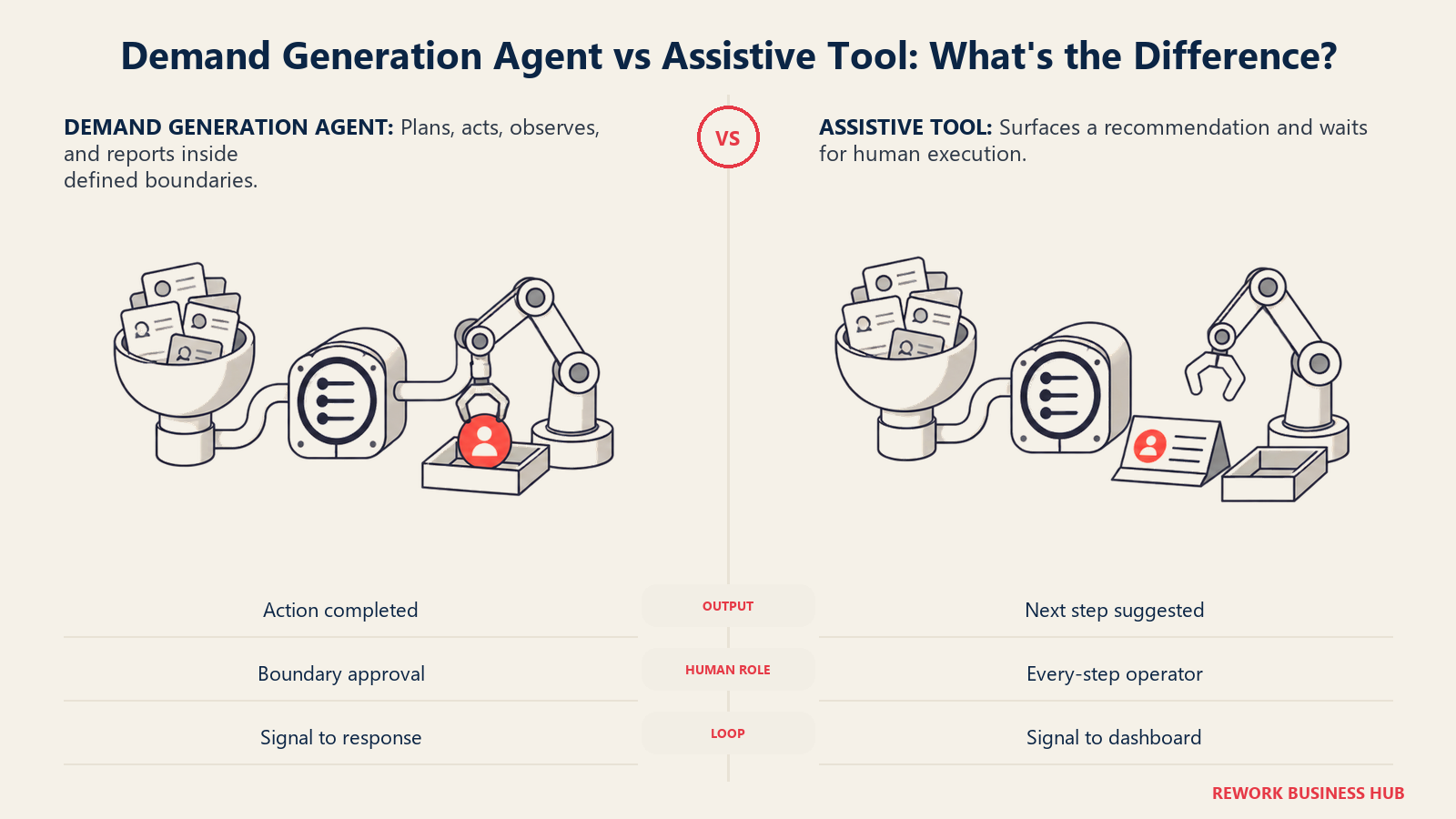
That bar cost this guide four candidates worth naming, because the honest answer is more useful than a padded list. RollWorks' own Command Center page describes itself as a system that "recommends your next best steps": add records to a CRM, build a list, send a priority list to sales. That's a real product with real value, but it's positioned as human-guided AI, not an autonomous agent, so it's not ranked below. Terminus, once a standalone ABM platform, was absorbed into DemandScience through 2025 and 2026 and no longer has a standalone product page or pricing. Intentsify describes its own offering as "a managed service model" where a team runs your intent program for you rather than software you operate directly. That makes it a legitimate data source (more on that below) but not a self-serve agent. And HockeyStack was left out because its pricing and capability claims need to be confirmed with the vendor directly before it earns a place on a shortlist.
Where the Intent Data Actually Comes From
Every agent in this guide claims to know which accounts are "in market." That claim is only as good as the data feeding it, and the four sourcing models behind it have very different accuracy profiles.
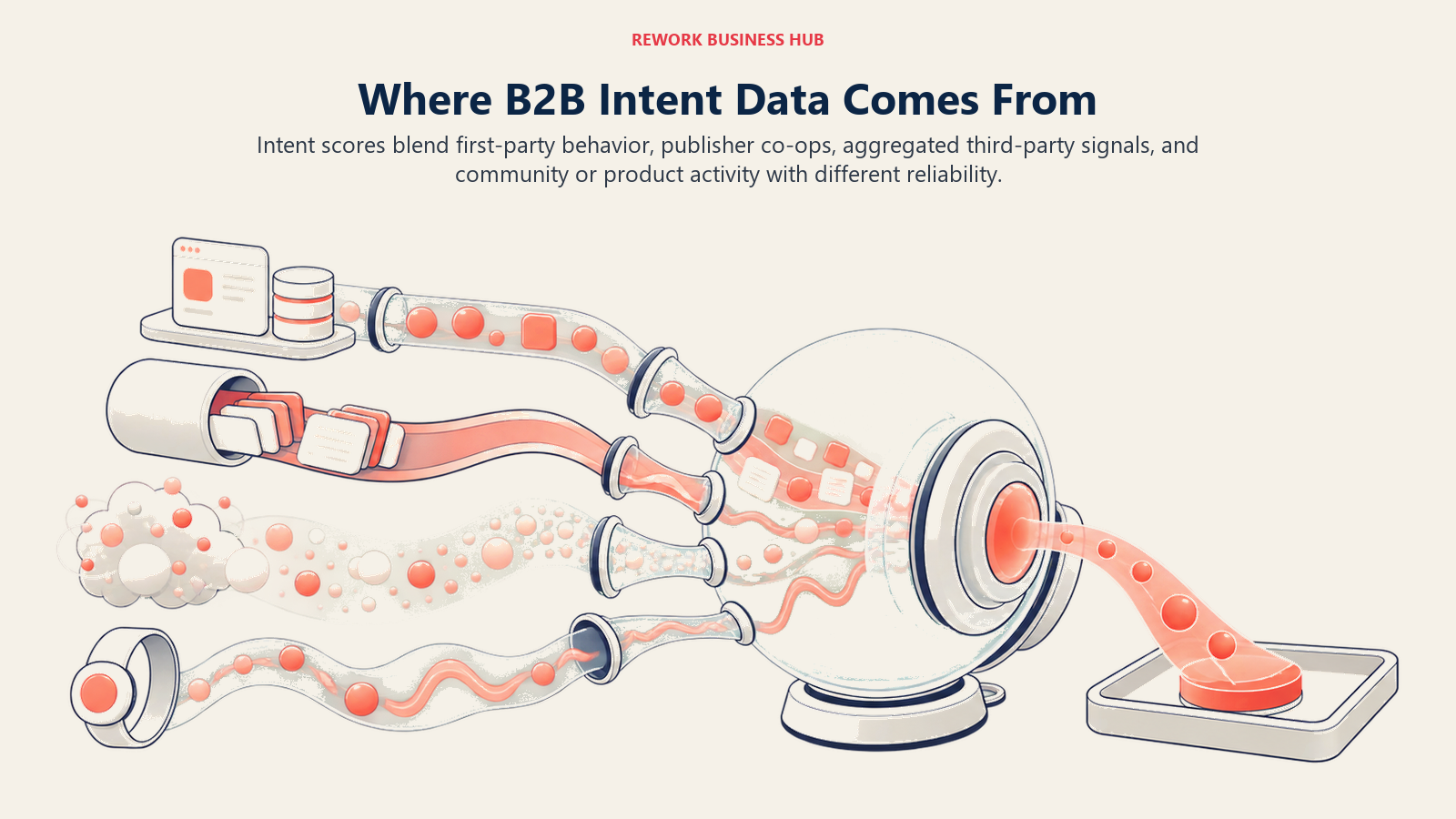
| Source type | How it's collected | Reliability notes | Seen in this guide |
|---|---|---|---|
| First-party | Your own website visitor identification (IP-to-company matching) plus your own CRM and product data | Highest specificity since it's genuinely your prospect, but only covers people who already found you | Warmly (site deanonymization), Common Room (product and CRM signals) |
| Second-party (co-op) | A shared network of publisher and brand sites pools anonymized content-consumption data, then vendors license access to the pooled signal | Broad coverage from real content consumption, but accuracy depends on co-op membership and how the buyer's actual reading habits map to the topics tracked | Warmly and Common Room both license Bombora's co-op; likely present but undisclosed in 6sense and Demandbase |
| Third-party (aggregated or bidstream) | Behavioral and firmographic data purchased or scraped from ad-exchange bid requests and other resold sources, then matched to a company | Cheapest at scale, but the least verifiable: no consent trail, and cookie and IP-privacy changes have degraded match rates industry-wide | Named generically as "third-party intent" by Qualified's Enterprise tier; the model Intentsify's 1.1 trillion monthly signals and 460,000-plus monitored sites imply, though Intentsify itself is a managed service rather than a self-serve agent |
| Community and product-led | Signals from your own community platforms (Slack, Discord, GitHub), product telemetry, and support activity | Very high specificity for companies with a real community or free-tier product footprint, close to useless for anyone without one | Common Room, explicitly built around "1st, 2nd, and 3rd-party channels" and open-source activity |
Two practical takeaways follow from this. First, ask any vendor which of these four models actually feeds their "in-market" score, not just how many signals they claim. 6sense and Demandbase both blend first-party data you provide with undisclosed third-party signals under a proprietary model (6sense calls its version "Signalverse"), and neither publishes the underlying mechanics, so treat their scoring as a black box you're trusting rather than one you can audit. Second, second-party co-op data and community data are the two models with a traceable chain back to a real human doing a real thing, which is why they show up repeatedly as the more defensible choice when a vendor can't fully explain their pipeline. For a fuller walkthrough of the signal types and the false-positive problem every intent program eventually hits, see buyer intent signal synthesis with AI and the base explainer on intent data in B2B.
Account Prioritization and Scoring Transparency
Intent tells you who's active. It doesn't tell you who's a fit, and the agents that only chase intent without weighting fit end up prioritizing accounts that will never buy from you, just because they're reading a lot. The stronger products in this guide separate the two signals rather than blending them into one opaque number: 6sense and Demandbase both publish separate fit and intent components inside their predictive scores, and Common Room's RoomieAI attaches a credit-tracked research trail to each account it flags, so a rep can see why an account surfaced, not just that it did.
When you're evaluating this, ask a vendor to show you a scored account and walk through the inputs live, not in a slide. If they can't explain in plain language why account A outranked account B, the score isn't something your sales team will trust enough to act on, no matter how sophisticated the model behind it is. The fit vs. intent scoring breakdown covers how to weight the two signals for your own sales motion, and the AI account research agent blueprint shows what a transparent, citation-backed version of this scoring step looks like when you build it yourself instead of buying it.
The Ads-Plus-Website Personalization Loop
An account that clicks a LinkedIn ad and then lands on a generic homepage has just told you it's interested and watched you ignore that. The agents here that close that loop pair paid targeting with on-site personalization so the experience escalates as an account shows more intent, rather than resetting to zero at every touchpoint. Mutiny handles the website half directly, swapping headlines, proof points, and calls to action based on the visiting account's industry, size, and referral source. Influ2 handles the paid half at the individual level, running ads to specific named people on a buying committee rather than a broad account-level audience. Warmly and Demandbase sit in between, combining site identification with retargeting and chat in one flow.
The honest limitation across all of them: none of these tools own both halves of the loop equally well, and stitching a best-of-breed ads tool to a best-of-breed personalization tool is still integration work someone on your team has to own. If your team is already comfortable wiring agent workflows together with a general-purpose orchestration layer, best no-code AI agent builders covers the platforms teams use to connect an intent alert to a Slack ping, a CRM update, and an ad-audience sync without custom code.
Sales and Marketing Handoff Quality
An intent signal that sits in a marketing dashboard for three days before a rep sees it is worth less than the same signal delivered in real time. Every agent in this guide pushes some form of alert into Slack, email, or the CRM directly, but the quality gap shows up in what happens next: does the alert include enough context for a rep to act immediately, or does it just say "Acme Corp is active" and leave the rep to start research from zero? Common Room and Qualified score best here: Common Room's alerts carry the specific signal and account history that triggered them, and Piper hands off a live conversation transcript, not just a lead record.
This is the same coordination problem that shows up whenever marketing and sales run account-based programs as two separate lists instead of one. The ABM and ABS joint playbook covers how to design that handoff before you layer software on top of it, since a well-configured agent still fails if marketing and sales are working from different target-account lists. For the underlying strategy these agents are meant to execute, account-based marketing covers the three ABM tiers and where each tool in this guide tends to fit.
Attribution Honesty: What to Ask a Vendor to Prove
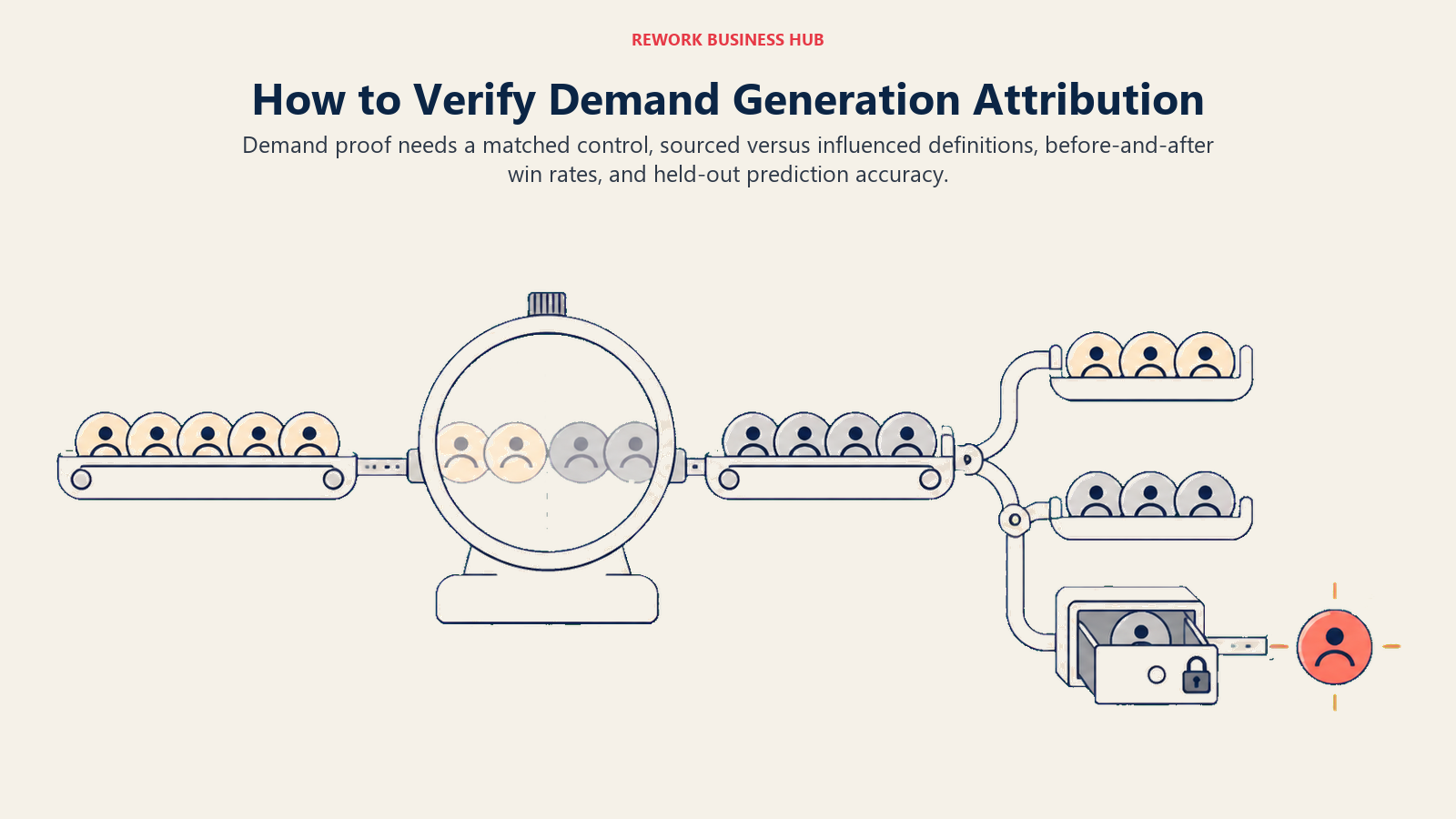
Pipeline attribution claims are the least verifiable part of any sales conversation in this category, and it's worth understanding why before a vendor shows you a slide with a big multiplier on it. B2B deals close 6 to 12 months after the accounts involved first show intent, multiple people touch the deal, and marketing, sales, and the account's own research all happen in parallel, not in a clean sequence. A vendor showing you "$4M in influenced pipeline" is usually counting every account that was ever flagged as in-market and later closed, whether or not the tool caused that outcome or just happened to notice it.
| What a vendor claims | What to ask them to show | A red flag answer |
|---|---|---|
| "X% lift in pipeline from flagged accounts" | A cohort comparison: accounts flagged in-market versus a matched control group that wasn't, over the same window | They can only show flagged accounts, with no control group to compare against |
| "$Y in influenced pipeline" | Whether that number is sourced (the tool's signal started the deal) or merely influenced (the account was flagged at some point during a deal already in motion) | They use "influenced" and "sourced" interchangeably, or can't define the difference |
| "Our customers see Z% higher win rates" | The customer's win rate before adoption versus after, on a comparable account segment | The stat is a single customer's before/after with no segment control, presented as a category average |
| "Our AI predicts which accounts will convert" | The model's actual precision and recall on held-out data, not just a case study | They answer with adoption numbers (logos, seats) instead of prediction accuracy |
None of this means the category doesn't work. It means the honest version of "does this pay back" is a pilot on your own accounts, measured against your own control group, not a vendor's aggregate case study. Build that pilot design into your evaluation before you sign a multi-year contract, since several of the vendors below reward longer commitments with lower effective pricing, which is exactly when you want to already know the tool works.
How to Choose: By Company Stage
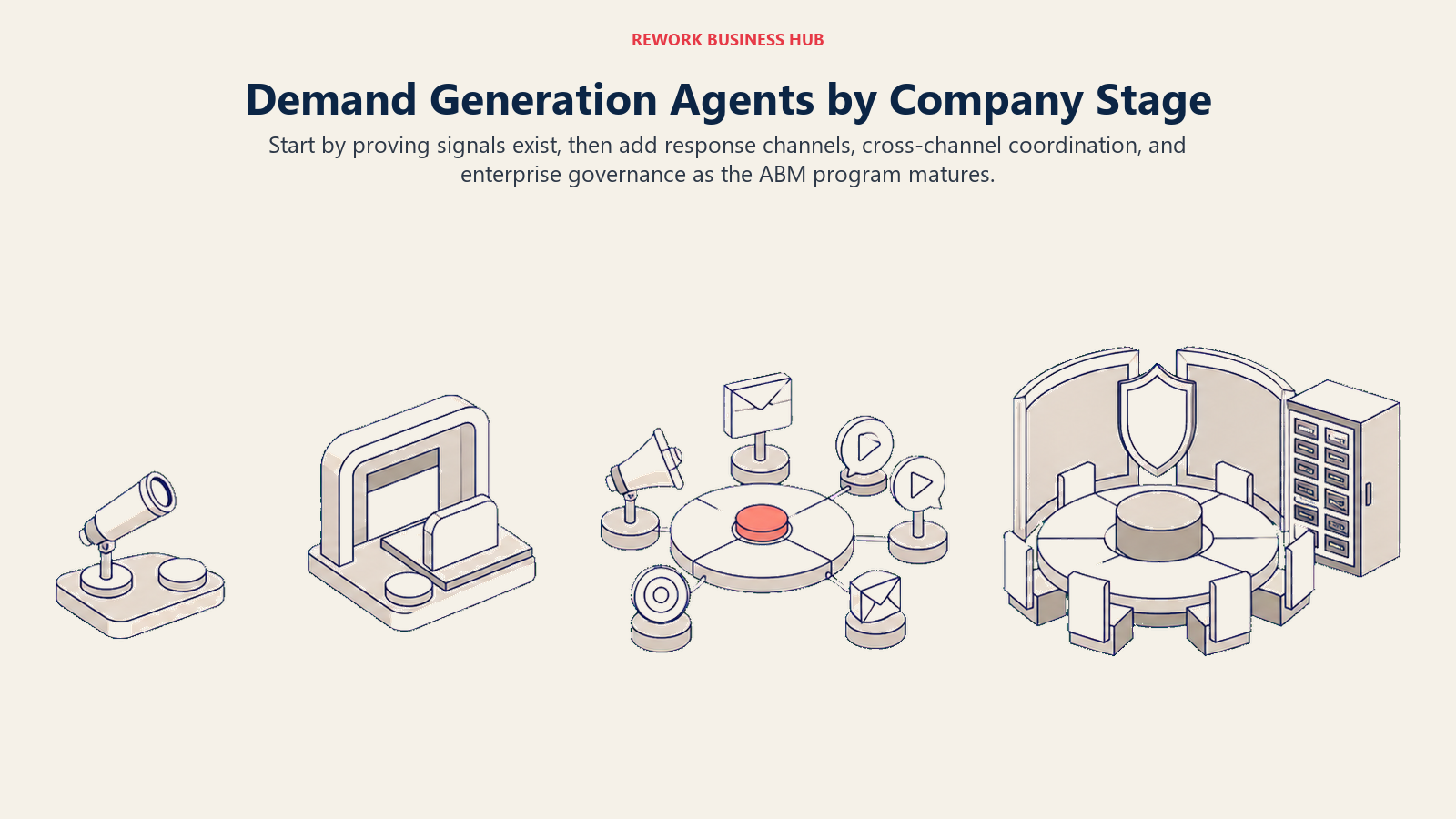
Company stage determines how much coordination, governance, and procurement overhead a demand generation agent must support. This progression shows the operating environment that typically fits each level of ABM maturity.
| Stage | What you need | Best fits |
|---|---|---|
| Pre-ABM (never run account-based programs) | A free or low-cost way to see if in-market accounts exist in your data at all | Mutiny (free tier), Warmly (free deanonymization) |
| Early ABM (first target-account list, small team) | A single agent covering identification, scoring, and a first response channel | Mutiny, Common Room, Warmly |
| Scaling ABM (multiple channels, dedicated headcount) | Coordinated ads plus website personalization plus alerts, with real seat and contact volume | Demandbase, Metadata.io, Influ2 |
| Enterprise ABM program | Predictive scoring at scale, security review, and integration into an existing RevOps stack | 6sense, Demandbase, Qualified |
Enterprise deployments at the 6sense or Demandbase level also mean a real procurement and security review, since you're granting a vendor access to CRM data, ad platforms, and often a data warehouse connection at once. If your evaluation process already includes a broader platform security pass, best enterprise AI agent platforms covers what that review typically checks for beyond the demand-gen-specific questions in this guide.
Sizing and Persona Table
| Agent | Ideal team size | Primary buyer persona |
|---|---|---|
| 6sense | 200-5,000+ employees | VP Demand Gen, Head of ABM, RevOps Director |
| Demandbase | 200-5,000+ employees | CMO, VP Marketing, Head of ABM |
| Qualified (Piper) | 100-2,000 employees (Salesforce-based) | VP Marketing, Head of Pipeline, RevOps |
| Mutiny | 10-200 employees | Growth Marketer, Demand Gen Manager, Founder |
| Warmly | 20-500 employees | Marketing Ops Manager, Demand Gen Lead |
| Metadata.io | 20-500 employees | Performance Marketing Manager, Demand Gen Director |
| Common Room | 20-500 employees, PLG and dev-tool heavy | Head of Growth, Community Lead, PLG PMM |
| Influ2 | 50-1,000 employees | ABM Manager, Field Marketing, Enterprise AE support |
1. 6sense: Deepest Predictive Scoring, No Public Price
6sense built its position on predictive AI: a model trained on what it calls 13 years of proprietary "Signalverse" intent, blending your own CRM, marketing automation, web, and product data with third-party signals like funding rounds and job changes into one account-level score. Sales Copilot layers AI-generated recommendations and some automated workflows on top, so a rep gets a next-best-action instead of a raw signal feed.
The catch is transparency, on two fronts. 6sense's own pricing page shows three bundled feature combinations (Sales Intelligence with Data Credits, with Predictive AI, or both) and no dollar figures anywhere, and the underlying mechanics behind Signalverse aren't publicly documented either. Vendr's purchase data puts the real range at $12,000 to $176,000 a year across 378 tracked deals, with a median around $63,000.
| What you get | What you don't |
|---|---|
| Predictive AI scoring blending first and third-party signals | No public pricing anywhere, not even a starting figure |
| Sales Copilot recommendations and automated workflows | Underlying data sourcing for Signalverse isn't disclosed |
| Established enterprise ABM category leader | No self-serve or small-team entry point |
Pricing: Not published: three bundled tiers, no dollar figures shown. Reported $12,000-$176,000/yr (median ~$63,000/yr), scoped to your total addressable market and chosen bundle. Contact sales for a quote.
Best for: Enterprise demand gen and ABM teams that want the deepest predictive scoring and have budget for a custom enterprise deal.
2. Demandbase: Named "Agentbase" Layer on a Unified Account Record
Demandbase One's pitch is a single account record shared by sales and marketing, with advertising, website personalization, and now a named agent layer, Agentbase, sold as an add-on module. The platform fee plus a flat per-user fee model is meant to make scaling predictable once you're in, even though getting an exact number requires a sales conversation first.
Vendr's data across 185 tracked purchases puts the median contract at $68,591 a year, ranging from $24,000 to $164,265, with a separately reported $29,000 onboarding fee and per-seat costs of $1,200 to $3,000 a year beyond the included user count. That onboarding fee is worth confirming directly since it sits outside the headline platform price.
| What you get | What you don't |
|---|---|
| Named "Agentbase" AI agent module, not just a dashboard | No public pricing; platform fee and per-user fee are both custom |
| Advertising (B2B DSP), personalization, and scoring in one record | Reported ~$29,000 onboarding fee separate from the platform fee |
| Deep integration between ad targeting and account data | Per-seat costs for users beyond the included count add up fast |
Pricing: Not published: platform fee plus flat per-user fee, custom-quoted. Reported $24,000-$164,265/yr (median ~$68,591/yr) before onboarding and seat overages.
Best for: Enterprise marketing and sales teams that want advertising, personalization, and account scoring inside one shared data model.
3. Qualified (Piper): AI SDR Agent for Salesforce Shops
Piper is the clearest agent in this guide by behavior: it holds a live video, voice, or text conversation with a website visitor, qualifies them, books a meeting straight onto a rep's calendar, and follows up by AI-generated email, all without a human in the loop for a first-touch conversation. Since Salesforce acquired Qualified in 2025, Piper is built to run on top of Salesforce Sales Cloud, which is a real strength if that's already your stack and a real tax if it isn't.
Pricing sits in three unpublished tiers, Premier, Enterprise, and Ultimate, that add third-party intent signals, enterprise APIs, and multiple agent profiles as you move up. Third-party procurement data puts Qualified alone at $40,000 to $68,000 a year, on top of $30,000 to $60,000 for the Salesforce stack it depends on, so the all-in cost is meaningfully higher than the Qualified line item by itself.
| What you get | What you don't |
|---|---|
| Real-time AI SDR agent handling video, voice, and text | Requires Salesforce Sales Cloud underneath since the 2025 acquisition |
| Autonomous meeting booking and AI follow-up email | Total cost includes the Salesforce stack, not just Qualified's fee |
| Third-party intent signals available at the Enterprise tier | No published pricing on any of the three tiers |
Pricing: Not published: Premier, Enterprise, and Ultimate tiers, custom-quoted. Reported $40,000-$68,000/yr for Qualified alone, plus the required Salesforce stack.
Best for: Salesforce-standardized teams that want an AI SDR qualifying and booking meetings directly from website traffic.
4. Mutiny: The Agent That Got Cheaper in 2026
Mutiny spent most of the last few years as an enterprise website-personalization tool with a five- and six-figure entry point and no self-serve option. That's changed. Mutiny now positions itself as an agent, in its own words one that "plugs into your tools" for account research, follow-ups, and forecast reviews, working alongside a team in Slack rather than sitting behind a separate dashboard, and it backs that with a real free tier and a $50-a-month Business plan.
The credit-based structure is the thing to watch: the free tier includes 5 daily credits per seat (up to 30 a month), Business includes 50 credits a month with unlimited team members, and Enterprise starts at $40,000 a year with custom credit limits. A small team can genuinely start here for nothing and prove the concept before committing budget.
| What you get | What you don't |
|---|---|
| Real free tier and a $50/mo paid entry point, not just enterprise | Credit-based usage caps can bind a team running many workflows |
| Repositioned in 2026 around agent behavior, not just page personalization | Enterprise tier still requires a custom quote starting at $40,000/yr |
| Account research, follow-up, and forecast-review workflows in one agent | Newer agent positioning means less of a public track record than 6sense or Demandbase |
Best for: Lean RevOps or growth teams that want to test an account-based agent without an enterprise budget first.
5. Warmly: Deanonymization Plus AI Chat, Bombora Included
Warmly's core move is combining two things that are often sold separately: website visitor deanonymization and an AI chat agent that can qualify and book a meeting on the spot. Every paid tier includes Bombora intent signals bundled in rather than priced as a separate add-on, which is unusual in a category where third-party intent is often an upsell.
The published tiers are straightforward: AI Web-Deanonymization at $10,000 a year ($4,875 a quarter) covers visitor identification, ICP filtering, and CRM sync. Inbound Chat at $20,000 a year adds one AI Studio Agent for live chat and automated email follow-up. AI Inbound Autopilot at $30,000 a year, the vendor's most-popular tier, adds unlimited AI Studio Agents with autonomous goal-setting and qualification. All tiers include a 10,000-credit monthly baseline, and there's no monthly billing option: every paid plan runs on an annual or quarterly contract.
| What you get | What you don't |
|---|---|
| Bombora intent signals included in every paid tier, not an add-on | No monthly billing; annual or quarterly contracts only |
| Free tier covers 500 monthly visitors and 10 weekly Bombora signals | Higher-tier features like 24/7 video chat require a custom quote |
| Autonomous AI Studio Agents at the top tier, not just alerts | Credit ceiling (10K/mo baseline) can be tight for high-traffic sites |
Best for: Mid-market marketing teams that want deanonymization and an AI chat agent in one contract instead of two.
6. Metadata.io: A Full Agent Team for Paid Demand Gen
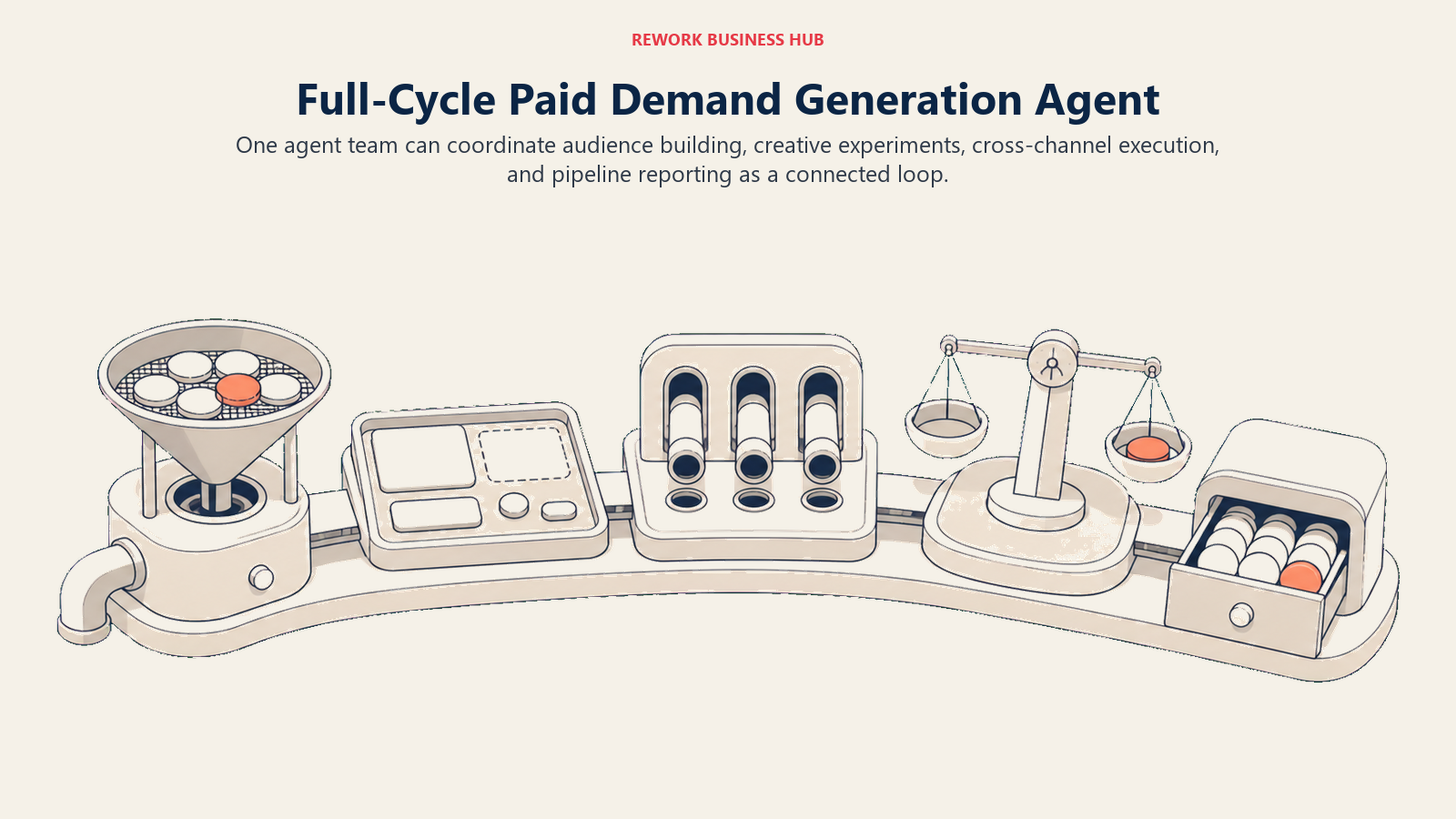
Metadata.io's own pricing page describes the product as "the full agent team and platform," covering audience building, cross-channel campaign execution, creative generation, experiment management, and pipeline reporting as one connected loop rather than separate tools stitched together. The pitch is that a lean team can run a paid demand-gen program that would otherwise need a media buyer, a designer, and an analyst working in parallel.
Nothing is priced publicly. The vendor's own language, "priced to your GTM, not a one-size grid," is honest about the model even if it doesn't give you a number. Third-party pricing trackers report a MetaMatch entry point around $295 a month, a Spotlight plan from $20,000 a year, a Campaigns plan (unlimited users across Facebook, LinkedIn, and Google Ads) from $43,200 a year, and a core platform figure around $60,000 a year (all reported); confirm current pricing with Metadata.
| What you get | What you don't |
|---|---|
| One agent spanning audience, creative, execution, and reporting | Zero published pricing; every figure below is third-party reported |
| Multi-channel execution (Facebook, LinkedIn, Google Ads) in one plan | Pricing scoped to spend and channel count, hard to estimate upfront |
| Positioned explicitly as an "agent team," not a dashboard | No self-serve signup visible on the pricing page itself |
Pricing: Not published; scoped to channels and ad spend managed. Reported figures: MetaMatch ~$295/mo, Spotlight from $20,000/yr, Campaigns from $43,200/yr, core platform ~$60,000/yr. Not confirmed on Metadata's own pricing page.
Best for: Performance marketing teams that want one agent running paid demand gen across channels instead of separate point tools.
7. Common Room: The Only Agent Built on Community Signals
Common Room earns a distinct place in this guide because its signal sourcing is genuinely different from the ad-and-content-syndication model everyone else here runs on. RoomieAI Capture, which Common Room itself describes as "an agent for signal capture," pulls from what it calls first, second, and third-party channels: job changes, website visitor identification, CRM and call-transcript data, and, distinctively, open-source and product-led activity. For a company selling to developers or running a real free-tier product, that's a signal source none of the ad-network-based tools in this guide can see at all.
Pricing is the most transparent in this guide at the entry level. Essential is $2,500 a month billed annually ($30,000 a year), including 5 seats, up to 100,000 contacts, 5,000 RoomieAI research credits, and 2,500 Prospector credits, with unlimited alerts, workflows, and segments. Advanced (15 seats, 250,000 contacts) and Enterprise (30 seats, 750,000 contacts) both move to custom quotes.
| What you get | What you don't |
|---|---|
| Community and product-usage signals no ad-based tool captures | Essential tier caps at 100,000 contacts and 5 seats |
| Published, specific pricing at the entry tier ($2,500/mo) | Advanced and Enterprise both require a custom quote |
| RoomieAI credit trail makes scoring reasoning traceable | Less relevant for companies without a real community or PLG motion |
Best for: PLG and developer-tool companies that want demand gen driven by real community and product activity, not just ad-network intent.
8. Influ2: Person-Level Ads for a Named Buying Committee
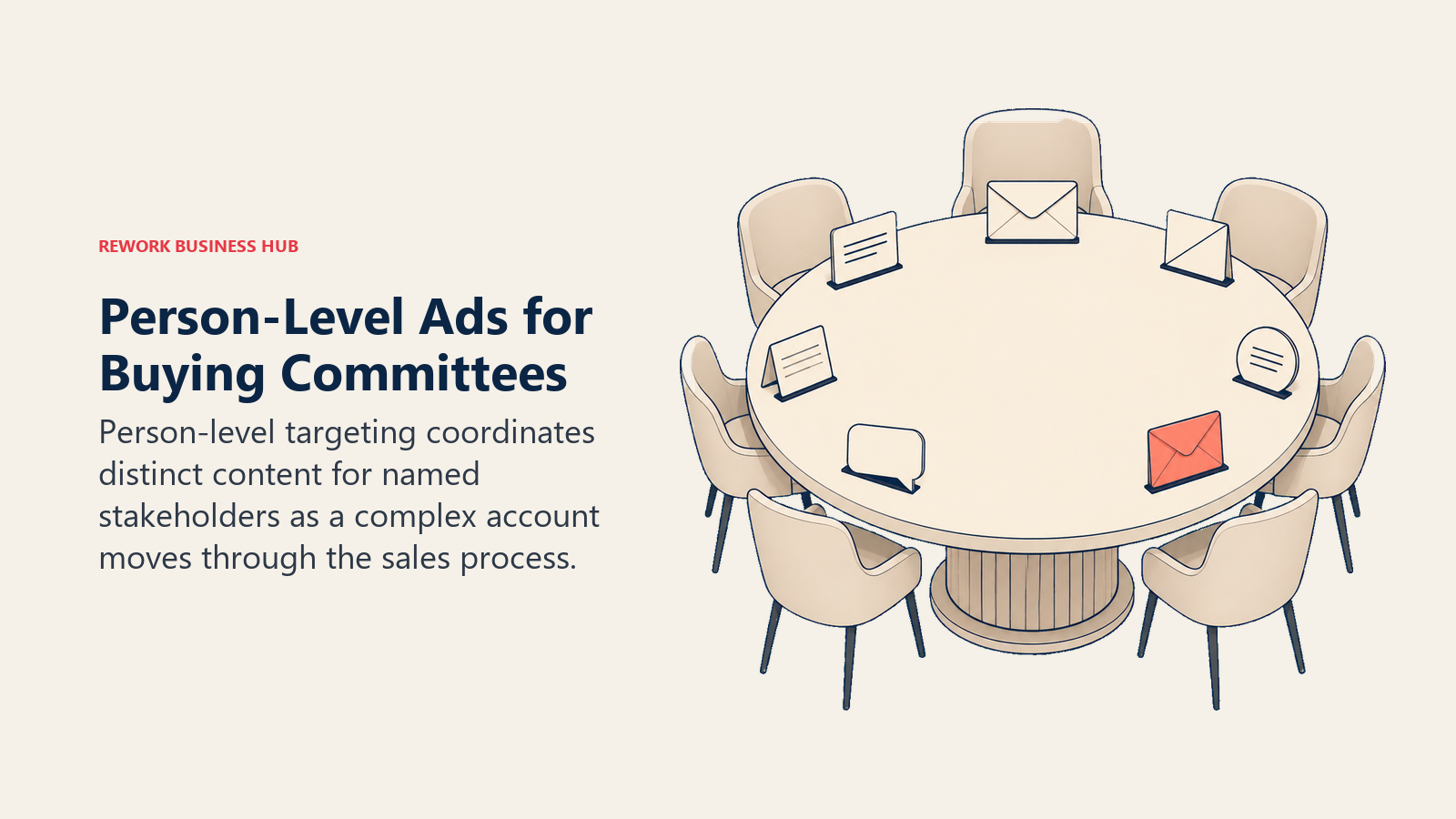
Influ2's whole premise is narrower and, in its own way, more precise than the rest of this guide: instead of targeting an account or even a job title, it runs ads to specific named individuals on a buying committee, then orchestrates which content each person sees based on where they are in the sales process. For multi-threading a complex enterprise deal where six or eight named people all need to see the right message, that level of precision has no real substitute among the account-level tools here.
Worth saying plainly: Influ2 doesn't market itself as an "agent" the way the other seven products in this guide do, and there's no public pricing page to reference either. Its own product page describes the platform as one that "triggers ads and orchestrates marketing activities," which is real multi-step, cross-channel automation even without the label. Vendr's data shows a median of $60,000 a year, ranging $34,600 to $102,480, with unit economics around $5 per engaged contact, and multi-year contracts earning 15% to 30% better per-contact pricing.
| What you get | What you don't |
|---|---|
| True person-level ad targeting, not just account-level | No "agent" branding and no public pricing page |
| Orchestrates content across the stack based on funnel stage | Reported costs bundle platform fee with required ad spend |
| Strong fit for multi-threading a named buying committee | Vendr-reported pricing only; nothing confirmed on influ2.com |
Pricing: Not published, no dedicated pricing page found. Reported median $60,000/yr ($34,600-$102,480 range), roughly $5 per engaged contact, platform fee plus required ad spend.
Best for: Enterprise ABM teams multi-threading a specific, named buying committee rather than targeting an account broadly.
Demand Generation Buying Mistakes to Avoid
| Mistake | What it looks like | What to do instead |
|---|---|---|
| Buying intent data before defining your ICP | Flagging thousands of "in-market" accounts, most of which were never a fit | Lock your ideal customer profile first, then layer intent on top of it |
| Treating every agent claim as equally verified | Assuming "AI agent" means the same autonomous behavior across every vendor | Ask what specific action the system takes without a human, not just what it recommends |
| Skipping the control-group pilot | Signing an annual contract off a vendor case study alone | Pilot against a matched set of accounts you don't act on, then compare |
| Buying ads and personalization from two disconnected vendors | An account clicks an ad, then lands on a generic homepage | Prioritize agents that close the ads-to-website loop, or budget for the integration work |
| Ignoring the required stack underneath | Buying Piper without accounting for the Salesforce spend it needs | Add every dependency's cost to the platform fee before comparing totals |
| Letting marketing and sales run separate target lists | Marketing nurtures accounts sales never prioritizes, and sales cold-calls accounts marketing has been warming for weeks | Build one shared account list and shared metrics before turning on any agent |
| Assuming a bigger signal count means better data | Choosing a vendor because it claims the most monthly signals | Ask which of the four sourcing models (first-party, co-op, aggregated, community) produces that count |
Decision Framework
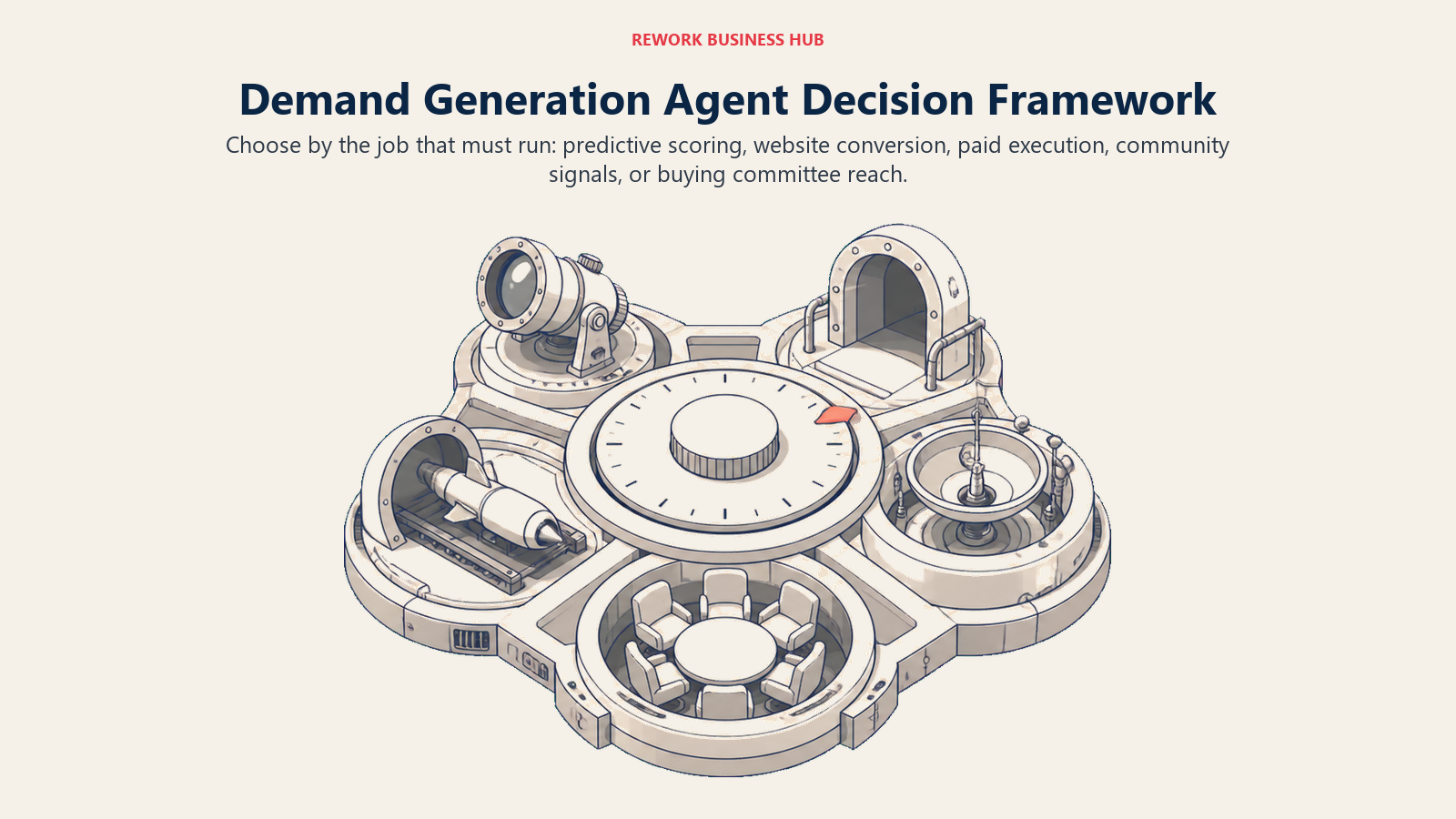
The shortlist becomes clearer when you route the operating job before comparing vendors. The visual below separates predictive scoring, website conversion, paid execution, community signals, and buying committee reach as distinct demand generation jobs.
| If you need... | Pick... | Why |
|---|---|---|
| The deepest predictive account scoring at enterprise scale | 6sense | Longest-running proprietary intent model, blends first and third-party signals |
| One unified record for sales, marketing, and advertising | Demandbase | Named Agentbase layer plus a built-in B2B ad DSP on one account record |
| An AI SDR that books meetings from website traffic | Qualified (Piper) | Real-time video, voice, and text agent, native to Salesforce |
| To start free and prove the concept before paying | Mutiny | Genuine $0 and $50/mo tiers after its 2026 repositioning |
| Deanonymization and AI chat bundled with intent data | Warmly | Bombora intent included in every paid tier, not an upsell |
| One agent running paid demand gen across channels | Metadata.io | Audience, creative, execution, and reporting in one loop |
| Signals from community and product usage, not just ads | Common Room | Only agent here built on PLG and open-source activity |
| Precision targeting of a named buying committee | Influ2 | Person-level ads, not account-level, for complex multi-threaded deals |
Frequently Asked Questions about AI Agents for Demand Generation
What's the difference between an AI agent for demand generation and one for lead generation?
A demand generation agent works at the account level: it identifies which companies show buying signals, scores and prioritizes them, and coordinates a response across ads, the website, and outreach. A lead generation agent works at the individual level, finding and qualifying specific people. The two problems use overlapping data but different tools, and a roundup built for one rarely fits the other well.
Where does intent data actually come from?
Four models, with different reliability. First-party comes from your own site and product. Second-party (co-op) comes from a shared network of publisher sites, like Bombora's Data Co-op, pooling anonymized content-consumption data. Third-party or aggregated data is purchased or scraped at scale, often from ad-exchange bid requests, and is the hardest to verify. Community data comes from your own Slack, Discord, GitHub, or support activity. Ask any vendor which model feeds their score before trusting it.
Are any of these tools free to start?
Mutiny has a genuine free tier (5 team members, credit-limited) and a $50/month Business plan. Warmly has a free tier covering 500 monthly website visitors and 10 weekly Bombora intent signals. Every other agent in this guide is fully custom-quoted with no self-serve signup.
Why did RollWorks, Terminus, Intentsify, and HockeyStack get left out of the ranking?
Each missed the bar for a different reason. RollWorks' own site describes itself as recommending actions for a human rather than acting autonomously. Terminus was absorbed into DemandScience and no longer has a standalone product. Intentsify describes itself as a managed service, meaning a team runs your program rather than software you operate yourself. HockeyStack was left out because its claims need to be confirmed with the vendor directly before it earns a place on a shortlist.
How much does an AI demand generation agent cost in 2026?
Entry points range from free (Mutiny, Warmly) to $2,500 a month for Common Room's published Essential tier. Mid-market tools like Warmly's higher plans and Mutiny's Enterprise tier run $20,000 to $40,000 a year. Enterprise platforms like 6sense, Demandbase, and Qualified are fully custom-quoted and typically land between $40,000 and $250,000-plus a year once seats, credits, and onboarding are included.
Can I trust a vendor's pipeline attribution numbers?
Treat them as a starting hypothesis, not proof. Ask whether the number reflects accounts the tool sourced (started the deal) or merely influenced (was flagged sometime during a deal already in motion), and ask for a comparison against a control group of accounts you didn't act on. A vendor that can only show flagged-account totals with no control group hasn't proven causation.
Do I need separate tools for ads, website personalization, and alerts, or does one agent cover all of it?
A few agents here cover more than one piece: Warmly and Demandbase pair site identification with retargeting and chat, and Metadata.io covers audience, creative, and execution together. But no single agent in this guide owns the full loop end to end, so expect to connect at least two tools, or budget time to wire them together with a workflow layer.
What should a small team with a limited budget start with?
Start with Mutiny's free tier or Warmly's free deanonymization tier to confirm that in-market accounts are actually visible in your traffic before spending anything. Common Room's $2,500/month Essential tier is the next real step up if you have community or product-usage signals worth capturing.
What to Do Next
Pick one agent and run a 30-day pilot against a control group before signing an annual contract. Flag a set of target accounts, let the agent identify and score them, and hold back a matched set you don't act on, then compare pipeline outcomes between the two groups at the end of the window. That comparison tells you more about whether an agent's intent data and scoring actually work for your business than any vendor case study will. If you're building this capability internally rather than buying it, AI Marketer for SaaS demand generation walks through the build-side version of the same job, from content production through pipeline prediction.

Principal CRM Strategist
On this page
- Updated August 2026: What Changed
- Key Facts
- Quick Comparison Table
- What Actually Counts as a Demand Generation Agent
- Where the Intent Data Actually Comes From
- Account Prioritization and Scoring Transparency
- The Ads-Plus-Website Personalization Loop
- Sales and Marketing Handoff Quality
- Attribution Honesty: What to Ask a Vendor to Prove
- How to Choose: By Company Stage
- Sizing and Persona Table
- 1. 6sense: Deepest Predictive Scoring, No Public Price
- 2. Demandbase: Named "Agentbase" Layer on a Unified Account Record
- 3. Qualified (Piper): AI SDR Agent for Salesforce Shops
- 4. Mutiny: The Agent That Got Cheaper in 2026
- 5. Warmly: Deanonymization Plus AI Chat, Bombora Included
- 6. Metadata.io: A Full Agent Team for Paid Demand Gen
- 7. Common Room: The Only Agent Built on Community Signals
- 8. Influ2: Person-Level Ads for a Named Buying Committee
- Demand Generation Buying Mistakes to Avoid
- Decision Framework
- What to Do Next