More in
Notícias de AI no Trabalho
A OpenAI Abriu a Publicidade no ChatGPT para Pequenas Empresas com Qualquer Orçamento
jun 6, 2026
AI Está em Todo Lugar no Trabalho. Apenas 1 em 10 Diz que Transformou o Emprego
jun 6, 2026
O Momento de US$ 10,5B do Vibe Coding: AI Agora Inicia a Maioria dos Novos Projetos de Software
jun 6, 2026
Agentes de AI Agora Têm Mais Acesso ao Sistema do que Seus Funcionários. Poucos Estão Protegidos
jun 5, 2026
Você Deve Construir Sua AI ou Comprá-la? Observe o que os Gigantes Compraram.
jun 5, 2026
A Uber Limitou os Gastos de AI por Funcionário a US$ 1.500 por Assento Após um Estouro de Orçamento
jun 5, 2026
O Decreto Executivo de AI de Trump é Desregulamentador. Seu Risco de Conformidade Não Mudou
jun 4, 2026
A AI Empurrou 220 Unicórnios Abaixo de US$ 1B. Empresas Pré-ChatGPT Enfrentam um Acerto de Contas
jun 4, 2026
Os Preços de Token Caíram 67% Este Ano. Sua Conta de AI Está Aumentando de Qualquer Forma
jun 3, 2026
Pequenas Empresas que Usam AI Relatam Maior Receita e Jornadas de Trabalho Mais Curtas
jun 3, 2026
A Aposta da SAP na Empresa Autônoma: 50 Joule Assistants, 200 Agents e uma Integração com Claude que Seu CTO Precisa Avaliar
Turn this article into takeaways for your work.


Each assistant summarizes the article only for you and suggests best practices for your work.
A SAP acabou de dizer a seus clientes empresariais que o ERP deles está prestes a se tornar um control plane de agents. Isso não é uma atualização de funcionalidade. É uma decisão de stack.
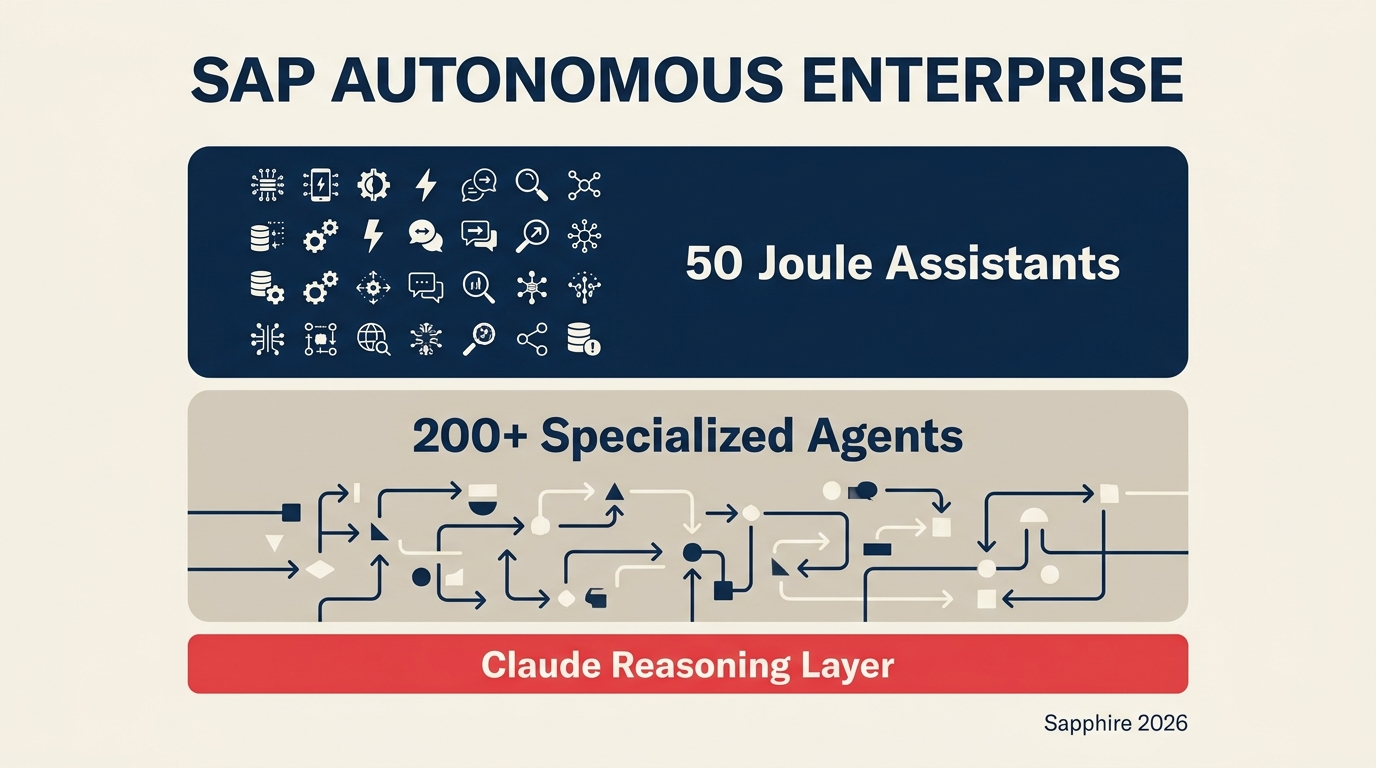
No SAP Sapphire 2026 em Madri (13 a 15 de maio), o CEO Christian Klein anunciou o que a empresa chama de "Empresa Autônoma": uma reformulação completa da plataforma que reimagina o ERP da SAP como um sistema operacional empresarial em camadas, orientado por agents. De acordo com o keynote do SAP Sapphire 2026, a empresa está entregando mais de 50 Joule Assistants específicos por domínio situados acima de uma base de 200+ agents especializados. E está embutindo o Anthropic Claude como camada primária de raciocínio em todo o portfólio.
Se você é um CTO com um footprint significativo na SAP, tem uma decisão a tomar. Não sobre se o Joule é interessante. Sobre se a SAP vai ser a dona da sua camada de orquestração de agents pelos próximos cinco a sete anos.
O Que a SAP de Fato Entregou no Sapphire 2026
O Que a SAP Entregou
- 50+ Joule Assistants específicos por domínio orquestrando 200+ agents especializados em finanças, cadeia de suprimentos, compras, HCM e CX (keynote do SAP Sapphire 2026)
- Acesso design-time ao Joule Studio 2.0 gratuito até o final de 2026; construído para frameworks no estilo LangGraph e AutoGen com dados SAP ao vivo (SAP News, maio de 2026)
- Anthropic Claude torna-se "capacidade primária de raciocínio e agentic" embutida no portfólio de soluções da SAP (expansão da parceria SAP-Anthropic)
Sejamos precisos sobre o que está de fato na release, porque os detalhes importam para sua avaliação.
A arquitetura é um agent stack de dois níveis. No topo ficam 50+ Joule Assistants, cada um com escopo em um domínio de negócio específico: finanças, cadeia de suprimentos, compras, HCM, CX. Cada Assistant atua como um orquestrador, decompondo solicitações de negócio e delegando a execução para os 200+ agents especializados abaixo. Os agents lidam com tarefas discretas: atualizar um pedido de compra, acionar um fluxo de trabalho de folha de pagamento, sinalizar um desvio na cadeia de suprimentos.
Por baixo de tudo isso está uma nova camada fundamental que a SAP chama de SAP Business AI Platform. É uma unificação de três coisas anteriormente separadas: SAP Business Technology Platform, SAP Business Data Cloud e SAP Business AI. A proposta é um ambiente único e governado para desenvolvimento de AI, acesso a dados e conformidade. Para CIOs em setores regulados, essa história de governança consolidada pode ser a parte mais convincente do anúncio.
Clientes RISE recebem três Joule Assistants incluídos contratualmente no primeiro ano, conforme cobertura anterior do Sapphire. Isso elimina o atrito do "vamos fazer um piloto". A pergunta passa imediatamente para o escopo e o compromisso de longo prazo.
Por Que a Decisão sobre o Claude Dentro do Joule Importa Mais do Que a Contagem de Agents
A contagem de agents é a manchete. A parceria com Claude é o sinal estratégico.
De acordo com o anúncio do Sapphire 2026, o Claude da Anthropic se torna "uma capacidade primária de raciocínio e agentic embutida no portfólio de soluções aprimoradas por AI da SAP". Isso significa que o Claude não é um complemento opcional. É a camada de raciocínio integrada ao Joule e aos Joule agents em todo o stack.
Para a maioria dos CTOs, isso levanta uma pergunta fácil de ignorar: você quer que seu fornecedor de ERP escolha seu modelo de base?
A maioria das estratégias de AI empresariais de hoje assume algum nível de flexibilidade de modelo. Você pode executar o Claude da Anthropic para algumas cargas de trabalho, os modelos da OpenAI para outras, o Gemini do Google para geração de código ou um modelo open-source em um ambiente air-gapped. Essa flexibilidade permite otimizar custo, desempenho, residência de dados e risco de fornecedor. Quando o Claude está embutido como camada de raciocínio dentro do Joule, essa flexibilidade desaparece para qualquer fluxo de trabalho que o Joule controla.
Isso não é uma crítica ao Claude. É um dos modelos de raciocínio mais fortes disponíveis e uma escolha defensável para trabalho agentic de nível empresarial. Mas a decisão é tomada por você. E para CTOs que já investiram em frameworks de orquestração agnósticos de modelo, isso é um conflito estrutural.
Há uma segunda consideração: se você também usa os modelos de raciocínio da Microsoft pelo Copilot, ou tem um acordo direto com a Anthropic, o relacionamento Claude-dentro-da-SAP pode criar uma conversa triangular incômoda sobre licenciamento, tratamento de dados e atualizações de modelo.
As Três Perguntas que Todo CTO com Forte Presença na SAP Precisa Responder
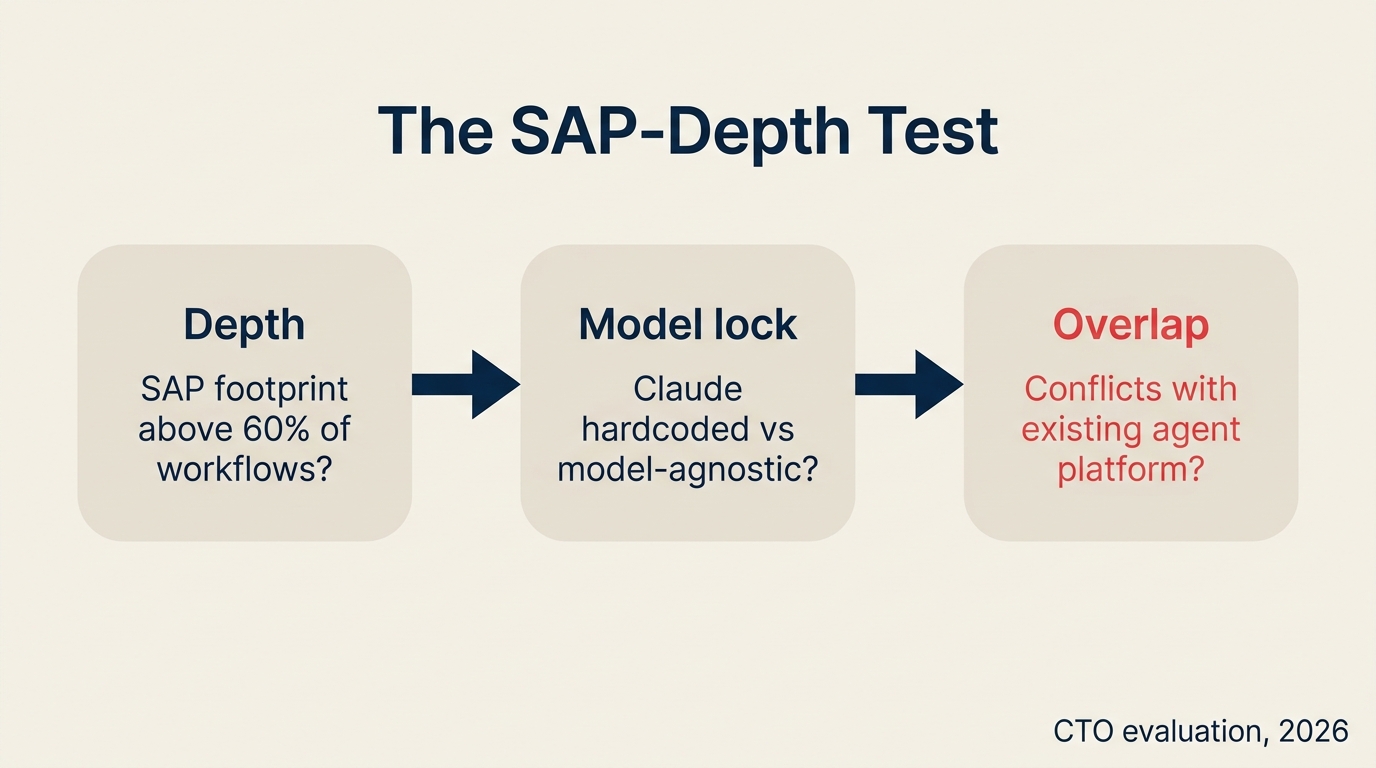
Chame isso de SAP-Depth Test: três perguntas que determinam se o Joule deve se tornar seu control plane primário de agents ou um alvo de integração especializado.
Pergunta 1: Profundidade. Que percentual dos dados e fluxos de trabalho da sua empresa vive dentro da SAP?
Pense em um fabricante com 4.000 funcionários executando SAP S/4HANA para finanças, compras, manutenção de plantas e cadeia de suprimentos. Se 70% dos fluxos de trabalho críticos para o negócio forem nativos da SAP, os Joule Assistants provavelmente são o caminho mais eficiente. Os dados já estão lá. As integrações já existem. Construir integrações horizontais de agents contra todos esses sistemas custa tempo, dinheiro e manutenção contínua.
Mas se você é uma empresa onde a SAP gerencia finanças e compras, porém seu motor de receita roda no Salesforce, seus dados de clientes vivem no Snowflake e seus fluxos de trabalho de RH estão no Workday, o quadro muda. Seu problema de orquestração de agents é fundamentalmente entre sistemas. O Joule da SAP é otimizado para tarefas no domínio SAP. Ele não resolve o problema entre sistemas, e colocá-lo no controle da sua camada de agents cria uma lacuna.
Regra prática: abaixo de 40% de concentração de fluxos de trabalho SAP, o Joule funciona melhor como sistema-alvo com sua plataforma horizontal no controle. Acima de 60%, o Joule pode ser o control plane mais prático.
Pergunta 2: Dependência de modelo. O raciocínio com Claude embutido é aceitável, ou você precisa de orquestração agnóstica de modelo?
Se sua estratégia de AI já especifica flexibilidade de modelo como requisito, a integração do Joule com o Claude é uma restrição, não uma funcionalidade. Você precisaria documentar essa restrição, obter aprovação de que é aceitável para fluxos de trabalho no domínio SAP e manter um processo separado de governança de modelos para tudo fora da SAP.
Se você já é um cliente da Anthropic com contratos empresariais, a integração com Claude pode na verdade simplificar as coisas. Um relacionamento de fornecedor a menos para gerenciar.
Pergunta 3: Sobreposição. Que plataforma de agents horizontal existente já toca fluxos de trabalho adjacentes à SAP, e onde o conflito vai aparecer primeiro?
É aqui que a avaliação fica específica. Um CTO em uma empresa global de cadeia de suprimentos que executa o Microsoft 365 Copilot para equipes de finanças vai enfrentar sobreposição quase imediatamente: o Joule quer controlar os agents de fluxo de trabalho de finanças; a plataforma Microsoft Agent 365 reivindica o mesmo território por meio das integrações com Excel e Teams. A ServiceNow tem sobreposição em aprovações de compras. O Salesforce Agentforce toca fluxos de trabalho de CX que também estão no portfólio do Joule da SAP.
Você não precisa resolver cada sobreposição antes de começar. Mas precisa identificar o primeiro conflito antes de se comprometer. Esse é o que vai definir o relacionamento.
Veja como outros operadores estão pensando nesse tipo de avaliação em The Governance Gap: What Leaders Get Wrong About AI at Work e AI Copilots vs. AI Agents: Understanding the Difference Matters.
O Que o Joule Studio 2.0 Significa para Seu Cálculo de Construir versus Comprar
O Joule Studio 2.0, com entrega prevista para junho de 2026, é a parte desse anúncio que sua equipe de engenharia de plataforma precisa revisar separadamente da conversa de estratégia de agents no nível executivo.
A SAP está posicionando o Joule Studio como um ambiente de desenvolvimento para construir agents e Assistants personalizados com dados de negócio SAP ao vivo. Ele suporta frameworks no estilo LangGraph e AutoGen, o que significa que seus engenheiros podem trazer padrões existentes de desenvolvimento agentic para o ambiente SAP sem precisar aprender do zero um sistema de desenvolvimento proprietário.
O sinal de preço é intencional: o acesso design-time é gratuito até o final de 2026, com desenvolvimento assistido por AI incluído sob limites de uso justo. A SAP está removendo a barreira de custo inicial para encorajar a adoção antes de cobrar pelo uso em produção. É um clássico movimento de land-and-expand.
O que isso significa na prática: seus engenheiros podem começar a construir com dados SAP em junho sem uma conversa de orçamento. Isso é útil para uma prova de conceito. Mas o preço de GA, os limites de produção e os termos de suporte vão determinar se o que eles constroem é transferível ou cria dívida técnica caso você saia.
A pergunta-chave para sua equipe de plataforma: os agents que você constrói no Joule Studio são portáteis? Eles podem rodar fora do ambiente da SAP se você trocar de fornecedor ou construir uma arquitetura híbrida? A compatibilidade com LangGraph/AutoGen é encorajadora. Confirme a portabilidade explicitamente antes que o período gratuito termine.
Para um framework mais amplo sobre como avaliar decisões de plataforma de AI como esta, consulte The Executive Decision Framework for AI Workforce Strategy e Measuring AI ROI Beyond 'Time Saved'.
Um Plano de Avaliação de 60 Dias do SAP Joule para Sua Equipe de CTO
Você não precisa tomar a decisão completa de stack este mês. Mas precisa evitar que ela aconteça por omissão. Aqui está uma estrutura de avaliação de 60 dias que mantém você no controle.
Dias 1 a 10: Mapeie seu footprint SAP
Peça ao seu arquiteto empresarial para documentar concretamente quais processos de negócio são nativos da SAP versus entre sistemas. Atribua um percentual aproximado de concentração de fluxos de trabalho. Esse único número direciona a maioria das decisões seguintes. Sem ele, a conversa sobre o Joule permanece teórica.
Dias 11 a 20: Audite os compromissos existentes com plataformas de agents
Levante cada contrato, piloto ou implantação em produção do Microsoft Agent 365, Salesforce Agentforce, ServiceNow AI ou Snowflake Intelligence que toca um fluxo de trabalho também no escopo do Joule da SAP. Mapeie a sobreposição. Identifique o primeiro ponto de conflito. Não se trata de cancelar nada. Trata-se de saber com o que você está trabalhando.
Dias 21 a 30: Revisão de dependência de modelo
Se a flexibilidade de modelo é um requisito declarado em sua política de AI, obtenha uma confirmação por escrito de suas equipes jurídica e de segurança de que a integração Claude-dentro-do-Joule é aceitável para os fluxos de trabalho no domínio SAP que o Joule vai controlar. Se não for aceitável, você precisa de uma exceção ou de uma arquitetura diferente antes de prosseguir.
Dias 31 a 45: Prova de conceito do Joule Studio 2.0
Use o acesso design-time gratuito para construir um agent ou Assistant simples contra um fluxo de trabalho SAP real. Escolha algo de baixo risco, mas genuinamente representativo. Atualização de relatório financeiro, notificação de status de compras ou atualização de status de onboarding de RH são bons candidatos. O objetivo não é uma implantação em produção. É um teste de portabilidade: seus engenheiros conseguem trabalhar no ambiente, e eles conseguem levar o que constroem para outro lugar se necessário?
Dias 46 a 60: Memo de decisão de stack
Elabore um memo de uma página para sua equipe de liderança de CTO: percentual de footprint SAP, mapa de sobreposição, avaliação de dependência de modelo, resultados da prova de conceito e uma recomendação para um dos três caminhos.
Caminho A: Joule como control plane primário de agents para fluxos de trabalho no domínio SAP, plataforma horizontal (Microsoft, Salesforce etc.) para orquestração entre sistemas.
Caminho B: Plataforma horizontal como control plane primário de agents, Joule como sistema-alvo com integração via API.
Caminho C: Adie a decisão por 6 meses, continue monitorando, defina uma data de reavaliação.
O Caminho C só é defensável se você tiver um motivo concreto para esperar. Não o deixe se tornar a opção padrão.
Para saber como enquadrar esse caso de investimento para seu conselho, consulte How to Talk to Your Board About AI Workforce Investment Without the Hype e AI Agents in the Sales Pipeline: Hype, Reality, and What's Actually Working.
Perguntas Frequentes
Devemos esperar o Joule Studio 2.0 chegar à disponibilidade geral antes de nos comprometer?
O acesso design-time chega em junho de 2026 e é gratuito até o final do ano. Você pode executar uma prova de conceito significativa durante esse período sem um compromisso de produção. O risco de esperar pelo GA completo é que sua equipe de conta SAP acelere as conversas contratuais sobre os Joule Assistants antes de você terminar sua avaliação. Inicie a revisão técnica agora para que a decisão de negócio não seja tomada por omissão durante uma negociação de renovação.
O Joule substitui o Microsoft Copilot para trabalho adjacente à SAP?
Não automaticamente, e a sobreposição é parcial, não completa. O Copilot da Microsoft e o Agent 365 funcionam na camada do Microsoft 365: Teams, Excel, SharePoint, Outlook. O Joule funciona na camada de dados e processos SAP: transações financeiras, aprovações de compras, eventos da cadeia de suprimentos. A zona de conflito é onde os dois tocam o mesmo fluxo de trabalho, o que é real mas mais restrito do que parece à primeira vista. Uma equipe de finanças executando o fechamento de final de mês pela SAP, mas coordenando no Teams, é o cenário de sobreposição mais claro. Você provavelmente precisará dos dois por um bom tempo, com um ponto de handoff definido entre eles.
Qual é o prazo realista do sign-off executivo até ter um Joule Assistant em produção?
Clientes RISE com três Assistants incluídos contratualmente podem realisticamente colocar um em produção em 90 a 120 dias se o escopo for restrito e houver um recurso dedicado de engenharia de plataforma. As principais variáveis são a revisão de governança de dados (especialmente em setores regulados), os testes de integração com plataformas de agents existentes e o gerenciamento de mudanças para as equipes de negócio que vão usar o Assistant. Empresas que tentam fazer rollouts amplos desde o primeiro dia tendem a travar. Comece com um Assistant, um domínio, uma equipe.
Saiba Mais

On this page
- O Que a SAP de Fato Entregou no Sapphire 2026
- Por Que a Decisão sobre o Claude Dentro do Joule Importa Mais do Que a Contagem de Agents
- As Três Perguntas que Todo CTO com Forte Presença na SAP Precisa Responder
- O Que o Joule Studio 2.0 Significa para Seu Cálculo de Construir versus Comprar
- Um Plano de Avaliação de 60 Dias do SAP Joule para Sua Equipe de CTO
- Perguntas Frequentes
- Saiba Mais