More in
Berita AI di Tempat Kerja
OpenAI Membuka Iklan ChatGPT untuk Bisnis Kecil dengan Anggaran Berapa Pun
Jun 6, 2026
AI Ada di Mana-mana di Tempat Kerja. Hanya 1 dari 10 yang Menyatakan AI Benar-benar Mengubah Pekerjaan Mereka
Jun 6, 2026
Momen $10,5 Miliar Vibe Coding: AI Kini Memulai Sebagian Besar Pembangunan Perangkat Lunak Baru
Jun 6, 2026
AI Agent Kini Memiliki Akses Sistem Lebih Besar dari Karyawan Anda. Sedikit yang Sudah Diamankan
Jun 5, 2026
Bangun atau Beli AI Anda? Perhatikan Apa yang Dibeli Para Raksasa.
Jun 5, 2026
Uber Membatasi Pengeluaran AI Karyawan di $1.500 per Kursi Setelah Anggaran Jebol
Jun 5, 2026
Perintah Eksekutif AI Trump Bersifat Deregulasi. Risiko Kepatuhan Anda Tidak Berubah
Jun 4, 2026
AI Mendorong 220 Unicorn Turun di Bawah $1 Miliar. Perusahaan Pra-ChatGPT Menghadapi Tantangan Besar
Jun 4, 2026
Harga Token Turun 67% Tahun Ini. Tagihan AI Anda Tetap Naik
Jun 3, 2026
Bisnis Kecil yang Menggunakan AI Melaporkan Pendapatan Lebih Tinggi dan Jam Kerja Lebih Singkat
Jun 3, 2026
Bahasa Indonesia
Taruhan Autonomous Enterprise SAP: 50 Joule Assistants, 200 Agen, dan Integrasi Claude yang Harus Dievaluasi CTO Anda
Turn this article into takeaways for your work.


Each assistant summarizes the article only for you and suggests best practices for your work.
SAP baru saja memberi tahu pelanggan perusahaannya bahwa ERP mereka akan segera menjadi control plane agen. Ini bukan pembaruan fitur. Ini adalah keputusan stack.
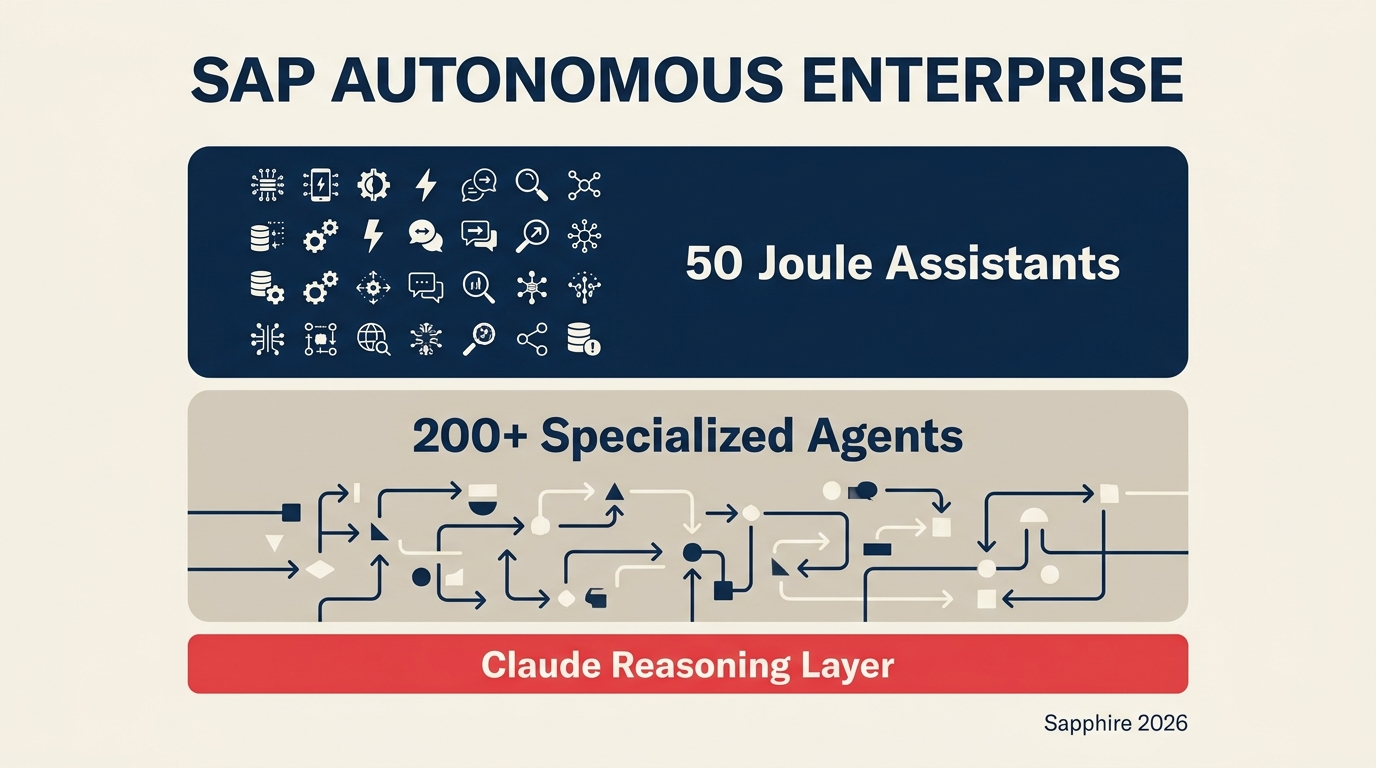
Di SAP Sapphire 2026 di Madrid (13-15 Mei), CEO SAP Christian Klein mengumumkan apa yang disebut perusahaan sebagai "Autonomous Enterprise": pivotasi platform penuh yang membayangkan ulang enterprise resource planning (ERP) SAP sebagai sistem operasi bisnis berlapis berbasis agen. Menurut keynote SAP Sapphire 2026, perusahaan meluncurkan lebih dari 50 Joule Assistants spesifik domain yang berada di atas fondasi 200+ agen khusus. Dan perusahaan menyematkan Anthropic Claude sebagai lapisan penalaran utama di seluruh portofolio.
Jika Anda adalah CTO dengan jejak SAP yang signifikan, Anda harus membuat keputusan. Bukan tentang apakah Joule menarik. Tentang apakah SAP akan memiliki lapisan orkestrasi agen Anda selama lima hingga tujuh tahun ke depan.
Apa yang Sebenarnya Diluncurkan SAP di Sapphire 2026
Yang Diluncurkan SAP
- 50+ Joule Assistants spesifik domain yang mengorkestrasikan 200+ agen khusus di bidang keuangan, rantai pasokan, pengadaan, human capital management (HCM), dan customer experience (CX) (keynote SAP Sapphire 2026)
- Akses design-time Joule Studio 2.0 gratis hingga akhir 2026; dibangun untuk kerangka bergaya LangGraph dan AutoGen terhadap data SAP langsung (SAP News, Mei 2026)
- Anthropic Claude menjadi "kemampuan penalaran dan agen utama" yang disematkan di seluruh portofolio solusi SAP (perluasan kemitraan SAP Anthropic)
Mari kita tepat tentang apa yang sebenarnya ada dalam rilis ini, karena hal spesifik itu penting untuk evaluasi Anda.
Arsitekturnya adalah stack agen dua tingkatan. Di bagian atas terdapat 50+ Joule Assistants, masing-masing dengan cakupan domain bisnis tertentu: keuangan, rantai pasokan, pengadaan, HCM, CX. Setiap Assistant bertindak sebagai orkestrator, memecah permintaan bisnis dan mendelegasikan eksekusi ke 200+ agen khusus di bawahnya. Agen-agen tersebut menangani tugas-tugas diskrit: memperbarui pesanan pembelian, memicu alur kerja penggajian, menandai penyimpangan rantai pasokan.
Di bawah semua ini terdapat lapisan fondasi baru yang SAP sebut sebagai SAP Business AI Platform. Ini merupakan penyatuan tiga hal yang sebelumnya terpisah: SAP Business Technology Platform, SAP Business Data Cloud, dan SAP Business AI. Proposalnya adalah satu lingkungan yang diatur untuk pengembangan AI, akses data, dan kepatuhan. Bagi CIO di industri yang diatur, kisah tata kelola terkonsolidasi tersebut mungkin merupakan bagian pengumuman yang paling menarik.
Pelanggan RISE mendapatkan tiga Joule Assistants yang disertakan secara kontrak di tahun pertama, sesuai liputan Sapphire sebelumnya. Itu menghilangkan hambatan "mari kita coba dulu". Pertanyaan segera beralih ke cakupan dan komitmen jangka panjang.
Mengapa Keputusan Claude di Dalam Joule Lebih Penting daripada Jumlah Agen
Jumlah agen adalah judul beritanya. Kemitraan Claude adalah sinyal strategisnya.
Menurut pengumuman Sapphire 2026, Claude dari Anthropic menjadi "kemampuan penalaran dan agen utama yang disematkan di seluruh portofolio solusi bertenaga AI SAP." Artinya Claude bukan tambahan opsional. Claude adalah lapisan penalaran yang tertanam dalam Joule dan agen Joule di seluruh stack.
Bagi sebagian besar CTO, ini memunculkan pertanyaan yang mudah diabaikan: apakah Anda ingin vendor ERP Anda memilih model dasar Anda?
Sebagian besar strategi AI perusahaan saat ini mengasumsikan beberapa tingkat fleksibilitas model. Anda mungkin menjalankan Claude dari Anthropic untuk beberapa beban kerja, model OpenAI untuk yang lain, Gemini Google untuk pembuatan kode, atau model open-source di lingkungan air-gapped. Fleksibilitas tersebut memungkinkan Anda mengoptimalkan biaya, kinerja, lokasi penyimpanan data, dan risiko vendor. Ketika Claude di-hardcode sebagai lapisan penalaran di dalam Joule, fleksibilitas tersebut hilang untuk alur kerja apa pun yang dimiliki Joule.
Ini bukan kritik terhadap Claude. Claude adalah salah satu model penalaran yang lebih kuat yang tersedia dan merupakan pilihan yang dapat dipertahankan untuk pekerjaan agen tingkat perusahaan. Tetapi keputusan tersebut sudah dibuat untuk Anda. Dan bagi CTO yang sudah berinvestasi dalam kerangka orkestrasi agnostik model, itu adalah konflik struktural.
Ada pertimbangan kedua: jika Anda juga menggunakan model penalaran Microsoft melalui Copilot, atau memiliki kesepakatan langsung dengan Anthropic, hubungan Claude-di-dalam-SAP dapat menciptakan percakapan tiga arah yang rumit tentang lisensi, penanganan data, dan pembaruan model.
Tiga Pertanyaan yang Perlu Dijawab Setiap CTO dengan Jejak SAP yang Besar
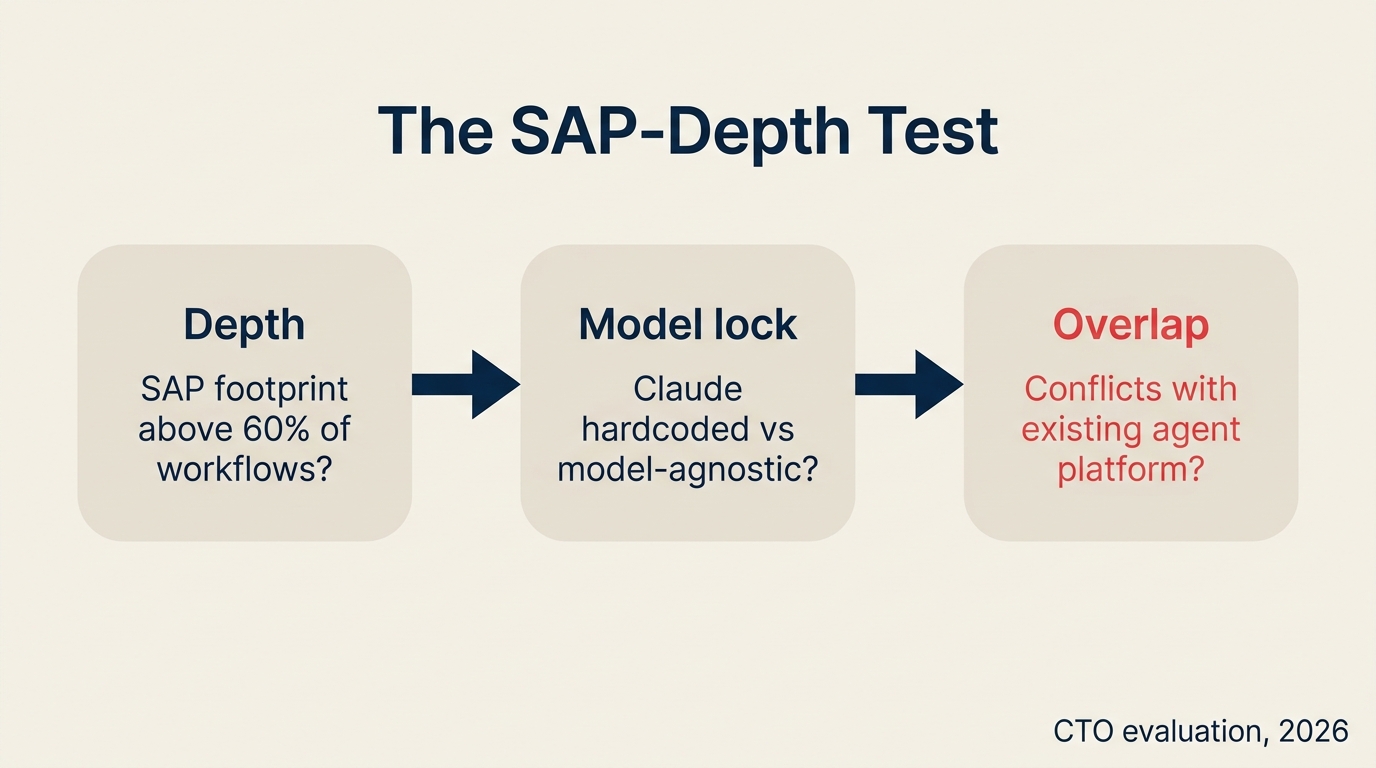
Sebut ini SAP-Depth Test: tiga pertanyaan yang menentukan apakah Joule harus menjadi control plane agen utama Anda atau target integrasi khusus.
Pertanyaan 1: Kedalaman. Berapa persen data dan alur kerja perusahaan Anda berada di dalam SAP?
Bayangkan produsen dengan 4.000 karyawan yang menjalankan SAP S/4HANA untuk keuangan, pengadaan, pemeliharaan pabrik, dan rantai pasokan. Jika 70% alur kerja bisnis kritis mereka bersifat native SAP, Joule Assistants kemungkinan adalah jalur yang paling efisien. Datanya sudah ada di sana. Integrasinya sudah ada. Membangun integrasi agen horizontal terhadap semua sistem tersebut membutuhkan waktu, uang, dan pemeliharaan berkelanjutan.
Tetapi jika Anda adalah perusahaan di mana SAP menangani keuangan dan pengadaan, tetapi mesin pendapatan Anda berjalan di Salesforce, data pelanggan Anda berada di Snowflake, dan alur kerja HR Anda ada di Workday, gambaran berubah. Masalah orkestrasi agen Anda pada dasarnya bersifat lintas sistem. Joule SAP dioptimalkan untuk tugas-tugas domain SAP. Joule tidak menyelesaikan masalah lintas sistem, dan menempatkannya sebagai pengendali lapisan agen Anda menciptakan kesenjangan.
Aturan praktis: di bawah 40% konsentrasi alur kerja SAP, Joule paling cocok sebagai sistem target dengan platform horizontal Anda sebagai pengendali. Di atas 60%, Joule mungkin menjadi control plane yang lebih praktis.
Pertanyaan 2: Kunci model. Apakah penalaran Claude yang di-hardcode dapat diterima, atau Anda membutuhkan orkestrasi agnostik model?
Jika strategi AI Anda sudah menentukan fleksibilitas model sebagai persyaratan, integrasi Claude Joule adalah batasan, bukan fitur. Anda perlu mendokumentasikan batasan tersebut, mendapatkan persetujuan bahwa itu dapat diterima untuk alur kerja domain SAP, dan mempertahankan proses tata kelola model terpisah untuk segala sesuatu di luar SAP.
Jika Anda sudah menjadi pelanggan Anthropic dengan perjanjian perusahaan, integrasi Claude mungkin justru menyederhanakan segalanya. Satu hubungan vendor yang lebih sedikit untuk dikelola.
Pertanyaan 3: Tumpang tindih. Platform agen horizontal apa yang sudah menyentuh alur kerja yang berdekatan dengan SAP, dan di mana konflik pertama akan muncul?
Di sinilah evaluasi menjadi spesifik. CTO di perusahaan rantai pasokan global yang menjalankan Microsoft 365 Copilot untuk tim keuangan akan menghadapi tumpang tindih hampir seketika: Joule ingin memiliki agen alur kerja keuangan; platform Agent 365 Microsoft mengklaim wilayah yang sama melalui integrasi Excel dan Teams. ServiceNow memiliki tumpang tindih dalam persetujuan pengadaan. Salesforce Agentforce menyentuh alur kerja CX yang juga ada dalam portofolio Joule SAP.
Anda tidak perlu menyelesaikan setiap tumpang tindih sebelum memulai. Tetapi Anda perlu mengidentifikasi konflik pertama sebelum berkomitmen. Itulah yang akan mendefinisikan hubungan tersebut.
Lihat bagaimana operator lain memikirkan jenis evaluasi ini di Kesenjangan Tata Kelola: Apa yang Salah Dipahami Pemimpin tentang AI di Tempat Kerja dan AI Copilots vs. AI Agen: Memahami Perbedaannya Itu Penting.
Apa Arti Joule Studio 2.0 bagi Pertimbangan Beli-versus-Bangun Anda
Joule Studio 2.0, yang akan diluncurkan Juni 2026, adalah bagian dari pengumuman ini yang perlu ditinjau tim rekayasa platform Anda secara terpisah dari percakapan strategi agen tingkat eksekutif.
SAP memposisikan Joule Studio sebagai lingkungan pengembangan untuk membangun agen dan Assistants kustom terhadap data bisnis SAP langsung. Joule Studio mendukung kerangka bergaya LangGraph dan AutoGen, yang berarti para insinyur Anda dapat membawa pola pengembangan agen yang sudah ada ke lingkungan SAP tanpa harus mempelajari sistem build proprietary dari awal.
Sinyal penetapan harga itu disengaja: akses design-time gratis hingga akhir 2026, dengan pengembangan berbantuan AI termasuk dalam batas penggunaan wajar. SAP menghilangkan hambatan biaya awal untuk mendorong adopsi sebelum menagih untuk penggunaan produksi. Ini adalah strategi land-and-expand klasik.
Artinya secara praktis: para insinyur Anda dapat mulai membangun terhadap data SAP pada Juni tanpa percakapan anggaran. Itu berguna untuk bukti konsep. Tetapi harga GA, batas produksi, dan ketentuan dukungan akan menentukan apakah yang mereka bangun dapat dipindahkan atau menciptakan utang teknis jika Anda keluar.
Pertanyaan kunci untuk tim platform Anda: apakah agen yang Anda bangun di Joule Studio portabel? Dapatkah mereka berjalan di luar lingkungan SAP jika Anda beralih vendor atau membangun arsitektur hybrid? Kompatibilitas LangGraph/AutoGen itu menggembirakan. Konfirmasi portabilitas secara eksplisit sebelum periode gratis berakhir.
Untuk kerangka yang lebih luas tentang mengevaluasi keputusan platform AI seperti ini, lihat Kerangka Keputusan Eksekutif untuk Strategi Tenaga Kerja AI dan Mengukur ROI AI Melampaui 'Waktu yang Dihemat'.
Rencana Evaluasi SAP Joule 60 Hari untuk Tim CTO Anda
Anda tidak perlu membuat keputusan stack penuh bulan ini. Tetapi Anda perlu menghindari tergelincir ke dalamnya secara default. Berikut struktur evaluasi 60 hari yang membuat Anda tetap dalam kendali.
Hari 1-10: Petakan jejak SAP Anda
Minta arsitek perusahaan Anda mendokumentasikan secara konkret proses bisnis mana yang bersifat native SAP versus lintas sistem. Tetapkan persentase konsentrasi alur kerja kasar. Angka tunggal ini mendorong sebagian besar keputusan hilir. Tanpanya, percakapan Joule tetap bersifat teoretis.
Hari 11-20: Audit komitmen platform agen yang ada
Tarik setiap kontrak, uji coba, atau penerapan produksi Microsoft Agent 365, Salesforce Agentforce, ServiceNow AI, atau Snowflake Intelligence yang menyentuh alur kerja yang juga ada dalam cakupan Joule SAP. Petakan tumpang tindih. Identifikasi titik konflik pertama. Ini bukan tentang membatalkan apa pun. Ini tentang mengetahui apa yang Anda hadapi.
Hari 21-30: Tinjauan kunci model
Jika fleksibilitas model adalah persyaratan yang dinyatakan dalam kebijakan AI Anda, dapatkan konfirmasi tertulis dari tim hukum dan keamanan bahwa integrasi Claude-di-dalam-Joule dapat diterima untuk alur kerja domain SAP yang akan dimiliki Joule. Jika tidak dapat diterima, Anda membutuhkan pengecualian atau arsitektur yang berbeda sebelum melangkah lebih jauh.
Hari 31-45: Bukti konsep Joule Studio 2.0
Gunakan akses design-time gratis untuk membangun satu agen atau Assistant yang sempit terhadap alur kerja SAP yang nyata. Pilih sesuatu yang berisiko rendah tetapi benar-benar representatif. Pembaruan pelaporan keuangan, notifikasi status pengadaan, atau pembaruan status onboarding HR adalah kandidat yang baik. Tujuannya bukan penerapan produksi. Tujuannya adalah uji portabilitas: dapatkah para insinyur Anda bekerja di lingkungan tersebut, dan dapatkah mereka membawa apa yang mereka bangun ke tempat lain jika diperlukan?
Hari 46-60: Memo keputusan stack
Buat memo satu halaman untuk tim kepemimpinan CTO Anda: persentase jejak SAP, peta tumpang tindih, penilaian kunci model, hasil bukti konsep, dan rekomendasi untuk salah satu dari tiga jalur.
Jalur A: Joule sebagai control plane agen utama untuk alur kerja domain SAP, platform horizontal (Microsoft, Salesforce, dll.) untuk orkestrasi lintas sistem.
Jalur B: Platform horizontal sebagai control plane agen utama, Joule sebagai sistem target dengan integrasi API.
Jalur C: Tunda keputusan selama 6 bulan, terus pantau, tetapkan tanggal evaluasi ulang yang tegas.
Jalur C hanya dapat dipertahankan jika Anda memiliki alasan konkret untuk menunggu. Jangan biarkan menjadi default.
Untuk cara membingkai kasus investasi ini kepada dewan direksi Anda, lihat Cara Berbicara kepada Dewan Anda tentang Investasi Tenaga Kerja AI Tanpa Hype dan Agen AI dalam Pipeline Penjualan: Hype, Realitas, dan Apa yang Benar-Benar Berhasil.
Pertanyaan yang Sering Diajukan
Haruskah kami menunggu Joule Studio 2.0 mencapai general availability sebelum berkomitmen?
Akses design-time diluncurkan Juni 2026 dan gratis hingga akhir tahun. Anda dapat menjalankan bukti konsep yang bermakna selama periode tersebut tanpa komitmen produksi. Risiko menunggu GA penuh adalah tim akun SAP Anda mempercepat percakapan kontrak seputar Joule Assistants sebelum Anda menyelesaikan evaluasi. Mulai tinjauan teknis sekarang agar keputusan bisnis tidak dibuat secara default selama negosiasi pembaruan.
Apakah Joule menggantikan Microsoft Copilot untuk pekerjaan yang berdekatan dengan SAP?
Tidak secara otomatis, dan tumpang tindihnya parsial, bukan lengkap. Copilot dan Agent 365 Microsoft bekerja di lapisan Microsoft 365: Teams, Excel, SharePoint, Outlook. Joule bekerja di lapisan data dan proses SAP: transaksi keuangan, persetujuan pengadaan, peristiwa rantai pasokan. Zona konflik adalah ketika keduanya menyentuh alur kerja yang sama, yang nyata tetapi lebih sempit dari yang terlihat pertama kali. Tim keuangan yang menjalankan penutupan akhir bulan melalui SAP tetapi berkoordinasi di Teams adalah skenario tumpang tindih yang paling jelas. Anda mungkin membutuhkan keduanya untuk masa mendatang, dengan titik handoff yang ditentukan di antara mereka.
Berapa waktu realistis dari persetujuan eksekutif hingga satu Joule Assistant dalam produksi?
Pelanggan RISE dengan tiga Assistants yang disertakan secara kontrak dapat secara realistis menempatkan satu ke dalam produksi dalam 90 hingga 120 hari jika cakupannya sempit dan ada sumber daya rekayasa platform yang berdedikasi. Variabel utamanya adalah tinjauan tata kelola data (terutama jika Anda berada di industri yang diatur), pengujian integrasi dengan platform agen yang ada, dan manajemen perubahan untuk tim bisnis yang akan menggunakan Assistant. Perusahaan yang mencoba menjalankan peluncuran luas sejak hari pertama cenderung terhenti. Mulailah dengan satu Assistant, satu domain, satu tim.
Pelajari Lebih Lanjut

On this page
- Apa yang Sebenarnya Diluncurkan SAP di Sapphire 2026
- Mengapa Keputusan Claude di Dalam Joule Lebih Penting daripada Jumlah Agen
- Tiga Pertanyaan yang Perlu Dijawab Setiap CTO dengan Jejak SAP yang Besar
- Apa Arti Joule Studio 2.0 bagi Pertimbangan Beli-versus-Bangun Anda
- Rencana Evaluasi SAP Joule 60 Hari untuk Tim CTO Anda
- Pertanyaan yang Sering Diajukan
- Pelajari Lebih Lanjut