Alternatif Stripe Terbaik 2026: 13 Platform Pembayaran untuk Perniagaan Berkembang
Turn this article into takeaways for your work.


Each assistant summarizes the article only for you and suggests best practices for your work.
Alternatif Stripe terbaik pada 2026 ialah Adyen dan Checkout.com untuk harga interchange-plus peringkat enterprise, Helcim untuk yuran SMB Amerika Utara yang telus, Paddle dan Lemon Squeezy untuk pematuhan cukai Merchant of Record, Square untuk pembayaran dalam-premis serta dalam talian, dan Mollie, Razorpay, atau Paystack untuk liputan serantau. Pilihan yang tepat bergantung pada titik geseran Stripe anda yang khusus: kos pada skala besar, kebergantungan kepada pembangun, atau pengendalian cukai global.
Stripe membina sesuatu yang benar-benar mengagumkan. API-nya bersih, dokumentasinya menyeluruh, dan pembangun akan memberitahu anda bahawa ia adalah cara terpantas untuk mengaktifkan pembayaran. Bagi pengasas teknikal atau pasukan dengan sumber kejuruteraan, Stripe telah menjadi pilihan utama yang jelas selama hampir satu dekad. Anda boleh menyemak halaman harga Stripe untuk memahami kos kadar rata-rata berbanding alternatif interchange-plus pada skala yang lebih besar.
Namun Stripe mempunyai titik geseran yang nyata dan semakin ketara seiring pertumbuhan syarikat. Kebergantungan kepada pembangun bermakna pasukan bukan teknikal tidak boleh menguruskan aliran, langganan, atau tetapan pembayaran tanpa memfailkan tiket dalaman. Harga pada skala yang lebih besar menjadi rumit apabila anda menambah caj kad antarabangsa, penukaran mata wang, yuran pertikaian, dan caj radar. Kestabilan akaun adalah aduan berulang: pedagang melaporkan dana yang dibekukan dengan penyelesaian yang terhad dan sokongan yang hanya melalui e-mel sehingga anda mencapai peringkat pelan yang membuka akses telefon. Dashboard pula, walaupun kaya dengan ciri, mengelirukan pasukan kewangan dan operasi yang hanya perlu merekonsiliasi pembayaran atau mengemas kini polisi bayaran balik. Jika mana-mana isu ini menjadi masalah sebenar bagi pasukan anda, berikut adalah 13 alternatif yang layak dinilai dengan serius.
Pasukan yang menimbang semula keseluruhan tindanan kewangan mereka bersama-sama pembayaran juga harus membaca kos sebenar hamparan perisian. Pemprosesan pembayaran adalah salah satu kawasan di mana yuran setiap transaksi terkumpul secara senyap merentasi tindanan. Dan jika anda menguruskan langganan dengan platform operasi yang lebih luas, panduan alternatif Bitrix24 terbaik merangkumi cara alat yang berbeza mengendalikan aliran kerja pengebilan berulang pada lapisan operasi.
Jadual Perbandingan Pantas
| Alat | Paling Sesuai Untuk | Harga Permulaan | Kekuatan Utama | Batasan Utama |
|---|---|---|---|---|
| PayPal / Braintree | Capaian pengguna luas dan isyarat kepercayaan checkout | 2.9% + $0.30 setiap transaksi | Pengiktirafan jenama, pembeli dompet PayPal, liputan 200+ pasaran | Kadar pertikaian lebih tinggi; Braintree memerlukan persediaan pembangun |
| Square | Runcit, restoran, dalam-premis dan dalam talian secara bersama | Percuma untuk asas; 2.6% + $0.10 dalam premis | POS bersatu dengan pembayaran dalam talian; ekosistem perkakasan | Lemah di luar Amerika Utara; terhad untuk pengebilan SaaS tulen |
| Adyen | Pedagang enterprise dan global yang memerlukan satu platform | Interchange+ setiap transaksi; minimum $120/bulan | Omnichannel sebenar; integrasi tunggal untuk pemerolehan global | Jumlah pemprosesan minimum; proses onboarding yang kompleks |
| Mollie | SMB Eropah yang memerlukan kaedah pembayaran tempatan | 0.25 EUR + % setiap kaedah | SEPA, iDEAL, Bancontact, Sofort natif (tanpa plugin) | Terhad di luar Eropah; ekosistem lebih kecil berbanding Stripe |
| Checkout.com | Pedagang bervolume tinggi yang mahukan harga telus | Custom; model interchange+ | Data terperinci, kadar kelulusan tinggi, harga tersuai pada skala | Ambang hasil minimum; tidak sesuai untuk pasukan kecil |
| Razorpay | Perniagaan berasaskan India dan pengembangan Asia Tenggara | 2% setiap transaksi | Sokongan UPI, IMPS, NEFT mendalam; pematuhan khusus India terbina | Capaian geografi terhad di luar Asia Selatan/Tenggara |
| Paddle | Syarikat SaaS yang mahukan liputan Merchant of Record | 5% + $0.50 setiap transaksi | Model MoR mengendalikan VAT global, cukai jualan, pematuhan secara automatik | Yuran setiap transaksi lebih tinggi; kurang kawalan ke atas UX checkout |
| Lemon Squeezy | Pengasas solo dan penjual produk digital kecil | 5% + $0.50 setiap transaksi | Persediaan pantas, MoR disertakan, kedai terbina | Tidak dibina untuk volum tinggi atau logik langganan yang kompleks |
| Authorize.net | Perniagaan AS yang memerlukan kestabilan setaraf bank | $25/bulan + 2.9% + $0.30 | Rekod prestasi yang panjang, integrasi bank yang luas, stabil untuk industri terkawal | Antara muka lapuk; yuran lebih tinggi berbanding alternatif moden |
| GoCardless | Perniagaan langganan yang lebih memilih debit bank berbanding kad | 0.5-1% setiap transaksi | Pembayaran bank-ke-bank berulang; kadar kegagalan lebih rendah berbanding kad | Kad tidak disokong; mandat akaun bank menambah geseran |
| Paystack | Perniagaan Afrika yang memproses pembayaran tempatan | 1.5% + 50 NGN (Nigeria) | Sokongan kaedah pembayaran tempatan yang mendalam di 10+ negara Afrika | Terhad di Afrika; ekosistem pembangun kecil di luar benua |
| Helcim | SMB Amerika Utara yang mahukan ketelusan interchange+ | Interchange+ 0.1% + $0.05 | Tiada yuran bulanan, harga interchange+ sebenar, ketelusan yuran yang cemerlang | Terhad di AS/Kanada; tiada pemerolehan antarabangsa |
| Nickel | Pasukan kewangan AS yang menyatukan AR, AP, dan pembayaran | Pelan percuma; ACH $0, kad 2.9% | ACH percuma tanpa had ditambah 2% APY ke atas wang tunai yang tidak digunakan | Bukan platform pembangun; API hanya pada peringkat $300 |
Matriks Kesesuaian Peringkat
| Alat | Permulaan (1-10) | Peringkat Pertumbuhan (10-100) | Pasaran Pertengahan (100-500) | Enterprise (500+) |
|---|---|---|---|---|
| PayPal / Braintree | Sesuai kuat | Sesuai baik | Berfungsi | Tersedia |
| Square | Sesuai kuat (runcit) | Sesuai baik (hibrid) | Berfungsi | Tidak ideal |
| Adyen | Tidak sesuai | Terhad | Sesuai baik | Paling sesuai |
| Mollie | Sesuai kuat (EU) | Sesuai baik (EU) | Berfungsi | Terhad |
| Checkout.com | Tidak sesuai | Mungkin | Sesuai baik | Paling sesuai |
| Razorpay | Sesuai kuat (India) | Sesuai baik (India) | Berfungsi | Tersedia |
| Paddle | Sesuai kuat (SaaS) | Sesuai baik (SaaS) | Berfungsi | Kedalaman terhad |
| Lemon Squeezy | Paling sesuai | Terhad | Tidak ideal | Tidak direka untuk ini |
| Authorize.net | Berfungsi | Sesuai baik | Sesuai baik | Berfungsi |
| GoCardless | Berfungsi | Sesuai baik | Sesuai kuat | Berfungsi |
| Paystack | Sesuai kuat (Afrika) | Sesuai baik (Afrika) | Berfungsi | Terhad |
| Helcim | Sesuai kuat (NA) | Sesuai baik (NA) | Berfungsi | Tidak direka untuk ini |
| Nickel | Sesuai baik (AS) | Sesuai kuat (AS) | Sesuai kuat (AS) | Berfungsi |
Jadual Saiz dan Persona
| Alat | Saiz Pasukan Ideal | Siapa yang Membeli | Siapa yang Menggunakannya Setiap Hari |
|---|---|---|---|
| PayPal / Braintree | Semua saiz | Pengasas, Pengurus E-dagang | Kewangan, pelanggan |
| Square | 1-100 | Pemilik, Pengurus Operasi | Kakitangan, kewangan |
| Adyen | 200+ pekerja | CFO, CTO, VP Pembayaran | Kewangan, kejuruteraan |
| Mollie | 1-200 (EU) | Pengasas, Pengarah Kewangan | Kewangan, operasi |
| Checkout.com | 50+ | CFO, Ketua Pembayaran | Kewangan, kejuruteraan |
| Razorpay | 1-500 (India) | Pengasas, CTO, Kewangan | Pembangun, kewangan |
| Paddle | 1-100 (SaaS) | Pengasas SaaS, CFO | Kewangan, produk |
| Lemon Squeezy | 1-10 | Pengasas solo, pencipta | Pengasas secara langsung |
| Authorize.net | 10-500 | Pemilik Perniagaan, Pengarah IT | Kewangan, pentadbiran |
| GoCardless | 10-500 | Pengarah Kewangan, COO | Kewangan, operasi |
| Paystack | 1-200 (Afrika) | Pengasas, CTO | Pembangun, kewangan |
| Helcim | 1-200 (NA) | Pemilik, Pengurus Kewangan | Kewangan, pentadbiran |
| Nickel | 5-500 (AS) | Controller, Pengurus Kewangan | Kewangan, kakitangan AP/AR |
1. PayPal / Braintree: Kepercayaan pengguna pada skala dengan dua wajah
Strategi produk PayPal mempunyai dua mod yang berbeza: checkout PayPal yang berhadapan dengan pengguna yang mendapat manfaat daripada ketersediaan dompet, dan Braintree, platform yang berfokus kepada pembangun yang diakuisisi PayPal pada tahun 2013. Kedua-duanya melayani profil pembeli yang berbeza dan tidak seharusnya dianggap sebagai produk yang sama.
Butang checkout PayPal menukar dengan baik kerana pembeli tidak perlu memasukkan semula data kad. Dalam e-dagang, kesan kepercayaan jenama itu nyata dan boleh diukur, terutamanya bagi golongan demografi yang lebih tua atau pasaran di mana keengganan memasukkan kad adalah tinggi. PayPal merangkumi 200+ pasaran dan 25 mata wang, yang menjadikan pengembangan global lebih mudah dari segi operasi.
Braintree adalah lapisan API pembangun. Ia menawarkan penyimpanan kad, pengebilan langganan, dan aliran checkout yang lebih boleh disesuaikan berbanding PayPal standard. Venmo dan dompet PayPal adalah kaedah pembayaran natif. Pengalaman pembangun tidak sepoles Stripe, tetapi ia kukuh.
Kelemahannya: kadar pertikaian cenderung lebih tinggi berbanding Stripe atau Adyen. Polisi perlindungan pembeli PayPal cenderung mesra pengguna, yang menimbulkan geseran bagi pedagang dalam kes balik wang. Isu kestabilan akaun PayPal (penahanan, pembekuan) adalah kekecewaan yang terdokumentasi dengan baik, terutamanya bagi pedagang dengan pertumbuhan pesat yang mempunyai corak volum yang berubah dengan cepat.
| Apa yang anda dapat | Apa yang anda tidak dapat |
|---|---|
| Pembeli dompet PayPal ditukar semasa checkout | Proses penyelesaian pertikaian yang bersih |
| Liputan 200+ pasaran, 25 mata wang | Pengalaman pembangun sepoles Stripe |
| Braintree untuk aliran kad tersuai | Kestabilan akaun yang boleh dijangka pada volum tinggi |
| Venmo sebagai pilihan pembayaran (AS) | Kadar kompetitif pada skala |
Harga: 2.9% + $0.30 setiap transaksi (standard); Braintree menambah $0.30 + 2.59% untuk transaksi kad. Diskaun volum tersedia melebihi $100K/bulan. Lihat halaman harga pedagang PayPal untuk kadar semasa.
Paling sesuai untuk: Perniagaan e-dagang di mana penggunaan dompet PayPal tinggi; perniagaan AS yang mahukan integrasi Venmo; penjual global yang memerlukan liputan pasaran yang luas tanpa infrastruktur tersuai.
2. Square: Platform dalam-premis yang berkembang ke dalam talian
Square dibina untuk runcit dan perkhidmatan makanan sebelum menjadi platform pembayaran yang lebih luas. Asal-usul itu membentuk segala-galanya: perkakasan cemerlang, perisian POS yang direka dengan teliti, dan pelaporan bersatu merentasi saluran dalam-premis dan dalam talian yang benar-benar berguna bagi perniagaan yang beroperasi dalam kedua-duanya.
Falsafah produk adalah akses bukan teknikal. Pemilik runcit kecil, pengurus restoran, atau perniagaan perkhidmatan boleh menggunakan Square tanpa pembangun. Dashboard direka untuk pengendali, bukan jurutera. Pertikaian, bayaran balik, pembayaran, dan rekod pelanggan semuanya boleh diuruskan oleh kakitangan bukan teknikal tanpa tiket sokongan.
Untuk pembayaran dalam talian tulen atau pengebilan SaaS, Square kurang menarik. Alat langganan dan pengebilan berulang berfungsi tetapi terhad berbanding enjin pengebilan Stripe. Ketersediaan antarabangsa sempit, kini hanya AS, Kanada, UK, Australia, Jepun, dan Ireland, yang menjadikannya tidak sesuai untuk syarikat dengan volum rentas sempadan yang ketara.
| Apa yang anda dapat | Apa yang anda tidak dapat |
|---|---|
| POS bersatu dengan pembayaran dalam talian dalam satu produk | Fleksibiliti API setaraf pembangun |
| Ekosistem perkakasan (pembaca, terminal, kiosk) | Liputan pasaran antarabangsa |
| Dashboard bukan teknikal yang boleh digunakan oleh mana-mana kakitangan | Logik pengebilan langganan lanjutan |
| Pelan asas percuma tanpa yuran bulanan | Kadar kompetitif untuk pemprosesan kad bervolum tinggi |
Harga: 2.6% + $0.10 setiap transaksi dalam premis; 2.9% + $0.30 dalam talian; tiada yuran bulanan untuk pelan asas. Square Plus dari $29/bulan menambah ciri lanjutan. Lihat halaman harga Square untuk harga perkakasan dan pelan semasa.
Paling sesuai untuk: Runcit, restoran, dan perniagaan perkhidmatan dengan jualan dalam-premis dan dalam talian; pasukan yang memerlukan pengurusan pembayaran bukan teknikal; perniagaan Amerika Utara dengan lokasi fizikal.
3. Adyen: Platform tunggal untuk pemerolehan global enterprise
Visi produk Adyen adalah penyatuan: satu integrasi yang mengendalikan pembayaran kad-hadir, dalam talian, dan dalam-aplikasi merentasi semua geografi, dengan hubungan pemerolehan langsung di pasaran yang penting. Tawaran kepada pasukan kewangan dan pembayaran enterprise adalah menghapuskan gabungan pemproses serantau, PSP, dan kontrak gateway yang terkumpul selama bertahun-tahun pengembangan antarabangsa.
Metodologinya adalah pemerolehan-dahulu. Di mana Stripe menjual semula perkhidmatan rangkaian kad, Adyen memegang hubungan penerbit dan pengakuisi langsung di pasaran terasnya. Ini membolehkan kadar kelulusan yang lebih tinggi, data transaksi terperinci, dan peraturan penghalaan tersuai yang mengoptimumkan kadar penerimaan berbanding kos pemprosesan.
Produk RevenueAccelerate Adyen menggunakan data peringkat rangkaian untuk meningkatkan kadar kelulusan pada caj berulang, yang berharga bagi perniagaan langganan dengan cubaan semula kad bervolum tinggi. Model data bersatu bermakna pasukan kewangan mendapat pelaporan konsolidasi merentasi saluran tanpa overhead rekonsiliasi.
Halangan adalah saiz minimum yang boleh digunakan. Adyen memerlukan volum pemprosesan yang ketara untuk mewajarkan onboarding, dan model harga minimum bulanan (sekitar $120/bulan) ditambah interchange-plus memerlukan pasukan kewangan yang memahami ekonomi pembayaran. Ia bukan produk layan diri. Onboarding melibatkan perbincangan jualan dan kerja integrasi.
| Apa yang anda dapat | Apa yang anda tidak dapat |
|---|---|
| Hubungan pemerolehan langsung di 40+ pasaran | Onboarding layan diri |
| Omnichannel: dalam talian, dalam-aplikasi, dalam kedai disatukan | Harga yang berbaloi untuk volum kecil |
| Kadar kelulusan tinggi melalui pengoptimuman rangkaian | Dashboard mudah untuk pengguna bukan teknikal |
| Data transaksi terperinci untuk pasukan kewangan | Masa-ke-pembayaran-pertama yang pantas |
Harga: Model interchange-plus; yuran pemprosesan berbeza mengikut jenis kad dan pasaran; minimum $120/bulan. Kontrak tersuai untuk volum yang besar.
Paling sesuai untuk: Perniagaan enterprise dan pasaran pertengahan atas yang memproses $10M+ setahun; pedagang global yang ingin menyatukan pemproses serantau; syarikat di mana pengoptimuman kadar kelulusan mempunyai kesan langsung terhadap P&L.
4. Mollie: Pembayaran Eropah yang dibina untuk kaedah tempatan
Keseluruhan tesis produk Mollie adalah liputan kaedah pembayaran Eropah tanpa kerumitan integrasi. Kaedah pembayaran tempatan yang mendominasi e-dagang Eropah (iDEAL di Netherlands, Bancontact di Belgium, SEPA Direct Debit merentasi zon euro, Sofort di Jerman) semuanya tersedia secara natif tanpa plugin pihak ketiga atau kontrak berasingan.
Falsafahnya adalah kebolehcapaian bagi perniagaan kecil dan sederhana Eropah. Mollie dihargai setiap transaksi, tanpa yuran bulanan, dan dashboard direka untuk pengendali tanpa penglibatan pembangun. Menambah kaedah pembayaran baharu, misalnya ansuran Klarna atau PayPal di samping kad, adalah togol tetapan, bukan perubahan kod.
API cukup bersih untuk pembangun tetapi penekanannya adalah pada integrasi no-code atau low-code melalui plugin untuk Shopify, WooCommerce, Magento, dan platform utama lain. SMB Eropah yang sebelum ini memerlukan pembangun untuk menambah iDEAL ke checkout mereka kini boleh melakukannya sendiri.
Batasannya adalah geografi. Di luar Eropah, Mollie mempunyai nilai yang terhad. Tiada pemerolehan kad AS, tiada jejak Asia-Pasifik, dan kaedah pembayaran yang penting di pasaran lain tidak disokong.
| Apa yang anda dapat | Apa yang anda tidak dapat |
|---|---|
| SEPA, iDEAL, Bancontact, Sofort natif (tanpa plugin) | Capaian geografi di luar Eropah |
| Tiada yuran bulanan; bayar setiap transaksi | Alat pelaporan setaraf enterprise |
| Integrasi plugin untuk platform e-dagang utama | Ciri pengebilan langganan yang kompleks |
| Dashboard bersih untuk pasukan bukan teknikal | Pengoptimuman harga berasaskan volum |
Harga: Yuran setiap transaksi berbeza mengikut kaedah: kad 1.8% + €0.25; iDEAL €0.29 rata; SEPA 0.2% + €0.25. Tiada minimum bulanan.
Paling sesuai untuk: SMB dan perniagaan e-dagang Eropah yang memerlukan kaedah pembayaran tempatan; pedagang Belanda, Belgium, Jerman, dan Perancis di mana alternatif kad mendominasi; syarikat yang mengutamakan pematuhan Eropah tanpa overhead integrasi.
5. Checkout.com: Ketelusan bervolum tinggi untuk pedagang yang berkembang
Checkout.com memposisikan dirinya sebagai platform pembayaran untuk pedagang yang telah melampaui kesederhanaan kadar rata-rata Stripe dan mahukan ketelusan harga yang sebenar. Tawarannya adalah harga interchange-plus dengan hubungan pemerolehan langsung, memberikan pasukan kewangan keterlihatan tentang apa yang sebenarnya mereka bayar untuk setiap jenis transaksi.
Metodologinya berpusat pada pengoptimuman kadar kelulusan. Logik penghalaan pintar Checkout.com menggunakan data rangkaian dan penerbit untuk memilih laluan pemerolehan terbaik bagi setiap transaksi, yang secara terukur meningkatkan kadar penerimaan pada kad antarabangsa. Bagi pedagang di mana peningkatan 1-2% dalam kadar kelulusan bermakna hasil enam angka, ini adalah pembeza yang ketara.
Lapisan data adalah canggih. Pedagang mendapat perincian setiap transaksi mengikut jenis kad, negara penerbit, sebab penolakan, dan kadar kejayaan cubaan semula, membolehkan pasukan kewangan dan penipuan menganalisis prestasi pembayaran pada tahap yang tidak didedahkan oleh pemproses kadar rata-rata.
Checkout.com tidak dibina untuk pasukan kecil. Proses onboarding memerlukan pengesahan perniagaan, sejarah pemprosesan, dan kerja integrasi. Model harga memberikan ganjaran pada skala. Ia masuk akal dari segi ekonomi apabila volum bulanan melebihi sekitar $50-100K.
| Apa yang anda dapat | Apa yang anda tidak dapat |
|---|---|
| Harga interchange-plus dengan keterlihatan kos penuh | Harga layan diri atau bervolum rendah |
| Penghalaan pintar untuk kadar kelulusan yang lebih tinggi | Penyematan checkout mudah tanpa pembangun |
| Data transaksi terperinci untuk pasukan kewangan dan penipuan | Garis masa onboarding yang pantas |
| Pengurusan akaun khusus pada volum | Liputan kaedah pembayaran pengguna yang luas |
Harga: Tersuai; model interchange-plus. Umumnya kompetitif pada volum tahunan $500K+. Ambang minimum dikenakan.
Paling sesuai untuk: Pedagang peringkat pertumbuhan dan pasaran pertengahan yang memproses $1M+ setahun; perniagaan di mana pengoptimuman kadar kelulusan antarabangsa penting; pasukan kewangan yang mahukan keterlihatan kos setiap transaksi.
6. Razorpay: Natif India dengan capaian Asia Tenggara
Razorpay dibina dari bawah ke atas untuk infrastruktur pembayaran India, yang secara ketara berbeza daripada landasan kad Barat. UPI (Unified Payments Interface), IMPS, NEFT, dan RTGS adalah kaedah pembayaran yang dominan, bukan Visa dan Mastercard. Razorpay menyokong semua kaedah ini secara natif, bersama-sama ansuran EMI pada kad, aliran bayar semasa penghantaran, dan keperluan pematuhan sekitar peraturan RBI.
Falsafah produk adalah kelengkapan untuk pasaran India: bukan sekadar penerimaan pembayaran, tetapi pembayaran keluar, perbankan perniagaan (melalui RazorpayX), kad korporat, dan gaji. Bagi syarikat permulaan dan syarikat pertumbuhan India, Razorpay boleh menggantikan pelbagai vendor infrastruktur kewangan.
Pengalaman pembangun adalah kukuh. Dokumentasi API menyeluruh, SDK merangkumi semua platform utama, dan produk pautan pembayaran serta checkout yang dihoskan membolehkan pasukan bukan teknikal mengutip pembayaran tanpa menulis kod. Sokongan pelanggan responsif mengikut waktu India dan tersedia dalam cara yang sering tidak dimiliki oleh pemproses global untuk pedagang yang lebih kecil.
Skop geografi di luar India adalah terhad. Razorpay telah berkembang ke Asia Tenggara, tetapi ia terutamanya merupakan alat pasaran Asia Selatan. Bagi perniagaan dengan volum Amerika Utara, Eropah, atau Asia Timur yang ketara, pemproses berasingan diperlukan.
| Apa yang anda dapat | Apa yang anda tidak dapat |
|---|---|
| Sokongan UPI, IMPS, NEFT natif (tanpa penyelesaian) | Pemerolehan global di luar Asia Selatan/Tenggara |
| Pematuhan RBI dan penjajaran peraturan India | Kadar kompetitif untuk transaksi kad Barat |
| Pembayaran keluar, perbankan, dan kad dalam satu ekosistem | Pengoptimuman penghalaan skala enterprise |
| Dokumentasi pembangun dan liputan SDK yang kukuh | Sokongan semasa waktu perniagaan AS/EU |
Harga: 2% setiap transaksi (India domestik); kad antarabangsa 3%; tiada yuran persediaan.
Paling sesuai untuk: Syarikat permulaan dan perniagaan India; syarikat yang berkembang di Asia Selatan atau Tenggara; pasukan yang memerlukan UPI dan kaedah pembayaran khusus India sebagai saluran utama.
7. Paddle: Merchant of Record untuk pematuhan SaaS global
Pandangan teras Paddle adalah bahawa syarikat SaaS tidak mahu menjadi pakar pematuhan cukai. Sebagai Merchant of Record, Paddle bertanggungjawab secara undang-undang untuk mengutip dan menyerahkan cukai jualan, VAT, dan GST merentasi pasaran yang dilayani oleh pelanggan mereka. Pihak berkuasa cukai di setiap negara melihat kepada Paddle, bukan syarikat anda.
Metodologinya menyelesaikan beban operasi yang sebenar. Tanpa MoR, syarikat SaaS yang menjual secara global perlu mendaftar untuk VAT di EU (setelah mencapai ambang mengikut negara), mematuhi cukai jualan peringkat negeri AS di lebih 45 negeri, menguruskan GST/HST Kanada, dan mengendalikan GST Australia, cukai penggunaan Jepun, dan berpuluh-puluh rejim lain. Paddle mengendalikan semua ini sebagai ganti yuran setiap transaksi.
Selain pematuhan, Paddle menyediakan pengurusan langganan, automasi dunning, dan penyesuaian checkout. Checkout dihoskan tetapi boleh dijenama dengan munasabah. Aliran naik taraf, turun taraf, dan pembatalan diuruskan dalam dashboard Paddle tanpa penglibatan kejuruteraan.
Pertukaran adalah kos dan kawalan. Yuran 5% + $0.50 setiap transaksi Paddle lebih tinggi berbanding 2.9% + $0.30 Stripe. Pada volum tinggi, jurang itu ketara. Dan kerana Paddle adalah Merchant of Record, anda mempunyai kawalan yang lebih sedikit ke atas UX checkout dan polisi bayaran balik berbanding memiliki aliran pembayaran secara langsung.
| Apa yang anda dapat | Apa yang anda tidak dapat |
|---|---|
| Pematuhan cukai global dikendalikan (tiada beban pendaftaran VAT) | Yuran setiap transaksi yang lebih rendah |
| Pengurusan langganan dengan aliran naik/turun taraf no-code | Kawalan penuh ke atas UX checkout |
| Automasi dunning untuk pemulihan pembayaran gagal | Hubungan pemerolehan langsung |
| Pengurusan lesen dan portal pelanggan disertakan | Fleksibiliti untuk barangan fizikal atau pengebilan kompleks |
Harga: 5% + $0.50 setiap transaksi. Tiada yuran bulanan. Harga tersuai untuk SaaS bervolum tinggi. Lihat halaman harga Paddle untuk kadar semasa dan apa yang disertakan dalam model Merchant of Record.
Paling sesuai untuk: Syarikat SaaS yang menjual secara global dan mahukan pematuhan cukai dikendalikan secara automatik; pengasas solo atau pasukan kecil tanpa fungsi kewangan/undang-undang; perniagaan yang menjual produk digital ke Eropah dan ingin VAT diuruskan.
8. Lemon Squeezy: MoR persediaan pantas untuk pengasas solo dan produk digital
Lemon Squeezy (diakuisisi oleh Stripe pada tahun 2024 tetapi terus beroperasi secara bebas) menyasarkan hujung bawah pasaran Paddle: pengasas individu, pencipta, dan pasukan yang sangat kecil yang menjual produk digital, langganan SaaS, atau aset yang boleh dimuat turun yang ingin beroperasi dalam beberapa jam, bukan minggu.
Falsafah produk adalah kesederhanaan berbanding kedalaman. Pembina kedai adalah visual. Pematuhan cukai dikendalikan sebagai MoR. Langganan, kunci lesen, dan penghantaran fail terbina. Penjual bukan teknikal boleh mempunyai perniagaan produk digital yang berfungsi tanpa menyentuh kod.
Apa yang tidak anda dapat adalah kerumitan. Lemon Squeezy tidak dibina untuk pemprosesan transaksi bervolum tinggi, aliran checkout tersuai, model harga langganan yang kompleks, atau pasukan yang memerlukan pelaporan merentasi pelbagai produk dan geografi. Yuran setiap transaksi (5% + $0.50) adalah tinggi, yang bertambah pada skala.
| Apa yang anda dapat | Apa yang anda tidak dapat |
|---|---|
| Masa terpantas ke penjualan pertama dalam senarai ini | Ekonomi transaksi pada skala |
| Pematuhan cukai MoR disertakan | Checkout tersuai atau integrasi API-dahulu |
| Penghantaran fail digital terbina + kunci lesen | Logik langganan lanjutan |
| Pembina kedai visual, tiada pembangun diperlukan | Sokongan akaun khusus |
Harga: 5% + $0.50 setiap transaksi. Tiada yuran bulanan.
Paling sesuai untuk: Pengasas solo, penggodam indie, dan pasukan kecil yang menjual produk digital, langganan SaaS, atau templat; pasukan di mana kelajuan pelancaran lebih penting daripada pengoptimuman setiap transaksi; produk peringkat awal yang menguji harga dan pembungkusan.
9. Authorize.net: Pembayaran stabil setaraf bank untuk perniagaan mapan
Authorize.net adalah salah satu gateway pembayaran tertua di pasaran, ditubuhkan pada tahun 1996 dan kini dimiliki oleh Visa. Usia bukanlah cadangan dengan sendirinya, tetapi dalam industri terkawal atau dengan pembeli enterprise yang mempunyai keperluan vendor yang ketat, rekod prestasi dan kedalaman integrasi bank Authorize.net penting dalam cara yang tidak boleh dipadankan oleh platform yang lebih baru.
Metodologinya adalah kebolehpercayaan berbanding inovasi. Authorize.net menyokong setiap rangkaian kad utama, pindahan bank ACH, Apple Pay, PayPal, dan Visa Checkout. Suite pengesanan penipuan (Advanced Fraud Detection Suite) boleh dikonfigurasi tanpa penglibatan pembangun. Alat pematuhan PCI, pengebilan berulang, dan profil pelanggan semuanya tersedia.
Dashboard adalah lapuk mengikut piawaian moden. Antara muka mencerminkan usia platform dan tidak mengikuti pelaburan UX yang telah dibuat oleh Stripe atau Square. Tetapi bagi pasukan kewangan atau operasi yang menghargai kebolehramalan dan tidak memerlukan pengalaman pembangun moden, ia berfungsi.
Ekosistem integrasi adalah luas. Authorize.net telah diintegrasikan ke dalam perisian perakaunan, sistem ERP, dan platform e-dagang selama beberapa dekad. Jika tindanan perniagaan sedia ada anda sudah mempunyai sambungan Authorize.net, ia adalah laluan yang paling mudah.
| Apa yang anda dapat | Apa yang anda tidak dapat |
|---|---|
| Rekod masa aktif berdekad; dikenali oleh pembeli enterprise | Dashboard moden atau pengalaman pembangun |
| Integrasi luas dengan perisian perniagaan legasi | Kadar setiap transaksi yang kompetitif |
| Alat penipuan yang boleh dikonfigurasi tanpa penglibatan pembangun | Onboarding pantas atau dokumentasi API moden |
| Sokongan ACH + kad + dompet digital | Pengurusan pertikaian layan diri |
Harga: Yuran gateway $25/bulan + 2.9% + $0.30 setiap transaksi (pelan all-in-one). Pilihan akaun pedagang berasingan tersedia pada kadar setiap transaksi yang lebih rendah.
Paling sesuai untuk: Perniagaan AS mapan dengan integrasi Authorize.net sedia ada; industri terkawal (bersempadan penjagaan kesihatan, undang-undang, perkhidmatan kewangan) di mana reputasi vendor penting; syarikat dengan sistem legasi yang telah diintegrasikan.
10. GoCardless: Debit bank berulang untuk perniagaan langganan
GoCardless dibina berdasarkan tesis khusus: bagi perniagaan langganan, pembayaran debit bank-ke-bank yang berulang adalah lebih boleh dipercayai, lebih murah, dan kadar churn lebih rendah berbanding langganan berasaskan kad. Kad tamat tempoh, hilang, dan mempunyai pembatalan berkaitan penipuan. Akaun bank tidak berubah hampir kerap.
Metodologinya berpusat pada ACH (AS), SEPA Direct Debit (Eropah), BACS (UK), dan BECS (Australia): landasan debit langsung di setiap pasaran utama. GoCardless mengendalikan pengumpulan mandat (kebenaran pelanggan untuk debit masa hadapan), logik cubaan semula, pemberitahuan kegagalan, dan aliran kerja dunning. Kadar pembayaran gagal untuk debit bank biasanya 0.5-2% berbanding 10-15% untuk langganan berasaskan kad.
Pertukaran adalah geseran checkout. Mendapatkan pelanggan untuk memberikan butiran akaun bank dan menandatangani mandat debit langsung adalah lebih banyak geseran berbanding memasukkan nombor kad. Untuk langganan B2B, kontrak tahunan, atau perkhidmatan berulang bernilai tinggi, geseran itu boleh diterima. Untuk langganan pengguna bertaraf rendah di mana kadar penukaran adalah utama, kad biasanya lebih baik.
GoCardless tidak menyokong pembayaran kad sama sekali. Ia adalah debit bank semata-mata. Perniagaan yang memerlukan kedua-duanya perlu menggabungkan GoCardless dengan pemproses kad.
| Apa yang anda dapat | Apa yang anda tidak dapat |
|---|---|
| Kadar pembayaran gagal yang lebih rendah berbanding kad | Penerimaan pembayaran kad |
| Harga setiap transaksi yang memberikan ganjaran pada skala | Geseran checkout yang rendah untuk pelanggan baharu |
| Pengurusan mandat dan dunning terbina | Pemprosesan pembayaran masa nyata |
| Debit bank berbilang negara pada satu integrasi | Kebiasaan kaedah pembayaran yang berhadapan dengan pengguna |
Harga: 0.5% + $0.20 setiap transaksi (AS ACH); SEPA 1% dihadkan pada €2; pelan volum tersedia. Tiada yuran bulanan pada pelan standard.
Paling sesuai untuk: Syarikat SaaS B2B dengan model langganan tahunan atau bulanan; perniagaan dengan nilai kontrak purata yang tinggi di mana geseran mandat debit bank boleh diterima; perniagaan UK, Eropah, atau Australia di mana debit langsung sudah mapan secara budaya.
11. Paystack: Pembayaran Afrika yang dibina untuk infrastruktur Afrika
Paystack (diakuisisi oleh Stripe pada tahun 2020 tetapi beroperasi secara bebas) dibina untuk menyelesaikan cabaran infrastruktur pembayaran khusus pasaran Afrika: sistem perbankan yang berfragmen, kadar penetrasi kad yang rendah di sesetengah pasaran, dominasi wang mudah alih di Afrika Timur, dan kepelbagaian kaedah pembayaran tempatan yang tidak dikendalikan dengan baik oleh mana-mana pemproses global.
Metodologinya adalah tempatan-dahulu. Di Nigeria, Ghana, Afrika Selatan, Kenya, Mesir, Côte d'Ivoire, dan beberapa pasaran lain, Paystack mempunyai hubungan langsung dengan bank tempatan dan rangkaian wang mudah alih. Pembayaran melalui pindahan bank, USSD (membolehkan pengguna telefon biasa membayar), wang mudah alih, dan kad semuanya disokong secara natif.
Bagi perniagaan Afrika, ini penting dari segi operasi. Mendapatkan aliran pindahan bank Nigeria berfungsi melalui pemproses Barat melibatkan penyelesaian dan isu kebolehpercayaan. Produk pindahan bank Paystack hanya berfungsi, dengan kelajuan dan kebolehpercayaan yang dijangkakan oleh pelanggan tempatan.
Pengalaman pembangun adalah kukuh. Dokumentasi API menyeluruh, SDK diselenggarakan, dan dashboard adalah moden. Sokongan pelanggan responsif semasa waktu perniagaan Afrika Barat.
Skop geografi adalah had yang tegas. Paystack direka untuk pasaran Afrika. Menggunakannya untuk penerimaan pembayaran Eropah atau AS bukan tujuan pembinaannya.
| Apa yang anda dapat | Apa yang anda tidak dapat |
|---|---|
| Sokongan natif untuk 10+ kaedah pembayaran Afrika | Liputan geografi di luar Afrika |
| Hubungan bank dan wang mudah alih langsung | Pengoptimuman penghalaan skala enterprise |
| Sokongan pembayaran USSD untuk pengguna telefon biasa | Kadar kompetitif untuk pembayaran kad di luar Afrika |
| API moden + dokumentasi pembangun yang kukuh | Alat cukai dan pematuhan global |
Harga: 1.5% setiap transaksi + 50 NGN (dihadkan pada 2,000 NGN untuk transaksi Nigeria); kad tempatan lebih murah berbanding kad antarabangsa. Tiada yuran bulanan.
Paling sesuai untuk: Perniagaan Nigeria, Ghana, Afrika Selatan, Kenya, atau Mesir; syarikat permulaan Afrika yang memerlukan liputan kaedah pembayaran tempatan; syarikat yang berkembang ke pasaran Afrika yang memerlukan sokongan pindahan bank dan wang mudah alih.
12. Helcim: Ketelusan interchange-plus untuk SMB Amerika Utara
Kedudukan Helcim adalah ketelusan yuran bagi perniagaan yang sudah penat dengan harga kadar rata-rata yang mengaburkan kos pemprosesan sebenar. Model interchange-plus meneruskan kos rangkaian kad sebenar ditambah markup Helcim yang kecil, yang secara konsisten lebih murah berbanding kadar rata-rata untuk kebanyakan gabungan kad apabila volum bulanan melebihi sekitar $5,000.
Falsafah produk adalah "tiada yuran bulanan ditambah harga yang adil." Tidak seperti yuran gateway $25/bulan Authorize.net atau kadar rata-rata Stripe yang agak mahal untuk gabungan transaksi berat debit, Helcim tidak mempunyai yuran bulanan dan model interchange-plus bermakna kad debit dan kad kredit kos rendah jauh lebih murah untuk diproses.
Dashboard bersih dan direka untuk pemilik perniagaan bukan teknikal. Pengebilan, pengebilan berulang, alat pengurusan pelanggan, dan halaman pembayaran yang dihoskan semuanya disertakan tanpa kos tambahan. Pembayaran dalam premis melalui pembaca kad mereka tersedia untuk perniagaan hibrid.
Batasannya adalah geografi. Helcim hanya untuk AS dan Kanada. Pemerolehan kad antarabangsa atau aliran pembayaran rentas sempadan tidak disokong.
| Apa yang anda dapat | Apa yang anda tidak dapat |
|---|---|
| Harga interchange-plus sebenar (tiada pengaburan markup) | Pemerolehan antarabangsa |
| Tiada yuran bulanan; pengebilan + pengebilan berulang disertakan | Fleksibiliti API setaraf pembangun |
| Pelaporan yuran telus setiap jenis transaksi | Sokongan untuk kaedah pembayaran bukan Amerika Utara |
| Dashboard bersih yang boleh diuruskan oleh mana-mana pemilik perniagaan | Harga kontrak enterprise atau pengurusan akaun |
Harga: Interchange + 0.1% + $0.05 setiap transaksi (dalam premis); interchange + 0.15% + $0.15 (dalam talian). Tiada yuran bulanan. Diskaun volum dikenakan melebihi $25K/bulan.
Paling sesuai untuk: Perniagaan AS dan Kanada yang memproses $5K-$500K/bulan yang ingin meminimumkan kos pemprosesan; pemilik perniagaan yang mahukan pengebilan telus tanpa kejutan; pasukan yang tidak mahu atau tidak memerlukan pembangun untuk menguruskan pembayaran.
13. Nickel: Operasi aliran tunai untuk pasukan tanpa pembangun
Nickel berada dalam senarai ini atas sebab yang berbeza daripada semua yang di atasnya. Stripe menjual infrastruktur pembayaran kepada mereka yang membina checkout. Nickel menjual akaun belum terima, akaun belum bayar, dan pengurusan tunai kepada pasukan kewangan di syarikat pembuatan, pembinaan, logistik, dan borong. Pembayaran hanyalah sebahagian daripadanya dan bukan keseluruhannya, yang menjadikannya jawapan yang tepat untuk pembaca tertentu dan jawapan yang salah bagi sesiapa yang menghantar kod.
Jadual yuran adalah di mana ia bersaing dalam senarai ini. ACH tidak dikenakan sebarang bayaran pada setiap pelan, dalam kedua-dua arah, untuk perniagaan, vendor, dan pembelinya sekali gus, merentasi 135+ negara. Kad dikenakan kadar rata 2.9% dan anda memilih sama ada anda atau pelanggan yang menanggungnya, kad antarabangsa menambah 1% lagi, dan cek yang dipos berharga $2. Wire berharga $25 melainkan dibiayai daripada akaun Nickel Balance, di mana wire dan ACH segera kedua-duanya jatuh kepada $0 dan wang tunai yang tidak digunakan memperoleh 2% APY.
Pelan dikenakan di atas kadar setiap transaksi. Core adalah percuma dengan tiga pengguna dan had $25,000 setiap transaksi, Plus ialah $35 sebulan dibilkan tahunan dan menaikkan had itu kepada $1M dengan pengguna tanpa had, dan Pro ialah $300 sebulan untuk akses API, SSO, dan pengurus akaun khusus. Ejen AI mengejar invois yang belum dibayar dan menyediakan bil untuk kelulusan daripada peti masuk e-mel, yang benar-benar berguna kepada fungsi kewangan dua orang dan tidak relevan kepada fungsi kejuruteraan.
Kisah pembangun tiada secara sengaja. Tiada pendirian API-dahulu di bawah peringkat Pro, tiada ekosistem pustaka, dan tiada apa-apa di sini untuk pasukan produk yang membenamkan pembayaran dalam aplikasi. Pasukan yang terutamanya memerlukan pengebilan dan pengurusan buku akaun, bukannya infrastruktur pembayaran, juga harus melihat perbandingan alternatif QuickBooks kami.
| Apa yang anda dapat | Apa yang anda tidak dapat |
|---|---|
| ACH percuma tanpa had dalam kedua-dua arah, 135+ negara | Alat API atau checkout yang mengutamakan pembangun |
| AR, AP, pembayaran, dan pengurusan tunai dalam satu platform | Akses API di bawah peringkat Pro $300/bulan |
| 2% APY ke atas wang tunai yang tidak digunakan, dan wire $0 daripada baki itu | Kesesuaian untuk membenamkan pembayaran dalam produk |
| Ejen AI yang mengejar invois dan menyediakan bil | Ruang pada peringkat percuma melebihi $25,000 setiap transaksi |
Harga: Core $0, Plus $35/bulan dibilkan tahunan ($45 bulanan), Pro $300/bulan, Enterprise dinyatakan harga atas permintaan. ACH $0, kad 2.9%, kad antarabangsa 2.9% + 1%, cek $2, wire $25 atau $0 daripada akaun Nickel Balance.
Paling sesuai untuk: Pasukan kewangan AS bersaiz kecil dan sederhana yang menyatukan AR, AP, dan pembayaran di satu tempat; perniagaan yang kebanyakannya membayar dan dibayar melalui ACH; pasukan tanpa pembangun untuk menguruskan pembayaran.
Jadual Perbandingan Metodologi
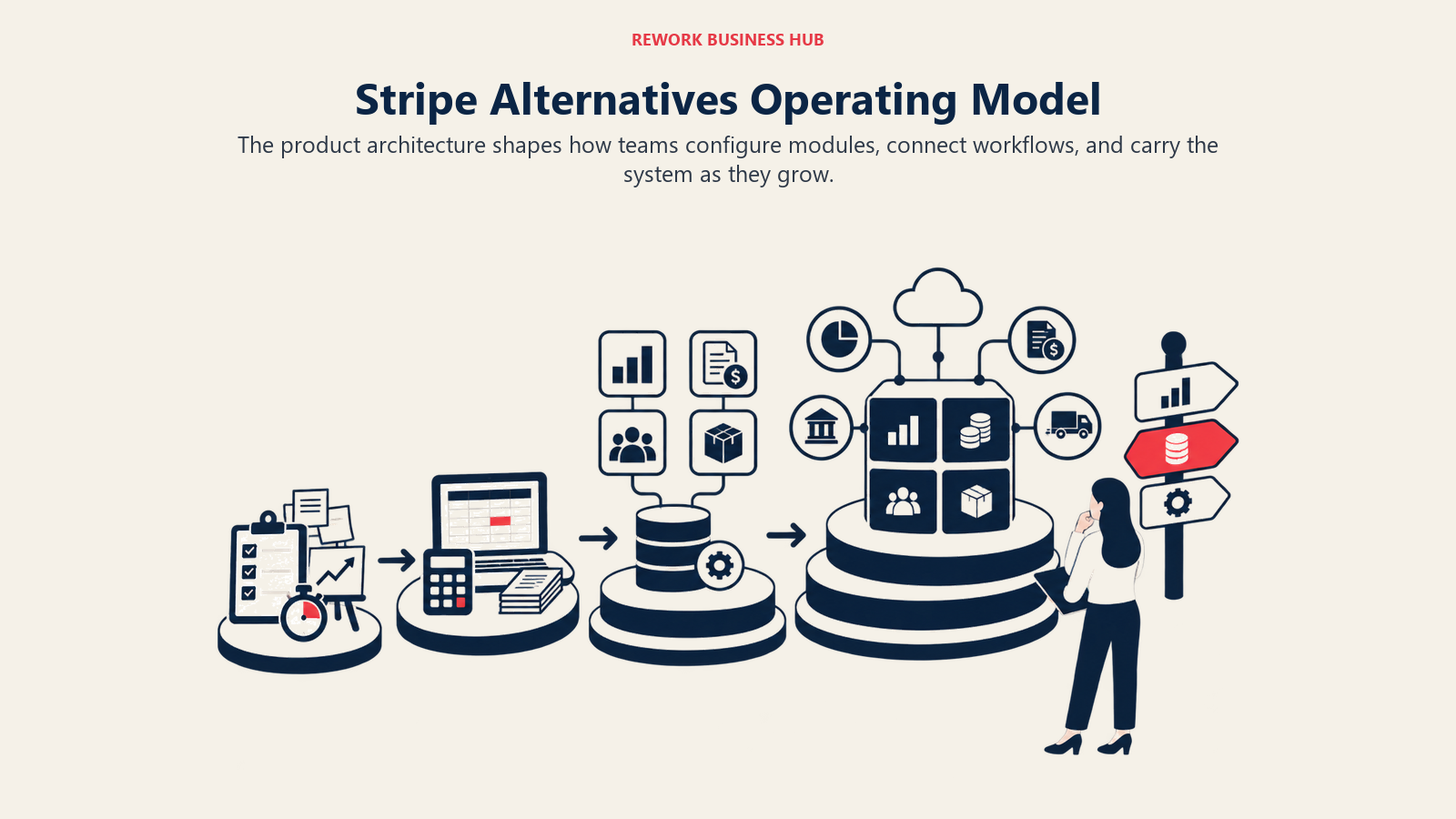
Seni bina produk membentuk cara pasukan mengkonfigurasi modul, menyambung aliran kerja, dan membawa sistem apabila mereka berkembang.
| Alat | Falsafah Produk | MoR | API-Dahulu |
|---|---|---|---|
| PayPal / Braintree | Kepercayaan pengguna + gateway pembangun | Tidak | Braintree: Ya |
| Square | Bukan teknikal, dalam-premis + dalam talian bersatu | Tidak | Ya (terhad) |
| Adyen | Pemerolehan langsung untuk enterprise global | Tidak | Ya |
| Mollie | Liputan kaedah pembayaran EU tempatan | Tidak | Ya |
| Checkout.com | Harga telus + pengoptimuman kelulusan | Tidak | Ya |
| Razorpay | Infrastruktur kewangan natif India | Tidak | Ya |
| Paddle | Pematuhan cukai MoR untuk SaaS | Ya | Terhad |
| Lemon Squeezy | MoR persediaan pantas untuk pengasas solo | Ya | Terhad |
| Authorize.net | Kestabilan setaraf bank dan integrasi legasi | Tidak | Ya (lapuk) |
| GoCardless | Debit bank untuk langganan churn rendah | Tidak | Ya |
| Paystack | Kedalaman kaedah pembayaran tempatan Afrika | Tidak | Ya |
| Helcim | Ketelusan interchange-plus untuk SMB | Tidak | Ya (terhad) |
| Nickel | AR, AP, dan pengurusan aliran tunai dengan pembayaran disertakan | Tidak | Ya (peringkat Pro sahaja) |
Perbandingan Model Harga
Bandingkan kos penuh lesen, persediaan, pentadbiran, dan penskalaan sebelum memilih harga tajuk yang paling murah.
| Alat | Model | Kadar Biasa | Yuran Bulanan |
|---|---|---|---|
| PayPal / Braintree | Kadar rata-rata | 2.9% + $0.30 | Tiada |
| Square | Kadar rata-rata | 2.6% + $0.10 (dalam premis) | Tiada (asas) |
| Adyen | Interchange-plus | Tersuai | Minimum ~$120 |
| Mollie | Rata-rata setiap kaedah | Dari €0.25 + % | Tiada |
| Checkout.com | Interchange-plus | Tersuai | Tiada (minimum dikenakan) |
| Razorpay | Kadar rata-rata | 2% domestik | Tiada |
| Paddle | Yuran MoR | 5% + $0.50 | Tiada |
| Lemon Squeezy | Yuran MoR | 5% + $0.50 | Tiada |
| Authorize.net | Kadar rata-rata | 2.9% + $0.30 | $25 |
| GoCardless | Setiap transaksi | 0.5% + $0.20 (ACH) | Tiada |
| Paystack | Kadar rata-rata | 1.5% + yuran tempatan | Tiada |
| Helcim | Interchange-plus | IC + 0.1% + $0.05 | Tiada |
| Nickel | ACH percuma + kadar kad rata-rata | ACH $0; kad 2.9% | $0 / $35 / $300 |
Jadual Liputan Geografi
| Alat | AS | Eropah | India/APAC | Afrika | Amerika Latin |
|---|---|---|---|---|---|
| PayPal / Braintree | Ya | Ya | Ya | Terhad | Ya |
| Square | Ya (utama) | Terhad | Tidak | Tidak | Tidak |
| Adyen | Ya | Ya | Ya | Terhad | Ya |
| Mollie | Tidak | Ya (EU utama) | Tidak | Tidak | Tidak |
| Checkout.com | Ya | Ya | Ya | Terhad | Terhad |
| Razorpay | Tidak | Tidak | Ya (utama) | Tidak | Tidak |
| Paddle | Ya | Ya | Ya | Terhad | Terhad |
| Lemon Squeezy | Ya | Ya | Ya | Terhad | Terhad |
| Authorize.net | Ya (utama) | Terhad | Tidak | Tidak | Tidak |
| GoCardless | Ya | Ya | Tidak | Tidak | Tidak |
| Paystack | Tidak | Tidak | Tidak | Ya (utama) | Tidak |
| Helcim | Ya | Tidak | Tidak | Tidak | Tidak |
| Nickel | Ya (utama) | Terhad | Terhad | Terhad | Terhad |
Matriks Pasukan berbanding Alat Syarikat Menyeluruh
| Alat | Siapa yang Mengurusnya | Mesra Bukan Teknikal | Pembangun Diperlukan untuk Persediaan |
|---|---|---|---|
| PayPal | Kewangan + operasi | Ya (checkout standard) | Ya (Braintree) |
| Square | Pemilik / pengurus operasi | Ya | Tidak |
| Adyen | Kewangan + kejuruteraan | Tidak | Ya |
| Mollie | Kewangan + operasi | Ya | Tidak (plugin) |
| Checkout.com | Kewangan + kejuruteraan | Tidak | Ya |
| Razorpay | Pembangun + kewangan | Sebahagiannya | Ya |
| Paddle | Pengasas + kewangan | Ya | Minimum |
| Lemon Squeezy | Pengasas solo | Ya | Tidak |
| Authorize.net | Kewangan + IT | Sebahagiannya | Sebahagian |
| GoCardless | Kewangan | Ya | Minimum |
| Paystack | Pembangun + kewangan | Sebahagiannya | Ya |
| Helcim | Pemilik / kewangan | Ya | Tidak |
| Nickel | Controller / kewangan | Ya | Tidak |
Cara Memilih: Rangka Kerja Keputusan
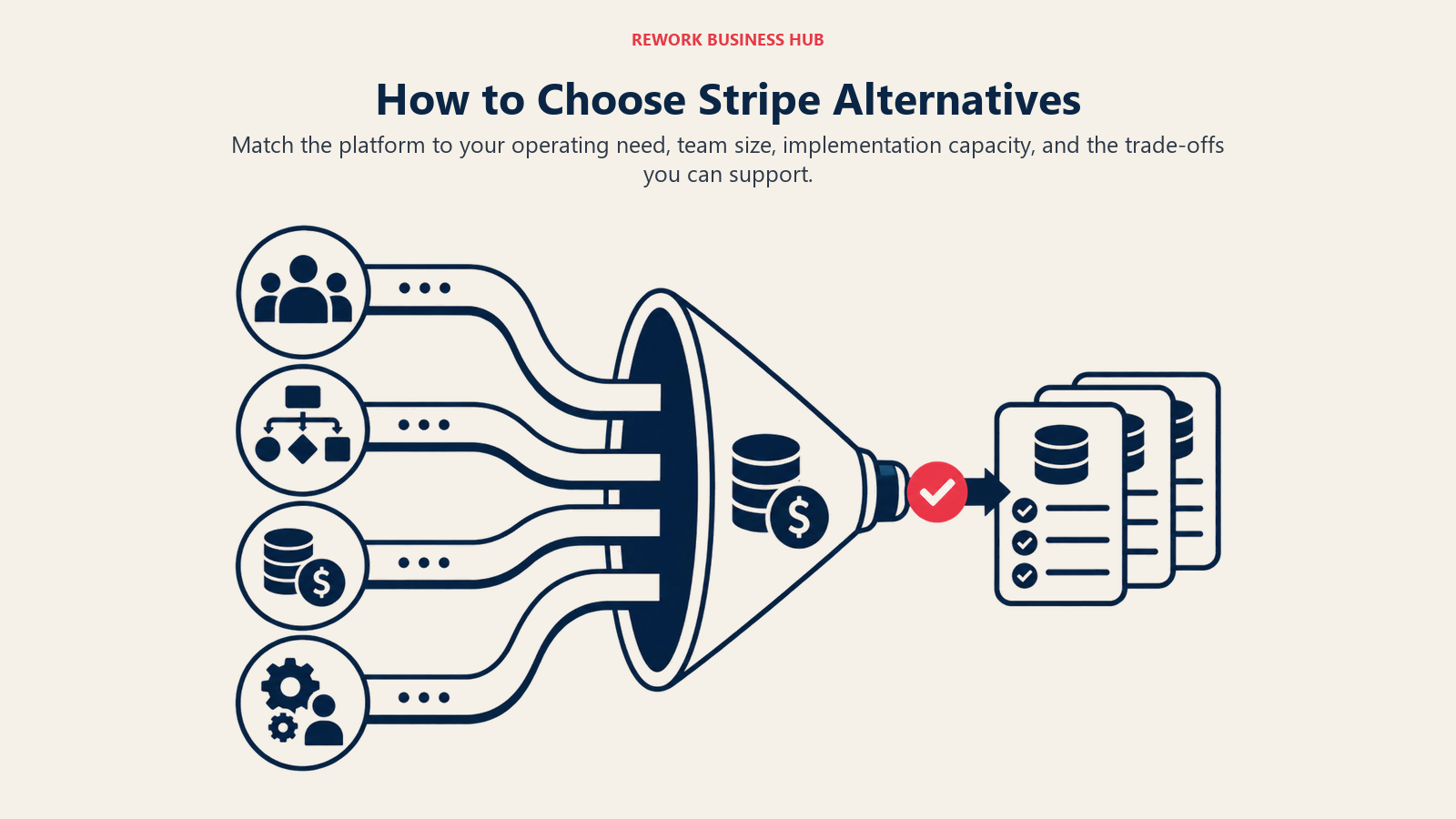
Padankan platform dengan keperluan operasi, saiz pasukan, kapasiti pelaksanaan, dan pertukaran yang mampu anda sokong.
| Jika anda memerlukan... | Pilih... |
|---|---|
| Pematuhan cukai global dikendalikan secara automatik (SaaS) | Paddle atau Lemon Squeezy |
| Kos pemprosesan terendah pada $10K+/bulan | Helcim atau Adyen (bergantung pada volum) |
| Kaedah pembayaran tempatan Eropah (iDEAL, SEPA, Bancontact) | Mollie |
| Dalam-premis + dalam talian bersatu untuk runcit atau perkhidmatan makanan | Square |
| Pembayaran di India atau Asia Selatan/Tenggara | Razorpay |
| Pembayaran merentasi Afrika (Nigeria, Ghana, Kenya, SA) | Paystack |
| Kadar pembayaran gagal yang lebih rendah untuk langganan B2B | GoCardless |
| Pemerolehan global enterprise dengan satu integrasi | Adyen atau Checkout.com |
| Kepercayaan pengguna luas + pembeli dompet PayPal global | PayPal / Braintree |
| Interchange-plus telus untuk SMB Amerika Utara | Helcim |
| Kebolehpercayaan setaraf bank untuk industri AS terkawal | Authorize.net |
| Pengoptimuman kadar kelulusan tinggi pada volum $1M+ | Checkout.com |
Sebab Pasukan Meninggalkan Stripe
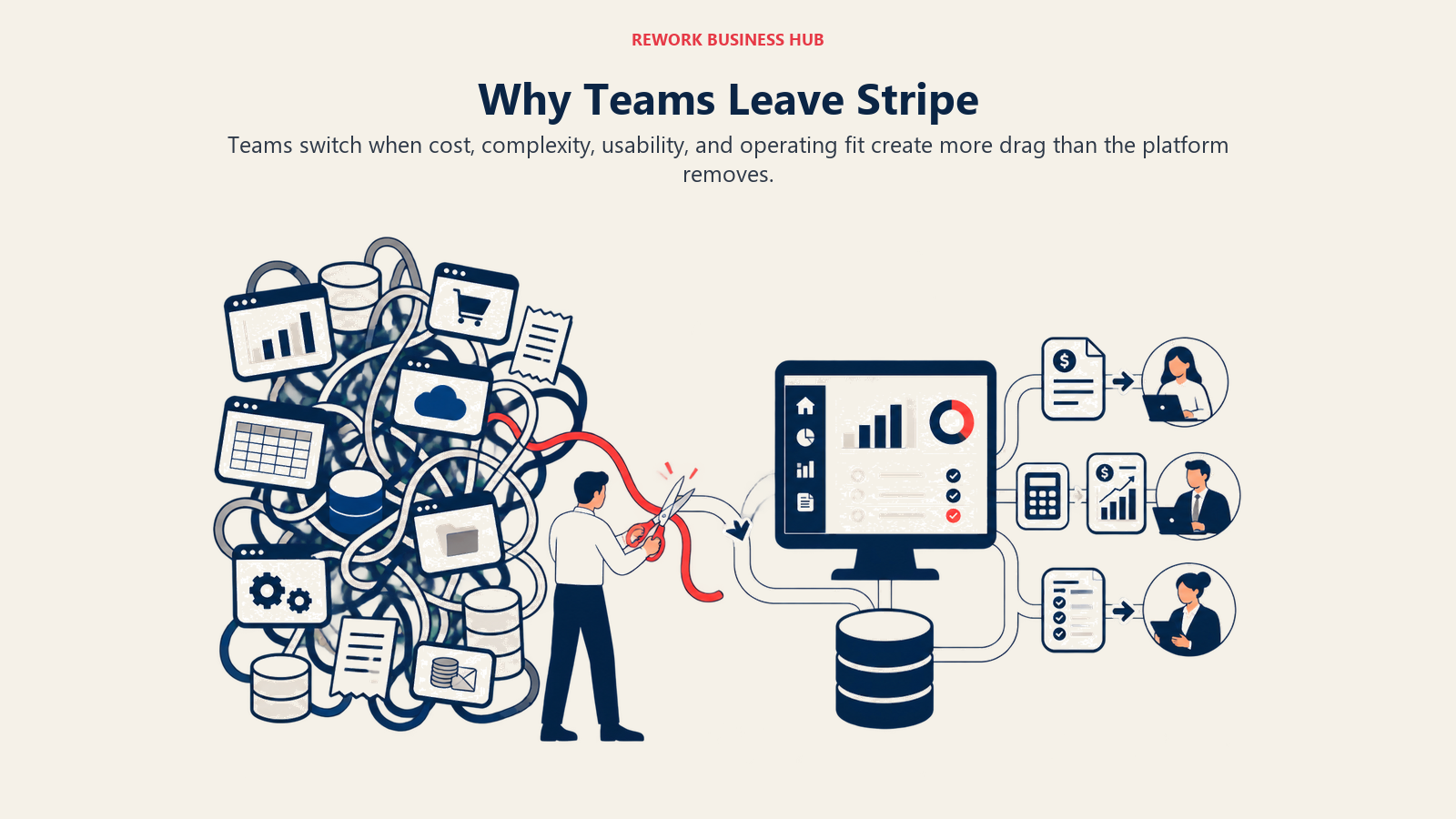
Sebelum memilih pengganti, ada baiknya menyenaraikan titik geseran sebenar Stripe supaya anda boleh memadankannya dengan alternatif yang betul:
| Titik Kesakitan | Rupanya Seperti Apa | Alternatif Yang Lebih Baik |
|---|---|---|
| Kebergantungan kepada pembangun | Kewangan bukan teknikal tidak boleh mengubah harga langganan atau mengemas kini tetapan pembayaran tanpa memfailkan tiket pembangun | Square, Mollie, Helcim, Paddle |
| Harga kompleks pada skala | Yuran Radar, caj tambahan kad antarabangsa, margin penukaran mata wang bertambah dan sukar dimodelkan | Adyen, Checkout.com, Helcim |
| Kestabilan akaun (dana dibekukan) | Pertumbuhan volum pesat atau chargeback pertama mencetuskan penahanan automatik; sokongan hanya melalui e-mel untuk kebanyakan peringkat | Authorize.net, Adyen, PayPal (Braintree) |
| Sokongan telefon terhad | Pelan Stripe standard mengarahkan sokongan melalui dokumentasi dan e-mel; akses telefon memerlukan pelan berbayar | Helcim, GoCardless, Razorpay (untuk India) |
| Kerumitan dashboard | Pasukan kewangan memerlukan terjemahan pembangun untuk memahami laporan; UX pengurusan pertikaian tidak intuitif | Square, Helcim, Mollie |
| Pematuhan cukai global (SaaS) | Stripe mengendalikan pemprosesan pembayaran tetapi bukan pengutipan dan penyerahan VAT/cukai jualan | Paddle, Lemon Squeezy |
Corak merentasi titik kesakitan ini ialah ia berkembang bersama anda, bukan menentang anda. Kadar rata Stripe 2.9% + $0.30 adalah tawaran yang adil pada $5,000 sebulan dan mahal pada $500,000, di mana penyedia interchange-plus seperti Helcim atau Adyen boleh menjimatkan mata asas yang nyata pada setiap transaksi. Perkara yang sama berlaku bagi kebergantungan kepada pembangun: ia tidak kelihatan apabila anda mempunyai kapasiti kejuruteraan yang lebih, dan menyakitkan sebaik sahaja pasukan kewangan anda perlu mengubah peraturan pembayaran semasa pembekuan pengambilan pekerja. Padankan alternatif dengan kekangan yang sebenarnya semakin membesar, bukan yang paling lantang ketika anda mula-mula mendaftar.
Apa yang Perlu Dilakukan Seterusnya
Jangan tukar pemproses pembayaran berdasarkan artikel perbandingan sahaja. Langkah yang betul adalah menjalankan kajian rintis selari. Pilih dua calon teratas anda daripada jadual di atas, integrasikan ke dalam persekitaran pementasan, dan proses transaksi ujian sebenar merentasi gabungan transaksi sebenar anda (jenis kad, geografi, nilai pesanan). Bandingkan kadar kelulusan, jumlah kos pemprosesan pada data sebenar anda, dan berapa banyak masa kejuruteraan yang sebenarnya diperlukan oleh integrasi.
Bagi kebanyakan pasukan, pemproses yang patut diutamakan berdasarkan titik kesakitan yang biasa: Helcim jika anda mahukan ketelusan kos di Amerika Utara; Paddle jika pematuhan cukai SaaS adalah masalah teras; Mollie jika kaedah tempatan Eropah adalah apa yang anda ketinggalkan; GoCardless jika churn langganan daripada pembayaran kad yang gagal adalah isu yang sebenarnya anda cuba selesaikan. Menurut ulasan pemprosesan pembayaran G2, alat dengan skor kepuasan pengguna tertinggi untuk pedagang kecil dan sederhana secara konsisten adalah yang mempunyai harga telus dan dashboard bukan teknikal. Rujuk silang ulasan untuk volum transaksi dan geografi khusus anda.
Pasukan SaaS yang menggunakan perkhidmatan Merchant of Record seperti Paddle juga harus memikirkan tindanan kewangan yang lebih luas. Panduan alternatif QuickBooks terbaik merangkumi lapisan perakaunan yang paling sesuai bersama-sama alat pembayaran seperti Paddle atau Helcim, dan panduan alternatif FreshBooks terbaik wajar dilihat jika anda pasukan yang lebih kecil yang merekonsiliasi pembayaran dengan invois. Dan jika keputusan perolehan melibatkan penyatuan perisian yang lebih luas, kos sebenar hamparan perisian memetakan cara membina kes perniagaan untuk penyatuan merentasi alat kewangan dan operasi anda.
Soalan Lazim
Apakah alternatif Stripe yang terbaik?
Ia bergantung kepada sebab anda beralih. Untuk yuran paling rendah di Amerika Utara, harga interchange-plus Helcim menang. Untuk pemerolehan global peringkat enterprise, Adyen dan Checkout.com mendahului. Untuk syarikat SaaS yang mahu pematuhan cukai diuruskan, Paddle dan Lemon Squeezy bertindak sebagai Merchant of Record. Untuk peruncitan dengan jualan dalam-premis dan dalam talian, Square adalah padanan paling kukuh.
Adakah terdapat alternatif yang lebih murah daripada Stripe?
Ya. Helcim menggunakan harga interchange-plus tanpa yuran bulanan, yang secara konsisten lebih murah daripada kadar rata Stripe apabila volum bulanan melebihi kira-kira $5,000, terutamanya untuk gabungan transaksi yang didominasi debit. Pada volum yang lebih tinggi, model interchange-plus Adyen dan Checkout.com juga mengatasi kadar rata Stripe sebanyak 2.9% + $0.30 bagi kebanyakan gabungan kad.
Apakah alternatif Stripe yang terbaik untuk syarikat SaaS?
Paddle, jika anda menjual secara global dan mahu VAT, GST, dan cukai jualan AS dikutip serta diserahkan secara automatik melalui model Merchant of Record. Lemon Squeezy menawarkan manfaat MoR yang sama untuk pengasas solo dan pasukan kecil yang mahu melancarkan produk dalam masa beberapa jam sahaja. Kedua-duanya mengenakan yuran setiap transaksi yang lebih tinggi (5% + $0.50) sebagai pertukaran untuk mengalihkan beban pematuhan.
Alternatif Stripe manakah yang mengendalikan cukai antarabangsa secara automatik?
Penyedia Merchant of Record berbuat demikian. Paddle dan Lemon Squeezy mengambil tanggungjawab undang-undang untuk mengutip dan menyerahkan cukai jualan, VAT, dan GST merentasi pasaran tempat pelanggan anda berada, jadi anda tidak perlu mendaftar cukai di setiap bidang kuasa. Pemproses standard seperti Stripe, Adyen, dan Checkout.com memproses pembayaran tetapi meninggalkan pematuhan cukai kepada anda.
Bolehkah pasukan bukan teknikal menguruskan platform pembayaran ini?
Beberapa daripadanya memang dibina untuk tujuan itu. Square, Mollie, Helcim, dan Lemon Squeezy semuanya menawarkan dashboard yang boleh dikendalikan oleh kakitangan kewangan atau operasi tanpa pembangun, termasuk bayaran balik, pembayaran keluar, dan perubahan langganan. Adyen dan Checkout.com lebih berorientasikan kejuruteraan dan biasanya memerlukan penglibatan pembangun untuk persediaan dan perubahan berterusan.

Principal Product Marketing Strategist
On this page
- Jadual Perbandingan Pantas
- Matriks Kesesuaian Peringkat
- Jadual Saiz dan Persona
- 1. PayPal / Braintree: Kepercayaan pengguna pada skala dengan dua wajah
- 2. Square: Platform dalam-premis yang berkembang ke dalam talian
- 3. Adyen: Platform tunggal untuk pemerolehan global enterprise
- 4. Mollie: Pembayaran Eropah yang dibina untuk kaedah tempatan
- 5. Checkout.com: Ketelusan bervolum tinggi untuk pedagang yang berkembang
- 6. Razorpay: Natif India dengan capaian Asia Tenggara
- 7. Paddle: Merchant of Record untuk pematuhan SaaS global
- 8. Lemon Squeezy: MoR persediaan pantas untuk pengasas solo dan produk digital
- 9. Authorize.net: Pembayaran stabil setaraf bank untuk perniagaan mapan
- 10. GoCardless: Debit bank berulang untuk perniagaan langganan
- 11. Paystack: Pembayaran Afrika yang dibina untuk infrastruktur Afrika
- 12. Helcim: Ketelusan interchange-plus untuk SMB Amerika Utara
- 13. Nickel: Operasi aliran tunai untuk pasukan tanpa pembangun
- Jadual Perbandingan Metodologi
- Perbandingan Model Harga
- Jadual Liputan Geografi
- Matriks Pasukan berbanding Alat Syarikat Menyeluruh
- Cara Memilih: Rangka Kerja Keputusan
- Sebab Pasukan Meninggalkan Stripe
- Apa yang Perlu Dilakukan Seterusnya
- Soalan Lazim