More in
Playbook Proses Jualan
Handoff SDR ke AE: Cara Menulisnya Supaya Ia Benar-benar Berfungsi
Apr 18, 2026
Asas Deal Desk: Cara Pasukan Jualan yang Lebih Kecil Boleh Meluluskan dan Menutup Deal dengan Lebih Pantas
Apr 18, 2026
Commit, Best Case, Pipeline: Mendefinisikan Istilah Forecast yang Digunakan Sama oleh Seluruh Pasukan
Apr 18, 2026
Analisis Win/Loss Tanpa Bias: Proses Berulang untuk Pasukan Jualan
Apr 18, 2026
Membina Proses Jualan Satu Jenis Deal pada Satu Masa
Apr 18, 2026
Multi-Threading Deals Tanpa Menyusahkan Champion Anda
Apr 18, 2026 · Currently reading
Kemerosotan Pertengahan Pipeline: Cara Mendiagnosis dan Memperbaiki Deal yang Terhenti
Apr 18, 2026
Mutual Action Plans: Bila Ia Membantu dan Bila Ia Merugikan
Apr 18, 2026
Kadence Operasi Jualan: Dari Daily Stand-Up hingga QBR Suku Tahunan
Apr 18, 2026
Kadence Forecast: Mingguan vs. Bulanan vs. Berterusan — Apa yang Berkesan dan Bila
Apr 6, 2026
Multi-Threading Tawaran Tanpa Mengganggu Champion Anda
Turn this article into takeaways for your work.


Each assistant summarizes the article only for you and suggests best practices for your work.
Tawaran satu kenalan mati secara senyap. Champion hilang selama dua minggu, kemudian anda mendapat tahu mereka telah menukar pekerjaan. Atau mereka kehilangan sokongan dalaman tetapi tidak memberitahu anda sehingga tawaran sudah mati. Atau mereka menyokong anda tetapi tidak mempunyai kuasa belanjawan, dan anda telah menghabiskan tiga bulan bercakap dengan seseorang yang tidak boleh menandatangani apa-apa.
Multi-threading iaitu membina hubungan dengan berbilang pemegang kepentingan dalam satu tawaran adalah jawapannya. Tetapi jika dilakukan dengan salah, ia memberi isyarat kepada champion anda bahawa anda tidak mempercayai mereka, mencetuskan reaksi politik dalam organisasi prospek, dan membakar muhibah yang telah anda habiskan berbulan-bulan untuk meraihnya.
Perbezaan antara multi-threading yang baik dan buruk biasanya satu perkara: sama ada anda melalui champion anda atau mengelak mereka. Penyelidikan Gartner mengenai jawatankuasa pembelian B2B moden mendapati bahawa keputusan pembelian enterprise biasa kini melibatkan 6-10 pemegang kepentingan, menjadikan tawaran satu kenalan rapuh dari segi struktur tanpa mengira betapa kuatnya hubungan champion kelihatan. Ia juga salah satu sebab utama tawaran terhenti di pertengahan pipeline, dan jika tawaran anda menjadi sunyi selepas peringkat cadangan, diagnostik kemerosotan pertengahan pipeline sering akan mendedahkan risiko champion sebagai punca utama.
Perangkap Tawaran Satu Kenalan
Tawaran satu kenalan terasa lebih mudah kerana ia memang lebih mudah, sekurang-kurangnya dalam jangka pendek. Satu kenalan untuk diuruskan, satu benang komunikasi, satu hubungan untuk dikekalkan. Wakil jualan terperangkap ke dalamnya kerana:
- Champion responsif dan mesra, jadi tiada sebab jelas untuk menghubungi orang lain
- Memperkenalkan lebih banyak pemegang kepentingan terasa berisiko. Bagaimana jika seseorang yang kanan berkata tidak?
- Champion secara eksplisit atau tersirat tidak menggalakkan hubungan langsung dengan orang lain ("biar saya uruskan proses dalaman")
Tetapi inilah yang tawaran satu kenalan telan kos:
Menurut analisis Forrester mengenai kegagalan tawaran B2B, kehilangan champion disebut sebagai faktor penyumbang dalam lebih 40% kegagalan tawaran peringkat akhir, menjadikannya punca tunggal yang paling boleh dicegah daripada kebocoran pipeline.
Risiko pemergian champion. Champion meninggalkan syarikat. Champion dipromosi atau ditempatkan semula. Champion yang berpindah dari VP Jualan kepada peranan lain mungkin tidak lagi menjadi penyokong tawaran anda. Jika mereka adalah satu-satunya kenalan anda, tawaran mati bersama kepergian mereka.
Risiko pengaruh dalaman. Champion anda mungkin benar-benar ingin membeli daripada anda tetapi tidak mempunyai pengaruh organisasi untuk melakukannya. Mereka akan memberitahu anda ia berjalan lancar. Mereka tidak akan memberitahu anda mereka sedang kalah dalam hujah dalaman.
Risiko akses pesaing. Jika pesaing anda bercakap dengan CFO dan anda hanya bercakap dengan VP Jualan, champion anda mungkin tidak menyedari penilaian bersaing yang berlaku secara selari.
Matlamat multi-threading bukan untuk melindungi pertaruhan anda secara sinis. Ia untuk membina gabungan yang lebih luas dalam akaun yang memberi tawaran sokongan struktur yang lebih kukuh.
Langkah 1: Petakan Landskap Pemegang Kepentingan Sebelum Anda Menghubungi
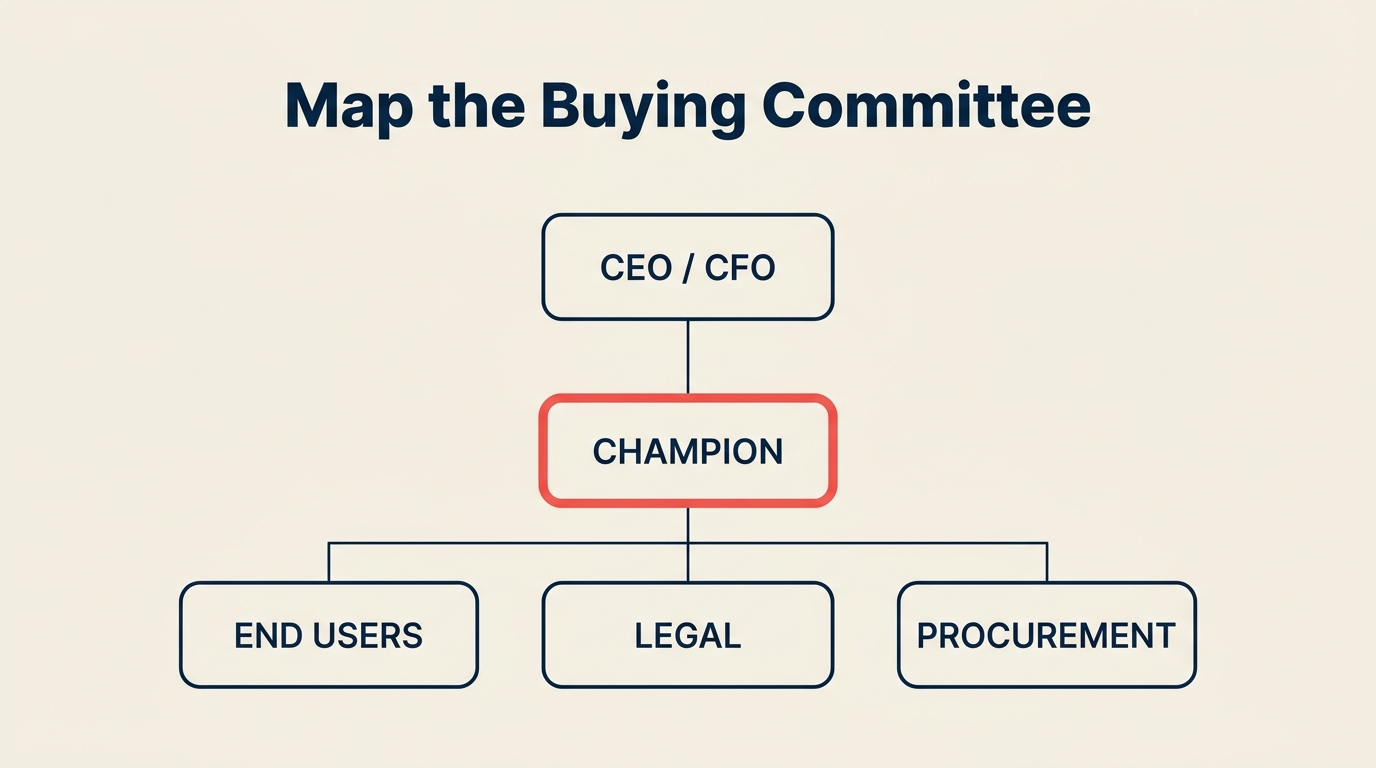
Sebelum anda menghubungi sesiapa yang baru, bina peta tentang siapa yang terlibat dan peranan yang mereka mainkan. Menghubungi tanpa konteks ini adalah cara terpantas untuk mencipta situasi yang janggal.
Lima peranan pemegang kepentingan untuk dikenal pasti:
| Peranan | Penerangan | Soalan untuk dijawab |
|---|---|---|
| Economic Buyer | Mengawal belanjawan dan membuat keputusan komersial terakhir | Adakah mereka tahu tentang penilaian ini? Adakah mereka meluluskan belanjawan? |
| Technical Buyer | Menilai kesesuaian, integrasi, dan keperluan pelaksanaan | Adakah mereka terlibat? Apa kebimbangan mereka? |
| User Buyer | Akan menggunakan produk sehari-hari | Adakah mereka mahukan ini? Adakah mereka penyokong atau skeptikal? |
| Champion | Menyokong secara dalaman untuk pembelian | Berapa banyak modal politik yang mereka ada? Siapa yang perlu mereka yakinkan? |
| Blocker | Mempunyai keupayaan untuk melambatkan atau menghentikan tawaran | Apa kebimbangan mereka? Adakah champion anda tahu mereka wujud? |
Tanya champion anda secara langsung: "Siapa lagi yang akan terlibat dalam keputusan ini? Siapa yang perlu kita pastikan sejajar?" Champion yang tidak mahu menjawab soalan ini adalah isyarat, bukan halangan. Rangka kelayakan anda sepatutnya sudah memerlukan anda mengenal pasti economic buyer dan proses keputusan sebelum maju melepasi penemuan, dan pemetaan pemegang kepentingan ini adalah disiplin yang sama yang diterapkan lebih awal.
Langkah 2: Pendekatan Pengenalan Melalui Champion
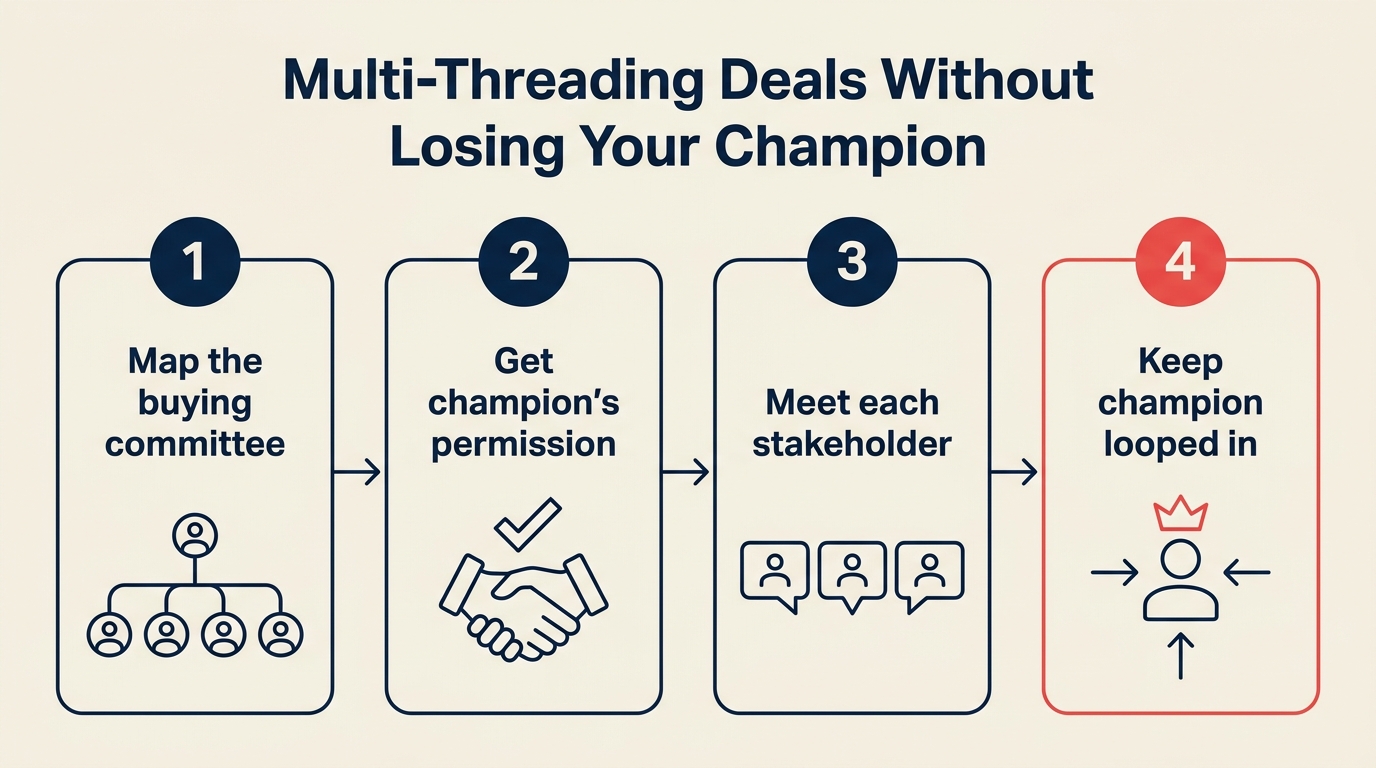
Laluan paling selamat kepada multi-threading adalah melalui champion anda. Minta mereka membuat pengenalan.
Ini terasa berlawanan dengan intuisi. Anda mungkin bimbang mereka akan mengatakan tidak, atau ia memberi isyarat bahawa anda tidak mempercayai mereka untuk menguruskan proses. Tetapi apabila dilakukan dengan betul, permintaan itu sebenarnya mengukuhkan hubungan champion. Ia membingkaikan jangkauan sebagai anda cuba membantu mereka berjaya secara dalaman, bukan sebagai anda cuba mengelak mereka.
Pembingkaian yang berkesan:
"Saya mahu memastikan [economic buyer] dan [ketua IT] mempunyai semua yang mereka perlukan untuk membuat keputusan ini dengan selesa. Adakah berguna jika saya berhubung terus dengan mereka supaya saya dapat menjawab soalan spesifik mereka? Saya tidak mahu meletakkan semua itu di atas bahu anda."
Ini berkesan kerana:
- Ia meletakkan jangkauan sebagai memudahkan kerja champion, bukan menyukarkan
- Ia menamakan orang tertentu dengan peranan tertentu, bukan samar-samar "saya mahu bercakap dengan CEO anda"
- Ia memberi champion kawalan. Mereka boleh membuat pengenalan mengikut terma mereka sendiri
Apa yang perlu dilakukan setelah champion memperkenalkan anda:
Setelah anda mendapat pengenalan, sediakan agenda khusus untuk setiap pemegang kepentingan berdasarkan peranan mereka. Jangan hantar dek pembentangan yang sama kepada CFO seperti yang anda hantar kepada ketua IT. Tunjukkan bahawa anda memahami kebimbangan khusus mereka.
Format e-mel pengenalan champion (champion hantar):
"Hai [Pemegang Kepentingan], ingin melibatkan anda dalam penilaian kami terhadap [Produk]. [Nama Wakil] dari [Syarikat] telah membantu dalam memetakan proses kami, dan saya rasa berbaloi untuk berhubung terus supaya anda boleh mendapatkan jawapan kepada soalan anda. [Wakil], diserahkan kepada anda."
Langkah 3: Jangkauan Khusus Nilai kepada Setiap Pemegang Kepentingan
Setelah anda mempunyai kenalan di setiap peringkat pemegang kepentingan, sesuaikan perbualan dengan apa yang orang tersebut benar-benar ambil berat. Ini bukan sekadar menukar nama dalam pengepala e-mel.
Mengikut jenis pemegang kepentingan:
Analisis Harvard Business Review mengenai pembuatan keputusan eksekutif dalam pembelian B2B menunjukkan bahawa economic buyer paling kuat bertindak balas kepada pembingkaian kes perniagaan yang dikaitkan dengan pengurangan kos, pengurangan risiko, dan kedudukan bersaing, bukan keupayaan produk.
Economic buyer (CFO, VP, peringkat C-level): Fokus pada ROI, pengurangan risiko, dan kesesuaian strategik. Apa kos status quo? Apa kelebihan kewangan perubahan itu? Elakkan ciri-ciri produk. Mereka tidak mengambil berat.
Technical buyer (IT, Kejuruteraan, Operasi): Fokus pada pelaksanaan, integrasi, keselamatan, dan beban penyelenggaraan. Bagaimana ini sepadan dengan sistem sedia ada? Apa beban untuk pasukan mereka? Berikan dokumentasi, bukan bahan jualan.
User buyer (pengguna harian): Fokus pada peningkatan workflow dan kemudahan penggunaan. Bagaimana rupa kesakitan semasa mereka pada petang Selasa? Bagaimana ini menjadikan kerja mereka kurang mengecewakan?
Blocker: Ini memerlukan paling banyak perhatian. Pertama, fahami apa bantahan sebenar mereka. Kemudian tangani secara langsung tanpa melangkau kepala mereka. "Saya dengar mungkin terdapat kebimbangan mengenai proses integrasi. Bolehkah kita jadualkan 20 minit untuk membincangkan spesifikasi teknikal?"
Langkah 4: Menguruskan Perbualan Selari
Setelah anda bercakap dengan berbilang pemegang kepentingan, anda perlu menjejak apa yang anda katakan kepada siapa. Ini penting atas dua sebab: konsistensi (anda tidak mahu memberitahu CFO satu perkara dan VP yang lain) dan risikan (apa yang anda pelajari daripada satu pemegang kepentingan sepatutnya memaklumkan apa yang anda tanya yang seterusnya).
Templat log komunikasi pemegang kepentingan:
TAWARAN: [Nama Syarikat]

Nama | Jawatan | Peranan | Hubungan terakhir | Kebimbangan utama | Langkah seterusnya
--- | --- | --- | --- | --- | ---
[Champion] | VP Jualan | Champion | [Tarikh] | [Nota] | [Langkah seterusnya]
[Economic Buyer] | CFO | Ekonomi | [Tarikh] | [Nota] | [Langkah seterusnya]
[Teknikal] | Pengarah IT | Teknikal | [Tarikh] | [Nota] | [Langkah seterusnya]
Kemas kini log ini selepas setiap interaksi pemegang kepentingan. Ia mengambil masa dua minit dan menyelamatkan anda daripada rasa malu terlupa apa yang anda beritahu seseorang tiga minggu lalu.
Pastikan champion anda dimaklumkan tentang perbualan anda dengan pemegang kepentingan lain. Bukan laporan penuh, hanya kemas kini ringkas: "Saya ada panggilan yang baik dengan pengarah IT anda mengenai keperluan integrasi. Dia menandakan satu soalan mengenai akses API yang akan saya tangani dalam cadangan."
Ini memastikan champion anda berasa dimaklumkan dan terkawal, bukan dipintas.
Langkah 5: Apa yang Perlu Dilakukan Apabila Champion Menentang
Sesetengah champion akan secara aktif tidak menggalakkan anda berhubung dengan pemegang kepentingan lain. "Saya dah uruskan secara dalaman. Fokus kepada saya sahaja." Ini memerlukan perhatian, kerana ia boleh bermakna perkara yang berbeza:
Senario A: Champion menguruskan proses dengan cekap. Mereka mempunyai kuasa sebenar, keputusan adalah milik mereka, dan mereka melindungi masa anda daripada politik dalaman yang tidak perlu. Hormati ini, tetapi sahkan. Tanya secara langsung: "Siapa penandatangan terakhir pada kontrak?" Jika itu mereka, teruskan.
Senario B: Champion takut. Mereka bimbang jika anda bercakap dengan bos mereka, sesuatu akan menjadi salah. Sama ada anda akan mengatakan sesuatu yang mencipta keraguan, atau bos akan memotong mereka dalam proses. Ini adalah peluang pembinaan: bantu mereka menyediakan pembentangan dalaman mereka. Champion yang takut dengan penelitian dalaman memberitahu anda tawaran itu mempunyai masalah politik yang perlu anda fahami.
Senario C: Champion menjaga kedudukan mereka. Mereka mahu menjadi satu-satunya titik hubungan anda kerana ia memberi mereka kawalan dan keterlihatan. Ini adalah senario yang paling berisiko. Jika tawaran anda bergantung sepenuhnya kepada pengaruh dalaman dan muhibah satu orang, anda terdedah.
Cara untuk membuka perbualan: "Saya faham sepenuhnya bahawa anda menguruskan ini secara dalaman. Saya mahu menyokong anda dalam itu. Sebab saya bertanya tentang berhubung dengan [orang] adalah bahawa dalam tawaran seperti ini, kebimbangan khusus mereka tentang [topik] boleh menjadi halangan lewat dalam proses. Saya lebih suka menanganinya awal dengan bimbingan anda daripada ia timbul pada masa kontrak."
Langkah 6: Menggunakan Pelan Tindakan Bersama untuk Mendedahkan Pemegang Kepentingan yang Hilang
Pelan tindakan bersama adalah alat yang berguna untuk multi-threading kerana ia memaksa pembeli untuk menamakan semua orang yang perlu terlibat untuk tawaran ditutup.
Apabila anda membina MAP bersama, tanya: "Siapa yang perlu terlibat dalam setiap langkah ini?" Langkah semakan teknikal perlu menghasilkan nama. Langkah kelulusan kontrak perlu menghasilkan nama. Langkah semakan keselamatan perlu menghasilkan nama.
Pemegang kepentingan yang belum disebutkan sering muncul dalam latihan ini kerana MAP menjadikan proses dalaman pembeli eksplisit. Champion kadangkala tidak menyedari mereka telah meninggalkan seseorang sehingga mereka terpaksa memetakannya.
Apabila nama baru muncul, minta champion membuat pengenalan dalam konteks pencapaian MAP: "Anda menyebut [Nama] perlu meluluskan semakan keselamatan. Adakah berguna jika saya berhubung terus dengan mereka supaya kita dapat menjadualkan pencapaian itu?"
Kesilapan Biasa
Menghantar e-mel kepada economic buyer sebelum champion tahu. Jika champion mendapat tahu anda menghubungi VP mereka secara langsung tanpa memberitahu mereka, anda telah merosakkan hubungan terpenting dalam tawaran. Sentiasa beritahu champion terlebih dahulu. Sebaik-baiknya, minta mereka membuat pengenalan.
Menggunakan dek pembentangan yang sama untuk setiap pemegang kepentingan. Menghantar CFO dek demo produk 40 slaid memberi isyarat bahawa anda tidak bersedia untuk kebimbangan mereka. Sesuaikan bahan, walaupun hanya slaid pertama yang berbeza dan bahan yang ditinggalkan.
Penyelidikan daripada McKinsey mengenai pengurusan hubungan B2B menunjukkan bahawa akaun dengan multi-threading mempunyai NRR 35% lebih tinggi berbanding yang satu kenalan, didorong oleh kadar churn yang lebih rendah dan kadar pengembangan yang lebih tinggi.
Membiarkan champion berfikir mereka adalah satu-satunya kenalan anda secara tidak sengaja. Jika anda memang berhubung dengan pemegang kepentingan lain tanpa memberitahu champion anda, mereka akan mengetahuinya akhirnya, biasanya dalam mesyuarat dalaman. Maklumkan mereka secara proaktif: "Saya ada panggilan dengan [Nama] hari ini, inilah yang timbul." Ketelusan dengan champion anda adalah yang memastikan multi-threading tidak terasa seperti pengkhianatan.
Templat Peta Pemegang Kepentingan
PETA PEMEGANG KEPENTINGAN TAWARAN: [Nama Syarikat]

ECONOMIC BUYER
Nama:
Jawatan:
Status hubungan: [ ] Diperkenalkan  [ ] Dalam perbualan  [ ] Belum dihubungi
Kebimbangan utama:

TECHNICAL BUYER
Nama:
Jawatan:
Status hubungan: [ ] Diperkenalkan  [ ] Dalam perbualan  [ ] Belum dihubungi
Kebimbangan utama:

CHAMPION
Nama:
Jawatan:
Kekuatan sokongan: [ ] Kuat  [ ] Sederhana  [ ] Tidak pasti
Sekutu dalaman yang mereka sebutkan:

USER BUYER(S)
Nama / Jawatan:
Status hubungan:
Sentimen: [ ] Positif  [ ] Neutral  [ ] Skeptikal

BLOCKER YANG DIKETAHUI
Nama / Jawatan / Kebimbangan:

RISIKO SATU KENALAN: [ ] Tinggi (satu kenalan sahaja)  [ ] Sederhana  [ ] Rendah
Apa yang Perlu Dilakukan Seterusnya
Buka CRM anda dan lihat 5 tawaran bernilai tertinggi mengikut ARR. Bagi setiap satu, tanya:
- Berapa ramai pemegang kepentingan yang anda namakan dalam tawaran?
- Adakah anda pernah berhubung terus dengan economic buyer?
- Jika champion anda meninggalkan syarikat esok, adakah tawaran itu akan bertahan?
Soalan-soalan ini berbaloi untuk dijalankan dalam semakan pipeline mingguan anda sebagai senarai semak tetap untuk mana-mana tawaran melebihi ambang batas deal desk anda.
Jika anda mempunyai tawaran di mana jawapan kepada soalan 3 adalah "tidak," itulah keutamaan multi-threading anda minggu ini. Bagi setiap satu, draf permintaan pengenalan champion menggunakan pembingkaian dari Langkah 2 dan hantar minggu ini.
Anda tidak perlu membina peta pemegang kepentingan penuh sebelum mengambil tindakan. Cukup pilih satu kenalan yang paling penting dalam setiap tawaran dan minta champion anda membuat pengenalan.
Ketahui Lebih Lanjut

Head of Enterprise Solutions
On this page
- Perangkap Tawaran Satu Kenalan
- Langkah 1: Petakan Landskap Pemegang Kepentingan Sebelum Anda Menghubungi
- Langkah 2: Pendekatan Pengenalan Melalui Champion
- Langkah 3: Jangkauan Khusus Nilai kepada Setiap Pemegang Kepentingan
- Langkah 4: Menguruskan Perbualan Selari
- Langkah 5: Apa yang Perlu Dilakukan Apabila Champion Menentang
- Langkah 6: Menggunakan Pelan Tindakan Bersama untuk Mendedahkan Pemegang Kepentingan yang Hilang
- Kesilapan Biasa
- Templat Peta Pemegang Kepentingan
- Apa yang Perlu Dilakukan Seterusnya