How to Build a Feedback Culture
Turn this article into takeaways for your work.


Each assistant summarizes the article only for you and suggests best practices for your work.
A feedback culture is a workplace where feedback flows continuously in both directions, up, down, and sideways, and where people trust that giving or receiving it will not cost them socially or professionally. It is a habit built into how work gets done, not an event scheduled once a year.
What a Feedback Culture Actually Is
Most companies already have a feedback process. Very few have a feedback culture. The difference sits in three qualities that either exist together or not at all.
Continuous. Feedback happens close to the moment it is useful, inside a 1:1, right after a client call, in the fifteen minutes after a project ships, not saved up for a form that gets filled out twice a year. By the time an annual review rolls around, the specific moment that mattered is six months cold and neither person remembers the details well enough to learn from it.
Two-way. In a real feedback culture, feedback is not something managers hand down to reports. Reports give it back up, peers give it sideways, and a new hire's first-week observations carry real weight instead of getting filed away as "still learning the ropes." A culture where feedback only flows downward is not a feedback culture. It is a performance-management process wearing the language of one.
Safe. People will not say the honest thing if saying it has ever cost someone their standing, their next assignment, or their manager's warmth toward them. Safety is not the same as comfort. A feedback culture can still be direct and specific. What it cannot be is punitive, where raising a concern or naming a mistake gets quietly remembered against the person who raised it.
Put those three together and you get something durable: a team that catches small problems while they are still small, and that builds the kind of trust in the workplace that makes hard conversations possible instead of avoided. Miss any one of the three and what remains is a form, a ritual, or a threat.
Why Most Feedback Cultures Fail
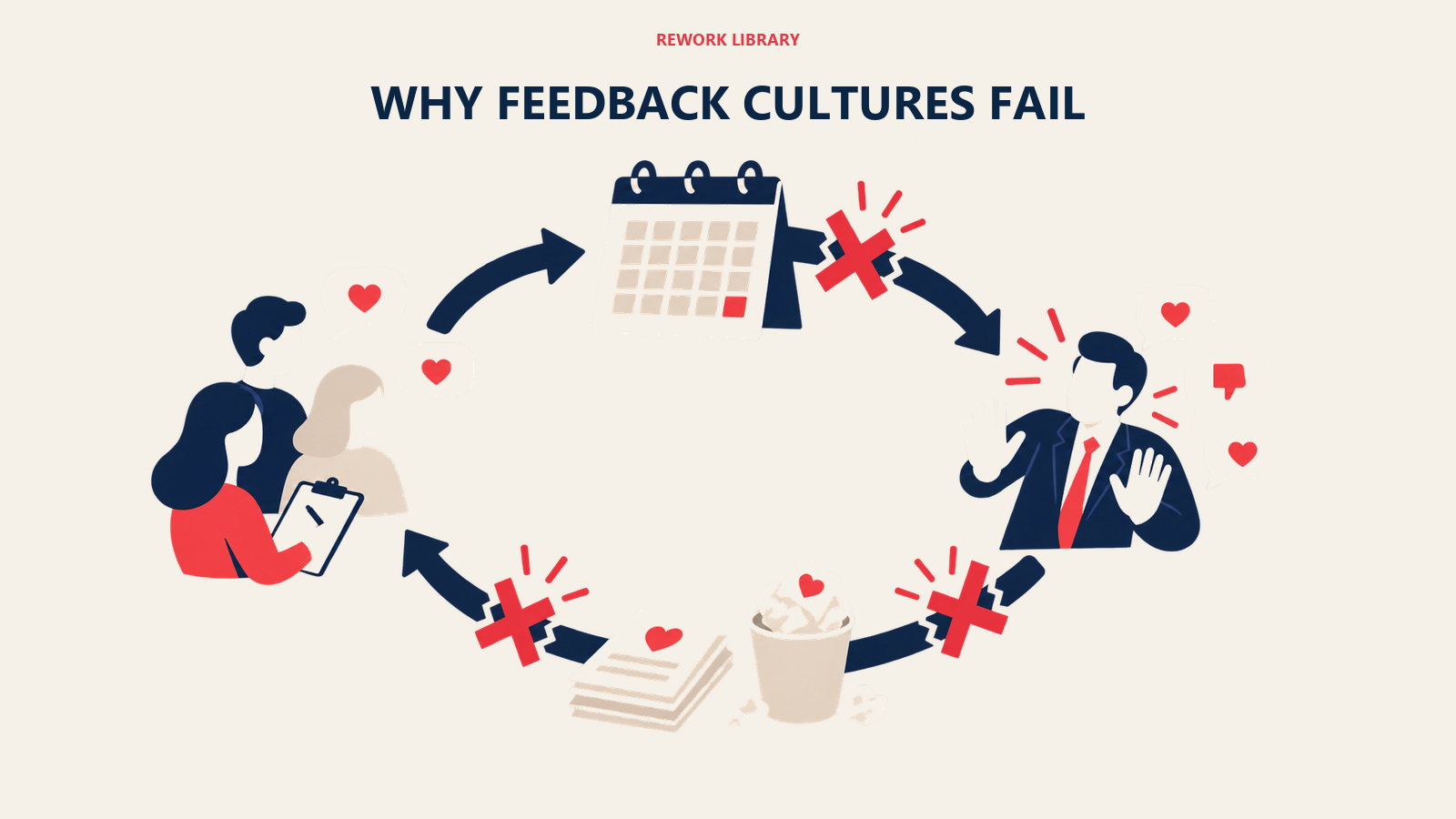
Companies rarely set out to build a bad feedback culture. It fails for three specific, fixable reasons.
Annual-review theater
The most common failure mode is treating the annual review as the feedback system rather than one input into it. By the time it happens, the moments worth discussing have blurred into a general impression, so the conversation drifts toward vague language: "step up," "be more strategic," "show more ownership." None of it is actionable because none of it is anchored to a specific event the person can picture and adjust.
Gallup's research on workplace feedback found that only 26% of employees strongly agree that the feedback they receive helps them do better work. That is not a training problem. It is a structural one: feedback delivered once a year, disconnected from the work it describes, cannot do the job a real feedback culture does every week.
No psychological safety
A team can run a flawless feedback process, regular 1:1s, structured retros, a clean review cycle, and still produce silence, because the process was never the bottleneck. The bottleneck is whether people believe speaking up is safe. Amy Edmondson's research on psychological safety, and Google's own internal study of what separated its most effective teams (known as Project Aristotle), both landed on the same finding: psychological safety was the single strongest predictor of whether a team functioned well, ahead of skill, tenure, or resources. Without it, feedback becomes something people say to survive a process, not something they mean.
Culture mismatch
The third failure is importing a feedback style wholesale from somewhere it worked and expecting it to transplant cleanly. A Silicon Valley "radical candor" playbook, built for a low-power-distance, individualist culture where blunt in-the-moment correction reads as respect, can land as public humiliation in a workplace where hierarchy and group harmony carry real weight. The substance of good feedback (specific, timely, tied to something concrete) travels across cultures fine. The delivery style does not, and treating one region's delivery norm as the universal standard is its own kind of culture mismatch, covered in more depth below.
How to Build a Feedback Culture
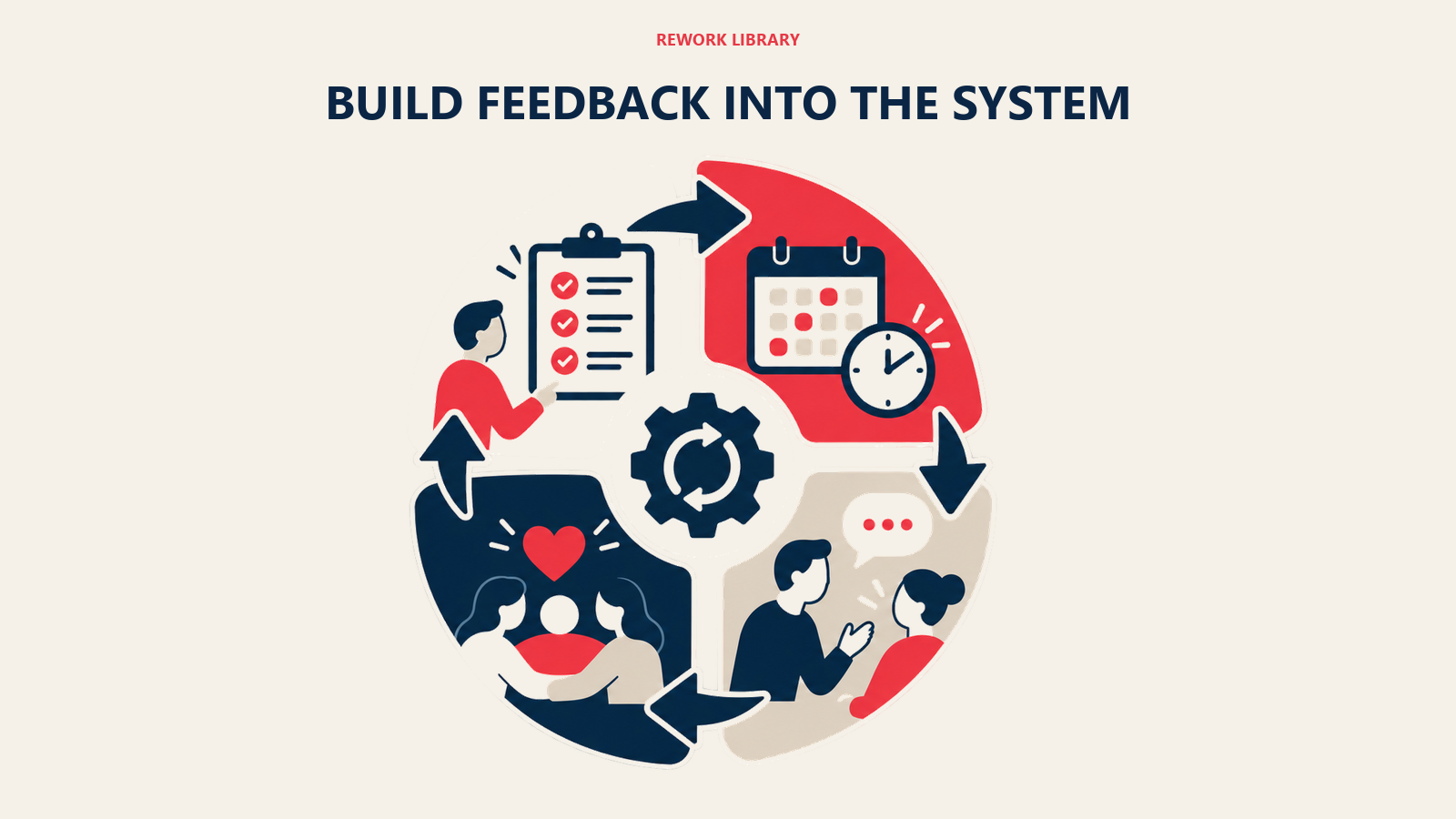
Building a real feedback culture is less about a program launch and more about four things a company has to get right at the same time.
Set explicit norms, not vague values
"We value open communication" on a careers page changes nothing. What changes behavior is naming the specific norm: feedback goes to the person, not about them in their absence; it gets delivered within days of the event, not saved for a quarterly form; and disagreeing with a decision in the room is expected, not tolerated. Write the norm down somewhere people actually read it, a team charter, an onboarding doc, and repeat it out loud until it is boring. Boring is the sign it has become real.
Build a cadence, not an event
A feedback culture needs a rhythm that does not depend on anyone remembering to start it. Weekly or biweekly 1:1s, a short retro at the end of each project, and a lightweight peer-check after major milestones do more for feedback quality than any annual cycle ever will, because the gap between the event and the conversation stays small. The annual review still has a place, for compensation and long-arc pattern-spotting, but it should summarize a year of small conversations, not substitute for them.
Train the manager skill
Giving useful feedback is a trainable skill, not a personality trait some managers happen to have. Most managers were never taught how to separate observation from judgment, how to make feedback specific enough to act on, or how to invite pushback instead of just delivering a verdict. Frameworks like Radical Candor, which frames good feedback as caring personally while challenging directly, give managers a concrete structure to practice against instead of relying on instinct under pressure. Companies that skip this step usually end up with a feedback policy that only a handful of naturally direct managers actually use.
Tie it to psychological safety
None of the above works without the foundation underneath it. Psychological safety is not a soft add-on to a feedback culture, it is the precondition for one. That means leaders have to visibly reward the first few people who raise something uncomfortable, instead of letting silence pass as agreement, and it means protecting the person who gave hard feedback from any hint of retaliation, publicly and immediately, the first time it happens. Skip this step and every other tactic on this list produces compliance, not honesty.
The Cross-Cultural Nuance: Feedback Isn't Universal
Here is where most feedback-culture advice quietly breaks: it assumes one universal style of "good feedback," usually the direct, in-the-moment, low-hierarchy style common in US and Northern European business writing. On a global or distributed team, that assumption does real damage.
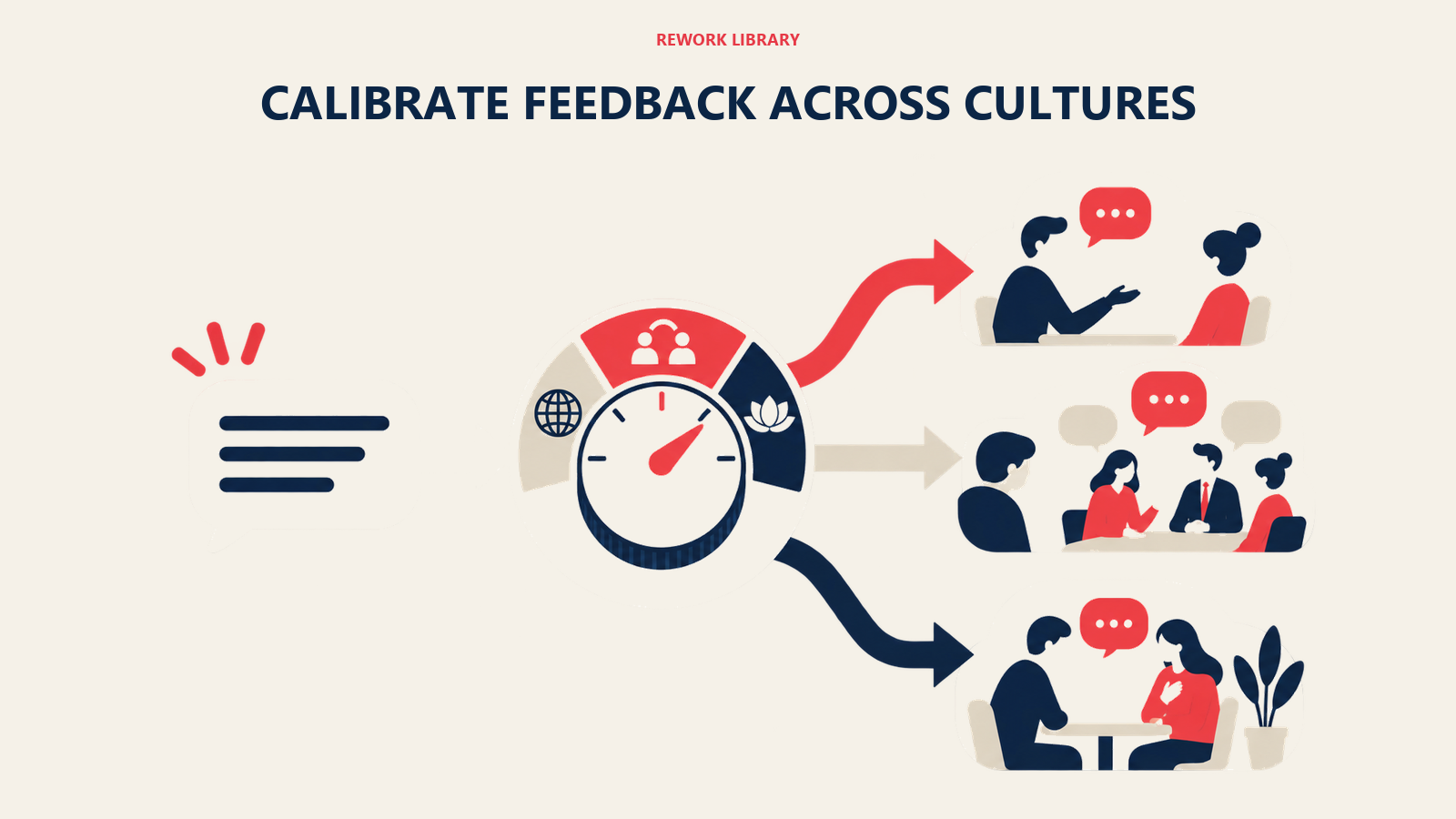
Erin Meyer's Culture Map names this explicitly as the Evaluating scale, running from direct negative feedback at one end to indirect negative feedback at the other. And Hofstede's Power Distance dimension compounds it: in high-power-distance cultures, feedback moving upward, from a junior employee to a senior one, carries social risk that a Western feedback framework rarely accounts for at all.
Direct-feedback cultures
Countries like the Netherlands, Germany, and Israel score toward the direct end of Meyer's Evaluating scale. In these cultures, criticism delivered plainly and specifically, "this section of the report doesn't hold up," said in a meeting, in front of others, reads as respect for the other person's ability to handle it. Softening the message with padding can actually read as condescending or evasive.
Indirect-feedback cultures
Cultures across much of East and Southeast Asia, including Japan and Vietnam, sit toward the indirect end of the same scale, often paired with higher Power Distance scores (Vietnam scores 70 on Hofstede's PDI, Malaysia scores 100, among the highest in Hofstede's dataset). Here, the same blunt correction delivered in front of a group does not land as respect. It lands as a public loss of face, and it can shut a person down rather than open them up. Feedback in these cultures more often travels through a private conversation, a trusted intermediary, or careful phrasing that lets the recipient reach the correction themselves rather than hear it stated outright.
Calibrating feedback on a global team
The fix is not picking one style and applying it everywhere. It is calibration: knowing where a given colleague's culture (and their individual style, which can differ from their country's average) sits on the Evaluating and Power Distance scales, and adjusting delivery accordingly, while keeping the substance of the feedback just as clear either way.
| Dimension | Direct-feedback norm | Indirect-feedback norm |
|---|---|---|
| Where it happens | In the room, sometimes in front of the team | One-on-one, in private |
| How it's phrased | Stated plainly: "this didn't work because..." | Framed as a question or suggestion, letting the person arrive at it |
| Upward feedback (to a manager) | Expected and normal | Often routed through an intermediary or a structured channel |
| Written vs. spoken | Comfortable in writing (email, doc comments) | Often prefers a conversation first, writing only to confirm |
| Risk of getting it wrong | Feedback reads as vague or evasive | Feedback reads as blunt or humiliating |
A manager running a mixed team does not need to run two separate systems. They need one system for substance (specific, timely, tied to the work) and a flexible delivery layer that shifts based on who is in the room, the same instinct covered in giving feedback as a core competency and in conflict resolution for the harder conversations. This is also where company culture and national culture interact rather than sitting in separate boxes: a company can build its own explicit norm ("we give feedback privately first, in writing, within 48 hours") that works across every national culture on the team, precisely because it does not assume one default style is neutral.
Tools and Rituals That Support a Feedback Culture
Structure does not replace psychological safety, but the right rituals make continuous, two-way feedback easier to sustain than relying on individual initiative alone.
- Structured 1:1s with a standing agenda item for feedback in both directions, not just status updates.
- Peer feedback rounds after a project closes, where teammates (not just the manager) name what worked and what to change next time.
- Skip-level check-ins, where a manager's manager talks directly with individual contributors, catching what a direct reporting line sometimes filters out.
- Lightweight pulse surveys, run often enough (monthly, not annually) that a bad trend shows up while it is still small.
- Retros at the end of every meaningful unit of work, not just at the end of a quarter, so lessons get applied to the next project instead of the one after that.
- A written norm document naming how feedback should be given on this specific team, which doubles as onboarding material for anyone new.
None of these tools create a feedback culture by themselves. They remove the friction that otherwise makes continuous feedback depend on a handful of naturally outspoken people carrying it alone.
Feedback Culture in the Age of AI
AI is starting to show up inside the feedback loop itself, and it is worth naming honestly rather than treating it as either a solved problem or a threat. Managers are increasingly using AI tools to help draft performance feedback, structure a hard conversation, or turn scattered notes into something specific and actionable. Used well, this can genuinely help a manager who struggles to find the right words say something clearer and kinder than they would have on their own.
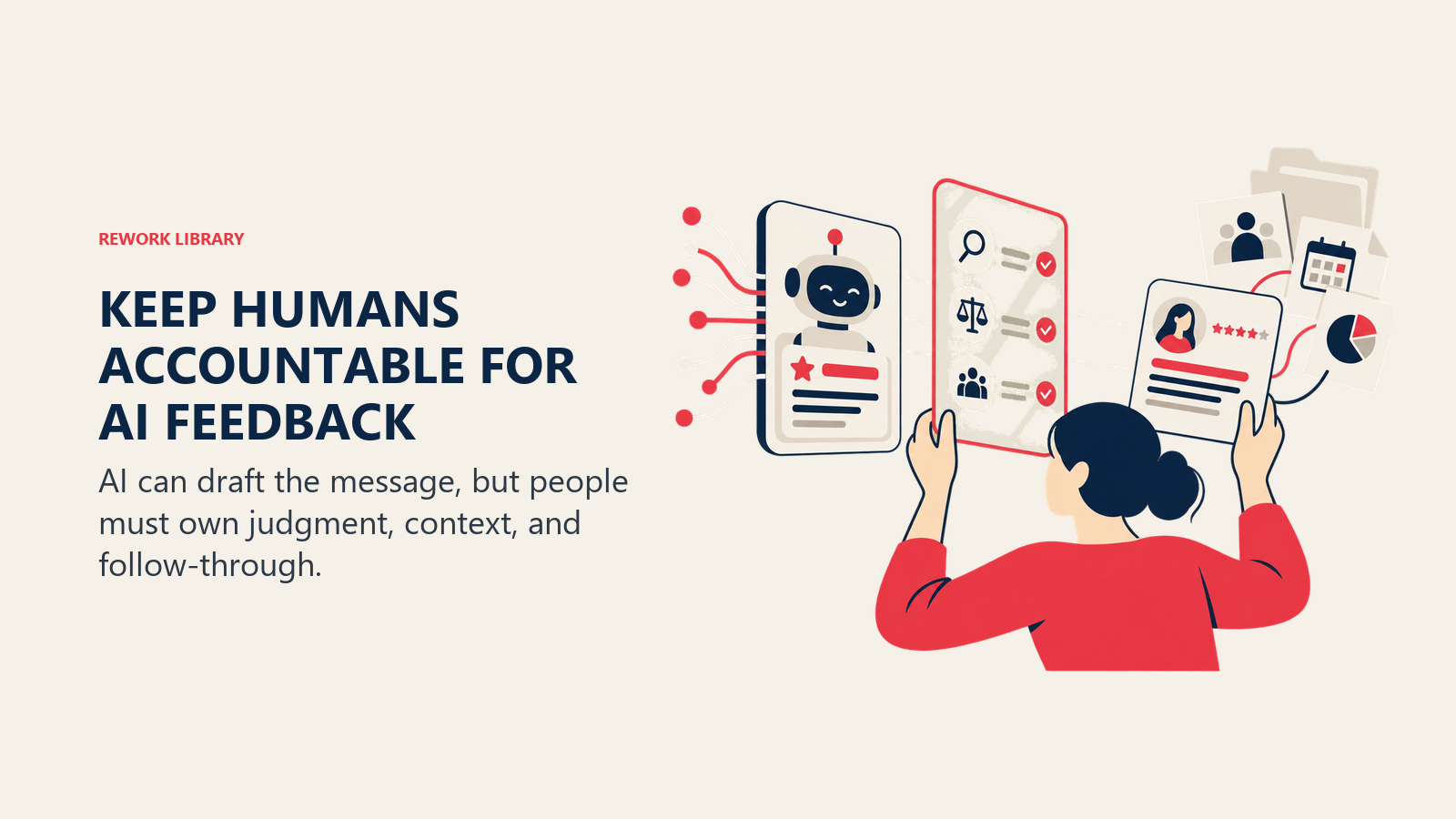
Used carelessly, it creates a new failure mode: feedback that reads as generic, over-polished, or emotionally hollow because it was generated rather than felt, the same dynamic researchers have started calling "workslop," AI-generated work that looks complete but carries none of the judgment or context a human reviewer actually needed. A feedback culture built on AI-drafted comments that no human actually stands behind is not a feedback culture. It is automation wearing the language of one, the same trap as annual-review theater with a newer tool.
Two honest disclosure norms help here. First, if a manager used AI to help structure or word a piece of feedback, the substance still has to be theirs, they should be able to defend every specific claim in a follow-up conversation without leaning on the tool. Second, teams experimenting with AI-assisted feedback should say so openly rather than let people guess, since discovering it after the fact does more damage to trust than the AI assistance itself ever would. This matters more, not less, as AI tools take on more of the writing: MIT's 2025 NANDA research on generative AI adoption found that 95% of enterprise generative AI pilots were producing no measurable return, and Gartner has separately predicted that over 40% of agentic AI projects will be cancelled by the end of 2027, largely because teams skipped the unglamorous work of defining what a good outcome actually looks like before deploying the tool. Feedback is exactly the kind of judgment-heavy work where skipping that step shows up fast.
Signs Your Feedback Culture Is Actually Working
A feedback culture is working when junior employees correct senior ones in a meeting and nothing bad happens afterward. It is working when people bring up a problem while it is still small and annoying, rather than sitting on it until it becomes a resignation letter. It is working when a manager can name, specifically, the last piece of feedback a direct report gave them, and describe what changed because of it.
None of that shows up on an engagement survey by itself. It shows up in how people actually talk to each other on an ordinary Tuesday, which is the same test that applies to business culture generally: not what gets said in the all-hands, but what happens when no one is grading the performance.
Key Facts
- Gallup's research on workplace feedback found that only 26% of employees strongly agree the feedback they receive helps them do better work. Source: Gallup, "Give Performance Reviews That Actually Inspire Employees"
- After Adobe replaced its annual review with an ongoing "check-in" system in 2012, the company reported voluntary turnover fell by roughly 30% within a year. Source: Forbes, "How Adobe Scrapped Its Performance Review System And Why It Worked"
- Google's internal Project Aristotle study of 180 teams identified psychological safety as the strongest predictor of team effectiveness, ahead of skill, tenure, or resources. Source: Google re:Work, "Understand team effectiveness"
- Erin Meyer's Culture Map places direct versus indirect negative feedback on its own "Evaluating" scale, separate from general communication style. Source: Harvard Business Review, "Navigating the Cultural Minefield," May 2014
- Malaysia holds one of the highest Power Distance Index scores in Hofstede's dataset, at 100, versus 70 for Vietnam. Source: Hofstede Insights country comparison
- MIT's 2025 "GenAI Divide" study from Project NANDA found that 95% of enterprise generative AI pilots delivered no measurable business return. Source: Forbes, "MIT Finds 95% Of GenAI Pilots Fail Because Companies Avoid Friction"
- Gartner predicts that over 40% of agentic AI projects will be cancelled by the end of 2027 due to escalating costs and unclear business value. Source: Gartner press release, June 25, 2025
Frequently Asked Questions about Building a Feedback Culture
What is a feedback culture?
A feedback culture is a workplace where feedback flows continuously and in both directions, not just from manager to employee, and where people trust that giving or receiving honest feedback will not damage their standing. It is a daily habit built into how work happens, not an annual event.
Why do most feedback cultures fail?
Three reasons show up most often: treating the annual review as the whole feedback system instead of one input into it, missing psychological safety so people say what is safe rather than what is true, and importing a feedback style from a culture where it worked without adjusting it for the team actually receiving it.
How is a feedback culture different from a performance review process?
A performance review is a scheduled event, usually annual, that evaluates past performance. A feedback culture is continuous and forward-looking: it catches problems and opportunities while they are still small, weeks or days after they happen, rather than months later in a formal review.
Can feedback be too direct?
Yes, depending on the culture. Meyer's Culture Map places direct and indirect feedback on a scale, and what reads as respectfully direct in the Netherlands or Germany can read as humiliating in a higher-power-distance, more indirect culture like Japan or Vietnam. The substance of good feedback should stay the same; the delivery style has to adapt.
How do you give feedback on a multicultural or global team?
Separate substance from delivery. Keep the feedback specific, timely, and tied to the actual work regardless of who is receiving it, then adjust the delivery layer, private versus public, direct versus suggestive, written versus spoken, based on where that person's culture and individual style sit on the Evaluating and Power Distance scales.
Is giving good feedback a skill you can train, or just a personality trait?
It is a trainable skill. Most managers were never taught to separate observation from judgment or make feedback specific enough to act on. Frameworks like Radical Candor give managers a concrete structure to practice, and companies that skip this training usually end up with only their naturally direct managers giving feedback well.
What role does psychological safety play in a feedback culture?
It is the precondition, not an add-on. Google's Project Aristotle and Amy Edmondson's research both found psychological safety to be the strongest predictor of team effectiveness. Without it, a feedback process still runs, but people say what keeps them safe rather than what is actually true.
Is it okay to use AI to help write feedback?
AI can help a manager structure or word a difficult piece of feedback more clearly, but the substance still has to belong to the person giving it, they should be able to defend every specific point without the tool. Teams should also disclose when AI assistance is part of how feedback gets drafted, since finding out later damages trust more than the assistance itself.
What are the signs a feedback culture is actually working?
Junior employees correct senior ones in a meeting without consequence, problems get raised while they are still small, and managers can name specific feedback they received recently and what changed because of it. None of that shows up on a survey by itself; it shows up in how people talk to each other on an ordinary day.
This guide to building a feedback culture was updated August 2026.

Co-Founder, Rework.com
On this page
- What a Feedback Culture Actually Is
- Why Most Feedback Cultures Fail
- Annual-review theater
- No psychological safety
- Culture mismatch
- How to Build a Feedback Culture
- Set explicit norms, not vague values
- Build a cadence, not an event
- Train the manager skill
- Tie it to psychological safety
- The Cross-Cultural Nuance: Feedback Isn't Universal
- Direct-feedback cultures
- Indirect-feedback cultures
- Calibrating feedback on a global team
- Tools and Rituals That Support a Feedback Culture
- Feedback Culture in the Age of AI
- Signs Your Feedback Culture Is Actually Working
- Key Facts