More in
AI at Work ニュース
OpenAIがChatGPT広告を中小企業に予算制限なく開放した
6月 6, 2026
AIは職場のあらゆる場所に浸透した:しかし「仕事を根本から変えた」と言える人は10人に1人だけ
6月 6, 2026
Vibe Codingの105億ドルの瞬間:AIが新規ソフトウェア開発の大半を担うようになった
6月 6, 2026
AIエージェントは今や従業員よりも多くのシステムアクセス権を持っている:しかしセキュリティ対策はほとんど追いついていない
6月 5, 2026
AIは自社開発すべきか、購入すべきか。巨大企業が何を買収したかを見れば答えが見えてくる
6月 5, 2026
Uberは予算超過を受け、従業員1人あたりのAI利用上限を1,500ドルに設定した
6月 5, 2026
TrumpのAI大統領令は規制緩和を志向:しかし御社のコンプライアンスリスクは変わっていない
6月 4, 2026
AIが220社のユニコーン企業を時価総額10億ドル未満に押し下げた:ChatGPT以前のスタートアップは転換点を迎えている
6月 4, 2026
トークン価格は今年67%下落した:それでもAI費用は増え続けている
6月 3, 2026
AIを活用する中小企業は売上増加と勤務時間短縮を同時に実現している
6月 3, 2026
NVIDIAがエージェントスタックを2階層化。次回プラットフォーム更新に向けたCTOのインフラ評価テスト
Turn this article into takeaways for your work.


Each assistant summarizes the article only for you and suggests best practices for your work.
構築中のエンタープライズエージェントプラットフォームの候補リストが、さらに複雑になりました。5番目のベンダーが競争に加わったからではありません。NVIDIAは、そもそもプラットフォームベンダーではない可能性があるからです。他の4社が上に乗る層、つまり基盤インフラである可能性があります。
GTC 2026において、NVIDIAはNVIDIA Open Agent Platformを発表し、17社の企業導入パートナーを公表しました。その中にはSalesforce、SAP、ServiceNow、Adobe、Cisco、Atlassian、Red Hat、Palantirが含まれます。これほど多くの戦略的ベンダーが一つの発表で同じランタイムに賛同した場合、問われるべき問いは「どのプラットフォームを選ぶべきか?」ではなく、「プラットフォームを選ぶとき、実際に何を選んでいるのか?」へと変わります。
Microsoft Agent 365、Anthropicのself-hosted sandboxes、Google's Antigravity 2.0などエンタープライズエージェントプラットフォーム競争を追ってきたCTOにとって、この発表は評価全体の枠組みを変えるものです。それまでの記事はプラットフォームに関するものでした。今回は、それらすべての下に位置するインフラ層についての話です。
17社の戦略的ベンダーが同じランタイムを選んだことが本当のニュースである理由
NVIDIAのGTC 2026発表によると、NVIDIAはプラットフォームの核を形成する3つのオープンコンポーネントを発表しました。Nemotron(エージェント的推論に特化した開発済みモデル)、AI-Q(知識を活用する企業向けエージェントのブループリント:知覚、推論、行動)、OpenShell(セキュリティ、ネットワーク、プライバシーに関するポリシーベースのコントロールを適用するオープンソースランタイム)です。最適化スキルライブラリはcuOptと呼ばれます。
ただし、コンポーネントの一覧が本題ではありません。本題は、発表に合わせて名前を連ねた17社の導入企業です。
Adobeはこのプラットフォームをハイブリッドな長時間稼働のクリエイティブエージェントに活用しています。SalesforceはAgentforceに組み込みました。Amdocsは、NVIDIA AI-QとNemotronを基盤に「Cognitive Core」と呼ばれるシステムを構築し、顧客とのやり取りや請求データの監視に利用しています。これらはパイロットプログラムでも概念実証でもありません。数百万人のユーザーにエンタープライズソフトウェアを提供している企業による、本番グレードのアーキテクチャ上の選択です。
SalesforceがNVIDIAのランタイム上にAgentforceを構築した場合、そのランタイムはすべてのSalesforce顧客にとってAgentforceの選定に含まれることになります。SAP、ServiceNow、Ciscoについても同じ論理が成り立ちます。NVIDIAを直接評価していないかもしれません。しかし、あなたのベンダーはすでにそれを行っています。
重要なポイント
- NVIDIAのOpen Agent PlatformはGTC 2026で3つのオープンコンポーネントとともに発表されました:Nemotron(モデル)、AI-Q(ブループリント)、OpenShell(ランタイム)(NVIDIA、2026年3月)
- Adobe、Salesforce、SAP、ServiceNow、Atlassian、Palantir、Cisco、Red Hatを含む17社の企業が発表に賛同(NVIDIA Newsroom)
- Bainはこの発表を「AIがオペレーティングレイヤーになる」と位置づけ、NVIDIAはアプリケーション層プラットフォームと競合するのではなく、その下に位置する戦略を採っているとしています(Bain & Co. 分析、GTC 2026)
Futurumの分析は明確に述べています。NVIDIAはアプリケーション層ではなく、自律エージェントインフラに主張の軸を置いているとしています。Bain & Co.のGTC 2026分析では、この瞬間を「AIがオペレーティングレイヤーになる」と表現しました。この表現は的確です。NVIDIAはMicrosoftやSalesforceとエージェントプラットフォームの予算を争っているのではありません。インフラ予算を競っているのです。そして、エンタープライズソフトウェア市場の相当部分が、どちら側に立つかを示しました。
Nemotron、AI-Q、OpenShell:CTOが3つのオープンコンポーネントについて実際に理解すべきこと
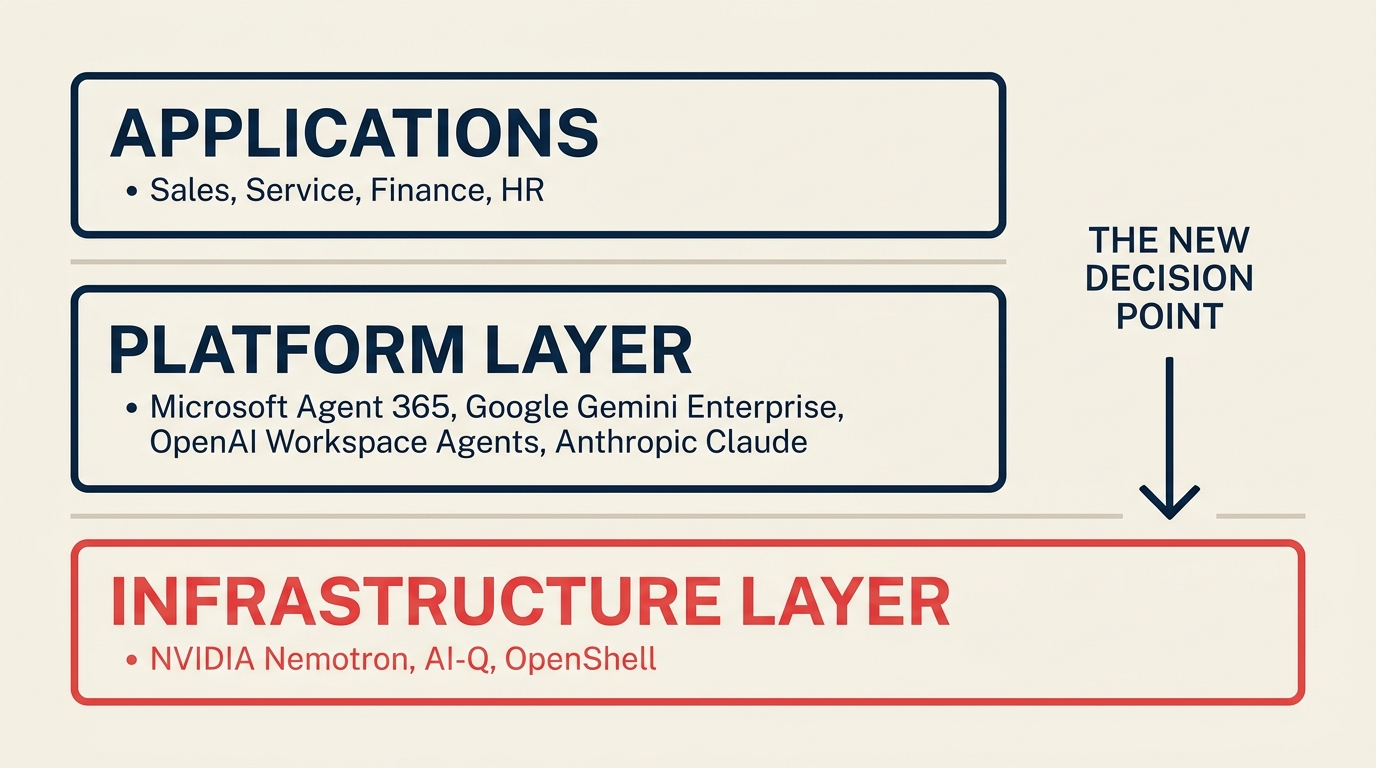
NVIDIAプラットフォームに関するCTOへのブリーフィングのほとんどはNemotronから始まります。モデルは、デモが容易だからです。しかし、デモによって評価の方向性を決めないでください。3つのコンポーネントはそれぞれ異なる役割を持っており、インフラ判断において最も重要なのはOpenShellです。
Nemotronは、エージェント的推論に特化して調整されたオープンモデルのファミリーです。汎用の大規模言語モデルとの違いは重要です。エージェント的モデルは、ツールをいつ呼び出すか、タスクをどのようにサブステップに分解するか、そしていつ停止して人間に入力を求めるかを判断する必要があります。Nemotronはその問題に特化してトレーニングされています。SalesforceやSAPのようなベンダープラットフォームの上にエージェントを構築しているCTOにとって、Nemotronが表面に出ることはないかもしれません。しかし、カスタムエージェントを構築しているチームや、ベンダープラットフォームが有能なモデルを利用しているかどうかを評価しているチームにとっては、関連するデータポイントです。
AI-Qは製品ではなくブループリントです。エンタープライズ知識エージェントのアーキテクチャを定義しており、知覚(構造化・非構造化のエンタープライズデータを取り込む)、推論(そのデータにエージェント的ロジックを適用する)、行動(ダウンストリームのワークフローをトリガーしたり出力を提示する)が可能です。ブループリントのパターンが重要なのは、17社の導入企業に共通の参照アーキテクチャを提供するからです。AmdocsがCognitive CoreをSalesforceがAgentforceを同じAI-Qブループリント上に構築すれば、生成されたエージェントはデータアクセス、状態管理、アクションスコープに関する前提を共有します。この相互運用性は、静かながらも構造的な優位性です。
OpenShellは、インフラに関する議論の核心があります。セキュリティ、ネットワーク境界、プライバシーに対するポリシーベースのコントロールを適用するオープンソースランタイムです。CTOにとって、このコンポーネントが答える問いは「NVIDIAのインフラ上に構築した場合、guardrailsを誰がコントロールするのか?」です。OpenShellが示す答えは「あなた自身がコントロールする。なぜならオープンソースであり、監査・修正・適用が可能だから」です。これは、ベンダーのクラウドプラットフォームに組み込まれたクローズドな独自ランタイムから得られる答えとは異なります。
この違いは、コンプライアンスチームが特定のランタイムがエージェントに何を許可し、何を許可しないかを検査する必要があるエンタープライズ規模では特に重要です。
2階層の問い:プラットフォームとインフラ
エージェントプラットフォームに関するCTOの標準的な評価フレームワークは、水平比較として扱います。Microsoft Agent 365 対 Google Gemini Enterprise 対 OpenAI Workspace Agents 対 Anthropic Claude Managed Agents。一つを選ぶか、バックアップ付きで主要なものを選ぶ。このフレームワークは2026年初頭までは合理的でした。
NVIDIAのGTC発表によって、このフレームワークは時代遅れになりました。
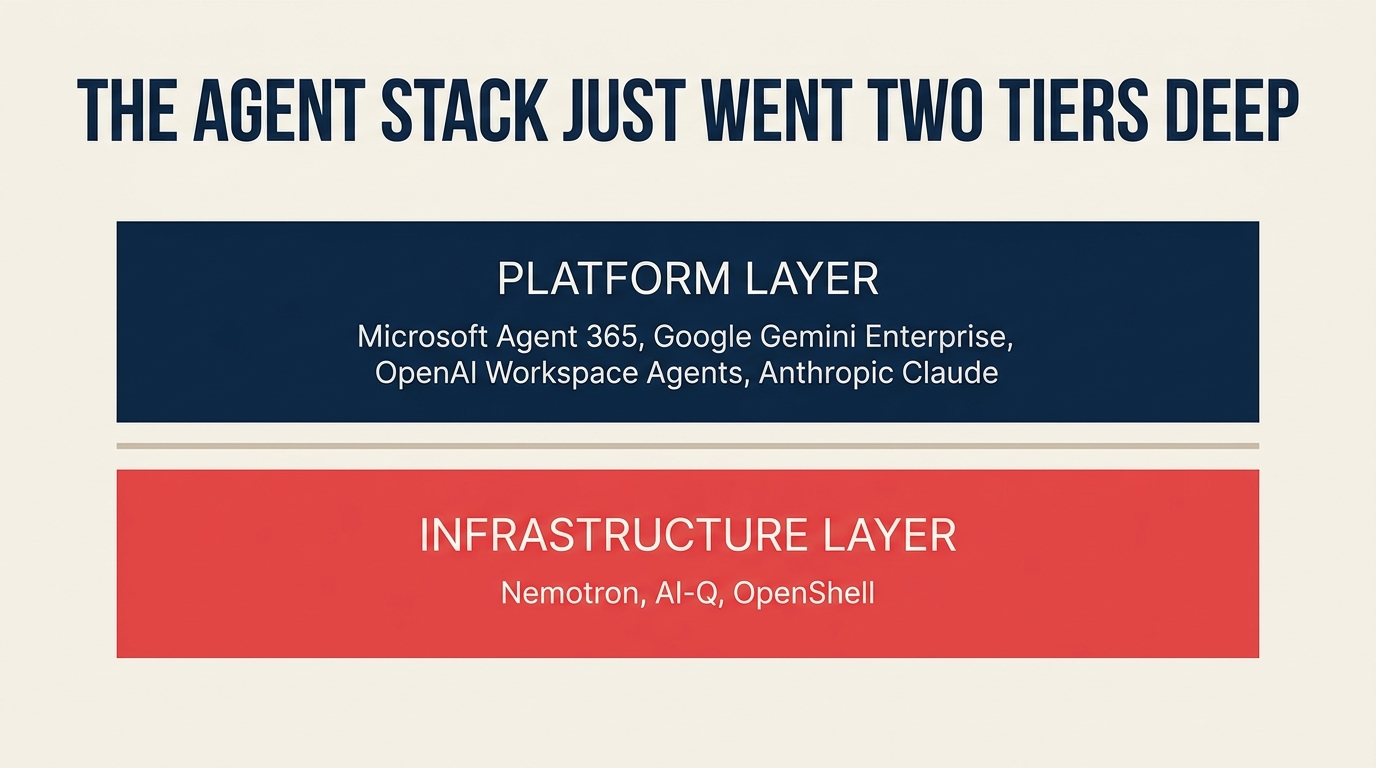
適切なメンタルモデルは今や水平ではなく垂直です。プラットフォーム層とインフラ層があります。プラットフォーム層では、Microsoft、Google、OpenAI、Anthropicが競争しています。インフラ層は、NVIDIAが賭けを置いている場所です。SalesforceがAgentforceにNVIDIAのランタイムを組み込むと、2つの層が積み重なります。SalesforceはあなたのプラットフォームのChoice、NVIDIAは(場合によっては)あなたのインフラの選択です。両者は代替品ではありません。層です。
これが重要なのは、調達プロセス、評価基準、担当チーム、更新タイムラインが、プラットフォームの判断とインフラの判断では異なるからです。
プラットフォームの判断はアプリケーション層の判断です。ユーザー向けインターフェース、統合層、control plane、配布の仕組みを選んでいます。購買者は通常、エンジニアリングのVP、ITトップ、またはCTO直轄です。評価基準はユーザーエクスペリエンス、統合カバレッジ、ライセンスコスト、ベンダーサポートです。
インフラの判断は、より下位のアーキテクチャ上の選択です。エージェントを動かすもの:モデルファミリー、ランタイムのguardrails、エージェントの推論アーキテクチャに組み込まれたブループリントの前提条件を選んでいます。購買者はアーキテクトまたはプラットフォームチームのリーダーです。評価基準はオープン性、監査可能性、コンポーザビリティ、長期的な依存リスクです。
1つの調達プロセスにこれら2つの判断を混在させると、悪い結果をもたらします。ランタイムセキュリティで評価すべき判断に対して、ユーザーエクスペリエンス指標を最適化してしまうことになります。あるいは、直接設定することのない製品のモデル層の監査にエンジニアリングのキャパシティを費やすことになります。
調達の再設計:プラットフォーム判断とインフラ判断を分離すべき理由
2階層モデルの実践的な意味は、調達の組み立て方の変化です。現在、ほとんどのエンタープライズ技術調達は、AIエージェントを1つの予算枠、1つの評価プロセスで扱っています。1つのRFP、1つのベンダー候補リスト、1つの購買委員会です。
この構造は、スタックが1層だったときには理にかなっていました。今はもう意味がありません。
2階層の調達プロセスは異なる形を持ちます。プラットフォームの評価(どのベンダーの画面、control plane、統合がビジネスユニットに最も適しているか)はアプリケーション層で行われます。インフラの評価(プラットフォームが何の上に構築されているか、guardrailの前提は何か、監査可能性はあるか、その依存関係を受け入れるか)は別途、異なる人々が異なる問いを立てながら行います。
実際には、多くの組織がインフラの判断がすでに代わりに行われていることに気づくでしょう。Salesforce Agentforceへのコミットを決めていて、SalesforceがNVIDIAのランタイムにコミットしているなら、あなたのインフラの判断はデフォルトでNVIDIAです。これは必ずしも問題ではありません。しかし、ベンダーの製品ロードマップに隠れた見えない前提としてではなく、アーキテクチャログに記録された意識的な選択であるべきです。
AIパターンガバナンスやAIパターン別の購入か自社開発かの判断について考えているチームは、このダイナミクスに気づくでしょう。プラットフォーム層で行われた判断は、スタック全体に波及するアーキテクチャ上の前提を持ちます。NVIDIAの発表によって、それらの前提が初めて可視化されました。
CTOのインフラ評価テスト(次回更新前に確認すべき5つの問い)
次回のプラットフォーム契約更新前、または新規契約の締結前に、インフラ層に対してこのテストを実施してください。以下の問いはベンダー中立的に設計されています。エージェントランタイムを内包するあらゆるプラットフォームに適用できます。
1. このプラットフォームはどのランタイム上に構築されており、そのランタイムはオープンソースか? ランタイムが独自のクローズドなものであれば、エージェントに何を許可し、何を禁じるかを監査することができません。規制業界や高セキュリティ環境では、これは要件を満たさない制約です。OpenShellのオープンソース姿勢は、この問いへの明確な回答です。
2. モデル層を誰がコントロールし、交換可能か? 単一のモデルファミリーに縛られたプラットフォームは依存リスクを生みます。ベンダーがモデルの価格を変更したり、モデルのバージョンを廃止したり、ファインチューニングのポリシーを変更した場合、エージェントもそれに合わせて変化します。オープンで分離可能なNemotronのようなインフラ層は、アプリケーション層を再構築することなくモデルのバージョンを固定したり、プロバイダーを切り替える能力を与えます。
3. コンプライアンスチームはguardrailのロジックを検査できるか? ポリシーベースのguardrailは、レビュー可能である場合にのみ信頼できます。「guardrailは機能している、信頼してください」は、顧客データや請求レコードに作用するシステムにとって受け入れられる回答ではありません。ランタイムがブロックするもの、ログに記録するもの、許可するものの文書を要求してください。
4. このインフラベンダーが価格や条件を変更した場合、切り替えコストはいくらか? コンポーネントのオープン性がここで重要です。オープンソースランタイムには切り替えコストがあります。独自ランタイムのコストははるかに高くなります。インフラの依存リスクを適切に価格設定してください。
5. プラットフォームベンダーのロードマップは単一のインフラプロバイダーに縛られているか、複数をサポートしているか? 単一のインフラプロバイダーにコミットしたプラットフォームベンダーは、その依存関係をあなたに転移させます。複数のインフラオプションをサポートするプラットフォームベンダー(またはランタイム上の抽象化層を公開するベンダー)は、選択肢の幅を保持します。これは次回のQBRでプラットフォームベンダーに直接問うべき質問です。
今週すべきこと
NVIDIAの発表は即時の行動を求めるものではありません。しかし、メンタルモデルの更新と、次回のアーキテクチャレビューへの1つの具体的な追加事項を求めます。
メンタルモデルを更新してください。 エージェントプラットフォームの判断を4社の水平比較として考えるのをやめてください。垂直に積み重なった2つの独立した判断として考え始めてください。プラットフォーム層(Microsoft、Google、OpenAI、Anthropic)とインフラ層(ますますNVIDIAが中心になりつつあるが、他の可能性もある)です。GartnerのAIコーディングエージェント再編成の記事は、スタックがどのように進化しているかを理解するうえで参考になります。
現在のプラットフォームコミットメントに隠れたインフラの前提を監査してください。 すでにプラットフォームを選択している場合は、ベンダーにエージェント実行環境の基盤となるランタイムを確認してください。NVIDIAのスタックが答えであれば、すでにインフラの選択をしています。文書化して、意識的に同じ選択をしたかどうかを評価してください。
次回のプラットフォーム更新レビューに5つの問いのインフラテストを追加してください。 プラットフォーム契約は通常12から24ヶ月の更新サイクルがあります。上記のインフラテストは、次回の更新前にアーキテクチャチームと半日のワークショップで完了できます。最も早く到来する更新から始めてください。
これまでのシリーズを読んでいない場合は、Microsoft Agent 365のcontrol plane分析とGoogle Antigravity 2.0のプラットフォーム比較が今回と自然に補完し合います。それらの記事はプラットフォーム層を評価しました。今回はその下のインフラ層を評価しました。
関連記事
- Microsoft Agent 365が稼働中:CTOがAIエージェントのcontrol planeを持つべき理由
- Googleがエンタープライズエージェントプラットフォーム競争に参戦:Antigravity 2.0とGemini Enterprise Agent PlatformのCTOへの示唆
- Anthropicのself-hosted sandboxesとMCP tunnels:CTOへのブリーフィング
よくある質問
NVIDIAのOpen Agent Platformとは何ですか?
NVIDIAのOpen Agent PlatformはGTC 2026で発表された3つのオープンコンポーネントのセットです。Nemotron(エージェント的推論に特化した調整済みオープンモデル)、AI-Q(エンタープライズ知識エージェントのブループリントアーキテクチャ)、OpenShell(ポリシーベースのセキュリティ、ネットワーク、プライバシーのguardrailsを適用するオープンソースランタイム)です。エンドユーザー向けアプリケーションではありません。エンタープライズソフトウェアベンダーが自社のエージェントプラットフォームに組み込むインフラ層です。発表時に、Salesforce、SAP、ServiceNow、Adobe、Ciscoを含む17社のエンタープライズベンダーが導入を公表しました。
NVIDIAはMicrosoft Agent 365、Google Gemini Enterprise、OpenAI Workspace Agentsとどう違うのですか?
それら3つはアプリケーション層プラットフォームです。エンタープライズユーザーに対して、組織内でエージェントをデプロイ・管理するためのインターフェース、control plane、統合セットを提供します。NVIDIAはインフラ層プロバイダーです。これらのプラットフォーム(およびその上で動作するソフトウェア)が構築される可能性のあるランタイム、モデル、ブループリントを供給します。SalesforceがNVIDIAのランタイムをAgentforceに組み込む場合、NVIDIAとSalesforceは競合していません。同じスタックの2つの層です。
CTOはエージェントプラットフォームの選定とは別にNVIDIAを評価すべきですか?
はい。ただし、評価の観点は異なります。プラットフォームの評価は、ユーザーエクスペリエンス、統合、control planeの深度、ベンダーサポートに焦点を当てます。インフラの評価は、オープン性、guardrailsの監査可能性、モデルの可搬性、依存リスクに焦点を当てます。多くの場合、インフラの選択はプラットフォームの選択を通じて暗黙的に行われます。CTOの仕事は、その暗黙の選択を明示的にし、プラットフォーム契約の署名前に5つの問いのインフラテストを実施することです。
出典:NVIDIA Open Agent Platform発表。VentureBeat、Futurum、およびBain & Co.の報道より。

On this page
- 17社の戦略的ベンダーが同じランタイムを選んだことが本当のニュースである理由
- Nemotron、AI-Q、OpenShell:CTOが3つのオープンコンポーネントについて実際に理解すべきこと
- 2階層の問い:プラットフォームとインフラ
- 調達の再設計:プラットフォーム判断とインフラ判断を分離すべき理由
- CTOのインフラ評価テスト(次回更新前に確認すべき5つの問い)
- 今週すべきこと
- 関連記事
- よくある質問
- NVIDIAのOpen Agent Platformとは何ですか?
- NVIDIAはMicrosoft Agent 365、Google Gemini Enterprise、OpenAI Workspace Agentsとどう違うのですか?
- CTOはエージェントプラットフォームの選定とは別にNVIDIAを評価すべきですか?