バイヤーペルソナ:作成方法とテンプレート
Turn this article into takeaways for your work.


Each assistant summarizes the article only for you and suggests best practices for your work.
バイヤーペルソナは、レベニューチームが作成できる最も効果的なドキュメントのひとつです。適切に作成すれば、ターゲティングを絞り込み、すべての営業会話を鋭くし、マーケティングに「実際に誰に向けて話しているか」という唯一の情報源を与えます。しかし、粗雑に作れば、Googleドライブのフォルダで眠り続けるだけで、営業担当者は見込み客が何を求めているかを勘頼みに続けることになります。
このガイドでは、バイヤーペルソナとは何か、関連概念との違い、何を盛り込むべきか、そしてチーム全員が実際に活用できるペルソナの構築方法を解説します。
重要な事実:バイヤーペルソナ
- HubSpotの「State of Marketing」レポートによると、バイヤーペルソナを活用している企業は、汎用ターゲティングと比較してクリック率とコンバージョン率が2〜5倍向上しています。
- 収益目標とリード目標を超えている企業の71%がバイヤーペルソナを文書化しているのに対し、目標を達成できていない企業ではその割合は37%にとどまります(ITSMA、Buyer Persona Research)。
- バイヤーペルソナ調査に基づいたパーソナライズされたアプローチは、セールスサイクルを最大20%短縮できます。担当者が会話に入る前から見込み客の主要課題と懸念点を把握しているためです(Forrester Research、2024年)。
バイヤーペルソナとは
バイヤーペルソナとは、既存バイヤーに関する実データと調査から構築された、理想的な顧客の半架空プロファイルです。その人物が誰であるか、何を求めているか、何を恐れているか、どのように購買意思決定を行うかを記述します。

「半架空」という言葉は重要です。ペルソナは作り話ではありません。実際の顧客インタビュー、CRMデータ、営業コールメモ、行動パターンから構築されたコンポジットです。架空の要素は、チームにとって具体的かつ記憶しやすいものにするために使う名前とナラティブのラッパーです。
たとえば「中規模SaaS企業のマーケティングマネージャー」をターゲットにするのではなく、「懐疑的なCFOにパイプラインROIを示す必要があり、それを6ヶ月で達成しなければならないデマンドジェネレーションディレクターのマリア」としてチームがひとつになる方が効果的です。前者はセグメントであり、後者は担当者がすべてのコール中に頭の中に保持できる人物像です。
バイヤーペルソナ vs 理想的顧客プロファイル vs ユーザーペルソナ
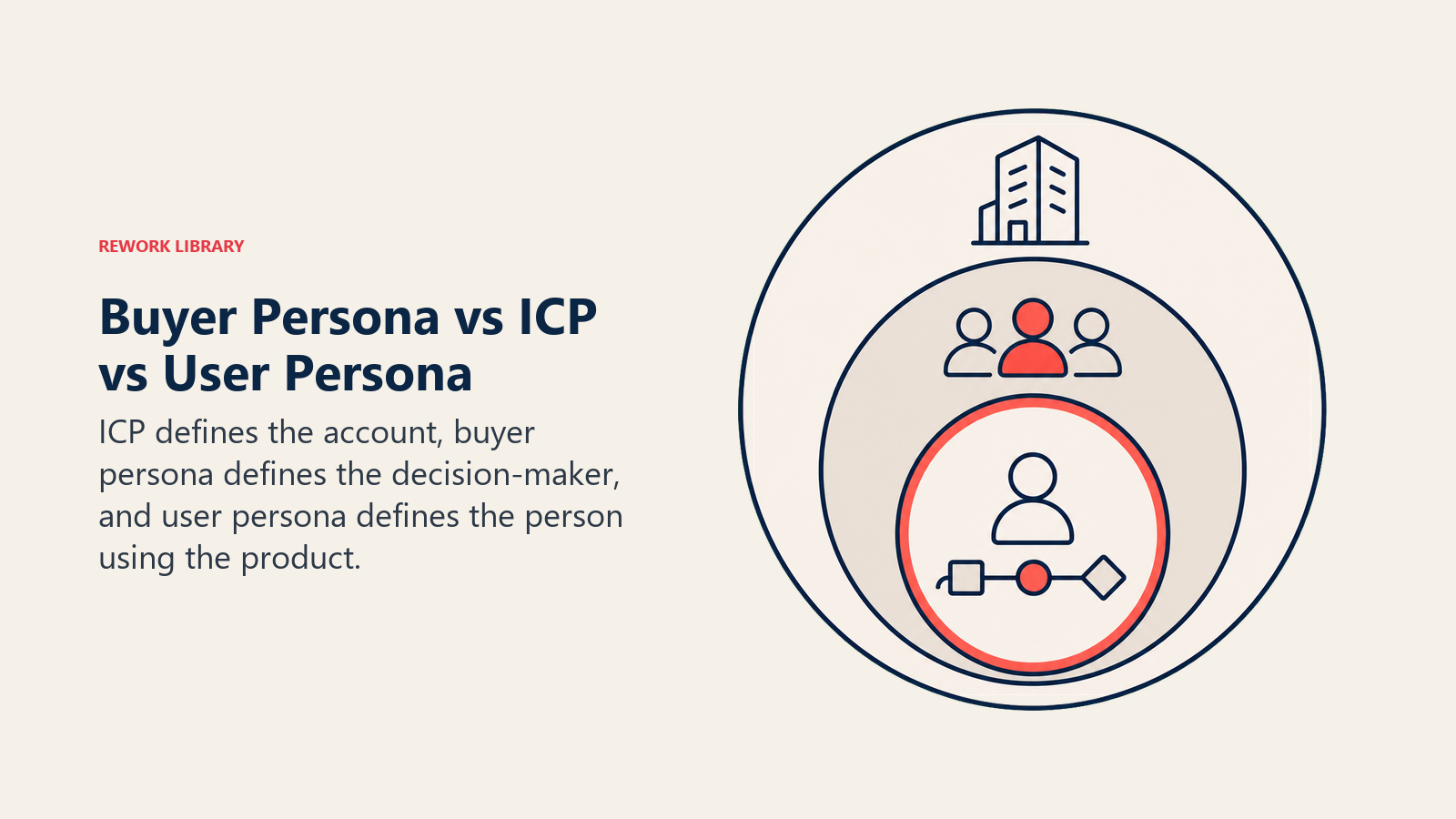
これら3つの概念は常に混同されています。以下はその違いです:
| 概念 | 説明対象 | 利用部門 | 主な目的 |
|---|---|---|---|
| 理想的顧客プロファイル(ICP) | 自社製品から最も価値を得る企業(ファーモグラフィック:規模、業種、テックスタック、収益) | マーケティング、営業、RevOps | どのアカウントをターゲットにするかを定義する |
| バイヤーペルソナ | その企業内で購買決定を推進または影響する個人 | 営業、マーケティング、CS | メッセージング、クオリフィケーション、アプローチを形成する |
| ユーザーペルソナ | 製品を日常的に実際に使用する個人(バイヤーと異なる場合もある) | プロダクト、UX、CS | 製品設計とオンボーディングの指針となる |
ICPはどのドアをノックするかを教えてくれます。バイヤーペルソナは誰かが応答したときに何を言うかを教えてくれます。ユーザーペルソナは誰のために構築するかを教えてくれます。
1つのICPに複数のバイヤーペルソナを設定できます。同じターゲット企業のCFOと営業VPでは、目標、懸念点、購買トリガーがまったく異なります。両者とも重要ですが、異なるメッセージが必要です。
バイヤーペルソナがアカウントレベルのターゲティングとどのように結びつくかについては、理想的顧客プロファイルを参照してください。
バイヤーペルソナが重要な理由
ペルソナが文書化されていないと、3つのことが起こります。第一に、メッセージングが汎用的になります。マーケティングが全員に向けて書くと、誰にも響かないメッセージになります。第二に、クオリフィケーションが一貫しなくなります。担当者ごとに「優良なリード」を感覚で判断するようになり、リードスコアリングシステムの根拠が失われます。第三に、新しい担当者のオンボーディングに時間がかかります。誰に販売するかについての共通言語がないためです。

適切に調査されたペルソナがあれば:
メッセージングが鋭くなります。 マリアがパイプラインROIで評価され、次回の予測ミスを発表することを恐れていると知っていれば、機能ではなく成果を最初に伝えるようになります。すべてのメールとディスカバリーコールが彼女の実際の状況に語りかけるものになります。
ターゲティングが向上します。 リード評価フレームワークにペルソナ適合性をスコアリング軸として組み込めます。役割、目標、ペインポイントが一致するリードは、一致しないリードよりもほぼ常に高品質です。
プロダクトがより賢くなります。 ペルソナは顧客が使う言葉や検討中の代替案を明らかにします。そのコンテキストは内部の憶測よりも正確にロードマップの意思決定を形成します。
セールスサイクルが短縮されます。 あるペルソナにとって典型的な懸念点と購買トリガーを事前に把握している担当者は、見込み客が何を重視しているかを3回のミーティングで発見するような無駄を省けます。
バイヤーペルソナに含める内容
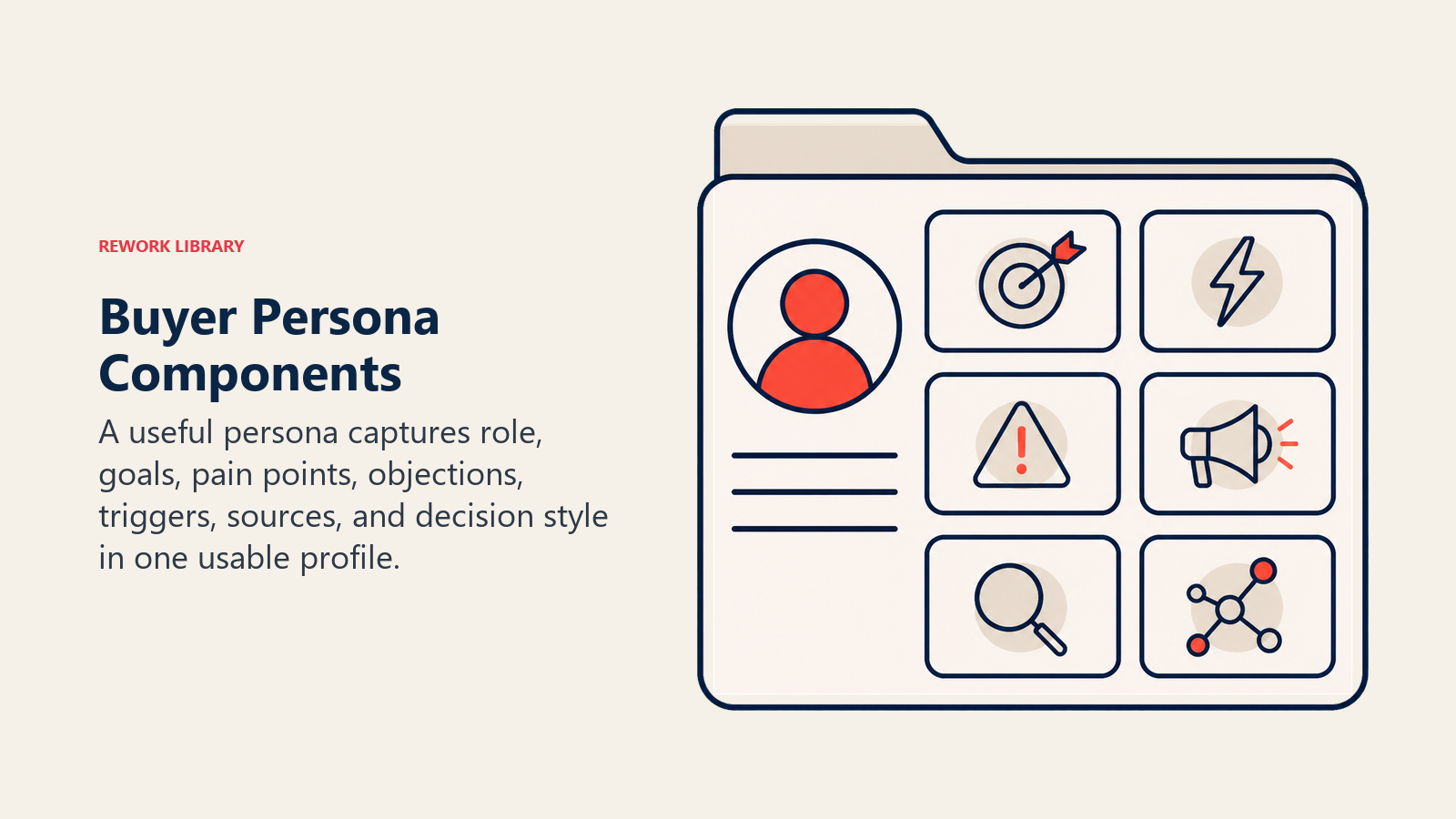
有用なペルソナは、行動を変えるのに十分な詳細を持ちながらも、誰も読まない長編小説にはなりません。販売とマーケティングの方法に影響する要素に集中しましょう。
| 要素 | 記録する内容 | 重要な理由 |
|---|---|---|
| デモグラフィック | 年齢層、性別(関連する場合)、所在地、学歴 | トーン、チャンネル選択、コンテンツ形式を決定する |
| 役割と肩書き | 職種、シニアリティ、チーム規模、レポートライン | 権限レベル、語彙、意思決定力を決定する |
| 目標 | 評価される職業上のKPIと目標 | 彼らが責任を持つ言葉で価値を伝えられるようにする |
| ペインポイント | 日常のフラストレーション、業務上の問題、戦略的ギャップ | アプローチとコンテンツの関連性を高める |
| 懸念点 | 営業中に躊躇したり反論したりする一般的な理由 | 商談を崩壊させる前に担当者が摩擦を処理できるよう準備する |
| 購買トリガー | 探し始めるきっかけとなるイベントや条件 | マーケティングがキャンペーンのタイミングを、担当者がアプローチのタイミングを判断するのに役立つ |
| 情報源 | どこで学ぶか(LinkedIn、ポッドキャスト、アナリスト、同業者) | コンテンツ配信とチャンネル戦略を指針とする |
| 意思決定スタイル | 単独バイヤー、チャンピオン、委員会;迅速か熟慮型か | 営業プロセスと提案構成を形成する |
長編小説は不要です。これら8つの項目を持つ1ページのペルソナドキュメントは、作成に1週間かかる20スライドのデッキよりも実用的です。
バイヤーペルソナの作成方法
ペルソナプロジェクトのほとんどは、チームが調査をスキップして憶測から始めるために失敗します。以下の5つのステップは、実際のデータに基づいてペルソナをゼロから構築します。

ステップ1:既存の優良顧客にインタビューする
すでに購入し価値を得た人々から始めましょう。セグメントごとに8〜12件のインタビューを目標にします。質問は3つのことに集中します:達成しようとしていたこと、検索のきっかけになったこと、購入を止めそうになったこと。
最も過小評価されている質問:「私たちの製品のことを聞いたことがない人にどう説明しますか?」顧客が使う言葉は、社内で書かれる何よりも優れたコピーです。コールを録音し、直接の引用を集め、パターンを探しましょう。
ステップ2:既存データを活用する
インタビューは「なぜ」を教えてくれます。データは「何が」を教えてくれます。3つのソースから収集します:
CRMデータ: 過去12ヶ月の受注案件を確認します。最も頻繁に現れる役職、業種、企業規模は何ですか?
営業コールメモ: チームがコール録音ソフトウェアを使用している場合、繰り返し出てくる懸念点と見込み客が検討を始めるきっかけとなったトリガーを検索します。
リードライフサイクルデータ: どのソースが最もコンバージョン率の高いペルソナを生み出しますか?どのリードタイプが各セグメントで最もファネルを速く移動しますか?
ステップ3:個別のペルソナにセグメント化する
1つの普遍的なペルソナを構築しようとしないでください。ほとんどのB2B企業には2〜4つの異なるバイヤータイプがあり、それらをひとつにまとめると誰にとっても有用でないドキュメントが生まれます。
原則:2つのグループが目標、懸念点、または購買トリガーで意味のある差異を持つ場合、それぞれに別のペルソナが必要です。同じターゲット企業のCFOと営業VPは、同じICP内に属していても、まったく異なるメッセージが必要です。
ステップ4:ペルソナドキュメントを作成する
各ペルソナに名前と1段落のナラティブを付けます。次に、可能な限り直接の引用とデータを使って、上の表の8つの要素をすべて記入します。
曖昧な一般論は避けてください。「コミュニケーションに苦労している」は誰にでも当てはまります。代わりに:「コンテンツチームに十分な速さでアセットを作成させられないので、プレースホルダーコピーでキャンペーンを開始している」という具体性が、ペルソナが担当者の行動を変えるかウィキに触れられずに残るかの差を生みます。
ステップ5:検証と改善
ペルソナを社内全体に展開する前に、営業チームとカスタマーサクセスチームでテストします。担当者はこれらの説明を実際の見込み客から認識しますか?CSマネージャーは自分のアカウントで同じパターンを見ていますか?
ペルソナは永続的なものではありません。特に新しい製品をリリースするとき、上位市場に移行するとき、またはリードナーチャリングプログラムのパフォーマンスに変化が見られるときは、6〜12ヶ月ごとに見直します。市場は変化し、バイヤーは進化します。2023年に構築されたペルソナは2026年に販売している相手を反映していない可能性があります。
バイヤーペルソナ テンプレート
各ペルソナを文書化するためにこの構成を使用してください。1ページに収めます。

| 項目 | 記入内容 |
|---|---|
| ペルソナ名 | 例:「デマンドジェネレーションディレクターのマリア」 |
| 職種 | デマンドジェネレーションディレクター、マーケティングプログラムヘッド |
| 企業規模・種別 | 従業員100〜500人のB2B SaaS、シリーズB以降 |
| レポートライン | CMOまたはマーケティングVPに報告 |
| 主な目標 | パイプライン目標の達成;収益へのマーケティング貢献の証明 |
| 主なペインポイント | MQLから商談へのコンバージョン率の低さ;アトリビューション不足;営業・マーケティングの不一致 |
| 購買トリガー | マーケティングROIへのCFOの新たな監視;前四半期のパイプライン目標未達 |
| 懸念点 | 「すでにHubSpotがある」「新しいツールを導入する余裕がない」 |
| 意思決定プロセス | 社内でチャンピオンとなり、営業VPの賛同を得て、CFOが予算を承認する |
| 情報源 | LinkedIn、G2レビュー、Pavilionコミュニティ、マーケティングポッドキャスト |
| 成功指標 | パイプラインアトリビューション率、MQLからSQLへのコンバージョン、パイプライン1ドルあたりのコスト |
| 直接の引用 | 「QBRで、マーケティングがどれだけのパイプラインを生み出したかを正確に示せるようにしたい」 |
直接の引用は実際のコール録音から抜き出してください。担当者が見込み客から同じ言葉を聞いたとき、マリアと話していると分かります。
バイヤーペルソナの実例
同じターゲットアカウント内の異なる役割にわたる2つの実例を以下に示します:
| 項目 | ペルソナ1:マリア | ペルソナ2:デービッド |
|---|---|---|
| 名前 | マリア、デマンドジェネレーションディレクター | デービッド、営業VP |
| 企業 | 200人のB2B SaaS | マリアと同じ企業 |
| 目標 | パイプラインROIの証明;MQL目標の達成 | セールスサイクルの短縮;受注率の向上 |
| ペインポイント | アトリビューションのギャップ;営業側がリードの品質が低いと言う | 担当者が非適格リードに時間をかけすぎる;予測が不安定 |
| 購買トリガー | パイプライン目標未達;CFOの監視 | Q1に速い競合他社に3件の商談を奪われた |
| 主な懸念点 | 「新しいツールを導入するリソースがない」 | 「マーケティングがすでにこれを修正しようとして失敗した」 |
| 意思決定における役割 | チャンピオン:社内でビジネスケースを構築する | 承認者:承認前にROIを確認する必要がある |
| 最適なチャンネル | LinkedInコンテンツ、マーケティングコミュニティフォーラム | 同業者の紹介、AEからの直接アウトバウンド |
マリアとデービッドが同じ企業にいながら、まったく異なる会話が必要なことに注目してください。マリアはアトリビューションを重視し、デービッドはパイプライン品質を重視しています。一方に響くメッセージは、もう一方には通じないことが多いです。
これがリード vs 見込み客 vs 商談の分類が重要な理由です。誰がファネルのどこにいるかを把握することで、どのペルソナメッセージを最初に伝えるかを決定できます。
よくある失敗
調査ではなく憶測からペルソナを構築する。 最もよくある失敗です。チームが90分の社内ワークショップを開き、その成果をペルソナと呼びます。しかし顧客に関する社内の憶測はほぼ常に間違っています。真のペルソナには真のインタビューが必要です。
ペルソナを作りすぎる。 5つのペルソナは網羅的に聞こえます。実際には、運用することが不可能です。営業担当者は2〜3つのペルソナなら頭に入れられます。それ以上になると、「ペルソナドキュメントを確認しよう」となり、誰もそうしないので全体が機能しなくなります。
購買委員会を無視する。 Gartnerの調査によると、B2Bの購買には通常6〜10人の関係者が関与しています。主要な連絡先のためのペルソナを1つだけ構築してCFO、法務チーム、エンドユーザーチャンピオンを無視することは、商談の会話の半分に対して準備ができていないことを意味します。
ペルソナをパイプライン指標に結びつけない。 ペルソナは行動を変える場合にのみ有用です。ペルソナ適合性をコンバージョン率、商談規模、またはセールスサイクルの長さに結びつけられないなら、ペルソナが正確または有用かどうかを判断する方法がありません。リード管理とは何かのデータを使ってベンチマークします。
ペルソナを永続的なものとして扱う。 市場は変化します。バイヤーは変わります。急成長期に構築したペルソナは、市場の調整後に販売している相手を反映していない可能性があります。四半期ごとのレビューサイクルを構築しましょう。
ベストプラクティス
ペルソナをクオリフィケーションに結びつける。 ペルソナ適合性は、行動シグナルとともにスコアリング軸であるべきです。役割、目標、企業ステージはコンバージョン品質の強力な予測因子です。
担当者のオンボーディングでペルソナを使用する。 最初のディスカバリーコールの前に2〜3つのペルソナを内面化した担当者は、試行錯誤で学ぶ担当者よりも速くクローズできます。
1ページに収める。 それより長いものは使われません。裏付けとなる調査は本文ではなく付録に入れます。
実際の顧客からの引用を使用する。 コール録音からの1つの真正な引用は、3段落の説明よりもペルソナをリアルに感じさせます。
すべてのチームで共有する。 ペルソナが会社を統一するのは、営業、マーケティング、CS、プロダクトが同じドキュメントで作業するときだけです。サイロ化されたペルソナはサイロ化されたメッセージングを生み出します。
よくある質問
バイヤーペルソナとターゲット市場はどう違いますか?
ターゲット市場はセグメントです:「従業員100〜500人の中規模SaaS企業」。バイヤーペルソナは、そのセグメント内で購買決定を行う、または影響を与える特定の個人です。ターゲット市場は何年も変わらないことがありますが、ペルソナは実際に誰が購入しているか、なぜ購入するかをより深く学ぶにつれて進化します。
B2B企業はいくつのバイヤーペルソナを持つべきですか?
ほとんどのB2B企業には2〜4つのペルソナが必要です。主要なチャンピオン(社内でビジネスケースを構築する人)のためのもの、経済的決裁者(予算を承認する人)のためのもの、そして時にエンドユーザーや技術評価者などの主要な影響者のための1〜2つ。4つを超えると、運用するには狭すぎるペルソナが生まれます。
バイヤーペルソナとICPの違いは何ですか?
ICPは理想的な企業を記述します(ファーモグラフィック:業種、規模、収益、テックスタック)。バイヤーペルソナはその企業内の個人を記述します。両方が必要です:ICPはどのアカウントをターゲットにするかを教え、ペルソナはそのアカウント内の適切な人々にどのように関与するかを教えます。
バイヤーペルソナはアウトバウンドプロスペクティングに有効ですか?
はい。ペルソナは、どの役職を優先するか、どのペインポイントを最初に伝えるか、どのチャンネルを使用するかを担当者に教えるので、アウトバウンドをより効率的にします。マリアの特定の目標に合わせたメッセージで50人のマリアにアプローチする担当者は、ペルソナターゲティングなしで500件の汎用的な一斉送信をする担当者よりも成果を上げます。
バイヤーペルソナはどのくらいの頻度で更新すべきですか?
少なくとも年に1回、そして上位市場への移行、新しい製品ラインのリリース、新しい業種への参入など、重要なGTM変更を行うたびに見直します。ペルソナが古くなっているという最も明確なシグナルは、担当者が「会話で見ているものと一致しない」と言い始めるときです。
まとめ
バイヤーペルソナはマーケティングの成果物ではありません。RevOpsのツールです。実際の調査から構築され、クオリフィケーションプロセスに結びついている場合、セールスサイクルを短縮し、すべての顧客対応チームに誰に対してサービスを提供しているかについての共通言語を与えます。
ペルソナ調査を一時的なプロジェクトとして扱う企業は一時的な結果を得ます。継続的な業務として扱う企業は複利効果のあるリターンを得ます。