Bahasa Indonesia
Value Chain Manufaktur: Mengoptimalkan Setiap Tahap dari Bahan Baku hingga Pelanggan
Turn this article into takeaways for your work.


Each assistant summarizes the article only for you and suggests best practices for your work.
Produsen yang unggul bukan hanya membuat produk yang lebih baik. Mereka berprestasi di seluruh value chain mulai dari hubungan pemasok hingga layanan pelanggan. Seorang produsen mungkin memiliki produksi kelas dunia tetapi merugi karena logistik masuk mereka tidak efisien, atau biaya distribusi berlebihan, atau organisasi layanan mereka tidak bisa mendukung produk secara efektif.
Penguasaan value chain memisahkan pemimpin industri dari pesaing. Itulah perbedaan antara perusahaan yang menghasilkan EBITDA 15% dan mereka yang berjuang mencapai 5%. Memahami di mana nilai diciptakan, di mana biaya terakumulasi, dan di mana keunggulan kompetitif muncul mengubah profitabilitas manufaktur dan kinerja operasional.
Memahami Value Chain Manufaktur
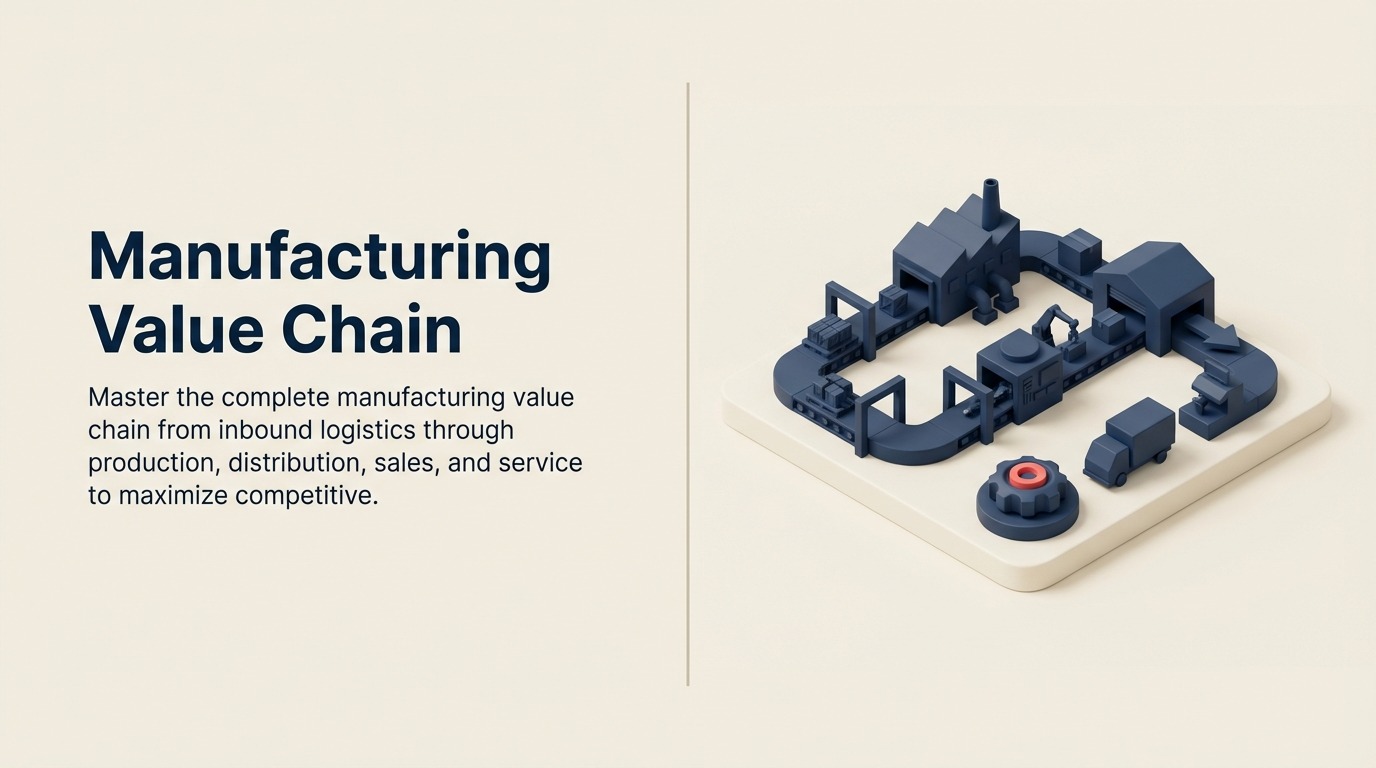
Value chain manufaktur mencakup semua aktivitas yang menciptakan dan mengantarkan nilai kepada pelanggan. Ia membentang dari pengadaan pemasok hingga layanan purnajual. Setiap mata rantai dalam rantai ini baik menambah nilai yang mau dibayar pelanggan atau menambah biaya yang mengurangi profitabilitas.
Kerangka value chain Michael Porter membagi aktivitas menjadi aktivitas primer (langsung menciptakan nilai) dan aktivitas pendukung (memungkinkan aktivitas primer). Bagi produsen, aktivitas primer adalah logistik masuk, operasi produksi, logistik keluar, pemasaran dan penjualan, serta layanan. Aktivitas pendukung meliputi pengadaan, pengembangan teknologi, sumber daya manusia, dan infrastruktur perusahaan.
Memahami kerangka ini membantu produsen melihat bisnis mereka secara sistematis. Riset McKinsey menekankan bahwa optimasi rantai pasokan berdampak signifikan pada profitabilitas, dengan perusahaan yang mengadopsi alat digital melihat peningkatan efisiensi 25%. Anda bukan hanya operasi produksi. Anda adalah sistem terintegrasi di mana setiap aktivitas mempengaruhi yang lain. Mengoptimalkan satu mata rantai sambil mengabaikan yang lain menciptakan ketidakseimbangan yang membatasi kinerja keseluruhan.
Logistik Masuk
Logistik masuk mengelola aliran material dari pemasok ke produksi. Ini mencakup seleksi pemasok, pembelian, penerimaan, inspeksi, manajemen inventaris, dan penanganan material ke lini produksi. Manajemen hubungan pemasok yang kuat dan strategic sourcing menjadi fondasi.
Mata rantai ini sering mewakili 40-60% biaya manufaktur. Peningkatan 10% dalam logistik masuk — melalui hubungan pemasok yang lebih baik, pengurangan biaya freight, atau manajemen inventaris yang lebih baik — langsung berdampak pada keuntungan. Namun banyak produsen fokus hampir eksklusif pada produksi sambil memperlakukan logistik masuk sebagai overhead administratif.
Keunggulan dalam logistik masuk memerlukan kemitraan pemasok, bukan sekadar pembelian transaksional. Ini menuntut visibilitas ke kapasitas dan kualitas pemasok. Ini membutuhkan optimasi inventaris yang menyeimbangkan biaya penyimpanan terhadap risiko kehabisan stok. Dan ini memerlukan handoff yang lancar dari penerimaan ke produksi yang meminimalkan penanganan dan keterlambatan.
Operasi Produksi
Operasi produksi mengubah bahan baku menjadi barang jadi. Menurut riset tentang value chain, aktivitas operasi adalah tempat manufaktur berlangsung, melibatkan transformasi bahan baku menjadi produk jadi. Ini adalah aktivitas manufaktur inti di mana sebagian besar produsen memusatkan perhatian dan investasi. Ini mencakup pemesinan, perakitan, pengujian, dan pengemasan. Dasar-dasar perencanaan produksi dan prinsip lean manufacturing mendorong keunggulan produksi.
Keunggulan produksi memerlukan proses yang efisien, peralatan yang mumpuni, operator yang terampil, dan kontrol kualitas yang efektif. Cycle time, tingkat yield, uptime peralatan, dan produktivitas tenaga kerja menentukan ekonomi produksi. Peningkatan kecil dikalikan volume menghasilkan dampak keuntungan yang signifikan.
Tetapi optimasi produksi secara terisolasi menciptakan masalah. Produsen yang memaksimalkan efisiensi produksi tanpa mempertimbangkan distribusi hilir atau persyaratan pelanggan sering memproduksi apa yang bisa mereka buat dengan murah alih-alih apa yang dihargai pelanggan. Optimasi seimbang di seluruh value chain mengalahkan optimasi produksi saja.
Logistik Keluar
Logistik keluar mengelola aliran produk dari produksi ke pelanggan. Ini mencakup pergudangan barang jadi, pemenuhan pesanan, pengemasan, pengiriman, dan pelacakan pengiriman. Bagi produsen yang mengirim langsung ke pelanggan atau melalui jaringan distribusi, logistik keluar berdampak signifikan pada tingkat layanan dan biaya. Kinerja pengiriman tepat waktu bergantung pada keunggulan logistik keluar.
Banyak produsen underinvestasi dalam logistik keluar karena terjadi setelah produksi. Tetapi pelanggan menilai Anda berdasarkan pengiriman, bukan hanya kualitas produk. Pengiriman terlambat, kiriman yang rusak, dan kesalahan pesanan menghancurkan hubungan pelanggan terlepas dari keunggulan produk.
Keunggulan logistik keluar memerlukan pergudangan yang efisien, pemenuhan pesanan yang akurat, pengiriman yang dioptimalkan, dan komunikasi pengiriman yang proaktif. Ini berarti memilih apakah akan mengirim langsung, menggunakan distributor, atau mempekerjakan 3PL berdasarkan ekonomi dan persyaratan layanan. Dan ini menuntut integrasi antara penjadwalan produksi dan komitmen pengiriman pelanggan.
Pemasaran dan Penjualan
Aktivitas pemasaran dan penjualan menghasilkan permintaan dan mengubahnya menjadi pesanan. Bagi produsen, ini mencakup analisis pasar, positioning produk, strategi penetapan harga, manajemen tenaga penjual, hubungan saluran, dan keterlibatan pelanggan. Strategi penjualan manufaktur yang kuat mengintegrasikan penjualan dengan operasi.
Banyak produsen memperlakukan pemasaran dan penjualan sebagai terpisah dari manufaktur. Tetapi efektivitas penjualan menentukan utilisasi kapasitas, yang menentukan ekonomi manufaktur. Tim penjualan yang bisa menjual 20% lebih banyak volume memungkinkan manufaktur untuk menyebarkan biaya tetap dan meningkatkan margin secara dramatis.
Pemasaran dan penjualan harus memahami kapabilitas dan kendala manufaktur. Menjual produk yang tidak bisa Anda produksi secara menguntungkan menghancurkan nilai. Menjanjikan pengiriman yang tidak bisa Anda penuhi merusak reputasi. Integrasi antara penjualan dan perencanaan operasi mencegah ketidaksesuaian ini.
Layanan dan Dukungan
Aktivitas layanan dan dukungan mempertahankan hubungan pelanggan setelah penjualan awal. Ini mencakup instalasi, pelatihan, pemeliharaan, perbaikan, pasokan suku cadang, dukungan teknis, dan administrasi garansi.
Bagi produsen yang menjual peralatan atau produk tahan lama, layanan sering menghasilkan keuntungan seumur hidup lebih besar daripada penjualan produk awal. Margin layanan biasanya melebihi 40% sementara margin produk berkisar 20-30%. Layanan menciptakan pendapatan berulang, membangun loyalitas pelanggan, dan memberikan diferensiasi kompetitif.
Keunggulan layanan memerlukan teknisi lapangan, inventaris suku cadang, keahlian teknis, dan manajemen hubungan pelanggan. Produsen yang memperlakukan layanan sebagai renungan meninggalkan uang di atas meja dan menciptakan ketidakpuasan pelanggan yang mempengaruhi penjualan masa depan.
Analisis Nilai: Mengidentifikasi Di Mana Nilai Diciptakan dan Ditangkap
Tidak semua aktivitas menciptakan nilai yang sama. Beberapa menambah nilai signifikan yang mau dibayar pelanggan. Yang lain menambah biaya tanpa menambah nilai. Analisis nilai sistematis mengidentifikasi peluang untuk keunggulan kompetitif dan peningkatan keuntungan.
Aktivitas Value-Added vs. Non-Value-Added
Aktivitas value-added mengubah produk dengan cara yang dihargai pelanggan. Pemesinan, perakitan, pengujian kualitas, dan pengemasan khusus adalah value-added jika pelanggan menganggapnya penting. Aktivitas value-added membenarkan biayanya melalui kesediaan pelanggan untuk membayar.
Aktivitas non-value-added mengkonsumsi sumber daya tanpa meningkatkan nilai pelanggan. Penanganan material berlebihan, rework, inspeksi untuk menemukan cacat, dan pemeriksaan kualitas yang berlebihan adalah non-value-added. Itu adalah kejahatan yang diperlukan yang diciptakan oleh proses yang buruk, bukan penciptaan nilai yang sejati.
Tujuannya bukan menghilangkan semua aktivitas non-value-added. Beberapa diperlukan untuk operasi bisnis atau kepatuhan regulasi. Tetapi meminimalkan aktivitas non-value-added mengurangi biaya sambil mempertahankan atau meningkatkan nilai pelanggan. Inilah inti dari lean manufacturing.
Cost Driver di Setiap Tahap
Setiap tahap value chain memiliki cost driver yang berbeda. Memahami driver ini memandu upaya optimasi:
Biaya logistik masuk didorong oleh lokasi pemasok, frekuensi pesanan, tingkat inventaris, dan proses penanganan material. Mengurangi jumlah pemasok, mengkonsolidasikan pengiriman, dan mengoptimalkan tingkat inventaris mengurangi biaya masuk.
Biaya produksi didorong oleh penggunaan material, efisiensi tenaga kerja, utilisasi peralatan, dan yield kualitas. Peningkatan proses, otomasi, dan peningkatan yield mengurangi biaya produksi.
Biaya logistik keluar didorong oleh frekuensi pengiriman, ukuran paket, jarak tujuan, dan persyaratan kecepatan pengiriman. Mengkonsolidasikan pengiriman, mengoptimalkan kemasan, dan mengelola ekspektasi pengiriman pelanggan mengurangi biaya keluar. Optimasi logistik yang efektif memberikan penghematan signifikan.
Biaya penjualan dan pemasaran didorong oleh fragmentasi pasar, kompleksitas saluran, dan kesulitan akuisisi pelanggan. Fokus pada segmen pelanggan yang menguntungkan dan saluran yang efisien mengurangi biaya go-to-market.
Biaya layanan didorong oleh keandalan produk, kompleksitas layanan, dispersi geografis, dan persyaratan inventaris suku cadang. Meningkatkan desain produk untuk serviceability dan mengoptimalkan jaringan suku cadang mengurangi biaya layanan.
Peluang Optimasi Margin
Optimasi margin terjadi di setiap tahap value chain. Sebagian besar produsen hanya fokus pada margin produksi, melewatkan peluang di tempat lain.
Logistik masuk menawarkan peningkatan margin melalui negosiasi pemasok yang lebih baik, pengurangan biaya freight, dan biaya penyimpanan inventaris yang lebih rendah. Pengurangan 10% dalam biaya material meningkatkan margin sebesar 4-6 poin persentase untuk produsen tipikal.
Produksi menawarkan peningkatan margin melalui peningkatan yield, pengurangan cycle time, dan otomasi. Peningkatan yield 5% atau pengurangan cycle time 20% menghasilkan 3-4 poin persentase margin.
Logistik keluar menawarkan peningkatan margin melalui optimasi pengiriman dan pengurangan kerusakan. Freight mewakili 3-8% pendapatan bagi banyak produsen. Mengoptimalkan routing dan pemilihan carrier menghemat 15-25% biaya freight.
Layanan menawarkan peningkatan margin melalui penetapan harga yang lebih baik, optimasi margin suku cadang, dan produktivitas teknisi. Layanan sering berjalan pada gross margin 50%+ ketika dikelola dengan baik. Manajemen layanan yang buruk meninggalkan 10-20 poin persentase di atas meja.
Strategi Integrasi: Membangun Operasi Value Chain yang Mulus
Mata rantai individual yang dioptimalkan tidak menjamin rantai yang dioptimalkan. Integrasi antar mata rantai menciptakan leverage yang tidak bisa dicapai optimasi individual.
Hubungan Pemasok
Hubungan pemasok tradisional bersifat transaksional: Anda menentukan persyaratan, beberapa pemasok mengajukan penawaran, Anda memilih harga terendah. Pendekatan ini mengoptimalkan harga pembelian tetapi sering meningkatkan total biaya melalui masalah kualitas, masalah pengiriman, dan keterbatasan investasi pemasok dalam kesuksesan Anda.
Hubungan pemasok strategis memperlakukan pemasok kunci sebagai mitra. Anda berbagi prakiraan, melibatkan mereka dalam desain, berinvestasi dalam pengembangan kapabilitas mereka, dan berkomitmen pada hubungan jangka panjang. Sebagai imbalannya, pemasok berinvestasi dalam memahami persyaratan Anda, meningkatkan kualitas, dan mengurangi biaya secara kolaboratif.
Ini bukan berarti single-sourcing segalanya atau menerima kinerja buruk. Ini berarti mensegmentasi pemasok menjadi mitra strategis (10-20% pemasok, 60-80% pengeluaran) dan vendor transaksional (80-90% pemasok, 20-40% pengeluaran). Anda mengelola setiap kategori secara berbeda berdasarkan kepentingan strategis.
Keterkaitan Proses Internal
Mata rantai value chain harus terhubung dengan lancar. Handoff yang buruk antara logistik masuk dan produksi, atau antara produksi dan logistik keluar, menciptakan keterlambatan, kesalahan, dan biaya.
Handoff yang lancar memerlukan integrasi fisik (material mengalir dengan mudah), integrasi informasi (sistem berkomunikasi secara otomatis), dan integrasi organisasi (kelompok berkolaborasi bukan hanya sekadar handoff).
Integrasi fisik mungkin berarti menempatkan penerimaan dekat produksi untuk meminimalkan penanganan material. Integrasi informasi berarti sistem perencanaan produksi secara otomatis memicu purchase order dan menginformasikan logistik keluar tentang pengiriman yang akan datang. Integrasi organisasi berarti fungsi berbagi metrik dan berkolaborasi dalam perbaikan.
Koneksi Pelanggan
Mata rantai value chain terakhir menghubungkan Anda ke pelanggan. Koneksi pelanggan yang kuat memberikan visibilitas permintaan yang memungkinkan perencanaan yang lebih baik, mengurangi kesalahan prakiraan, dan mengidentifikasi peluang perbaikan.
Perencanaan kolaboratif dengan pelanggan utama berbagi prakiraan, mengkoordinasikan jadwal pengiriman, dan menyelaraskan produksi dengan konsumsi. Ini mengurangi buffer inventaris, meningkatkan tingkat layanan, dan memungkinkan pengurangan biaya bersama.
Loop umpan balik pelanggan menginformasikan pengembangan produk, mengidentifikasi masalah kualitas lebih awal, dan memandu peningkatan layanan. Produsen yang tetap dekat dengan pelanggan memahami persyaratan yang berubah dan beradaptasi lebih cepat dari mereka yang hanya mengandalkan laporan penjualan.
Kerangka Optimasi: Alat untuk Keunggulan Value Chain
Beberapa alat membantu produsen menganalisis dan mengoptimalkan value chain secara sistematis.
Value Stream Mapping
Value stream mapping memvisualisasikan aliran material dan informasi dari pemasok hingga pelanggan. Ini mengidentifikasi cycle time, waktu antrian, waktu value-added, dan pemborosan di setiap tahap. Rasio waktu value-added terhadap total lead time mengungkap peluang optimasi.
Seorang produsen mungkin menemukan bahwa produk yang memerlukan 4 jam waktu pemrosesan membutuhkan 30 hari dari pesanan hingga pengiriman. 716 jam waktu tunggu menawarkan peluang perbaikan yang luar biasa. Value stream mapping membuat ini terlihat dan memandu upaya perbaikan.
Buat peta current state yang menunjukkan bagaimana hal-hal bekerja hari ini. Analisis untuk pemborosan, keterlambatan, dan ketidaksesuaian. Rancang peta future state yang menunjukkan bagaimana seharusnya hal-hal bekerja. Kemudian terapkan perubahan untuk menutup kesenjangan secara sistematis.
Total Cost of Ownership
Analisis total cost of ownership (TCO) mengevaluasi semua biaya di seluruh value chain, bukan hanya harga pembelian yang terlihat. Komponen dengan harga pembelian $50 mungkin memiliki total biaya $65 ketika Anda memperhitungkan freight, penerimaan, inspeksi kualitas, biaya penyimpanan, dan inefisiensi produksi.
Pemikiran TCO mencegah penghematan semu. Memilih pemasok berdasarkan harga pembelian 10% lebih rendah sambil mengabaikan lead time 30% lebih panjang (inventaris lebih tinggi), tingkat cacat 2x (rework lebih tinggi), dan keandalan pengiriman yang buruk (biaya expedite lebih tinggi) meningkatkan total biaya meskipun harga pembelian lebih rendah.
Terapkan analisis TCO pada pemilihan pemasok, keputusan make-vs-buy, dan pilihan saluran distribusi. Lihat melampaui harga invoice ke dampak ekonomi yang lengkap.
Balanced Scorecard
Balanced scorecard mencegah sub-optimasi dengan mengukur kinerja di beberapa dimensi. Scorecard untuk logistik masuk mungkin mencakup biaya material, tingkat inventaris, kualitas pemasok, dan keandalan pengiriman. Mengoptimalkan hanya biaya sambil mengabaikan kualitas atau pengiriman menciptakan masalah di hilir.
Scorecard harus berjenjang di seluruh tahap value chain. Scorecard korporat mendorong scorecard fungsional, yang mendorong scorecard proses. Penyelarasan ini memastikan optimasi lokal mendukung tujuan keseluruhan daripada bertentangan dengannya.
Pemikiran Lean
Prinsip lean berlaku di seluruh value chain, bukan hanya produksi. Pemborosan ada dalam pembelian (inventaris berlebihan, hubungan pemasok yang buruk), logistik (transportasi berlebihan, penanganan material), dan penjualan (penawaran yang kompleks, pemrosesan pesanan yang panjang).
Terapkan lima prinsip lean di mana saja: definisikan nilai dari perspektif pelanggan, identifikasi value stream, buat nilai mengalir, biarkan pelanggan menarik, dan kejar kesempurnaan melalui perbaikan berkelanjutan. Prinsip-prinsip ini memandu optimasi baik Anda sedang meningkatkan produksi, logistik, maupun layanan.
Pelajari Lebih Lanjut
Perluas pemahaman Anda tentang optimasi value chain:
- Model Pertumbuhan Manufaktur menjelaskan bagaimana kompleksitas value chain tumbuh seiring skala bisnis
- Struktur Biaya Manufaktur merinci komponen biaya di seluruh value chain
- Material Requirements Planning mencakup aliran material melalui rantai
- Prinsip Lean Manufacturing menyediakan alat untuk optimasi value chain
- Value Stream Mapping menawarkan metodologi pemetaan terperinci
- Model Bisnis Manufaktur menunjukkan bagaimana model bisnis membentuk value chain
- Manajemen Risiko Rantai Pasokan membahas kerentanan value chain
Bersaing Melalui Keunggulan Value Chain
Keunggulan value chain menciptakan keunggulan kompetitif yang tidak bisa disampaikan fitur produk saja. Ketika Anda bisa mengantarkan kualitas lebih baik, pengiriman lebih cepat, dan biaya lebih rendah dari pesaing dengan mengoptimalkan seluruh value chain Anda, Anda membangun diferensiasi yang berkelanjutan.
Ini memerlukan melihat bisnis Anda sebagai sistem terintegrasi, bukan hanya kumpulan fungsi. Ini berarti mengoptimalkan keseluruhan, bukan hanya bagian-bagiannya. Ini menuntut kolaborasi lintas batas organisasi dan dengan mitra eksternal.
Produsen yang menguasai value chain mereka tidak selalu memiliki peralatan terbaik atau engineer terpintar. Mereka memiliki sistem yang lebih terintegrasi yang bekerja dengan andal di setiap mata rantai dari pemasok hingga pelanggan. Konsistensi dan integrasi tersebut mengalahkan optimasi titik setiap saat.

Co-Founder, Rework.com