KI-Kompetenz: Ihr unverzichtbarer Leitfaden für die Arbeit mit künstlicher Intelligenz

Turn this article into takeaways for your work.


Each assistant summarizes the article only for you and suggests best practices for your work.
Was Sie aus diesem Leitfaden mitnehmen
- Ihren aktuellen KI-Kompetenzstand einschätzen mit unserem 5-Stufen-Rahmen und klaren behavioral indicators sowie Entwicklungsmeilensteinen
- Kernkonzepte der KI verstehen ohne technischen Fachjargon, von Machine-Learning-Grundlagen bis hin zu Generative-AI-Anwendungen
- Lernen, wann KI sinnvoll ist und wann nicht, mit praxisnahen Richtlinien zur Beurteilung der KI-Eignung
- Kritische Bewertungskompetenzen entwickeln, um KI-Ergebnisse auf Genauigkeit, Bias und geschäftliche Relevanz zu prüfen
- Eine persönliche KI-Entwicklungs-Roadmap erstellen mit stufenspezifischen Strategien und schnellen Erfolgen
Sie haben es sicher bemerkt: KI-Tools sind heute überall. Kolleginnen und Kollegen erwähnen, dass sie ChatGPT zum Verfassen von E-Mails nutzen, das Marketing-Team betreibt Kampagnen mit KI-generierten Inhalten, und das Unternehmen hat gerade eine neue KI-gestützte Analyseplattform angekündigt. Dabei fragen Sie sich vielleicht, ob man für diesen Wandel ein Informatikstudium braucht.
Die Antwort ist: nein. KI-Kompetenz bedeutet nicht, Machine-Learning-Ingenieur zu werden. Es geht darum zu verstehen, was KI kann und was nicht, zu wissen, wann der Einsatz sinnvoll ist, und das Urteilsvermögen aufzubauen, um mit KI als fähigem Partner zu arbeiten statt als undurchschaubarer Blackbox. Da 80 % der Unternehmen inzwischen Generative AI in irgendeiner Form einsetzen, ist dieses Wissen keine Kür mehr. Und es gibt eine erfreuliche Kehrseite: Stellen, die KI-Kompetenz voraussetzen, haben sich seit 2023 versiebenfacht. Diese Fähigkeit eröffnet also direkt neue Karrierechancen.
Ob Sie gerade erst beginnen, KI-Assistenten auszuprobieren, oder bereits bereit sind, KI-Initiativen in Ihrer Organisation zu leiten: Dieser Leitfaden hilft Ihnen, das notwendige Verständnis und die passenden Kompetenzen aufzubauen. Sie werden feststellen, dass KI-Kompetenz weniger mit technischem Know-how zu tun hat als vielmehr mit kritischem Denken und dem Stellen der richtigen Fragen.
Warum KI-Kompetenz 2026 wichtig ist
Der Arbeitsplatz hat sich grundlegend verändert. Laut aktuellen Studien zur Arbeitswelt erledigen Fachkräfte, die KI-Tools effektiv einsetzen, Aufgaben 40 % schneller und berichten von höherer Arbeitszufriedenheit. Was die Statistiken jedoch nicht immer zeigen: Wer die Grenzen von KI kennt, vermeidet kostspielige Fehler, die weniger informierten Kolleginnen und Kollegen regelmäßig passieren.
KI-Kompetenz bringt konkrete Vorteile:
Für Ihre Produktivität: KI-Tools können Routineaufgaben automatisieren, erste Entwürfe erstellen, Datenmuster analysieren und Erkenntnisse liefern, die Sie sonst übersehen würden. Vorausgesetzt, Sie wissen, wie Sie sie effektiv einsetzen und ihre Ergebnisse kritisch bewerten.
Für Ihre Karriere: Unternehmen suchen zunehmend nach Mitarbeitenden, die die Lücke zwischen KI-Fähigkeiten und Geschäftsanforderungen schließen können. Diese Rolle als „KI-Übersetzer" wird überdurchschnittlich vergütet und öffnet Türen zu Führungspositionen.
Für Ihr Unternehmen: Teams mit ausgeprägter KI-Kompetenz treffen bessere Technologieinvestitionen, vermeiden KI-bezogene Risiken und realisieren tatsächlich die Produktivitätssteigerungen, die andere nur versprechen.
Für Ihre Arbeitsplatzsicherheit: KI zu verstehen bedeutet zu wissen, welche Aufgaben sie übernehmen kann und welche genuinen menschlichen Fähigkeiten erfordern. Diese Klarheit hilft Ihnen, sich auf hochwertige Tätigkeiten zu konzentrieren, die KI ergänzt statt ersetzt.
Ihre KI-Kompetenzreise: Der 5-Stufen-Rahmen
Die Fähigkeiten wachsen von der Sensibilisierung über die praktische Anwendung, die kritische Bewertung und die Integration in Arbeitsabläufe bis hin zur Führung auf Organisationsebene.
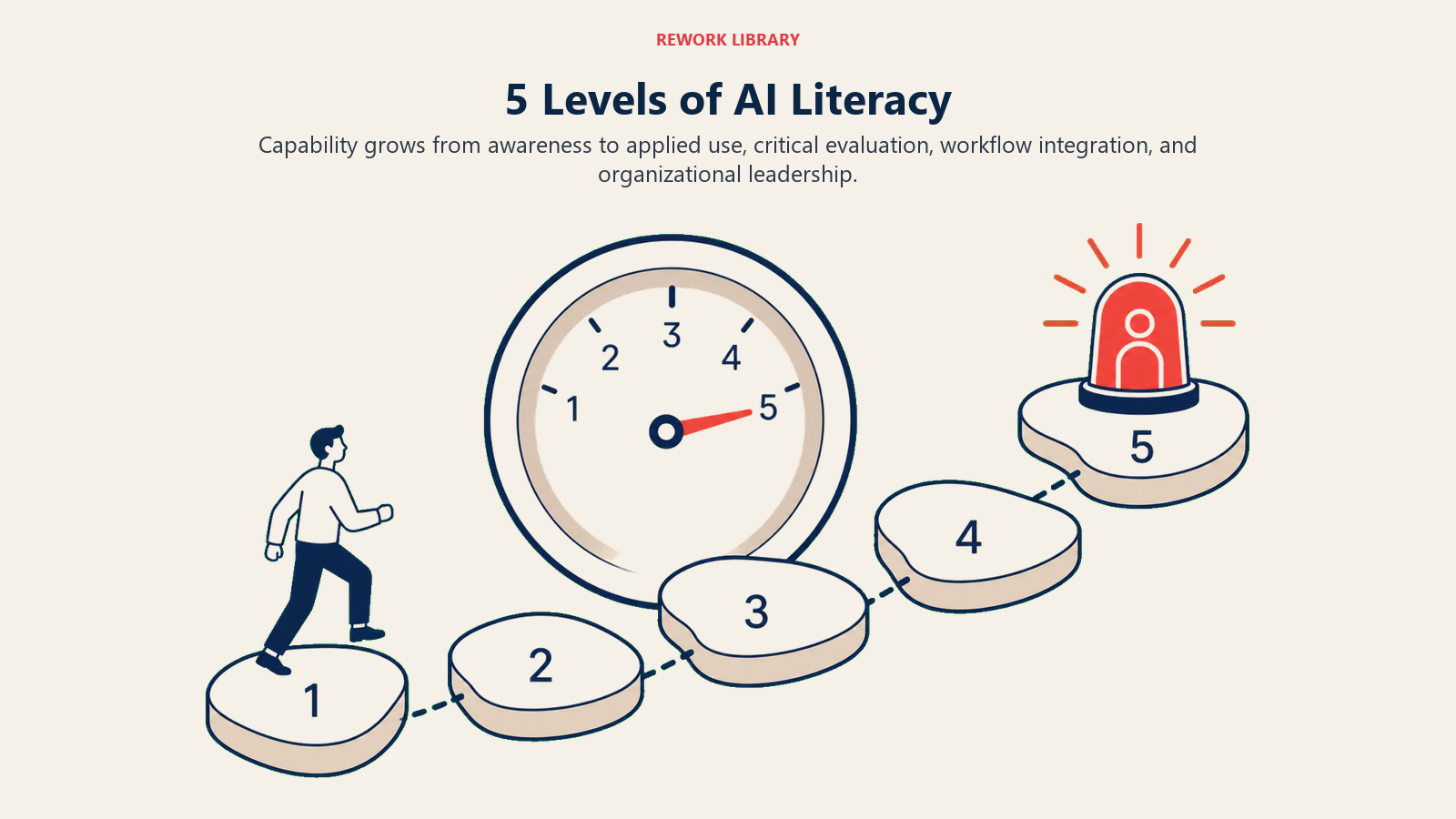
Stufe 1: KI-Einsteiger (0 bis 6 Monate gezieltes Lernen)
Sie befinden sich auf dieser Stufe, wenn: KI sich für Sie wie Magie oder Science-Fiction anfühlt, Sie Begriffe wie „Machine Learning" gehört haben, sie aber nicht erklären können, und Sie unsicher sind, ob Sie KI-Ergebnissen vertrauen sollen.
Behavioral Indicators:
- Sie haben grundlegende KI-Tools wie Chatbots oder Schreibassistenten ausprobiert
- Sie können KI-gestützte Funktionen in der von Ihnen genutzten Software erkennen
- Sie verstehen, dass KI aus Daten lernt statt explizit programmiert zu werden
- Sie wissen, dass KI-generierte Inhalte existieren, können sie aber nicht immer identifizieren
- Sie haben ein grundlegendes Bewusstsein für KI-Datenschutz und Datenbedenken
Bewertungskriterien:
- Erledigt einfache Aufgaben mit Hilfe von KI-Assistenten unter Anleitung
- Erklärt KI-Konzepte in einfachen Worten (z. B. „KI erkennt Muster in Daten")
- Benennt 3 bis 5 KI-Tools, die für die eigene Arbeit relevant sind
- Zeigt Bewusstsein für die Grenzen von KI
- Hält die organisatorischen KI-Nutzungsrichtlinien ein
Entwicklungsfokus: Grundlegendes Verständnis aufbauen und Hemmschwellen abbauen. Ihr Ziel ist es, gängige KI-Tools mit Neugier auszuprobieren und dabei eine gesunde Skepsis gegenüber KI-Ergebnissen zu entwickeln.
Schnelle Erfolge auf dieser Stufe:
- Testen Sie drei verschiedene KI-Assistenten (ChatGPT, Claude, Gemini) mit demselben Prompt, um zu sehen, wie die Ergebnisse variieren
- Nutzen Sie KI zunächst für risikoarme Aufgaben wie Brainstorming, das Zusammenfassen von Artikeln oder das Verfassen von Social-Media-Posts
- Lesen Sie die KI-Richtlinien Ihres Unternehmens und verstehen Sie, was erlaubt ist
- Lernen Sie den Fachjargon, darunter Prompts, Modelle, Trainingsdaten und Halluzinationen
- Bauen Sie auf Ihren Digital-Literacy-Grundlagen auf, indem Sie KI als weiteres digitales Tool betrachten, das Sie beherrschen wollen
Erfolgszeichen: Sie können einer Person außerhalb der Fachbranche erklären, was KI ist, ohne Fachjargon zu verwenden. Sie haben mindestens ein KI-Tool gefunden, das Ihrer Arbeit wirklich nützt. Und Sie verstehen, warum Sie KI-Ergebnissen nicht blind vertrauen sollten.
Stufe 2: KI-Kompetent (6 bis 12 Monate Erfahrung)
Sie befinden sich auf dieser Stufe, wenn: Sie KI-Tools regelmäßig für Arbeitsaufgaben einsetzen, effektive Prompts schreiben können und wissen, wann KI-Ergebnisse menschliche Überprüfung erfordern.
Behavioral Indicators:
- Sie nutzen KI-Assistenten für Entwürfe, Recherchen und Analyseaufgaben
- Sie verfeinern Prompts, um die Qualität der Ergebnisse zu verbessern
- Sie überprüfen KI-generierte Informationen, bevor Sie auf deren Basis handeln
- Sie erkennen typische KI-Fehlertypen und Halluzinationen
- Sie erklären KI-Fähigkeiten weniger erfahrenen Kolleginnen und Kollegen
Bewertungskriterien:
- Liefert konsistent nützliche Ergebnisse aus KI-Tools
- Erkennt, wenn KI-Ergebnisse falsch oder ungeeignet sind
- Passt Prompting-Strategien an verschiedene Aufgaben an
- Dokumentiert die KI-Nutzung sachgerecht
- Wahrt den Datenschutz beim Einsatz von KI-Tools
Entwicklungsfokus: Verlässliche KI-Workflows aufbauen und die eigenen Bewertungskompetenzen schärfen. Vertiefen Sie Ihr Verständnis der KI-Grenzen so weit, dass Sie Probleme antizipieren können, bevor sie auftreten.
Schnelle Erfolge auf dieser Stufe:
- Erstellen Sie eine Prompt-Bibliothek für wiederkehrende Aufgaben (E-Mails, Berichte, Analysen)
- Üben Sie Prompt-Engineering-Techniken wie Chain-of-Thought und Few-Shot-Beispiele
- Etablieren Sie eine Faktencheck-Gewohnheit, indem Sie KI-Aussagen zu Statistiken, Daten und Zitaten stets überprüfen
- Informieren Sie sich über KI-Bias und wie er Ergebnisse in Ihrem Arbeitsbereich beeinflusst
- Bauen Sie Ihre Datenanalysefähigkeiten aus, um KI-generierte Erkenntnisse besser bewerten zu können
Erfolgszeichen: Ihre KI-unterstützte Arbeit hat durchgängig hohe Qualität. Sie erkennen KI-Fehler, bevor sie Probleme verursachen. Und Sie haben ein Gespür dafür entwickelt, welche Aufgaben KI gut geeignet sind und welche nicht.
Stufe 3: KI-Versiert (1 bis 3 Jahre Erfahrung)
Sie befinden sich auf dieser Stufe, wenn: Sie KI strategisch in komplexe Workflows integrieren, verschiedene KI-Tools für spezifische Zwecke bewerten können und andere bei der effektiven KI-Nutzung anleiten.
Behavioral Indicators:
- Sie entwerfen mehrstufige Workflows, die KI und menschliches Urteilsvermögen kombinieren
- Sie bewerten KI-Tools und empfehlen sie für die Einführung im Team
- Sie erstellen KI-Nutzungsrichtlinien für Ihren Bereich
- Sie beheben KI-Probleme und optimieren für bessere Ergebnisse
- Sie coachen Kolleginnen und Kollegen in KI-Best-Practices
Bewertungskriterien:
- Setzt KI-Lösungen um, die messbare Produktivitätssteigerungen liefern
- Entwickelt Dokumentation und Schulungen für KI-Workflows
- Erkennt geeignete Anwendungsfälle und identifiziert ungeeignete
- Steuert KI-bezogene Risiken proaktiv
- Verknüpft KI-Fähigkeiten mit geschäftlichen Ergebnissen
Entwicklungsfokus: Werden Sie zum KI-Enabler für Ihr Team. Konzentrieren Sie sich darauf, effektive KI-Praktiken zu skalieren und organisatorische Kapazitäten aufzubauen statt nur die persönliche Produktivität zu steigern.
Schnelle Erfolge auf dieser Stufe:
- Führen Sie ein Audit der KI-Nutzung im Team durch, um Lücken und Chancen zu identifizieren
- Erstellen Sie Entscheidungsrahmen, wann KI eingesetzt werden soll und wann nicht
- Bauen Sie individuelle Workflows auf, die KI-Tools effektiv miteinander verknüpfen
- Entwickeln Sie Kennzahlen, um die tatsächliche KI-Wirkung auf die Produktivität zu messen
- Wenden Sie systemisches Denken an, um zu verstehen, wie KI übergeordnete Prozesse beeinflusst
Erfolgszeichen: Die KI-Nutzung in Ihrem Team ist ausgereifter als im Durchschnitt. Sie haben KI-bezogene Probleme durch proaktive Anleitung verhindert. Und die Unternehmensführung erkennt Ihre KI-Expertise an.
Stufe 4: KI-Fortgeschritten (3 bis 5 Jahre Erfahrung)
Sie befinden sich auf dieser Stufe, wenn: Sie die KI-Strategie Ihrer Organisation mitgestalten, Unternehmens-KI-Investitionen bewerten und AI-Governance-Frameworks entwickeln.
Behavioral Indicators:
- Sie leiten KI-Transformationsinitiativen über Abteilungen hinweg
- Sie entwickeln organisationsweite KI-Kompetenzprogramme
- Sie bewerten KI-Anbieter und Implementierungsansätze
- Sie legen KI-Ethik- und Governance-Standards fest
- Sie prognostizieren KI-Trends und ihre geschäftlichen Auswirkungen
Bewertungskriterien:
- Führt KI-Implementierungsprojekte erfolgreich durch
- Entwickelt skalierbare KI-Schulungs- und Enablement-Programme
- Erstellt AI-Governance-Frameworks, die Innovation und Risiko ausbalancieren
- Baut Beziehungen zu KI-Anbietern und Lösungspartnern auf
- Misst den KI-ROI und kommuniziert ihn an die Unternehmensführung
Entwicklungsfokus: Gestalten Sie die KI-Zukunft Ihrer Organisation. Konzentrieren Sie sich auf strategische Führung, Change-Management und den Aufbau einer KI-orientierten Unternehmenskultur unter Wahrung ethischer Standards.
Schnelle Erfolge auf dieser Stufe:
- Gründen Sie ein KI Center of Excellence oder eine Community of Practice
- Entwickeln Sie eine KI-Kompetenzbewertung für Einstellungs- und Entwicklungszwecke
- Erstellen Sie KI-Ethik-Leitlinien spezifisch für Ihre Branche
- Bereiten Sie Executive-Briefings zu KI auf, die strategische Entscheidungen fundieren
- Wenden Sie strategisches Denken an für langfristige KI-Planung
Erfolgszeichen: Ihre KI-Initiativen liefern erheblichen Geschäftswert. Sie werden bei KI-bezogenen Entscheidungen auf höchster Führungsebene hinzugezogen. Und die KI-Reife Ihrer Organisation hat sich sichtbar verbessert.
Stufe 5: KI-Experte (5 oder mehr Jahre Erfahrung)
Sie befinden sich auf dieser Stufe, wenn: Sie als Thought Leader im KI-Bereich anerkannt sind, Branchenpraktiken beeinflussen und die Zukunft von KI in Ihrem Fachgebiet mitgestalten.
Behavioral Indicators:
- Sie entwickeln neue KI-Anwendungen in Ihrer Branche als Vorreiter
- Sie veröffentlichen Thought Leadership zu KI-Strategie und -Implementierung
- Sie beraten Unternehmensführungen und Aufsichtsgremien zur KI-Ausrichtung
- Sie sprechen auf Konferenzen über KI-Transformation
- Sie tragen zu Branchenstandards und Best Practices bei
Bewertungskriterien:
- Als Branchenexperte für KI-Anwendungen anerkannt
- Veröffentlichter Autor oder Referent zu KI-Themen
- Beratungsrolle für KI-Initiativen außerhalb der eigenen Organisation
- Nachweisliche Geschichte transformativer KI-Projekte
- Prägt den Umgang der eigenen Branche mit KI
Entwicklungsfokus: Leisten Sie einen Beitrag zur breiteren KI-Kompetenzbewegung. Konzentrieren Sie sich auf Thought Leadership, die Förderung verantwortungsvoller KI und die Entwicklung der nächsten Generation KI-kompetenter Fachkräfte.
Schnelle Erfolge auf dieser Stufe:
- Veröffentlichen Sie Erkenntnisse zu Erfahrungen aus KI-Implementierungen
- Fördern Sie aufstrebende KI-Führungskräfte in Ihrer Branche
- Beteiligen Sie sich an KI-Politikdiskussionen, die Ihr Fachgebiet betreffen
- Schaffen Sie offene Ressourcen für die Entwicklung von KI-Kompetenzen
Erfolgszeichen: Ihre Perspektiven prägen Branchenpraktiken. Ihre KI-Expertise ist gefragt. Und Ihre Arbeit hinterlässt einen dauerhaften Eindruck darin, wie Organisationen mit KI umgehen.
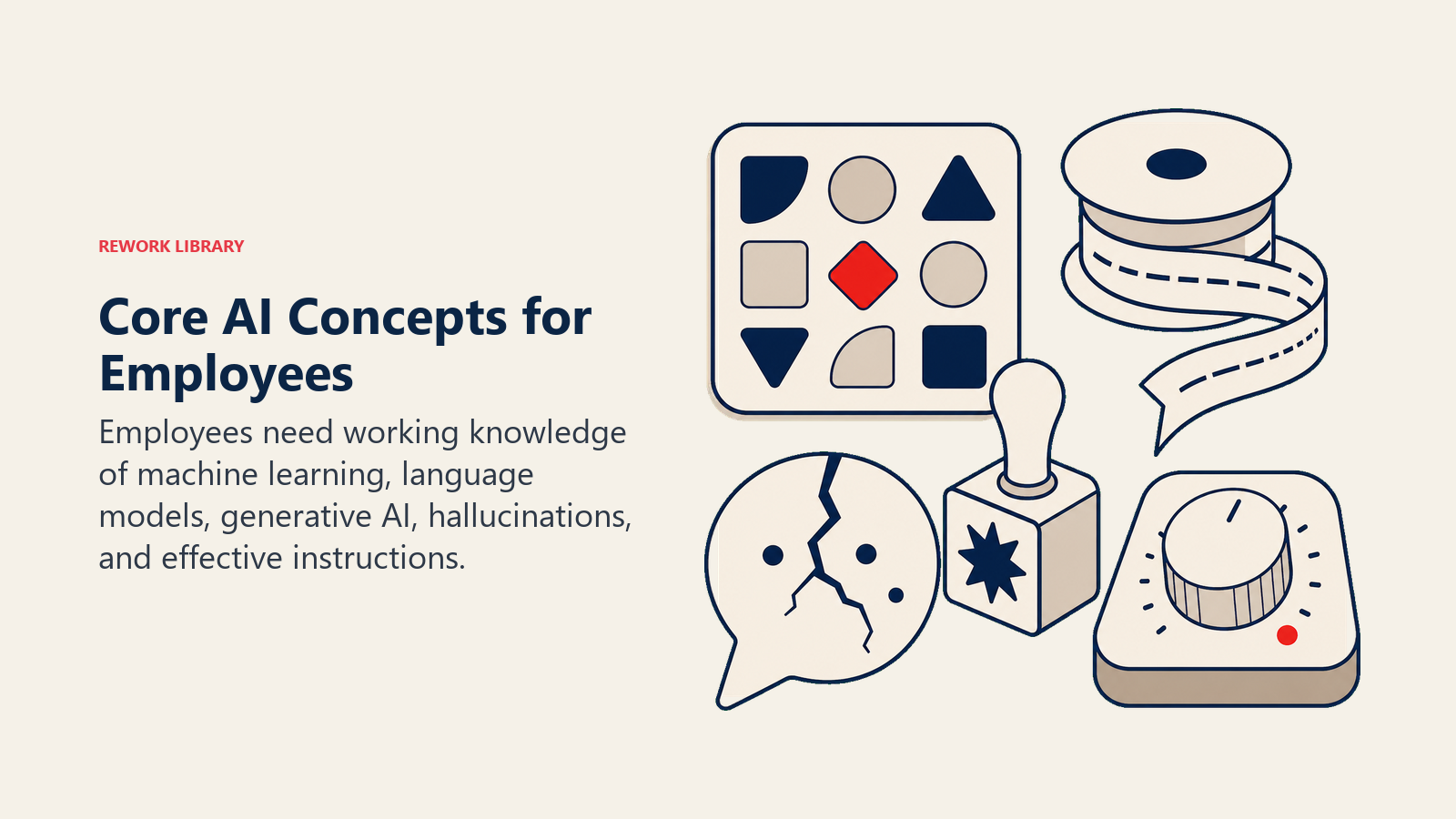
Grundlegende KI-Konzepte, die jede Mitarbeiterin und jeder Mitarbeiter kennen sollte
Mitarbeitende brauchen Grundwissen zu Machine Learning, Sprachmodellen, Generative AI, Halluzinationen und Prompting.
Machine Learning: Wie KI tatsächlich lernt
Machine Learning ist das Fundament moderner KI. Anstatt spezifische Regeln zu programmieren, füttert man KI-Systeme mit großen Datenmengen und lässt sie Muster finden. Stellen Sie sich vor, wie man einem Kind beibringt, Hunde zu erkennen: Statt jedes Merkmal eines Hundes zu erklären, zeigt man ihm tausende Bilder, bis es Hunde selbst identifizieren kann.
Warum das für Sie wichtig ist: Wenn Sie verstehen, dass KI aus Daten lernt, erkennen Sie ihre Grenzen besser. Eine KI, die hauptsächlich mit englischsprachigen Texten trainiert wurde, wird mit anderen Sprachen Schwierigkeiten haben. Eine KI, die bis 2023 Daten aufgenommen hat, weiß nichts über aktuelle Ereignisse. Die Trainingsdaten bestimmen, was KI kann und was nicht.
Large Language Models (LLMs): Die Technologie hinter ChatGPT
LLMs sind KI-Systeme, die auf riesigen Textmengen trainiert wurden, um vorherzusagen, welche Wörter als nächstes kommen sollten. Sie sind bemerkenswert gut darin, menschenähnliche Texte zu erzeugen, Fragen zu beantworten und Anweisungen zu befolgen. Aber sie „verstehen" nicht wirklich so wie Menschen.
Warum das für Sie wichtig ist: LLMs sind leistungsstarke Schreib- und Denkpartner, aber sie können mit Überzeugung falsche Informationen produzieren. Sie sagen wahrscheinliche Texte voraus statt gesicherte Fakten abzurufen. Überprüfen Sie stets wichtige Aussagen, insbesondere Statistiken, Zitate und aktuelle Informationen.
Generative AI: Neue Inhalte erstellen
Generative AI erstellt neue Inhalte wie Texte, Bilder, Code und Audio. Zu dieser Kategorie gehören Schreibassistenten, Bildgeneratoren wie DALL-E und Midjourney sowie Code-Vervollständigungstools wie GitHub Copilot.
Warum das für Sie wichtig ist: Generative AI kann kreative Arbeit erheblich beschleunigen, aber die Ergebnisse sind Ausgangspunkte, keine fertigen Produkte. Die besten Resultate entstehen, wenn qualifizierte Menschen KI-Outputs anleiten und verfeinern und dabei kreatives Denken mit KI-Fähigkeiten kombinieren.
KI-Halluzinationen: Wenn KI Dinge erfindet
KI-Systeme generieren manchmal Informationen, die plausibel klingen, aber vollständig falsch sind. Das können erfundene Quellenangaben, ausgedachte Statistiken oder selbstbewusst vorgetragene falsche Antworten sein. Der Begriff „Halluzination" beschreibt KI-generierte Inhalte, die nicht in Trainingsdaten oder der Realität verankert sind.
Warum das für Sie wichtig ist: Gehen Sie nicht davon aus, dass KI-Ergebnisse korrekt sind, nur weil sie autoritär klingen. Faktenprüfung ist wichtig, besonders für alles, was Sie als Grundlage für Entscheidungen nutzen oder nach außen kommunizieren. Starke Recherchekompetenzen helfen Ihnen, KI-Aussagen effektiv zu überprüfen.
Prompt Engineering: Die Sprache der KI sprechen
Prompts sind die Anweisungen, die Sie KI-Systemen geben. Prompt Engineering ist die Fähigkeit, Prompts zu formulieren, die nützliche Ergebnisse produzieren. Bessere Prompts führen zu deutlich besseren Resultaten.
Warum das für Sie wichtig ist: Sie müssen die technischen Interna von KI nicht verstehen, aber zu lernen, wie Sie effektiv mit KI kommunizieren, ist eine hochwertige Kompetenz. Kleine Änderungen in der Formulierung Ihrer Anfragen können KI-Ergebnisse von mittelmäßig zu herausragend verwandeln.
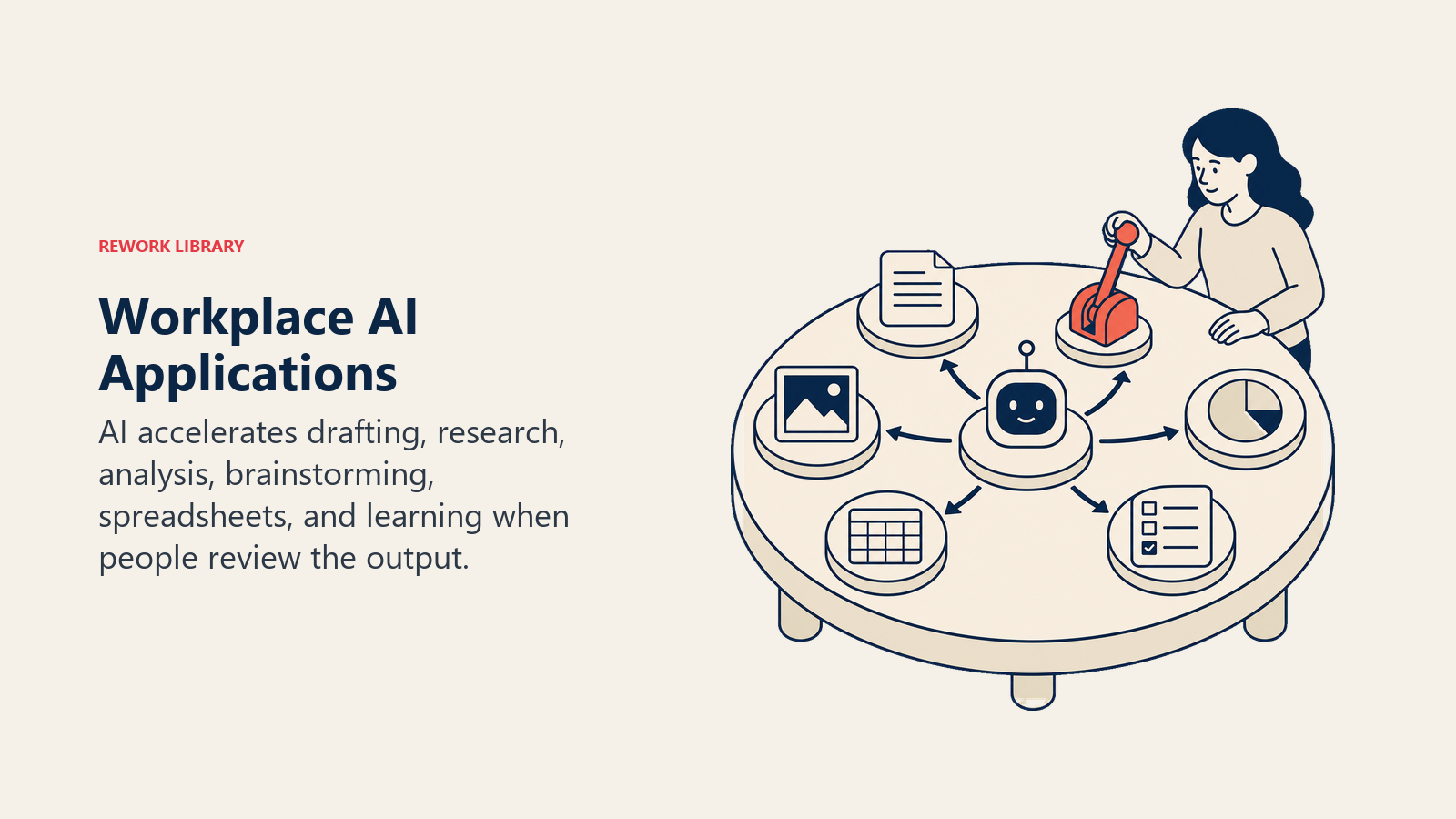
Praktische KI-Anwendungen am Arbeitsplatz
KI beschleunigt Entwürfe, Recherche, Analysen, Brainstorming, Tabellenkalkulationen und Lernen, wenn Menschen die Ergebnisse prüfen.
Schreiben und Kommunikation
KI ist hervorragend beim Erstellen, Bearbeiten und Verfeinern von Texten. Nutzen Sie sie für:
- Erste Entwürfe von E-Mails, Berichten und Angeboten
- Klarheit und Ton in Ihren Texten verbessern
- Mehrere Versionen für A/B-Tests generieren
- Lange Dokumente zusammenfassen
- Übersetzungen zwischen Sprachen (mit menschlicher Überprüfung)
Best Practice: Geben Sie Kontext über Ihre Zielgruppe, Ihren Zweck und den gewünschten Ton an. Prüfen Sie alle Ergebnisse auf Richtigkeit und Angemessenheit, bevor Sie sie versenden.
Recherche und Analyse
KI kann die Recherche beschleunigen durch:
- Zusammenfassen von Artikeln, Berichten und Meeting-Protokollen
- Mustererkennung in qualitativen Daten
- Generieren von Forschungsfragen und Frameworks
- Komplexe Konzepte in einfacheren Worten erklären
- Verschiedene Perspektiven zu Themen vergleichen
Best Practice: Überprüfen Sie alle von KI gelieferten Fakten oder Statistiken. Nutzen Sie KI, um die Recherche zu beschleunigen, nicht um kritische Bewertung zu ersetzen.
Problemlösung und Brainstorming
KI ist ein ausgezeichneter Denkpartner für:
- Ideen generieren, die Sie vielleicht nicht in Betracht gezogen hätten
- Verschiedene Blickwinkel auf ein Problem erkunden
- Ihre Annahmen hinterfragen
- Entscheidungsmatrizen erstellen
- Vor- und Nachteile-Listen entwickeln
Best Practice: Behandeln Sie KI als Mitarbeitenden, der frische Perspektiven einbringen kann, aber wenden Sie Ihr eigenes Urteilsvermögen und Ihr Fachwissen an, um Ideen zu bewerten. Das ergänzt Ihre Fähigkeiten zur technischen Problemlösung.
Daten und Tabellenkalkulationen
KI kann helfen bei:
- Formeln und Funktionen schreiben
- Daten bereinigen und formatieren
- Visualisierungen erstellen
- Analyseansätze entwickeln
- Komplexe Datensätze erklären
Best Practice: Validieren Sie KI-generierte Formeln mit Testfällen. Verstehen Sie, was die Formeln tun, statt sie blind zu übernehmen.
Lernen und Entwicklung
KI beschleunigt den Kompetenzaufbau durch:
- Konzepte auf Ihrem Niveau erklären
- Übungsaufgaben erstellen
- Feedback zu Ihrer Arbeit geben
- Lernressourcen empfehlen
- Fragen in Echtzeit beantworten
Best Practice: Nutzen Sie KI als Tutor, aber überprüfen Sie technische Informationen mit autoritativen Quellen. KI kann Dinge falsch erklären, dabei aber überzeugend klingen.
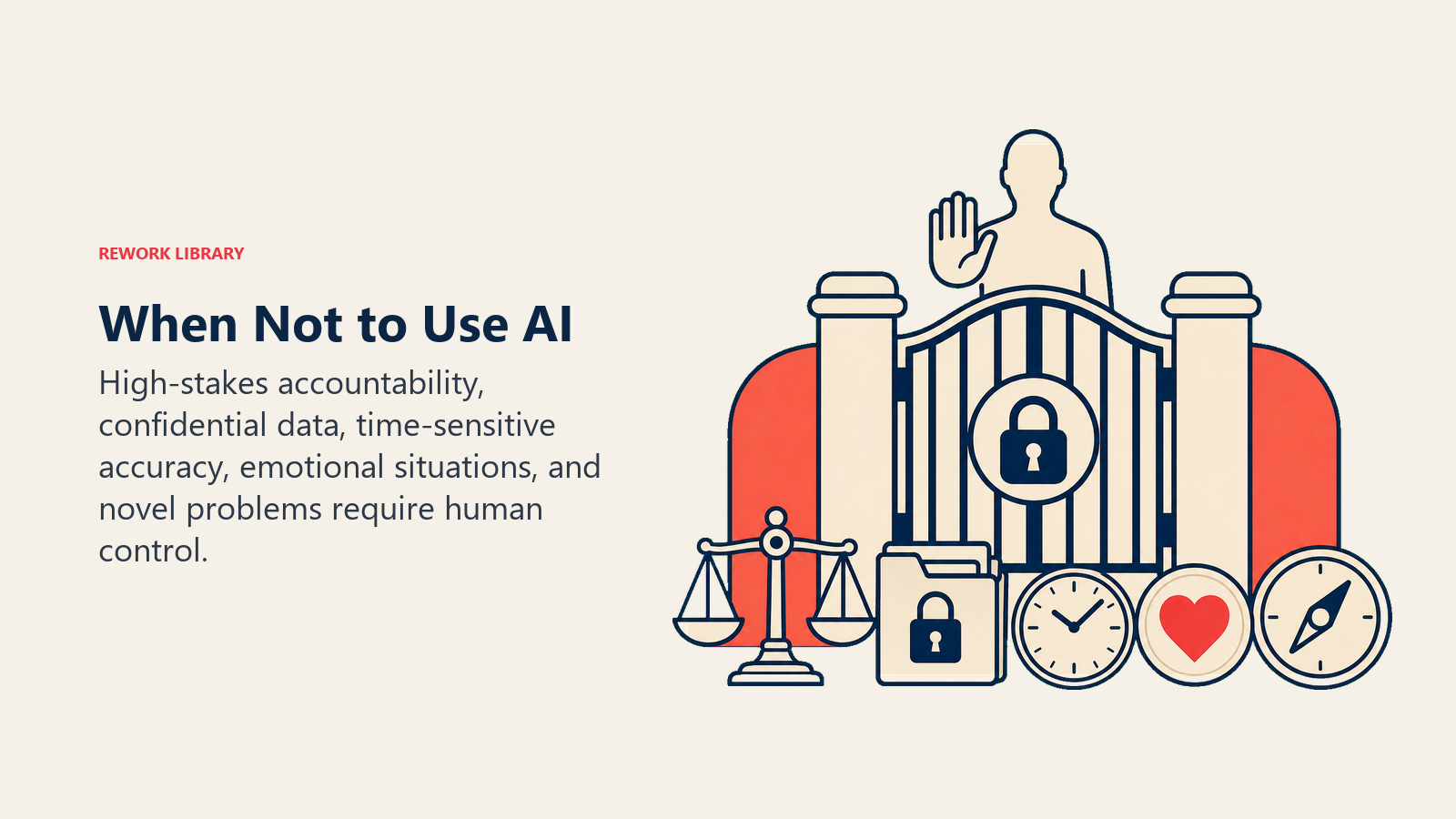
KI-Grenzen verstehen: Wann KI nicht geeignet ist
KI-Kompetenz bedeutet auch zu wissen, wann KI nicht das richtige Werkzeug ist. Vermeiden Sie KI für:
Entscheidungen, die Rechenschaftspflicht erfordern
Wenn Sie eine Entscheidung gegenüber Stakeholdern, Regulierungsbehörden oder Gerichten begründen müssen, erfordert KI-unterstützte Arbeit sorgfältige Dokumentation. Nutzen Sie KI nie als einzige Grundlage für Entscheidungen, die Beschäftigung, Gesundheit, Finanzen oder Rechte von Menschen betreffen.
Umgang mit sensiblen oder vertraulichen Daten
Die meisten KI-Tools senden Ihre Eingaben an externe Server. Geben Sie keine vertraulichen Geschäftsinformationen, personenbezogene Daten, Geschäftsgeheimnisse oder durch NDAs geschützte Inhalte ein, ohne die Richtlinien Ihres Unternehmens zu verstehen und einzuhalten.
Zeitkritische Genauigkeit
Wenn Genauigkeit wichtiger ist als Geschwindigkeit, ist menschliche Überprüfung unverzichtbar. Das gilt für Rechtsdokumente, medizinische Informationen, Finanzberichte und sicherheitskritische Anwendungen.
Emotionale oder sensible Situationen
KI verfügt über keine echte Empathie. Für schwierige Gespräche, Konfliktlösungen oder Situationen, die emotionale Intelligenz erfordern, sind menschliches Urteilsvermögen und zwischenmenschliche Verbindung nach wie vor unverzichtbar.
Neuartige oder beispiellose Situationen
KI arbeitet durch das Erkennen von Mustern in historischen Daten. Bei wirklich beispiellosen Situationen, strategischen Schwenks oder kreativen Durchbrüchen sind menschliche Intuition und Expertise nach wie vor überlegen.
KI-Ergebnisse kritisch bewerten
Das Urteilsvermögen bei KI-Ergebnissen zu entwickeln ist vielleicht die wichtigste KI-Kompetenz überhaupt. Nutzen Sie diesen Rahmen:
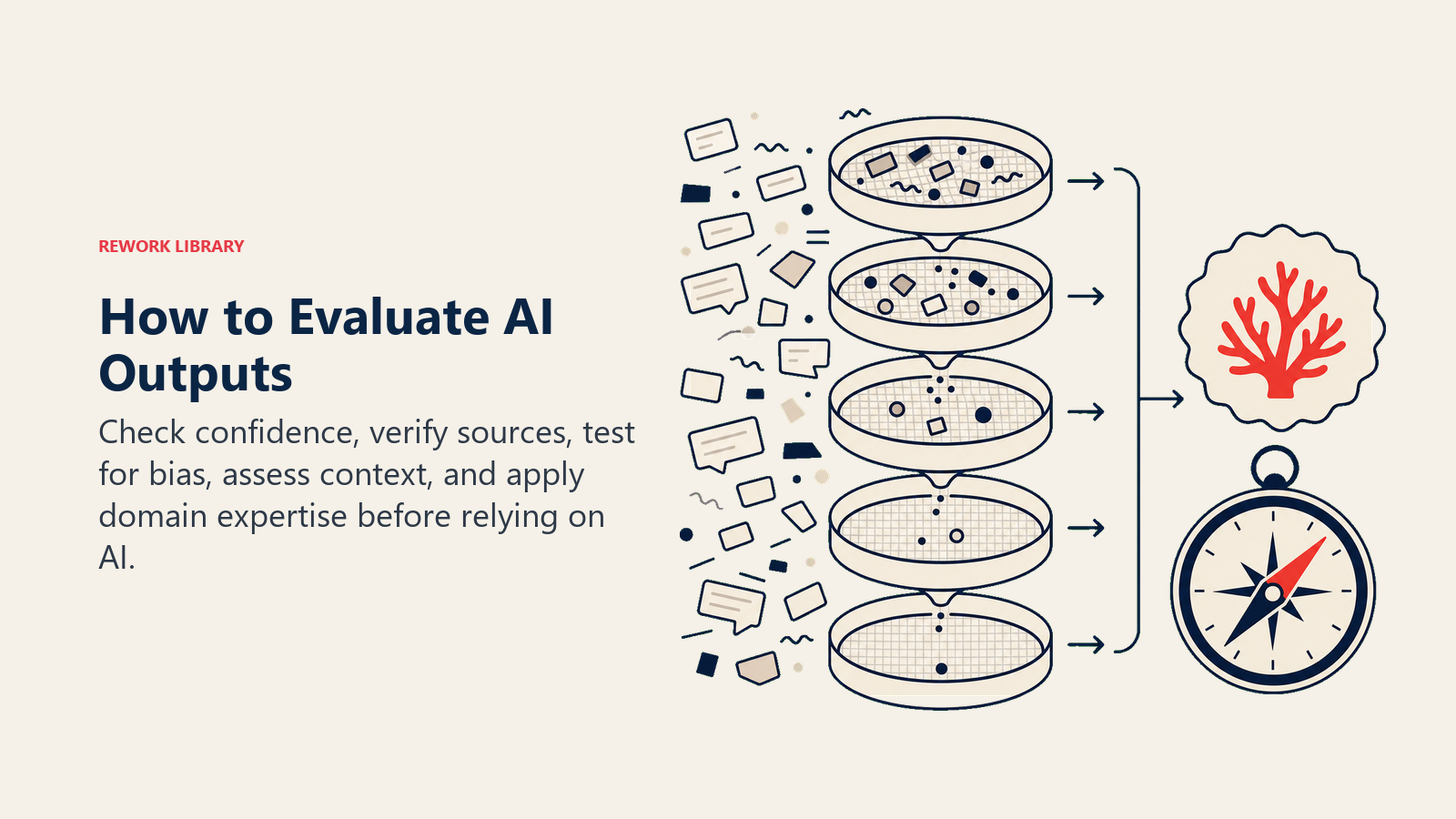
Die Selbstsicherheitsfalle erkennen
KI klingt oft selbstsicher, auch wenn sie falsch liegt. Verwechseln Sie selbstsichere Sprache nie mit Richtigkeit. Fragen Sie sich: „Würde ich das von einer Berufseinsteigerin oder einem Berufseinsteiger ohne Überprüfung akzeptieren?"
Fakten und Quellen überprüfen
Jede konkrete Aussage verdient eine Überprüfung:
- Statistiken: Prüfen Sie die Originalquelle
- Zitate: Bestätigen Sie, dass sie real und im richtigen Kontext sind
- Aktuelle Informationen: KI-Trainingsdaten haben ein Ablaufdatum
- Technische Details: Überprüfen Sie mit autoritativen Quellen
Auf Bias-Muster achten
KI kann Vorurteile in ihren Trainingsdaten widerspiegeln und verstärken. Seien Sie aufmerksam bei:
- Geschlechterspezifischen, rassistischen oder kulturellen Stereotypen
- Überrepräsentation westlicher Perspektiven
- Geschäftsannahmen, die nicht zu Ihrem Kontext passen
- Veralteten Informationen, die als aktuell präsentiert werden
Relevanz für Ihren Kontext beurteilen
KI liefert allgemeine Antworten. Beurteilen Sie, ob das Ergebnis zu Folgendem passt:
- Ihrer spezifischen Branche und den geltenden Vorschriften
- Ihrer Unternehmenskultur und -normen
- Dem Wissensstand Ihrer Zielgruppe
- Ihren tatsächlichen Zielen, nicht den angenommenen
Auf Ihre eigene Expertise vertrauen
Sie kennen Ihr Fachgebiet. Wenn KI-Ergebnisse Ihren Erfahrungen widersprechen oder seltsam wirken, hinterfragen Sie diese statt KI blind zu vertrauen. Ihre Expertise bleibt wertvoll, und kontinuierliches Lernen hält sie aktuell.
Entwicklungsstrategien für den Aufbau von KI-Kompetenz
Mit strukturierten Experimenten beginnen
Wochen 1 bis 2: Probieren Sie drei verschiedene KI-Tools für denselben Aufgabentyp aus, den Sie regelmäßig erledigen. Notieren Sie, was funktioniert, was scheitert und was Sie überrascht. Führen Sie ein einfaches Protokoll Ihrer Experimente.
Wochen 3 bis 4: Konzentrieren Sie sich auf ein KI-Tool und lernen Sie, es gut zu nutzen. Erkunden Sie die Dokumentation, probieren Sie erweiterte Funktionen aus und entwickeln Sie Prompt-Vorlagen für Ihre häufigen Anforderungen.
Eine persönliche KI-Anwendungsbibliothek aufbauen
Dokumentieren Sie erfolgreiche KI-Anwendungen in Ihrer Arbeit:
- Bei welcher Aufgabe hat KI geholfen?
- Welche Prompts haben gute Ergebnisse geliefert?
- Welche Überprüfungsschritte waren erforderlich?
- Wie viel Zeit hat es gespart?
Diese Bibliothek wird zu Ihrer Referenz und hilft Ihnen, andere zu schulen.
Täglich kritisch bewerten
Machen Sie es zur Gewohnheit, KI-Ergebnisse zu hinterfragen:
- Hat die KI die Frage beantwortet, die ich tatsächlich gestellt habe?
- Sind diese Informationen aktuell und korrekt?
- Passt das zu meiner spezifischen Situation?
- Was fehlt in dieser Antwort?
Aus KI-Fehlern lernen
Wenn KI schlechte Ergebnisse liefert, behandeln Sie das als Lerndaten:
- Warum hat die KI missverstanden?
- Wie könnten Sie besser prompten?
- Wo hat die KI blinde Flecken bei diesem Aufgabentyp?
- Wann sollten Sie für diesen Zweck keine KI nutzen?
Aktuell bleiben ohne jedem Hype nachzujagen
KI entwickelt sich rasant, aber Sie müssen nicht alles wissen. Folgen Sie 2 bis 3 vertrauenswürdigen Quellen, konzentrieren Sie sich auf für Ihre Arbeit relevante Tools und entwickeln Sie Anpassungsfähigkeit, die Ihnen hilft, bei Bedarf neue Tools zu erlernen.
Praxisbeispiele aus dem Arbeitsalltag
Marcus im Kundenservice: Ein Support-Manager, der zunächst befürchtete, KI würde sein Team ersetzen, lernte stattdessen, KI als Ergänzungstool einzusetzen. KI bearbeitet nun Routineanfragen, erstellt Antwortentwürfe zur Freigabe durch das Team und erkennt Stimmungsmuster im Kundenfeedback. Sein Team bewältigt 40 % mehr Volumen bei höheren Zufriedenheitswerten, und er wurde zum Customer Experience Director befördert.
Sofia im Marketing: Eine Content-Strategin, die mit Schreibblockaden kämpfte, lernte Prompt-Engineering-Techniken, die ihren Workflow transformierten. Sie nutzt KI, um erste Ideen zu generieren, Gliederungen zu erstellen und Überschriften vorzuschlagen, dann bringt sie ihre Expertise ein, um den Inhalt zu verfeinern und mit ihrer persönlichen Note zu versehen. Ihr Output stieg um das Dreifache, während sie ihre unverwechselbare Stimme beibehielt.
David in der Finanzabteilung: Ein Finanzanalyst, der KI skeptisch gegenüberstand, entdeckte ihren Wert für die Datenbereinigung und Mustererkennung. Er nutzt KI jetzt, um unstrukturierte Daten zu verarbeiten, erste Analysen zu erstellen und Visualisierungsentwürfe zu entwickeln. Durch die Automatisierung tedioser Aufgaben verbringt er mehr Zeit mit strategischen Erkenntnissen, die die Unternehmensführung schätzt, und wurde als aufgehender Stern anerkannt.
Teamerfolg bei MidWest Manufacturing: Ein traditionell technologiescheues Operations-Team führte KI-Kompetenzschulungen auf allen Ebenen durch. Innerhalb von sechs Monaten hatten sie Effizienzgewinne von zwei Millionen Dollar durch KI-unterstützte Prozessanalyse identifiziert. Noch wichtiger: Mitarbeitende, die zuvor Technologie gemieden hatten, wurden zu begeisterten Experimentatoren, und die Unternehmenskultur wandelte sich von Ablehnung zu Neugier.
Ihr 90-Tage-Aktionsplan für KI-Kompetenz
Tage 1 bis 30: Grundlagen aufbauen
- Ehrliche Selbstbewertung anhand des 5-Stufen-Rahmens durchführen
- Drei verschiedene KI-Assistenten ausprobieren und einen zum Vertiefen auswählen
- Die KI-Nutzungsrichtlinien Ihres Unternehmens lesen und verstehen
- Grundlegende Prompt-Engineering-Techniken erlernen
- Einen Fachwortschatz an KI-Begriffen aufbauen, den Sie einfach erklären können
- Einen einführenden KI-Kurs abschließen (viele sind kostenlos)
Tage 31 bis 60: Kompetenzen entwickeln
- Prompt-Vorlagen für fünf wiederkehrende Arbeitsaufgaben entwickeln
- KI-Ergebnisse systematisch auf Fakten überprüfen üben
- Drei Anwendungsfälle identifizieren, bei denen KI Ihre Arbeit wirklich unterstützt
- Drei Situationen erkennen, in denen KI nicht angemessen ist
- Einer Kollegin oder einem Kollegen bei der grundlegenden KI-Nutzung helfen
- KI-Experimente und Erkenntnisse dokumentieren
Tage 61 bis 90: Integration und Anwendung
- Mindestens einen KI-Workflow implementieren, der bedeutend Zeit spart
- Einen Entscheidungsrahmen erstellen, wann KI eingesetzt werden soll
- Ihre Erkenntnisse mit dem Team teilen
- Nächste KI-Lernprioritäten identifizieren
- KI-Kompetenzen mit Ihren Karrierezielen verknüpfen
- Weitere KI-Kompetenzentwicklung planen
Es in die Tat umsetzen: Ihre nächsten Schritte
KI-Kompetenz ist kein Ziel, sondern eine kontinuierliche Praxis. Die heute verfügbaren KI-Tools werden in fünf Jahren primitiv erscheinen, aber die grundlegenden Fähigkeiten, Möglichkeiten zu verstehen, Grenzen zu erkennen und Ergebnisse kritisch zu bewerten, werden dauerhaft wertvoll bleiben.
Starten Sie heute mit einer kleinen Aktion. Öffnen Sie einen KI-Assistenten und geben Sie ihm eine Aufgabe aus Ihrer tatsächlichen Arbeit. Bewerten Sie das Ergebnis kritisch. Verfeinern Sie Ihren Prompt, um die Resultate zu verbessern. Bemerken Sie, was funktioniert hat und was nicht. Dieses eine Experiment lehrt mehr als stundenlange Lektüre über KI.
Denken Sie daran: Das Ziel ist nicht, KI-Experte zu werden. Es geht darum, jemand zu sein, der effektiv mit KI als Werkzeug arbeitet und dabei das kritische Denken und das menschliche Urteilsvermögen bewahrt, das KI nicht ersetzen kann. Ihre Fachkompetenz, Kreativität, ethisches Denken und die Fähigkeit, Beziehungen aufzubauen, bleiben einzigartig wertvoll. KI-Kompetenz bedeutet lediglich, dass Sie diese menschlichen Stärken mit KI-Fähigkeiten verstärken können.
Die Fachkräfte, die im KI-Zeitalter erfolgreich sind, werden weder jene sein, die KI fürchten, noch jene, die ihr blind vertrauen. Es werden jene sein, die KI gut genug verstehen, um sie klug und strategisch einzusetzen. Darum geht es bei KI-Kompetenz, und Sie sind bereits auf dem richtigen Weg.
Mehr erfahren: Wichtige Kompetenzen für den KI-Erfolg
KI-Kompetenz ist mit vielen anderen beruflichen Kompetenzen verknüpft und verstärkt diese. Diese ergänzenden Fähigkeiten beschleunigen Ihre KI-Wirksamkeit:
Technisches und analytisches Wachstum
- Digital Literacy - Das Fundament für alle Technologiekompetenzen einschließlich KI
- Datenanalyse - KI-generierte Erkenntnisse mit analytischer Strenge bewerten
- Recherchekompetenzen - KI-Ergebnisse überprüfen und autoritative Quellen finden
Berufliche Weiterentwicklung
- Kritisches Denken - KI-Ergebnisse hinterfragen und logische Schwächen identifizieren
- Entscheidungsfindung - KI-Erkenntnisse in fundierte Entscheidungen integrieren
- Technische Problemlösung - KI-Tools auf komplexe Herausforderungen anwenden
Persönliche Entwicklung
- Kontinuierliches Lernen - Aktuell bleiben, während sich KI-Fähigkeiten weiterentwickeln
- Anpassungsfähigkeit - Den eigenen Ansatz anpassen, wenn KI die Arbeit verändert
- Growth Mindset - KI-Lernen als fortlaufende Reise begreifen

Senior Customer Retention Strategist
On this page
- Warum KI-Kompetenz 2026 wichtig ist
- Ihre KI-Kompetenzreise: Der 5-Stufen-Rahmen
- Stufe 1: KI-Einsteiger (0 bis 6 Monate gezieltes Lernen)
- Stufe 2: KI-Kompetent (6 bis 12 Monate Erfahrung)
- Stufe 3: KI-Versiert (1 bis 3 Jahre Erfahrung)
- Stufe 4: KI-Fortgeschritten (3 bis 5 Jahre Erfahrung)
- Stufe 5: KI-Experte (5 oder mehr Jahre Erfahrung)
- Grundlegende KI-Konzepte, die jede Mitarbeiterin und jeder Mitarbeiter kennen sollte
- Machine Learning: Wie KI tatsächlich lernt
- Large Language Models (LLMs): Die Technologie hinter ChatGPT
- Generative AI: Neue Inhalte erstellen
- KI-Halluzinationen: Wenn KI Dinge erfindet
- Prompt Engineering: Die Sprache der KI sprechen
- Praktische KI-Anwendungen am Arbeitsplatz
- Schreiben und Kommunikation
- Recherche und Analyse
- Problemlösung und Brainstorming
- Daten und Tabellenkalkulationen
- Lernen und Entwicklung
- KI-Grenzen verstehen: Wann KI nicht geeignet ist
- Entscheidungen, die Rechenschaftspflicht erfordern
- Umgang mit sensiblen oder vertraulichen Daten
- Zeitkritische Genauigkeit
- Emotionale oder sensible Situationen
- Neuartige oder beispiellose Situationen
- KI-Ergebnisse kritisch bewerten
- Die Selbstsicherheitsfalle erkennen
- Fakten und Quellen überprüfen
- Auf Bias-Muster achten
- Relevanz für Ihren Kontext beurteilen
- Auf Ihre eigene Expertise vertrauen
- Entwicklungsstrategien für den Aufbau von KI-Kompetenz
- Mit strukturierten Experimenten beginnen
- Eine persönliche KI-Anwendungsbibliothek aufbauen
- Täglich kritisch bewerten
- Aus KI-Fehlern lernen
- Aktuell bleiben ohne jedem Hype nachzujagen
- Praxisbeispiele aus dem Arbeitsalltag
- Ihr 90-Tage-Aktionsplan für KI-Kompetenz
- Tage 1 bis 30: Grundlagen aufbauen
- Tage 31 bis 60: Kompetenzen entwickeln
- Tage 61 bis 90: Integration und Anwendung
- Es in die Tat umsetzen: Ihre nächsten Schritte
- Mehr erfahren: Wichtige Kompetenzen für den KI-Erfolg
- Technisches und analytisches Wachstum
- Berufliche Weiterentwicklung
- Persönliche Entwicklung