KI-gestütztes Lernen: Ihr Leitfaden für eine intelligentere berufliche Entwicklung

Turn this article into takeaways for your work.


Each assistant summarizes the article only for you and suggests best practices for your work.
Was Sie aus diesem Leitfaden mitnehmen
- Verstehen Sie, wie AI das Lernen verändert und warum das für Ihre Karriereentwicklung entscheidend ist
- Bewerten Sie Ihre AI-Lernkompetenz anhand unseres 5-Stufen-Kompetenzrahmens mit klaren Entwicklungspfaden
- Entwickeln Sie personalisierte Lernstrategien, die AI-Tools mit menschlichem Mentoring kombinieren
- Vermeiden Sie häufige Fehler wie übermäßige Abhängigkeit von AI und maximieren Sie gleichzeitig den Nutzen für Ihre Kompetenzentwicklung
Wahrscheinlich haben Sie Kollegen dabei zugehört, wie sie ChatGPT nutzen, um neue Programmierkonzepte zu erlernen, oder Claude, um komplexe Geschäftsrahmenwerke zu verstehen. Vielleicht haben Sie es selbst ausprobiert und sich gefragt, ob Sie das Beste aus diesen Tools herausholen. Das Entscheidende dabei: AI ersetzt traditionelles Lernen nicht. Es schafft eine völlig neue Möglichkeit, Fähigkeiten schneller, persönlicher und effektiver als je zuvor zu entwickeln.
KI-gestütztes Lernen bedeutet nicht, Maschinen das Denken zu überlassen. Es geht darum, einen unendlich geduldigen Tutor zu haben, der rund um die Uhr verfügbar ist, Konzepte auf verschiedene Weisen erklären kann, Sie über den Stoff abfragt und sich genau an Ihre Lernweise anpasst. Die Fachleute, die diese Kompetenz meistern, werden einen erheblichen Vorteil im Bereich kontinuierliches Lernen und bei der Karriereentwicklung haben.
Warum KI-gestütztes Lernen alles verändert
Traditionelles Lernen folgt einem Einheitsansatz. Sie lesen ein Lehrbuchkapitel, schauen eine Vorlesung an oder nehmen an einer Schulung teil, die für den Durchschnittslernenden konzipiert wurde. Wenn Sie mehr Beispiele brauchen: Pech gehabt. Wenn Sie besser durch Analogien lernen oder ein anderes Tempo bevorzugen: Sie stecken fest.
AI dreht dieses Modell auf den Kopf. Sie können nun Erklärungen anfordern, die auf Ihren Hintergrund zugeschnitten sind, zusätzliche Beispiele verlangen, wenn Konzepte nicht einleuchten, und Fähigkeiten mit unmittelbarem Feedback üben. Forschungsergebnisse des Stanford Institute for Human-Centered AI ergaben, dass Studierende, die AI-Tutoringsysteme nutzten, eine 30 % schnellere Kompetenzentwicklung im Vergleich zu herkömmlichen Methoden erzielten, während sich die Behaltensquoten um 25 % verbesserten.
Doch der eigentliche Wandel geht tiefer. KI-gestütztes Lernen ermöglicht Ihnen:
Auf genau Ihrem Niveau zu lernen. Kein Durchsitzen von Grundlagen, die Sie bereits kennen, und kein Kämpfen mit fortgeschrittenem Material, für das Sie noch nicht bereit sind. AI trifft Sie dort, wo Sie stehen.
Unbegrenzt mit Feedback zu üben. Ob Sie eine Sprache lernen, Datenanalyse üben oder Kommunikationsfähigkeiten entwickeln: AI kann endlose Szenarien generieren und Ihnen sofortiges, nützliches Feedback geben.
Verwandte Fragen sofort zu erkunden. Wenn das Lernen Neugier auf verwandte Themen weckt, können Sie diese sofort verfolgen, ohne den Schwung zu verlieren.
Auf Expertise in jedem Bereich zuzugreifen. Von Führungsprinzipien über technische Fähigkeiten bis hin zum kreativen Schreiben bringt AI fachkundige Orientierung zu jedem Thema, das Sie meistern möchten.
Ihre KI-gestützte Lernreise: Der 5-Stufen-Kompetenzrahmen
Lernende entwickeln sich von gelegentlichen AI-Fragen zu einem überprüften, wiederholbaren Lernsystem, das sie weitergeben und verbessern können.
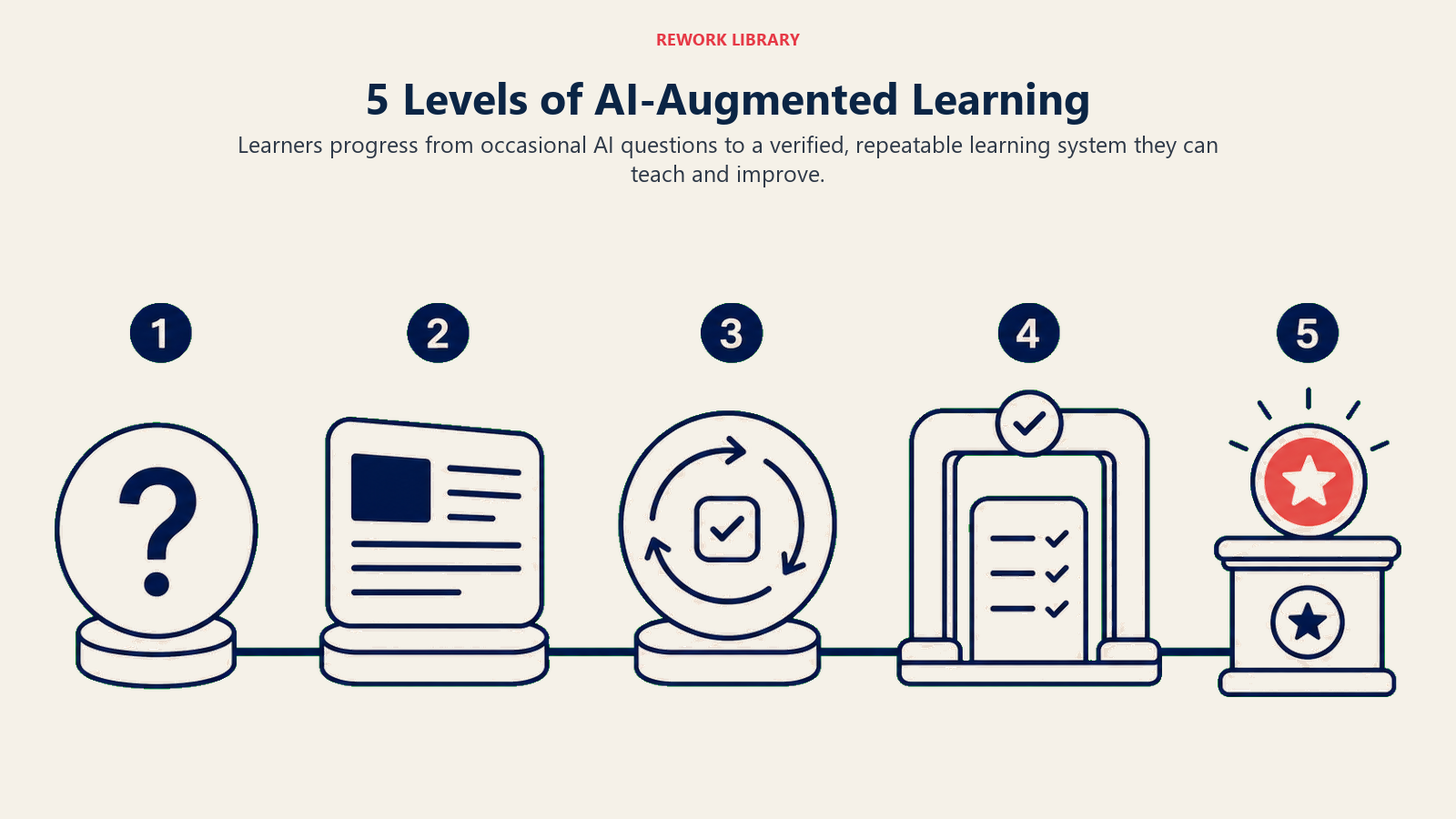
Stufe 1: KI-Lerneinsteiger (0 bis 6 Monate gezielter Entwicklung)
Sie befinden sich auf dieser Stufe, wenn: Sie AI-Tools einige Male für Fragen ausprobiert haben, aber noch keinen systematischen Ansatz zum Lernen damit entwickelt haben.
Verhaltensindikatoren:
- Sie nutzen AI für grundlegende Fragen und Faktenüberprüfung
- Sie kopieren und fügen AI-Antworten ohne viel kritische Bewertung ein
- Sie wissen nicht, wie Sie Lerngespräche mit AI strukturieren sollen
- Sie erhalten oft allgemeine Antworten, die Ihren Bedürfnissen nicht ganz entsprechen
- Sie verlassen sich auf AI-Antworten ohne Überprüfung
Bewertungskriterien:
- Kann AI-Tools grundlegende Fragen stellen
- Nutzt AI gelegentlich zur Lernunterstützung
- Versteht, dass AI Einschränkungen hat und falsch liegen kann
- Kann offensichtlich falsche AI-Antworten identifizieren
- Nutzt mindestens ein AI-Tool zu Lernzwecken
Entwicklungsschwerpunkt: Grundlegende Fähigkeiten im Formulieren von Anfragen und in der kritischen Bewertung aufbauen. Ihr Ziel ist es zu lernen, wie Sie effektiv mit AI kommunizieren und eine gesunde Skepsis gegenüber ihren Ausgaben entwickeln.
Erste Erfolge auf dieser Stufe:
- Grundlegende Formulierungstechniken erlernen: Seien Sie spezifisch darüber, was Sie lernen möchten
- Wichtige Fakten immer überprüfen: Verifizieren Sie AI-Informationen mit autoritativen Quellen
- Ein Lerntagebuch beginnen, um zu verfolgen, was AI Ihnen zu verstehen hilft
- Verschiedene AI-Tools ausprobieren (ChatGPT, Claude, Perplexity), um Ihre Präferenzen zu finden
- Ihren growth mindset entwickeln in Bezug auf AI als Lernpartner
Fortschrittsmarker: Sie erhalten konsistent nützliche Antworten von AI, Sie sind es gewohnt, Folgefragen zu stellen, und können erkennen, wenn AI-Antworten keinen Sinn ergeben.
Stufe 2: KI-Lernkompetenter (6 Monate bis 1 Jahr Erfahrung)
Sie befinden sich auf dieser Stufe, wenn: Sie AI regelmäßig zum Lernen nutzen und effektive Formulierungsgewohnheiten entwickelt haben, aber noch keine systematischen Lern-Workflows erstellt haben.
Verhaltensindikatoren:
- Sie formulieren spezifische, detaillierte Anfragen, die nützliche Antworten liefern
- Sie bitten AI, Konzepte auf verschiedene Weisen zu erklären, bis sie einleuchten
- Sie nutzen AI, um Übungsaufgaben und Quizze zu generieren
- Sie erkennen, wenn AI Fehler macht oder oberflächliche Antworten gibt
- Sie kombinieren KI-gestütztes Lernen mit anderen Ressourcen
Bewertungskriterien:
- Erhält konsistent qualitativ hochwertige, relevante Antworten
- Nutzt AI für aktives Lernen (Übung, Testing, Anwendung)
- Gleicht AI-Informationen mit autoritativen Quellen ab
- Stellt effektive Folgefragen, um das Verständnis zu vertiefen
- Hat bevorzugte Formulierungsmuster entwickelt
Entwicklungsschwerpunkt: Strukturierte Lern-Workflows erstellen und AI für die Kompetenzübung einsetzen, nicht nur für die Informationssammlung. Auf aktives statt passives Lernen konzentrieren.
Erste Erfolge auf dieser Stufe:
- Vorlagen für Anfragen erstellen für verschiedene Lernszenarien
- AI für sokratischen Dialog nutzen: Bitten Sie AI, Ihr Verständnis in Frage zu stellen
- Das Erlernte AI erklären: Üben Sie, das Gelernte in eigenen Worten wiederzugeben, um das Verständnis zu testen
- Skills Agility aufbauen durch die Nutzung von AI zur schnellen Erkundung neuer Bereiche
- Regelmäßige KI-gestützte Lernsessions einrichten zu Themen, an denen Sie arbeiten
Fortschrittsmarker: Sie haben bevorzugte Formulierungsstrategien, AI ist ein fester Teil Ihrer Lernroutine, und Sie lernen spürbar schneller als zuvor.
Stufe 3: KI-Lernfortgeschrittener (1 bis 2 Jahre Erfahrung)
Sie befinden sich auf dieser Stufe, wenn: Sie AI tief in Ihren Lern-Workflow integriert haben, mit AI-Unterstützung umfassende Lernpfade erstellen können und anderen effektiv dabei helfen, mit AI zu lernen.
Verhaltensindikatoren:
- Sie gestalten vollständige Lehrpläne mit AI-Unterstützung
- Sie nutzen AI, um reale Szenarien zum Üben zu simulieren
- Sie kombinieren mehrere AI-Tools strategisch für verschiedene Zwecke
- Sie betreuen andere bei effektiven AI-Lerntechniken
- Sie entwickeln und verfeinern Ihre eigenen Lernmethodologien
Bewertungskriterien:
- Entwickelt effektive selbstgesteuerte Lernprogramme mit AI
- Nutzt AI für realistische Kompetenzübung und Simulation
- Bewertet die pädagogische Wirksamkeit von AI kritisch
- Passt AI-Lernstrategien an verschiedene Fachbereiche an
- Vermittelt AI-Lernfähigkeiten an Kollegen
Entwicklungsschwerpunkt: Zum versierten Gestalter KI-gestützter Lernerfahrungen werden. Auf die Entwicklung vollständiger Lernsysteme konzentrieren, die die Stärken von AI nutzen und gleichzeitig ihre Schwächen ausgleichen.
Erste Erfolge auf dieser Stufe:
- Einen vollständigen Lehrplan für einen neuen Fähigkeitsbereich entwickeln mithilfe von AI
- Szenariobasierte Übungen mit AI-Rollenspiel erstellen
- Ihren eigenen AI-Lernrahmen entwickeln und dokumentieren
- Eine persönliche Wissensdatenbank aufbauen aus KI-gestützten Lernsessions
- kritisches Denken anwenden, um KI-Lernausgaben zu bewerten und zu verbessern
Fortschrittsmarker: Sie werden als jemand anerkannt, der schnell lernt, andere suchen Ihren Rat zur Nutzung von AI beim Lernen, und Sie haben sich erfolgreich komplexe Fähigkeiten mithilfe KI-gestützter Methoden selbst beigebracht.
Stufe 4: Fortgeschrittener KI-Lernender (2 bis 5 Jahre Erfahrung)
Sie befinden sich auf dieser Stufe, wenn: Sie KI-gestützte Lerninitiativen leiten, organisatorische Lernprogramme entwickeln, die AI integrieren, und mit aufkommenden AI-Lerntechnologien Schritt halten.
Verhaltensindikatoren:
- Sie gestalten KI-gestützte Trainingsprogramme für Teams und Organisationen
- Sie evaluieren und erproben neue AI-Lerntools und Methodologien
- Sie integrieren KI-gestütztes Lernen mit formaler Bildung und Zertifizierungsprogrammen
- Sie messen und optimieren Lernergebnisse aus KI-gestützten Methoden
- Sie tragen zur organisatorischen Lernstrategie bei
Bewertungskriterien:
- Implementiert AI-Lernprogramme erfolgreich in größerem Maßstab
- Entwickelt messbare Verbesserungen bei Lernergebnissen
- Bleibt mit AI-Lernforschung und -tools auf dem aktuellen Stand
- Baut organisatorische Kompetenz im KI-gestützten Lernen auf
- Erstellt Rahmenwerke, die andere zur Verbesserung ihres AI-Lernens nutzen können
Entwicklungsschwerpunkt: Gestalten Sie, wie Ihre Organisation und Branche KI-gestütztes Lernen angehen. Konzentrieren Sie sich auf skalierbare Lösungen, Messung und den Aufbau starker Lernkulturen.
Erste Erfolge auf dieser Stufe:
- Ein AI-Lernpilotprogramm in Ihrer Abteilung starten
- Kennzahlen entwickeln, um die Wirksamkeit des KI-gestützten Lernens zu messen
- Ein AI-Lerntoolkit für Ihre Organisation erstellen
- Erkenntnisse zum KI-gestützten Lernen bei Unternehmensmeetings oder Konferenzen präsentieren
Fortschrittsmarker: Ihre AI-Lerninitiativen zeigen messbare Ergebnisse, Sie werden bei Entscheidungen zu Lerntechnologien konsultiert, und Sie haben wiederholbare Programme entwickelt, die andere erfolgreich nutzen.
Stufe 5: KI-Lernexperte (mehr als 5 Jahre Erfahrung)
Sie befinden sich auf dieser Stufe, wenn: Sie als Thought Leader im KI-gestützten Lernen anerkannt sind, Branchenpraktiken beeinflussen und zur Weiterentwicklung des Feldes beitragen.
Verhaltensindikatoren:
- Sie erschließen neue Anwendungen von AI für Lernen und Entwicklung
- Sie veröffentlichen Forschungsergebnisse oder Thought Leadership zum AI-Lernen
- Sie beraten Organisationen zu AI-Lernstrategien
- Sie sprechen auf Konferenzen über KI-gestützte Bildung
- Sie gestalten Branchenstandards für die Wirksamkeit des AI-Lernens
Bewertungskriterien:
- Als Experte im KI-gestützten Lernen anerkannt
- Veröffentlichter Autor oder Redner zu diesem Thema
- Beratungsrolle bei Lerninititativen mit Technologiebezug
- Nachgewiesene Erfolgsbilanz transformativer Lernprogramme
- Beeinflusst, wie das Fachgebiet über AI und Lernen denkt
Entwicklungsschwerpunkt: Das Feld des KI-gestützten Lernens voranbringen. Schwerpunkt auf Forschung, Innovation und der Entwicklung von Rahmenwerken legen, die der breiteren Gemeinschaft helfen, mit AI effektiver zu lernen.
Erste Erfolge auf dieser Stufe:
- Artikel zu AI-Lerninnovationen und gewonnenen Erkenntnissen veröffentlichen
- Aufstrebende KI-Lernpraktiker branchenübergreifend betreuen
- Mit EdTech-Unternehmen zusammenarbeiten, um AI-Lerntools zu verbessern
- Zu Open-Source-AI-Lernressourcen und -rahmenwerken beitragen
Fortschrittsmarker: Ihre Erkenntnisse beeinflussen Branchenpraktiken, Sie werden für Ihre Expertise gesucht, und Ihre Arbeit hat dauerhaften Einfluss auf die Art und Weise, wie Menschen mit AI lernen.
Kernstrategien für KI-gestütztes Lernen
1. Der personalisierte Tutor-Ansatz
Stellen Sie sich AI als Ihren persönlichen Tutor vor, der jedes Konzept so erklären kann, wie es für Sie Sinn ergibt. Der Schlüssel liegt darin, spezifisch in Bezug auf Ihren Lernkontext zu sein:
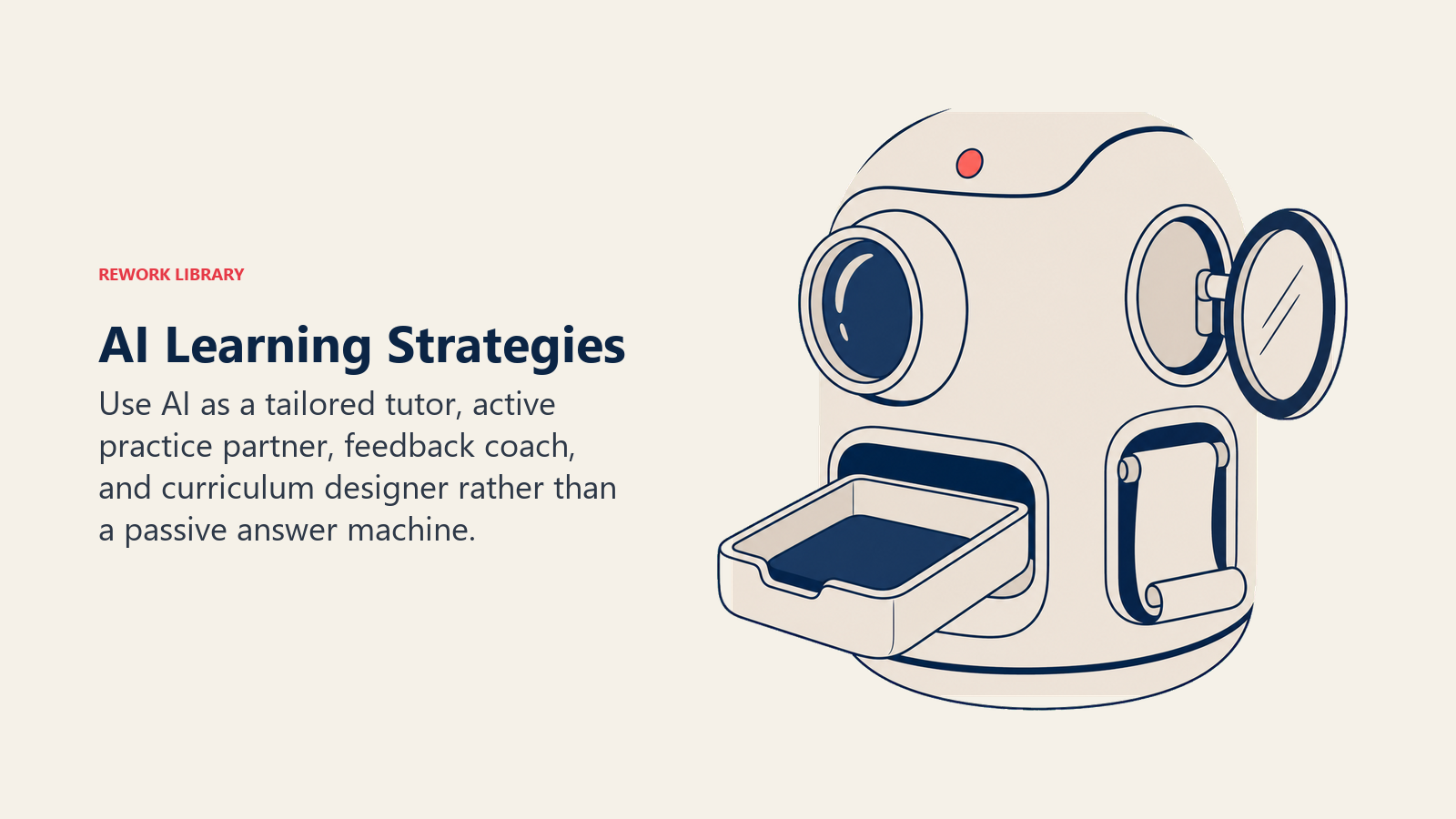
Statt: „Erkläre mir maschinelles Lernen" Probieren Sie: „Ich bin Marketing-Manager, verstehe grundlegende Statistik, habe aber keinen Programmierhintergrund. Erkläre mir maschinelles Lernen anhand von Marketing-Beispielen und konzentriere dich auf praktische Anwendungen für die Kundensegmentierung."
Je mehr Kontext Sie über Ihren Hintergrund, Ihre Ziele und Lernpräferenzen liefern, desto besser kann AI seine Erklärungen zuschneiden.
2. Aktives Lernen mit AI-Übungspartnern
Passives Lesen entwickelt keine Fähigkeiten. AI ist hervorragend geeignet, aktives Üben zu ermöglichen:
Für konzeptuelles Lernen: Bitten Sie AI, Sie abzufragen, Szenarien vorzustellen oder Ihr Verständnis durch sokratische Befragung herauszufordern.
Für Kompetenzübung: Lassen Sie AI Übungsaufgaben generieren, Gespräche in einem Rollenspiel führen oder reale Situationen simulieren.
Für die Anwendung: Schildern Sie reale Herausforderungen, mit denen Sie konfrontiert sind, und arbeiten Sie mit AI daran, das Gelernte auf konkrete Probleme anzuwenden.
3. Die Technik der Erklärungstiefe
Wenn Sie etwas Neues lernen, verwenden Sie einen mehrschichtigen Ansatz:
- Erster Durchgang: Bitten Sie um eine einfache, übergeordnete Erklärung
- Zweiter Durchgang: Fordern Sie mehr Details zu bestimmten Teilen an, die Sie interessieren
- Dritter Durchgang: Bitten Sie um Beispiele, Analogien oder verschiedene Perspektiven
- Vierter Durchgang: Lassen Sie AI Ihr Verständnis mit Grenzfällen herausfordern
Dies spiegelt wider, wie effektive menschliche Tutoren lehren, aber Sie steuern das Tempo und die Tiefe.
4. Lernpfad-Design
Für eine umfassende Kompetenzentwicklung nutzen Sie AI, um vollständige Lernpfade zu entwerfen:
„Ich möchte in den nächsten 3 Monaten Finanzanalyse für Geschäftsentscheidungen erlernen. Ich habe einen Abschluss in Betriebswirtschaft, aber begrenzten Finanzwissen-Hintergrund. Ich kann täglich 1 Stunde widmen. Erstelle einen strukturierten Lernpfad mit Meilensteinen, empfohlenen Ressourcen, Übungsaktivitäten und Bewertungsprüfpunkten."
Verfeinern und passen Sie den Pfad dann an, während Sie Fortschritte machen.
5. AI mit menschlichem Mentoring kombinieren
AI ist leistungsstark, kann menschliches Mentoring aber nicht vollständig ersetzen. So sollten Sie es betrachten:
AI ist am besten geeignet für: Konzepte erklären, Übungen bereitstellen, unbegrenzte Fragen beantworten, rund um die Uhr verfügbar sein und bei wiederholten Erklärungen geduldig bleiben.
Menschen sind am besten geeignet für: Karriereberatung, organisatorischen Kontext, emotionale Unterstützung, Netzwerkverbindungen und nuanciertes Urteilsvermögen, das aus Erfahrung resultiert.
Bauen Sie ein Lernökosystem auf, das beides nutzt. Verwenden Sie AI, um sich auf Meetings mit menschlichen Mentoren vorzubereiten, das Gelernte anschließend zu verarbeiten und Lücken zwischen Mentoring-Sessions zu füllen.
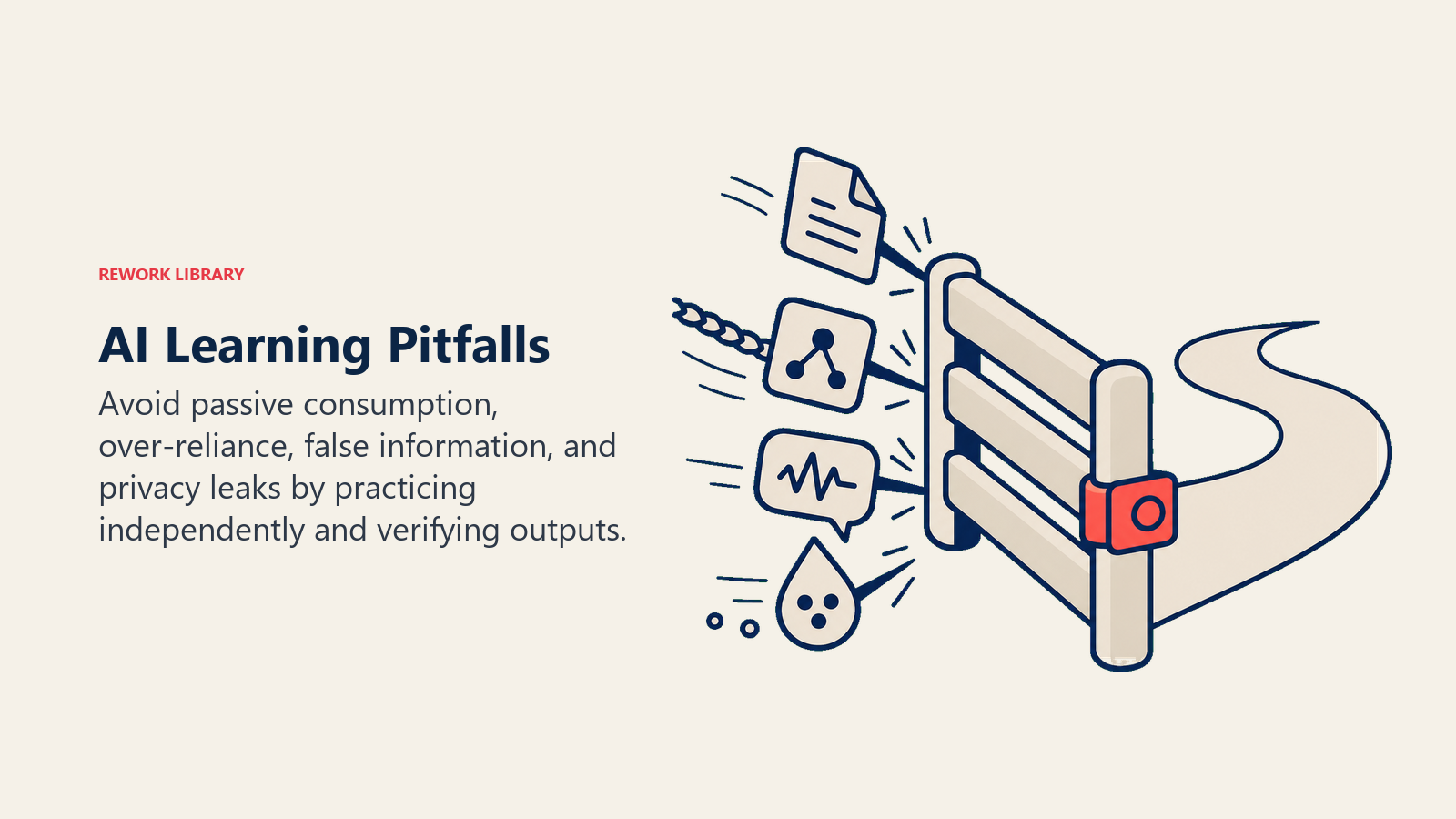
Häufige Fallstricke beim KI-gestützten Lernen vermeiden
Die Illusion des Lernens
Das Lesen von AI-Erklärungen kann sich wie Lernen anfühlen, aber Verständnis ohne Anwendung verblasst schnell. Bekämpfen Sie dies durch:
- Erklärungen immer mit Übungsaufgaben zu folgen
- Konzepte AI in eigenen Worten zu erklären
- Gelerntes innerhalb von 48 Stunden auf reale Projekte anzuwenden
- Sich selbst zu testen, bevor Sie AI um Antworten bitten
Übermäßige Abhängigkeit von AI
Wenn Sie eine Fähigkeit ohne AI-Unterstützung nicht ausführen können, haben Sie sie nicht wirklich erlernt. Stellen Sie sicher, dass Sie echte Fähigkeiten aufbauen, indem Sie:
- AI-Unterstützung schrittweise reduzieren, wenn die Kompetenz wächst
- Fähigkeiten eigenständig üben und AI nur zur Überprüfung der Arbeit einsetzen
- Verständnis für zugrunde liegende Prinzipien aufbauen, nicht nur für Verfahren
- Eine starke AI-Kompetenz entwickeln, um zu wissen, wann AI-Hilfe angemessen ist
Falsche Informationen akzeptieren
AI kann falsche Informationen selbstsicher präsentieren. Schützen Sie sich durch:
- Kritische Fakten mit autoritativen Quellen zu überprüfen
- Besonders skeptisch gegenüber spezifischen Zahlen, Daten und Namen zu sein
- Wichtige Entscheidungen durch den Abgleich mehrerer Quellen abzusichern
- Fachwissen zu entwickeln, das Ihnen hilft, Fehler zu erkennen
Oberflächliches Lernen
AI macht es einfach, schnelle Antworten zu erhalten, ohne tiefes Verständnis zu entwickeln. Für nachhaltiges Lernen:
- Über oberflächliche Erklärungen hinausgehen, um „Warum" und „Wie" zu verstehen
- AI bitten, die Argumentation hinter Antworten zu erklären
- Grenzfälle und Ausnahmen erkunden
- Neues Lernen mit vorhandenem Wissen verknüpfen
Praktische KI-Lern-Workflows
Die tägliche Lerngewohnheit (20 Minuten)
Minuten 1 bis 5: Teilen Sie AI Ihr Lernziel mit und was Sie bereits über das Thema wissen.
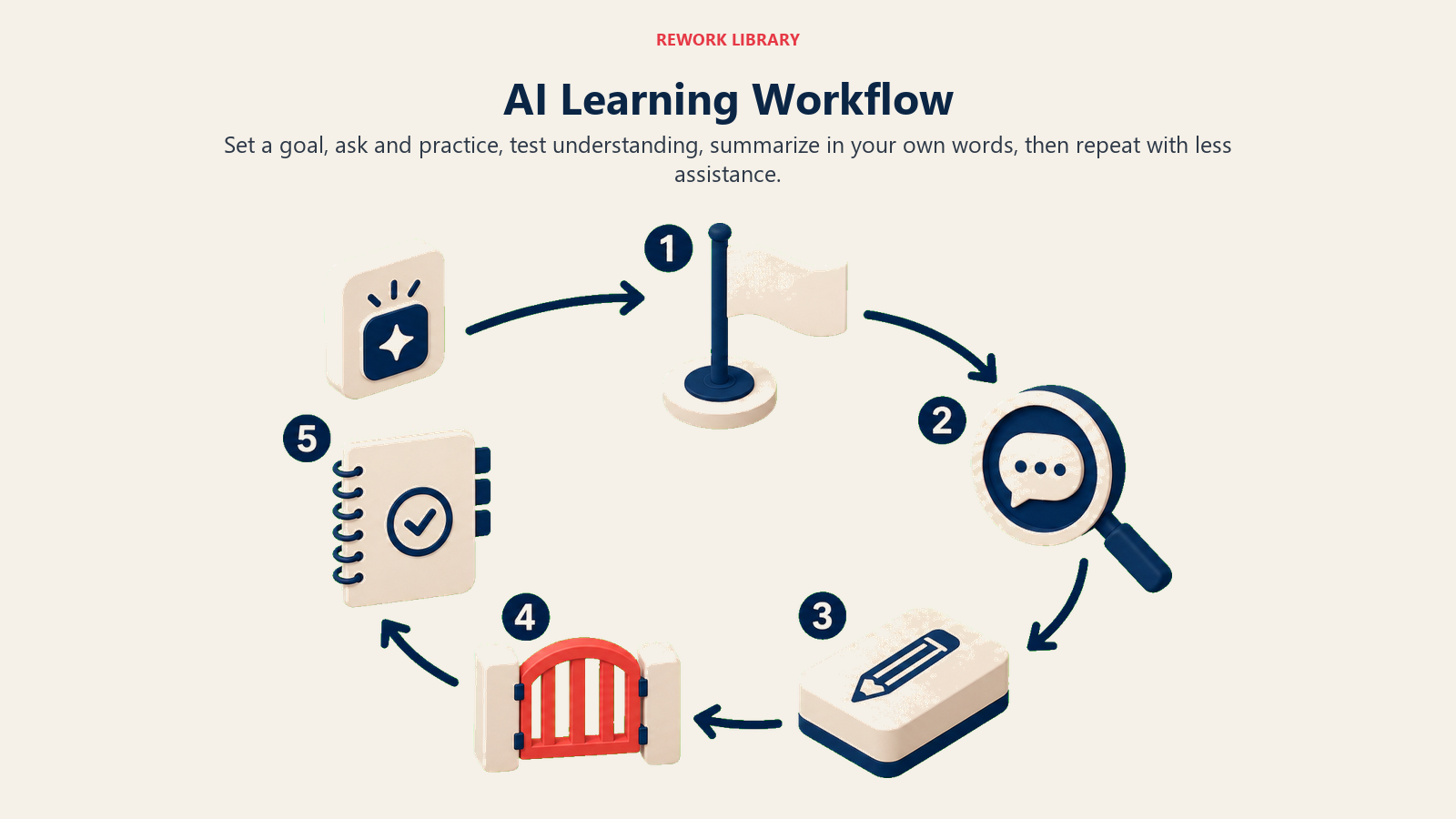
Minuten 5 bis 15: Treten Sie in Dialog. Stellen Sie Fragen, fordern Sie Erklärungen an, arbeiten Sie Beispiele durch.
Minuten 15 bis 18: Bitten Sie AI, Ihr Verständnis mit anspruchsvollen Fragen zu testen.
Minuten 18 bis 20: Fassen Sie das Gelernte in eigenen Worten zusammen und identifizieren Sie die nächsten Fragen.
Die Vertiefungssitzung (2 Stunden)
Stunde 1: Nutzen Sie AI, um einen umfassenden Überblick über Ihr Thema zu erstellen, einschließlich Schlüsselkonzepten, häufiger Missverständnisse und praktischer Anwendungen.
Stunde 2: Arbeiten Sie Übungsszenarien mit AI durch, besprechen Sie Ihre Argumentation und erhalten Sie Feedback. Beenden Sie die Sitzung mit einem Zusammenfassungsdokument, auf das Sie später verweisen können.
Das Kompetenzübungs-Protokoll
- Identifizieren Sie die Fähigkeit, die Sie üben möchten
- Bitten Sie AI, Szenarien auf Ihrem aktuellen Niveau zu generieren
- Arbeiten Sie Szenarien zuerst eigenständig durch
- Teilen Sie Ihren Ansatz mit AI und diskutieren Sie Alternativen
- Fordern Sie zunehmend anspruchsvollere Szenarien an, wenn Sie sich verbessern
- Reflektieren Sie Muster in Ihrer Leistung und Bereiche für Wachstum
Ihr 90-Tage-Aktionsplan für KI-gestütztes Lernen
Tage 1 bis 30: Grundlagen
- Mindestens 3 AI-Tools ausprobieren (ChatGPT, Claude, Perplexity)
- 10 effektive Formulierungstechniken für das Lernen erlernen
- Ein kleines Lernprojekt vollständig mit AI-Unterstützung abschließen
- Ein AI-Lerntagebuch beginnen, in dem Sie festhalten, was funktioniert
- Ihr bevorzugtes AI-Tool und Ihren Lernstil identifizieren
Tage 31 bis 60: Integration
- Einen vollständigen 30-Tage-Lehrplan mit AI für eine Fähigkeit entwerfen, die Sie entwickeln möchten
- AI für tägliche Übungssessions zu Ihrer gewählten Fähigkeit nutzen
- KI-gestütztes Lernen mit einem menschlichen Mentor oder Peer-Lernpartner kombinieren
- Jemand anderem eine grundlegende AI-Lerntechnik beibringen
- Ihre Formulierungsvorlagen basierend auf Erfahrungen verfeinern
Tage 61 bis 90: Optimierung
- Ihren KI-gestützten Lehrplan abschließen
- Ihre Kompetenzverbesserung objektiv messen
- Ihre persönliche AI-Lernmethodik dokumentieren
- Ihren Ansatz mit Ihrem Team oder Netzwerk teilen
- Ihr nächstes KI-gestütztes Lernprojekt planen
Häufige Fragen zum KI-gestützten Lernen
Kann AI traditionelle Lernmethoden wie Kurse und Bücher wirklich ersetzen?
AI ersetzt traditionelles Lernen nicht, sondern ergänzt es. Bücher und Kurse bieten strukturierte Lehrpläne und geprüfte Inhalte, mit denen AI nicht mithalten kann. AI glänzt bei Personalisierung, unbegrenztem Üben und der Beantwortung spezifischer Fragen. Der effektivste Ansatz kombiniert strukturierte Ressourcen für Grundlagenwissen mit AI für Übung, Vertiefung und Anwendung. Betrachten Sie AI als Ergänzung, nicht als Ersatz für hochwertige Lernmaterialien.
Woher weiß ich, ob AI mir korrekte Informationen gibt, wenn ich etwas Neues lerne?
Gesunde Skepsis ist unerlässlich. Für grundlegende Konzepte gleichen Sie AI-Erklärungen mit autoritativen Quellen wie Lehrbüchern, offizieller Dokumentation oder seriösen Websites ab. Achten Sie darauf, ob Erklärungen über mehrere Interaktionen hinweg konsistent sind. Seien Sie besonders vorsichtig bei spezifischen Fakten, Statistiken und technischen Details. Wenn Sie Fachwissen aufbauen, werden Sie von Natur aus besser darin, Fehler zu erkennen. Im Zweifelsfall: überprüfen, bevor Sie es anwenden.
Ich mache mir Sorgen, von AI abhängig zu werden. Wie stelle ich sicher, dass ich wirklich lerne?
Der Schlüssel liegt darin, AI zur Lernunterstützung einzusetzen, nicht als Krücke für die eigentliche Arbeit. Testen Sie sich regelmäßig ohne AI-Zugang. Üben Sie, Konzepte in eigenen Worten zu erklären. Wenden Sie das Gelernte in realen Situationen an, in denen AI nicht verfügbar ist. Reduzieren Sie AI-Unterstützung schrittweise, wenn Ihre Kompetenz wächst. Wenn Sie merken, dass Sie eine Fähigkeit ohne AI nicht ausführen können, treten Sie zurück und konzentrieren Sie sich auf den Aufbau echten Verständnisses. Das Ziel ist gesteigertes Können, keine AI-Abhängigkeit.
Welches AI-Tool ist am besten zum Lernen geeignet?
Verschiedene Tools haben verschiedene Stärken. ChatGPT und Claude eignen sich hervorragend für konversationelles Lernen und Erklärungen. Perplexity ist stark bei forschungsbasiertem Lernen mit Quellenangaben. Spezialisierte Tools gibt es für Programmierung (GitHub Copilot), Sprachen (Duolingo) und andere Bereiche. Probieren Sie mehrere aus und wählen Sie basierend auf Ihrem Lernstil und Fachgebiet. Viele effektive Lernende nutzen mehrere Tools für verschiedene Zwecke.
Wie bringe ich AI dazu, Dinge auf meinem Niveau zu erklären, statt allgemeine Antworten zu geben?
Kontext ist alles. Teilen Sie AI Ihren Hintergrund mit, was Sie bereits wissen und wie Sie am besten lernen. Geben Sie Ihren Zweck für das Lernen an. Fordern Sie bestimmte Erklärungsarten an (Analogien, Beispiele, schrittweise Aufschlüsselungen). Wenn eine Erklärung nicht passt, bitten Sie darum, sie anders zu formulieren. Sagen Sie Dinge wie „Erkläre das, als wäre ich ein völliger Anfänger" oder „Ich verstehe X, aber nicht Y. Können Sie diese Lücke überbrücken?"
Ist KI-gestütztes Lernen auch für technische Fähigkeiten wie Programmieren oder Datenanalyse wirksam?
AI ist tatsächlich hervorragend für technische Fähigkeiten, da es unbegrenzte Übungsaufgaben, sofortiges Feedback und Erklärungen in jeder Tiefe liefern kann. Beim Programmieren kann AI Code erklären, beim Debuggen helfen und Übungsaufgaben generieren. Bei der Datenanalyse kann es Methodologien durchgehen und bei der Interpretation von Ergebnissen helfen. Der Schlüssel liegt darin, AI-Anleitung mit echtem praktischen Üben zu kombinieren. Das Lesen von Code-Erklärungen reicht nicht aus. Sie müssen den Code selbst schreiben.
Wie balanciere ich KI-gestütztes Lernen mit menschlichem Mentoring?
Nutzen Sie AI und menschliche Mentoren entsprechend ihren jeweiligen Stärken. Bereiten Sie sich auf Mentor-Meetings vor, indem Sie AI nutzen, um Konzepte zu klären und durchdachte Fragen zu entwickeln. Verarbeiten Sie nach dem Meeting mit AI das Besprochene und vertiefen Sie es. Nutzen Sie AI für unbegrenzte Übung zwischen den Sessions. Reservieren Sie Zeit mit menschlichen Mentoren für Karriereberatung, organisatorische Weisheit, Netzwerkaufbau und nuancierte Ratschläge, die Erfahrung und Kontext erfordern, den AI nicht bereitstellen kann.
Was, wenn meine Organisation die Nutzung von AI zum Lernen nicht genehmigt?
Beginnen Sie damit, die AI-Richtlinien und Bedenken Ihrer Organisation zu verstehen. Viele Einwände beziehen sich auf Datensicherheit oder geistiges Eigentum, die angegangen werden können, indem Sie es vermeiden, vertrauliche Informationen mit AI-Tools zu teilen. Schlagen Sie einen Pilotversuch vor, der die Vorteile des AI-Lernens demonstriert. Zeigen Sie, wie KI-gestütztes Lernen Produktivität und Kompetenzentwicklung verbessern kann. Wenn eine formale Genehmigung nicht möglich ist, konzentrieren Sie sich auf persönliches Lernen außerhalb der Arbeit und beachten Sie dabei alle Richtlinien.
Wie messe ich, ob AI mein Lernen tatsächlich verbessert?
Setzen Sie vor Beginn klare Lernziele mit messbaren Ergebnissen. Testen Sie sich regelmäßig ohne AI-Unterstützung. Verfolgen Sie die Zeit bis zur Kompetenz bei neuen Fähigkeiten. Vergleichen Sie Ihren Fortschritt mit früheren Lernerfahrungen. Holen Sie Feedback von anderen zur Anwendung Ihrer Fähigkeiten ein. Dokumentieren Sie spezifische Fähigkeiten, die Sie erworben haben. Das ultimative Maß ist, ob Sie das Gelernte effektiv in realen Situationen anwenden können.
Wird die Nutzung von AI mein kritisches Denken schwächen?
Das hängt davon ab, wie Sie AI einsetzen. Der passive Konsum von AI-Antworten kann kritisches Denken schwächen. Aber AI aktiv einzusetzen, indem Sie Erklärungen hinterfragen, Alternativen erkunden und Argumente analysieren, kann es tatsächlich stärken. Der Schlüssel liegt darin, AI als Denkpartner zu behandeln, nicht als Antwortmaschine. Stellen Sie „Warum"- und „Was wäre wenn"-Fragen. Üben Sie bewusst die Bewertung von AI-Antworten. Nutzen Sie AI, um mehrere Perspektiven zu komplexen Themen zu erkunden, statt die erste Antwort zu akzeptieren.
Vorwärtsgehen: Ihr Vorteil durch KI-gestütztes Lernen
Die Fachleute, die in den kommenden Jahren erfolgreich sein werden, sind nicht diejenigen, die am meisten wissen. Es werden diejenigen sein, die am schnellsten lernen können. KI-gestütztes Lernen gibt Ihnen diese Fähigkeit, wenn Sie sie bewusst entwickeln.
Beginnen Sie einfach. Wählen Sie eine Fähigkeit, die Sie entwickeln möchten, und verbringen Sie eine Woche damit, sie mit AI-Unterstützung zu erlernen. Beobachten Sie, was funktioniert und was nicht. Verfeinern Sie Ihren Ansatz. Bauen Sie Ihre Methodik durch Experimentieren auf.
Denken Sie daran, dass AI ein leistungsstarkes Tool ist, aber Sie sind noch immer der Lernende. Ihre Neugier, Disziplin und Anwendung von Wissen sind es, was AI-Unterstützung in echtes Können verwandelt. Die Technologie verstärkt Ihre Anstrengungen. Sie kann sie nicht ersetzen.
Das Aufregendste? Wir befinden uns noch in den Anfängen des KI-gestützten Lernens. Die Tools werden immer besser, neue Techniken werden entstehen, und das Potenzial für schnelle Kompetenzentwicklung wird nur wachsen. Indem Sie jetzt Ihre AI-Lernkompetenz aufbauen, positionieren Sie sich an der Spitze dessen, wie berufliche Entwicklung in den kommenden Jahren funktionieren wird.
Ihr nächster Lernfortschritt ist ein Gespräch entfernt. Beginnen Sie es noch heute.
Mehr erfahren: Wesentliche Kompetenzen für KI-gestütztes Wachstum
KI-gestütztes Lernen verbindet sich auf natürliche Weise mit diesen Kompetenzen, die Ihre berufliche Entwicklung voranbringen können:
Lernen und Anpassungsfähigkeit
- Kontinuierliches Lernen - Das Fundament des lebenslangen Lernens aufbauen, das AI beschleunigen kann
- Skills Agility - Die Flexibilität aufbauen, um neue Fähigkeiten schnell zu erlernen und anzuwenden
- Growth Mindset - Das Denksystem kultivieren, das Lernen mit AI am effektivsten macht
Technologie und digitale Fähigkeiten
- AI-Kompetenz - AI-Grundlagen verstehen, um Lerntools effektiver einzusetzen
- Digitale Kompetenz - Das digitale Fundament aufbauen, das KI-gestütztes Lernen unterstützt
- Datenanalyse - Analytische Fähigkeiten anwenden, um das eigene Lernen zu messen und zu optimieren
Berufliche Entwicklung
- Kritisches Denken - AI-Ausgaben bewerten und das eigene Verständnis vertiefen
- Selbstwahrnehmung - Den eigenen Lernstil verstehen, um AI-Interaktionen anzupassen
- Initiative - Verantwortung für den eigenen KI-gestützten Lernpfad übernehmen

Senior Customer Retention Strategist
On this page
- Warum KI-gestütztes Lernen alles verändert
- Ihre KI-gestützte Lernreise: Der 5-Stufen-Kompetenzrahmen
- Stufe 1: KI-Lerneinsteiger (0 bis 6 Monate gezielter Entwicklung)
- Stufe 2: KI-Lernkompetenter (6 Monate bis 1 Jahr Erfahrung)
- Stufe 3: KI-Lernfortgeschrittener (1 bis 2 Jahre Erfahrung)
- Stufe 4: Fortgeschrittener KI-Lernender (2 bis 5 Jahre Erfahrung)
- Stufe 5: KI-Lernexperte (mehr als 5 Jahre Erfahrung)
- Kernstrategien für KI-gestütztes Lernen
- 1. Der personalisierte Tutor-Ansatz
- 2. Aktives Lernen mit AI-Übungspartnern
- 3. Die Technik der Erklärungstiefe
- 4. Lernpfad-Design
- 5. AI mit menschlichem Mentoring kombinieren
- Häufige Fallstricke beim KI-gestützten Lernen vermeiden
- Die Illusion des Lernens
- Übermäßige Abhängigkeit von AI
- Falsche Informationen akzeptieren
- Oberflächliches Lernen
- Praktische KI-Lern-Workflows
- Die tägliche Lerngewohnheit (20 Minuten)
- Die Vertiefungssitzung (2 Stunden)
- Das Kompetenzübungs-Protokoll
- Ihr 90-Tage-Aktionsplan für KI-gestütztes Lernen
- Tage 1 bis 30: Grundlagen
- Tage 31 bis 60: Integration
- Tage 61 bis 90: Optimierung
- Vorwärtsgehen: Ihr Vorteil durch KI-gestütztes Lernen
- Mehr erfahren: Wesentliche Kompetenzen für KI-gestütztes Wachstum
- Lernen und Anpassungsfähigkeit
- Technologie und digitale Fähigkeiten
- Berufliche Entwicklung