KI-Menschliche Zusammenarbeit: Im Zeitalter intelligenter Tools erfolgreich sein

Turn this article into takeaways for your work.


Each assistant summarizes the article only for you and suggests best practices for your work.
Was Sie aus diesem Leitfaden mitnehmen
- Verändern Sie Ihre Denkweise von "KI vs. Menschen" zu "KI + Menschen" für maximale Effektivität am Arbeitsplatz
- Wenden Sie einen 5-Stufen-Reifegrad-Rahmen an, um Ihre KI-Kollaborationsfähigkeiten einzuschätzen und weiterzuentwickeln
- Nutzen Sie einen praktischen Entscheidungsrahmen, der zeigt, wann Sie auf KI statt auf menschliches Urteilsvermögen setzen sollten
- Bauen Sie effektive Mensch-KI-Workflows auf, die Ihre Produktivität steigern, ohne die Kontrolle zu verlieren
- Stärken Sie einzigartig menschliche Fähigkeiten, die in einem KI-gestützten Arbeitsumfeld unersetzbar bleiben
Sie haben die Debatten sicher gehört. KI bedroht Ihren Job. KI wird ganze Berufsfelder ersetzen. Die Roboter übernehmen. Doch was diese angstgetriebenen Schlagzeilen übersehen: Die Fachkräfte, die in den kommenden Jahrzehnten erfolgreich sein werden, sind nicht diejenigen, die gegen KI kämpfen oder ihr blind vertrauen. Es werden diejenigen sein, die herausfinden, wie sie neben ihr arbeiten können.
Die Frage lautet nicht, ob KI Ihre Arbeit verändern wird. Sie hat es bereits. Die eigentliche Frage ist, ob Sie zu jemandem werden, der KI als kraftvollen Verstärker der eigenen Fähigkeiten nutzt, oder zu jemandem, der zurückgelassen wird und sich fragt, was passiert ist. Dieser Leitfaden hilft Ihnen, Ersteres zu werden.
Die Denkwende: Von Konkurrenz zu Zusammenarbeit
Die "KI vs. Menschen"-Erzählung eignet sich für dramatische Schlagzeilen, missversteht aber, wie Technologie die Arbeitswelt verändert. Die erfolgreichsten Fachkräfte in der Geschichte waren nicht diejenigen, die gegen neue Werkzeuge konkurrierten. Sie waren diejenigen, die herausfanden, wie man diese besser nutzt als alle anderen.
Denken Sie daran so: Taschenrechner haben Buchhalter nicht abgeschafft. Sie haben Buchhalter von mühsamer Rechenarbeit befreit, damit diese sich auf Analyse, Strategie und Kundenbeziehungen konzentrieren können. Tabellenkalkulationsprogramme haben Finanzanalysten nicht ersetzt. Sie haben Analysten deutlich produktiver gemacht. Dasselbe Muster wiederholt sich mit KI, nur in größerem Maßstab und schnellerem Tempo.
Die Erfolgsformel lautet nicht Mensch oder KI. Sie lautet Mensch und KI im gemeinsamen Einsatz.
Folgendes verändert sich, wenn Sie diese kollaborative Denkweise annehmen:
- Sie hören auf, KI-Fähigkeiten zu fürchten und beginnen, zu erkunden, wie sie Ihre eigenen erweitern können
- Sie erkennen Ihren unersetzlichen Wert im Urteilsvermögen, in der Kreativität und in menschlichen Beziehungen
- Sie werden neugierig auf KI-Tools statt resistent gegen sie
- Sie entwickeln kritisches Denken, um KI-Ergebnisse zu bewerten statt sie blind zu akzeptieren
Die Fachkräfte, die Schwierigkeiten haben, sind nicht diejenigen ohne technische Fähigkeiten. Es sind diejenigen, die an der Überzeugung festhalten, dass der alte Weg irgendwie überlegen ist. Währenddessen liefern ihre Kolleginnen und Kollegen, die KI-Kollaboration angenommen haben, bessere Arbeit in kürzerer Zeit.
Der 5-Stufen-Reifegrad-Rahmen für KI-Menschliche Zusammenarbeit
Zu verstehen, wo Sie stehen, hilft Ihnen zu wissen, wohin Sie gehen. Dieser Rahmen beschreibt den Weg vom KI-Vermeidenden zum KI-gestärkten Profi.
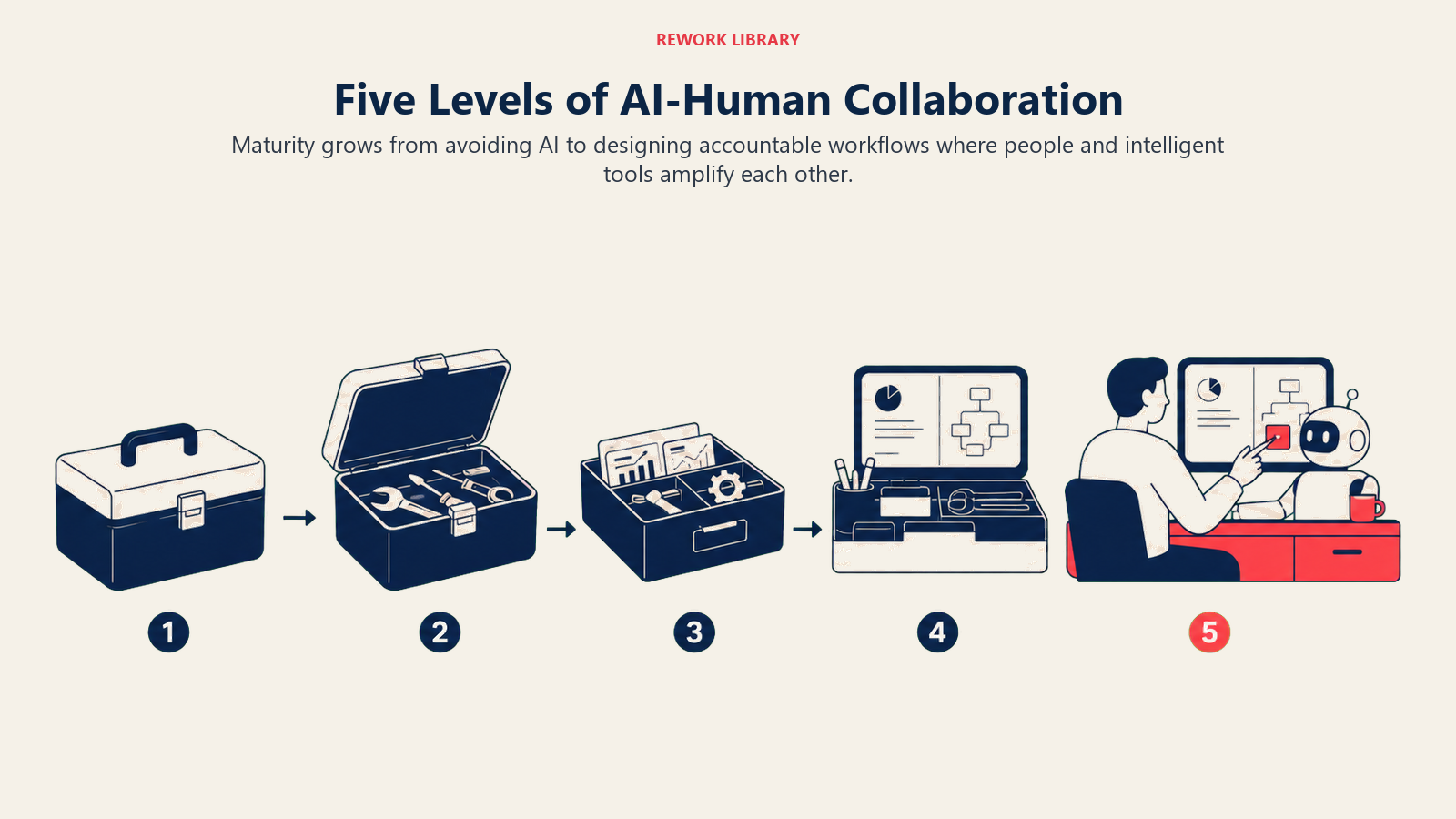
Stufe 1: KI-Bewusster (Einstieg)
Sie befinden sich auf dieser Stufe, wenn: Sie wissen, dass KI-Tools existieren, aber diese selten nutzen. Vielleicht sind Sie skeptisch gegenüber ihrem Nutzen oder unsicher, wo Sie anfangen sollen.
Behavioral Indicators:
- Sie haben von ChatGPT, Copilot oder ähnlichen Tools gehört, sie aber noch nicht ausprobiert
- Sie erledigen alle Aufgaben manuell, auch repetitive
- Sie sind neugierig, wissen aber nicht, wo Sie anfangen sollen
- Gespräche über KI machen Sie leicht unwohl
Entwicklungsmaßnahmen:
- Probieren Sie ein KI-Tool für eine risikoarme Aufgabe aus (eine E-Mail entwerfen, ein Dokument zusammenfassen)
- Fragen Sie Kolleginnen und Kollegen, wie sie KI in ihrer täglichen Arbeit nutzen
- Lesen Sie Artikel über KI-Anwendungen in Ihrer Branche
- Beobachten Sie KI-generierte Inhalte, um deren Muster und Grenzen zu verstehen
Erfolgsindikatoren: Sie haben mindestens ein KI-Tool für eine echte Arbeitsaufgabe genutzt und können beschreiben, was es gut und was es schlecht macht.
Stufe 2: KI-Nutzer (Komfort aufbauen)
Sie befinden sich auf dieser Stufe, wenn: Sie KI-Tools gelegentlich für spezifische Aufgaben nutzen, sie aber als separate Werkzeuge behandeln, nicht als integrierte Partner.
Behavioral Indicators:
- Sie nutzen KI für einzelne Aufgaben wie das Erstellen von Inhalten oder das Beantworten von Fragen
- Ihre Prompts sind einfach und Sie akzeptieren erste Ergebnisse
- Sie verstehen, dass KI Grenzen hat, können diese aber nicht immer identifizieren
- Sie haben KI noch nicht in Ihre regulären Workflows integriert
Entwicklungsmaßnahmen:
- Lernen Sie Grundlagen des Prompt Engineering, um bessere Ergebnisse zu erzielen
- Experimentieren Sie mit mehreren KI-Tools, um deren Unterschiede zu verstehen
- Beginnen Sie zu dokumentieren, bei welchen Aufgaben KI am meisten hilft
- Üben Sie das Bewerten von KI-Ergebnissen anhand Ihrer Berufsstandards
Erfolgsindikatoren: Sie erhalten konsistent nützliche Ergebnisse von KI-Tools und können Resultate durch besseres Prompting verbessern.
Stufe 3: KI-Kollaborateur (Arbeitende Partnerschaft)
Sie befinden sich auf dieser Stufe, wenn: KI ist ein regulärer Teil Ihrer Arbeitsweise. Sie wissen, wann Sie sie einsetzen, wie Sie effektiv prompten und wie Sie Ergebnisse kritisch bewerten.
Behavioral Indicators:
- Sie haben etablierte KI-Workflows für wiederkehrende Aufgaben
- Sie verfeinern KI-Ergebnisse statt erste Entwürfe zu akzeptieren
- Sie kombinieren KI-Fähigkeiten mit Ihrer Expertise für bessere Resultate
- Sie können anderen erklären, wann und wie KI-Tools einzusetzen sind
- Sie bewahren starke Entscheidungsfindungskompetenz, wann KI-Input angemessen ist
Entwicklungsmaßnahmen:
- Erstellen Sie Vorlagen und Workflows, die KI systematisch einbinden
- Entwickeln Sie Expertise in KI-Tools, die spezifisch für Ihren Beruf sind
- Betreuen Sie Kolleginnen und Kollegen beim effektiven KI-Einsatz (mentoring)
- Verfolgen Sie Produktivitätsverbesserungen durch KI-Kollaboration
Erfolgsindikatoren: Ihre Arbeitsqualität und Produktivität haben sich durch KI-Integration messbar verbessert, und Sie helfen anderen, ähnliche Ergebnisse zu erzielen.
Stufe 4: KI-Orchestrator (Strategische Integration)
Sie befinden sich auf dieser Stufe, wenn: Sie Workflows gestalten, bei denen Menschen und KI jeweils das übernehmen, was sie am besten können. Sie denken strategisch über KI-Fähigkeiten in Ihrem Team und Ihrer Organisation.
Behavioral Indicators:
- Sie konzipieren Prozesse, die die Mensch-KI-Aufgabenverteilung optimieren
- Sie evaluieren neue KI-Tools anhand von Teambedarfen und empfehlen deren Einführung
- Sie schulen Teams in effektiven KI-Kollaborationspraktiken
- Sie identifizieren organisationale Möglichkeiten zur KI-Augmentierung
- Sie balancieren KI-Effizienz mit Qualitätsexzellenz-Standards
Entwicklungsmaßnahmen:
- Entwickeln Sie organisationale Richtlinien für den KI-Einsatz in Ihrem Bereich
- Erstellen Sie Schulungsprogramme für KI-Kollaborationsfähigkeiten
- Messen und kommunizieren Sie den ROI der KI-Integration
- Bleiben Sie über aufkommende KI-Fähigkeiten informiert, die für Ihr Fachgebiet relevant sind
Erfolgsindikatoren: Ihr Team oder Ihre Abteilung arbeitet dank KI-Integrationsstrategien, die Sie implementiert haben, effektiver.
Stufe 5: KI-Stratege (Organisationale Transformation)
Sie befinden sich auf dieser Stufe, wenn: Sie mitgestalten, wie Ihre Organisation über KI-Menschliche Zusammenarbeit denkt und diese im großen Maßstab umsetzt.
Behavioral Indicators:
- Sie beraten die Führungsebene zu KI-Strategie und Belegschaftsimplikationen
- Sie entwickeln Governance-Rahmenwerke für den verantwortungsvollen KI-Einsatz
- Sie beeinflussen Branchenpraktiken rund um die Mensch-KI-Zusammenarbeit
- Sie veröffentlichen Inhalte oder sprechen über Best Practices der KI-Kollaboration
- Sie antizipieren künftige KI-Entwicklungen und bereiten Organisationen auf die Anpassung vor
Entwicklungsmaßnahmen:
- Bauen Sie bereichsübergreifende Koalitionen um KI-Transformation auf
- Entwickeln Sie ethische Rahmenwerke für den KI-Einsatz in Ihrer Branche
- Erstellen Sie Thought Leadership-Inhalte zur Mensch-KI-Kollaboration
- Betreuen Sie die nächste Generation von KI-Kollaborations-Führungskräften (mentoring)
Erfolgsindikatoren: Ihr Einfluss prägt organisationale und branchenweite Ansätze zur Mensch-KI-Zusammenarbeit.
Wann KI, wann menschliches Urteilsvermögen: Ein Entscheidungsrahmen
Nicht jede Aufgabe profitiert gleichermaßen von KI-Beteiligung. Kluge Zusammenarbeit bedeutet zu wissen, wann KI Mehrwert schafft und wann menschliches Urteilsvermögen die Führung übernehmen sollte. Hier ist ein Rahmen, der Ihnen bei der Entscheidung hilft.
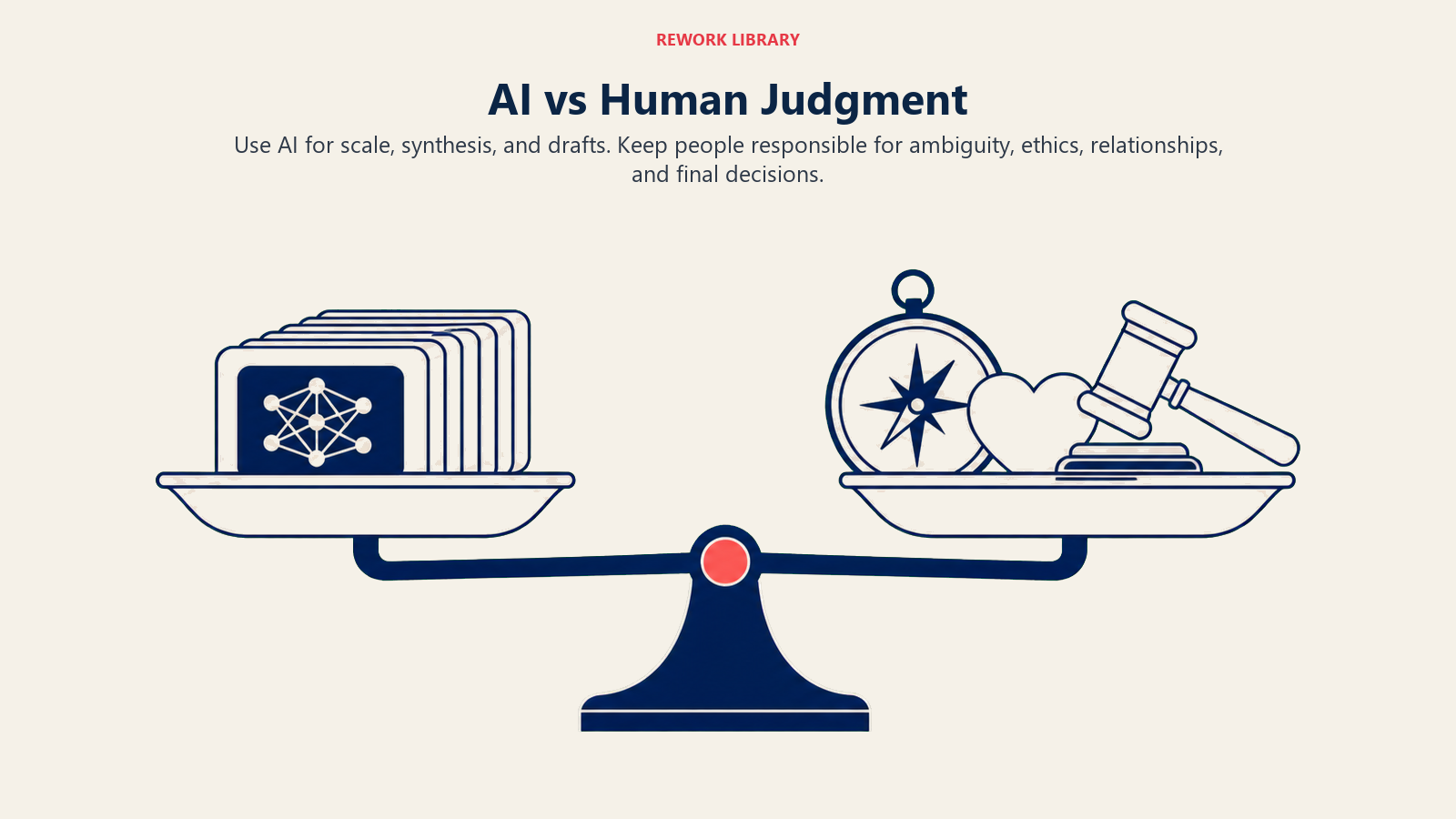
KI einsetzen, wenn:
Die Aufgabe die Verarbeitung oder Generierung großer Informationsmengen umfasst
- Lange Dokumente oder Recherchen zusammenfassen
- Erste Versionen von Routinekommunikation entwerfen
- Datenmuster über große Datensätze hinweg analysieren
- Schnell mehrere Optionen oder Varianten generieren
Geschwindigkeit wichtiger ist als Perfektion
- Erste Entwürfe, die Sie prüfen und verfeinern
- Brainstorming-Sitzungen, bei denen Quantität Qualität ermöglicht
- Zeitkritische Antworten, bei denen "gut genug" "perfekt aber zu spät" schlägt
- Explorative Recherche zur Identifizierung vielversprechender Richtungen
Die Aufgabe klare, definierbare Parameter hat
- Dokumente nach Spezifikationen formatieren
- Zwischen Sprachen übersetzen
- Daten zwischen Formaten konvertieren
- Etablierten Vorlagen oder Strukturen folgen
Sie den sprichwörtlichen leeren Seite Syndrom überwinden müssen
- Eine Präsentation beginnen, wenn Sie nicht wissen, wo Sie anfangen sollen
- Erste Ideen für ein Projekt generieren
- Verschiedene Blickwinkel auf ein vertrautes Thema finden
- Gliederungen oder Rahmenwerke für komplexe Inhalte erstellen
Auf menschliches Urteilsvermögen vertrauen, wenn:
Die Entscheidung das Leben oder Wohlbefinden von Menschen betrifft
- Einstellungs-, Entlassungs- oder Leistungsbeurteilungen
- Medizinische Diagnosen oder Behandlungsempfehlungen
- Rechtliche Feststellungen oder Beratung
- Finanzielle Entscheidungen mit erheblichen persönlichen Auswirkungen
Die Situation emotionale Intelligenz erfordert
- Schwierige Neuigkeiten an Kolleginnen, Kollegen oder Kunden überbringen
- Zwischenmenschliche Konflikte navigieren
- Vertrauen und Beziehungen aufbauen
- Unausgesprochene Bedürfnisse oder Bedenken verstehen
Der Kontext Nuancen hat, auf die KI keinen Zugriff hat
- Unternehmenskultur und politische Dynamiken
- Persönliche Geschichten und Beziehungshintergründe
- Branchenspezifische ungeschriebene Regeln
- Lokale Gepflogenheiten und Sensibilitäten
Kreativität originell und authentisch sein muss
- Markenstimme, die echte organisationale Werte widerspiegelt
- Strategische Vision, die tiefes Marktverständnis erfordert
- Kreative Werke, bei denen die menschliche Perspektive der eigentliche Kern ist
- Innovation, die das Verstehen unausgesprochener Kundenbedürfnisse erfordert
Ethische Überlegungen sorgfältig abgewogen werden müssen
- Situationen, in denen das Richtige wichtiger ist als das Schnelle
- Entscheidungen mit unklaren ethischen Dimensionen
- Fälle, bei denen Fairness und Gerechtigkeit an erster Stelle stehen müssen
- Entscheidungen, die Präzedenzfälle für künftige Situationen schaffen
Die Kollaborationszone
Viele Aufgaben liegen zwischen diesen Extremen. Hier ist, wie Sie mit ihnen umgehen:
KI entwirft, Mensch verfeinert: KI erstellt erste Version, Mensch fügt Expertise, Urteilsvermögen und Feinschliff hinzu Mensch definiert Rahmen, KI führt aus: Mensch definiert Parameter und Ziele, KI übernimmt die Ausführung KI recherchiert, Mensch entscheidet: KI sammelt und fasst Informationen zusammen, Mensch trifft die Entscheidung Parallele Verarbeitung: Beide arbeiten an den Aspekten, die sie am besten können, dann werden Ergebnisse zusammengeführt
Effektive Mensch-KI-Workflows aufbauen
Theorie bringt Sie nur so weit. Hier ist, wie Sie praktische Workflows aufbauen, die KI-Kollaboration nahtlos machen.
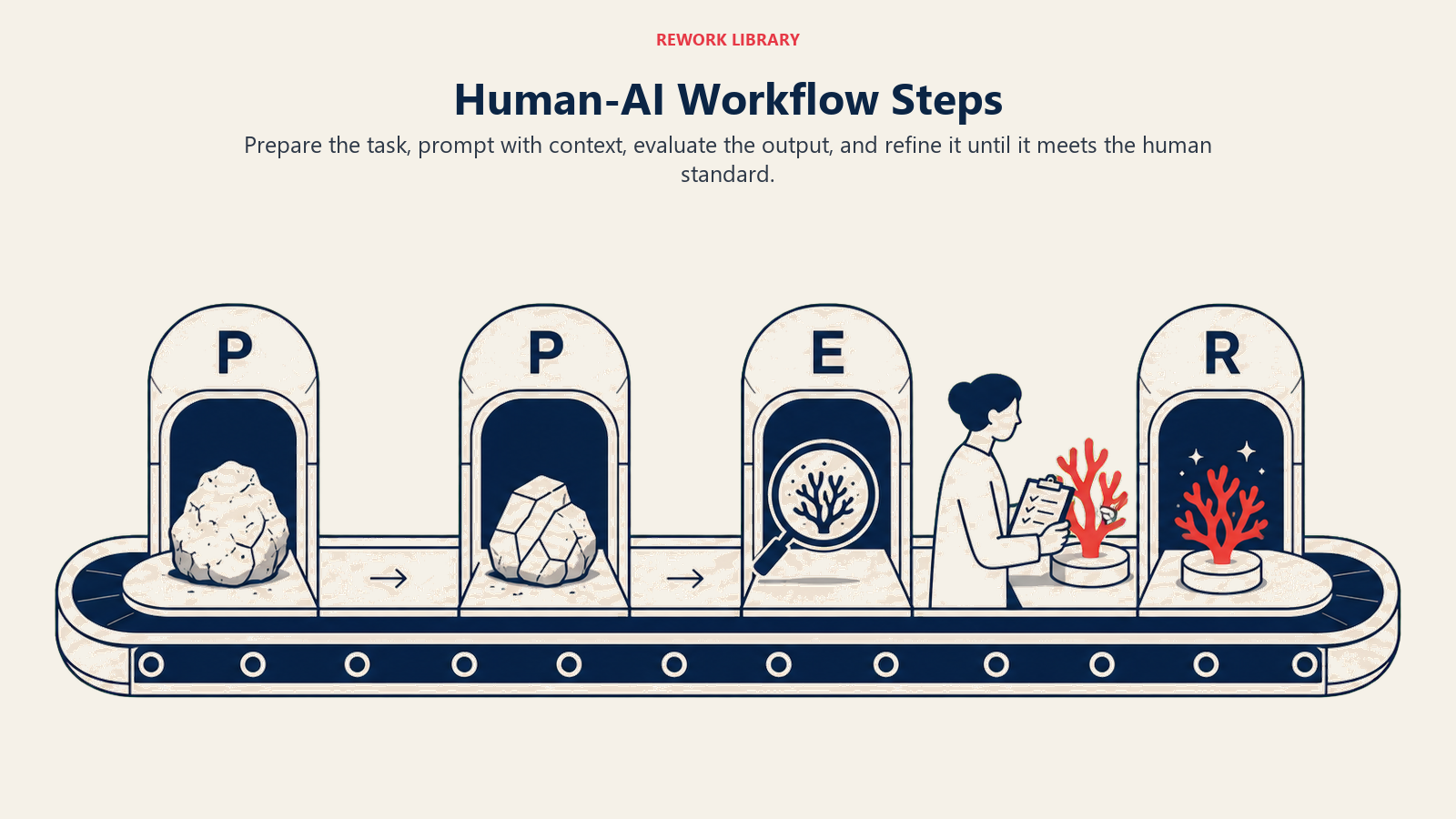
Das PAIR-Rahmenwerk für KI-Kollaboration
P - Prepare (Vorbereiten): Definieren Sie, was Sie brauchen, bevor Sie KI einsetzen
- Welches konkrete Ergebnis möchten Sie?
- Welche Einschränkungen oder Anforderungen gelten?
- Welchen Kontext benötigt KI, um hilfreich zu sein?
- Welche Qualitätsstandards muss das Ergebnis erfüllen?
A - Ask (Anfragen): Effektive Prompts formulieren
- Seien Sie spezifisch zu Format, Länge und Stil
- Liefern Sie relevanten Kontext und Beispiele
- Beschreiben Sie, wie Erfolg aussieht
- Fordern Sie mehrere Optionen an, wenn Sie erkunden
I - Iterate (Iterieren): Durch Dialog verfeinern
- Akzeptieren Sie erste Ergebnisse nicht einfach automatisch
- Stellen Sie Folgefragen, um Ergebnisse zu verbessern
- Fordern Sie Überarbeitungen mit spezifischem Feedback an
- Testen Sie Ergebnisse anhand Ihrer Qualitätsstandards
R - Review (Überprüfen): Menschliches Urteilsvermögen auf das endgültige Ergebnis anwenden
- Prüfen Sie auf Genauigkeit und Sachfehler
- Bewerten Sie die Eignung für Zielgruppe und Kontext
- Fügen Sie Ihre Expertise, Stimme und Erkenntnisse hinzu
- Übernehmen Sie die Verantwortung für das Endprodukt
Beispiel-Workflows nach Aufgabentyp
Recherche und Analyse:
- Recherchefragen klar definieren
- KI nutzen, um erste Informationen zu sammeln und zusammenzufassen
- Kritisches Denken anwenden, um Quellen und Aussagen zu bewerten
- KI nutzen, um Lücken oder Widersprüche zu identifizieren
- Erkenntnisse mit eigener Domainexpertise synthetisieren
- Mensch verifiziert Schlüsselfakten und zieht Schlussfolgerungen
Inhaltserstellung:
- Kernpunkte und Struktur selbst skizzieren
- KI nutzen, um Abschnitte zu entwerfen oder Alternativen zu generieren
- Auf Genauigkeit, Ton und Markenausrichtung prüfen
- Mit eigener Stimme und Expertise verfeinern
- KI auf Konsistenz und Fehler prüfen lassen
- Abschließende menschliche Prüfung und Genehmigung
Kommunikation:
- Kommunikationsziele und Zielgruppe identifizieren
- KI nutzen, um erste Nachricht zu entwerfen
- Ton, Wärme und Persönlichkeit anpassen
- Kontext hinzufügen, auf den KI keinen Zugriff hat
- Auf effektive Kommunikations-Prinzipien prüfen
- Nur nach menschlicher Genehmigung versenden
Problemlösung:
- Das Problem klar definieren
- KI nutzen, um potenzielle Lösungen zu brainstormen
- Eigene Erfahrung anwenden, um Optionen zu bewerten
- KI Umsetzungsüberlegungen recherchieren lassen
- Entscheidung mit menschlichem Urteilsvermögen treffen
- KI zur Kommunikation und Umsetzung nutzen
Kritisches Denken in einer KI-gestützten Welt bewahren
Die Bequemlichkeit von KI schafft eine gefährliche Versuchung: Ergebnisse ohne genaue Prüfung zu akzeptieren. Aber KI macht Fehler, perpetuiert Biases und fehlt der Kontext, den menschliches Urteilsvermögen bietet. Scharf zu bleiben erfordert bewusste Anstrengung.
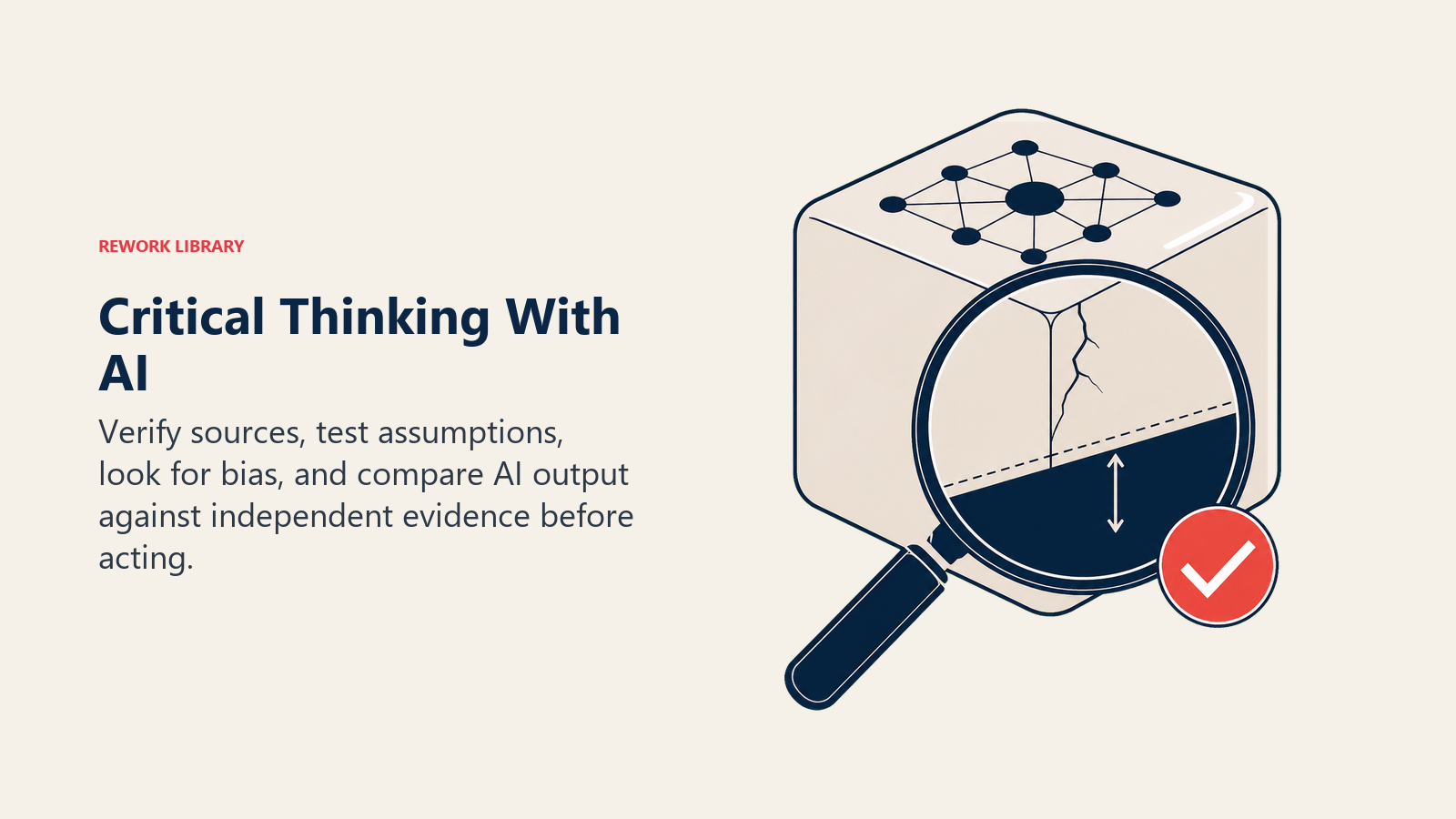
KI-Grenzen verstehen
KI kann selbstsicher falsch liegen. Große Sprachmodelle generieren plausibel klingende Texte, auch wenn die Fakten falsch sind. Verifizieren Sie wichtige Aussagen stets, besonders Statistiken, Zitate und technische Details.
KI spiegelt Training Data-Biases wider. Wenn historische Daten Biases enthalten, werden KI-Ergebnisse das ebenfalls tun. Seien Sie besonders vorsichtig, wenn KI an Entscheidungen beteiligt ist, die Menschen betreffen.
KI fehlt Common Sense und Kontext. Sie weiß nichts über die gestrige Unternehmensankündigung, die internen Witze Ihres Teams oder die unausgesprochenen Bedenken des Kunden. Diesen Kontext müssen Sie liefern.
KI optimiert für Muster, nicht für Wahrheit. Sie generiert, was statistisch wahrscheinlich ist basierend auf Trainingsdaten, was nicht immer korrekt oder für Ihre Situation angemessen ist.
Praktiken des kritischen Denkens
Fragen Sie sich: "Woran würde ich merken, wenn das falsch ist?" Bevor Sie KI-Ergebnisse akzeptieren, identifizieren Sie, wie Fehler aussehen würden, und prüfen Sie darauf.
Verifizieren Sie unabhängig. Konsultieren Sie bei wichtigen Fakten primäre Quellen. Lassen Sie KI nicht Ihre einzige Wahrheitsquelle sein.
Überlegen Sie, was KI nicht weiß. Denken Sie an Kontext, Beziehungen und aktuelle Entwicklungen, auf die KI keinen Zugriff hatte.
Testen Sie Randfälle. Wenn Sie KI für Analysen nutzen, prüfen Sie deren Ergebnisse anhand von Fällen, die Sie gut kennen, um Ihr Vertrauen zu kalibrieren.
Bauen Sie Ihr eigenes Wissen weiter auf. Lassen Sie Ihre Expertise nicht durch KI verkümmern. Lernen Sie kontinuierlich in Ihrem Fachbereich, damit Sie KI-Ergebnisse kompetent bewerten können.
Engagieren Sie Systemdenken. Überlegen Sie, wie KI-Empfehlungen in breitere Kontexte und Konsequenzen passen, die KI möglicherweise nicht berücksichtigt hat.
Die menschlichen Fähigkeiten, die KI nicht ersetzen kann
KI glänzt bei Mustererkennung, Informationsverarbeitung und Inhaltsgenerierung. Aber einige Fähigkeiten bleiben unverwechselbar menschlich. Und diese Fähigkeiten zu entwickeln macht Sie in einer KI-gestützten Welt wertvoller, nicht weniger.
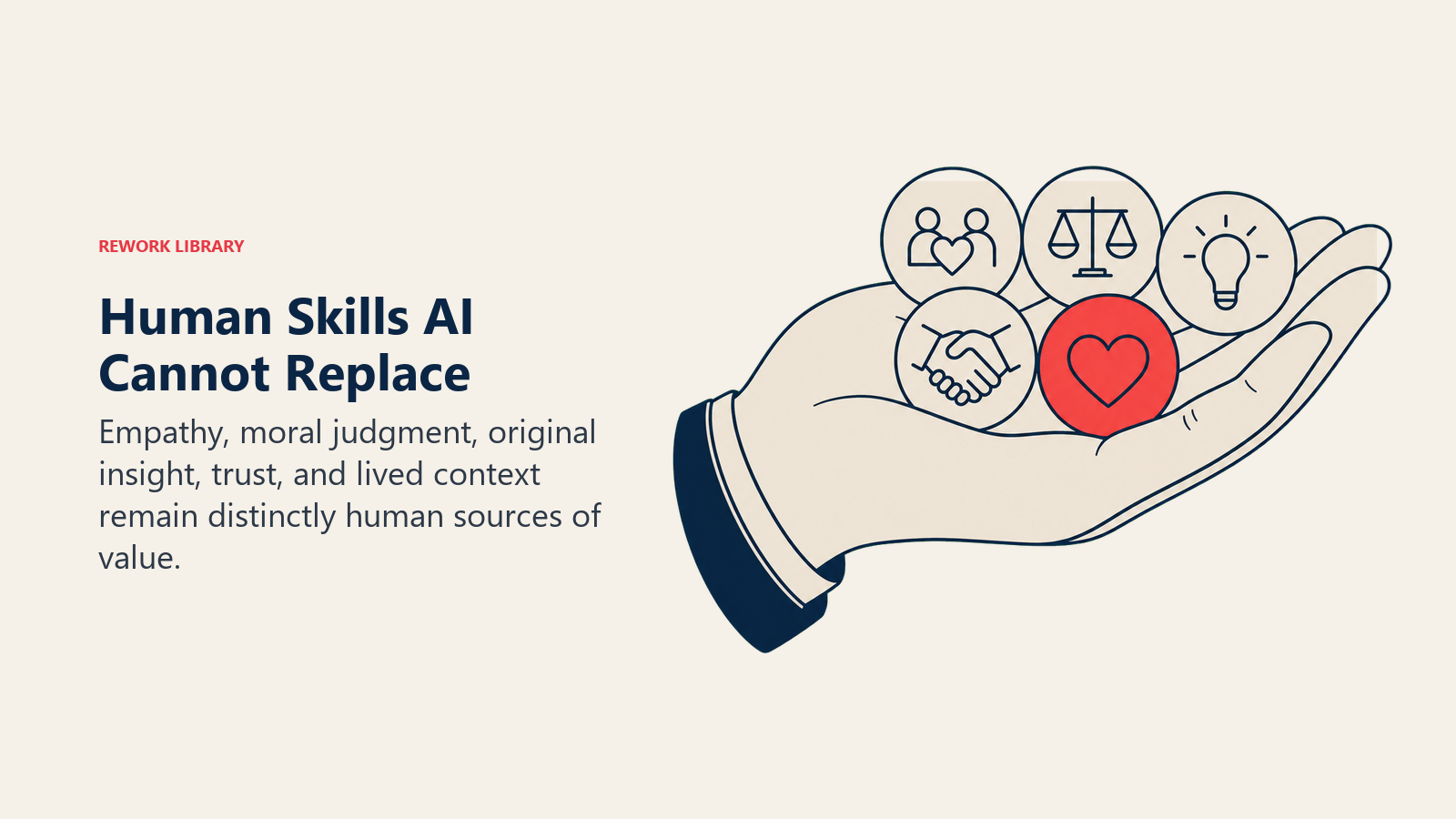
Kreativität und originelles Denken
KI rekombiniert bestehende Muster. Menschen schaffen genuinell neue Ideen, die nicht in Trainingsdaten existieren. Ihre Fähigkeit, sich Möglichkeiten vorzustellen, die noch nie existiert haben, Ideen auf unerwartete Weise zu verknüpfen und aus dem Nichts Bedeutung zu erschaffen? Das bleibt unersetzlich.
Entwicklungsschwerpunkt: Üben Sie divergentes Denken. Setzen Sie sich vielfältigen Ideen aus. Stellen Sie unerwartete Verbindungen her. Und lassen Sie KI Ihre Vorstellungskraft nicht einengen, nur weil Sie KI nach kreativen Ideen fragen.
Empathie und emotionale Intelligenz
Zu verstehen, was andere fühlen, Vertrauen aufzubauen und durch komplexe menschliche Dynamiken zu navigieren, erfordert echte menschliche Verbindung. KI kann Empathie in Texten simulieren, kann aber menschliche Erfahrungen nicht wirklich fühlen oder verstehen.
Entwicklungsschwerpunkt: Stärken Sie Ihre emotionale Intelligenz. Üben Sie aktives Zuhören. Bauen Sie echte Beziehungen auf. Diese Fähigkeiten werden wertvoller, wenn KI transaktionale Interaktionen übernimmt.
Ethisches Urteilsvermögen und Werte
KI kann Ihnen sagen, was wahrscheinlich oder effizient ist, aber nicht, was richtig ist. Entscheidungen, die konkurrierende Werte, Fairness und Menschenwürde umfassen, erfordern moralisches Denken, das KI schlicht nicht besitzt.
Entwicklungsschwerpunkt: Studieren Sie berufliche Ethik in Ihrem Fachbereich. Reflektieren Sie Ihre Werte. Üben Sie, schwierige Entscheidungen zu treffen, bei denen Richtig und Falsch nicht offensichtlich sind. Diese Fähigkeiten sind wichtiger, wenn KI alles optimieren kann, aber nicht entscheiden kann, was optimiert werden sollte.
Verantwortungsbewusstsein und Verantwortungsübernahme
Jemand muss für Ergebnisse einstehen. KI kann nicht zur Verantwortung gezogen werden, sich nicht bedeutungsvoll entschuldigen oder aus Misserfolgen so lernen wie Menschen. Ihre Bereitschaft, Verantwortung zu übernehmen, wird wichtiger, nicht weniger.
Entwicklungsschwerpunkt: Stehen Sie zu Ihrer Arbeit, auch wenn KI daran mitgewirkt hat. Verstecken Sie sich nicht hinter "die KI hat das gemacht." Ihr beruflicher Ruf hängt davon ab, Verantwortung zu übernehmen.
Vertrauen und Beziehungen aufbauen
Geschäftsleben basiert auf Vertrauen. Kunden engagieren Menschen, denen sie vertrauen. Teams sind erfolgreich, wenn Mitglieder einander vertrauen. KI kann Informationen liefern, aber nicht die menschliche Verbindung aufbauen, die echtem Vertrauen zugrunde liegt.
Entwicklungsschwerpunkt: Investieren Sie in Beziehungsaufbau. Seien Sie verlässlich und authentisch. Da KI mehr Transaktionen übernimmt, werden die verbleibenden menschlichen Beziehungen wertvoller.
Strategische Vision und Sinn
KI kann Daten analysieren und Metriken optimieren, aber nicht bestimmen, was wichtig ist. Richtung vorgeben, Erfolg definieren und andere für eine Vision begeistern? Das erfordert menschliche Führung und Sinnstiftung.
Entwicklungsschwerpunkt: Entwickeln Sie Ihre strategischen Denkfähigkeiten. Verbinden Sie Ihre Arbeit mit größeren Zielen. Helfen Sie anderen, Bedeutung in dem zu sehen, was sie tun. Diese Fähigkeiten werden unerlässlich, wenn KI mehr Ausführungsaufgaben übernimmt.
Teamzusammenarbeit mit KI-Tools
KI verändert nicht nur die individuelle Arbeit. Sie verändert auch die Funktionsweise von Teams. Hier ist, wie Sie KI-Kollaboration auf Teamebene erfolgreich gestalten.
Team-KI-Praktiken etablieren
Gemeinsame Richtlinien erstellen. Vereinbaren Sie, welche Aufgaben KI nutzen, welche Qualitätsstandards für KI-gestützte Arbeit gelten und wie Offenlegung gehandhabt wird. Das verhindert Verwirrung und sorgt für Konsistenz.
Rollen klar definieren. Wer evaluiert KI-Tool-Auswahl? Wer schult Teammitglieder? Wer hält Qualitätsstandards aufrecht? Klare Verantwortlichkeiten verhindern Lücken.
Kollektives Wissen aufbauen. Teilen Sie effektive Prompts, nützliche Workflows und gewonnene Erkenntnisse. Die Entdeckung einer Person kommt allen zugute.
Die menschliche Verbindung erhalten. Lassen Sie KI-Effizienz nicht Teamarbeit und Zusammenarbeit untergraben. Manche Gespräche sollten von Mensch zu Mensch bleiben.
Häufige Team-KI-Herausforderungen
Ungleichmäßige Einführung: Manche Teammitglieder nehmen KI an, während andere sich widersetzen. Lösung: Koppeln Sie Enthusiasten mit Skeptikern. Machen Sie KI-Lernen zu einer Teamaktivität. Feiern Sie kollektiven Fortschritt.
Qualitätsinkonsistenz: Verschiedene Personen nutzen KI unterschiedlich, was variable Ergebnisqualität erzeugt. Lösung: Etablieren Sie Teamstandards für KI-gestützte Arbeit. Überprüfen Sie frühe Ergebnisse zur Kalibrierung.
Übermäßige Abhängigkeit: Teammitglieder vertrauen KI möglicherweise zu sehr, was kritische Prüfung reduziert. Lösung: Integrieren Sie Verifikation in Workflows. Feiern Sie das Entdecken von KI-Fehlern. Halten Sie menschliche Expertise scharf.
Wissenserosion: Teams verlieren möglicherweise Fähigkeiten, die sie an KI ausgelagert haben. Lösung: Führen Sie Aufgaben regelmäßig ohne KI-Unterstützung durch. Bewahren Sie Kernkompetenzen. Dokumentieren Sie Expertise, bevor sie verblasst.
Team-Workflows optimieren
Überlegen Sie, welche Teamfunktionen am meisten von KI-Augmentierung profitieren:
- Meetingvorbereitung: KI fasst frühere Diskussionen und relevante Dokumente zusammen
- Dokumentation: KI entwirft Protokolle, Berichte und Updates zur menschlichen Überprüfung
- Recherche: KI sammelt Informationen, die Teammitglieder analysieren
- Kommunikation: KI hilft beim Entwerfen von Teamkommunikation für konsistente Botschaften
- Analyse: KI verarbeitet Daten, die Teammitglieder interpretieren
Diese Funktionen sollten jedoch menschenzentriert bleiben:
- Entscheidungsfindung: Endgültige Entscheidungen erfordern menschliches Urteilsvermögen und Verantwortungsbewusstsein
- Konfliktlösung: Zwischenmenschliche Probleme brauchen menschliche Behandlung
- Feedback und coaching: Entwicklungsgespräche erfordern echtes menschliches Engagement
- Strategiesitzungen: Richtungsvorgaben brauchen menschliche Vision und Werte
- Beziehungsaufbau: Vertrauen entwickelt sich durch menschliche Verbindung
Praxisbeispiele erfolgreicher KI-Kollaboration
Marketing Managerin transformiert Content-Produktion: Sarah verbrachte früher zwei Tage pro Woche damit, Social-Media-Inhalte zu schreiben. Jetzt nutzt sie KI, um erste Entwürfe basierend auf ihrem Content-Kalender und Brand-Richtlinien zu generieren. Sie verbringt etwa vier Stunden damit, zu verfeinern, Fakten zu prüfen und ihre authentische Stimme einzubringen. Das Content-Volumen stieg um das Dreifache, während die Qualität sich verbesserte, weil sie mehr Zeit für strategisches Denken und kreative Ausrichtung hat.
Finanzanalyst beschleunigt Reporting: Marcus fürchtete monatliche Reporting-Zyklen, die ganze Wochen beanspruchten. Er baute Workflows auf, bei denen KI Daten extrahiert, erste Analysen durchführt und narrative Zusammenfassungen entwirft. Er konzentriert sich auf die Interpretation von Ergebnissen, die Identifizierung von Erkenntnissen und die Beratung von Führungskräften. Die Reporting-Zeit sank um 60 %, und seine Erkenntnisse wurden wertvoller, weil er Zeit zum tiefen Nachdenken hatte.
HR Business Partner verbessert Service: Elena bearbeitete täglich Dutzende von Mitarbeiteranfragen. Sie schulte KI, häufige Richtlinienfragen zu beantworten und erste Antworten auf komplexe Probleme zu entwerfen. Ihre Reaktionszeit verbesserte sich erheblich, und sie verbringt jetzt mehr Zeit mit strategischen Personalthemen statt mit transaktionalen Fragen. Die Mitarbeiterzufriedenheit mit HR stieg, weil Menschen schnellere Antworten erhalten und Elena für wichtige Gespräche verfügbarer ist.
Projektmanager verbessert Planung: David nutzte KI, um historische Projektdaten zu analysieren und Risikomuster zu identifizieren. Die KI half dabei, erste Projektpläne zu erstellen und potenzielle Probleme basierend auf früheren Projekten zu markieren. Seine Pläne wurden realistischer, und weniger Projekte stießen auf Überraschungen. Er schreibt KI zu, geholfen zu haben, Projektmanagement-Best Practices konsistenter anzuwenden.
Ihr 90-Tage-Entwicklungsplan für KI-Kollaboration
Tage 1 bis 30: Fundament
Woche 1: Erkunden
- Drei verschiedene KI-Tools für Arbeitsaufgaben ausprobieren
- Dokumentieren, was gut und was nicht gut funktioniert
- Eine wiederkehrende Aufgabe identifizieren, die für KI-Unterstützung geeignet ist
Woche 2: Lernen
- Grundlagen des Prompt Engineering studieren
- Durch bessere Eingaben bessere Ergebnisse erzielen üben
- Communities beitreten, die KI in Ihrem Beruf diskutieren
Woche 3: Anwenden
- Ersten KI-gestützten Workflow erstellen
- Zeiteinsparungen und Qualitätsauswirkungen verfolgen
- Notieren, wo KI-Ergebnisse erhebliche menschliche Verbesserung benötigten
Woche 4: Reflektieren
- Ihr Komfortniveau mit KI-Tools bewerten
- Fähigkeiten identifizieren, die Sie entwickeln möchten
- Ziele für den nächsten Monat setzen
Tage 31 bis 60: Integration
Woche 5 bis 6: Workflows aufbauen
- KI-Kollaborationsprozesse für Ihre häufigsten Aufgaben entwickeln
- Prompt-Vorlagen erstellen, die Sie wiederverwenden können
- Persönliche Qualitätsstandards für KI-gestützte Arbeit etablieren
Woche 7 bis 8: Fähigkeiten erweitern
- Ein fortgeschrittenes KI-Tool erlernen, das für Ihren Beruf relevant ist
- Kritische Bewertung von KI-Ergebnissen üben
- Kolleginnen und Kollegen bei der KI-Kollaboration unterstützen beginnen
Tage 61 bis 90: Optimierung
Woche 9 bis 10: Verfeinern
- Workflows basierend auf Erfahrung optimieren
- Schnellere Methoden für KI-Iteration und -Überprüfung entwickeln
- Bibliothek effektiver Prompts und Ansätze aufbauen
Woche 11 bis 12: Beitragen
- Erkenntnisse mit dem Team teilen
- Beim Etablieren von Team-KI-Praktiken helfen
- Weitere KI-Kollaborationsentwicklung planen
Häufige Fragen zur KI-Menschlichen Zusammenarbeit
Wird KI irgendwann meinen Job vollständig ersetzen?
Unwahrscheinlich für die meisten Berufsrollen. KI automatisiert typischerweise Aufgaben, nicht ganze Jobs. Die Rollen, die sich verändern, sind diejenigen, bei denen Fachkräfte KI-Fähigkeiten mit menschlichem Urteilsvermögen, Kreativität und Beziehungen verbinden. Konzentrieren Sie sich auf die Entwicklung der einzigartig menschlichen Fähigkeiten, die in diesem Leitfaden beschrieben werden, und KI wird Ihr Verstärker, nicht Ihr Ersatz.
Wie weiß ich, ob ich KI-Ergebnissen vertrauen kann?
Vertrauen Sie KI-Ergebnissen nie blind. Verifizieren Sie sachliche Aussagen unabhängig. Prüfen Sie auf logische Konsistenz. Berücksichtigen Sie, welchen Kontext KI nicht hatte. Testen Sie Ergebnisse anhand Ihrer Expertise. Betrachten Sie KI wie einen sehr schnellen Recherche-Assistenten, der manchmal selbstsicher Dinge erfindet. Sie würden die Arbeit Ihres Assistenten nicht ohne Überprüfung veröffentlichen.
Sollte ich offenlegen, wenn ich KI-Unterstützung genutzt habe?
Befolgen Sie die Richtlinien Ihrer Organisation und berufliche Normen. Generell sind Sie für Ihre Arbeit verantwortlich, unabhängig davon, wie sie produziert wurde. Wenn KI wesentlich zu Inhalten beigetragen hat, kann eine Offenlegung angemessen oder erforderlich sein. Wenn KI bei Recherche oder Entwurf geholfen hat, den Sie erheblich verfeinert haben, ist eine Offenlegung möglicherweise unnötig. Setzen Sie Urteilsvermögen ein und priorisieren Sie Transparenz bei Unsicherheit.
Was, wenn mein Unternehmen den KI-Tool-Einsatz einschränkt?
Respektieren Sie organisationale Richtlinien, die oft aus validen Sicherheits-, Rechts- oder Qualitätsgründen existieren. Konzentrieren Sie sich auf genehmigte Tools, wenn diese verfügbar sind. Setzen Sie sich für durchdachte KI-Richtlinien ein, die Innovation mit Risikomanagement balancieren. Entwickeln Sie inzwischen Ihre Fähigkeiten mit persönlichen KI-Tools für nicht berufsbezogenes Lernen.
Wie erhalte ich meine Expertise, wenn KI so viel übernimmt?
Üben Sie bewusst ohne KI-Unterstützung. Bleiben Sie durch traditionelles Lernen in Ihrem Fachgebiet aktuell. Nutzen Sie KI zur Augmentierung Ihrer Expertise, nicht zu deren Ersatz. Führen Sie Aufgaben gelegentlich manuell durch, um Ihre Fähigkeiten scharf zu halten. Ihre Expertise ist das, was Ihnen ermöglicht, KI-Ergebnisse zu bewerten und zu verbessern.
Wie fange ich am besten an, wenn ich gegenüber KI skeptisch bin?
Beginnen Sie mit risikoarmen Aufgaben, bei denen Fehler nicht viel ausmachen. Nutzen Sie KI, um etwas zu entwerfen, das Sie sowieso geschrieben hätten, und vergleichen Sie dann. Versuchen Sie KI für Brainstorming statt für endgültige Ergebnisse. Ihr Skeptizismus ist eigentlich gesund. Lassen Sie Erfahrung, nicht Hype, Ihre Sichtweise prägen.
Wie gehe ich mit Kolleginnen und Kollegen um, die KI-Kollaboration ablehnen?
Führen Sie durch Vorbild statt durch Predigen. Teilen Sie Ergebnisse, nicht Meinungen. Bieten Sie Hilfe ohne Urteil an. Denken Sie daran, dass Widerstand oft aus validen Bedenken über Qualität, Jobsicherheit oder Werte kommt. Gehen Sie direkt auf diese Bedenken ein. Manche werden sich überzeugen lassen, wenn sie Vorteile sehen. Andere werden es nicht, und das ist deren Entscheidung.
Was sind die größten Fehler, die Menschen bei der KI-Kollaboration machen?
KI-Ergebnissen ohne Verifikation zu sehr vertrauen. Zu wenig in Prompt-Qualität investieren. Kernfähigkeiten durch zu starke Delegation an KI verlieren. KI für Aufgaben nutzen, bei denen menschliches Urteilsvermögen unerlässlich ist. Die eigene Expertise nicht aufrechterhalten. KI als Magie behandeln statt als Tool mit spezifischen Fähigkeiten und Grenzen.
Wie wird sich KI-Kollaboration in den nächsten Jahren entwickeln?
Erwarten Sie, dass KI-Tools stärker in bestehende Software integriert, in spezialisierten Bereichen leistungsfähiger und für Nicht-Techniknutzer zugänglicher werden. Die Grundlagen dieses Leitfadens bleiben relevant. Die Fachkräfte, die erfolgreich sind, werden weiterhin diejenigen sein, die KI-Fähigkeiten mit menschlichem Urteilsvermögen, Kreativität und Verantwortungsbewusstsein verbinden.
Macht mich die Nutzung von KI weniger kreativ oder kompetent?
Nicht, wenn Sie sie durchdacht einsetzen. KI kann Kreativität tatsächlich steigern, indem sie Ihnen hilft, mehr Optionen zu erkunden und Blockaden zu überwinden. Der Schlüssel liegt darin, Ihre eigenen Fähigkeiten durch Übung zu erhalten und KI zur Augmentierung statt zum Ersatz Ihres Denkens zu nutzen. Ihre Kreativität und Kompetenz kommen von Ihnen. KI ist nur ein weiteres Werkzeug in Ihrem Werkzeugkoffer.
Handeln Sie: Ihre nächsten Schritte
KI-Menschliche Zusammenarbeit ist kein Ziel. Es ist eine fortlaufende Praxis, die sich weiterentwickelt, wenn Technologie fortschreitet und Ihre Fähigkeiten sich vertiefen. Die Fachkräfte, die erfolgreich sein werden, sind nicht diejenigen, die die heutigen spezifischen Tools meistern. Es werden diejenigen sein, die das Urteilsvermögen, die Anpassungsfähigkeit und die einzigartig menschlichen Fähigkeiten entwickeln, die die Zusammenarbeit wertvoll machen.
Starten Sie heute. Wählen Sie eine Aufgabe, die Sie diese Woche mit KI-Unterstützung erledigen werden. Gehen Sie dabei als Experiment vor. Beobachten Sie, was funktioniert, was nicht, und wie Sie es beim nächsten Mal besser machen könnten.
Bleiben Sie neugierig. Technologie wird sich weiter verändern. Ihre Fähigkeit, sich anzupassen und zu lernen, ist wichtiger als das Beherrschen eines bestimmten Tools.
Investieren Sie in menschliche Fähigkeiten. Je mehr KI kann, desto wertvoller werden Ihre Kreativität, Empathie und Ihr Urteilsvermögen. Vernachlässigen Sie diese nicht zugunsten technischer Fähigkeiten.
Übernehmen Sie Verantwortung. Sie sind für Ihre Arbeit verantwortlich, ob KI dabei geholfen hat oder nicht. Diese Verantwortung ist es, die menschliche Beteiligung unerlässlich macht.
Die Zukunft gehört denen, die lernen, neben KI als Partner zu arbeiten, statt gegen sie als Rivalen zu konkurrieren. Und diese Zukunft beginnt mit Ihrer nächsten Entscheidung, wie Sie Ihre Arbeit angehen. Machen Sie es zu einer kollaborativen.
Mehr erfahren: Wesentliche Kompetenzen für den Erfolg in der KI-Kollaboration
Effektive KI-Kollaboration aufzubauen verbindet sich mit vielen anderen beruflichen Fähigkeiten. Diese Kompetenzen stärken Ihre Fähigkeit, produktiv neben KI zu arbeiten:
Grundlegende Fähigkeiten
- Kritisches Denken - KI-Ergebnisse bewerten und fundierte Urteile fällen
- Entscheidungsfindung - Wissen, wann KI statt menschlichem Urteilsvermögen einzusetzen ist
- Digital Literacy - Sicher mit der Technologie umgehen, die KI-Tools antreibt
Menschenzentrierte Fähigkeiten
- Emotionale Intelligenz - Die menschliche Verbindung bewahren, die KI nicht liefern kann
- Teamarbeit - Effektiv in KI-gestützten Umgebungen zusammenarbeiten
- Kommunikation - Ideen klar über menschliche und KI-Kanäle ausdrücken
Wachstum und Anpassung
- Kontinuierliches Lernen - Auf dem neuesten Stand bleiben, wenn KI-Fähigkeiten sich entwickeln
- Anpassungsfähigkeit - Technologischen Wandel als Chance annehmen
- Growth Mindset - KI-Kollaboration als eine zu entwickelnde Fähigkeit betrachten

Senior Customer Retention Strategist
On this page
- Die Denkwende: Von Konkurrenz zu Zusammenarbeit
- Der 5-Stufen-Reifegrad-Rahmen für KI-Menschliche Zusammenarbeit
- Stufe 1: KI-Bewusster (Einstieg)
- Stufe 2: KI-Nutzer (Komfort aufbauen)
- Stufe 3: KI-Kollaborateur (Arbeitende Partnerschaft)
- Stufe 4: KI-Orchestrator (Strategische Integration)
- Stufe 5: KI-Stratege (Organisationale Transformation)
- Wann KI, wann menschliches Urteilsvermögen: Ein Entscheidungsrahmen
- KI einsetzen, wenn:
- Auf menschliches Urteilsvermögen vertrauen, wenn:
- Die Kollaborationszone
- Effektive Mensch-KI-Workflows aufbauen
- Das PAIR-Rahmenwerk für KI-Kollaboration
- Beispiel-Workflows nach Aufgabentyp
- Kritisches Denken in einer KI-gestützten Welt bewahren
- KI-Grenzen verstehen
- Praktiken des kritischen Denkens
- Die menschlichen Fähigkeiten, die KI nicht ersetzen kann
- Kreativität und originelles Denken
- Empathie und emotionale Intelligenz
- Ethisches Urteilsvermögen und Werte
- Verantwortungsbewusstsein und Verantwortungsübernahme
- Vertrauen und Beziehungen aufbauen
- Strategische Vision und Sinn
- Teamzusammenarbeit mit KI-Tools
- Team-KI-Praktiken etablieren
- Häufige Team-KI-Herausforderungen
- Team-Workflows optimieren
- Praxisbeispiele erfolgreicher KI-Kollaboration
- Ihr 90-Tage-Entwicklungsplan für KI-Kollaboration
- Tage 1 bis 30: Fundament
- Tage 31 bis 60: Integration
- Tage 61 bis 90: Optimierung
- Handeln Sie: Ihre nächsten Schritte
- Mehr erfahren: Wesentliche Kompetenzen für den Erfolg in der KI-Kollaboration
- Grundlegende Fähigkeiten
- Menschenzentrierte Fähigkeiten
- Wachstum und Anpassung