Best Bank Reconciliation Software in 2026: 15 Tools Compared for Finance Teams
Turn this article into takeaways for your work.


Each assistant summarizes the article only for you and suggests best practices for your work.
Every price below is either quoted from the vendor's own pricing page, or stated plainly as unpublished, with third-party contract data labelled and sourced where it exists.
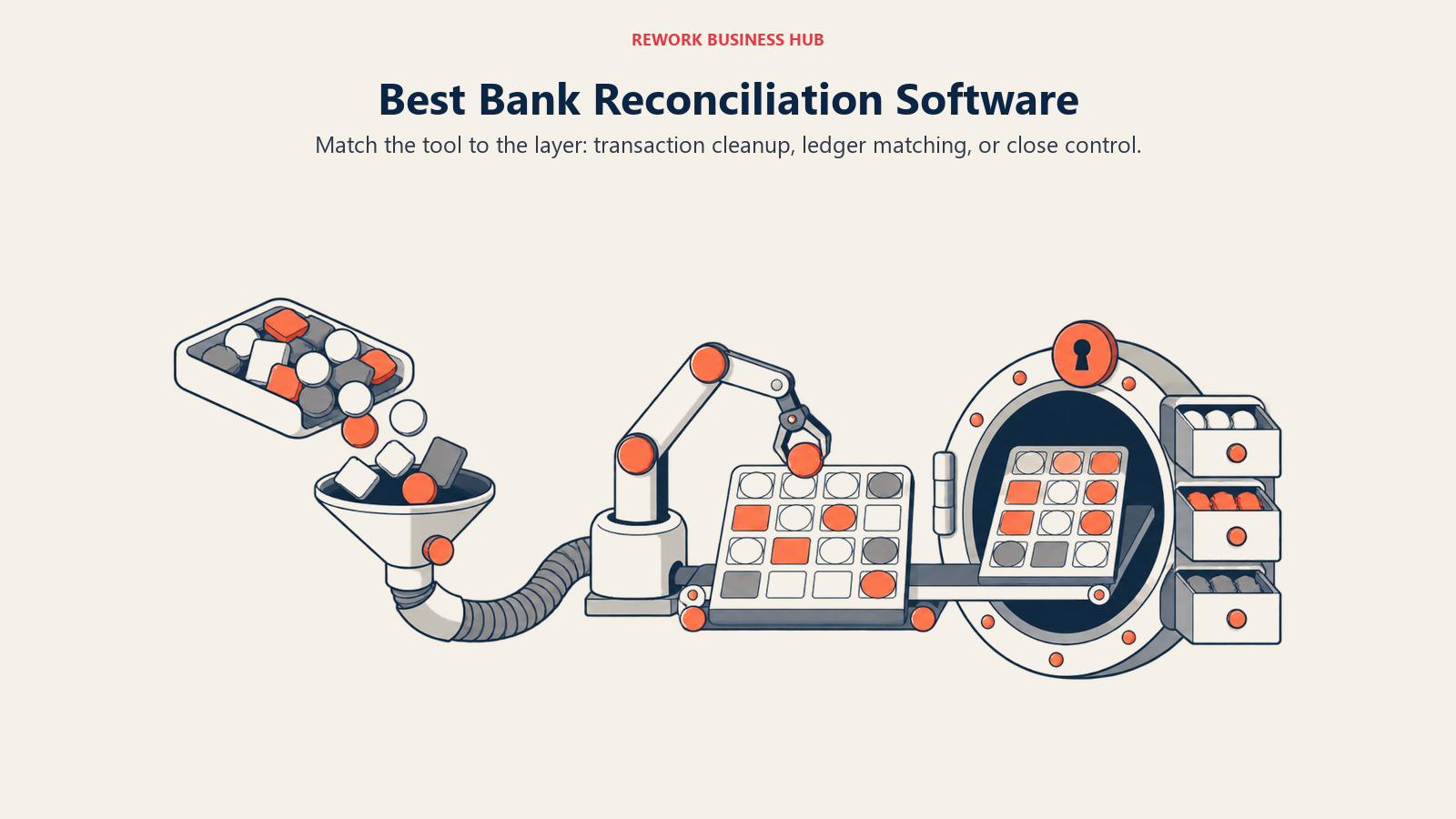
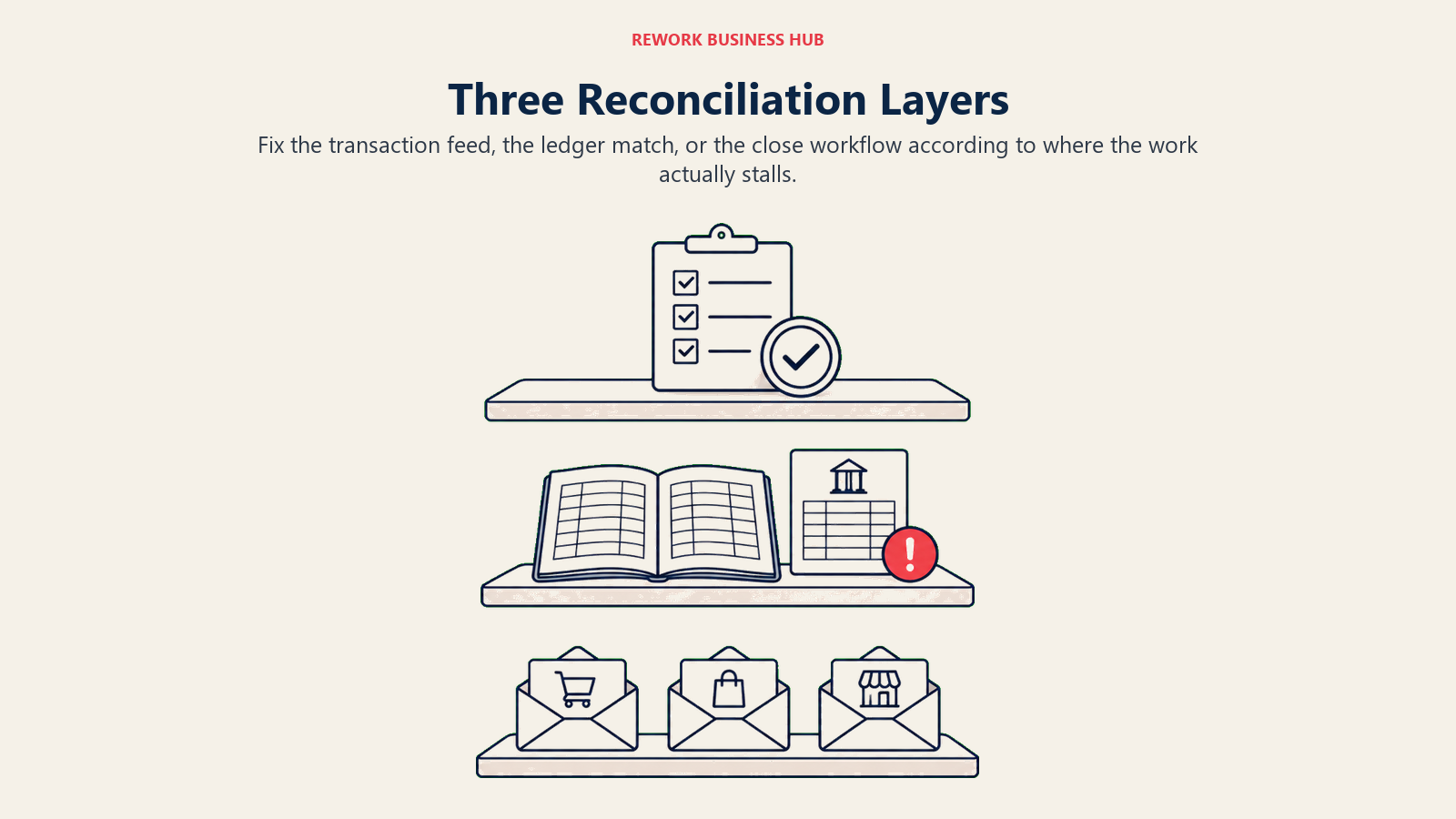
The best bank reconciliation software depends on a question most buyers never ask out loud: which layer of the problem are you actually trying to fix? If you just need your bank feed to match your ledger every month, QuickBooks Online, Xero, Zoho Books, Sage Intacct, and NetSuite already do that as part of what you are paying them for. If the real pain is a close process that eats a week of every month across a dozen accounts and three people chasing spreadsheets, you need a close-management layer like FloQast, Numeric, BlackLine, Trintech, or ReconArt that sits on top of the ledger you already run. And if your mess is upstream of the bank feed entirely, a hundred Shopify payouts, Stripe fees, and Amazon settlements that never map cleanly to a single deposit, you need a transaction-feed tool like A2X, Synder, Bookkeep, Dext, or Modern Treasury to make the feed reconcilable before anyone even opens a reconciliation screen.
This guide compares 15 tools across all three categories, because most "best reconciliation software" roundups collapse them into one ranking and end up comparing a $0 accounting package against a six-figure enterprise close platform as though they solve the same problem. They don't, and buying the wrong layer is the single most common mistake in this category. If your reconciliation pain is really an unpaid-bill or vendor-payment problem rather than a bank-matching one, see best AP automation software instead, or best Stampli alternatives if invoice approval speed specifically is the bottleneck. If the whole spend stack is under review, start with best spend management software.
Key Facts
Key Facts: What Reconciliation and the Close Actually Cost
- Half of finance teams need six or more business days to close the books each month, and only 18% close in three business days or less, per Ledge's 2025 survey of 100 finance professionals (Ledge).
- Cash reconciliation alone eats 20 to 50 hours a month for many finance teams, spread across three to five separate systems that all need to agree (Ledge).
- 94% of finance teams still lean on Excel somewhere in their close process, and half say it is a direct reason their close runs slow (Ledge).
- Account reconciliation catches only about 5% of occupational fraud cases, far behind tips at 43% and internal audit at 14%, meaning a reconciliation process that only checks totals misses most of what it is supposed to catch (ACFE 2024 Report to the Nations).
- Median contract value for a dedicated account-reconciliation platform like BlackLine runs about $40,125 a year across tracked deals, with most landing between $13,154 and $101,000, which is the real budget range buyers should plan against rather than a marketing number (Vendr).
Which Kind of Bank Reconciliation Tool Do You Actually Need?
"Bank reconciliation software" is really three different product categories wearing the same search term, and almost every roundup that ranks them against each other is comparing apples to spreadsheets. Work out which row you are in before you look at a single price.
| Category | What It Actually Does | Who Needs It | Tools in This Guide |
|---|---|---|---|
| General ledger with reconciliation built in | Matches bank feed transactions against ledger entries as one feature inside the accounting system you already run | Companies that have not outgrown a single ledger and just need the bank tab to balance every month | QuickBooks Online, Xero, Sage Intacct, NetSuite, Zoho Books |
| Close-management and account-reconciliation platform | Sits on top of your existing ERP or ledger and manages the whole close: reconciliation checklists, sign-off workflow, flux analysis, audit trail | Finance teams of 5 or more where the close itself, not just the bank tab, has become the bottleneck | FloQast, Numeric, BlackLine, Trintech (Adra and Cadency), ReconArt |
| Transaction-feed and settlement tool | Turns a pile of marketplace payouts, processor fees, and multi-channel transactions into a clean summary journal entry your ledger can actually reconcile against | Ecommerce sellers and multi-channel businesses whose real problem is upstream of the bank feed | A2X, Synder, Bookkeep, Dext, Modern Treasury |
The mistake that shows up constantly in vendor selection: a 40-person company with a messy Amazon and Shopify feed buys BlackLine because it's the most famous name in "reconciliation," when what they actually needed was A2X or Synder to clean up the feed before it ever hits the ledger. Or a startup with a single bank account and one entity buys FloQast because a close-management platform sounds more serious than "just use the bank feed in QuickBooks," when their real problem was that nobody had turned reconciliation on yet. Name your actual bottleneck first. The rest of this guide is organized in that order: general ledgers first, close-management platforms second, feed and settlement tools third. If the general ledger itself, not the reconciliation layer on top of it, is what is actually under review, see best accounting software for that broader decision.
Quick Comparison Table
| Tool | Category | Best For | Starting Price | Key Strength | Key Limitation |
|---|---|---|---|---|---|
| QuickBooks Online | General ledger | Small businesses wanting reconciliation built into the ledger | Free (1 user); Simple Start $38/mo | Genuinely free 1-user tier plus automatic bank-feed matching | Reconciliation is a feature, not a system; no close workflow or sign-off |
| Xero | General ledger | Small and growing businesses wanting no per-user fees | Early $25/mo | Unlimited users on every plan, strong bank-rule matching | Early plan caps invoices and bills; deeper reconciliation needs an add-on |
| Sage Intacct | General ledger | Mid-market companies needing multi-entity reconciliation inside the ERP | Quote-only, no published price | Multi-entity, multi-currency reconciliation as a core ERP capability | No price page; every evaluation starts with a sales conversation |
| NetSuite | General ledger | Mid-market to enterprise companies standardizing on one ERP | Quote-only, no published price | Reconciliation embedded in a full financial and operational suite | Pricing opacity is extreme even by enterprise-software standards |
| Zoho Books | General ledger | Budget-conscious small businesses that still want real reconciliation | Free (1 user, under $50K revenue) | Bank reconciliation included on every tier, including free | Free tier revenue cap; higher tiers needed for multi-entity work |
| FloQast | Close management | Teams already on QuickBooks, NetSuite, or Intacct that want the close itself managed | Quote-only, no per-user fee | Sits on top of your existing ERP without replacing it | No price page; Vendr data shows real deals from about $10K to $69K a year |
| Numeric | Close management | Growing teams on QuickBooks or Xero wanting AI-assisted auto-reconciliation | Essentials from $30/user/mo | Published entry price, unusual in this category | Growth and Enterprise tiers, where the automation lives, are quote-only |
| BlackLine | Close management | Enterprises with high account volume needing the close-automation category leader | Quote-only, no published price | Deepest, most audited account-reconciliation platform on the market | Vendr data shows median contracts near $40,125 a year, six figures at enterprise scale |
| Trintech (Adra and Cadency) | Close management | Mid-market (Adra) to enterprise (Cadency) teams wanting a BlackLine alternative | Quote-only, no published price | Two tiers of the same reconciliation lineage for different company sizes | No price page; per-user estimates run $55 to $95 a month for the core bundle |
| ReconArt | Close management | Mid-market and public-sector teams wanting transparent, edition-based pricing | Quote-only tiers, no published dollar figures | Fixed edition tiers with no surprise upgrade fees | Specific prices still require a conversation to confirm |
| A2X | Transaction feed | Amazon, Shopify, and Walmart sellers needing clean settlement summaries | From $29/mo per channel | Purpose-built for marketplace settlement accounting | Priced per sales channel; multi-channel sellers stack multiple subscriptions |
| Synder | Transaction feed | Multi-channel ecommerce sellers syncing many payment processors at once | Entry tier around $52 to $65/mo (reported) | Broadest processor and channel integration list in this category | Vendor pricing page did not expose machine-readable dollar figures at time of writing |
| Bookkeep | Transaction feed | Ecommerce sellers wanting fully published, transparent pricing | $19/mo (Lite) | Every tier and add-on fee is published with no sales call required | Higher tiers needed quickly once revenue or channel count grows |
| Dext | Transaction feed | Bookkeepers and firms wanting receipt capture plus bank statement extraction | $25.21/mo (Business, annual) | Strong document and bank statement extraction accuracy | Practice/partner tier has no published per-client rate |
| Modern Treasury | Transaction feed | Fintechs and platforms needing ledger-grade reconciliation infrastructure | Usage-based, no fixed list price | Built for payment-operations teams, not just accounting teams | Not a fit for a traditional finance team; this is engineering-adjacent infrastructure |
Pricing Models: What You Are Actually Buying
Two tools that look similarly priced on a comparison chart can bill in completely different ways, and the model matters more than the headline number once you add real volume.
| Pricing Model | How It Bills | Tools Using It | Watch Out For |
|---|---|---|---|
| Per user, per month, published | Scales with headcount, price visible on the site | QuickBooks Online, Xero, Zoho Books, Numeric (Essentials only) | Xero charges no per-user fee at all, which changes the math fast past 5 users |
| Per channel or per integration | One subscription per sales channel or accounting connection | A2X, Bookkeep (per channel add-ons) | Multi-channel sellers stack several subscriptions, not one |
| Tiered flat fee, published | Fixed monthly price per tier regardless of user count | Bookkeep, Dext (Business) | Read what triggers the next tier: document volume, revenue, or channel count |
| Usage-based | Priced by transaction volume, payment volume, or API calls | Modern Treasury | Hard to estimate without real volume data; ask for a usage-based worksheet |
| Quote-only, no published mechanism | Every price negotiated per deal, per module, per user count | Sage Intacct, NetSuite, FloQast, BlackLine, Trintech, ReconArt, Dext (Partner/Practice) | Treat any number you see in a third-party guide as reported, not confirmed, and get a written quote |
The quote-only column is longer in this category than in most, because account-reconciliation and close-management software is sold the way enterprise software has always been sold: scoped to entity count, transaction volume, and module mix, not listed on a website. That is not a red flag by itself, it is simply the norm once you are past a single-ledger tool, but it does mean budgeting time for a real sales conversation before you can compare two quote-only vendors honestly.
Stage Fit Matrix
Company size is a rough proxy here. Account volume, entity count, and channel count predict fit better than headcount alone, but size is still the fastest first filter.
| Tool | Startup (1-10) | Growth (10-50) | Mid-Market (50-200) | Enterprise (200+) |
|---|---|---|---|---|
| QuickBooks Online | Strong fit | Strong fit | Possible | - |
| Xero | Strong fit | Strong fit | Possible | - |
| Sage Intacct | - | Possible | Strong fit | Strong fit |
| NetSuite | - | Possible | Strong fit | Strong fit |
| Zoho Books | Strong fit | Strong fit | Possible | - |
| FloQast | - | Possible | Strong fit | Strong fit |
| Numeric | Possible | Strong fit | Strong fit | Possible |
| BlackLine | - | - | Possible | Strong fit |
| Trintech (Adra and Cadency) | - | Possible | Strong fit | Strong fit |
| ReconArt | - | Possible | Strong fit | Strong fit |
| A2X | Strong fit | Strong fit | Strong fit | Possible |
| Synder | Strong fit | Strong fit | Possible | - |
| Bookkeep | Strong fit | Strong fit | Strong fit | Possible |
| Dext | Strong fit | Strong fit | Strong fit | Possible |
| Modern Treasury | - | Possible | Strong fit | Strong fit |
Sizing and Persona Table
Who actually owns the buying decision, and where each vendor is strongest, matters as much as headcount.
| Tool | Ideal Fit | Primary Buyer | Notes |
|---|---|---|---|
| QuickBooks Online | 1-50 employees | Owner, bookkeeper, controller | The default ledger for US small business |
| Xero | 1-50 employees | Owner, bookkeeper, controller | Strong outside the US; no per-user fee |
| Sage Intacct | 50-2,000 employees, multi-entity | Controller, CFO | Common in nonprofits, healthcare, and franchises |
| NetSuite | 50-5,000+ employees | CFO, VP Finance, IT | Full ERP; reconciliation is one module among many |
| Zoho Books | 1-50 employees | Owner, bookkeeper | Best fit for teams already using other Zoho products |
| FloQast | 20-2,000 employees | Controller, Accounting Manager | Built by former auditors; strong audit-trail story |
| Numeric | 10-500 employees | Controller, Assistant Controller | Modern, AI-forward challenger to FloQast |
| BlackLine | 500-50,000+ employees | Controller, VP Finance, CAO | The incumbent enterprise standard, SOX-heavy environments |
| Trintech (Adra and Cadency) | 100-10,000+ employees | Controller, VP Finance | Adra for mid-market, Cadency for large enterprise |
| ReconArt | 50-5,000 employees | Controller, Treasury Manager | Common in banking, insurance, and government |
| A2X | Amazon, Shopify, Walmart sellers of any size | Ecommerce owner, bookkeeper | Priced and built around one marketplace at a time |
| Synder | Multi-channel ecommerce sellers, 1-200 employees | Ecommerce owner, bookkeeper, accountant | Broadest processor and platform coverage in this list |
| Bookkeep | Ecommerce sellers, 1-200 employees | Ecommerce owner, outsourced bookkeeper | Fully transparent, self-serve pricing |
| Dext | Bookkeeping and accounting firms, any client size | Bookkeeper, accounting firm partner | Sold to firms managing many clients, not single companies |
| Modern Treasury | Fintechs, marketplaces, platforms | Head of Finance Engineering, Treasury | The only tool here sold primarily to engineering teams |
1. QuickBooks Online: The Default Ledger, Reconciliation Included
QuickBooks Online is where most US small businesses reconcile their bank accounts, not because it is the deepest reconciliation tool on this list but because it is the ledger they are already running. Bank feeds connect directly to checking, savings, and credit card accounts, transactions get auto-categorized against rules the business sets, and the reconciliation screen matches statement balances against booked transactions one account at a time. For a company with one or two entities and a handful of bank accounts, that built-in workflow covers the job without a second subscription.
The 2026 product also added something new: a genuinely free, one-user tier, alongside the paid Simple Start through Advanced plans that scale by user count and feature depth. What QuickBooks does not do is manage a close as a process. There is no sign-off workflow, no flux analysis, no audit trail built for a controller managing five people through a five-day close. Once a company outgrows single-account reconciliation, it typically adds a close-management layer like FloQast or Numeric on top of QuickBooks rather than replacing it.
| What you get | What you don't |
|---|---|
| Bank reconciliation included on every paid tier, and even the free tier | No close-management workflow, checklist, or sign-off process |
| A genuinely free 1-user tier, new in 2026 | Multi-entity reconciliation is limited without QuickBooks Enterprise or a third-party add-on |
| Automatic bank-feed matching and categorization rules | Reconciliation is one feature among many, not a dedicated system |
| The most widely supported target for other tools' integrations | A "90% off for 3 months" promotion running at time of writing is not the list price |
Pricing: Free is $0 per month for 1 user. Simple Start is $38 per month for 1 user. Essentials is $85 per month for 3 users. Plus is $140 per month for 5 users. Advanced is $340 per month for 25 users. A promotional rate of 90% off for 3 months was running on Intuit's site, with the promotion's own page showing an end date; that discount is not the list price above. Intuit has also announced a QuickBooks Online renewal-price change effective August 1, 2026, without publishing specific dollar amounts, so expect the renewal price on an existing subscription to differ from a new signup's list price. All figures from QuickBooks Online's own pricing page.
Best for: Single-entity small businesses that want reconciliation built into the ledger they already use, without a second subscription. If your real gap is employee spend and expense tracking rather than bank matching, see best expense management software.
2. Xero: No Per-User Fees, Strong Bank Rules
Xero's pitch to a growing company is simple: unlimited users on every plan, no per-seat fee ever, which changes the reconciliation conversation the moment more than a couple of people need access to the books. Bank feeds import daily, bank rules auto-match recurring transactions like rent or payroll fees, and the "find and match" screen handles the same core reconciliation job QuickBooks does, matching a bank statement line against a coded transaction until the account balance is true.
Where Xero differs structurally from QuickBooks is plan design. Early, the entry tier, caps a business at 20 invoices and 5 bills a month, which is a real constraint for anything beyond a very small operation, while Growing removes that cap and Established adds multi-currency and a longer cash flow forecast window. None of the three tiers add a dedicated close-management layer. A company running multi-entity reconciliation or wanting sign-off workflow on top of Xero adds a tool like Numeric or FloQast, the same pattern as QuickBooks.
| What you get | What you don't |
|---|---|
| No per-user license fee on any plan, ever | Early plan caps invoices and bills, a real limit past very small volume |
| Strong bank-rule automation for recurring transactions | No close-management, sign-off, or audit-trail workflow |
| Multi-currency and a 180-day cash flow forecast on Established | Multi-entity reconciliation still needs a third-party add-on at scale |
| A "90% off first 6 months" promotion running at time of writing is not the list price | Established, the top tier, still lacks true enterprise controls |
Pricing: Early is $25 per month, including 20 invoices, 5 bills, and a 30-day cash flow forecast. Growing is $55 per month, removing the invoice and bill caps and adding dashboards. Established is $90 per month, adding multi-currency, projects, expense claims, and a 180-day forecast. Xero charges no per-user fee on any plan. A promotion offering 90% off for the first 6 months for purchases made by September 30, 2026, was live at time of writing (Early at $2.50, Growing at $5.50, Established at $9 for six months); that is a promotional rate, not the list price. All figures from Xero's own pricing page.
Best for: Growing businesses that want reconciliation and bookkeeping access for more than one or two people without per-seat fees stacking up. Still deciding between the two US-market leaders? See QuickBooks vs Xero for the direct comparison.
3. Sage Intacct: Multi-Entity Reconciliation Inside a Real ERP
Sage Intacct is where a company lands once QuickBooks or Xero's single-entity model stops matching how the business actually operates, multiple entities, multiple locations, or fund accounting for a nonprofit that needs each fund reconciled and reported separately. Bank reconciliation in Intacct works across that multi-entity structure natively: transactions post into the right entity's ledger, and reconciliation happens per bank account per entity, with consolidated reporting rolling the results up. That is a materially different job than reconciling one QuickBooks file, and it is the reason mid-market finance teams migrate to Intacct even when the bank-matching mechanics look similar on the surface.
The tradeoff is pricing opacity and implementation weight. Sage does not publish a price list or starting figure for Intacct; the company states plainly that pricing is tailored to the modules and organization size, and every real number comes out of a sales conversation. Implementation is also a project, not a signup, typically involving a partner or Sage's own services team to configure the entity structure, chart of accounts, and integrations before reconciliation work even begins.
| What you get | What you don't |
|---|---|
| Multi-entity, multi-currency reconciliation as a core ERP capability | No published pricing at any tier |
| Fund accounting depth that fits nonprofits and grant-funded organizations | Implementation is a multi-week to multi-month project, not a signup |
| Strong audit trail and role-based controls for growing finance teams | Overkill for a single-entity small business with simple reconciliation needs |
| A large partner and integration ecosystem | Every evaluation starts with a sales conversation, no self-serve trial pricing |
Pricing: Quote-only. Sage Intacct's own pricing page states that pricing is tailored to the modules an organization selects and that a custom quote requires contacting Sage directly; no starting price or tier structure is published.
Best for: Multi-entity companies, nonprofits, and organizations with fund accounting needs that have outgrown a single-ledger tool like QuickBooks or Xero. For ERP alternatives if Intacct's cost or complexity does not fit, see best NetSuite alternatives.
4. NetSuite: Reconciliation as One Module in a Bigger Suite
NetSuite answers a different question than the other general ledgers on this list: not just how do we reconcile a bank account, but how do we run financials, inventory, order management, and reporting from one system across multiple subsidiaries. Bank reconciliation sits inside that broader financial management module, matching bank feed transactions against the general ledger the same way a dedicated tool would, but benefiting from sitting on top of a single source of truth for every other transaction type feeding the ledger, so fewer reconciling items originate from data that never made it into the system cleanly.
That breadth comes at the cost of pricing transparency taken to an extreme even for enterprise software. Oracle, which owns NetSuite, does not publish a price list anywhere, and two companies of similar size can receive very different quotes depending on modules, user count, and negotiated discount. A buyer evaluating NetSuite purely for its reconciliation capability, without needing the rest of the ERP, will likely find it more platform than the problem requires.
| What you get | What you don't |
|---|---|
| Reconciliation embedded in a full financial and operational ERP | No published pricing anywhere, not even a starting figure |
| Multi-subsidiary consolidation built for complex corporate structures | Implementation is a multi-month project involving a partner |
| A single source of truth reducing reconciling items from other modules | Overkill and overpriced for a company whose only problem is bank matching |
| A large ecosystem of add-ons, including dedicated reconciliation tools like Numeric | Real cost is opaque until deep into a sales cycle |
Pricing: Quote-only. NetSuite publishes no list price or pricing page with dollar figures; every deployment is scoped and quoted individually by Oracle or a NetSuite partner based on modules, user count, and subsidiary structure.
Best for: Mid-market to enterprise companies standardizing financials, inventory, and operations on one ERP, where reconciliation is one requirement among many rather than the primary problem. See best NetSuite alternatives if the ERP itself, not just reconciliation, is under review.
5. Zoho Books: Reconciliation on Every Tier, Including Free
Zoho Books makes a specific promise that neither QuickBooks nor Xero fully matches: bank reconciliation is included on every plan, from the free tier up through Ultimate, rather than being gated behind a paid upgrade. The free plan supports one user plus one accountant, up to 1,000 invoices a year, and remains free indefinitely as long as the business stays under $50,000 in annual revenue, a real, no-catch offer for a very small operation rather than a time-limited trial dressed up as free.
Beyond the free tier, Zoho Books scales the way most of the general ledgers on this list do, more users, more invoices, and deeper features at each step, with Premium adding cash flow forecasting and budget management and Ultimate adding advanced analytics with a 3-million-record capacity. For a company already invested in the wider Zoho product suite, CRM, Desk, or Zoho One, Books integrates natively in a way that gives it an edge over QuickBooks or Xero specifically for that buyer.
| What you get | What you don't |
|---|---|
| Bank reconciliation on every tier, including the free plan | Free plan capped at $50,000 annual revenue and 1 user |
| The most affordable paid entry point of any general ledger on this list | Less US brand recognition and third-party integration depth than QuickBooks |
| Native integration with the wider Zoho product suite | Multi-entity reconciliation still requires the higher tiers or a separate add-on |
| Annual billing discount available on every paid tier | Support quality and depth trail QuickBooks and Xero in most reviews |
Pricing: Free is $0 per month for 1 user plus 1 accountant, capped at $50,000 annual revenue. Standard is $20 per month or $15 per month billed annually, for 3 users. Professional is $50 per month or $40 per month annually, for 5 users. Premium is $70 per month or $60 per month annually, for 10 users. Elite is $150 per month or $120 per month annually, for 10 users. Ultimate is $275 per month or $240 per month annually, for 15 users. Bank reconciliation is included on every plan. All figures from Zoho Books' own pricing page.
Best for: Budget-conscious small businesses, especially those already using other Zoho products, that want real bank reconciliation without paying for it as an upgrade. If Zoho's ecosystem lock-in is not the right fit, see best Zoho Books alternatives.
6. FloQast: Close Management Built by Former Auditors, Priced Around Outcomes
FloQast's founders were auditors before they were software builders, and the product still reads that way: it does not replace your ERP's ledger or reconciliation, it wraps a checklist, sign-off workflow, and audit trail around the close process you already run in QuickBooks, NetSuite, Sage Intacct, or another general ledger. AutoRec, the account-reconciliation piece, can automate a large share of routine reconciliations, matching thousands of transactions against schedules like amortization tables or subledgers, which is the specific pain point that turns a five-day close into an eight-day close when it is done by hand in spreadsheets.
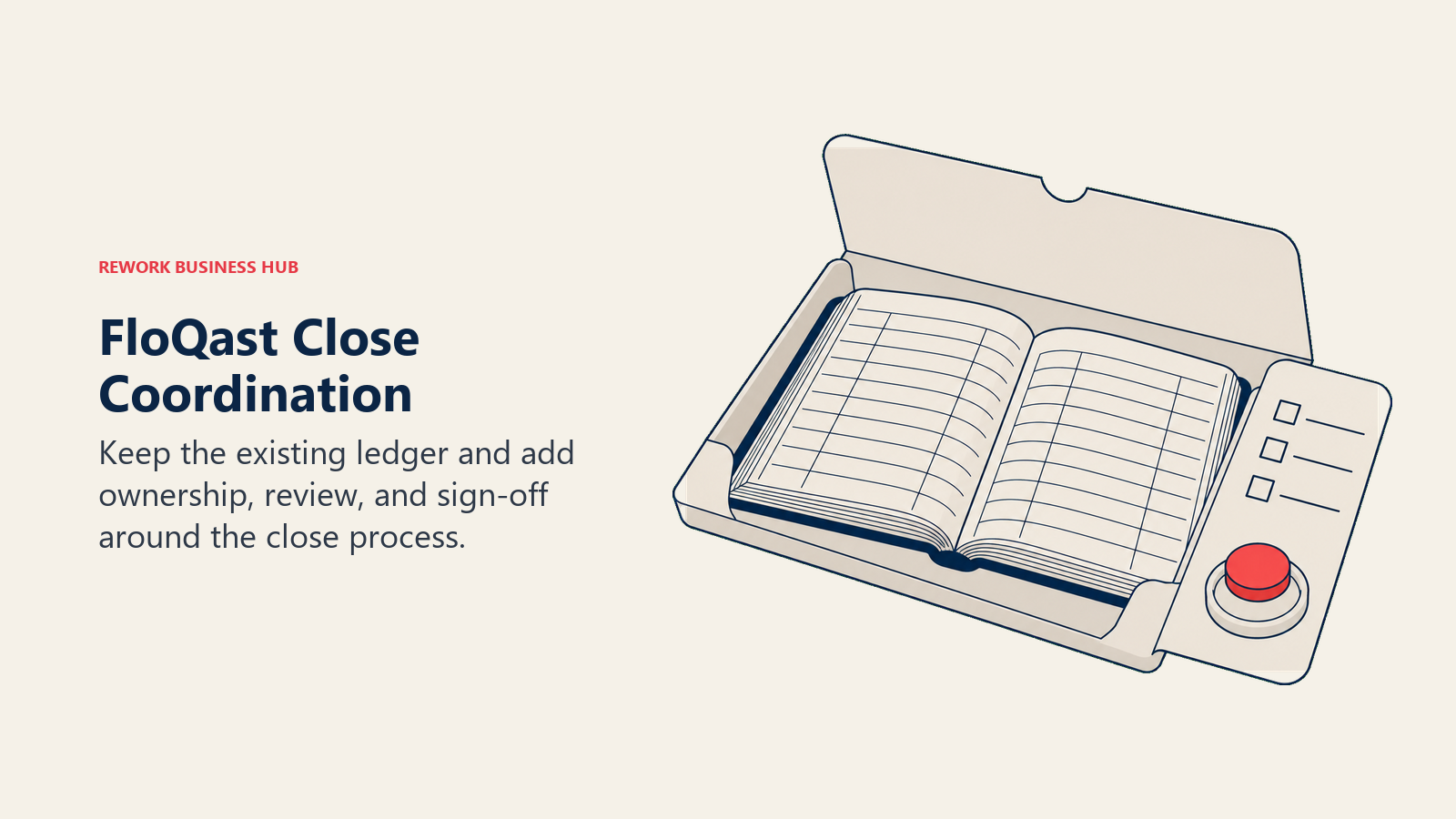
FloQast's pricing model is explicitly not per-user. The company states outright that it does not charge by seat and instead scopes packages, Close Optimization, Close Automation, Connected Compliance, Compliance Pro, FloQast Reporting, and FloQast Transform, to the organization's outcomes and scale. That is a genuinely different sales model than most of this list, but it also means there is no way to self-serve a price estimate from the website; real numbers only appear once a deal is actually being negotiated.
| What you get | What you don't |
|---|---|
| Sits on top of your existing ERP rather than replacing it | No price page, no per-user rate, no self-serve estimate |
| Reconciliation automation built specifically for repetitive, high-volume accounts | Vendr data on 312 tracked deals shows a real median near $24,481 a year |
| Strong audit-trail and sign-off workflow, built by auditors for auditors | Every evaluation requires a sales conversation and a scoping call |
| Six distinct packages that can be scoped to what you actually need | Package boundaries are not obvious without a demo |
Pricing: Quote-only. FloQast's own pricing page states "no per-user fees" and that packages are "built around value, not headcount," with every tier routed to a "Contact Sales" button and no published dollar figures. Third-party data from Vendr, which tracks anonymized buyer transactions, puts the median annual FloQast contract at $24,481 across 312 tracked purchases, with a range of roughly $10,147 to $68,727 (reported, Vendr).
Best for: Teams of 20 or more already running QuickBooks, NetSuite, or Sage Intacct that need the close process itself, not just the ledger, managed with a checklist and sign-off trail.
7. Numeric: The Modern, AI-Forward FloQast Challenger
Numeric is one of the newer entrants in close management, and it is the only tool in this category with a genuinely published entry price rather than a pure quote-only model, which by itself makes it worth a look for a team that wants to see real numbers before booking a demo. Essentials, the published tier, targets teams that mainly need visibility and organization around the close: project management, task segregation, Slack integration, and an AI assistant layered over the process.
The automation Numeric is actually known for, auto-reconciliation, AI bank statement parsing, ERP integration, and flux analysis, sits in the Growth tier, aimed at teams on QuickBooks and Xero, and the Enterprise tier, aimed at mature NetSuite users wanting continuous, controlled closes with transaction monitoring and live bank feeds. Both of those tiers revert to the same custom-quote model as every other close-management platform on this list, so the published Essentials price is useful context but not the number a growing team will actually pay once it needs the reconciliation automation.
| What you get | What you don't |
|---|---|
| A published starting price, unusual for this category | Growth and Enterprise, where the real automation lives, are quote-only |
| AI-assisted auto-reconciliation and bank statement parsing on Growth and up | Newer entrant with a shorter track record than FloQast or BlackLine |
| Built specifically for teams on QuickBooks, Xero, and NetSuite | Not built for Sage Intacct or less common ERPs |
| Vendr data shows a real median around $15,000 a year across tracked deals | Wide price range ($4,320 to $37,500) makes the median hard to plan against alone |
Pricing: Essentials starts at $30 per user per month, published on the vendor's site. Growth and Enterprise are custom-quoted, with Growth aimed at QuickBooks and Xero users wanting auto-reconciliation and AI bank statement parsing, and Enterprise aimed at NetSuite users wanting continuous close, transaction monitoring, and live bank feeds. All figures from Numeric's own pricing page. Third-party data from Vendr puts the median annual Numeric contract at $15,000 across 46 tracked purchases, with a range of roughly $4,320 to $37,500 (reported, Vendr).
Best for: Growing teams on QuickBooks, Xero, or NetSuite that want AI-assisted reconciliation automation from a modern challenger rather than an established incumbent.
8. BlackLine: The Enterprise Account-Reconciliation Standard
BlackLine is the name most controllers think of first when someone says "reconciliation software," and it earned that position by building the deepest, most audited account-reconciliation platform on the market, well before most of the tools on this list existed. The core Account Reconciliations product automates balance sheet reconciliation with certification workflows, while Transaction Matching handles high-volume automated matching, and Financial Close Management adds task management and variance analysis across the whole close. Large public companies use BlackLine specifically because its audit trail and controls satisfy SOX requirements that lighter tools were not built for.
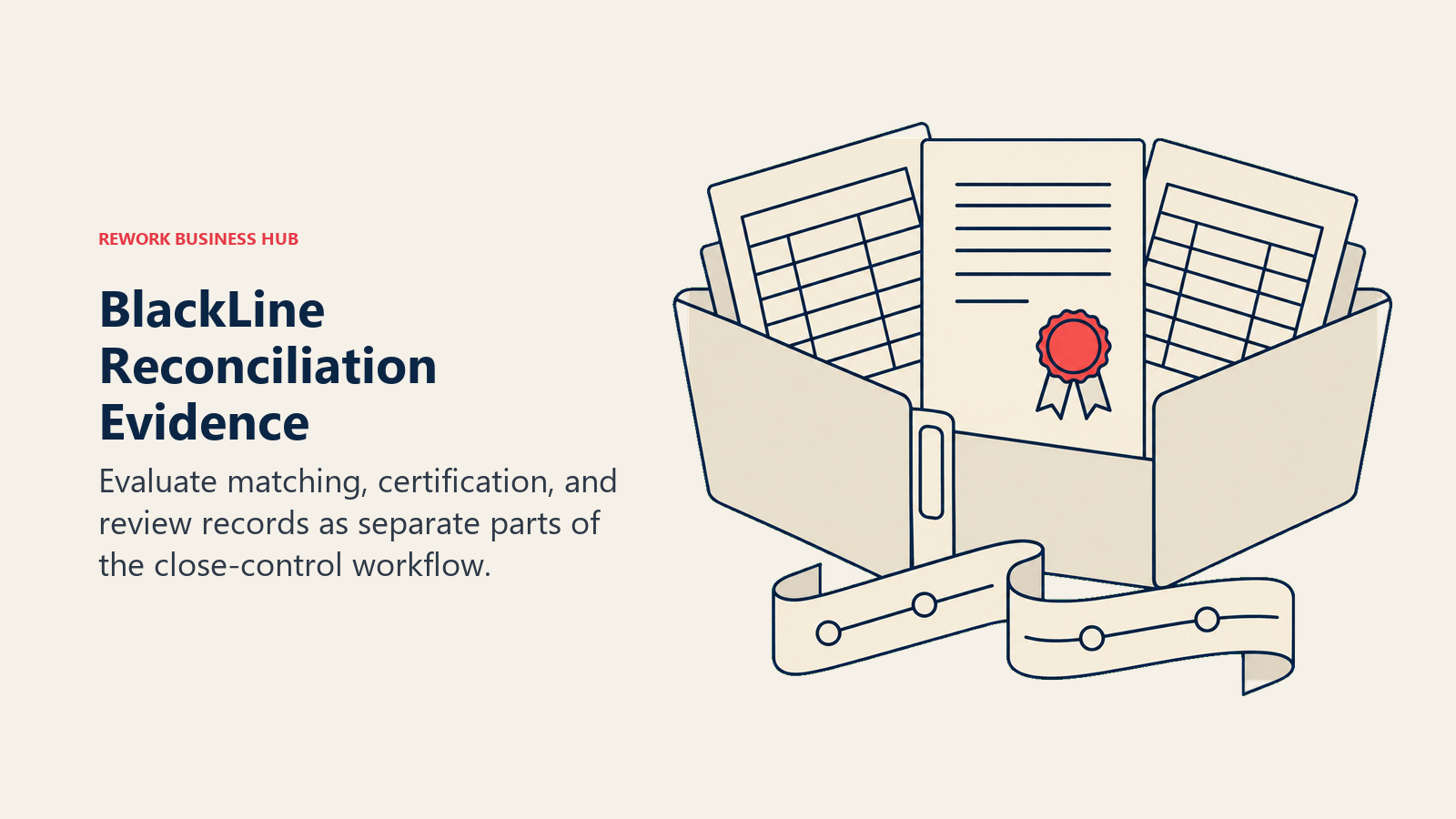
That depth comes at enterprise pricing and enterprise complexity. BlackLine does not publish a price list, and third-party contract data gives the clearest real-world picture: Vendr's tracked data across 74 purchases puts the median annual contract at $40,125, with most deals between $13,154 and $101,000, while SpendHound's separate dataset of 160 BlackLine customers shows SMB buyers averaging $46,318 a year and enterprise buyers averaging $541,209 a year. Implementation and professional services typically add 20% to 40% on top of the first year's subscription, so the software line item alone understates the real cost of adoption.
| What you get | What you don't |
|---|---|
| The deepest, most established account-reconciliation platform available | No published pricing at any tier |
| SOX-grade audit trail and certification workflow | Vendr and SpendHound data both show real costs starting in the tens of thousands |
| Modules for reconciliation, transaction matching, and close management | Implementation and professional services add 20-40% on top of year-one subscription |
| The category incumbent, trusted by large public companies | Overkill and overpriced for a company below roughly 500 employees |
Pricing: Quote-only. BlackLine publishes no list price for Account Reconciliations, Transaction Matching, or Financial Close Management. Third-party contract data from Vendr puts the median annual contract at $40,125 across 74 tracked purchases, with a range of $13,154 to $101,000 (reported, Vendr). Separate data from SpendHound, covering 160 BlackLine customers, shows SMB buyers (50-1,000 employees) averaging $46,318 a year and enterprise buyers (1,000+ employees) averaging $541,209 a year (reported, via Numeric's BlackLine pricing analysis).
Best for: Large enterprises, especially public companies with SOX obligations, that need the category's most established and deeply audited reconciliation platform and have the budget to match.
9. Trintech (Adra and Cadency): Two Tiers of the Same Reconciliation Lineage
Trintech is the closest thing BlackLine has to a direct, long-standing competitor, and it sells that competition through two distinct product lines aimed at different company sizes rather than one product with tiers. Adra, positioned for mid-market organizations roughly in the $100 million to $2 billion revenue range, bundles Balancer for account reconciliation and Task Manager for close-task tracking as its core anchor configuration, with Matcher available separately for transaction-volume matching. Cadency, the enterprise-tier platform, targets the same large, complex, multi-entity organizations BlackLine competes for.
Neither Adra nor Cadency publishes pricing, and Trintech's own pricing page was removed in a recent site redesign with no replacement live. Third-party analysis of real Adra contracts gives the closest thing to a usable number: a per-user range of roughly $55 to $95 a month for the Balancer plus Task Manager bundle, with total annual costs scaling from around $20,000 to $60,000 for a 15-to-40-user lower mid-market deployment up to $130,000 to $320,000 for 100-to-250 users.
| What you get | What you don't |
|---|---|
| Two tiers, Adra and Cadency, matched to mid-market versus enterprise scale | No pricing page at all; the prior one was removed in a redesign |
| A long-standing, established alternative to BlackLine | Third-party per-user estimates ($55-95/user/month) are not vendor-confirmed |
| ReconNET, Frontier, and Accurate round out a broader reconciliation product family | Overlapping product names (Adra, Cadency, ReconNET) can confuse a first-time buyer |
| Positioned specifically against BlackLine for competitive mid-market deals | Every evaluation requires a sales conversation with no self-serve estimate |
Pricing: Quote-only. Trintech has no public pricing page; Adra and Cadency are both sold through custom, quote-based contracts scoped to organization size and module mix. Third-party analysis from VendorBenchmark estimates the core Adra bundle (Balancer plus Task Manager) at $55 to $95 per user per month, with typical enterprise-scale annual costs in the $40,000 to $200,000 range depending on user count and modules (reported, VendorBenchmark).
Best for: Mid-market companies (Adra) to large enterprises (Cadency) wanting an established BlackLine alternative from the same competitive tier of the market.
10. ReconArt: Edition-Based Pricing Without the Enterprise Sticker Shock
ReconArt positions itself specifically against the pricing opacity that defines the rest of this category: a web-based reconciliation lifecycle platform covering transaction matching, account reconciliation, and financial close management, sold through four named editions rather than an open-ended custom quote. Essentials covers up to 25 million transactions a year with full matching, exceptions management, and process automation. Plus doubles the transaction ceiling to 50 million and adds period-end balance sheet reconciliation and certification. Certify focuses specifically on balance sheet reconciliation with configurable approval workflows, and Close bundles two or more financial close management modules, task management, variance analysis, and journal entries, into one edition.
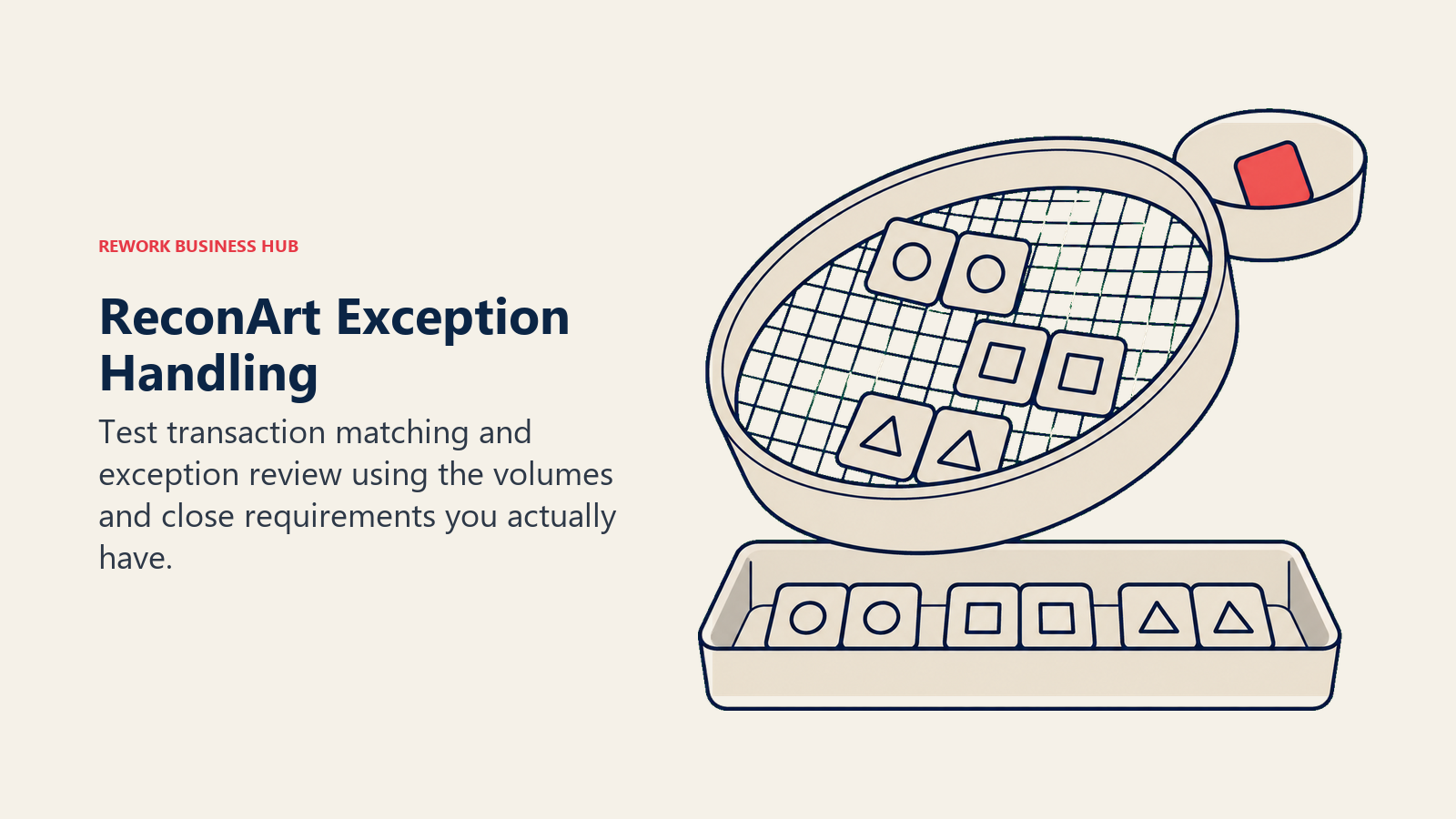
The company states plainly that implementation is sold as fixed 60-or-80-hour packages with no upgrade fees between major releases, which is a meaningfully different commercial promise than BlackLine or Trintech make. ReconArt still does not publish dollar figures for any edition, so "transparent" here means transparent tier boundaries and inclusions, not a visible price tag; real numbers still require a conversation, though third-party contract data suggests deals land well below BlackLine's enterprise range for comparable scope.
| What you get | What you don't |
|---|---|
| Four clearly named editions with defined transaction ceilings and features | No dollar figures published for any edition |
| Fixed-hour implementation packages and no upgrade fees between releases | Smaller brand recognition than BlackLine or Trintech |
| Serves banking, insurance, government, and CPA-firm fund accounting use cases | Vendr data shows real deals averaging near $49,532, still a real enterprise commitment |
| Multi-currency and fund-accounting support built in | Every price still requires a sales conversation to confirm |
Pricing: Quote-only across all four editions (Essentials, Plus, Certify, Close). ReconArt's own plans page publishes edition names, transaction ceilings, and included features but no dollar figures, stating "we'll work it out together" for edition selection. Third-party data from Vendr puts the average contract value at $49,531.81, with a total proposed price for a full deployment around $148,595.42 (reported, Vendr).
Best for: Mid-market and public-sector finance teams that want a defined, edition-based reconciliation platform without BlackLine's enterprise price tag, especially in banking, insurance, or fund accounting.
11. A2X: The One-Deposit-Per-Payout Fix for Marketplace Sellers
A2X solves a problem that has nothing to do with a bank feed being wrong and everything to do with a bank feed being unreconcilable in the first place. Amazon, Shopify, Walmart, and other marketplaces do not deposit one payment per sale, they batch hundreds or thousands of orders into a single payout, netted against fees, refunds, and reserves, so the number that lands in the bank account never matches any single invoice a bookkeeper can point to. A2X pulls the settlement data directly from each channel and posts a clean summary journal entry into QuickBooks Online, Xero, or NetSuite that maps precisely to that one payout, which is what makes the actual bank reconciliation step, matching the deposit against the entry, trivial afterward.
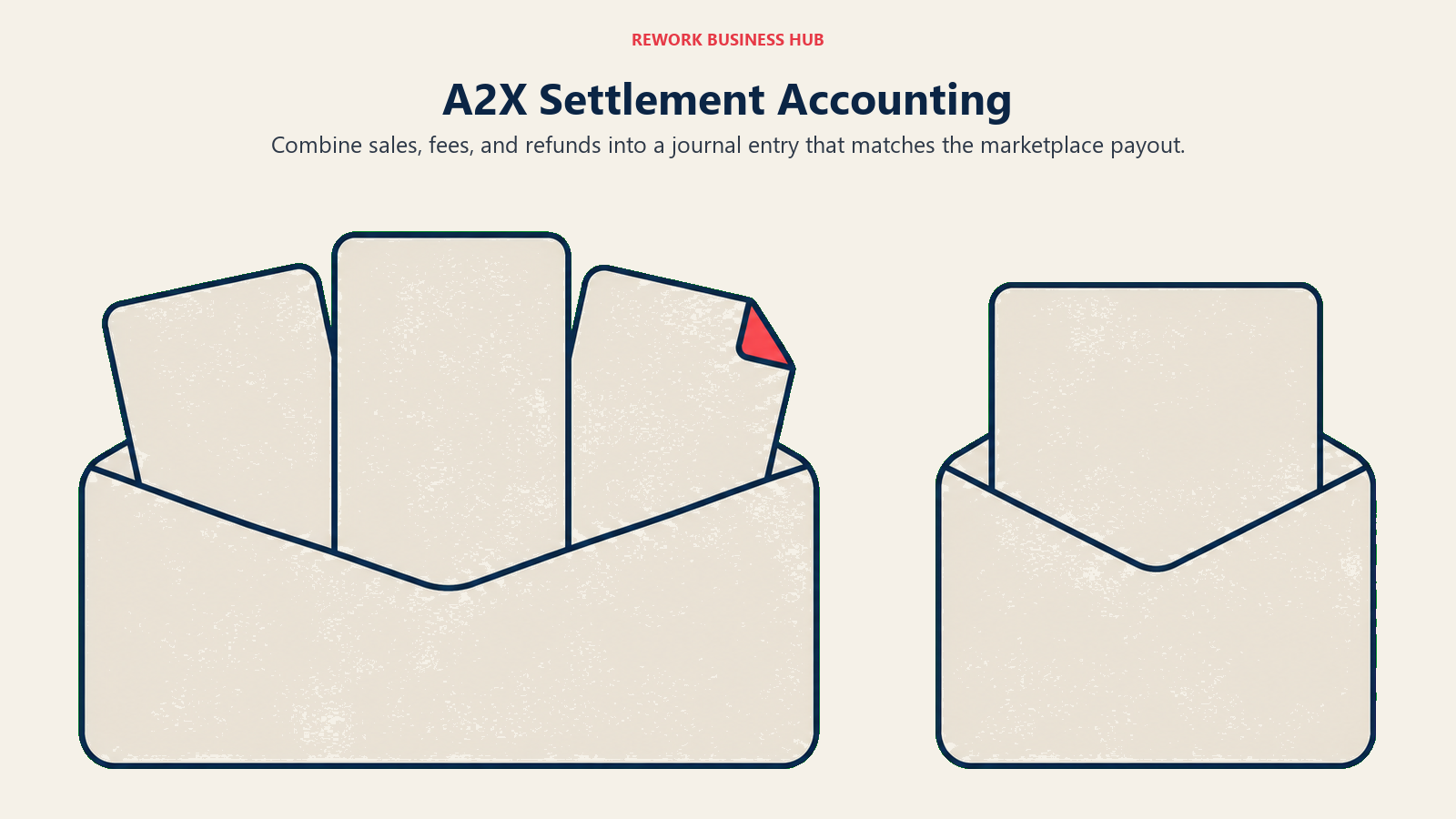
Pricing is structured per sales channel and by order volume, which means a seller active on Amazon, Shopify, and Walmart simultaneously is paying for three separate subscriptions rather than one blended price. That model makes sense given how differently each marketplace's settlement data is structured, but it is worth budgeting for explicitly rather than assuming one A2X subscription covers every channel a business sells on.
| What you get | What you don't |
|---|---|
| Purpose-built settlement accounting for Amazon, Shopify, Walmart, Etsy, eBay, and PayPal | Priced per channel; a multi-channel seller stacks multiple subscriptions |
| Accrual-basis COGS and FBA inventory location tracking on Amazon plans | Higher-volume sellers (75,000+ orders/month) need a custom quote |
| Clean summary journal entries that make the actual bank match trivial | Does not replace a general ledger; it feeds one |
| Tiered pricing that scales predictably with order volume | Not a fit for a single-channel, low-volume seller who can reconcile manually |
Pricing: For Amazon, Mini is $29 per month for up to 200 orders, Starter is $59 per month for up to 1,000 orders, Standard is $79 per month for up to 5,000 orders, and Standard 10k is $159 per month for up to 10,000 orders. Premium tiers scale from $229 per month (15,000 orders) up to $919 per month or more for 75,000 or more orders, with custom pricing at the highest volumes. Shopify, Etsy, eBay, and PayPal each start at $29 per month; Walmart starts at $79 per month. All figures from A2X's own pricing page.
Best for: Amazon, Shopify, or Walmart sellers whose bank feed does not match their sales data because of batched marketplace payouts, not because of a ledger problem.
12. Synder: The Broadest Multi-Channel Sync in This Category
Synder's argument is breadth. Where A2X specializes in marketplace settlement accounting one channel at a time, Synder syncs a wider spread of payment processors and sales channels, Stripe, PayPal, Square, Shopify, Amazon, and more, into QuickBooks, Xero, NetSuite, or Sage Intacct depending on tier, with hourly import frequency on its paid plans rather than daily. For a business collecting money through several different processors at once, not just one marketplace, that breadth is the specific reason to pick Synder over a single-channel specialist.
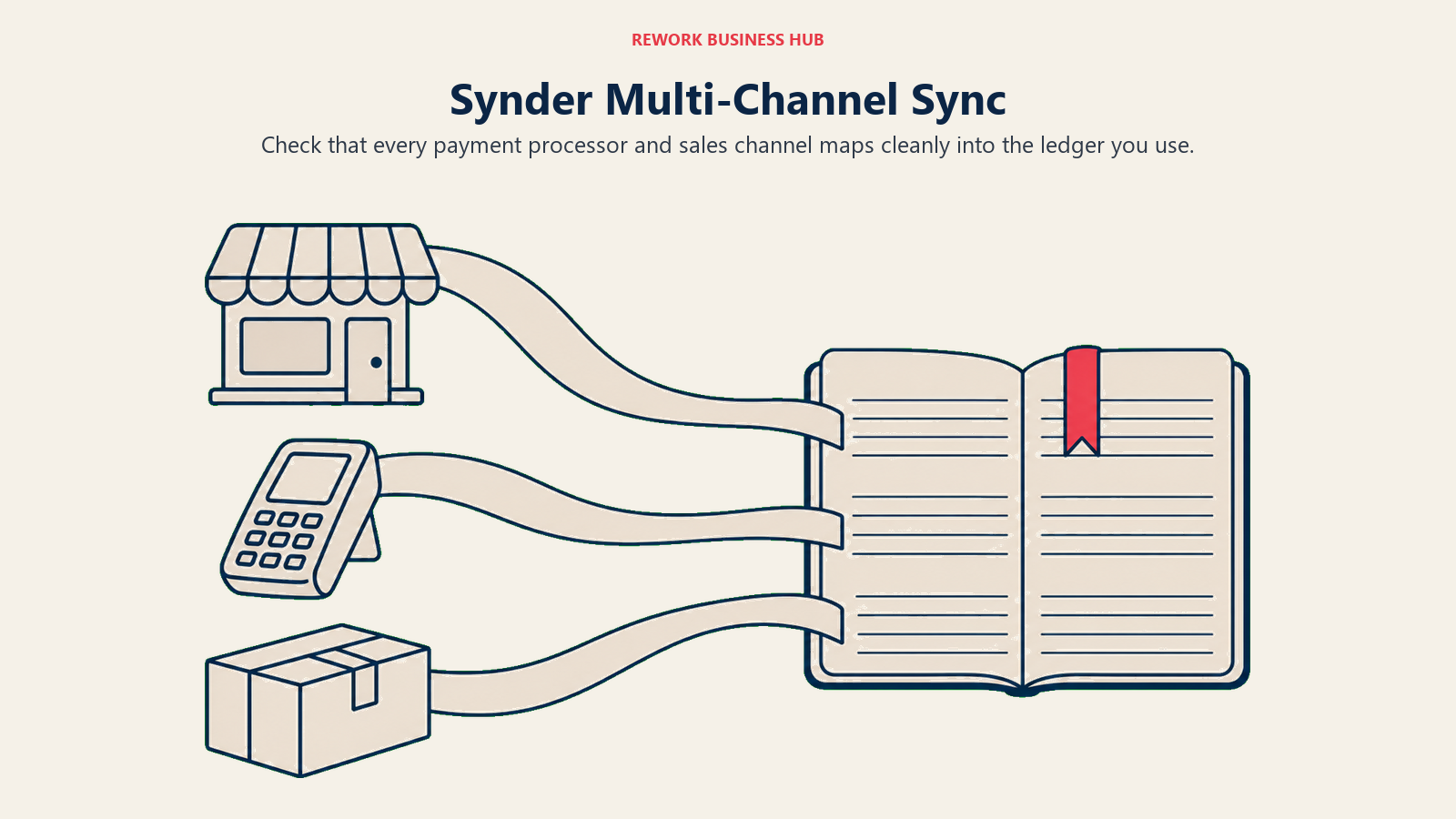
Synder's own pricing page structures five tiers, Basic, Essential, Pro, Pro Max, and Premium, by synced transaction volume, integration slots, and support level, confirmed directly from the vendor's site. What the vendor's page did not expose during this review, because the pricing table renders client-side, were the actual dollar figures attached to each tier. Multiple independent pricing trackers converge on a consistent picture: Basic in the roughly $52-to-$65-a-month range depending on annual versus monthly billing, Essential around $92 to $115, and Pro around $220 to $275, with Premium custom-priced for 50,000 or more transactions a month. Treat those numbers as reported rather than vendor-confirmed, and verify the live rate before budgeting against it.
| What you get | What you don't |
|---|---|
| The broadest payment-processor and channel coverage in this category | Vendor's pricing page did not render machine-readable dollar figures at time of writing |
| Five tiers scaled by transaction volume, confirmed directly from the vendor | Reported price points, not vendor-confirmed; verify the live rate |
| Support for QuickBooks, Xero, NetSuite, and Sage Intacct depending on tier | Basic tier caps at 500 sales transactions a month, thin for a growing seller |
| Hourly sync frequency on paid tiers versus daily on the entry tier | No free-forever tier; only a trial |
Pricing: Synder's own site confirms five tiers by synced transaction volume: Basic (up to 500 synced transactions, 2 integration slots, 1 additional user), Essential (up to 1,000 synced transactions, unlimited integrations), Pro (up to 10,000 synced transactions, 2 additional users), Pro Max (up to 20,000 synced transactions), and Premium (custom, unlimited users). Source: Synder's pricing page. Independent third-party pricing trackers consistently report Basic around $52 to $65 a month, Essential around $92 to $115, and Pro around $220 to $275, depending on annual versus monthly billing, with Premium custom-quoted (reported; verify current rate directly with Synder before budgeting).
Best for: Multi-channel sellers reconciling several payment processors at once, where A2X's single-marketplace focus is too narrow.
13. Bookkeep: Fully Published Pricing for Ecommerce Summary Journals
Bookkeep occupies the same transaction-feed category as A2X and Synder, turning ecommerce and payment-processor activity into summarized journal entries a ledger can reconcile against, but it separates itself with a pricing page that publishes every tier and every add-on fee with no sales call required anywhere in the funnel. Lite, at $19 a month, covers unlimited users and category-level mapping for one sales channel, a genuinely usable entry point for a very small seller. Growth adds automated posting directly into NetSuite, Sage Intacct, or Intuit Enterprise Suite, which signals Bookkeep's ambition to serve sellers who have outgrown QuickBooks Online rather than staying purely SMB-focused.
The add-on structure is where Bookkeep's real cost shows up for a scaling seller: managed sales tax filing runs $75 per filing beyond what is included, payout splitting costs $3.99 per transfer with a $100 monthly minimum, and a dedicated order-to-cash reconciliation service costs an additional $99 a month. None of that is hidden, every figure is on the pricing page, but a seller comparing Bookkeep's $19 headline against A2X's $29 without reading the add-on schedule will underestimate the real bill once sales tax filing or payout splitting gets added.
| What you get | What you don't |
|---|---|
| Every tier and add-on fee published, no quote-only pricing anywhere | Higher tiers needed quickly once revenue or channel count grows |
| Unlimited users on every tier, including the $19 Lite plan | $19 headline does not include sales tax filing or payout splitting |
| Automated posting to NetSuite, Sage Intacct, and Intuit Enterprise Suite on Growth and up | Six tiers plus per-service add-ons make total cost harder to estimate than a flat price |
| A dedicated order-to-cash reconciliation service as an add-on | Smaller integration list than Synder for non-ecommerce payment processors |
Pricing: Lite is $19 per month for unlimited users and one sales channel. Starter is $49 per month, adding sub-category mapping and live chat support. Growth is $99 per month, adding automated posting to NetSuite, Sage Intacct, and Intuit Enterprise Suite. Pro is $199 per month for up to $5 million in annual revenue, adding managed sales tax filing and COGS management. Advanced is $499 per month, adding fulfillment-based revenue recognition. Unlimited is $1,199 per month for unlimited sales channels. Annual billing saves 17%. Add-on fees include $75 per sales tax filing beyond what is included, $3.99 per payout-splitting transfer with a $100 monthly minimum, and $99 per month for order-to-cash reconciliation. All figures from Bookkeep's own pricing page.
Best for: Ecommerce sellers who want fully transparent, self-serve pricing with no sales call, and are willing to read the add-on schedule before committing to a headline tier price.
14. Dext: Receipt and Bank Statement Extraction for the Bookkeeping Firm
Dext approaches the reconciliation problem from the document side rather than the transaction-feed side. Its core strength is capturing receipts, invoices, and supplier statements through mobile and web apps, extracting the data automatically, and pushing it into more than 36 accounting integrations, which matters for reconciliation specifically because a bank line with no matching receipt is one of the most common reasons a reconciliation stalls. Bank statement extraction, sold as an add-on, pulls transaction data directly from statement PDFs when a live bank feed is not available or not trusted, filling a gap the other tools on this list assume away.
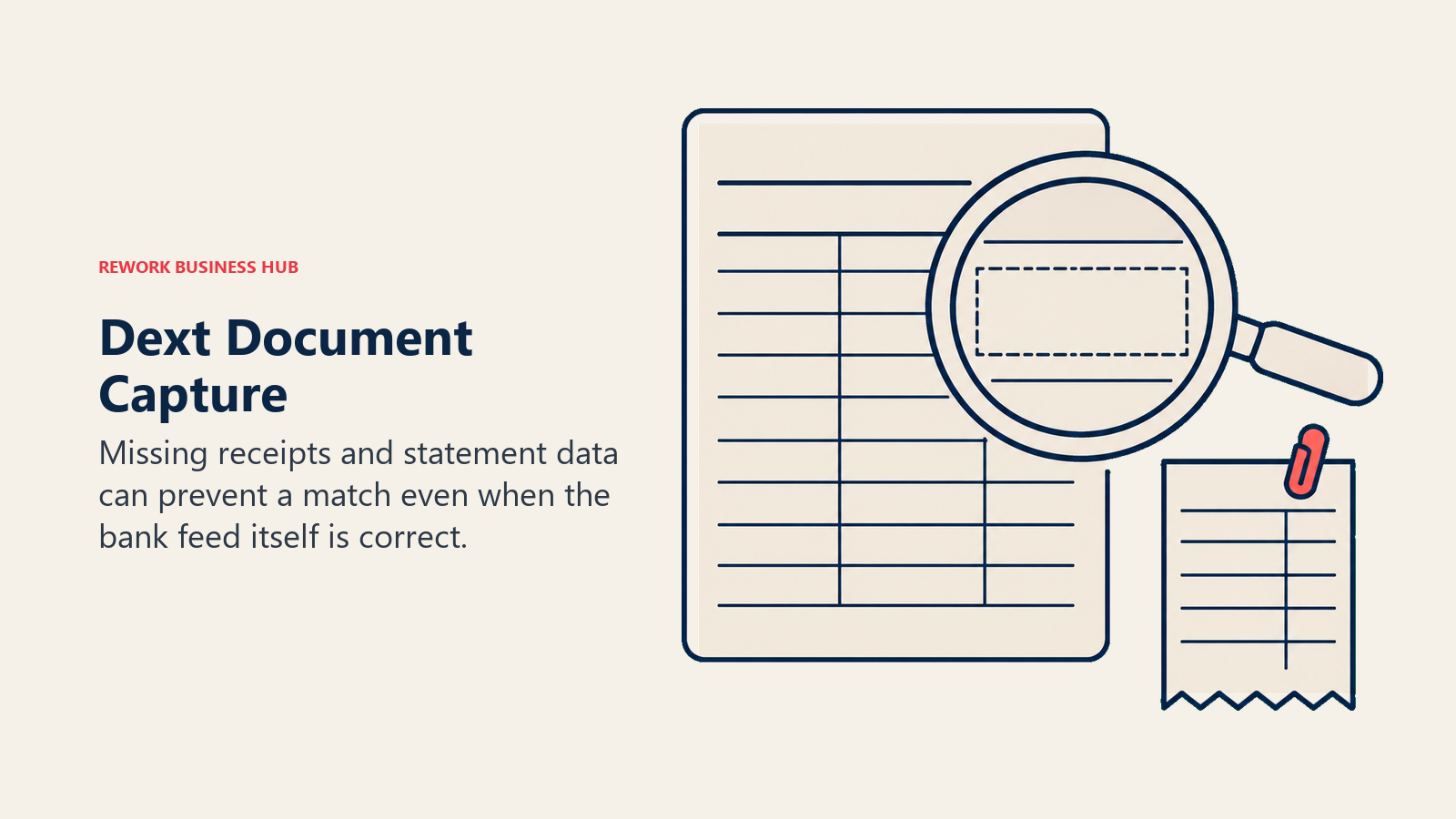
Dext sells through two distinct structures depending on the buyer. The Business plan, aimed at a single company managing its own books, is a self-serve, published-price product. The Partner plan, aimed at accounting and bookkeeping firms managing many clients, prices per client per month with a 10-client minimum and no published digit anywhere on the site, similar to how several enterprise close-management vendors on this list handle pricing, just applied to a per-client SMB context instead.
| What you get | What you don't |
|---|---|
| Strong receipt and supplier-statement extraction across 36+ integrations | Business plan pricing scales with a slider; the base $25.21 covers only 250 documents and 5 users |
| Bank statement extraction add-on for accounts without a reliable live feed | Partner/Practice tier has no published per-client rate |
| Two clear plan structures for a single business versus a multi-client firm | 13% annual discount only partially offsets the per-document, per-user scaling |
| Available in USD, GBP, EUR, CAD, AUD, and ZAR | AI Assist and other automation modules are separately priced add-ons |
Pricing: Business is $25.21 per month billed annually (list pricing scales upward with monthly billing), including 250 documents and 5 users, with a slider to increase either allowance; companies needing more than 5 entities get a custom quote. Add-ons include AI Assist, Commerce Lite, and Vault storage beyond the free 100MB, each priced separately. Partner/Practice plans (Essentials and Advanced) price per client per month with a 10-client minimum and a 13% annual-billing discount, but publish no specific dollar rate. All figures from Dext's own Business pricing page and Partner pricing page.
Best for: Bookkeeping and accounting firms, or individual businesses, whose reconciliation stalls most often on missing receipts or unreliable bank feeds rather than transaction-matching logic.
15. Modern Treasury: Ledger-Grade Reconciliation for Payment Operations Teams
Modern Treasury is the one tool in this guide that is not really sold to a traditional accounting or finance team at all. It is payment-operations infrastructure for fintechs, marketplaces, and platforms that move money programmatically, ACH, wires, RTP, FedNow, push-to-card, checks, and increasingly stablecoins, and its Ledgers product provides a real-time, double-entry system of record that reconciles against bank and payment-rail data automatically as transactions happen, rather than in a monthly batch process. For a company whose "reconciliation problem" is actually thousands of programmatic transactions a day across multiple payment rails, that real-time model solves a different problem than any GL or close-management tool on this list can.
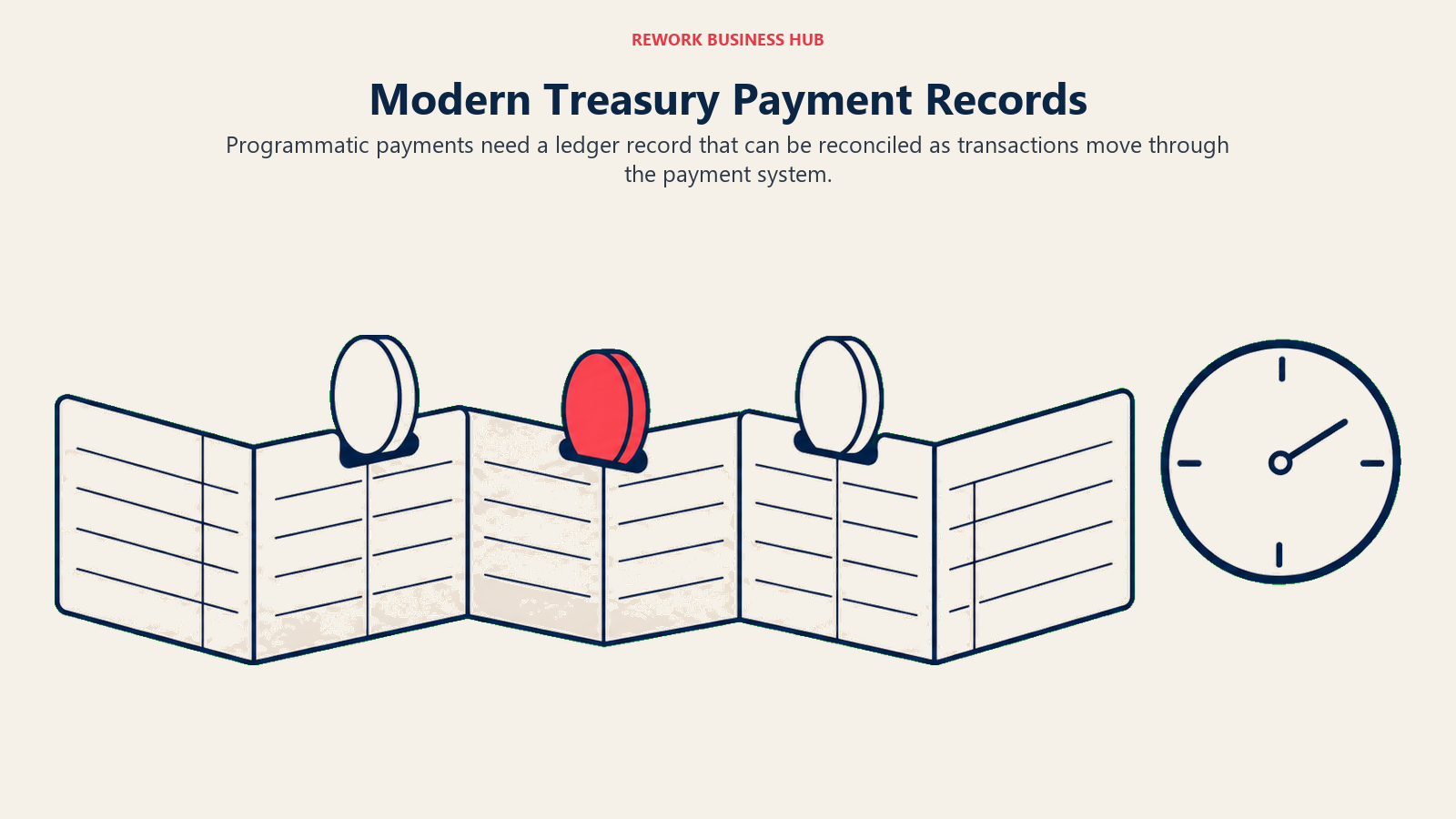
Pricing follows the infrastructure model rather than a SaaS seat model: a platform access fee covering API, dashboard, and support, usage-based charges per payment method, and accounts and compliance fees for KYB/KYC and transaction monitoring, all subject to a minimum spend. The vendor's own pricing page gives the structure but explicitly declines to publish per-unit rates, describing "flexible usage tiers that scale with your business" and directing prospects to a sales conversation for anything beyond the general shape of the model.
| What you get | What you don't |
|---|---|
| Real-time, double-entry reconciliation built for payment operations, not monthly close | Not a fit for a traditional finance team reconciling a normal operating bank account |
| Support for ACH, wires, RTP, FedNow, push-to-card, checks, and stablecoins | No published per-unit or per-transaction pricing anywhere |
| Ledgers product usable independently of the payment-rail features | Sold and evaluated primarily by engineering and treasury teams, not accounting |
| Per-unit costs decrease as volume increases, built to scale with the business | Minimum spend requirement applies regardless of actual usage |
Pricing: Usage-based, no fixed list price. Modern Treasury's own pricing page describes a platform access fee plus usage-based charges per payment method plus accounts and compliance fees, all subject to a minimum spend, with per-unit costs said to decrease at higher volume; no specific dollar figures are published, and the company directs prospects to contact sales for a quote.
Best for: Fintechs, marketplaces, and platforms moving money programmatically across multiple payment rails, where reconciliation needs to happen in real time against ledger-grade infrastructure rather than once a month.
Integration Fit: What Your Accounting Stack Allows
A close-management or transaction-feed tool only works as well as its sync back into your general ledger. Check this before you commit to any tool that sits on top of, rather than replaces, your existing ledger.
| Your Ledger | Close-Management Fits | Transaction-Feed Fits | Notes |
|---|---|---|---|
| QuickBooks Online | FloQast, Numeric | A2X, Synder, Bookkeep, Dext | The most widely supported target across this entire list |
| Xero | FloQast, Numeric | A2X, Synder, Bookkeep, Dext | Numeric's Growth tier is built specifically around Xero and QuickBooks |
| NetSuite | FloQast, Numeric (Enterprise), BlackLine, Trintech | A2X, Synder | Numeric's Enterprise tier and BlackLine both target mature NetSuite users specifically |
| Sage Intacct | FloQast, BlackLine, Trintech | Synder, Bookkeep (Growth tier) | Multi-entity sync depth varies; validate with a real trial before committing |
| Zoho Books | Limited close-management support | Limited native support | Zoho's ecosystem lock-in makes third-party close tools less common here |
| Custom or multiple ERPs | ReconArt, Trintech (Cadency) | Modern Treasury (via API) | This is where API-first tools like Modern Treasury and edition-based ReconArt earn their fit |
If your accounting platform itself, not the reconciliation layer on top of it, is the actual bottleneck, the adjacent decision is covered in best QuickBooks alternatives and best NetSuite alternatives.
True Cost Example: A 50-Person Company Closing the Books
Assumptions: a 50-person company, 3 people touching the close directly, a single US entity, running on QuickBooks Online or Xero today and deciding whether to add a close-management layer on top. Quote-only vendors (Sage Intacct, NetSuite, FloQast, BlackLine, Trintech, ReconArt) are modeled using the third-party reported figures disclosed earlier in this guide; budget them from a real quote before committing.
| Setup | Annual Software Cost | Basis |
|---|---|---|
| QuickBooks Online Essentials only (3 users) | $1,020 | Vendor-published, $85/mo, no close-management layer |
| Xero Growing only (unlimited users) | $660 | Vendor-published, $55/mo, no per-user fee |
| QuickBooks Online Plus (5 users) + Numeric Essentials (3 users) | $2,760 | $140/mo GL plus 3 x $30/mo Numeric, both vendor-published |
| QuickBooks Online Plus (5 users) + FloQast | From $26,161 | $140/mo GL plus Vendr's reported $24,481/year median FloQast contract |
| Sage Intacct (quote-only) + BlackLine (quote-only) | $40,125+ | BlackLine alone at Vendr's reported median; Sage Intacct adds an unquantified amount on top |
| NetSuite (quote-only) + Trintech Adra (reported per-user) | $20,000-$60,000+ | Trintech's reported lower mid-market range for 15-40 users, before NetSuite's own license cost |
| A2X Standard (Amazon, up to 5,000 orders) + QuickBooks Online Simple Start | $1,404 | $79/mo A2X plus $38/mo QuickBooks, both vendor-published |
| Bookkeep Growth + QuickBooks Online Essentials | $2,208 | $99/mo Bookkeep plus $85/mo QuickBooks, both vendor-published |
Three things stand out. First, the jump from a general ledger alone to a general ledger plus a close-management layer is not incremental, it is roughly an order of magnitude, which is exactly why the three-way category split at the top of this guide matters before anyone requests a demo. Second, the quote-only vendors are not simply "expensive," they are unknowable from the outside without a real conversation, which is why this guide leans on Vendr and SpendHound's anonymized contract data rather than a marketing number for BlackLine, FloQast, and Trintech. Third, at 20 to 50 hours a month of manual cash reconciliation effort per Ledge's 2025 survey, a controller earning a typical fully loaded salary is already spending several thousand dollars a month in labor on the problem before any software line item is counted, which is the real number every row in this table is competing against.
Buying Mistakes to Avoid
Every mistake below already happened somewhere in this category. None require special access, only reading the actual product scope before signing.
| Mistake | What It Looks Like | What to Do Instead |
|---|---|---|
| Buying a close-management platform for a bank-feed problem | Deploying FloQast or BlackLine when the real issue is that reconciliation was never turned on in QuickBooks | Confirm your GL's native reconciliation is actually configured and used before adding a layer on top of it |
| Buying a GL add-on for an upstream feed problem | Fighting with QuickBooks' bank feed to match Amazon or Shopify payouts line by line | Add A2X, Synder, or Bookkeep to clean the feed before it ever hits the ledger |
| Treating a third-party contract estimate as a vendor-confirmed price | Budgeting BlackLine or FloQast at a reported Vendr median as if it were a quote | Use reported figures as a planning range only, and get a written quote before committing budget |
| Assuming Synder's or Dext's headline number is the whole bill | Missing Dext's document and user allowance scaling, or Bookkeep's per-service add-on fees | Read the full pricing page, including add-ons, before comparing a headline number across vendors |
| Confusing Adra with Cadency, or Essentials with Cadency-scale needs | Evaluating Trintech's mid-market Adra product against BlackLine's enterprise scope | Confirm which Trintech product line actually matches your organization's size before comparing price |
| Ignoring which ledger a close-management tool actually integrates with | Buying BlackLine or FloQast before confirming it syncs cleanly with your specific ERP version | Run a real trial sync, including a multi-entity transaction, before renewing past the pilot |
| Skipping the manual-effort baseline before evaluating a fix | Comparing software cost against zero instead of against the real hours currently spent reconciling | Time your current close's reconciliation hours for one full cycle before you compare any tool's price against it |
| Picking a transaction-feed tool by price alone, ignoring processor coverage | Buying A2X for a business that also sells through Stripe and Square, which A2X does not cover | Match the tool's supported channel and processor list to your actual sales mix before comparing price |
Decision Framework
| If you need... | Pick... | Why |
|---|---|---|
| A free or nearly free ledger with reconciliation built in | QuickBooks Online or Zoho Books | Both include real bank reconciliation on a genuinely free tier |
| No per-user fees as headcount grows | Xero | Unlimited users on every plan, no per-seat charge |
| Multi-entity or fund-accounting reconciliation inside an ERP | Sage Intacct | Multi-entity, multi-currency reconciliation as a core capability |
| A full operational ERP where reconciliation is one module | NetSuite | Reconciliation embedded in inventory, order management, and financials |
| Close management layered on QuickBooks, NetSuite, or Intacct | FloQast | Built by auditors specifically to wrap a checklist and sign-off trail around your existing ERP |
| AI-assisted auto-reconciliation with a published entry price | Numeric | The only close-management platform on this list with a self-serve starting price |
| The most established, most audited enterprise reconciliation platform | BlackLine | Deepest SOX-grade controls, trusted by large public companies |
| A BlackLine alternative sized to mid-market or enterprise | Trintech (Adra or Cadency) | Two tiers of the same lineage matched to company size |
| Transparent, edition-based pricing without BlackLine's price tag | ReconArt | Fixed editions with defined transaction ceilings, no surprise upgrade fees |
| To fix a marketplace payout that never matches your bank feed | A2X | Purpose-built settlement accounting for Amazon, Shopify, and Walmart |
| To sync many payment processors and channels at once | Synder | Broadest processor and channel coverage in this category |
| Fully published, transparent pricing with no sales call | Bookkeep | Every tier and add-on fee listed on the pricing page |
| To fix missing receipts or unreliable bank feeds, not transaction matching | Dext | Strong document and bank statement extraction |
| Real-time, ledger-grade reconciliation for payment operations | Modern Treasury | Built for fintechs and platforms moving money programmatically |
Frequently Asked Questions about Bank Reconciliation Software
What is the best bank reconciliation software in 2026?
It depends on which layer of the problem you have. QuickBooks Online, Xero, and Zoho Books lead for companies that just need reconciliation built into their ledger. FloQast and Numeric lead for teams whose real problem is managing the close process on top of an existing ERP. BlackLine and Trintech lead at enterprise scale. A2X, Synder, and Bookkeep lead when the real issue is a marketplace or multi-channel payout that never matches a single bank deposit.
Do I need separate close-management software if I already use QuickBooks or Xero?
Only if reconciliation itself is not the bottleneck, but the surrounding close process is: checklists, sign-off, audit trail, and coordinating several people through a multi-day close. If reconciliation is slow because nobody configured the bank feed properly, fix that first before adding a paid layer on top.
How much does bank reconciliation software cost?
Published prices in this category run from $0 per month (QuickBooks Online Free, Zoho Books Free) to $340 per month for QuickBooks Online Advanced, with Xero and Zoho Books both offering paid tiers between $20 and $150 a month. Close-management platforms are mostly quote-only; third-party contract data puts FloQast's median annual contract near $24,481, Numeric's near $15,000, and BlackLine's near $40,125, though enterprise BlackLine deployments run into the hundreds of thousands.
Why don't BlackLine, FloQast, and Trintech publish their prices?
All three sell enterprise software scoped to modules, user count, transaction volume, and entity structure, which does not compress into a simple published rate card the way a $25-per-month SaaS tool does. That is standard practice at this end of the market, not a red flag by itself, but it does mean budgeting time for a real sales conversation before you can compare two quote-only vendors honestly.
What is the difference between A2X, Synder, and Bookkeep?
All three turn ecommerce and payment-processor activity into clean journal entries a ledger can reconcile against. A2X specializes deeply in marketplace settlement accounting, priced per channel. Synder covers the broadest range of payment processors and sales channels at once. Bookkeep publishes every tier and add-on fee with no sales call required, trading some integration breadth for pricing transparency.
Is Modern Treasury a fit for a normal small business closing its books every month?
No. Modern Treasury is payment-operations infrastructure for fintechs, marketplaces, and platforms moving money programmatically across multiple payment rails, evaluated primarily by engineering and treasury teams rather than accounting. A normal small business reconciling one or two bank accounts should look at QuickBooks Online, Xero, or Zoho Books instead.
How long does it take to close the books each month, and how much does software change that?
Per Ledge's 2025 survey of finance professionals, half of finance teams need six or more business days to close, and only 18% close in three days or less. Organizations that implement close automation report meaningful cycle-time reductions, though the exact improvement depends heavily on how manual the starting process was and how many systems feed the close.
Does reconciliation actually catch fraud?
Less than most people assume. Per the ACFE's 2024 Report to the Nations, account reconciliation accounts for only about 5% of how occupational fraud actually gets detected, well behind tips at 43% and internal audit at 14%. Reconciliation is still valuable for catching errors and unexplained variances, but it is not a primary fraud-detection control on its own.
What is the difference between Adra and Cadency from Trintech?
Adra is Trintech's mid-market product, generally positioned for organizations in the $100 million to $2 billion revenue range, bundling Balancer for reconciliation and Task Manager for close-task tracking. Cadency is Trintech's enterprise-tier platform, aimed at the same large, complex, multi-entity organizations BlackLine competes for. Neither publishes pricing.
Should an ecommerce seller pick a transaction-feed tool or a close-management platform?
A transaction-feed tool almost always comes first. If your bank feed does not match your sales data because of batched marketplace payouts or multiple payment processors, that is a feed problem A2X, Synder, or Bookkeep solves directly. A close-management platform assumes the feed is already clean and manages the broader process around it, which is the wrong layer to buy first.
What to Do Next
Name your actual layer before you book a single demo. Write down whether your bank feed matches your books today, whether the close process around that matching is the real bottleneck, or whether the feed itself is the mess because of marketplace payouts or multiple payment processors. That one sentence rules out most of this list immediately.
Then run a real two-week trial on whichever layer you land on, not a sales demo. Push a full month of real transactions through it: a standard bank feed match, a batched marketplace payout, a multi-entity transaction if you have one, and a duplicate or exception case. Time how long the reconciliation actually takes compared with your current process. The tool that survives that test with the fewest manual fixes, not the one with the best sales deck, is the right answer.

Principal Product Marketing Strategist
On this page
- Key Facts
- Which Kind of Bank Reconciliation Tool Do You Actually Need?
- Quick Comparison Table
- Pricing Models: What You Are Actually Buying
- Stage Fit Matrix
- Sizing and Persona Table
- 1. QuickBooks Online: The Default Ledger, Reconciliation Included
- 2. Xero: No Per-User Fees, Strong Bank Rules
- 3. Sage Intacct: Multi-Entity Reconciliation Inside a Real ERP
- 4. NetSuite: Reconciliation as One Module in a Bigger Suite
- 5. Zoho Books: Reconciliation on Every Tier, Including Free
- 6. FloQast: Close Management Built by Former Auditors, Priced Around Outcomes
- 7. Numeric: The Modern, AI-Forward FloQast Challenger
- 8. BlackLine: The Enterprise Account-Reconciliation Standard
- 9. Trintech (Adra and Cadency): Two Tiers of the Same Reconciliation Lineage
- 10. ReconArt: Edition-Based Pricing Without the Enterprise Sticker Shock
- 11. A2X: The One-Deposit-Per-Payout Fix for Marketplace Sellers
- 12. Synder: The Broadest Multi-Channel Sync in This Category
- 13. Bookkeep: Fully Published Pricing for Ecommerce Summary Journals
- 14. Dext: Receipt and Bank Statement Extraction for the Bookkeeping Firm
- 15. Modern Treasury: Ledger-Grade Reconciliation for Payment Operations Teams
- Integration Fit: What Your Accounting Stack Allows
- True Cost Example: A 50-Person Company Closing the Books
- Buying Mistakes to Avoid
- Decision Framework
- What to Do Next