Best Namely Alternatives in 2026: 12 HRIS and Payroll Platforms for Mid-Size Teams
Turn this article into takeaways for your work.


Each assistant summarizes the article only for you and suggests best practices for your work.
Namely had a genuine moment. When it launched, it stood out as the mid-market HRIS that finally understood what companies between 50 and 500 employees needed: a clean, all-in-one platform with payroll, benefits, onboarding, and a social newsfeed that made HR feel less transactional. For a few years, it was one of the better answers in a crowded category.
But things shifted. Namely was acquired by Vensure Employer Solutions in 2022, and since then the platform has tilted toward supporting Vensure's PEO business rather than competing head-on as a standalone HRIS. Pricing crept up and became opaque. Payroll and benefits service quality complaints piled up in review forums. Support responsiveness fell off after the ownership change. The interface, which once felt fresh, now feels dated next to modern platforms like HiBob or Rippling. And if your company has any international headcount, Namely offers little help. HR leaders and People Ops teams who chose Namely in 2019 or 2020 are now running re-evaluations, and this guide covers what they're finding.
Before diving in: if you're running a parallel review of specific platforms alongside this one, the best BambooHR alternatives and best Rippling alternatives guides cover similar mid-market territory from different entry points.
Quick Comparison Table
| Tool | Best For | Starting Price | Key Strength | Key Limitation |
|---|---|---|---|---|
| Rippling | Fast-growing teams needing HR + IT unified | No public price; ~$8/employee/mo reported + modules | Modular platform, IT management built in | Costs compound fast with add-ons |
| Gusto | US SMBs wanting transparent payroll | $49/mo + $6/employee | Clear pricing, great UX | US-only, limited above 200 employees |
| BambooHR | HR-first teams prioritizing employee experience | $250/mo flat or ~$10/employee | Best HR UX in category, strong onboarding | Payroll is a paid add-on |
| HiBob | Modern mid-market HRIS with engagement features | ~$8-12/employee/mo | Modern UX, strong performance management | Custom quote required |
| Workday | Large enterprises replacing legacy HCM | Custom enterprise quote | Unified HR, finance, and planning | Expensive, 6-18 month implementation |
| Paycor | Mid-market with workforce analytics needs | ~$19-27/employee/mo (custom) | Deep analytics, solid HCM suite | Removed public pricing in 2025 |
| TriNet | Regulated-industry teams needing PEO support | ~$80-150/employee/mo (PEO) | Industry-specific compliance, dedicated HR advisor | Expensive, complex to exit |
| Justworks | Startups wanting enterprise-level benefits access | $59/employee/mo (PEO Basic) | Fortune 500 benefits for small teams | PEO co-employment limits flexibility |
| Deel | Remote or globally distributed teams | $49/contractor/mo; $599 EOR | Best global contractor and EOR platform | Not designed for US-only domestic payroll |
| Personio | European mid-market companies | ~EUR 5-10/employee/mo | GDPR-native, strong EU compliance | Not suitable for US-headquartered teams |
| Insperity | Mid-size US companies wanting full-service PEO | ~$150-210/employee/mo | Full-service PEO with dedicated HR team | Fully custom, no self-service entry |
| ADP Workforce Now | Large companies needing proven enterprise payroll | Custom quote | 140-country payroll, deep compliance history | Legacy UX, opaque pricing |
Why Teams Actually Leave Namely
| Pain Point | Who Feels It Most | Severity |
|---|---|---|
| Opaque pricing, no published rates | HR directors evaluating budget renewal | High |
| Payroll module errors and slow resolution | HR admins running bi-weekly payroll | High |
| Support quality declined post-Vensure acquisition | Teams with active service tickets | High |
| Platform feels dated next to modern HRIS tools | HR generalists using it daily | Medium |
| Limited global or multi-country payroll | Companies with international headcount | High |
| Vensure acquisition shifted product roadmap away from standalone HRIS | Buyers evaluating long-term platform risk | High |
| Integration gaps between payroll and HR modules | Operations leads managing data across tools | Medium |
If none of these are your situation, Namely may still be working for you. But if two or more of those rows describe your last quarter, the platforms below are worth a serious look.
1. Rippling: When HR and IT Need to Be the Same System
Rippling builds from a different premise than Namely: HR operations and IT operations are not two separate functions, they're the same problem. When you hire someone, they need payroll set up, benefits enrolled, a laptop provisioned, apps activated, and Slack channels assigned. Rippling does all of that from one trigger.
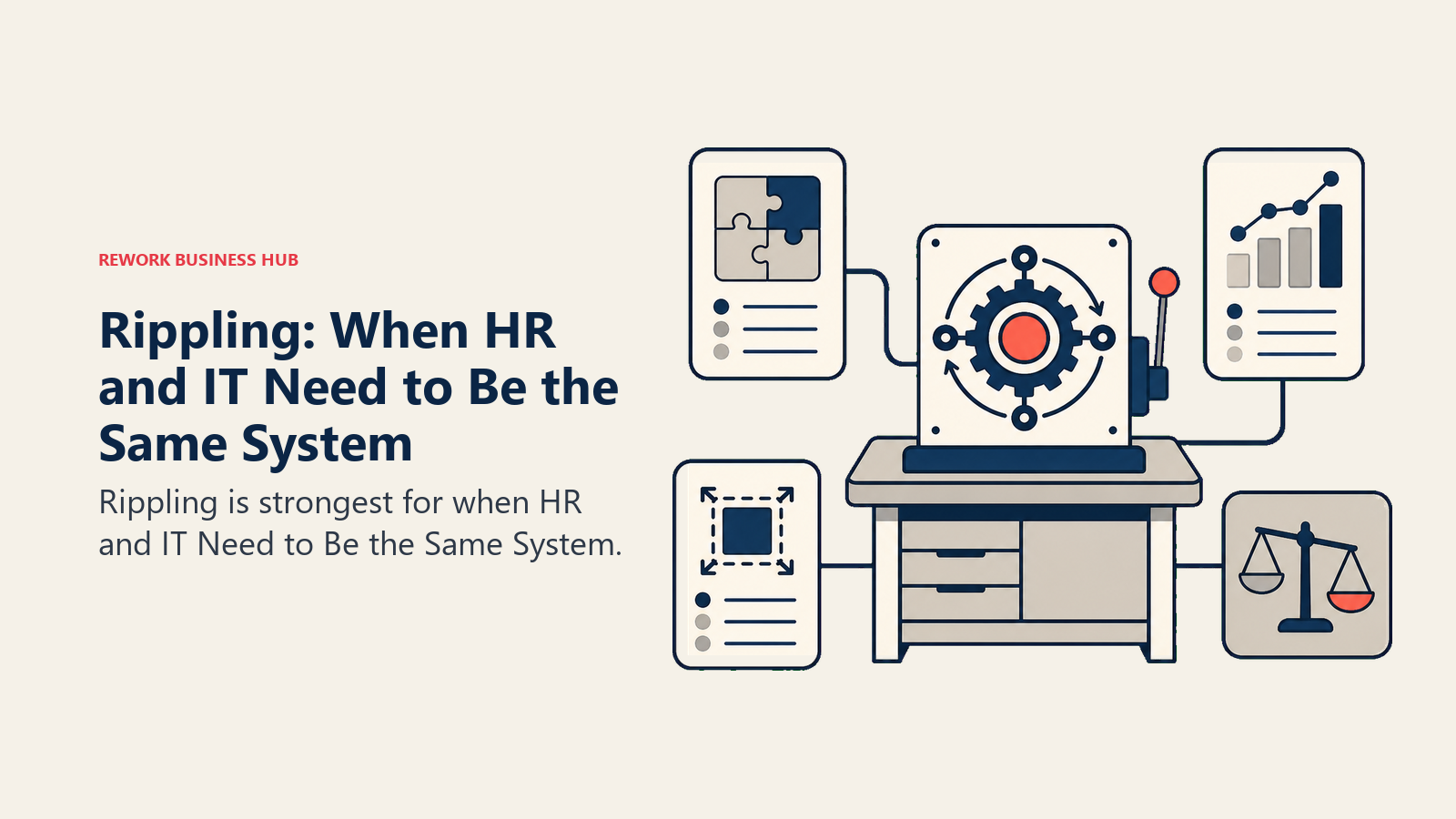
Methodology: Rippling sells a core Unity platform and lets you add modules: payroll, benefits, time tracking, IT management, expense management, and learning. The automation engine is the core product. Rules run like "when an employee joins Engineering, add to these 12 apps, assign this laptop policy, enroll in these benefit groups" without manual steps.
Target audience: Tech-forward companies with 20-500 employees that have a real IT footprint. The ICP is a Head of People or VP of Operations at a growth-stage company managing distributed or remote employees. Not the right fit for traditional SMBs that don't care about IT provisioning.
| Pros | Cons |
|---|---|
| HR + IT + payroll unified in one data model | Module costs stack up quickly |
| Powerful onboarding and offboarding automation | Pricing requires a custom demo |
| Strong global payroll and EOR layer for international teams | Setup and configuration take real time |
| Excellent cross-lifecycle reporting | Smaller companies may not need the IT layer |
Sizing fit:
| Team Size | Fit |
|---|---|
| 1-15 employees | Too much platform |
| 15-50 employees | Good if IT complexity exists |
| 50-300 employees | Excellent |
| 300-1,000+ employees | Strong |
Stage fit: Series A through Series C companies scaling headcount fast across multiple locations. Rippling earns its cost when IT and HR automation saves 10+ hours a week in manual provisioning.
Team vs company-wide: Company-wide. HR, IT, finance, and employees all interact with different parts of the platform.
Pricing: Rippling publishes no rate card. The core platform is widely reported at approximately $8/employee/mo. Most full HR + payroll deployments land at $25-50/employee/mo depending on modules. Custom quote required. See Rippling's pricing page for current estimates.
Best for: Growth-stage companies tired of Slack threads to IT every time someone is hired or leaves. See best Rippling alternatives if you're already evaluating Rippling.
2. Gusto: Transparent Payroll for US Teams Under 200
Gusto launched in 2012 with one clear thesis: payroll for small and mid-size US businesses should be transparent, fast, and not require a sales call. That thesis has held. Gusto publishes its pricing online, runs payroll in minutes, and has built a strong benefits administration layer for sub-200-employee companies that want a full-service option without the complexity of a PEO.
Methodology: Gusto's design philosophy is radical simplicity. Every plan includes unlimited payroll runs, full-service tax filing, and direct deposit. Add-ons are opt-in. The onboarding experience walks HR admins through setup step by step without requiring a consultant or a long implementation period.
Target audience: US-based companies with 2 to 200 employees, particularly startups, professional services firms, agencies, and tech companies. The primary buyer is a founder, HR generalist, or office manager who runs payroll solo.
| Pros | Cons |
|---|---|
| Fully transparent pricing online | US-only, no global payroll |
| Clean, modern UI any non-HR person can use | Benefits administration quality varies by state |
| Unlimited payroll runs on all plans | Premium features require Plus or Premium tier |
| Strong employee self-service portal | Support can slow during peak seasons |
Sizing fit:
| Team Size | Fit |
|---|---|
| 1-10 employees | Excellent |
| 10-50 employees | Strong |
| 50-150 employees | Good |
| 150+ employees | Starts to show limits |
Stage fit: Seed through Series B companies that need to move fast and keep overhead low. Starts to show limits around 200+ employees when multi-state compliance complexity spikes significantly.
Team vs company-wide: Company-wide. Employees use the self-service app directly for pay stubs, PTO, and benefits enrollment.
Pricing: Simple: $49/mo base + $6/employee/mo. Plus: $80/mo base + $12/employee/mo. Premium: $180/mo base + $22/employee/mo. See Gusto's pricing page for current rates.
Best for: US-based mid-market teams that want Namely-level HR coverage without Namely's pricing opacity or service complaints. See best Gusto alternatives if you're already on Gusto.
3. BambooHR: The HR-First Platform With the Best UX in Category
BambooHR doesn't lead with payroll. It leads with the employee lifecycle: hiring, onboarding, performance, and HR data management. Payroll is a paid US-only add-on. But for companies where the HR experience and people data management are the priority, BambooHR has the best interface and self-service experience of any platform in this list.
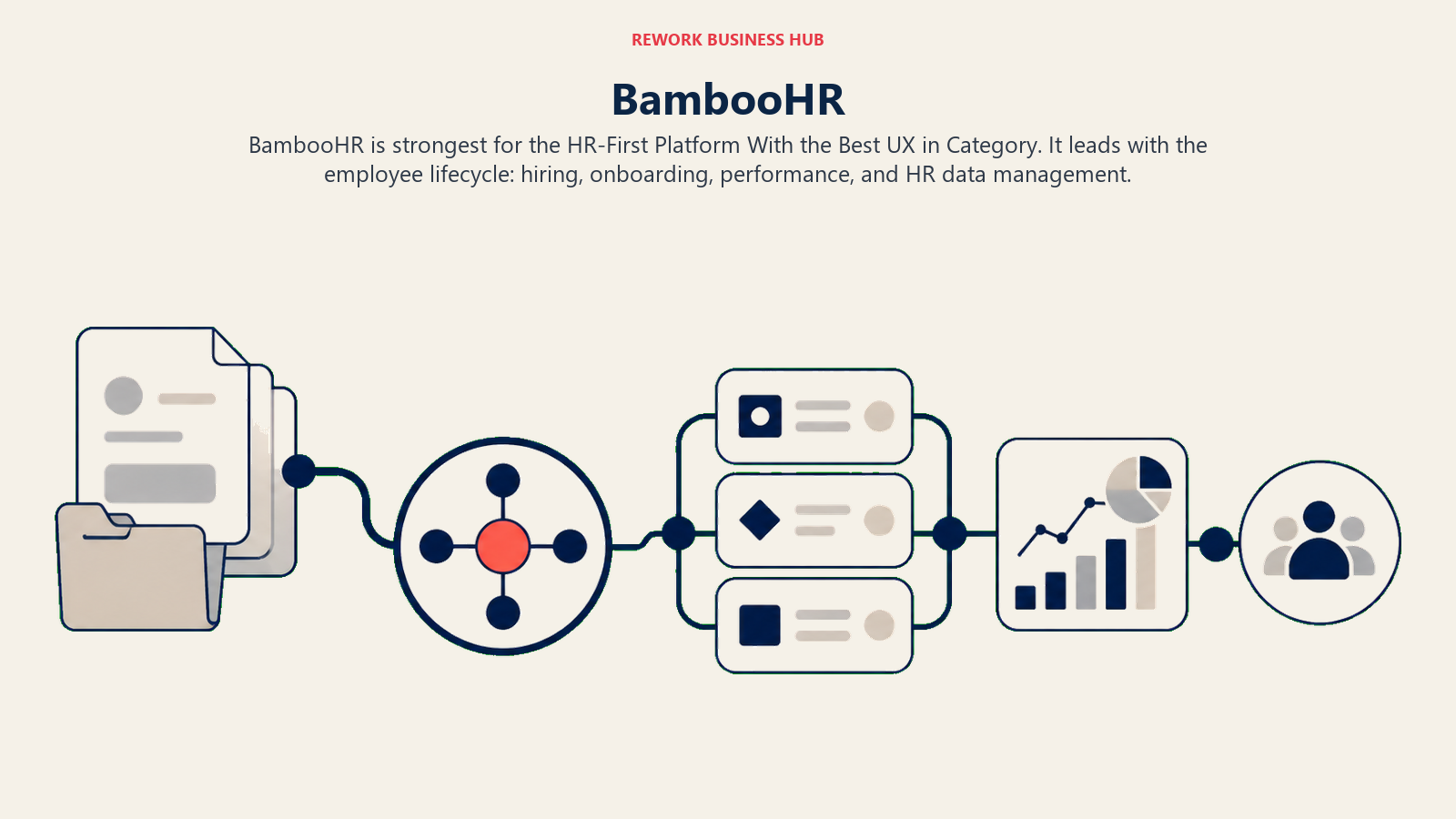
Methodology: BambooHR was designed as an HR system of record, not a payroll processor. Its core strength is organizing everything around the employee: documents, org charts, time-off policies, performance reviews, e-signatures, and offboarding checklists. The result is an HR experience that actually feels like a consumer app.
Target audience: US and international companies with 20-500 employees that have a dedicated HR team and want their tools to delight employees rather than just process transactions. Common in tech, nonprofits, and professional services.
| Pros | Cons |
|---|---|
| Best HR UX in this list, clean and employee-friendly | Payroll is a paid add-on, US-only |
| Strong onboarding and e-signature workflows | Not suited for companies needing global payroll |
| Good performance management at lower price tiers | Some analytics features require Elite tier |
| Solid integrations with ATS and payroll tools | Implementation fee adds to first-year cost |
Sizing fit:
| Team Size | Fit |
|---|---|
| 5-10 employees | Good |
| 10-50 employees | Excellent |
| 50-200 employees | Strong |
| 200-500 employees | Good |
Stage fit: Seed through Series B companies formalizing their HR function. Particularly strong when hiring is a major activity and onboarding experience matters more than payroll sophistication.
Team vs company-wide: Company-wide. Employees manage their own profiles, PTO requests, and documents directly through self-service.
Pricing: Flat $250/mo for companies under 25 employees. For 25+ employees: approximately $10/employee/mo (Core), $17 (Pro), $25 (Elite). Payroll is a separate add-on. See BambooHR's pricing page for current rates.
Best for: HR teams that prioritize the employee experience over payroll-first design. See best BambooHR alternatives for a side-by-side view.
4. HiBob: Modern Mid-Market HRIS With Strong Performance Management
HiBob (branded as Bob) is the platform most often mentioned alongside Namely in mid-market re-evaluations. It targets the same 50-500 employee sweet spot and delivers a modern, configurable HRIS with performance management, compensation management, and a social-layer feel without the baggage that Namely acquired post-acquisition.
Methodology: HiBob's philosophy is that mid-market HR shouldn't have to choose between a simple SMB tool and an enterprise HCM that takes six months to implement. Bob is designed to be fast to onboard (weeks, not months) while still supporting sophisticated people programs including OKRs, compensation bands, and workforce analytics.
Target audience: Companies with 50-500 employees in tech, SaaS, and professional services that have a real HR team and want a system that managers and employees actually use daily, not just a backend admin tool.
| Pros | Cons |
|---|---|
| Modern, clean UX for admins and employees alike | Pricing requires a custom quote |
| Strong performance management and compensation features | Payroll is handled via integrations, not native |
| Good workforce analytics and reporting | US-based teams may need a payroll integration (e.g., Gusto) |
| Fast implementation (weeks, not months) | Less suitable for sub-50-employee companies |
Sizing fit:
| Team Size | Fit |
|---|---|
| Under 30 employees | Light |
| 30-100 employees | Good |
| 100-500 employees | Excellent |
| 500-1,000+ employees | Strong |
Stage fit: Growth through mid-market. HiBob earns its cost when HR teams need a platform that supports managers and employees, not just HR admins running transactions.
Team vs company-wide: Company-wide. Managers use it for approvals, feedback, and compensation reviews. Employees use it for onboarding and self-service.
Pricing: Custom quote required. Third-party estimates place HiBob at $8-12/employee/mo for most mid-market configurations. Some sources report $16-25/employee/mo for broader module sets. See HiBob's pricing page to request a quote.
Best for: Mid-size companies that want a Namely replacement with a modern interface and genuine performance management depth. See best HiBob alternatives for a detailed breakdown.
5. Workday: Enterprise HCM When Scale Demands It
Workday is where companies end up after they've outgrown every other platform on this list. It's not a Namely alternative for a 100-person company. It's the replacement for Namely (or ADP Workforce Now) at the 1,000-5,000-employee tier where HR and finance data need to live in the same system of record.
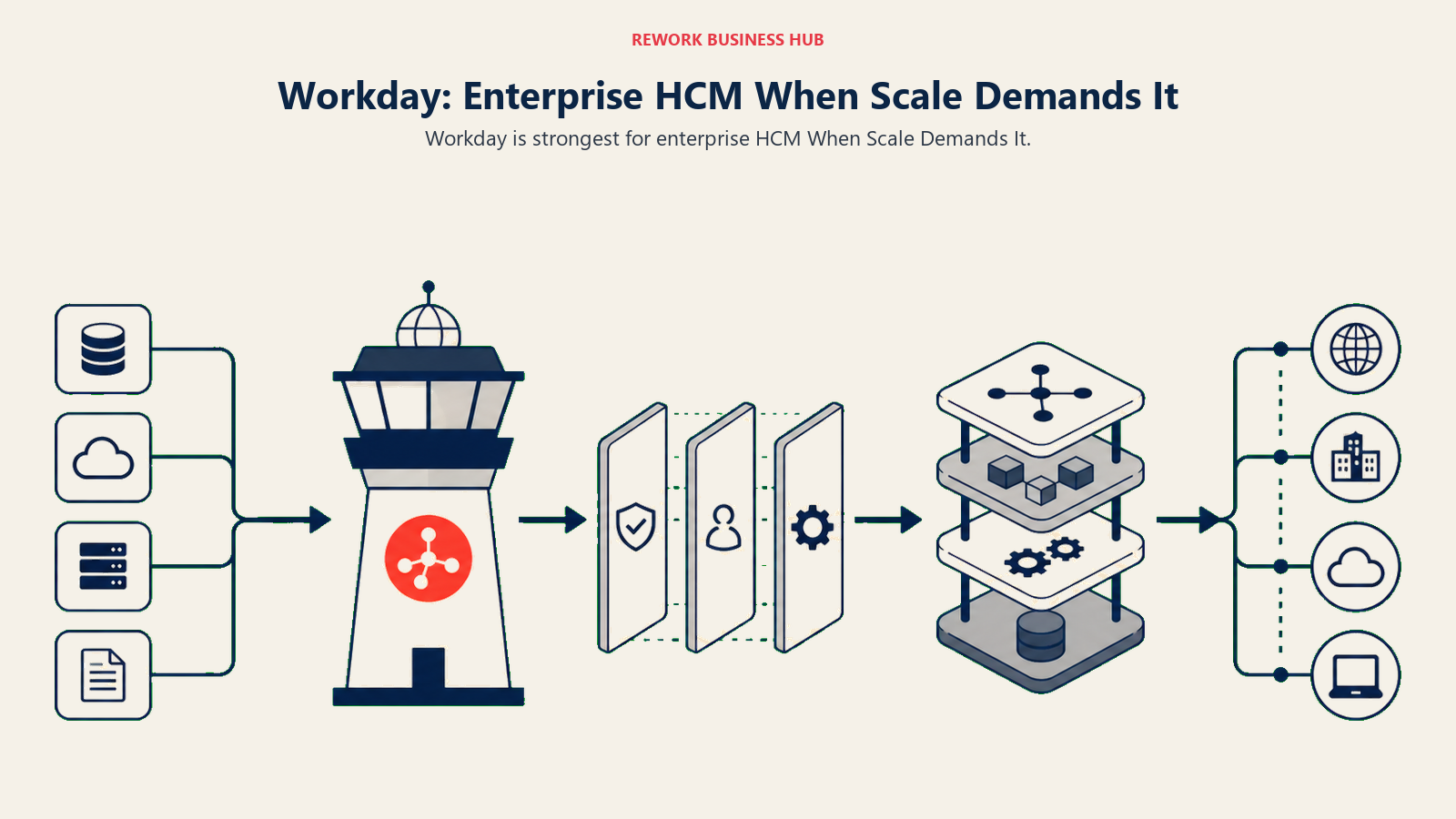
Methodology: Workday unifies HR, payroll, finance, and workforce planning in a single data model. Where most platforms treat HR and finance as separate applications connected by an integration, Workday treats them as the same system. That architecture enables headcount budgeting, compensation modeling, and workforce planning that finance and HR do together in real time.
Target audience: Large enterprises with 1,000+ employees in finance, healthcare, tech, and professional services. The buyer is a CHRO, CFO, or CIO evaluating a long-term system-of-record replacement. Not a realistic option for companies under 500 employees.
| Pros | Cons |
|---|---|
| Unified HR, finance, and workforce planning | Enterprise-only pricing and complexity |
| Modern UX relative to legacy HCM systems (SAP, Oracle) | Implementation takes 6-18 months |
| Strong compliance across global jurisdictions | Requires dedicated admin team post-launch |
| Continuous innovation cadence with twice-yearly releases | Per-module licensing adds up significantly |
Sizing fit:
| Team Size | Fit |
|---|---|
| Under 500 employees | Not suitable |
| 500-1,000 employees | Possible but expensive |
| 1,000-5,000 employees | Strong |
| 5,000+ employees | Excellent |
Stage fit: Late-stage mid-market and enterprise companies replacing legacy HR systems. Not appropriate for growth-stage companies without a large IT and HR operations team in place.
Team vs company-wide: Company-wide. Finance, HR, and executives all use different Workday modules from the same data model.
Pricing: Custom enterprise quote. No public pricing. Mid-market companies (1,000-5,000 employees) typically pay $25-42/employee/mo for core HCM and payroll. See best Workday alternatives if you're evaluating at this tier.
Best for: Large enterprises that need HR, finance, and workforce planning unified in a single source of truth.
6. Paycor: Mid-Market HCM With Workforce Analytics Depth
Paycor sits in the space between SMB simplicity and enterprise scale. It's a full HCM platform covering payroll, benefits, time, talent management, and analytics. Its reporting layer is a genuine differentiator for mid-market HR teams that need real workforce data without exporting CSVs into separate BI tools. Note: Paychex acquired Paycor in April 2025, which may affect the product roadmap over time.
Methodology: Paycor was built for HR teams that have outgrown basic payroll and need a platform that also serves managers, not just HR admins. Its analytics dashboards give department heads visibility into labor costs and scheduling without needing a separate tool.
Target audience: US-based companies with 50-500 employees, particularly in healthcare, manufacturing, and financial services. The primary buyer is an HR director or VP of People managing the full employee lifecycle and compensation cycles.
| Pros | Cons |
|---|---|
| Strong workforce analytics and labor insights | No public pricing since 2025, all custom quotes |
| Good talent management and recruiting tools | Implementation can be slow |
| Modern UX compared to legacy payroll platforms | Mobile app experience weaker than desktop |
| Solid multi-state payroll compliance | Paychex acquisition creates some product uncertainty |
Sizing fit:
| Team Size | Fit |
|---|---|
| Under 25 employees | Limited |
| 25-100 employees | Good |
| 100-500 employees | Strong |
| 500+ employees | Moderate |
Stage fit: Growth-stage and mid-market companies that need more than payroll, specifically those managing shift-based workforces or building a workforce analytics practice.
Team vs company-wide: Company-wide. Managers use the dashboard for approvals, scheduling, and department reporting.
Pricing: Third-party estimates put mid-market configurations at $19-27/employee/mo all-in. Requires a custom quote. Contact Paycor's pricing page for current rates.
Best for: Mid-size US companies that want real workforce analytics integrated with payroll and are tired of building reports manually.
7. TriNet: PEO for Companies in Regulated Industries
TriNet is a PEO (Professional Employer Organization) that co-employs your workforce and provides industry-specific compliance support. Where generalist PEOs treat all clients the same, TriNet specializes by vertical: healthcare, legal, technology, nonprofits, financial services, and staffing each get tailored benefit structures and compliance guidance.
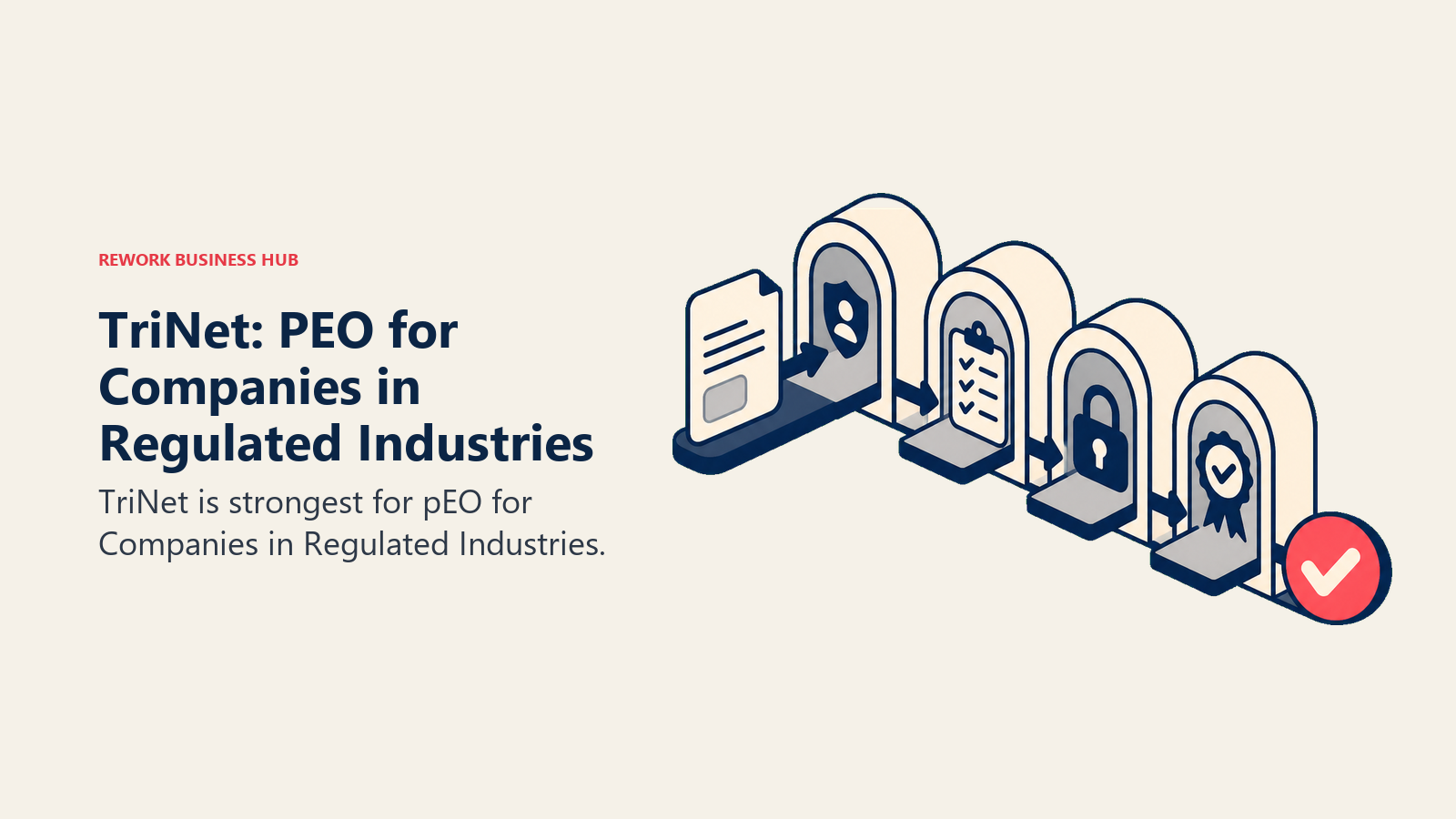
Methodology: TriNet assigns a dedicated HR service team to each client and structures its offerings around industry-specific risk. It handles payroll, benefits, compliance, and workers' comp as a bundled PEO service. The value is the regulatory expertise layered on top of the operational platform.
Target audience: US companies with 5-200 employees in regulated or high-risk industries that need compliance expertise built into their HR model, not bolted on. Also used by companies that have outgrown generic PEOs and want more hands-on HR advisory support.
| Pros | Cons |
|---|---|
| Industry-specific PEO and compliance support | No public pricing, custom quotes only |
| Dedicated HR advisor assigned to each account | Can be expensive for small teams |
| Strong benefits with industry-specific options | Difficult to exit once integrated |
| Good multi-state compliance handling | Support quality varies by region |
Sizing fit:
| Team Size | Fit |
|---|---|
| Under 5 employees | Not suitable |
| 5-30 employees | Possible but expensive |
| 30-100 employees | Strong in regulated industries |
| 100-500 employees | Good for specialized verticals |
Stage fit: Established small and mid-size companies in regulated industries that need a compliance partner, not just a payroll processor.
Team vs company-wide: Company-wide PEO model. Employees access benefits, pay stubs, and PTO through the TriNet portal.
Pricing: Custom quote required. Estimates range from $80-150/employee/mo for the full PEO service. See TriNet's pricing page for current estimates.
Best for: Healthcare, legal, staffing, or financial services companies that need industry-specific compliance built into their HR and payroll model.
8. Justworks: Small Teams That Need Enterprise Benefits
Justworks is a PEO that co-employs your workforce. The model is the key distinction: rather than being a software vendor, Justworks becomes a co-employer, which gives your employees access to the same health insurance pools and benefit rates that large enterprises negotiate. For a 25-person startup, that's a meaningful talent advantage over using Namely's standalone benefits administration.
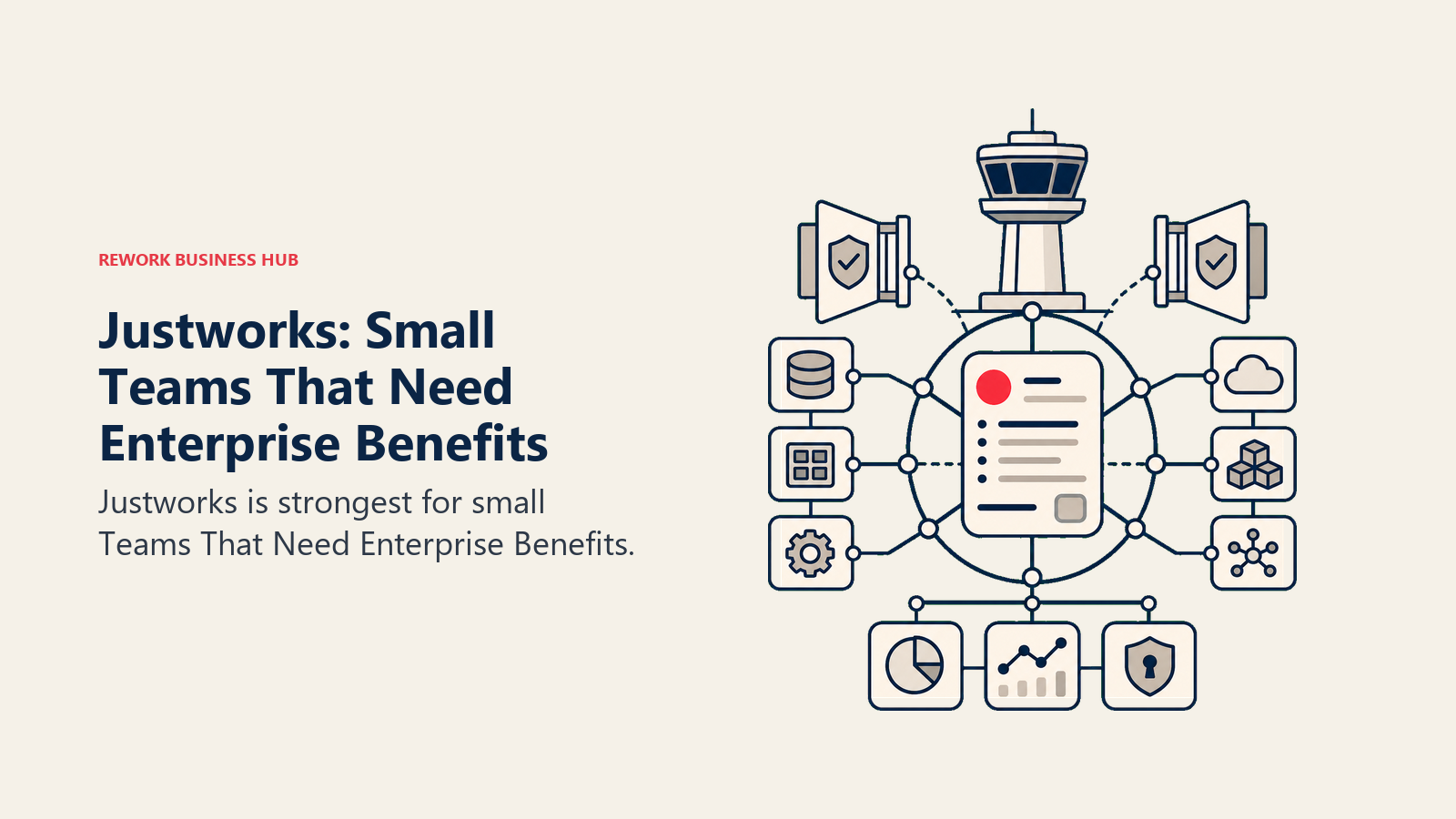
Methodology: Justworks handles payroll, compliance, HR administration, and benefits as a bundled PEO service. The tradeoff is less platform flexibility than a standalone HRIS: you're operating inside Justworks's benefit structures rather than building your own. For early-stage companies that can't negotiate their own group health rates, that constraint is actually a feature.
Target audience: US-based startups and small businesses with 5-100 employees where founders or HR teams want to offer competitive benefits without the overhead of negotiating directly with insurance brokers.
| Pros | Cons |
|---|---|
| Fortune 500-level benefits access at small-company size | PEO co-employment can complicate some exits |
| No long-term contracts (month-to-month billing) | Not suitable for companies outside the US |
| 24/7 support included on all plans | Limited customization of benefit offerings |
| Workers' comp, compliance, and tax filing all covered | Per-employee pricing gets expensive above 100 employees |
Sizing fit:
| Team Size | Fit |
|---|---|
| 1-5 employees | Too expensive |
| 5-50 employees | Strong if benefits access is a priority |
| 50-100 employees | Excellent |
| 100+ employees | Starts to lose cost advantage |
Stage fit: Pre-Series B startups competing for talent against larger companies and needing competitive health benefits without an in-house benefits team.
Team vs company-wide: Company-wide. Employees access benefits, pay stubs, and PTO through the Justworks portal.
Pricing: Payroll-only: $8/employee/mo + $50/mo base. PEO Basic: $59/employee/mo. PEO Plus (includes health insurance admin): $109/employee/mo. No long-term contracts. See Justworks pricing for current rates.
Best for: Startups with under 100 employees competing for talent against larger companies but without a full HR infrastructure to negotiate group benefits directly.
9. Deel: For Teams With International Contractors or Remote Employees
Deel is not a domestic payroll replacement for Namely in the traditional sense. It's built for the specific problem that Namely handles poorly: hiring, paying, and staying compliant when your team spans multiple countries. If you have contractors in Brazil, Germany, India, and Canada alongside a US team, Deel is the platform that makes that manageable without opening local entities.
Methodology: Deel's core product is legal and financial infrastructure for cross-border employment. It provides compliant contractor agreements in 150+ countries, an Employer of Record (EOR) service for hiring full-time employees abroad, and global payroll for companies with existing international entities. The compliance layer is the product.
Target audience: Remote-first and globally distributed companies of any size, from 5-person startups paying a few international contractors to 500-person companies running EOR across multiple countries.
| Pros | Cons |
|---|---|
| Contractor management in 150+ countries | Not designed for US-only domestic payroll |
| EOR in 90+ countries without opening a local entity | EOR pricing ($599/EE/mo) is expensive at scale |
| Multi-currency payments, expense management, equity tools | Primarily an international compliance platform |
| HRIS layer growing for global employee data | Domestic US payroll less mature than Gusto or Paycor |
Sizing fit:
| Team Size | Fit |
|---|---|
| 1-5 employees (global) | Strong |
| 5-50 employees (global) | Excellent |
| 50-200 employees (global) | Excellent |
| 200+ employees (global) | Strong |
Stage fit: Any stage with international hiring. Deel earns its cost from the first contractor or EOR hire outside the US.
Team vs company-wide: Company-wide. Employees and contractors across multiple countries interact with the platform for payments, documents, and compliance.
Pricing: Contractor management: $49/contractor/mo. EOR: $599/employee/mo (standard). Global payroll: $29/employee/mo. US PEO: $125/employee/mo. See Deel pricing for current rates. See also best Deel alternatives for a global HR platform comparison.
Best for: Companies with remote teams or contractors in multiple countries. Complement with a domestic payroll tool if your US headcount is significant.
10. Personio: The European Mid-Market Standard
Personio built the dominant HRIS for European mid-market companies, particularly in DACH (Germany, Austria, Switzerland), the UK, Netherlands, and Spain. If you're a European-headquartered company or a US company with a meaningful European entity, Personio has GDPR-native design and local HR law compliance that no US-first vendor matches.
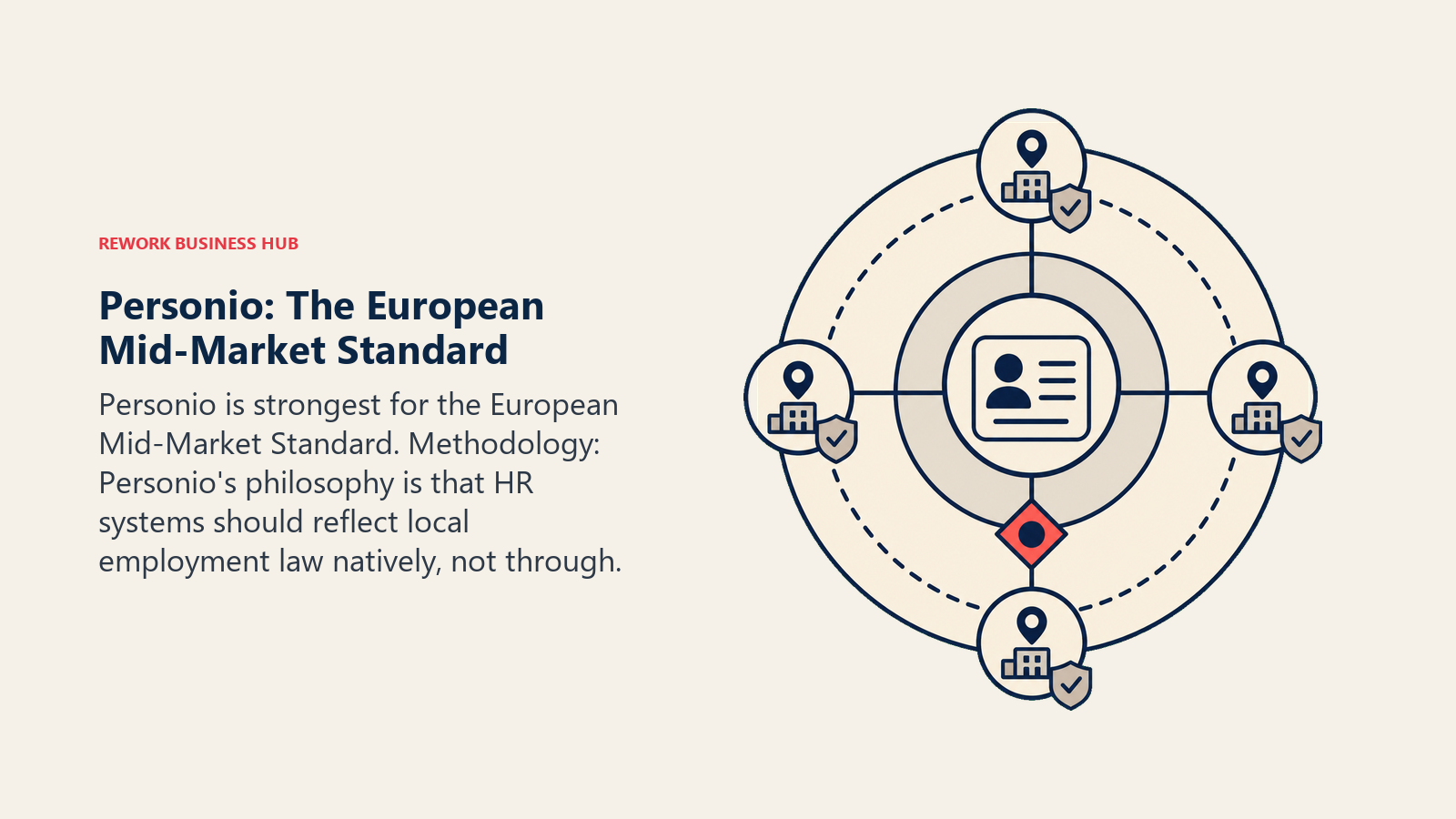
Methodology: Personio's philosophy is that HR systems should reflect local employment law natively, not through a patchwork of compliance add-ons. The platform covers core HRIS, recruiting, onboarding, time tracking, and payroll integrations for European payroll providers, with EU data residency standard across all plans.
Target audience: European companies with 50-500 employees, especially in DACH, Nordics, UK, and Iberia. Also used by US companies that have a European subsidiary and need a compliant HRIS for that entity. See best Personio alternatives if Personio is on your shortlist.
| Pros | Cons |
|---|---|
| GDPR-native design, EU data residency standard | Not suitable for US-headquartered companies without a European entity |
| Payroll integration with European payroll providers | Limited US payroll support |
| Strong onboarding and document workflows | Payroll is an integration, not native |
| Fast implementation for European companies | Pricing not published, requires a quote |
Sizing fit:
| Team Size | Fit |
|---|---|
| Under 20 employees | Light |
| 20-100 employees | Good |
| 100-500 employees | Excellent |
| 500+ employees | Strong |
Stage fit: Growth through mid-market for European companies formalizing their HR function. US companies with European entities needing a compliant local HRIS.
Team vs company-wide: Company-wide. Employees manage documents, time off, and self-service profiles.
Pricing: Custom quote required. Estimated EUR 5-10/employee/mo for core HRIS; EUR 12-20/employee/mo for broader module sets. See Personio's pricing page for current estimates.
Best for: European mid-market companies that want a GDPR-native HRIS built for European employment law, not adapted from a US platform.
11. Insperity: Full-Service PEO for Mid-Size US Companies
Insperity occupies a specific tier in the PEO market: full-service mid-market, with a dedicated HR team, a mature benefits network, and a longer-term relationship model than Justworks or TriNet. It's not a software-first platform; it's closer to an outsourced HR department with a technology layer on top.
Methodology: Insperity's model is built around providing companies with a complete, managed HR function: payroll, benefits, compliance, performance management, recruiting support, training, and dedicated HR specialists. The Workforce Optimization platform ties the operational tools together, and mid-market clients also have access to HRScale, which pairs Insperity's PEO services with Workday HCM.
Target audience: US companies with 25-500 employees that want to outsource significant HR administration to a managed service rather than building an internal HR function from scratch. Common in professional services, construction, and healthcare.
| Pros | Cons |
|---|---|
| Full-service PEO with dedicated HR team support | Fully custom pricing, no self-service entry |
| Strong benefits network and group insurance rates | Higher cost than software-only platforms |
| HRScale tier pairs with Workday for growing mid-market | Less flexible than a pure software platform |
| Compliance, risk management, and training included | Long-term commitment typically expected |
Sizing fit:
| Team Size | Fit |
|---|---|
| Under 25 employees | Light, better options exist |
| 25-150 employees | Good |
| 150-500 employees | Excellent |
| 500+ employees | Moderate |
Stage fit: Established mid-size US companies that want to professionalize their HR function without hiring a full internal HR team. Not for early-stage startups.
Team vs company-wide: Company-wide managed service. HR, finance, and employees all interact through the Insperity platform.
Pricing: Custom quote required. Third-party estimates range from $150-210/employee/mo for the full PEO service, including benefits administration. See Insperity's pricing page for current estimates.
Best for: Mid-size US companies that want to outsource HR operations to a managed service with dedicated human support rather than managing a software platform internally.
12. ADP Workforce Now: When Scale and Compliance Depth Are Non-Negotiable
ADP Workforce Now sits at the enterprise end of this list, and it's the platform most companies are comparing against Namely when they've outgrown mid-market tools. It's not for everyone, but for companies above 500 employees with global payroll, union rules, and complex time-and-attendance requirements, ADP's compliance network and integration breadth are genuinely hard to replace.
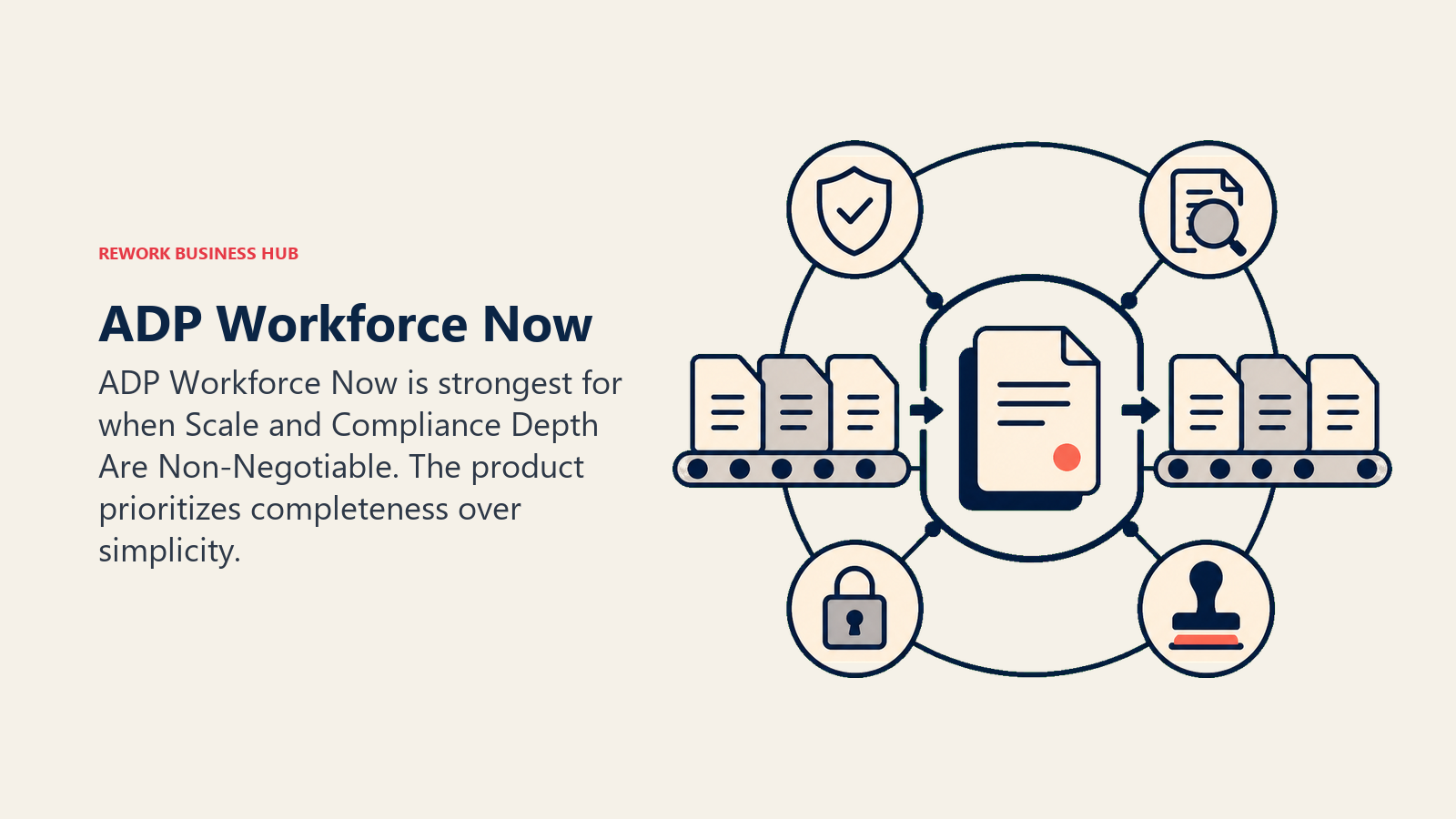
Methodology: ADP Workforce Now is built for companies that need proven, at-scale payroll infrastructure with multi-country compliance, extensive benefits administration, and a broad integration marketplace. The product prioritizes completeness over simplicity.
Target audience: Companies with 200-5,000 employees in industries where payroll compliance risk is high: manufacturing, healthcare, retail, and financial services. The buyer is typically an HR director or CHRO working alongside a finance team.
| Pros | Cons |
|---|---|
| Global payroll in 140+ countries | No published pricing, requires a sales call |
| Decades of tax compliance history | UI lags behind modern platforms |
| 300+ integrations via ADP Marketplace | Per-module fees inflate total cost |
| Strong workers' comp and benefits administration | Support ticket response times can be slow |
Sizing fit:
| Team Size | Fit |
|---|---|
| Under 100 employees | Overkill |
| 100-500 employees | Possible |
| 500-2,000 employees | Strong |
| 2,000+ employees | Excellent |
Stage fit: Mature mid-market and enterprise companies with complex compliance requirements. Not suitable for growth-stage companies building their HR function for the first time.
Team vs company-wide: Company-wide, with dedicated modules for different teams (payroll, benefits, time, talent).
Pricing: Custom enterprise quote. No public pricing available. Contact ADP directly for a quote. See best ADP alternatives for a detailed breakdown of the category.
Best for: Large companies above 500 employees where multi-country payroll, union compliance, and breadth of integrations justify the cost and complexity.
Stage Fit Matrix
| Tool | Startup (0-30) | Growth (30-100) | Mid-Market (100-500) | Enterprise (500+) |
|---|---|---|---|---|
| Rippling | Light | Strong | Excellent | Good |
| Gusto | Excellent | Strong | Good | Not suitable |
| BambooHR | Good | Excellent | Strong | Moderate |
| HiBob | Light | Good | Excellent | Strong |
| Workday | Not suitable | Not suitable | Possible | Excellent |
| Paycor | Limited | Good | Strong | Moderate |
| TriNet | Good (regulated) | Strong (regulated) | Good | Moderate |
| Justworks | Strong | Excellent | Moderate | Not suitable |
| Deel | Excellent (global) | Excellent (global) | Strong | Strong |
| Personio | Light | Good | Excellent (EU) | Strong (EU) |
| Insperity | Light | Good | Excellent | Moderate |
| ADP Workforce Now | Not suitable | Possible | Strong | Excellent |
Sizing and Persona Table
| Tool | Team Size Sweet Spot | Primary Buyer | Secondary Buyer |
|---|---|---|---|
| Rippling | 30-500 employees | Head of People | VP Engineering / IT |
| Gusto | 5-150 employees | Founder / HR generalist | Office manager |
| BambooHR | 20-300 employees | HR director | Recruiting manager |
| HiBob | 50-500 employees | HR director | Head of People |
| Workday | 1,000+ employees | CHRO / CIO | CFO |
| Paycor | 50-500 employees | HR director | VP of Finance |
| TriNet | 10-200 (regulated) | HR director | General counsel |
| Justworks | 5-100 employees | Founder / HR lead | CFO |
| Deel | 5-500+ (global) | People ops lead | CFO / Legal |
| Personio | 20-500 (EU) | HR director | COO |
| Insperity | 25-500 employees | HR director | COO |
| ADP Workforce Now | 200-5,000+ employees | CHRO / HR director | CFO |
How to Choose: Decision Framework
| If you need... | Choose |
|---|---|
| Transparent US payroll with clean UX for under 200 employees | Gusto |
| HR + IT + payroll unified with onboarding automation | Rippling |
| Best HR experience and employee self-service without payroll-first design | BambooHR |
| Modern mid-market HRIS with performance and compensation management | HiBob |
| Contractor or EOR payments across multiple countries | Deel |
| Fortune 500 benefits access for a small US team through a PEO | Justworks |
| Industry-specific PEO compliance support in healthcare, legal, or finance | TriNet |
| GDPR-native HRIS for a European company or EU entity | Personio |
| Full-service PEO with a dedicated HR team for mid-size US operations | Insperity |
| Enterprise HCM with unified HR and finance from 1,000+ employees | Workday |
| Proven multi-country payroll at scale with deep compliance breadth | ADP Workforce Now |
| Mid-market workforce analytics alongside payroll | Paycor |
What to Do Next
Pick two platforms from the framework above, then run a two-week parallel pilot. Demos are designed to show the best case. The real test is a live scenario: one pay cycle, one new hire, one termination, one PTO policy update. Run it through each platform and note where you hit friction.
For most Namely customers evaluating a replacement, the short list tends to look like this: Gusto if you want transparent pricing and clean US payroll, HiBob if you want a modern mid-market HRIS with real performance management, and Rippling if HR and IT automation together is the goal. If your team is distributed internationally, add Deel to that list before making a final call.
The platform that wins in an evaluation is almost always the one your HR team uses every day without training and your employees open without prompting. That signal is more reliable than any feature checklist.
Camellia writes about HR and operations tooling for B2B teams. Last updated June 2026.

Senior Customer Retention Strategist
On this page
- Quick Comparison Table
- Why Teams Actually Leave Namely
- 1. Rippling: When HR and IT Need to Be the Same System
- 2. Gusto: Transparent Payroll for US Teams Under 200
- 3. BambooHR: The HR-First Platform With the Best UX in Category
- 4. HiBob: Modern Mid-Market HRIS With Strong Performance Management
- 5. Workday: Enterprise HCM When Scale Demands It
- 6. Paycor: Mid-Market HCM With Workforce Analytics Depth
- 7. TriNet: PEO for Companies in Regulated Industries
- 8. Justworks: Small Teams That Need Enterprise Benefits
- 9. Deel: For Teams With International Contractors or Remote Employees
- 10. Personio: The European Mid-Market Standard
- 11. Insperity: Full-Service PEO for Mid-Size US Companies
- 12. ADP Workforce Now: When Scale and Compliance Depth Are Non-Negotiable
- Stage Fit Matrix
- Sizing and Persona Table
- How to Choose: Decision Framework
- What to Do Next