More in
Notícias sobre Empregos e Habilidades em IA
O Setor Financeiro Continua Cortando Empregos Enquanto a Economia Contrata: O Alerta para os Colarinhos-Brancos
jun 6, 2026
Habilidades em IA Se Tornaram a Contratação Mais Difícil do Mundo. Você Não Vai Sair Disso Apenas Recrutando
jun 6, 2026
A IA Está Realmente Eliminando Empregos? Os Dados de Contratação de Maio Dizem Que Não Tão Rápido
jun 5, 2026
Você Colocou Seus AI Agents no Organograma. A Responsabilidade Silenciosamente Desapareceu
jun 5, 2026
Todos Culpam a IA pela Crise de Emprego da Geração Z. O Fed Aponta para o Trabalho Remoto
jun 5, 2026
O Impacto Líquido da IA nos Empregos Caiu para 11.000 por Mês. A Construção Civil Está Mascarando a Verdade
jun 4, 2026
IA Apontada como Causa de 40% das Demissões nos EUA em Maio, Pelo Terceiro Mês Consecutivo
jun 4, 2026
Quatro Cenários para os Empregos até 2030: O Ponto de Verificação de Meados de 2026 para CEOs
jun 3, 2026
Os Aprendizados Federais em IA Podem Resolver Sua Lacuna de Competências por um Custo Menor do Que Contratar?
jun 3, 2026
A Remuneração de AI Engineers Se Dividiu em Dois Mercados. Apenas o Topo É uma Bolha
jun 3, 2026
A IA Está Destruindo o Emprego de Nível Inicial. O Risco ao Pipeline de Talentos Que Ninguém Está Precificando

Turn this article into takeaways for your work.


Each assistant summarizes the article only for you and suggests best practices for your work.
Grandes empresas estão silenciosamente apagando a camada júnior de suas equipes. E a maioria delas não faz ideia do que isso significa para o banco de talentos sênior em 2029.
Como o Washington Monthly reportou esta semana, vagas de nível inicial estão desaparecendo nos principais empregadores por conta da IA. Não porque jovens profissionais sejam incapazes de executar o trabalho, mas porque as ferramentas de AI fazem exatamente as partes para as quais essas funções foram criadas. O quadro é especialmente crítico para a turma de 2026: recém-formados nos EUA enfrentam um mercado de trabalho que parece melhor no papel do que é na prática.
Os Números Por Trás do Título Otimista
A atualização de primavera de 2026 da NACE projeta que as contratações gerais para a turma de 2026 cresceram cerca de 5,6% em relação ao ano anterior. À primeira vista, parece boa notícia. Mas ao olhar uma camada abaixo, o cenário muda.
O Federal Reserve Bank of New York registrou o desemprego de recém-formados em 5,6% em março de 2026, uma das leituras mais altas fora de períodos pandêmicos na última década. O aumento geral nas contratações não está chegando até a coorte que acabou de receber o diploma. Os dados do Hiring Insights de maio de 2026 da iCIMS confirmam que as expectativas de contratação para início de carreira estão sendo fundamentalmente redefinidas pela adoção de AI, não apenas endurecidas por uma economia cautelosa.
Dados Relevantes
- O desemprego entre recém-formados nos EUA chegou a 5,6% em março de 2026, próximo de uma máxima em uma década (Federal Reserve Bank of New York)
- 35% das vagas de nível inicial agora exigem competências em AI, um aumento expressivo em relação a anos anteriores (NACE)
- Formandos com experiência de trabalho durante a faculdade foram contratados a 81,6% contra 40,7% para aqueles sem experiência (NACE / CNBC Select)
O que mudou não é o número de vagas. É o formato delas. O levantamento da Handshake sobre a turma de 2026 revelou que a parcela de ofertas de trabalho em tempo integral com menção a competências em AI quase dobrou em relação ao ano anterior, chegando a 4,2%. Trinta e cinco por cento das vagas de nível inicial agora listam proficiência em AI como requisito. A linha de base para "júnior" está sendo redefinida mais rápido do que os playbooks de contratação conseguem acompanhar.
O Requisito de Experiência Está Subindo na Base
O ponto que mais deve preocupar os CHROs é este: as grandes empresas não estão apenas exigindo competências em AI dos candidatos de nível inicial. Elas estão eliminando a vaga de nível inicial por completo e repostando o trabalho para perfis mais experientes.
De meados de 2022 a meados de 2025, as vagas em tecnologia abertas a candidatos com dois a quatro anos de experiência caíram de 46% para 40% do total. As vagas que exigiam cinco anos ou mais subiram de 37% para 42%. Trata-se de um deslocamento deliberado na curva de experiência, impulsionado pela crença de que um AE ou engenheiro júnior pode ser substituído por uma contratação mais experiente combinada a uma ferramenta de AI. A conta parece limpa num relatório trimestral de quadro de pessoal.
Mas essa lógica tem um problema que se agrava com o tempo.
Dívida de Pipeline: O Conceito Que os CHROs Precisam Agora
Pense na contratação de nível inicial como um pipeline, não como uma linha de custo. Cada coorte de recém-formados que você incorpora e treina se torna seu banco de gestores de nível médio e contribuidores individuais sênior em três a cinco anos. Elimine a entrada e você elimina a saída, com um intervalo longo o suficiente para que ninguém conecte os dois pontos.
A isso chamamos de "Dívida de Pipeline."
Cada ano em que uma empresa opta por não contratar recém-formados, ela acumula de três a cinco anos de dívida composta no seu banco de talentos sênior. O passivo é invisível numa teleconferência de resultados do segundo trimestre. Ele aparece em 2029, quando você tenta promover internamente e descobre que o banco está vazio, ou em 2030, quando vai ao mercado externo e percebe que todos os concorrentes tomaram a mesma decisão míope.
A inflação nos requisitos de experiência agrava tudo isso. Se a exigência de cinco anos elimina as pessoas que teriam sido suas contratações com cinco anos de casa, caso você as tivesse iniciado como júniores há três a cinco anos, você se fechou para duas fontes ao mesmo tempo: promoção interna e a coorte de formandos que você nunca desenvolveu.
O Que as Pequenas Empresas Já Estão Acertando
A lacuna aparece nos dados. Cerca de 974.000 recém-formados entre 20 e 24 anos devem ser contratados por pequenas empresas, com um a 49 funcionários, entre abril e setembro de 2026, mesmo enquanto as grandes corporações reduzem suas vagas de nível inicial. As empresas menores não fazem isso por altruísmo. Fazem porque não podem elevar o requisito e precisam de pessoas dispostas a trabalhar de verdade.
O que elas estão descobrindo é que um recém-formado motivado mais uma boa ferramenta de AI consegue cobrir significativamente mais terreno do que um formando de cinco anos atrás trabalhando sozinho. Isso não é um problema com a contratação júnior. É o cargo redesenhado em ação, acontecendo de forma informal em empresas menores que não puderam se dar ao luxo de pensar demais.
Os CHROs de grandes empresas têm o problema oposto: orçamento para pensar demais e pressão trimestral para cortar.
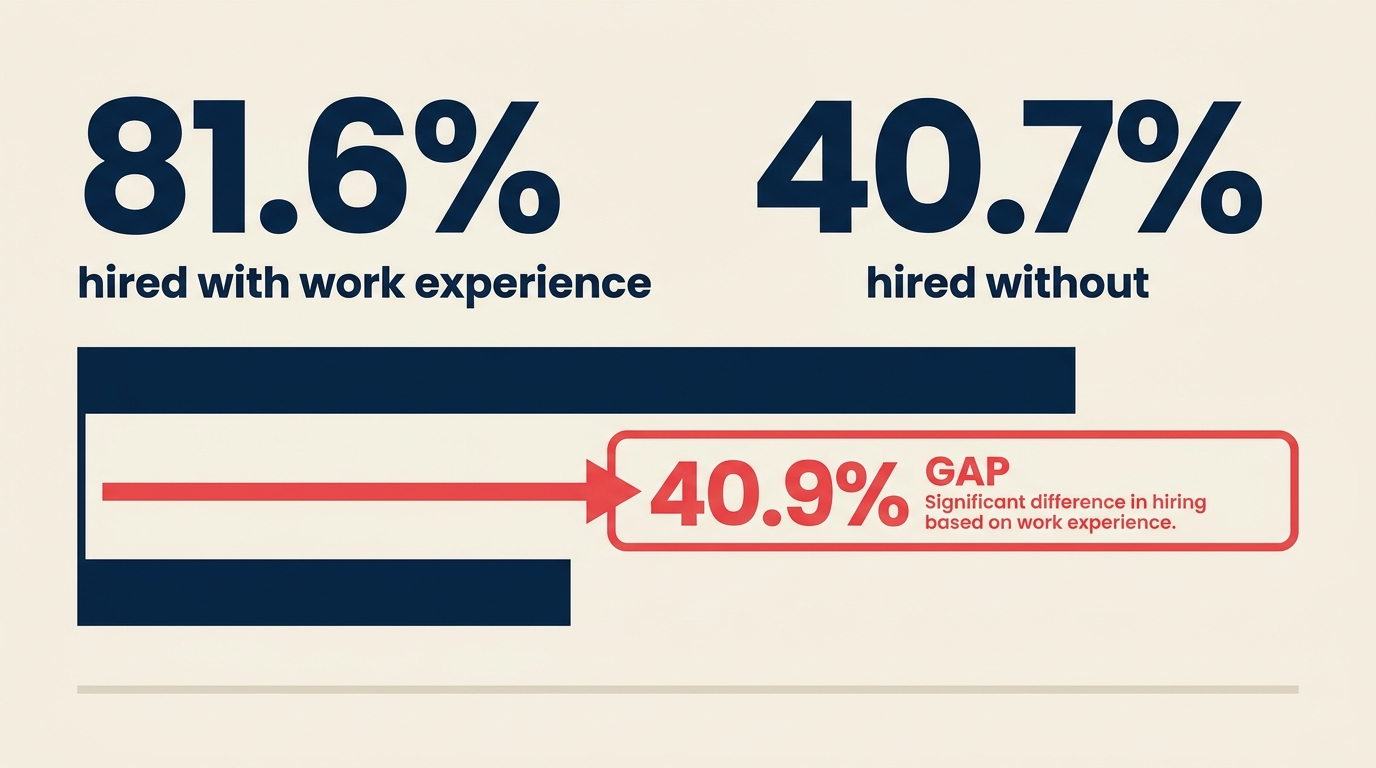
A lacuna de experiência durante a faculdade torna o cenário ainda mais grave. Formandos que tiveram estágios ou empregos de meio período durante a graduação foram contratados a 81,6%. Os sem experiência de trabalho chegaram a 40,7%. Uma diferença superior a dois para um. A experiência profissional, a exposição estruturada a ambientes reais de trabalho, é o indicador mais próximo que os gestores de contratação têm para avaliar a prontidão para o cargo. E a maioria dos recém-formados não consegue criá-la sem acesso a programas que as empresas estão cortando.
É um ciclo que se aperta sozinho. Menos contratações de nível inicial significa menos programas de estágio. Menos estágios significam menos recém-formados experientes. Menos recém-formados experientes confirmam o preconceito de que os formandos não estão prontos. E assim o requisito sobe novamente.
O Playbook do "Redesenhe, Não Delete"
CHROs que querem romper esse ciclo têm um caminho concreto. A solução não é fingir que a AI não mudou o cargo júnior. Mudou. Mas a resposta certa é redesenhar, não eliminar.
Os quatro passos são diretos:
1. Mapeie o que a AI faz hoje nos seus cargos júniores. Vá função por função. Quais tarefas nos seus cargos de nível inicial de AE, analista, coordenador ou engenheiro a AI consegue executar com 80% ou mais de fidelidade hoje? Essa lista é o alvo para redesenho, não para redução de quadro de pessoal.
2. Redefina o cargo júnior como operador de AI mais aprendiz de julgamento. O novo trabalho de nível inicial não é executar as tarefas que a AI faz. É supervisionar o output da AI, identificar erros, exercer o julgamento que o modelo não tem e desenvolver os instintos que serão necessários como contratação de nível médio. É um trabalho real. É também um aprendizado melhor do que a maioria dos cargos júniores oferecia antes da AI existir.
3. Abandone a inflação nos requisitos de experiência. Se 35% das suas vagas de nível inicial exigem competências em AI, recrute para competências em AI, não para cinco anos ou mais de experiência como substituto para elas. Um recém-formado que usou ferramentas de AI em contexto acadêmico ou de estágio estruturado pode ser mais proficiente em AI do que um profissional com cinco anos de experiência que nunca tocou em um modelo. Filtre pela capacidade demonstrada, não pela experiência como indicador substituto.
4. Proteja a entrada, mesmo em volume reduzido. Você não precisa da mesma coorte que contratava em 2019. Mas zero é um número que destrói o pipeline. Mesmo uma redução de 30 a 50% na entrada de recém-formados é recuperável. Zero cria um vácuo de talentos sênior no quarto ou quinto ano que nenhum orçamento externo de contratação vai resolver rapidamente.
Isso se conecta à questão mais ampla que os CHROs já estão navegando. A lacuna de prontidão da força de trabalho para AI em 2026, onde 98% dos executivos querem trabalho redesenhado em torno de AI, mas apenas metade se sente equipada para executar, não vai ser fechada eliminando as pessoas que teriam crescido até essa prontidão.
E os Candidatos Que Ninguém Está Contratando?
Apenas 19% dos candidatos a vagas de nível inicial dizem se sentir "muito confiantes" sobre suas perspectivas de carreira agora. Vinte e nove por cento dizem ter baixa ou nenhuma confiança. Isso é uma força de trabalho entrando em seus primeiros anos com um déficit de confiança que normalmente leva anos de experiência profissional para fechar, experiência que não vão ter se ninguém os contratar.
Empresas que contratam, redesenham bem e constroem cargos júniores potencializados por AI terão uma vantagem composta de talentos até 2028. Suas contratações júniores vão se desenvolver mais rápido porque a AI acelera o ciclo de feedback. Elas vão construir conhecimento institucional enquanto os concorrentes estão numa corrida por contratações tentando repor a equipe de nível médio que nunca desenvolveram.
O padrão de demissão por AI e recontratação boomerang já está gerando custos de recontratação que as empresas estão começando a precificar. A Dívida de Pipeline vai impactar ainda mais forte, porque não são custos de recontratação. É a ausência de pessoas para recontratar.
Empresas dispostas a revisar benchmarks de orçamento de requalificação em AI e redirecionar parte desse gasto para treinamento estruturado de AI para recém-formados estão fazendo uma aposta difícil de contestar num horizonte de cinco anos.
FAQ: AI e a Crise do Emprego de Nível Inicial
A AI está realmente eliminando empregos de nível inicial, ou o mercado de trabalho está apenas passando por uma desaceleração cíclica?
Ambos são verdadeiros, mas não representam riscos equivalentes. Uma desaceleração cíclica se recupera com o ciclo econômico. A eliminação estrutural do cargo de nível inicial, impulsionada pela AI fazendo as tarefas para as quais o cargo foi criado, não se recupera a menos que as empresas redesenhem ativamente esses cargos. A inflação nos requisitos de experiência de 2022 a 2025, com exigências de cinco anos ou mais subindo enquanto os de dois a quatro anos caíam, antecede qualquer preocupação cíclica de 2026 e aponta para uma mudança estrutural deliberada.
Os CHROs devem contestar congelamentos de contratação no nível inicial?
Sim, com dados. O argumento não é "contrate tantos formandos quanto antes." É "precifique a Dívida de Pipeline antes de congelar o degrau mais baixo." Um CHRO que consegue mostrar ao conselho uma projeção de lacuna de talentos sênior no quarto ou quinto ano, rastreada até um congelamento de entrada em 2025-2026, está fazendo um argumento estratégico que finanças e o CEO podem avaliar. Esse argumento é muito mais sólido com números: quantos dos seus atuais Diretores começaram como contratações júniores? Qual seria o custo de reposição externa?
Qual é a forma mais rápida de redesenhar um cargo de nível inicial como potencializado por AI?
Comece com o mapeamento de tarefas do primeiro passo do playbook acima. Depois faça um piloto com uma equipe antes de escalar. A pesquisa sobre a lacuna de prontidão da força de trabalho para AI mostra que a maioria das organizações que redesenham o trabalho em torno de AI se sente despreparada, o que significa que as equipes que fazem pilotos e iteram agora estarão à frente das que aguardam um framework pronto. Não espere o consenso das consultorias de RH. Tente em uma função com uma avaliação de 90 dias.
O Que os CHROs Devem Fazer Neste Trimestre
Estas são ações específicas, não princípios:
Audite sua entrada de nível inicial de 2025 versus sua entrada de 2020-2022. Se você está mais de 40% abaixo da média pré-2023, marque isso como um item de risco de Dívida de Pipeline para o deck do conselho do terceiro trimestre. Quantifique a lacuna.
Congele qualquer descrição de cargo que use "5+ anos de experiência" como filtro em funções que eram de nível inicial há dois anos. Devolva-as ao gestor de contratação com a pergunta: que capacidade específica esse filtro traz, e um recém-formado com competências em AI pode fornecê-la?
Identifique uma função onde você pode fazer um piloto de cargo júnior potencializado por AI até o quarto trimestre. Não precisa ser grande. Precisa ser real, avaliado e reportável. É assim que você constrói o argumento interno antes que alguém elimine toda a entrada.
Verifique se você tem um pipeline de estágio para contratação. Os dados da NACE sobre taxas de contratação de 81,6% versus 40,7% devem provocar uma revisão imediata de se o seu programa de estágios está funcionando como alimentador ou como protocolo. Se for protocolo, corrija o processo de conversão antes que a próxima turma de estagiários comece.
Coloque o orçamento de requalificação em AI na pauta do nível inicial. Não apenas para funcionários existentes, mas para a coorte entrante. O debate entre bootcamp e pipeline universitário é relevante aqui: a questão não é de onde veio a contratação, mas se ela chega com competências práticas em AI que seu cargo redesenhado exige. O orçamento deve seguir esse requisito, não a credencial.
A eliminação silenciosa do emprego de nível inicial é uma das decisões de força de trabalho mais consequentes desta década. Está acontecendo sem uma apresentação ao conselho, sem um framework estratégico e sem que ninguém precifique o custo composto. Esse é exatamente o tipo de risco que pertence à mesa do CHRO.
Fonte primária: Washington Monthly, 29 de maio de 2026. Dados complementares: iCIMS Hiring Insights de maio de 2026, CNBC Select Turma de 2026.

On this page
- Os Números Por Trás do Título Otimista
- O Requisito de Experiência Está Subindo na Base
- Dívida de Pipeline: O Conceito Que os CHROs Precisam Agora
- O Que as Pequenas Empresas Já Estão Acertando
- O Playbook do "Redesenhe, Não Delete"
- E os Candidatos Que Ninguém Está Contratando?
- FAQ: AI e a Crise do Emprego de Nível Inicial
- A AI está realmente eliminando empregos de nível inicial, ou o mercado de trabalho está apenas passando por uma desaceleração cíclica?
- Os CHROs devem contestar congelamentos de contratação no nível inicial?
- Qual é a forma mais rápida de redesenhar um cargo de nível inicial como potencializado por AI?
- O Que os CHROs Devem Fazer Neste Trimestre