Estilo de Liderança de Margaret Thatcher: Política de Convicção e o Custo de Não Comprometer
Turn this article into takeaways for your work.


Each assistant summarizes the article only for you and suggests best practices for your work.
Fatos Principais: Margaret Thatcher (1925-2013) foi a primeira mulher Primeira-Ministra do Reino Unido, servindo de maio de 1979 a novembro de 1990 — a mais longa premiership contínua do século XX. Ela venceu a Guerra das Falklands de 1982 contra a Argentina, quebrou o National Union of Mineworkers na greve de 1984-85, e privatizou a British Telecom, British Petroleum, British Gas, British Airways, Rolls-Royce e British Steel. A mídia soviética cunhou seu apelido "A Dama de Ferro" em 1976, que ela abraçou. Ela sobreviveu ao bombardeio do IRA de outubro de 1984 do Grand Hotel Brighton durante a conferência do Partido Conservador, que matou cinco e feriu 31.
A Doutrina de Política de Convicção
Política de convicção é uma doutrina de liderança na qual o líder estabelece um marco ideológico coerente antecipadamente e se recusa a comprometer princípios centrais por conveniência política ou pressão de curto prazo. Sob essa doutrina, a consistência em si se torna um ativo estratégico — cada desafio absorvido sem recuo reforça a credibilidade do líder, convertendo resistência em evidência de resolução em vez de vulnerabilidade. O método produz clareza e direção mas exige um mecanismo de feedback externo que os próprios instintos do líder não conseguem fornecer.
O pai de Margaret Thatcher era um merceeiro e conselheiro local em Grantham, Lincolnshire. Ela o creditou como sua principal influência intelectual — um homem que acreditava em autossuficiência, disciplina fiscal e fazer o que era certo independentemente do que era popular. Ela levou essas convicções para Oxford, para a profissão de advocacia, para o Parlamento em 1959, e eventualmente para Downing Street em maio de 1979.
Ela herdou uma Grã-Bretanha prejudicada por greves sindicais, 27 por cento de inflação em seu pico, e indústrias de propriedade estatal perdendo dinheiro público. Ela serviu 11 anos como Primeira-Ministra, mais que qualquer líder britânico do século XX. Ela privatizou a British Telecom, British Airways, Rolls-Royce, British Gas e British Steel. Ela quebrou o sindicato dos mineiros em uma greve de 12 meses que seu governo havia passado dois anos se preparando. Ela expediu uma força-tarefa naval para as Ilhas Falkland em abril de 1982, três semanas depois que a Argentina invadiu, com uma linha de suprimentos de 8 mil milhas e ceticismo profissional significativo sobre se conseguiria sucesso. A Argentina se rendeu em 14 de junho.
Ela foi expulsa não por eleitores mas por seu próprio gabinete Conservador em novembro de 1990 sobre a Poll Tax. A lição não é que ela estava certa ou errada sobre qualquer política específica. É que a liderança por convicção tem prazo de validade — Winston Churchill é a comparação britânica mais instrutiva, um líder que foi a pessoa certa para o momento existencial e a pessoa errada para a reconstrução que se seguiu, e os líderes que não reconhecem quando esse prazo está expirando tendem a terminar exatamente como ela.
Análise do Estilo de Liderança
| Estilo | Peso | Como Aparecia |
|---|---|---|
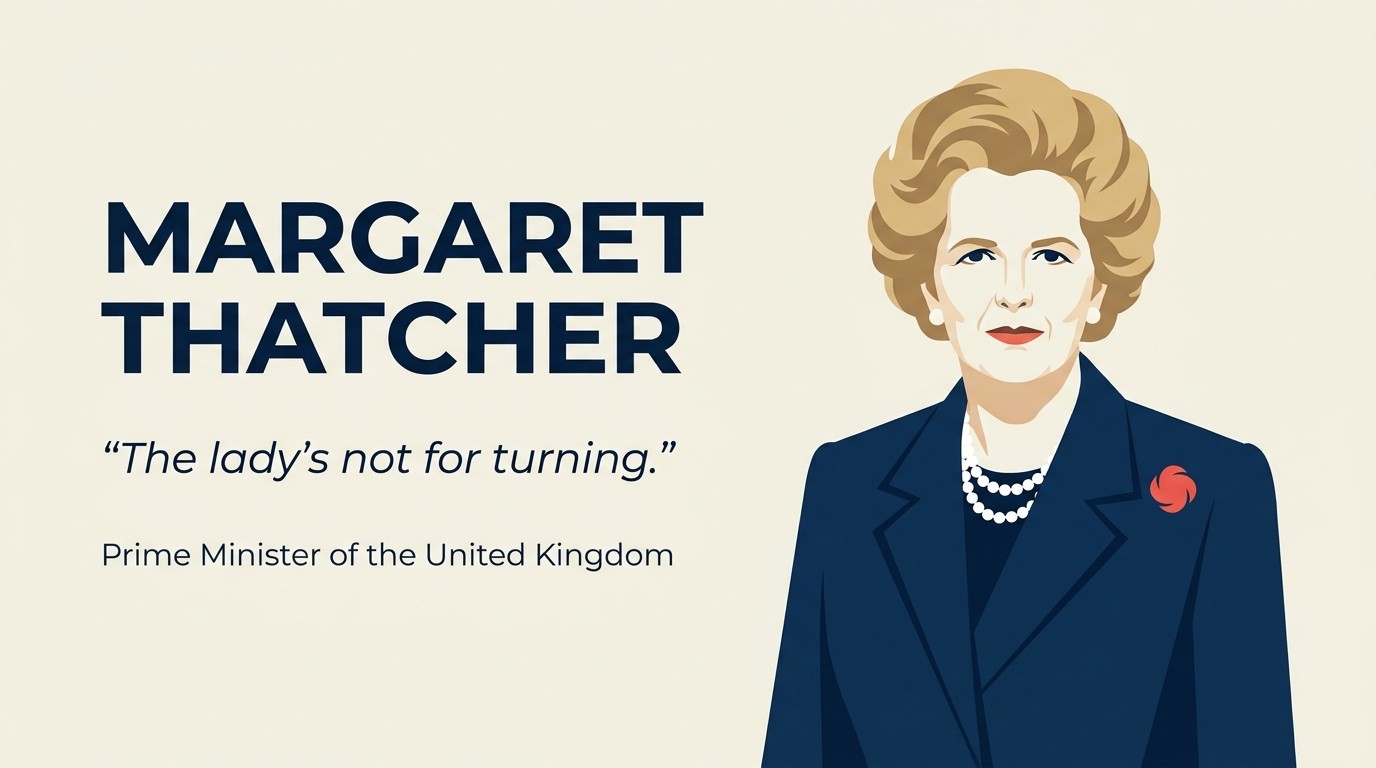
| Líder por Convicção | 65% | Thatcher operava a partir de um marco ideológico coerente — mercados livres, redução da intervenção estatal, defesa nacional forte, responsabilidade pessoal — e ela não comprometia esse marco por conveniência política. Quando seu Chanceler Howe quis reflacionar a economia em 1981 durante recessão profunda, ela se recusou. Quando 364 economistas assinaram uma carta dizendo que suas políticas causariam dano irreversível, ela não as mudou. "A dama não está virando", ela disse na conferência Conservadora de 1980, e ela queria dizer. |
| Agente de Mudança Confrontacional | 35% | Ela não gerenciou mudança — a impulsionou. A greve dos mineiros não foi resolvida através de negociação; foi vencida por pré-estocagem de carvão por dois anos e resistência a 12 meses de ação de greve. Privatização não foi feita gentilmente para proteger inércia institucional; foi feita em grandes tranches com mensagens políticas claras. Ela tratava resistência como algo a superar, não como informação sobre se a mudança estava sendo executada corretamente. |
A divisão 65/35 importa para entender onde seu método funcionou e onde falhou. O componente de convicção produziu direção estratégica consistente que seus antecessores não tinham. A Grã-Bretanha sob Thatcher sabia o que estava tentando fazer. O componente confrontacional fez coisas que genuinamente precisavam ser feitas. Mas o estilo confrontacional não tinha mecanismo para distinguir o sindicato dos mineiros (uma luta que valia a pena ter) da Poll Tax (uma luta da qual ela deveria ter se retirado antes de destruir a si mesma). Ambas pareciam iguais de dentro do marco de convicção.
Principais Características de Liderança
| Característica | Avaliação | O que Significa na Prática |
|---|---|---|
| Consistência ideológica sob pressão política | Excepcional | Thatcher manteve suas posições econômicas centrais através de 3 milhões de desempregados, através de distúrbios urbanos em 1981, através de hostilidade intensa da imprensa, e através de oposição interna significativa do Partido Conservador. Essa consistência era o que tornava o Thatcherismo um programa econômico coerente em vez de um conjunto reativo de políticas. Era também o que tornava o desastre da Poll Tax tão fatal — a mesma consistência que havia sido sua maior força produzia teimosia catastrófica quando a política era genuinamente errada. |
| Preparação pessoal e domínio de detalhes | Muito Alto | Ela era notória por ler cada briefing, por ficar acordada até 2 da manhã com documentos oficiais, por desafiar ministros em gabinete que não conheciam seus próprios departamentos tão bem quanto ela. Geoffrey Howe descreveu reuniões de gabinete como seminários onde ela já sabia as respostas e estava testando se seus ministros sabiam. Esse nível de preparação é excepcional e extremamente difícil de manter em toda uma operação governamental. |
| Disposição em absorver ódio público para objetivos de longo prazo | Alto | A transição econômica que ela implementou destruiu comunidades no Norte da Inglaterra e no País de Gales e Escócia que haviam sido construídas em torno de carvão e manufatura por gerações. Ela sabia disso. Ela não se desculpou por isso. Sua visão era que essas indústrias não conseguiriam sobreviver em sua forma existente e que mantê-las através de subsídio estatal era adiar dor necessária em vez de evitá-la. Se ela estava certa sobre a política, ela estava clara sobre o custo — e ela pagou o preço político sem flinching visível. |
| Incapacidade de ler sinais de expiração de coalizão | Baixo | Os líderes que eventualmente se movimentaram contra ela — Geoffrey Howe, Michael Heseltine, Nigel Lawson — não eram opositores políticos. Eram colegas que haviam servido ao lado dela por anos, que haviam implementado seu programa, e que finalmente concluíram que ela havia deixado de conseguir ouvi-los. O discurso de renúncia de Howe em novembro de 1990 foi devastador precisamente porque veio de alguém que havia sido leal por décadas. Ela não viu vindo porque havia deixado de procurar. |
As 3 Decisões Que Definiram Thatcher Como uma Líder
1. Enviando a Força-Tarefa para as Falklands em Abril de 1982
Em 2 de abril de 1982, forças argentinas invadiram as Ilhas Falkland, um território britânico no Atlântico Sul com uma população de aproximadamente 1.800 pessoas. A invasão não foi uma surpresa para serviços de inteligência, que vinham avisando de intenções argentinas por semanas. A resposta política e militar não era óbvia.
As Falklands ficavam a 8 mil milhas da Grã-Bretanha. Uma força-tarefa naval levaria três semanas para chegar, dando à Argentina tempo para se fortalecer. A avaliação militar era cautelosa sobre as chances de retomar as ilhas contra uma força defensora. As opções diplomáticas incluíam mediação da ONU e vários marcos para soberania argentina com direitos administrativos britânicos. Vários membros do Gabinete e quase todo o Foreign Office favoreciam a trilha negociada.
Thatcher expediu a força-tarefa em 5 de abril, três dias após a invasão. Seu raciocínio era direto: um território britânico havia sido apreendido pela força, súditos britânicos estavam sob ocupação estrangeira, e o dever do governo era reverter. Negociar soberania sob ocupação militar sinalizaria a cada adversário que a Grã-Bretanha podia ser coagida para fazer concessões por fait accompli militar. A mensagem que ela se recusava a enviar era mais importante que a dificuldade operacional.
A força-tarefa chegou ao Atlântico Sul, desembarcou em San Carlos Water em 21 de maio, e lutou até Port Stanley. A Argentina se rendeu 14 de junho. 255 pessoal militar britânico morreu. A posição política de Thatcher, que havia sido fraca antes do conflito, foi transformada. A eleição geral de 1983 produziu um deslizamento de terra Conservador.
A lição de liderança das Falklands é sobre a relação entre credibilidade e velocidade de decisão. Thatcher se movimentou em 72 horas porque entendia que o custo de hesitação (em termos do sinal que enviava sobre a disposição da Grã-Bretanha em defender seus compromissos) superava o custo da operação em si. Ela fez esse cálculo mais rápido que seus assessores e estava certa. A velocidade da decisão era a decisão.
2. Recusando-se em Piscar Durante a Greve dos Mineiros de 1984-85
O National Union of Mineworkers sob Arthur Scargill havia quebrado o governo Heath em 1974 forçando uma semana de trabalho de três dias e eventualmente precipitando a queda de Heath. Thatcher havia estado naquele Gabinete. Ela não tinha a intenção de repetir.
Entre 1981 e 1984, seu governo silenciosamente estocou carvão nas estações de energia. O Central Electricity Generating Board preparou planos de contingência para mudança de combustível. O governo construiu uma unidade de coordenação policial nacional para gerenciar ordem pública relacionada a greves. Quando Scargill chamou a greve em março de 1984 (sem uma votação nacional de membros do sindicato), o governo estava pronto de uma forma que nunca havia sido verdade antes.
A greve durou 12 meses. Houve confrontos significativos entre polícia e mineiros grevistas, o mais violento em Orgreave em junho de 1984. Comunidades em toda a região carbonífera sofreram dificuldade econômica severa. Importações de carvão internacional mantiveram as estações de energia funcionando.
A posição do NUM se desmoronou em março de 1985. Mineiros retornaram ao trabalho sem um único acordo sobre os fechamentos de poços que haviam precipitado a disputa. Ao longo dos anos seguintes, 20 mil ex-mineiros nunca mais trabalharam na indústria. Muitas comunidades mineiras entraram em declínio estrutural que ainda não se reverteu completamente.
A lição operacional é sobre preparação como substituto para sorte. Thatcher venceu a greve dos mineiros porque havia passado três anos se preparando para ter. Jack Welch aplicou uma disciplina análoga na GE — pré-identificando os problemas estruturais em cada unidade de negócio antes que o confronto chegasse, em vez de reagir quando a crise já era pública. Ela pré-estocou o carvão que negaria ao sindicato sua alavancagem. Ela construiu o marco legal e policial que permitiria ao governo gerenciar a dimensão de ordem pública. Ela escolheu o timing, ela se recusou a lutar em 1981 quando julgou que o governo não estava pronto, e forçou o confronto quando estava. Esse nível de preparação estratégica para um conflito que ainda não havia começado é incomum, difícil, e extremamente eficaz quando é feito bem.
3. Introduzindo a Poll Tax em 1989-90
A Community Charge, universalmente conhecida como a Poll Tax, substituiu o sistema de alíquotas de propriedade local com um pagamento fixo por cabeça. Cada adulto pagaria o mesmo valor independentemente de renda. A base de receita seria a mesma se você vivesse em uma casa solarengo ou um apartamento pequeno.
A política tinha uma lógica econômica coerente: as alíquotas não tinham relação com consumo de serviços locais, e a Poll Tax criaria responsabilidade democrática fazendo cada eleitor um pagador direto de custos de governo local. Thatcher acreditava. Seu gabinete havia debatido por anos. Foi introduzida na Escócia em 1989, Inglaterra e País de Gales em 1990.
Produziu distúrbios em Trafalgar Square em março de 1990. Campanhas de resistência à Poll Tax organizaram não-pagamento em massa. O ônus administrativo nos conselhos locais era enorme. O impacto regressivo nos domicílios de renda mais baixa era imediato e visível. A impopularidade da política não era uma questão de falha de implementação. Estava incorporada ao design.
O que é importante para operadores é o que aconteceu dentro do Partido Conservador, não nas ruas. Geoffrey Howe renunciou como Vice-PM em novembro de 1990, em parte sobre Europa mas também sobre a direção do governo e o estilo de liderança de Thatcher. Seu discurso de renúncia nos Commons foi uma conta metodical, pessoal e devastadora de ser uma ministra sênior cujos conselhos foram consistentemente ignorados. Michael Heseltine imediatamente declarou um desafio de liderança.
Thatcher lutou a primeira votação, chegou um voto aquém de vencer completamente, consultou seus colegas de gabinete individualmente, e descobriu que quase nenhum deles a apoiaria através de uma segunda votação. Ela se retirou em 22 de novembro de 1990. Ela chorou no carro saindo de Downing Street.
O modelo de falha é limpo: uma líder que havia corretamente ignorado a cautela de seus colegas em privatização, as Falklands e a greve dos mineiros, eventualmente aplicou a mesma ignorância a uma política sobre a qual eles tinham razão, e por então ela havia destruído o mecanismo de feedback que teria dito a ela a diferença. Os colegas que a expulsaram não eram seus oponentes políticos. Eram ex-leais que finalmente concluíram que ela havia deixado de ouvir. Esse é um modo específico e evitável de falha para qualquer líder orientado por convicção.
O Que Thatcher Faria em Seu Papel
Se você é um CEO, seu playbook diz a você para se preparar para a luta difícil antes dela chegar. A greve dos mineiros foi vencida em 1984 porque Thatcher começou a se preparar em 1981. Ela pré-estocou carvão. Ela construiu o marco legal. Ela se recusou a ter a luta antes de estar pronta. Se você conseguir ver um conflito competitivo ou estrutural significativo chegando, uma disrupção de categoria, um risco de concentração de cliente maior, um desafio trabalhista ou regulatório, o modelo de Thatcher é começar a construir a posição operacional agora, não quando a crise chegar.
Se você é um COO ou líder de operações, seu playbook diz a você para conhecer seus briefings melhor do que as pessoas que os possuem. A disciplina de preparação de Thatcher, as noites tardias com documentos oficiais, o interrogatório sistemático de ministros que não haviam feito o mesmo, criou uma qualidade de tomada de decisão no topo que compensou muito atrito organizacional. Se você é responsável por operações em múltiplas funções, você não consegue delegar seu caminho para sair da necessidade de entender o que está realmente acontecendo em cada uma. Profundidade de preparação é uma vantagem competitiva.
Se você é um líder de produto, seu programa de privatização é um estudo de caso de sequenciamento. Ela não privatizou tudo de uma vez. Começou com British Telecom em 1984, que era grande, visível, e tinha uma lógica comercial direta. Lee Kuan Yew executou uma estratégia paralela de sequenciamento em Singapura — reformas de mercado livre introduzidas em uma ordem que construiu credibilidade institucional antes de tentar as mudanças mais politicamente custosas. Depois British Gas em 1986. Depois British Airways e Rolls-Royce em 1987. Cada privatização bem-sucedida construiu credibilidade política e operacional para a próxima. Se você está executando uma transformação de produto significativa, o sequenciamento do que você muda primeiro, e o que esse sucesso habilita a seguir, importa tanto quanto a visão geral.
Se você está em vendas ou marketing, "A dama não está virando" é o exemplo mais estudado de framing de convicção na comunicação política britânica moderna. Ela estava anunciando, antecipadamente, que não seria movimentada, o que significava que toda campanha de pressão subsequente contra suas políticas confirmava sua consistência em vez de expor sua fraqueza. Esse tipo de posicionamento antecipado exige confiança absoluta de que sua tese central está correta. Funciona extremamente bem quando você está certo e catastroficamente quando está errado. Saiba em qual situação você está antes de fazer o anúncio.
A Análise de Rework
O modelo de Thatcher combina direção orientada por convicção com reforma estrutural executada na escala organizacional — privatização, confronto sindical, disciplina fiscal — e as transformações que definem sua gestão todas rodavam na mesma lógica operacional: preparar o terreno antecipadamente, sequenciar a mudança cuidadosamente, e manter a linha contra resistência organizada. Essa é a forma exata de maioria das transformações de negócio sérias. Migrações de CRM, pivôs de modelo de receita, realinhamentos de GTM, e consolidações pós-M&A todas exigem um líder que não vai piscar e um sistema operacional que não vai soltar threads durante os trimestres mais duros. Rework é construído para essa segunda metade. Quando um líder se compromete com uma transformação orientada por convicção, o trabalho em si ainda precisa acontecer em vendas, ops e suporte. Rework dá a essa transformação uma superfície operacional única — pipeline, tasks, handoffs cross-team e visibilidade de status em um lugar — para que a convicção no topo se traduza em execução na linha, em vez de se perder em sprawl de ferramentas quando a pressão pico.
Citações Notáveis e Lições Além da Sala de Diretores
"A dama não está virando." Conferência do Partido Conservador, outubro de 1980. Ela estava respondendo a chamadas para reverter suas políticas econômicas durante recessão profunda. A linha foi escrita pelo dramaturgo Ronald Millar e deliberadamente ecoava a peça "The Lady's Not for Burning" de Christopher Fry. Mas a razão pela qual funcionou era que era exatamente o que ela queria dizer. Ela não estava virando. As pessoas chamando por uma virada já sabiam disso; ela estava apenas removendo qualquer dúvida restante. Líderes que fazem esse tipo de compromisso antecipado incondicional levam um risco significativo, mas também convertem cada desafio subsequente em evidência de sua consistência, que é sua própria forma de capital político.
Ela disse mais tarde em sua carreira: "Eu não era uma política de consenso ou uma política pragmática. Eu era uma política de convicção." Ela quis dizer como uma descrição direta, não uma crítica de outros estilos. Mas contém o modo exato de falha que ela incorporava: convicção como uma filosofia de governança completa, sem mecanismo para distinguir as convicções que estão corretas das que não estão. Ela estava correta sobre privatização. Ela estava correta sobre os sindicatos. Ela estava errada sobre a Poll Tax. O estilo de convicção não conhece a diferença.
Seu domínio de detalhe era extraordinário e exaustivo para todos ao seu redor. Ela lia cada briefing. Ela ficava acordada até 2 da manhã com documentos oficiais. Ela desafiava funcionários públicos que não conseguiam responder perguntas sobre seus próprios departamentos tão bem quanto ela. Essa preparação lhe dava autoridade genuína em discussões de gabinete. Também contribuiu para um estilo de governança que não conseguia facilmente admitir estar errada, porque ela havia lido todos os documentos e sua posição estava, no momento em que a discussão começava, já completamente formada.
Onde Este Estilo Quebra
O estilo de convicção de Thatcher funcionava quando ela estava certa, sindicatos, privatização, Falklands, e se tornou catastrófico quando ela estava errada. A Poll Tax combinava ambos os modos de falha: a política era genuinamente ruim e ela era a última pessoa no governo a reconhecer, porque o mesmo mecanismo que produzia a decisão das Falklands também filtrava o feedback que teria dito a ela que a Poll Tax era diferente.
Ela nunca reconstruiu as comunidades industriais que sua transição econômica destruiu. O colapso da manufatura no Norte da Inglaterra, País de Gales e Escócia criou desigualdades regionais que persistem em 2026. Seu Euro-ceticismo, razoável como uma posição, eventualmente fraturou o Partido Conservador por uma geração. E os colegas que a expulsaram, Howe, Heseltine, Lawson, não eram inimigos. Eram ex-leais que ela havia deixado de ouvir. Mary Barra enfrentou um desafio estruturalmente diferente como a primeira mulher CEO de um grande fabricante de carros — a liderança de Mary Barra mostra como se parece a liderança por convicção quando o líder incorpora os loops de feedback que Thatcher eventualmente desabilitou. O modo específico de falha da liderança por convicção não é que ela produz más decisões. É que ela destrói o loop de feedback que as pegaria.
Saiba Mais
Esses artigos se conectam aos temas principais no perfil de Thatcher:
- Estilo de Liderança de Winston Churchill: Como Um Líder Se Torna Indispensável em Uma Crise Existencial
- Liderança de Jack Welch: A Máquina de Negócio GE e a Origem Moderna de Operações
- Liderança de Lee Kuan Yew: Como Construir Uma Nação Através de Dados Observados e Execução Disciplinada
- Liderança de Mary Barra: Como A Primeira Mulher CEO da General Motors Liderou a Indústria Automotiva no Maior Pivô de Sua História

On this page
- A Doutrina de Política de Convicção
- Análise do Estilo de Liderança
- Principais Características de Liderança
- As 3 Decisões Que Definiram Thatcher Como uma Líder
- 1. Enviando a Força-Tarefa para as Falklands em Abril de 1982
- 2. Recusando-se em Piscar Durante a Greve dos Mineiros de 1984-85
- 3. Introduzindo a Poll Tax em 1989-90
- O Que Thatcher Faria em Seu Papel
- A Análise de Rework
- Citações Notáveis e Lições Além da Sala de Diretores
- Onde Este Estilo Quebra
- Saiba Mais