Estilo de Liderança de Kim Scott: Franqueza Radical, Cuidado Pessoal e o Framework de Feedback Que Mudou Gerenciamento
Turn this article into takeaways for your work.


Each assistant summarizes the article only for you and suggests best practices for your work.
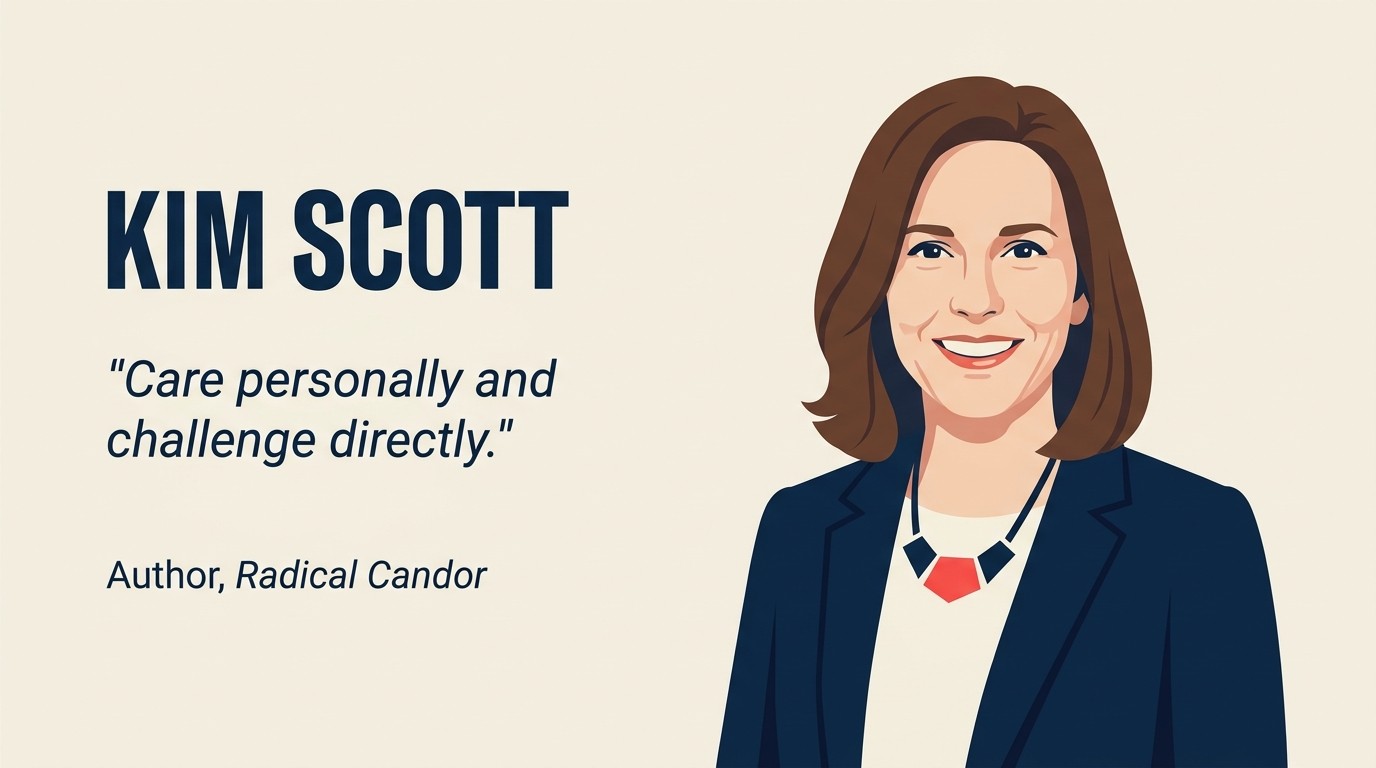
Fatos Principais Sobre Kim Scott
- Autora: "Radical Candor" (2017), bestseller do New York Times com mais de um milhão de cópias vendidas
- Google (2004–2014): Papéis executivos gerenciando times de AdSense, YouTube e Google Docs
- Apple University: Membro de faculdade ensinando currículo de gerenciamento executivo
- Cofundadora: Candor Inc (depois Radical Candor LLC) com Russ Laraway
- Livros adicionais: "Just Work" (2021) sobre equidade de local de trabalho e dinâmica de poder; "Radical Respect" (2024)
- Educação: MBA, Harvard Business School
Uma vez, um gerente de Kim Scott no Google lhe disse — após uma apresentação que correu bem — "Quando você disse 'um' muitas vezes, isso fez você soar menos inteligente." Scott estava pronta para descartá-lo como exigência. Então seu gerente disse: "Estou apenas te dizendo isso porque me importo com você e porque quero que você tenha sucesso aqui."
Aquela combinação — desafio direto, cuidado genuíno — é todo o framework de Franqueza Radical em um momento.
O livro vendeu mais de um milhão de cópias. Empresas como Dropbox, Twitter e Qualtrics construíram programas de treinamento de gerenciamento em torno dele. A cobertura do Harvard Business Review do framework rastreia por que a maioria dos gerentes padrão no quadrante errado. O que torna isso digno de estudo não é o framework em si — é os modos de falha específicos que foi projetado para corrigir: líderes que são gentis mas desonestos, e líderes que são honestos mas desagradáveis.
Scott gerenciou o time de produto Google Docs e engenharia de suporte ao cliente AdSense antes de ensinar gerentes na Apple University — onde foi mentorada por Sheryl Sandberg durante seus anos no Google. Ela construiu o framework de Franqueza Radical enquanto preparava executivos da Apple para conversas difíceis, e então passou a melhor parte de uma década após "Radical Candor" (2017) mostrando empresas por que o 2x2 é mais fácil de entender do que de executar. Seu framework fica ao lado da pesquisa de org-psych de Adam Grant, trabalho de Brené Brown sobre vulnerabilidade como contraponto de franqueza, e frameworks de cultura de Patty McCord do Netflix — todos abordando o mesmo problema subjacente de comunicação honesta em escala.
A Doutrina de Franqueza Radical (O Modelo Cuidado Pessoal + Desafio Direto)
A Doutrina de Franqueza Radical de Kim Scott é seu princípio de gerenciamento que feedback efetivo exige dois compromissos simultâneos: cuidar pessoalmente do indivíduo como uma pessoa inteira e desafiá-los diretamente sobre o trabalho. Scott argumenta que nenhuma dimensão funciona isoladamente — cuidado sem desafio collapsa em empatia prejudicial (gentil mas desonesto), enquanto desafio sem cuidado se torna agressão desagradável. A reivindicação prática da doutrina é que o investimento relacional é o pré-requisito, não o subproduto de feedback que realmente aterrissa e muda comportamento.
Análise do Estilo de Liderança
| Estilo | Peso | Como aparecia |
|---|---|---|
| Coach de Feedback Direto | 65% | A contribuição primária de Scott é um sistema prático para entregar feedback que é tanto honesto quanto relacional. Sua experiência no Google gerenciando engenheiros de alto desempenho — pessoas que conseguiam lidar com conversas difíceis mas cuja confiança você conseguia perder permanentemente com crítica mal entregue — moldou seu modelo. O framework 2x2 de Franqueza Radical não é teórico. Veio de assistir a si mesma e aos gerentes ao seu redor padrão a mesma falha confortável: sendo gentil o suficiente para evitar a conversa enquanto se dizendo que estavam sendo considerados. |
| Líder Centrado em Relacionamento | 35% | O eixo "cuidado pessoal" de Franqueza Radical não é decorativo. Scott argumenta que feedback sem um relacionamento genuíno por trás collapsa em agressão desagradável ou insinceridade manipulativa dependendo do quão direto for. Sua abordagem de gerenciamento no Google incluiu práticas que a maioria dos gerentes orientados tecnicamente pula: perguntar às pessoas sobre suas vidas fora do trabalho, entender o que as motiva, e ser explícito sobre cuidar de suas carreiras além do que fazem para seu time. O relacionamento não é o meio para melhor feedback. É o pré-requisito. |
A divisão 65/35 reflete o sequenciamento de Scott: a maioria dos gerentes tenta se tornar melhor em entrega de feedback e trata relacionamento como um nice-to-have. Scott argumenta que a sequência é de trás para frente. Você não consegue consistentemente desafiar alguém diretamente se o relacionamento não tem uma fundação que torna o desafio aterrissando como cuidado em vez de crítica. Mas ela também deixa claro que investir no relacionamento sem nunca desafiar diretamente é sua própria falha — e uma mais comum.
Traços Principais de Liderança
| Traço | Avaliação | O que significa na prática |
|---|---|---|
| Conforto entregando feedback desconfortável | Excepcional | Scott não apenas advoga por feedback direto — ela descreve o desconforto específico que para a maioria dos gerentes de dá-lo, e ela não finge que o desconforto desaparece com prática. Sua própria experiência recebendo o feedback de "um" é a origem história do framework precisamente porque ela foi inicialmente defensiva. O ponto prático é que entrega de feedback efetivo não é sobre superar desconforto com prática. É sobre desenvolver um relacionamento e um conjunto de hábitos que tornam o desconforto digno de suportar. |
| Investimento genuíno no crescimento de diretos | Muito Alta | O eixo "cuidado pessoal" de Scott não é sobre ser aquecido em 1:1s. É sobre saber o suficiente sobre os objetivos, forças e frustrações de cada direto para dar-lhes feedback que é calibrado para onde eles realmente querem ir. Isso requer investimento: perguntar o que as pessoas querem de suas carreiras, o que elas acham que drenam e o que estão tentando provar. A maioria dos gerentes pula isso porque leva tempo e cria obrigações. Scott argumenta as obrigações são o ponto — uma vez que você sabe em que alguém está trabalhando, seu feedback tem direção. |
| Honestidade intelectual sobre seus próprios fracassos | Alta | O 2x2 de Franqueza Radical inclui quadrantes que Scott explicitamente coloca a si mesma em vários pontos em sua carreira. Ela descreve dar feedback agressivamente desagradável como uma jovem gerente e padrão em empatia prejudicial quando estava gerenciando pessoas que gostava demais para desafiar. Essa auto-implicação torna o framework mais credível do que um modelo puramente prescritivo seria, e modela o tipo de auto-avaliação honesta que ela está pedindo aos leitores para aplicar. |
| Habilidade de tornar frameworks aderentes e práticos | Alta | O 2x2 de Franqueza Radical é simples o suficiente para desenhar no verso de um guardanapo e específico o suficiente para aplicar em uma reunião. Aquele balanço é mais difícil de alcançar do que parece. A maioria dos frameworks de gerenciamento são muito simples (seja mais empático) ou muito complexo (o modelo de 14 variáveis de feedback efetivo). Scott aterrou no espaço entre, que é por que se prendeu. O rótulo "empatia prejudicial" em particular — nomeando o modo de falha que a maioria dos gerentes nunca chamaria falha — é o que torna o framework realmente mudar comportamento. |
As 3 Decisões Que Definiram Kim Scott como Líder
1. Desenvolvendo o 2x2 de Franqueza Radical Enquanto Ensinava na Apple University
Apple University é o programa de educação executiva interna da Apple. Scott ensinou lá após deixar Google, e seu currículo foi focado em um problema de gerenciamento persistente: os gerentes mais propensos a serem promovidos em empresas de tecnologia eram tecnicamente excelentes, intelectualmente afiados, e sistematicamente terríveis em entregar feedback.
O problema não era dureza. Google e Apple não eram cheios de gerentes que aterrorizavam seus times. O problema era o oposto: gerentes que gostavam das pessoas que gerenciavam, não queriam danificar o relacionamento, e portanto suavizavam feedback até ficar inútil — ou evitavam dar tudo junto.
Scott nomeou esse modo de falha "empatia prejudicial." O nome importa mais do que a maioria das pessoas reconhece. Se você chama o comportamento "sendo demais gentil," gerentes ouvem que sua gentileza é o problema, e a correção parece como se tornar menos considerado. Se você chama "empatia prejudicial," o enquadramento é diferente: sua preocupação com o relacionamento está causando você danificá-lo, porque a pessoa que você está protegendo de uma conversa desconfortável vai ser surpreendida depois quando descobrir o que você realmente pensava.
O 2x2 tem dois eixos: Cuidado Pessoal (vertical) e Desafio Direto (horizontal). Os quatro quadrantes são:
- Franqueza Radical (alto cuidado, alto desafio): o que você está mirando
- Agressão Desagradável (baixo cuidado, alto desafio): direto mas frio ou desdenho
- Empatia Prejudicial (alto cuidado, baixo desafio): gentil mas desonesto
- Insinceridade Manipulativa (baixo cuidado, baixo desafio): político e passivo
A descoberta de pesquisa de Scott — que ela validou informalmente através de centenas de gerentes com que trabalhou na Apple e depois em consultoria — foi que o quadrante mais comum para gerentes bem-intencionados não era agressão desagradável. Era empatia prejudicial. Gerentes que se descreveriam como cuidadosos e considerados estavam sistematicamente falhando em dizer às pessoas coisas que precisavam saber.
O poder prático do framework vem da nomeação. Uma vez que você tem um nome para "gentil mas desonesto," você consegue perguntar a si mesmo em tempo real: isso é consideração ou empatia prejudicial? Essa é uma pergunta que a maioria dos gerentes não teria pensado fazer antes do framework dar-lhes o vocabulário para isso.
Para você: a aplicação mais rápida é identificar uma pessoa em seu time que está tendo desempenho inferior de uma forma que você não abordou diretamente. Pergunte a si mesmo o que você disse a ela sobre isso. Então pergunte se o que você disse lhe deu uma imagem clara do problema e do que você precisa mudar. Se a resposta honesta é não, você está no quadrante de empatia prejudicial para aquele relacionamento, e quanto mais tempo você ficar lá, mais difícil a eventual correção se torna.
2. Escrevendo "Radical Candor" como um Livro de Praticante, Não um Acadêmico
Scott publicou "Radical Candor" em 2017 através de St. Martin's Press. O posicionamento do livro era deliberadamente voltado para praticante: não um artigo de pesquisa, não um estudo de caso de escola de negócios, mas um manual de gerente para um conjunto específico de conversas.
Aquela decisão de posicionamento moldou como se espalhou. Livros de gerenciamento acadêmicos recebem citações e discussões em departamentos de RH. Livros de praticante recebem presentes entre gerentes e se tornam leitura necessária em onboarding de novo gerente. "Radical Candor" fez o último. Apareceu no treinamento de gerente de Dropbox, no desenvolvimento de liderança de Qualtrics, no currículo de gerenciamento interno do Twitter. Aquele spread aconteceu porque o livro não pediu aos gerentes para se tornarem pessoas diferentes — deu-lhes um framework para as conversas que já estavam evitando e um vocabulário para por que aquelas conversas importavam.
A figura de vendas de um milhão de cópias é contexto útil. A maioria dos livros de negócios vendem sob 10 mil cópias. O livro de Scott atravessou um milhão porque o problema que abordou era universal entre gerentes que haviam pensado sobre seu próprio comportamento honestamente. Todo gerente tem padronizado para empatia prejudicial em algum ponto. O framework nomeou aquela falha de um jeito que a tornou reconhecível sem torná-la vergonhosa, que é o tom certo para um livro pedindo pessoas para mudar comportamento.
Scott também tem sido transparente sobre os limites do framework no próprio livro. Ela descreve situações onde suas próprias tentativas de Franqueza Radical deram errado — onde ela foi direta mas o relacionamento não era forte o suficiente para sustentar o desafio, ou onde o contexto fez o feedback aterrissando diferente do que ela pretendia. Aquela honestidade é o que separa "Radical Candor" do gênero de livros de gerenciamento que apresentam um framework e depois o populam apenas com histórias de sucesso.
A limitação estrutural do livro é que foi escrito principalmente da perspectiva de um gerente dando feedback. As dinâmicas são diferentes quando você está recebendo feedback de um gerente que usa o framework como cobertura para agressão, ou quando você está em uma posição com menos poder organizacional do que a pessoa reivindicando estar radicalmentamente franqueada com você. Scott abordou isso em "Just Work" (2021), que estendeu o framework para incluir dinâmica de poder e equidade de local de trabalho. Mas muitos praticantes adotaram o framework de feedback sem o contexto de equidade, que produziu algumas das aplicações erradas que ela depois escreveu sobre.
Para você: se está planejando introduzir Franqueza Radical em sua cultura de gerenciamento, a ordem de introdução importa. Não comece com os nomes de quadrante. Comece com as conversas: peça aos seus gerentes para descrever a última vez que tiveram uma conversa de feedback que saíram sentindo que a outra pessoa claramente entendeu o problema. Então peça-lhes para descrever a última vez que suavizaram feedback porque não queriam danificar o relacionamento. A segunda categoria é geralmente muito maior, e a lacuna entre elas é o problema prático que o framework é projetado para abordagem.
3. Construindo Radical Candor LLC como um Negócio Centrado em Ideia
Após o sucesso comercial do livro, Scott cofundou Radical Candor LLC com Russ Laraway para construir um negócio de treinamento e consultoria em torno do framework. A empresa produz o podcast Radical Candor, currículo de workshop e programas de treinamento voltados para clientes de mid-market e enterprise.
Aquele modelo de negócio — escalonando uma ideia em vez de um produto — é genuinamente diferente da maioria das empresas tech-adjacentes, e tem restrições específicas e vantagens que merecem estudo.
A vantagem: porque o framework é simples, memorável e nomeado, se espalha viralmente através de organizações sem exigir que a empresa a venda. Um gerente que lê o livro e o aplica o recomenda para seus pares. Aqueles pares o trazem para o treinamento de gerenciamento de sua empresa. Radical Candor LLC não precisa vendas enterprise para alcançar clientes enterprise — o livro faz a distribuição.
A restrição: um negócio construído em torno de um framework com um nome memorável é vulnerável ao framework ser simplificado além do ponto de utilidade. "Franqueza Radical" se tornou uma frase que as pessoas usam para significar "ser blunt," que é especificamente Agressão Desagradável no modelo de Scott. Quando o nome da marca se torna separado do conteúdo real do modelo, o negócio de treinamento tem que competir contra uma versão corrupta de seu próprio framework. Scott gastou esforço significativo esclarecendo a distinção entre franqueza radical e agressão desagradável precisamente porque aplicação errada enfraquece a reputação da abordagem.
Sua decisão de estender o framework em equidade e dinâmica de poder com "Just Work" reflete um risco de negócio relacionado: um framework de feedback que funciona apenas em relacionamentos de alta confiança e poder relativamente igual é útil para um subconjunto limitado de gerentes. Abordando as condições sob as quais Franqueza Radical quebra — especificamente quando dinâmica de poder ou tendência sistêmica estão em jogo — ela estava tanto expandindo a aplicabilidade do framework quanto prevenindo a crítica que foi projetada para contextos profissionais privilegiados.
Para você: se está escalonando uma ideia dentro de sua organização — um novo processo, uma norma cultural, um framework de decisão — o modelo de negócio de Scott tem uma lição específica. O sucesso do framework depende da qualidade do nome e da simplicidade do modelo, mas também depende de explicitamente nomear riscos de aplicação errada. Se você introduz um framework sem nomear como pode dar errado, as aplicações erradas vão defini-lo mais rápido do que as aplicações corretas vão.
O Que Kim Scott Faria em Seu Papel
Se você é um CEO, a pergunta mais direta de Scott para você é sobre a lacuna entre o que você pensa que sua cultura de gerenciamento é e o que ela realmente é. A maioria dos CEOs acreditam que seus times de liderança são diretos um com o outro. A maioria dos times de liderança, quando pesquisados anonimamente, relatam que discordâncias reais são suavizadas em reuniões e o debate real acontece em conversas bilaterais depois. Esse é um problema de empatia prejudicial organizacional no topo da empresa. Scott o empurraria a examinar se as discordâncias que você está vendo em reuniões de liderança representam a faixa real de visões na sala, ou se você está vendo uma performance de alinhamento.
Se você é um COO ou líder de operações, Franqueza Radical tem uma aplicação específica a como você gerencia relacionamentos de fornecedor e cross-funcional. Operações tende a construir a teia mais complexa de dependências internas e externas de qualquer função. Os relacionamentos em que aquelas dependências repousam são exatamente onde empatia prejudicial custa a maioria: um fornecedor que não está encontrando SLA mas que você gosta pessoalmente, um parceiro cross-funcional cujo time está criando gargalos mas que ficaria ofendido se desafiado diretamente. Scott o empurraria a aplicar o framework a aqueles relacionamentos externos tão consistentemente quanto a seus diretos.
Se você é um líder de produto, o framework de feedback importa mais na intersecção de produto e engenharia. O modo de falha mais comum naquele relacionamento é o que Scott chamaria empatia prejudicial colaborativa: gerentes de produto e engenharia que discordam sobre direção, não dizem tão diretamente na sala, e então relitigam a decisão na implementação. O custo daquele padrão — prioridades desalinhadas, velocidade lenta, erosão de confiança — é mais alto do que o custo da conversa direta que ambos os lados estavam evitando. Scott o empurraria a tornar a conversa direta o padrão em vez da exceção desconfortável.
Se você está em vendas ou marketing, o eixo "cuidado pessoal" de Scott tem uma aplicação específica a como você gerencia o relacionamento entre suas duas funções. Relacionamentos de vendas e marketing são estruturalmente propensos a agressão desagradável — vendas diz marketing que seus leads são lixo, marketing diz vendas que problemas de pipeline são uma questão de execução de vendas. Scott o empurraria a adicionar a dimensão de cuidado antes do desafio: você realmente sabe o que torna o trabalho de sua contraparte difícil? Você entende qual é o sucesso para eles e não apenas para você? A conversa direta sobre o que não está funcionando aterrissa diferente quando o relacionamento já tem aquela fundação.
Operacionalizando Franqueza Radical: Onde Ferramentas Estruturadas Se Encaixam
O framework de Scott é comportamental, não procedural — mas escalonando cultura de feedback honesto passado 50 pessoas requer andaimes que comportamento sozinho não fornece. As organizações que acertam Franqueza Radical constroem estrutura em torno dela: agendas de 1:1 recorrentes com espaço explícito para feedback ascendente, notas de desempenho escritas que forçam gerentes a articular desafios antes das conversas em vez de improvisar, e compromissos cross-funcionais que tornam "empatia prejudicial" visível quando acontece. Esse é o lugar onde plataforma de operações de trabalho de Rework ganha seu lugar. Visibilidade de tarefa compartilhada torna mais difícil suavizar um gargalo entre times em reuniões quando a falha subjacente é documentada. Modelos de 1:1 estruturados dão aos gerentes um lugar repetível para capturar feedback antes dele decair em polidez. O framework fornece a coragem; o sistema fornece o ritmo. O próprio ponto de Scott em "Just Work" — que contexto e documentação importam mais uma vez dinâmica de poder entra na sala — mapeia diretamente para por que ferramentas de feedback estruturadas superam conversas ad-hoc em escala.
Citações Notáveis e Lições Além da Sala de Diretoria
O enquadramento mais útil de Scott é o momento de feedback que ela descreve na abertura do livro: após uma apresentação que ela pensou que correu bem, seu gerente teria podido não dizer nada. A apresentação funcionou. Nenhuma correção era necessária para o resultado imediato. O fato de seu gerente ter escolhido apontar o hábito de "um" — claramente, gentilmente, com cuidado explícito — é todo o argumento para feedback proativo em miniatura. Você dá o feedback quando é fácil porque a pessoa consegue ouvi-lo então. Se você espera até que seja um problema, a mesma conversa carrega muito mais peso e muito mais risco.
Sobre empatia prejudicial como o modo de falha mais comum, Scott disse em várias entrevistas: "A maioria dos gerentes com que trabalhei são pessoas gentis que estão causando dano real sendo gentis no momento errado." Aquele enquadramento é útil porque remove a carga moral da conversa de feedback. Você não está fazendo um favor a alguém protegendo-os de verdades duras. Você está fazendo uma troca de gentileza curto-prazo por um custo longo-prazo, e a pessoa que a paga não é você.
Seu pensamento em feedback remoto vale a pena notar. Após shifts de era COVID, Scott atualizou sua orientação para abordagem as formas Franqueza Radical quebra em times distribuídos. A principal vítima: o relacionamento-construção que torna desafio direto aterrissando bem é significativamente mais difícil de manter sobre Slack e Zoom. Presença física fornece contexto que comunicação digital não fornece — você consegue ver a linguagem corporal de alguém quando você entrega feedback, e eles conseguem ver sua. A recomendação de Scott para gerentes remotos — ecoada na pesquisa MIT Sloan em confiança de time remoto — não é evitar feedback direto sobre vídeo. É investir mais deliberadamente no trabalho "cuidado pessoal" antes das conversas desafiantes, porque o relacionamento-construção ambiente que acontece pessoalmente não acontece passivamente em configurações remotas.
Onde Este Estilo Quebra
Franqueza Radical requer segurança psicológica como pré-requisito. Você não consegue pedir aos gerentes para serem radicalmente francos em uma organização onde franqueza historicamente leva a retaliação, marginalização ou custo social. E construir segurança psicológica leva mais tempo do que implantar um framework. Empresas que introduzem Franqueza Radical em culturas de baixa confiança às vezes produzem o resultado mais ruim: pessoas que agora estão licenciadas para serem diretas sem a fundação relacional que torna direteza aterrissando como cuidado em vez de agressão.
O framework também assume dinâmica de poder relativamente igual. Quando um líder sênior usa "franqueza radical" como cobertura para feedback agressivo direcionado para baixo, sem abertura equivalente a feedback direcionado para cima, o 2x2 collapsa. O eixo "cuidado pessoal" é impossível de fingir em uma direção enquanto ignorando no outro. Scott é explícita sobre isso em "Just Work," mas muitos praticantes adotaram o framework de "Radical Candor" sem o contexto de equidade que o torna honesto. Se você está introduzindo o framework para seu time de gerenciamento, inclua a seção de dinâmica de poder — não é opcional.
Perguntas Frequentes sobre a Filosofia de Gerenciamento de Kim Scott
Quem é Kim Scott?
Kim Scott é a autora de "Radical Candor" (2017), um bestseller do New York Times sobre feedback de gerenciamento que vendeu mais de um milhão de cópias. Ocupou papéis executivos no Google de 2004 a 2014, onde gerenciou times de AdSense, YouTube e Google Docs, então ensinou na faculdade de Apple University. Ela cofundou Radical Candor LLC com Russ Laraway e desde então publicou "Just Work" (2021) e "Radical Respect" (2024). Ela mantém um MBA do Harvard Business School.
O que é Franqueza Radical?
Franqueza Radical é o framework de feedback de Kim Scott, publicado como um livro do mesmo nome em 2017. Argumenta que o melhor feedback de gerente combina cuidado pessoal genuíno com desafio direto sobre o trabalho. O framework é mais reconhecível como uma matriz 2x2, com "Cuidado Pessoal" no eixo vertical e "Desafio Direto" no eixo horizontal, produzindo quatro quadrantes de comportamento de feedback.
O que é o framework Cuidado Pessoal + Desafio Direto?
Cuidado Pessoal + Desafio Direto é o modelo de núcleo por trás de Franqueza Radical. Cuidado Pessoal significa conhecer seus diretos como pessoas inteiras — seus objetivos, motivações e frustrações — não apenas como papéis. Desafio Direto significa dizer-lhes claramente quando algo não está funcionando. A reivindicação central de Scott é que ambas as dimensões devem estar presentes simultaneamente; qualquer uma sozinha produz um modo de falha previsível.
Quais são os quatro quadrantes de feedback per Scott?
O 2x2 de Franqueza Radical produz quatro quadrantes. Franqueza Radical é cuidado alto e desafio alto — o alvo. Empatia Prejudicial é cuidado alto mas desafio baixo — gentil mas desonesto. Agressão Desagradável é cuidado baixo mas desafio alto — direto mas frio. Insinceridade Manipulativa é cuidado baixo e desafio baixo — o quadrante político, passivo. Scott argumenta que empatia prejudicial é o modo de falha mais comum entre gerentes bem-intencionados.
Como Franqueza Radical difere de 'honestidade brutal'?
Franqueza Radical explicitamente rejeita honestidade brutal como um modo de gerenciamento. "Honestidade brutal" tipicamente descreve desafio direto sem o eixo de cuidado pessoal, que Scott classifica como Agressão Desagradável. O ponto do framework é que direteza só aterrissa como feedback útil quando o recipiente o experiencia como vindo de alguém que genuinamente se importa com seu sucesso. Scott gastou anos corrigindo o uso comum errado de "franqueza radical" para significar simplesmente ser blunt.
O que gerentes conseguem aprender de Kim Scott?
Gerentes conseguem aprender três lições práticas do trabalho de Scott. Primeiro, a falha de feedback mais comum não é dureza — é ser gentil de formas que privam pessoas de informação que precisam. Segundo, o relacionamento é o pré-requisito para feedback, não a consequência; investir em conhecer seu time torna desafios posteriores aterrissando como cuidado. Terceiro, frameworks precisam de modos de falha nomeados — uma vez que "empatia prejudicial" tem um rótulo, gerentes conseguem reconhecê-la em si mesmos em tempo real e mudar de curso.
Saiba Mais
- Estilo de Liderança de Patty McCord: Times de Alto Desempenho, Honestidade Radical e a Cultura Deck Que Mudou RH
- Estilo de Liderança de Adam Grant: Doadores, Repensando e a Psicologia Organizacional de Fazer Trabalho Realizado
- Estilo de Liderança de Reed Hastings: Sem Regras, Três Pivôs e Uma Cultura Deck Que Mudou Gerenciamento

On this page
- A Doutrina de Franqueza Radical (O Modelo Cuidado Pessoal + Desafio Direto)
- Análise do Estilo de Liderança
- Traços Principais de Liderança
- As 3 Decisões Que Definiram Kim Scott como Líder
- 1. Desenvolvendo o 2x2 de Franqueza Radical Enquanto Ensinava na Apple University
- 2. Escrevendo "Radical Candor" como um Livro de Praticante, Não um Acadêmico
- 3. Construindo Radical Candor LLC como um Negócio Centrado em Ideia
- O Que Kim Scott Faria em Seu Papel
- Operacionalizando Franqueza Radical: Onde Ferramentas Estruturadas Se Encaixam
- Citações Notáveis e Lições Além da Sala de Diretoria
- Onde Este Estilo Quebra
- Saiba Mais