Ética de Trabalho: O que É e Como Demonstrá-la

Turn this article into takeaways for your work.


Each assistant summarizes the article only for you and suggests best practices for your work.
Ética de trabalho é uma das competências que aparece em todo anúncio de emprego, em toda avaliação de desempenho e em quase toda decisão de contratação. Mas raramente é definida com clareza suficiente para servir de base para a ação.
O que é Ética de Trabalho?
Ética de trabalho é um conjunto de valores e comportamentos que molda como uma pessoa aborda suas responsabilidades. Em sua essência, significa fazer o que você disse que faria, fazê-lo bem e fazê-lo sem precisar ser constantemente gerenciado. Alguém com uma forte ética de trabalho assume a propriedade de seus resultados, mantém consistência em diferentes condições e se mantém em padrões mesmo quando ninguém está observando.
Ética de trabalho não é o mesmo que trabalhar longas horas ou estar sempre disponível. Trata-se da qualidade, confiabilidade e integridade por trás do seu esforço, não do volume de horas registradas.
Fatos Relevantes: Ética de Trabalho
- 73% dos empregadores classificam a ética de trabalho como uma das principais qualidades que buscam em candidatos, de acordo com a pesquisa de Perspectivas de Emprego da National Association of Colleges and Employers (NACE).
- Pesquisas da Gallup mostram que colaboradores engajados que demonstram forte senso de propriedade pessoal são 17% mais produtivos e 21% mais lucrativos para suas organizações do que pares desengajados.
- Um estudo do Journal of Vocational Behavior descobriu que a conscienciosidade, o traço de personalidade mais intimamente ligado à ética de trabalho, é o preditor de personalidade mais forte de desempenho no trabalho em setores e funções diferentes.
Por que a Ética de Trabalho Importa
Para os indivíduos, a ética de trabalho é um dos ativos de reputação que se constroem mais rapidamente. Pessoas que cumprem compromissos de forma consistente recebem trabalhos mais interessantes, mais autonomia e mais oportunidades de avanço. O efeito é composto. Uma reputação de confiabilidade no primeiro ano em uma função pode abrir portas que as habilidades técnicas sozinhas não abrem.
Para as organizações, uma cultura de forte ética de trabalho impulsiona o desempenho operacional. Equipes cujos membros se responsabilizam perdem menos tempo em ciclos de acompanhamento, perdem menos prazos e exigem menos esforço de supervisão. Os gestores podem se concentrar em decisões estratégicas em vez de rastrear entregas.
A ética de trabalho também está diretamente ligada à responsabilidade. Quando as pessoas assumem a propriedade de seus resultados, identificam problemas cedo, comunicam honestamente sobre atrasos e trazem soluções em vez de desculpas. Esse estilo de operação constrói confiança em todas as camadas de uma organização.
E do ponto de vista da ética profissional, a ética de trabalho representa mais do que desempenho. Reflete caráter. Fazer um trabalho de qualidade mesmo quando é inconveniente, honrar compromissos quando as circunstâncias mudam e tratar seu papel com cuidado não são apenas hábitos profissionais. São expressões de quem você é no trabalho.
As Características de uma Forte Ética de Trabalho
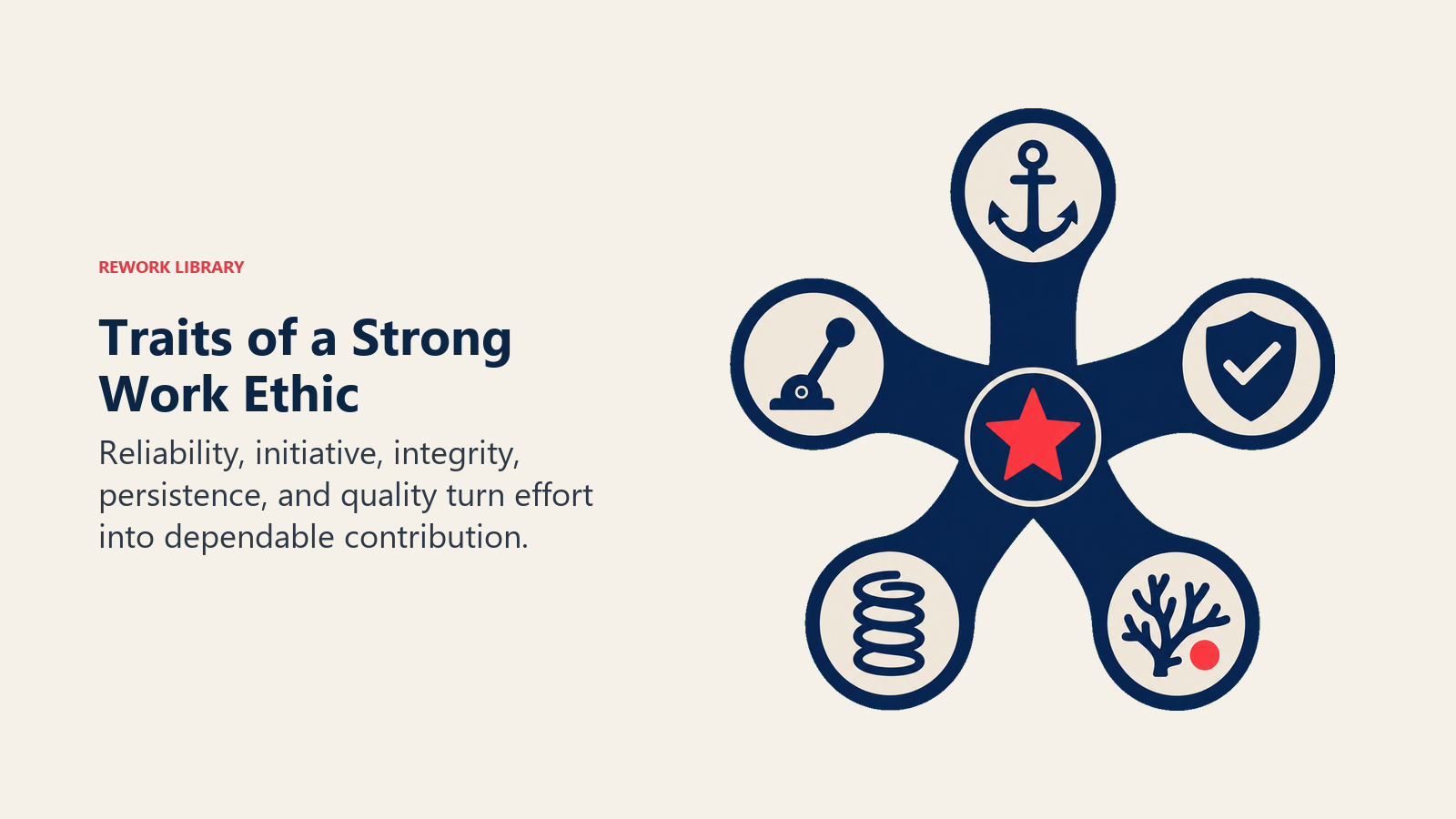
Ética de trabalho não é um único traço. É um conjunto de comportamentos relacionados que tendem a aparecer juntos em indivíduos de alto desempenho.
| Característica | Como aparece na prática |
|---|---|
| Confiabilidade | Entrega no prazo, de forma consistente. Raramente precisa de lembretes. |
| Responsabilidade | Assume os resultados, inclusive quando as coisas dão errado. Não transfere a culpa. |
| Disciplina | Mantém foco e qualidade mesmo em trabalhos repetitivos ou difíceis. |
| Iniciativa | Age em problemas e oportunidades sem esperar ser solicitado. |
| Profissionalismo | Cumpre compromissos com cuidado, respeita o tempo dos outros, comunica-se com clareza. |
| Integridade | Faz a coisa certa mesmo quando seria mais fácil não fazer. Não corta atalhos. |
| Perseverança | Supera obstáculos em vez de abandonar tarefas difíceis no meio do caminho. |
Esses traços não precisam ser todos igualmente fortes. Mas quanto mais deles aparecem de forma consistente, mais claro é o sinal para gestores, pares e clientes de que alguém traz real confiabilidade ao trabalho.
Iniciativa merece atenção especial aqui. É frequentemente subestimada. Colaboradores que veem um problema e agem sem serem direcionados, que preenchem lacunas, melhoram processos e levantam questões de forma proativa, demonstram um nível de propriedade que os distingue imediatamente dos pares que esperam por instruções.
Ética de Trabalho Forte vs. Fraca
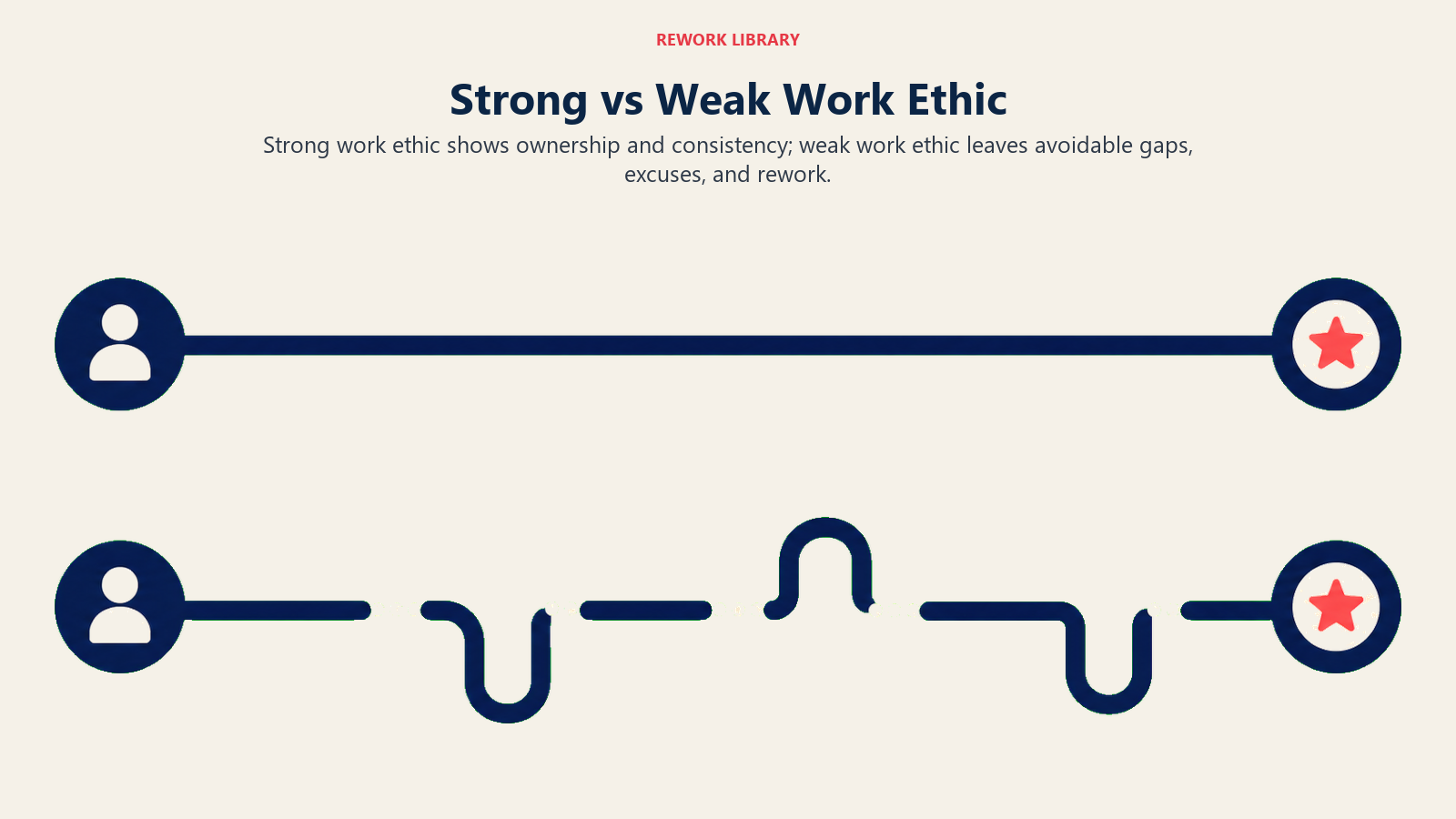
Ver o contraste lado a lado torna a diferença concreta.
| Comportamento | Ética de Trabalho Forte | Ética de Trabalho Fraca |
|---|---|---|
| Cumprimento de prazos | Entrega no prazo ou sinaliza com antecedência se um atraso está chegando | Perde prazos sem aviso, frequentemente culpa fatores externos |
| Qualidade da entrega | Revisa o trabalho antes de enviar, pergunta quando há incerteza | Envia primeiros rascunhos como versão final, espera que outros identifiquem erros |
| Resposta ao feedback | Aceita contribuições, ajusta o comportamento, cumpre o que foi acordado | Fica na defensiva, repete os mesmos erros |
| Enfrentamento de tarefas difíceis | Trabalha através da complexidade, pede ajuda quando está travado | Evita tarefas difíceis, delega para baixo para escapar do desconforto |
| Atitude em períodos lentos | Usa o tempo livre para melhorar processos, aprender ou ajudar outros | Faz o mínimo e espera pela próxima tarefa |
| Compromisso com padrões | Mantém qualidade mesmo quando a pressão é alta | Deixa os padrões caírem quando é inconveniente |
| Responsabilidade pelos erros | Reconhece os erros, explica a causa raiz, apresenta uma solução | Minimiza os erros, procura alguém para culpar |
Ninguém está perfeitamente na coluna da esquerda o tempo todo. Mas os padrões importam. Ao longo de semanas e meses, o comportamento consistente em uma direção ou outra cria uma impressão duradoura.
Exemplos de Ética de Trabalho no Trabalho
A ética de trabalho parece diferente dependendo da função e do contexto. Veja cenários concretos.
| Função / Cenário | Como a forte ética de trabalho se parece |
|---|---|
| Colaborador individual | Sinaliza um bloqueio para o gestor dois dias antes de um prazo, em vez de na manhã em que ele vence. Envia um trabalho que foi revisado, não um rascunho. |
| Gestor | Chega preparado para as one-on-ones com anotações. Cumpre os compromissos feitos com os subordinados diretos, como fornecer feedback sobre uma apresentação até quinta-feira. |
| Membro de equipe em projeto em grupo | Faz sua parte sem precisar de lembretes. Avisa os colegas imediatamente se sua seção vai atrasar, em vez de ficar em silêncio. |
| Representante de vendas | Mantém a contagem completa de atividades mesmo em um trimestre lento. Não corta atalhos nos dados de CRM ou no registro de chamadas só porque o trimestre está difícil. |
| Novo contratado nos primeiros 90 dias | Faz perguntas esclarecedoras antes de começar, entrega um trabalho limpo e aplica o feedback da primeira revisão aos trabalhos subsequentes. |
| Colaborador remoto | Comunica-se proativamente, entrega dentro do prazo e não deixa a falta de supervisão presencial se tornar uma desculpa para padrões reduzidos. |
O fio condutor em todos esses casos é a propriedade: a pessoa faz o que disse que faria e é honesta quando algo não está indo conforme planejado.
A forte orientação para resultados anda junto com a ética de trabalho aqui. O esforço sozinho não é o objetivo. O objetivo são os resultados. Pessoas com forte ética de trabalho se preocupam tanto com o processo quanto com o resultado.
Como Desenvolver uma Forte Ética de Trabalho
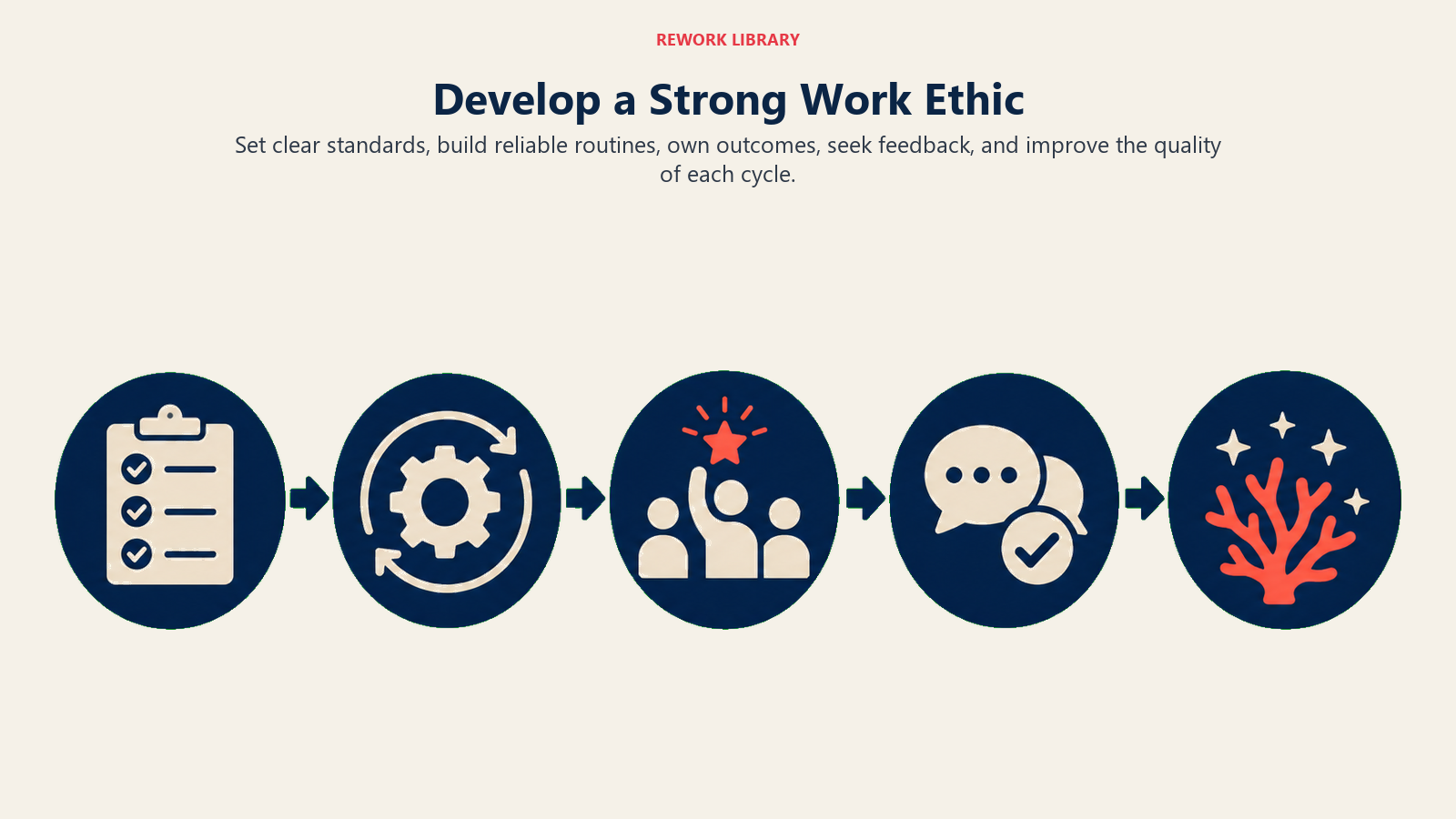
A ética de trabalho não é algo fixo. É um conjunto de hábitos e mentalidades que podem ser construídos deliberadamente.
Passo 1: Tenha clareza sobre seus compromissos
Você não pode honrar compromissos que não rastreou. Escreva tudo que você concordou em fazer: entregas, prazos, responsabilidades implícitas. A maioria das pessoas se surpreende com a quantidade de compromissos informais que tem em andamento. Uma lista simples ou gerenciador de tarefas é suficiente. O hábito de registrar compromissos constrói a autodisciplina para cumpri-los.
Passo 2: Gerencie seu tempo com intenção
Gestão do tempo é a infraestrutura da ética de trabalho. Se você não consegue controlar como suas horas são gastas, a consistência se torna acidental. Reserve tempo para o trabalho focado. Proteja as tarefas de alta prioridade de serem empurradas para o segundo plano pelo trabalho reativo. Revise seu calendário e lista de tarefas no início de cada dia.
Passo 3: Inclua pontos de verificação de qualidade
Antes de enviar qualquer trabalho, pergunte: "Eu ficaria confortável se um líder sênior revisasse isso agora?" Essa pergunta pega a maioria dos problemas de qualidade. Incorpore essa verificação ao seu fluxo de trabalho para que se torne automática, não uma reflexão tardia.
Passo 4: Comunique-se proativamente
Se algo vai atrasar ou não atender às expectativas, diga isso o mais cedo possível. A falha de ética de trabalho nem sempre é o atraso. É ficar em silêncio e torcer para que ninguém perceba. A comunicação proativa preserva a confiança mesmo quando o desempenho cai.
Passo 5: Cumpra as coisas pequenas
A ética de trabalho vive nos detalhes. Se você disse que enviaria um documento até o fim do dia, envie até o fim do dia. Se você disse a um colega que verificaria algo para ele, verifique. Pequenos compromissos cumpridos consistentemente constroem a mesma confiança que os grandes e são frequentemente percebidos com mais clareza.
Passo 6: Reflita sobre padrões, não apenas sobre incidentes
Ao final de cada semana, reserve cinco minutos para perguntar: "Onde deixei um compromisso escorregar? Onde entreguei bem?" O objetivo não é autocrítica. É reconhecimento de padrões. Falhas repetidas na mesma área geralmente apontam para um problema de sistemas (prioridades pouco claras, sem tempo de reserva) em vez de um problema de caráter.
Como Demonstrar Ética de Trabalho em uma Entrevista ou Currículo
A ética de trabalho é uma das qualidades que quase todo gerente de contratação tenta avaliar, mas a maioria dos candidatos não a aborda diretamente ou de forma eficaz. Veja como se destacar.
No currículo:
- Inclua resultados específicos e quantificados que exigiram esforço sustentado. "Reduzi o tempo de processamento de relatórios de 5 dias para 1 dia ao longo de 3 meses" diz muito mais do que "forte ética de trabalho" em uma lista de habilidades.
- Destaque consistência, não apenas picos. Se você manteve métricas de desempenho ao longo de um ano inteiro, mostre a tendência, não apenas um bom trimestre.
- Mencione exemplos de ir além do escopo definido: sistemas que você melhorou, processos que você organizou, lacunas que você preencheu sem ser solicitado.
Em uma entrevista:
- Use o formato STAR (Situação, Tarefa, Ação, Resultado) para contar histórias específicas sobre responsabilidade e comprometimento. Exemplos concretos superam alegações genéricas sempre.
- Quando perguntado sobre situações difíceis, descreva o que você realmente fez em vez do que a "resposta certa" soa. Os entrevistadores percebem a diferença.
- Descreva como você lida com erros. Um candidato que consegue detalhar um fracasso real, assumir sua parte nele e descrever o que mudou demonstra o tipo de responsabilidade que sinaliza genuína ética de trabalho.
Perguntas comuns em entrevistas que avaliam a ética de trabalho:
- "Conte-me sobre uma vez que você teve que superar um projeto difícil ou frustrante."
- "Descreva uma situação em que você teve que entregar resultados sem muita orientação."
- "O que você faz quando sua carga de trabalho é muito pesada para concluir tudo no prazo?"
- "Você já discordou de um prazo? Como lidou com isso?"
Não diga apenas que você tem uma forte ética de trabalho. Mostre-a pelas histórias que conta.
Perguntas Frequentes
Quais são exemplos de uma boa ética de trabalho?
Entregar trabalho no prazo sem lembretes, comunicar com antecedência quando um prazo está em risco, produzir uma entrega limpa e precisa antes de enviar, cumprir compromissos informais (não apenas tarefas oficiais) e manter padrões de qualidade mesmo sob pressão. O fio condutor é que alguém com boa ética de trabalho não precisa de outra pessoa para impor seus padrões.
Ética de trabalho é uma habilidade ou um valor?
É ambos. Como valor, a ética de trabalho reflete a crença de que fazer um trabalho de qualidade e honrar compromissos importa. Como habilidade, ela se expressa por meio de comportamentos específicos como gestão do tempo, comunicação e organização pessoal que podem ser aprendidos e aprimorados. Isso significa que a ética de trabalho não é simplesmente algo que você tem ou não tem. Ela pode ser desenvolvida.
Você pode ter uma forte ética de trabalho sem trabalhar longas horas?
Sim. A ética de trabalho é sobre a qualidade, confiabilidade e integridade do seu esforço, não a quantidade de horas. Alguém que trabalha 40 horas focadas por semana, entrega consistentemente e se comunica de forma proativa tem uma ética de trabalho mais forte do que alguém que trabalha 60 horas mas perde prazos e produz resultados inconsistentes. Confundir ocupação com ética de trabalho é um erro comum.
Como a ética de trabalho difere do profissionalismo?
O profissionalismo abrange um conjunto mais amplo de normas de conduta no local de trabalho: como você se comunica, como trata os outros, como se apresenta. A ética de trabalho é especificamente sobre como você aborda suas responsabilidades e compromissos. Os dois se sobrepõem significativamente, e ambos importam, mas alguém pode ser profissionalmente sofisticado e ainda assim não ser confiável, e vice-versa.
Como abordar uma ética de trabalho fraca em um membro da equipe?
Comece com clareza. Frequentemente, o que parece falta de ética de trabalho é, na verdade, expectativas pouco claras. Certifique-se de que a pessoa sabe o que "bom" significa e até quando. Depois aborde comportamentos específicos, não o caráter. "O relatório foi entregue dois dias atrasado sem aviso" é um comportamento que você pode abordar. "Você não tem uma forte ética de trabalho" é um julgamento que geralmente gera defensividade em vez de mudança. Estabeleça expectativas claras, acompanhe de forma consistente e documente o que você observa.
A ética de trabalho é construída por pequenos atos de responsabilidade repetidos ao longo do tempo. A reputação que ela cria é difícil de fabricar e difícil de falsificar, o que significa que as pessoas que fazem o trabalho de construí-la genuinamente se destacam. Comece com clareza sobre seus compromissos, proteja o tempo para honrá-los e comunique-se abertamente quando as coisas não saem conforme planejado. Essa é a base.
Leitura Complementar

On this page
- O que é Ética de Trabalho?
- Por que a Ética de Trabalho Importa
- As Características de uma Forte Ética de Trabalho
- Ética de Trabalho Forte vs. Fraca
- Exemplos de Ética de Trabalho no Trabalho
- Como Desenvolver uma Forte Ética de Trabalho
- Passo 1: Tenha clareza sobre seus compromissos
- Passo 2: Gerencie seu tempo com intenção
- Passo 3: Inclua pontos de verificação de qualidade
- Passo 4: Comunique-se proativamente
- Passo 5: Cumpra as coisas pequenas
- Passo 6: Reflita sobre padrões, não apenas sobre incidentes
- Como Demonstrar Ética de Trabalho em uma Entrevista ou Currículo
- Leitura Complementar