IA para conversão de trial em pago em SaaS: como sinais comportamentais superam dados firmográficos sempre
Turn this article into takeaways for your work.


Each assistant summarizes the article only for you and suggests best practices for your work.
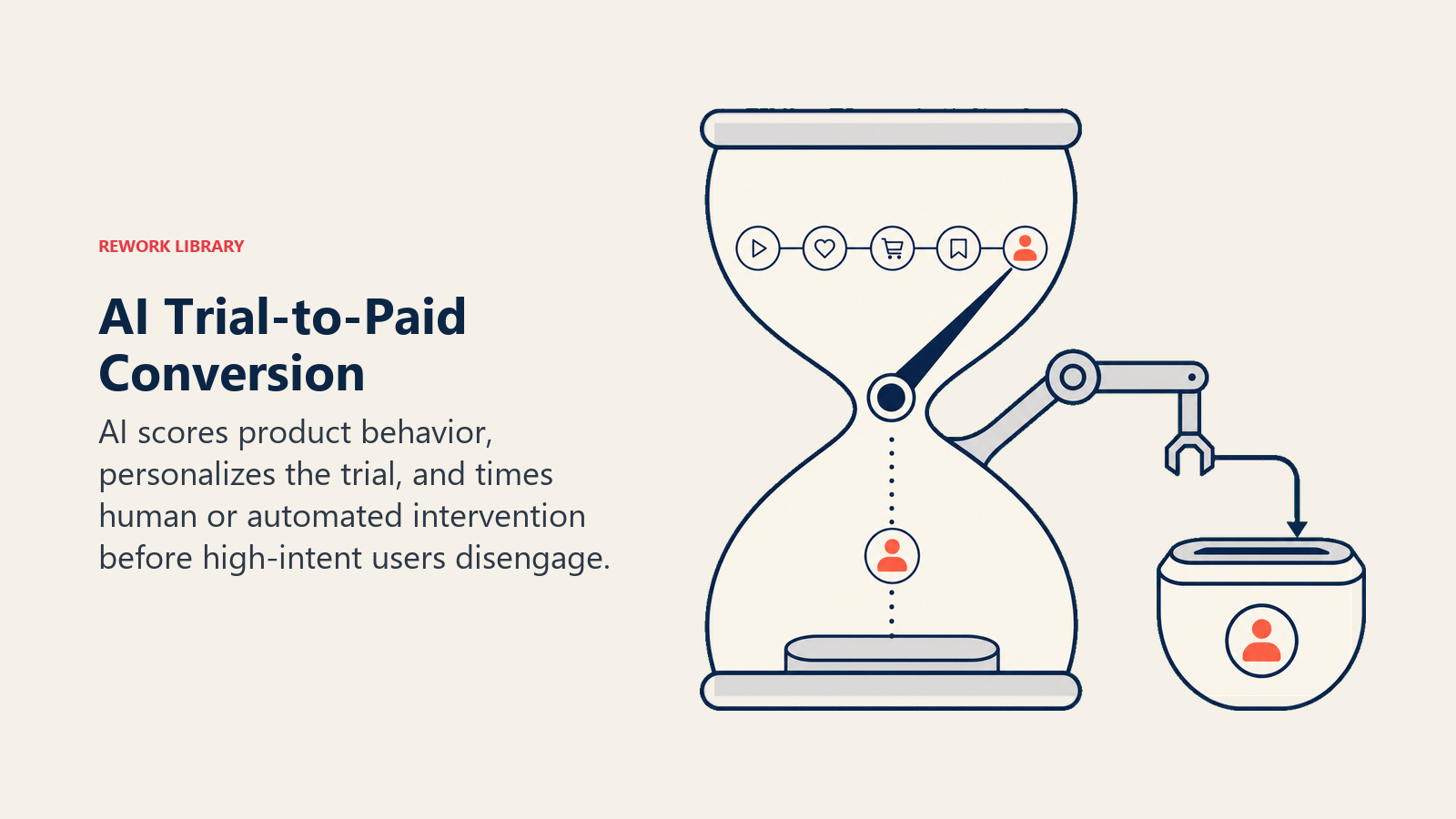
A maioria das contas em trial não fracassa porque o seu produto é ruim. Fracassa porque ninguém percebeu o momento em que o usuário se perdeu e precisava de ajuda. Ou porque o outreach foi para as pessoas erradas na hora errada. Ou porque o seu time tratou todo trial da mesma forma, quando a probabilidade de conversão variava por um fator de dez.
A IA não resolve a conversão de trial automaticamente. Mas ela mostra quais sinais previram os clientes que converteram, para que você aja sobre eles antes de a janela do trial se fechar.
A taxa média de conversão de trial em pago no mercado de SaaS B2B fica entre 2% e 5%. Se você tem mil cadastros gratuitos neste mês, de vinte a cinquenta deles se tornarão clientes pagantes. A questão não é se esse número é pequeno. É se você está alcançando os cinquenta certos.
O problema da conversão de trial em escala
Empresas SaaS em fase de crescimento enfrentam um problema estrutural: o topo do funil gera mais cadastros do que qualquer time humano consegue atender de forma significativa. Uma empresa SaaS de $10M de ARR (annual recurring revenue) com um movimento PLG (product-led growth) pode ver de 300 a 800 novos cadastros de trial por mês.
Key Facts: conversão de trial em pago em SaaS
- SDRs assistidos por IA que contatam usuários de trial com alta intenção que ativaram a conta em até quatro horas convertem 34,1%, contra 13,6% de sequências automatizadas só por e-mail, uma diferença de 2,5x explicada pelo timing e pelo contexto comportamental (dados de SaaS B2B da Growleads, 2025)
- O scoring baseado em PQL, com sinais comportamentais do produto, converte 25-30%, contra 5-10% das abordagens baseadas em MQL; empresas PLG nativas de IA com mais de $100M de ARR alcançam 56% de conversão de trial em pago, contra 32% do SaaS tradicional (ProductLed Benchmarks, 2025)
- Empresas com scoring de trials com IA bem implementado relatam taxas de conversão geral de 8-15%, contra a média de mercado de 2-5% para inbound sem apoio, o que representa uma melhora de 3-5x sobre a mesma base de trials (pesquisa de vendas PLG da McKinsey, 2024) Se elas têm três pessoas fazendo algum tipo de outreach de trial, cada uma responde por 100-270 novas contas por mês. Isso não é outreach. É triagem.
E a triagem feita sem dados recorre, por padrão, aos sinais mais óbvios: tamanho da empresa, domínio, cargo. São os sinais firmográficos que a maioria dos times SaaS usa para decidir quem recebe atenção humana durante o trial. O logo enterprise recebe uma ligação. O profissional autônomo recebe uma sequência automatizada. A empresa de 50 pessoas fica no meio e não recebe nada.
O problema é que os dados firmográficos têm correlação fraca com a conversão de trial. O tamanho da empresa diz algo sobre o potencial tamanho do negócio. Diz quase nada sobre se este usuário em particular, nesta empresa em particular, nesta semana em particular, vai converter.
O comportamento durante o trial diz exatamente isso. E os sinais que mais importam são mais específicos do que a maioria dos times espera.
O que de fato prevê a conversão de trial
A conversão de trial é prevista por comportamentos que mostram o primeiro valor, o uso recorrente e a adoção pela equipe, e não apenas pela demografia do cadastro.
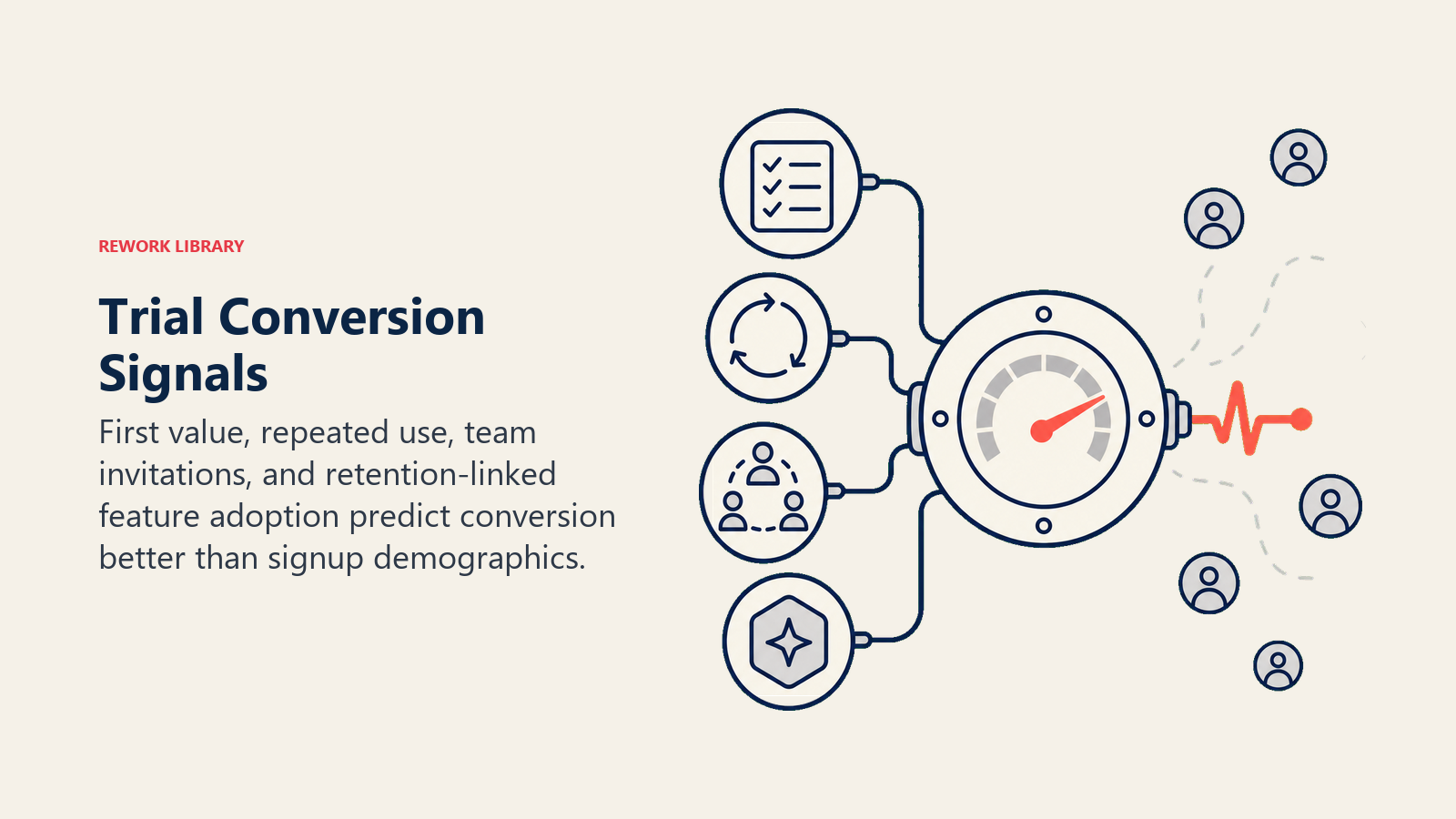
Os sinais comportamentais que preveem a conversão já estão bem estabelecidos. Em várias empresas SaaS PLG que publicaram suas análises de conversão, o mesmo conjunto de sinais aparece:
Conclusão do evento de ativação. O preditor isolado mais forte. O usuário concluiu as ações que definem o "primeiro valor"? Em um CRM, isso pode ser importar contatos e registrar uma atividade. Em uma ferramenta de gestão de projetos, pode ser criar um projeto, convidar um colega e atribuir uma tarefa. Cada produto tem a sua própria definição de ativação, mas, uma vez definida, a conclusão da ativação é o indicador antecipado de conversão mais confiável. Usuários que ativam convertem de três a cinco vezes mais do que os que não ativam. A pesquisa da OpenView sobre product qualified leads em PLG mostra que os marcos de ativação dentro do produto são o principal insumo do scoring de PQL (product qualified lead) nas empresas PLG de melhor desempenho. A vantagem da telemetria de produto em SaaS torna esses dados naturalmente disponíveis.
Frequência de login nos primeiros sete dias. Um usuário que faz login todos os dias durante sete dias mostra que o seu produto está virando parte do workflow dele. Um usuário que se cadastrou e não voltou desde o primeiro dia quase certamente não vai converter sem intervenção. A retenção de sete dias após o cadastro é um indicador antecipado da conversão em trinta dias.
Profundidade de uso de funcionalidades vs. exploração superficial. Usuários que exploram três funcionalidades centrais indicam uma intenção diferente da de quem visitou a homepage, clicou três vezes e fechou a aba. Amplitude, Mixpanel e Segment acompanham essas sequências de eventos no nível do usuário, e não apenas da sessão.
Tempo até o marco de primeiro valor. Quanto mais rápido um usuário chega ao primeiro resultado relevante, maior a probabilidade de conversão. Se o momento de primeiro valor do seu produto costuma acontecer em vinte minutos, usuários que o alcançam em dez minutos convertem bem mais do que os que levam sessenta. O scoring de IA pode usar esse sinal de tempo junto com a conclusão da ativação para avaliar a probabilidade de conversão em tempo real.
Convite para a equipe. Em produtos com casos de uso colaborativos, convidar um colega na primeira semana é um dos sinais de conversão mais fortes que existem. Ele indica adesão da organização, e não só curiosidade individual. E é o sinal que mostra que a conta passou da avaliação pessoal para a consideração organizacional.
A pergunta é como coletar esses sinais em escala, ponderá-los e agir sobre eles antes de a janela do trial se fechar.
Scoring de contas em trial com IA: o padrão Scoring and Routing
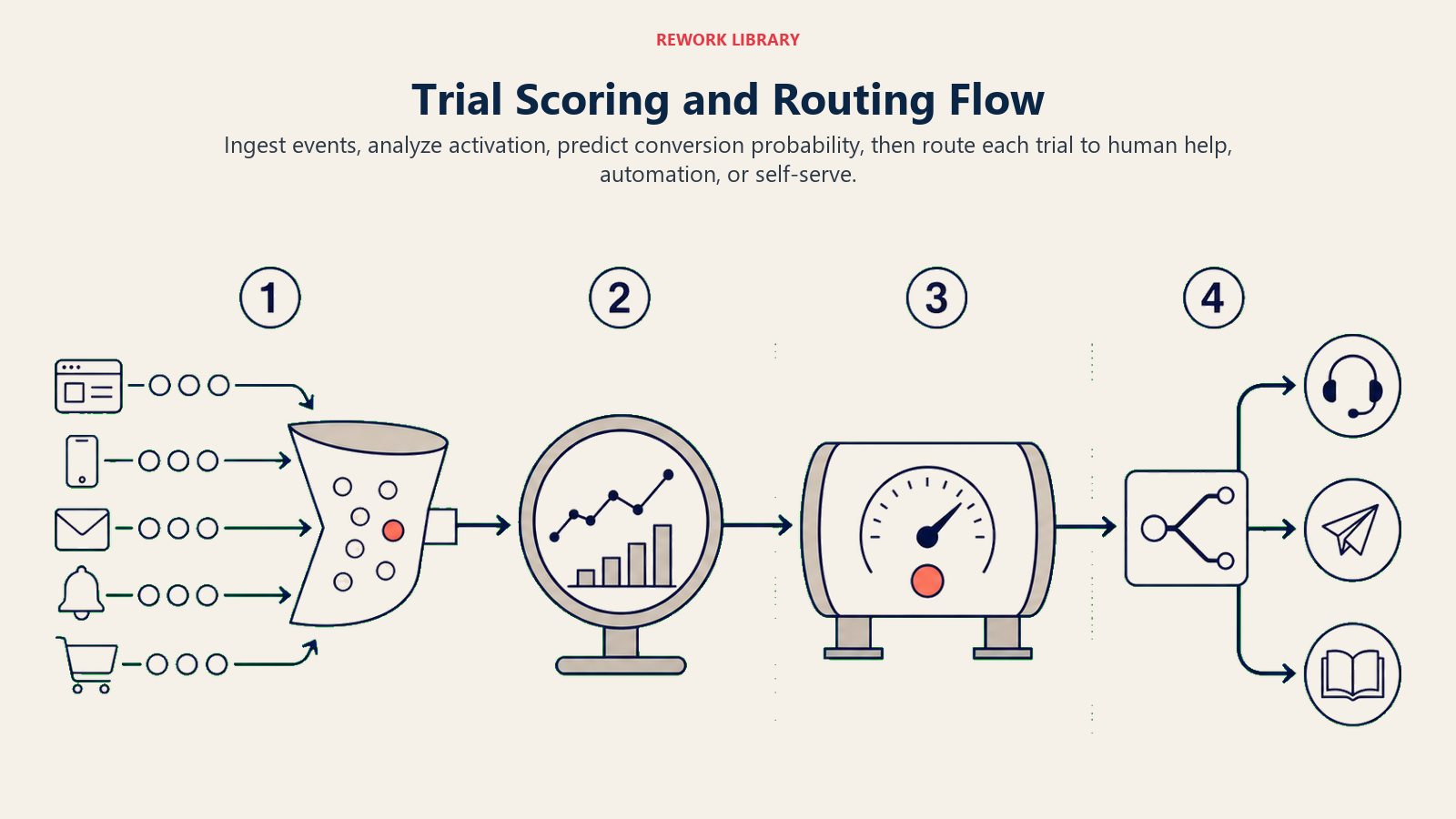
O padrão Scoring and Routing do ACE Framework se aplica diretamente aqui. Ele funciona fazendo o Ingest dos dados comportamentais do trial (fluxos de eventos do Segment, Amplitude ou Mixpanel), o Analyze dos sinais contra o seu modelo de conversão, o Predict de um score de probabilidade de conversão e o Execute de uma decisão de roteamento (que nível de outreach esta conta recebe?).
A Madkudu é a ferramenta feita sob medida para esse problema. Ela fica entre os seus dados de analytics de produto e as suas ferramentas de vendas e marketing, roda um modelo de probabilidade de conversão sobre o comportamento de cada conta em trial e gera um score que o restante da sua stack pode usar. O score é atualizado em tempo real conforme os usuários realizam ações no produto.
A segmentação de score que funciona para a maioria das empresas SaaS:
Score 8-10 (alta intenção). Essas contas concluíram eventos de ativação, fizeram login várias vezes e mostram uma profundidade de uso de funcionalidades compatível com a de clientes que converteram. Elas precisam de outreach humano hoje, não amanhã. Para contas enterprise, isso significa um e-mail pessoal de um AE (account executive) ou uma ligação de um solutions engineer. Para SMB, uma sequência direcionada de um representante de vendas que cita a atividade específica no produto.
Score 5-7 (intenção média). Essas contas demonstraram algum engajamento, mas não ativaram por completo. Elas precisam de sequências automatizadas com dicas de produto direcionadas, sobretudo estímulos para os eventos de ativação que ainda não concluíram. Intercom e Appcues entregam isso dentro do app, no momento em que o usuário tem mais chance de agir.
Score 1-4 (baixa intenção). Essas contas se cadastraram, mas não se engajaram de forma significativa. Outreach agressivo aqui tem uma economia de conversão ruim. O melhor investimento é analisar por que elas não ativam e melhorar o caminho de onboarding self-serve, para que menos trials caiam nesse grupo.
O módulo Sales AI da Rework conecta esse resultado de scoring ao workflow de outreach: quando uma conta cruza o limite de alta intenção, ele cria automaticamente uma tarefa no CRM, notifica o representante responsável e traz o briefing da conta com o contexto comportamental relevante. O representante não precisa monitorar um dashboard. O sistema leva a conta até ele quando é o momento certo.
Mas o score só diz quem. Ele não diz o que falar.
Personalização na experiência do trial
O scoring orientado por comportamento determina quem recebe outreach. O Personalization Engine determina o que a pessoa vive dentro do produto.
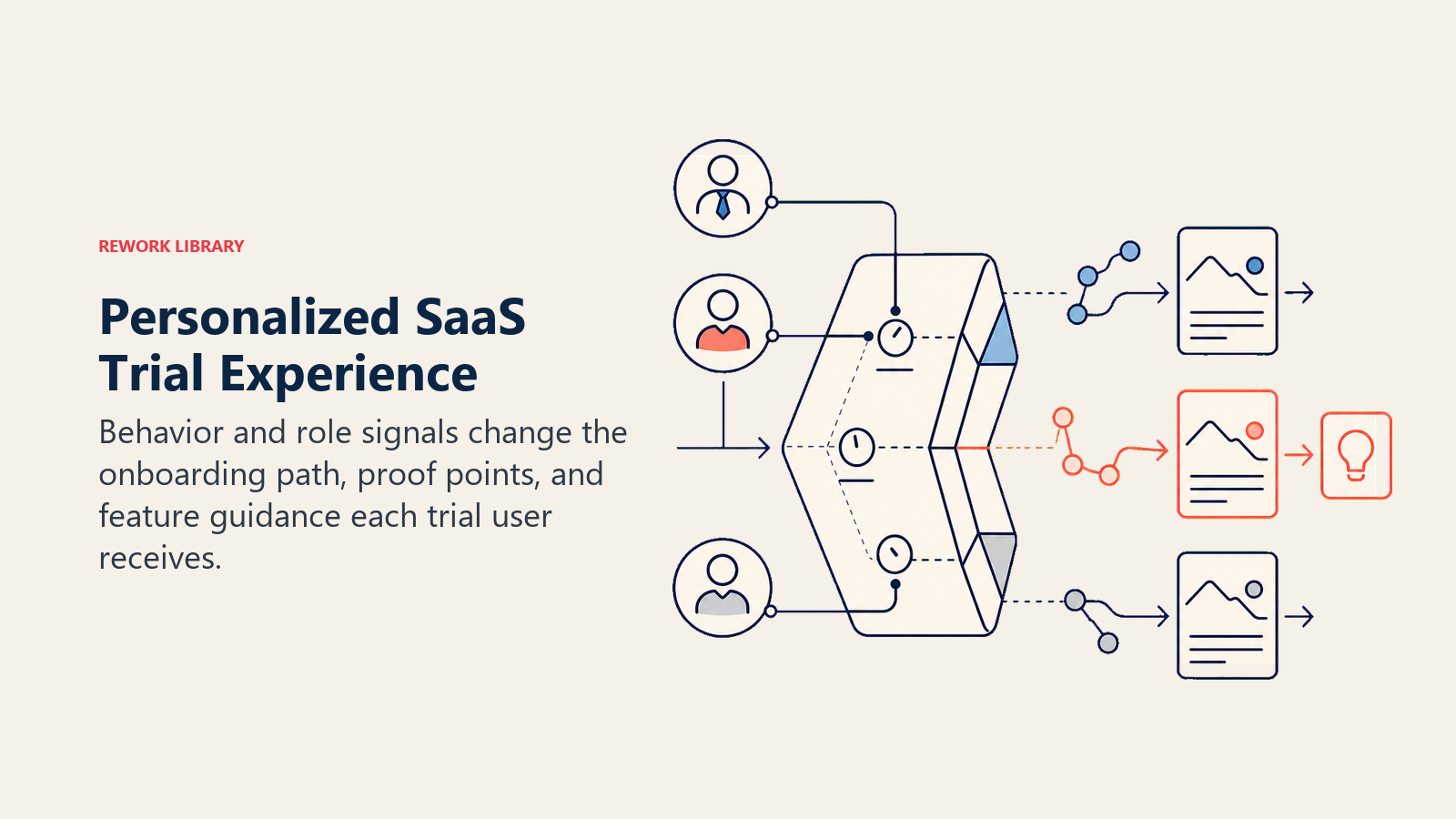
O mesmo produto significa coisas muito diferentes para compradores diferentes. Um CRO que avalia um CRM quer ver gestão de pipeline e precisão de forecast. Um líder de CS que avalia o mesmo CRM quer ver health score de clientes e acompanhamento de renovações. Se os dois veem o mesmo fluxo genérico de onboarding, você está deixando probabilidade de conversão na mesa.
Ferramentas de personalização in-app como Appcues e Intercom permitem exibir checklists de onboarding, destaques de funcionalidades e conteúdos educativos diferentes conforme o papel do usuário (captado no cadastro) ou inferido pelo comportamento. O CRO vê exemplos de pipeline. O líder de CS vê exemplos de retenção. Ambos avaliam o mesmo produto, mas vivem uma versão dele que reflete o seu caso de uso.
Essa personalização não exige desenvolvimento customizado. Exige definir de duas a quatro personas de usuário, mapear os eventos de ativação-chave de cada uma e configurar os fluxos in-app na sua ferramenta de onboarding. A camada de IA acrescenta ajuste em tempo real: se um líder de CS (customer success) começa a usar bastante as funcionalidades de pipeline de vendas, o Personalization Engine se ajusta para uma narrativa de caso de uso híbrido, em vez de prendê-lo ao caminho de CS.
Acertar a mensagem importa. Mas enviá-la no momento certo importa mais.
O timing é a variável que a maioria dos times subestima
Ter a intervenção certa é necessário. Aplicá-la no momento certo é o que faz ela converter.
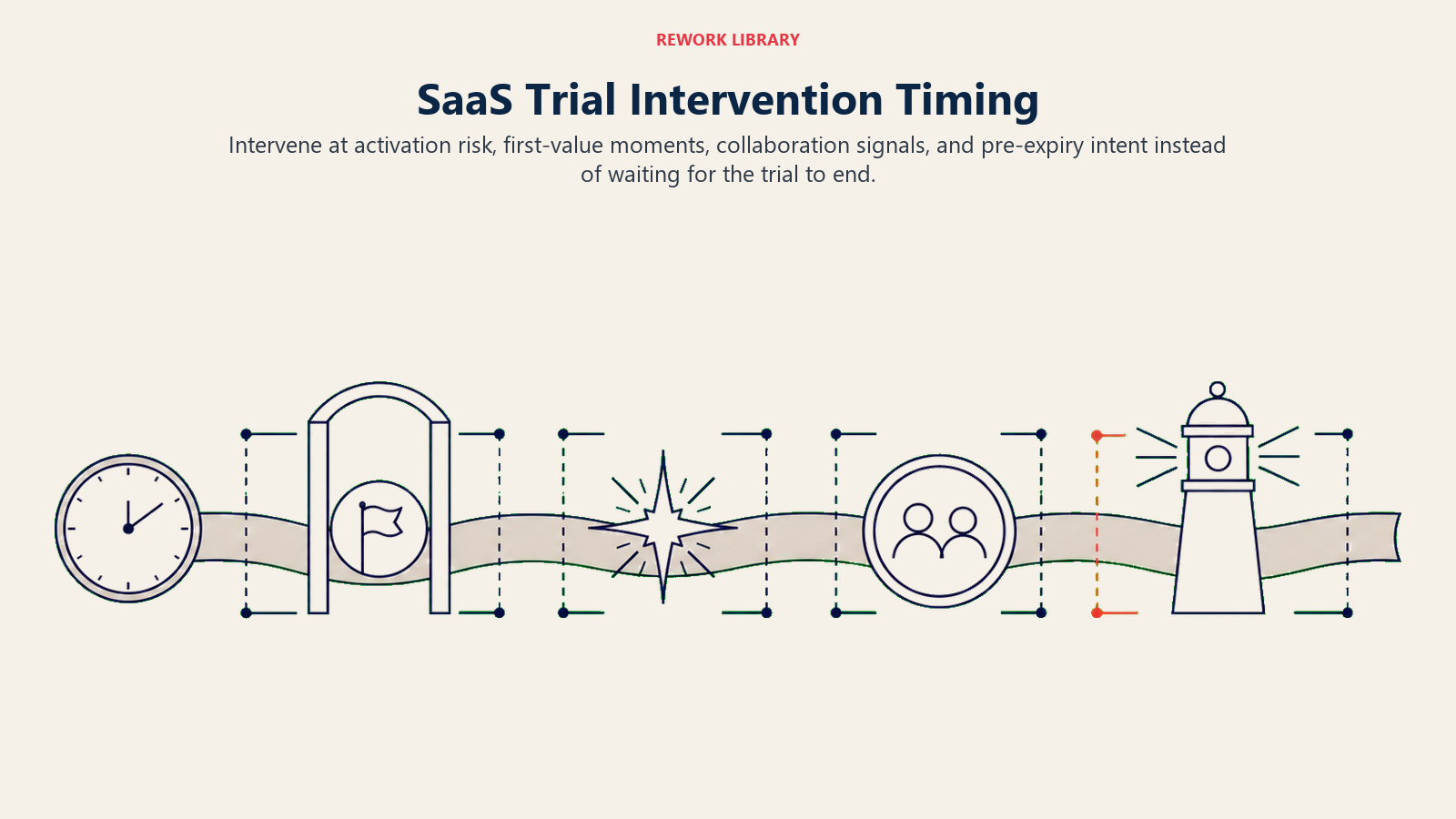
A conversão de trial segue uma curva de timing previsível:
Verificação de ativação no dia 3. Usuários que não concluíram a ativação até o terceiro dia dificilmente o farão sem um empurrão. Um check-in automatizado nesse ponto, oferecendo guiá-los na configuração ou tirar dúvidas, recupera uma parcela significativa das contas em risco antes que percam o interesse.
Alerta de queda de engajamento no dia 7. Um usuário que fazia login todos os dias e parou está mostrando um sinal precoce de churn. Essa é a janela de intervenção para contas de score alto. Uma mensagem personalizada que cita a atividade específica dele ("notei que você configurou as etapas do seu pipeline, mas ainda não conectou o seu e-mail") e oferece ajuda tem uma taxa de resposta alta, porque demonstra atenção.
Janela de conversão no dia 14. Em trials de quatorze dias, este é o momento do último empurrão. Contas que ainda não converteram, mas têm score de médio a alto, respondem a ofertas: trial estendido, uma demo agendada, uma chamada individual de configuração. A urgência é real, porque a janela do trial está se fechando.
O monitoramento por IA cuida do timing automaticamente. Você define os gatilhos, a IA observa os sinais e a intervenção sai no momento exato para o qual foi desenhada. Ninguém precisa se lembrar de verificar uma conta no sétimo dia.
A pergunta seguinte é como esses gatilhos de timing se encaixam em um framework coerente, e não em um conjunto de regras avulsas.
O Activation-to-Conversion Loop
O Activation-to-Conversion Loop é o framework de conversão de trial orientado por IA: fazer o Ingest dos eventos comportamentais de cada usuário em trial em tempo real, fazer o Score contínuo da probabilidade de conversão de cada usuário conforme ele executa ações no produto, acionar (Trigger) o nível certo de intervenção (outreach humano de alto toque, estímulo direcionado dentro do produto ou sequência automatizada de nurture) no momento em que o sinal de timing dispara e fazer o Update do score conforme o usuário responde ou perde o interesse. O loop roda 24/7 sem envolvimento de representantes até que um usuário cruze o limite de alta intenção, ponto em que uma tarefa humana é criada automaticamente. A ideia central: o loop não toma decisões de conversão, ele leva as contas certas às intervenções certas no momento certo. O julgamento do representante se aplica ao nível de alta intenção. A IA cuida do monitoramento e da triagem dos 85% dos trials que não justificam tempo humano imediato.
| Sinal comportamental | Impacto na conversão | Quando dispara | Intervenção recomendada |
|---|---|---|---|
| Marco de ativação concluído | Conversão 3-5x maior | Dias 1-3 | Outreach humano ou sequência de alto toque |
| Convite de equipe enviado | Sinal isolado mais forte | A qualquer momento do trial | Notificação humana imediata |
| Sequência diária de logins (7 dias) | Alta adoção no workflow | Dia 7 | Oferta de conversão ou trial estendido |
| 3+ funcionalidades centrais exploradas | Engajamento profundo com o produto | Dias 3-7 | Estímulo personalizado por funcionalidade |
| Queda na frequência de login (3+ dias) | Sinal precoce de churn | A qualquer momento | Mensagem de reengajamento, oferta de ajuda |
| Visita à página de preços (2+) | Intenção ativa de compra | A qualquer momento | Outreach de vendas no mesmo dia |
Fonte: OpenView PLG Benchmarks, Madkudu, dados de produto da Userpilot (2024-2025)
Alto toque vs. sem toque: a decisão que define o ROI
O ROI da IA de conversão de trial depende de o modelo encaminhar as contas para ajuda humana, para estímulos automatizados ou para um fluxo puramente self-serve.
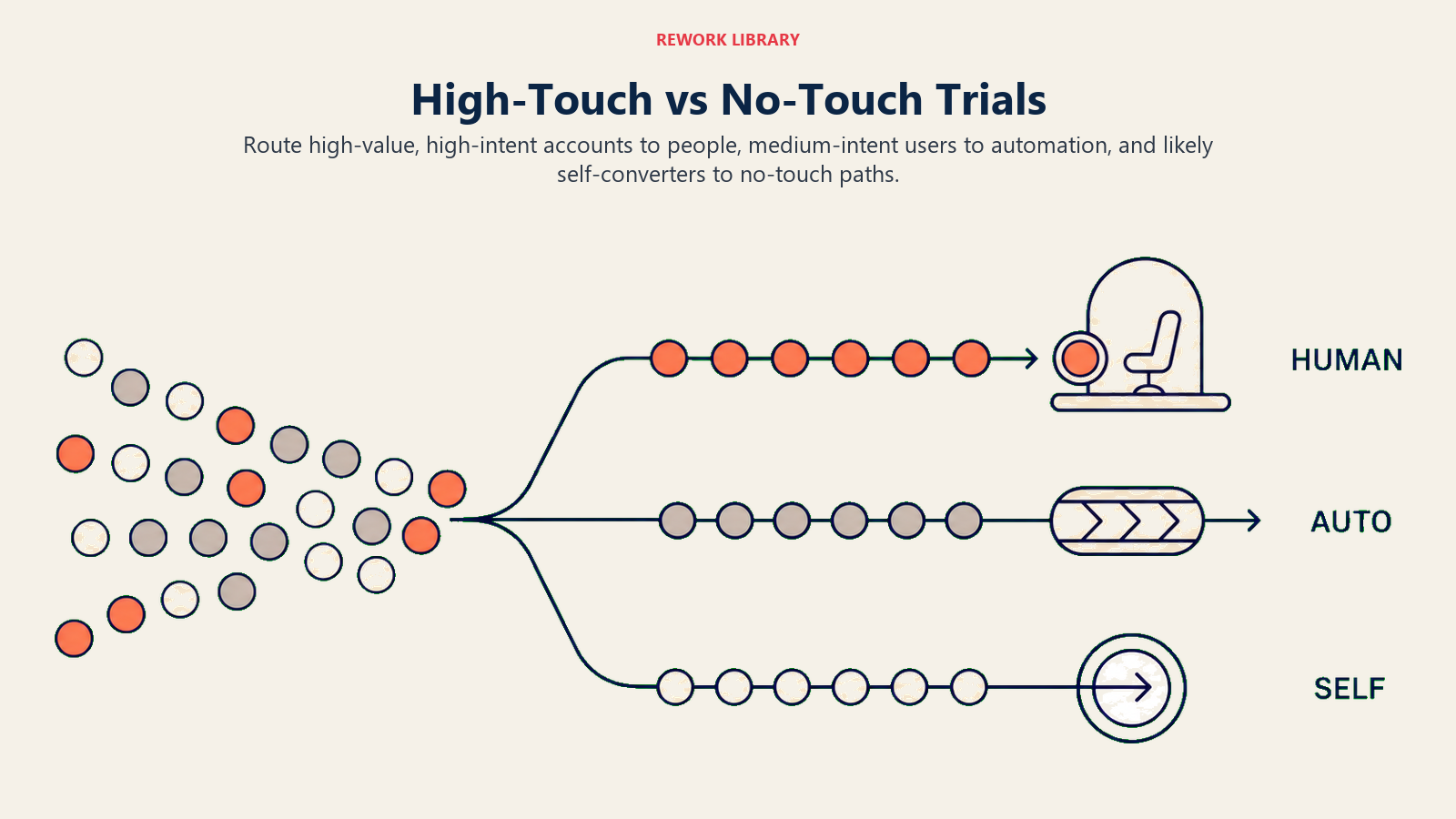
A decisão mais importante na operação de conversão de trial é quais contas recebem outreach humano e quais recebem sequências automatizadas. Se errar nisso, você gasta tempo de representantes em contas que teriam convertido de qualquer jeito (ou nunca) e perde as contas que precisavam de uma conversa.
A IA toma essa decisão com base no fit de ICP (ideal customer profile) combinado com o comportamento no trial, e não só no número de funcionários da empresa.
A lógica: uma empresa de 20 pessoas em que os fundadores usam o produto todos os dias, concluíram todas as etapas de ativação e convidaram três colegas é um uso melhor do tempo de outreach humano do que uma enterprise de 500 pessoas em que um usuário de nível baixo se cadastrou, fez login uma vez e não voltou. A empresa pequena sinaliza uma intenção forte. A conta enterprise sinaliza um compromisso individual fraco e, possivelmente, baixa prioridade organizacional.
Insumos da decisão de alto toque: score de fit de ICP (a partir de dados firmográficos da conta) mais score comportamental (a partir da atividade no trial). Os dois precisam estar na zona do "sim" para justificar o investimento humano. Alto fit de ICP com score comportamental baixo: nurture automatizado focado em ativação. Baixo fit de ICP com score comportamental alto: caminho self-serve com dicas de produto direcionadas. Alto fit de ICP com score comportamental alto: outreach humano imediato.
Esse modelo de dois fatores evita os modos de falha comuns: vendedores gastando tempo em logos enterprise que na verdade não estão engajados, ou ignorando contas SMB de alta intenção porque elas não se encaixam no perfil firmográfico.
E, com o modelo em funcionamento, a pergunta deixa de ser "quem recebe atenção" e passa a ser "como saber se está funcionando".
Métricas que mostram se a stack de IA está funcionando
A conversão de trial é o investimento em IA mais mensurável na aquisição de SaaS. O antes e o depois são números claros.
Taxa de conversão de trial em pago por segmento. Estabeleça a linha de base por segmento firmográfico e por faixa de score comportamental antes e depois de implantar o scoring com IA. Empresas SaaS com scoring de trials com IA bem implementado relatam taxas de conversão geral de 8-15%, contra a média de mercado de 2-5%. É uma melhora de três a cinco vezes sobre a mesma base de trials. A pesquisa da McKinsey sobre vendas orientadas por produto confirma que empresas que combinam PLG self-serve com conversão assistida por IA superam tanto o PLG puro quanto os movimentos puramente sales-led em eficiência de crescimento.
Tempo até o primeiro valor. Acompanhe o tempo mediano entre o cadastro e o primeiro marco de ativação. A personalização e os estímulos cronometrados guiados por IA reduzem esse tempo. Um tempo até o primeiro valor mais curto se correlaciona diretamente com taxas de conversão mais altas. Se você não está medindo isso, comece.
Taxa de conclusão da ativação. Que porcentagem dos trials conclui o checklist de ativação que você definiu? Essa é a métrica mais diretamente sob o seu controle. Melhorar a ativação de 20% para 35% dos trials melhora a conversão mais do que qualquer melhoria de outreach, porque usuários ativados convertem em taxas fundamentalmente mais altas.
Taxa de outreach para conversão por nível. Nas contas de alto toque, que porcentagem do outreach pessoal resulta em conversão paga? Se estiver abaixo de 20%, a definição do seu nível de alta intenção está frouxa demais. Se estiver acima de 50%, ela pode estar estreita demais e você está deixando contas de nível intermediário sem atendimento.
Essas métricas mostram se a stack de IA está gerando retorno. Mas, antes de medir, é preciso começar por algum lugar prático.
Por onde começar
A conversão de trial é o primeiro investimento certo em IA para empresas SaaS PLG, porque o ROI é mensurável rapidamente e os requisitos não são complexos. Você não precisa de um modelo customizado. Precisa de rastreamento de eventos implantado (Segment ou similar), de uma ferramenta de scoring que se conecte ao seu analytics de produto (Madkudu ou uma implementação mais simples) e de um mecanismo de entrega do outreach (Intercom, Rework Sales AI ou os workflows do seu CRM atual).
As duas decisões que determinam o quanto isso funciona: definir a ativação corretamente para o seu produto (o que significa de fato "primeiro valor alcançado"?) e configurar os níveis de score com limites realistas, com base nos seus dados históricos de conversão.
Nenhuma dessas decisões é técnica. As duas são estratégicas. E é exatamente aí que o julgamento humano pertence neste sistema.
Modelos de trial gratuito com opt-out (que exigem cartão de crédito de início) convertem 48,8%, quase o triplo dos 18,2% dos modelos com opt-in. Mas, para a maioria das empresas SaaS B2B, essa barreira é uma questão de modelo de negócio, e não apenas uma tática de conversão. A camada de scoring de IA importa mais nos modelos com opt-in, em que o universo de usuários é muito maior e não filtrado. (Userpilot SaaS Conversion Benchmarks, 2025)
Rework Analysis: O insight sobre conversão de trial que surpreende a maioria dos times SaaS: a intervenção ideal para uma conta de trial com alta intenção raramente é uma oferta de desconto. Usuários que ativaram, exploraram várias funcionalidades e voltaram todos os dias durante cinco dias estão convertendo porque o produto funciona para eles. Oferecer-lhes um desconto sinaliza que o preço era o problema, o que muitas vezes não era. A intervenção que impulsiona a conversão dessas contas é uma mensagem personalizada que reconhece o padrão de uso específico delas e oferece ajuda para se aprofundarem em uma capacidade que já exploraram. Essa mensagem fecha em taxas bem mais altas do que avisos genéricos de "seu trial está acabando", e não treina os compradores a esperar por descontos.
Para entender melhor como a IA remodela todo o movimento de vendas em SaaS, AI Sales Operator para o pipeline de SaaS B2B cobre a stack completa, do lead scoring ao forecast de pipeline. Para o movimento PLG que vem antes, A vantagem da telemetria de produto na IA para SaaS explica por que as empresas SaaS têm uma vantagem de dados que outros setores não conseguem replicar.
Perguntas Frequentes
O que é o Activation-to-Conversion Loop em SaaS?
O Activation-to-Conversion Loop é o framework de conversão de trial orientado por IA: fazer o Ingest dos eventos comportamentais de cada usuário em trial em tempo real, fazer o Score contínuo da probabilidade de conversão de cada usuário, acionar (Trigger) o nível certo de intervenção (outreach de alto toque, estímulo direcionado dentro do produto ou nurture automatizado) no momento certo e fazer o Update do score conforme o usuário responde ou perde o interesse. O loop roda 24/7 sem envolvimento de representantes até que um usuário cruze o limite de alta intenção, ponto em que uma tarefa humana é criada automaticamente. A IA cuida do monitoramento e da triagem dos 85% dos trials que não justificam tempo humano imediato.
Qual é a taxa média de conversão de trial em pago no SaaS B2B?
A média de mercado é de 2-5% para trials de inbound sem apoio. Modelos de trial gratuito convertem, em média, 17% dos cadastros; freemium converte 5%. Empresas com scoring comportamental com IA bem implementado relatam 8-15% de conversão. Empresas PLG nativas de IA com mais de $100M de ARR alcançam 56% de conversão de trial em pago, contra 32% do SaaS tradicional. A diferença em todos os níveis se deve ao quanto os sinais comportamentais (e não os dados firmográficos) são bem usados para identificar contas de alta intenção e acertar o timing das intervenções.
Quais sinais comportamentais melhor preveem a conversão de trial em pago?
Cinco sinais dominam: conclusão do marco de ativação (usuários que concluem as ações de primeiro valor convertem de 3 a 5 vezes mais do que os que não concluem), convite de equipe enviado durante o trial (o sinal de conversão PLG isolado mais forte, indicando adesão da organização), frequência de login nos primeiros sete dias (logins diários preveem a formação de hábito de workflow), profundidade de uso com três ou mais funcionalidades centrais exploradas (indica avaliação comprometida) e duas ou mais visitas à página de preços (intenção ativa de compra que justifica outreach de vendas no mesmo dia). Os sinais firmográficos (tamanho da empresa, setor, cargo) têm correlação fraca com a conversão e não devem ser o critério principal de roteamento.
Como uma empresa SaaS deve classificar as contas em trial por nível de outreach?
Use um modelo de dois fatores: score de fit de ICP (a partir dos dados firmográficos) combinado com score comportamental (a partir da atividade no trial). Alto fit de ICP com score comportamental alto: outreach humano imediato. Alto fit de ICP com score comportamental baixo: nurture automatizado focado em estímulos de ativação. Baixo fit de ICP com score comportamental alto: caminho self-serve com dicas de produto direcionadas. Baixo fit de ICP com score comportamental baixo: sem intervenção ativa. Isso evita os dois modos de falha: representantes gastando tempo em logos enterprise que não estão engajados e a perda de contas SMB de alta intenção porque elas não se encaixam no perfil firmográfico.
Qual é o melhor momento para intervir durante um trial SaaS?
Três janelas de timing importam mais. Dia 3: contas que não ativaram precisam de um empurrão rumo ao marco de ativação principal. Dia 7: contas com frequência de login em queda mostram sinais precoces de churn e precisam de um outreach personalizado que cite a lacuna específica na atividade. Dia 14 (em trials de 14 dias): a janela do último empurrão, em que contas de score médio a alto respondem a ofertas como trial estendido, demo agendada ou chamada de configuração. O monitoramento por IA dispara as intervenções exatamente nesses momentos, sem que um representante precise conferir um dashboard.
Que ROI uma empresa SaaS deve esperar de ferramentas de IA para conversão de trial?
SDRs assistidos por IA que contatam contas de alta intenção em até quatro horas após a ativação convertem 34,1%, contra 13,6% de sequências só automatizadas (Growleads, 2025). No nível do portfólio, empresas que passam de uma base de 3-5% para 8-15% de conversão com scoring de IA veem uma melhora de 3-5x sobre a mesma base de trials. Para uma empresa com 500 novos trials por mês e ACV de $10K, melhorar a conversão de 3% para 8% gera $250K de MRR adicional por mês. O payback das ferramentas de scoring de trials com IA costuma ser de 30 a 60 dias.
Related:

Co-Founder, Rework.com
On this page
- O problema da conversão de trial em escala
- O que de fato prevê a conversão de trial
- Scoring de contas em trial com IA: o padrão Scoring and Routing
- Personalização na experiência do trial
- O timing é a variável que a maioria dos times subestima
- O Activation-to-Conversion Loop
- Alto toque vs. sem toque: a decisão que define o ROI
- Métricas que mostram se a stack de IA está funcionando
- Por onde começar