More in
Berita AI di Tempat Kerja
OpenAI Membuka Pengiklanan ChatGPT kepada Perniagaan Kecil pada Sebarang Bajet
Jun 6, 2026
AI Ada Di Mana-mana di Tempat Kerja. Hanya 1 daripada 10 yang Menyatakan Ia Mengubah Pekerjaan
Jun 6, 2026
Detik $10.5B Vibe Coding: AI Kini Memulakan Kebanyakan Pembangunan Perisian Baharu
Jun 6, 2026
Ejen AI Kini Mempunyai Lebih Banyak Akses Sistem daripada Pekerja Anda. Sedikit yang Dilindungi
Jun 5, 2026
Patut Bina atau Beli AI Anda? Perhatikan Apa yang Dibeli oleh Gergasi.
Jun 5, 2026
Uber Menetapkan Had Perbelanjaan AI Pekerja pada $1,500 Setiap Tempat Duduk Selepas Anggaran Terlampau
Jun 5, 2026
Perintah Eksekutif AI Trump Bersifat Penyahregulan. Risiko Pematuhan Anda Tidak Bergerak
Jun 4, 2026
AI Menolak 220 Unicorn di Bawah $1B. Syarikat Pra-ChatGPT Berdepan Pertanggungjawaban
Jun 4, 2026
Harga Token Jatuh 67% Tahun Ini. Bil AI Anda Tetap Naik
Jun 3, 2026
Perniagaan Kecil yang Menggunakan AI Melaporkan Hasil Lebih Tinggi dan Hari Kerja Lebih Pendek
Jun 3, 2026 · Currently reading
Perniagaan Kecil yang Menggunakan AI Melaporkan Hasil Lebih Tinggi dan Waktu Kerja Lebih Pendek

Turn this article into takeaways for your work.


Each assistant summarizes the article only for you and suggests best practices for your work.
Pemilik yang mula menggunakan kecerdasan buatan (AI) tahun lalu bukan sahaja lebih produktif. Ramai daripada mereka kini menjana lebih banyak pendapatan, pulang lebih awal, dan melangkaui pesaing yang masih menunggu untuk melihat perkembangan selanjutnya.
Ini bukan promosi vendor. Itulah yang dikatakan oleh angka-angka.
Titik Penentu Penggunaan Telah Berlalu
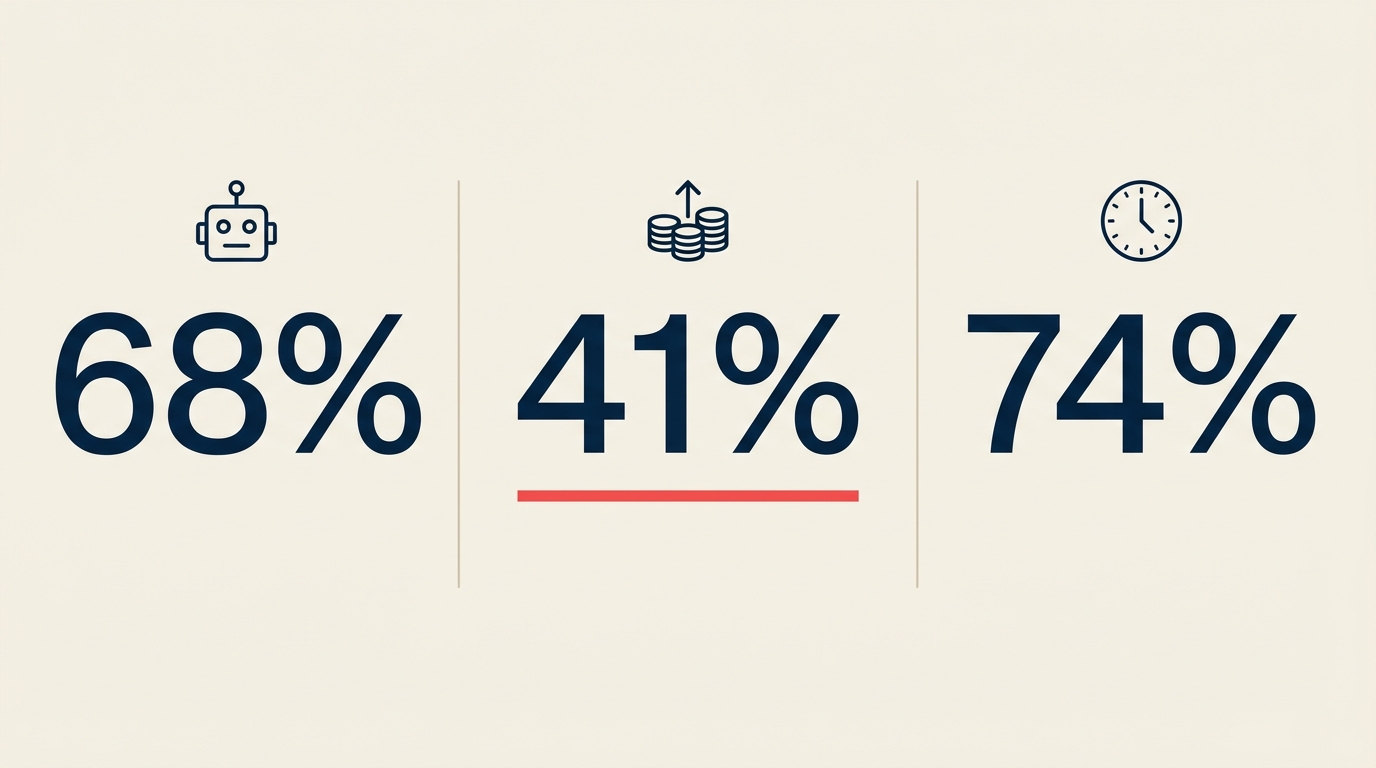
Kira-kira dua pertiga perniagaan kecil AS (68%) kini menggunakan AI secara tetap, meningkat daripada lebih kurang 48% pada pertengahan 2024, menurut Laporan Impak AI QuickBooks 2026 Intuit. Laporan itu meninjau lebih daripada 34,000 pemilik perniagaan kecil dan sederhana (SMB) di AS, Kanada, UK, dan Australia, serta menggabungkan data itu dengan pandangan tanpa nama daripada lebih daripada 5.3 juta perniagaan QuickBooks. Ia dibangunkan dengan kerjasama ahli ekonomi di Universiti Chicago, menjadikannya salah satu set data AI perniagaan kecil terbesar yang dihasilkan setakat ini.
Dalam lebih kurang lapan belas bulan, penggunaan AI yang tetap dalam kalangan perniagaan kecil meningkat daripada kurang separuh kepada hampir dua pertiga pemilik. Itu bukan tren yang beransur-ansur. Itu adalah titik penentu.
Bagi mana-mana pemilik yang masih menunggu di tepi padang, perubahan ini penting atas sebab yang khusus. Apabila majoriti pesaing anda sudah menggunakan alat produktiviti, kelebihan daya saing bukan lagi datang daripada penggunaan semata-mata. Ia datang daripada menggunakannya dengan lebih baik.
Fakta Utama
- 68% perniagaan kecil AS kini menggunakan AI secara tetap, meningkat daripada lebih kurang 48% pada pertengahan 2024. (Laporan Impak AI QuickBooks 2026 Intuit)
- 41% perniagaan kecil yang menggunakan AI menyatakan hasil meningkat kerana AI, berbanding hanya 2% yang menyatakan hasil menurun. (Laporan Impak AI QuickBooks 2026 Intuit)
- 74% perniagaan kecil yang menggunakan AI menyatakan AI menjadikan mereka lebih produktif, meningkat daripada 46% pada Julai 2024. (Laporan Impak AI QuickBooks 2026 Intuit)
Dari Mana Datangnya Keuntungan Hasil dan Masa
Data QuickBooks menghuraikan dengan tepat di mana pemilik perniagaan kecil menggunakan AI. Lima kes penggunaan teratas ialah pemasaran (43%), perkhidmatan pelanggan (36%), tugasan pentadbiran (33%), pemprosesan data (32%), dan perakaunan (29%).
Dua perkara menonjol dalam senarai itu.
Pertama, pemasaran adalah pemimpin yang jelas. Bagi kebanyakan perniagaan kecil, pemasaran juga merupakan laluan paling langsung kepada hasil. Lebih banyak jangkauan, pemesejan yang lebih baik, penciptaan kandungan yang lebih pantas, dan lelaran kempen yang lebih cepat semuanya bergabung menjadi pertumbuhan saluran jualan. Pemilik yang menggunakan AI dalam aliran kerja pemasaran mereka terlebih dahulu adalah, bukan secara kebetulan, juga yang paling mungkin melaporkan keuntungan hasil.
Kedua, perakaunan berada di bahagian bawah senarai lima teratas itu. Tetapi apabila anda melihatnya bersama tugasan pentadbiran, hampir satu pertiga pemilik yang menggunakan AI telah menerapkan AI kepada kerja yang tidak menjana hasil tetapi masih mengambil masa berjam-jam setiap minggu. Mengautomatikkan invois, penyesuaian, kemasukan data, dan surat-menyurat rutin membebaskan masa yang boleh dikembalikan ke dalam perniagaan.
Data masa mengesahkan perkara ini. Kira-kira 24% pemilik yang menggunakan AI menyatakan waktu kerja mereka kini lebih pendek, berbanding hanya 11% yang menyatakan waktu kerja lebih panjang. Itu adalah nisbah dua berbanding satu yang memihak kepada pemulihan masa.
Di sinilah keputusan bagi kebanyakan pemilik sebenarnya terletak. Bukan "adakah saya perlu menggunakan AI?" tetapi "dua atau tiga aliran kerja manakah yang saya mulakan dahulu, dan bagaimana saya tahu ia berbaloi?"
Mengapa Pengguna Awal Melangkaui yang Lain (dan Jurang Semakin Melebar)
Penemuan produktiviti ini patut mendapat lebih perhatian daripada yang diberikan. Pada Julai 2024, 46% perniagaan kecil yang menggunakan AI menyatakan AI menjadikan mereka lebih produktif. Menjelang awal 2026, bahagian itu meningkat kepada 74%. Dalam tempoh yang sama, penggunaan keseluruhan sendiri meningkat daripada 48% kepada 68%.
Ini bermakna lebih ramai pemilik menggunakan AI DAN mereka yang menggunakannya mendapat lebih banyak nilai daripadanya. Kedua-dua lengkung bergerak ke arah yang sama, dan ia semakin mempercepatkan bersama-sama.
Bagi mereka yang tidak menggunakan, ini mewujudkan kerugian berganda. Pesaing bukan sahaja menggunakan AI. Mereka semakin mahir menggunakannya setiap suku tahun.
Laporan AI Radar 2026 BCG mendokumentasikan corak yang sama dalam kalangan pemimpin perusahaan: syarikat yang bergerak awal pada AI semakin melebarkan jurang berbanding yang lewat, bukan mempersempitnya. Data perniagaan kecil dari QuickBooks menceritakan kisah yang sama pada skala yang lebih kecil. Pengguna awal belajar lebih pantas, menemui aliran kerja yang menguntungkan, dan menggandakan pengetahuan itu menjadi kelebihan operasi yang mampan. Pengguna lewat menghadapi pendakian yang lebih curam kerana mereka bukan sahaja mengejar teknologi. Mereka mengejar pembelajaran organisasi.
Dan isyarat hasil adalah sukar untuk diabaikan. Hanya 2% pemilik yang menggunakan AI menyatakan hasil menurun. Empat puluh satu peratus menyatakan ia meningkat. Itu adalah nisbah hasil positif 20 berbanding 1.
Permulaan Dua-Aliran Kerja
Bagi pemilik yang belum terlibat sepenuhnya dengan AI, atau yang telah mencuba tanpa kaedah yang jelas, terdapat rangka kerja praktikal yang patut dinamakan: Permulaan Dua-Aliran Kerja.
Ideanya mudah. Jangan cuba menggunakan AI di mana-mana sekaligus. Pilih tepat dua aliran kerja untuk bermula: satu yang paling hampir dengan hasil, dan satu yang merupakan pembaziran masa terbesar anda. Jalankan keduanya secara selari selama 60 hingga 90 hari. Ukur sebelum dan selepas.
Berdasarkan data QuickBooks, pilihan terbaik pertama adalah jelas.
Untuk aliran kerja hasil: mulai dengan pemasaran. Pemilik sudah menumpukan di sana (43%), dan hasilnya nampak dalam saluran jualan. Gunakan AI untuk merangka urutan e-mel, menulis kandungan media sosial, menjana varian salinan iklan, atau menyelidik pesaing. Outputnya boleh diukur: lebih banyak jangkauan, kadar respons lebih tinggi, lebih banyak saluran jualan, dan lebih banyak hasil yang ditutup.
Untuk aliran kerja pembaziran masa: mulai dengan perakaunan atau tugasan pentadbiran. Kedua-duanya muncul dalam lima kes penggunaan teratas dan kedua-duanya mewakili berjam-jam setiap minggu yang kebanyakan pemilik lebih suka luangkan dalam perniagaan, bukan untuk pentadbiran. Gunakan AI untuk mengkategorikan urus niaga, merangka komunikasi pelanggan, meringkaskan nota mesyuarat, atau memproses data rutin. Hasilnya juga boleh diukur: jam setiap minggu yang dipulihkan.
Bahagian kritikal adalah pengukuran sebelum/selepas. Sebelum bermula, catat berapa lama anda menghabiskan masa pada setiap aliran kerja dalam seminggu biasa dan seperti apa outputnya. Selepas 60 hari, ukur semula. Jika jam berkurang dan output kekal atau bertambah baik, anda telah mengesahkan pulangan itu. Jika angka-angka tidak bergerak, alat atau proses memerlukan penyesuaian. Walau apa pun, anda mempunyai data sebenar untuk memutuskan sama ada dan bagaimana untuk berkembang.
Inilah cara 74% yang melaporkan keuntungan produktiviti sebenarnya mencapainya. Bukan dengan melaksanakan AI di mana-mana sekaligus. Dengan menemui aliran kerja di mana AI memberikan hasil, kemudian berkembang dari asas itu.
Keputusan tentang kos AI dan harga token, yang boleh mengubah ekonomi alat yang anda pilih, dibincangkan secara terperinci dalam analisis bil AI perusahaan yang meningkat. Untuk aspek kemahiran, data premium gaji kefasihan AI 2026 menunjukkan apa yang diperoleh oleh pengusaha yang membina keupayaan AI dalaman.
Tindakan untuk Suku Ini
Jika anda menjalankan perniagaan kecil dan belum bermula atau belum komited, inilah gambaran suku yang berfokus.
Pilih dua aliran kerja anda. Pemasaran (menghadap hasil) dan perakaunan atau pentadbiran (pembaziran masa) adalah titik permulaan terkuat berdasarkan di mana pengguna perniagaan kecil menumpukan perhatian. Catat garis dasar anda untuk kedua-duanya minggu ini: jam yang dihabiskan, output tipikal, kos semasa.
Pilih satu alat AI untuk setiap aliran kerja. Jangan menilai sepuluh pilihan. Pilih alat yang paling banyak ulasan baik untuk setiap aliran kerja, gunakan selama 30 hari, dan ukur. Fasa penilaian adalah di mana kebanyakan pemilik terhenti. Langkau perbandingan menyeluruh dan mula belajar.
Semak pada hari ke-30 dan ke-60. Jika penjimatan masa adalah nyata dan kualiti kekal, kembangkan ke aliran kerja ketiga. Jika tidak, laraskan proses atau cuba alat yang berbeza. Matlamatnya bukan untuk menemui persediaan AI yang sempurna. Ia untuk menemui dua atau tiga aliran kerja di mana AI membayar jalannya sendiri untuk perniagaan khusus anda.
Penyelidikan Jurang Kepimpinan AI PwC mendapati bahawa jarak antara pemimpin AI dan yang ketinggalan bukan terutamanya tentang bajet. Ia tentang kadar pembelajaran dan lelaran. Perniagaan yang melangkaui adalah yang membuat lebih banyak percubaan, bukan semestinya yang berbelanja lebih banyak.
Data QuickBooks mengatakan 41% pengguna sudah melihat hasil yang lebih tinggi. Soalan untuk pertengahan 2026 bukan sama ada AI berkesan untuk perniagaan kecil. Ia berkesan. Soalannya ialah aliran kerja mana yang anda mulakan.
Soalan yang Sering Ditanya
Apakah cara paling biasa perniagaan kecil menggunakan AI pada tahun 2026?
Menurut Laporan Impak AI QuickBooks 2026 Intuit, lima kes penggunaan teratas dalam kalangan perniagaan kecil yang menggunakan AI ialah pemasaran (43%), perkhidmatan pelanggan (36%), tugasan pentadbiran (33%), pemprosesan data (32%), dan perakaunan (29%). Pemasaran dan pentadbiran/perakaunan bersama-sama mewakili titik permulaan terbaik bagi pemilik baharu kepada AI kerana ia menawarkan pulangan yang boleh diukur dari segi hasil dan masa.
Adakah AI benar-benar meningkatkan hasil bagi perniagaan kecil?
Data QuickBooks menunjukkan 41% perniagaan kecil yang menggunakan AI melaporkan hasil yang lebih tinggi, berbanding hanya 2% yang melaporkan hasil yang lebih rendah. Itu adalah isyarat positif yang kukuh, walaupun kesannya berbeza mengikut aliran kerja. Pemilik yang menerapkan AI pada kerja pemasaran dan jangkauan mereka cenderung melihat impak hasil yang paling langsung kerana aliran kerja tersebut mempunyai hubungan yang jelas dengan saluran jualan dan perniagaan yang ditutup.
Bagaimana saya mengukur sama ada AI berbaloi untuk perniagaan saya?
Kaedah paling mudah adalah pengukuran sebelum/selepas. Sebelum menggunakan AI dalam aliran kerja tertentu, rekodkan berapa jam seminggu aliran kerja itu mengambil masa dan seperti apa output tipikal. Selepas 60 hingga 90 hari penggunaan AI, ukur kedua-duanya semula. Jika jam berkurang dan output kekal atau bertambah baik, alat itu berbaloi. Jika tiada metrik yang bergerak, proses atau alat memerlukan penyesuaian. Ini mengelakkan perangkap biasa "menggunakan AI" tanpa mengetahui sama ada ia benar-benar memberikan pulangan.
Ketahui Lebih Lanjut
