Apa yang Bukan Rangka Kerja ACE: Had yang Jujur
Turn this article into takeaways for your work.


Each assistant summarizes the article only for you and suggests best practices for your work.
Setiap rangka kerja yang berguna akhirnya menjadi tukul yang mencari paku.
Seseorang dalam pasukan membaca artikel-artikel itu, teruja, lalu datang dengan cadangan untuk menyusun semula segala-galanya berdasarkan perbendaharaan kata baharu. Petakan semua alat. Susun semula roadmap. Lalukan setiap keputusan melalui rangka kerja. Bunyinya teliti. Tetapi bukan itu tujuan perbendaharaan kata ini dibina, dan tersalah anggap ia sebagai strategi adalah cara rangka kerja yang baik menyebabkan kerosakan paling besar.
Rangka Kerja ACE benar-benar berguna. Tetapi kebanyakan rangka kerja, apabila berguna, hanya berguna dalam cara yang sempit dan khusus. Penggunaan berlebihan menghasilkan lumpuh keputusan yang sepatutnya dicegah oleh rangka kerja itu: pasukan menyusun semula diri mengikut peta dan bukannya menavigasi wilayahnya.
Artikel ini ialah bahagian dokumentasi yang kebanyakan pembina rangka kerja langkau kerana mereka terlalu terikat dengan idea sendiri untuk menulisnya dengan jujur. Berikut ialah huraian tentang apa yang sebenarnya bukan Rangka Kerja ACE, dan di mana menggunakannya di luar had itu akan mengelirukan anda.
Inilah yang bukan Rangka Kerja ACE.
BUKAN preskripsi
Salah faham yang paling biasa adalah ini.
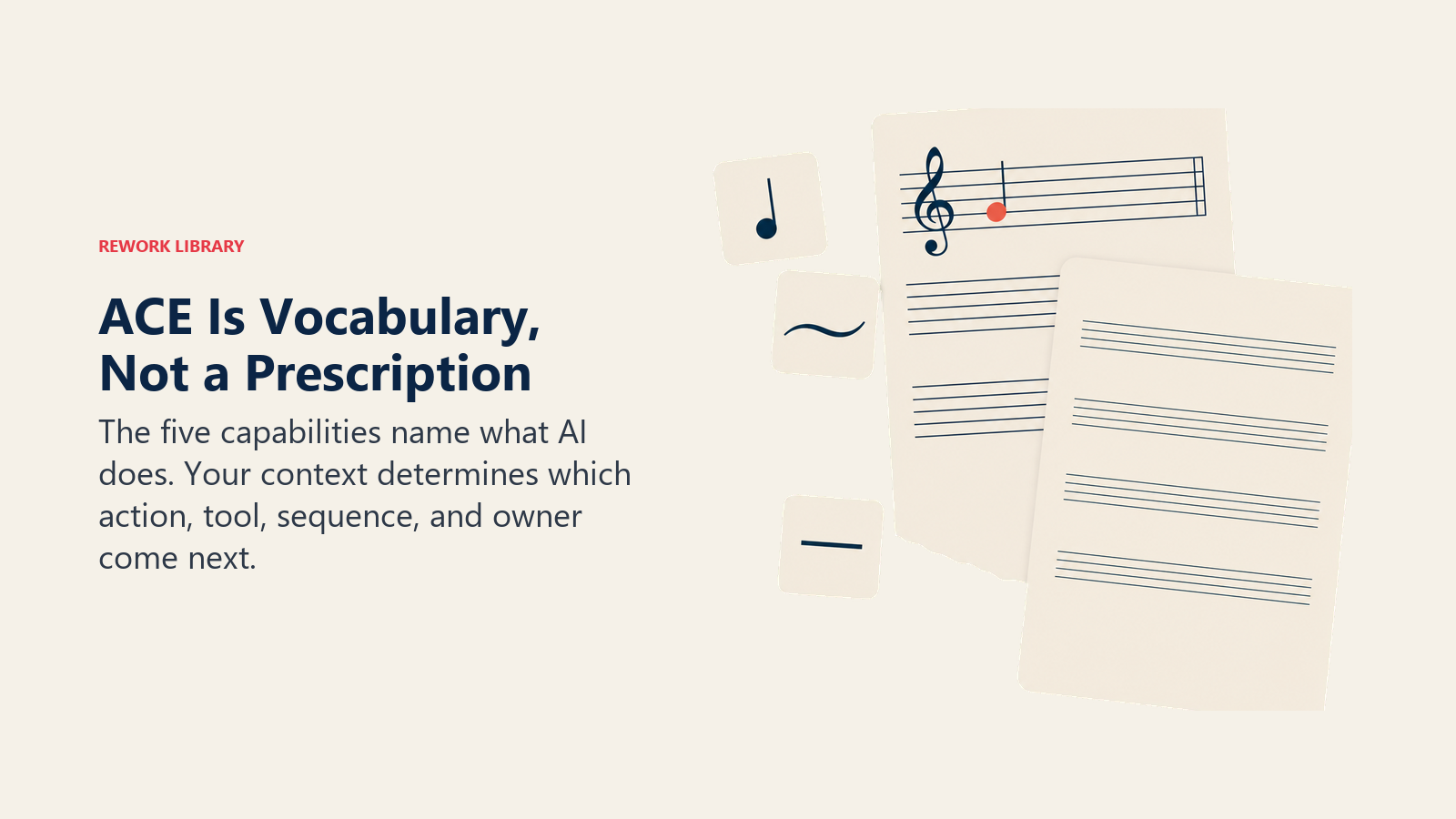
Rangka Kerja ACE memberikan anda perbendaharaan kata (lima keupayaan: Ingest, Analyze, Predict, Generate, Execute) dan struktur (tindanan enam lapisan dari Data ke Strategi Transformasi). Apa yang tidak diberikannya ialah urutan tindakan.
Ia tidak memberitahu anda alat AI mana yang perlu dibeli suku tahun depan. Ia tidak memberitahu anda untuk bermula dengan Analyze sebelum mencuba Predict. Ia tidak mengatakan "ambil jurutera prompt sebelum anda menggunakan pembantu RAG." Keputusan tersebut bergantung pada perniagaan anda, data anda, pasukan anda, toleransi risiko anda, dan sedozen faktor khusus konteks lain yang tidak boleh diketahui oleh mana-mana rangka kerja dari luar.
Jika anda mahukan "Isnin: lakukan X, Selasa: lakukan Y," anda memerlukan Playbook yang dibina di atas perbendaharaan kata ini. Perbendaharaan kata itu sendiri adalah asasnya. Preskripsi adalah milik anda untuk ditulis.
Fikirkan ia seperti mempelajari notasi muzik. Mengetahui bahawa nota suku mendapat satu ketukan tidak memberitahu anda cara menulis melodi. Tetapi anda tidak boleh menulis melodi dengan cara yang boleh dibaca oleh orang lain tanpanya.
BUKAN model kematangan
Yang ini menjerat orang bijak paling kerap, kerana tindanan enam lapisan kelihatan berturutan.
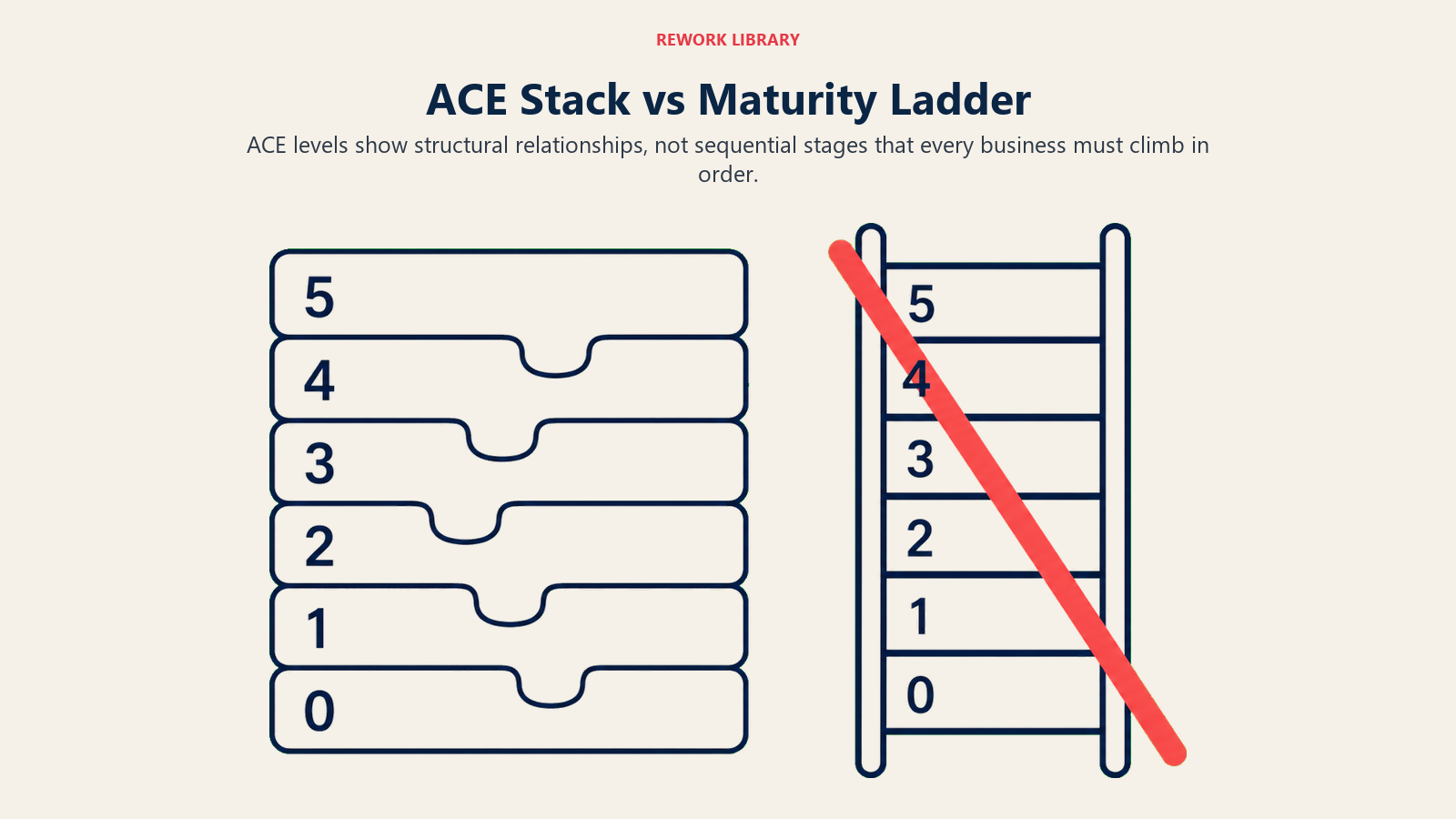
Asas (Data) → Tahap 1 (Keupayaan) → Tahap 2 (Corak) → Tahap 3 (Ejen AI) → Tahap 4 (Persembahan Industri) → Tahap 5 (Strategi Transformasi)
Ia dibaca seperti tangga. Bukan begitu.
Perniagaan sebenar menggunakan AI secara bukan linear. Sebuah syarikat logistik 90 orang mungkin menjalankan Penilaian+Penghalaan yang canggih (Corak Tahap 2) untuk prospek masuk tanpa mempunyai apa-apa yang menyerupai Strategi Transformasi (Tahap 5). Sebuah syarikat Fortune 500 mungkin menerbitkan polisi tadbir urus AI yang digilap (Tahap 5) sementara kualiti data sebenarnya (Asas) adalah bencana. Ini bukan kegagalan rangka kerja. Itulah cara penggunaan sebenar berjalan.
Tindanan bersifat struktural: ia menunjukkan cara komponen-komponen saling berhubungan. Ia bukan urutan yang anda maju melaluinya peringkat demi peringkat. Anda tidak perlu "menguasai Tahap 1" sebelum menyentuh Tahap 3. Anda tidak lulus dari Ingest sebelum dibenarkan menggunakan Generate.
Ini penting terutamanya dalam perniagaan pasaran pertengahan, di mana penggunaan AI cenderung oportunistik. Alat menyelesaikan masalah, diterima pakai, membuktikan nilai, dikembangkan. Itu bukan perkembangan model kematangan. Itulah cara keputusan sebenar dibuat di bawah kekangan sebenar.
Jika anda mencari model kematangan (alat jenis "Peringkat 1 hingga Peringkat 5, inilah di mana anda berada dan apa yang perlu dilakukan seterusnya"), Model Kematangan AI dalam koleksi Tahap 5 lebih hampir dengan apa yang anda perlukan. Rangka Kerja ACE adalah sesuatu yang berbeza.
BUKAN statik
AI perniagaan berkembang dengan pantas. Lebih pantas daripada yang rangka kerja ini dapat ikuti, jika kita jujur.
Lima keupayaan (Ingest, Analyze, Predict, Generate, Execute) meliputi bidang semasa dengan baik. Tetapi kategori keupayaan AI boleh dan akan berubah. "Model dunia" (sistem AI dengan representasi dalaman tetap tentang dunia) mungkin memerlukan nama keupayaan sendiri dalam tiga tahun. Keupayaan Execute mungkin perlu dibahagi kepada "pelaksanaan segerak" (AI mengambil satu tindakan) dan "pelaksanaan autonomi" (AI menavigasi gelung agentik berbilang langkah dengan backtracking) apabila perbezaan itu menjadi penting dari segi praktis untuk tadbir urus dan risiko.
Kami fikir Ingest, Analyze, Predict, Generate, Execute adalah set yang betul hari ini. Kami komited untuk menyemaknya setiap suku tahun, menerbitkan kemas kini apabila komponen berubah, dan jujur apabila sesuatu yang kami tulis tahun lalu memerlukan semakan.
Apa yang kami tidak komitkan adalah untuk sentiasa betul. Mana-mana rangka kerja yang mendakwa kebenaran kekal tentang bidang yang bergerak pantas sama ada naif atau tidak jujur. Kami lebih suka didapati mengemas kini daripada didapati mempertahankan sesuatu yang lapuk.
BUKAN khusus teknologi
Rangka Kerja ACE tidak memberitahu anda untuk menggunakan GPT-5, Claude, Gemini, LangChain, Pinecone, atau mana-mana alat tertentu. Ia tidak boleh, dan tidak sepatutnya.
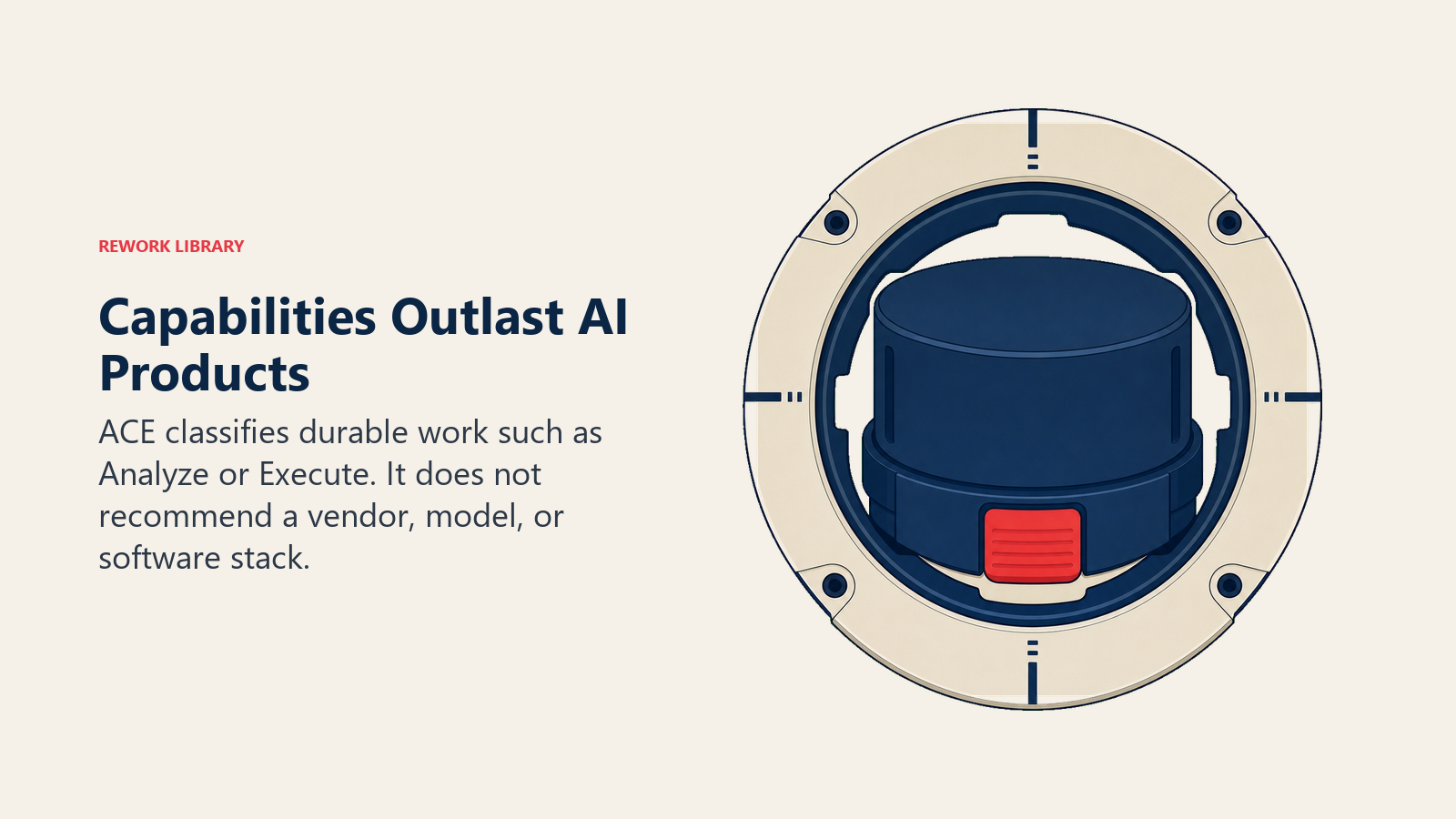
Keupayaan dan harga alat berubah setiap enam bulan. Kedudukan vendor berubah. Peserta baru muncul. Landskap produk April 2026 tidak akan menjadi landskap produk Oktober 2026.
Tetapi fakta bahawa Analyze + Predict adalah gabungan keupayaan yang betul untuk penilaian prospek tidak berubah. Fakta bahawa Execute memerlukan tadbir urus yang berbeza daripada Generate tidak berubah. Fakta bahawa kesediaan data adalah prasyarat untuk semua lima keupayaan tidak berubah.
Keupayaan lebih tahan lama berbanding nama produk. Perbendaharaan kata direka untuk bertahan lebih lama daripada alat yang melaksanakannya.
Ini mempunyai satu akibat praktikal yang layak disebutkan: Rangka Kerja ACE tidak akan membantu anda memilih antara dua alat serupa dalam kategori keupayaan yang sama. Jika anda menilai Gong berbanding Chorus untuk kecerdasan mesyuarat, kedua-duanya adalah Ingest + Analyze + Generate + Execute. Rangka kerja dengan betul mengenal pasti mereka sebagai setara pada tahap keupayaan. Memilih antara keduanya memerlukan kriteria penilaian khusus produk yang tergolong dalam panduan pembelian, bukan rangka kerja.
BUKAN pelan projek
Penggunaan AI adalah tidak kemas. Ia bersifat politik. Ia bukan linear. Ia melibatkan kitaran belanjawan, hubungan vendor, tentangan pasukan, pertengkaran tadbir urus data, dan sekurang-kurangnya satu inisiatif yang dibunuh apabila pencadang utama meninggalkan syarikat.
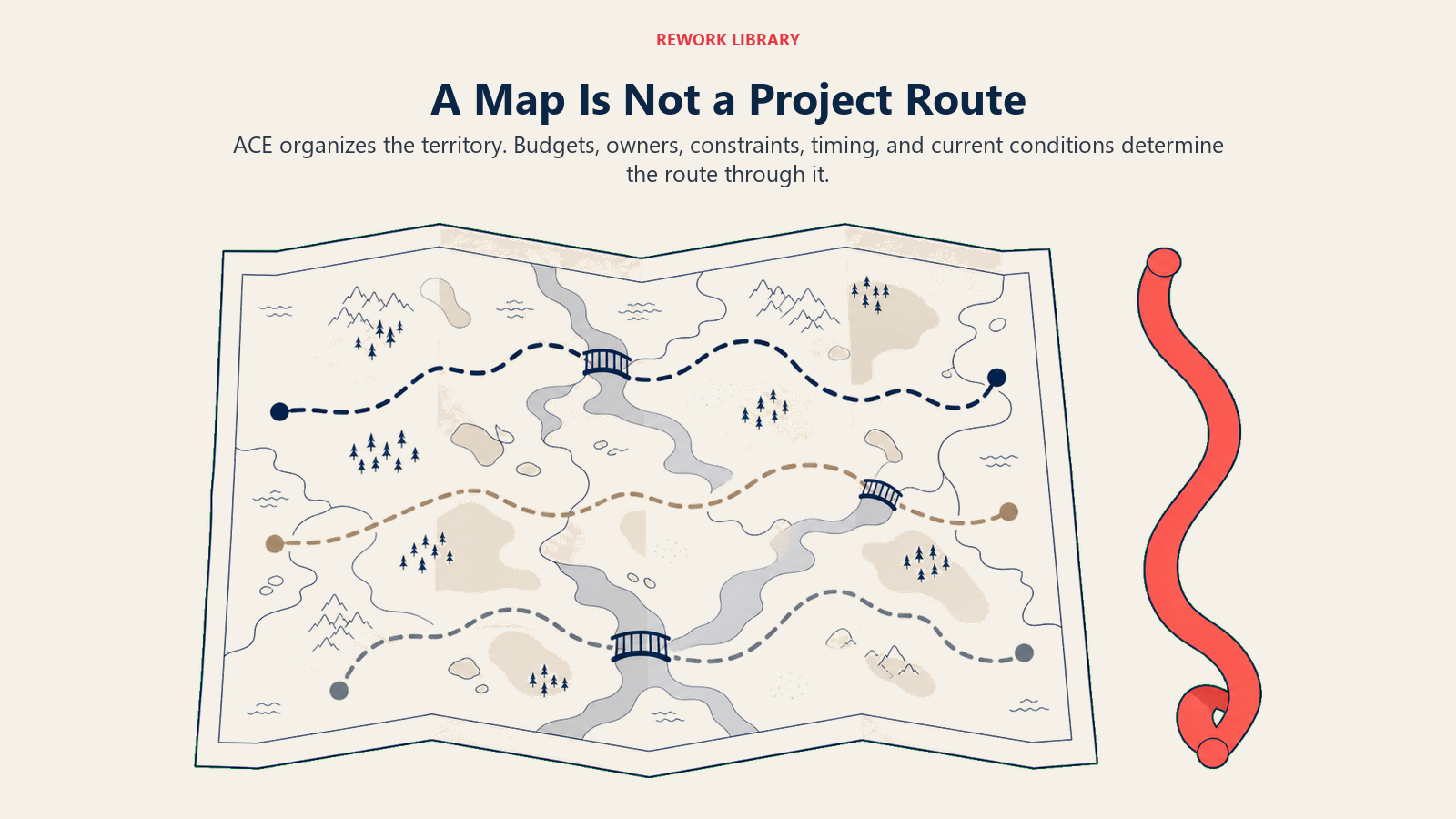
Rangka Kerja ACE adalah peta wilayah. Ia bukan laluan melaluinya.
Peta adalah benar-benar berguna. Peta bandar memberitahu anda jalan mana yang wujud, kejiranan mana yang bersebelahan, di mana jambatan berada. Tetapi ia tidak memberitahu anda jalan mana yang sesak hari ini, kejiranan mana yang selamat untuk dilalui pada waktu malam, atau jambatan mana yang ditutup untuk penyelenggaraan. Keputusan tersebut memerlukan pengetahuan masa nyata tentang situasi khusus anda.
Apabila seseorang berkata "mari kita susun semula Roadmap AI kita menggunakan Rangka Kerja ACE," versi yang betul ialah: "mari kita gunakan perbendaharaan kata ACE untuk menerangkan dan mengatur apa yang kita lakukan." Versi yang salah ialah: "mari kita gunakan tindanan ACE sebagai pelan projek dan laksanakan Tahap 1 sebelum Tahap 2."
Rangka kerja membantu anda berfikir tentang kerja. Ia tidak melakukannya.
TIDAK mencukupi dengan sendirinya
Yang ini berlaku untuk setiap artikel dalam koleksi ini, termasuk yang ini.
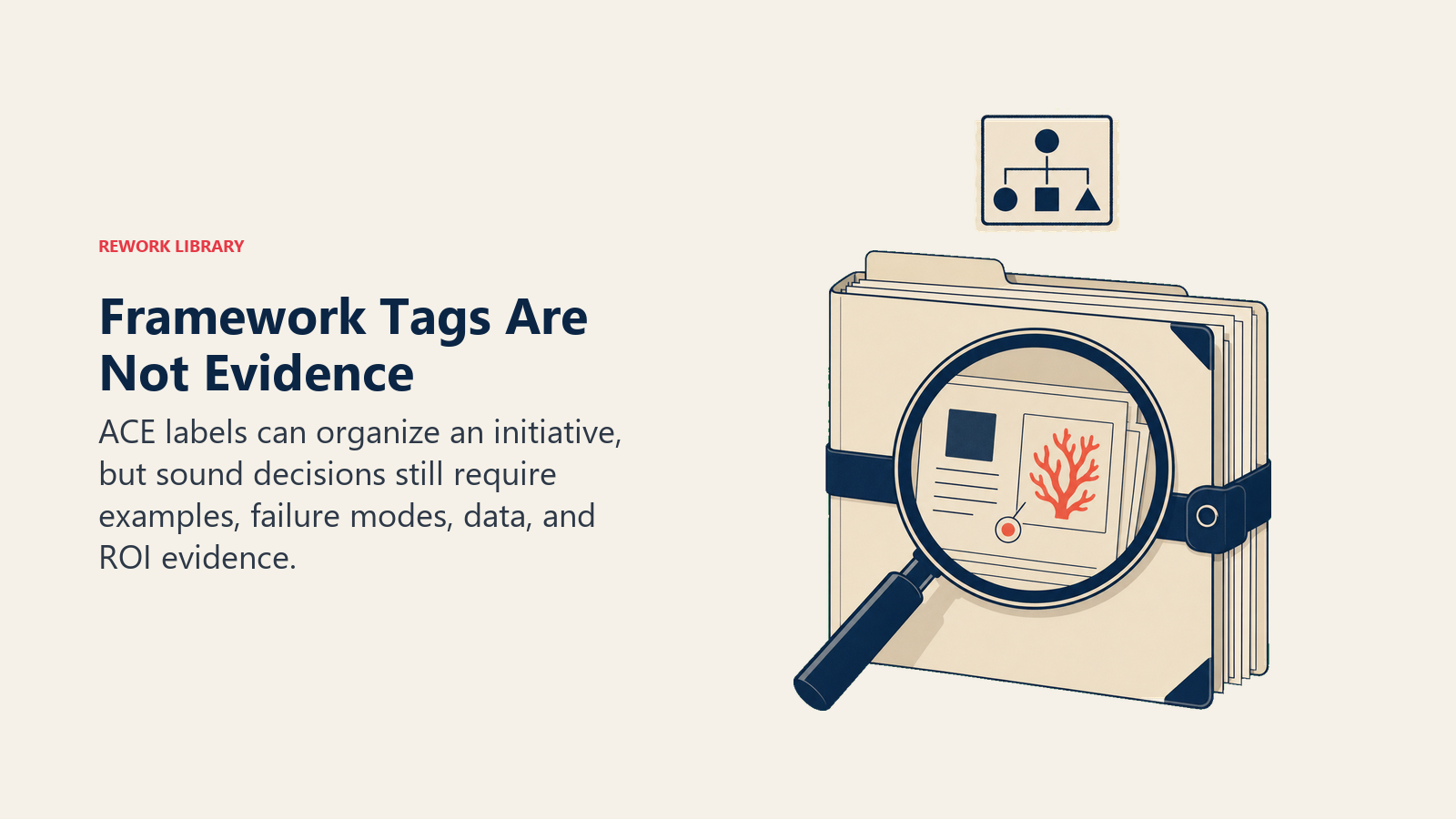
Rujukan rangka kerja bukan analisis. Mengatakan "kami menggunakan Rangka Kerja ACE untuk menilai vendor ini" adalah tuntutan kualiti yang sama dengan mengatakan "kami menggunakan hamparan untuk menjalankan nombor." Ia memberitahu anda sesuatu tentang proses. Ia tidak memberitahu anda sama ada analisis itu baik.
Artikel yang dibina atas Rangka Kerja ACE mesti memetik contoh sebenar, mod kegagalan sebenar, dan ROI yang jujur di mana ia wujud. Bukan sekadar merujuk perbendaharaan kata seolah-olah menyebut nama rangka kerja mengesahkan kesimpulan.
Perkara yang sama berlaku untuk penggunaan dalaman. Jika pasukan anda menandakan inisiatif AI baru sebagai "Ingest + Analyze" menggunakan taksonomi ACE, itu berguna untuk mengatur Portfolio anda. Ia tidak bermakna inisiatif itu dirangka dengan baik, dibiayai dengan baik, atau mungkin berjaya. Penandaan adalah permulaan. Kerja adalah kerja.
BELUM terbukti pada skala
Ini adalah bahagian yang jujur yang hampir tidak pernah dikatakan oleh rangka kerja.
Rangka Kerja ACE diterbitkan pada April 2026. Ia baru. Firma perundingan yang rangka kerjanya kami kritik dalam kritikan rangka kerja kami mempunyai dekad penglibatan pelanggan di sebalik pemikiran mereka. Penyelidik akademik yang rangka kerjanya kami panggil "ketat tetapi lewat" mempunyai bukti empirikal daripada pengunaan organisasi sebenar.
Kami mempunyai reka bentuk yang kukuh, prinsip pertama yang jelas, dan perbendaharaan kata yang meliputi bidang ini. Itu adalah permulaan yang bermakna. Ia bukan perkara yang sama dengan pengesahan empirikal pada skala.
Beberapa bahagian rangka kerja ini akan bertahan dari masa ke masa. Beberapa memerlukan semakan. Kami akan mengetahui mana satunya apabila pembaca yang mencukupi menggunakannya pada situasi sebenar yang mencukupi dan melaporkan apa yang berjaya dan apa yang tidak. Gelung maklum balas itu belum wujud. Ia akan wujud.
Kami lebih suka memberitahu anda ini dahulu daripada anda menemuinya kemudian apabila rangka kerja tidak begitu sesuai dengan sesuatu yang nyata.
BUKAN strategi jenama
Nama "Rangka Kerja ACE" wujud untuk kebolehingatan, bukan kerana akronim adalah intinya.
ACE tidak mengikut hierarki kepentingan yang ketat. Analyze dan Execute tidak lebih penting daripada Ingest, Predict, atau Generate. Namanya adalah pemegang. Nilainya adalah struktur yang mendasarinya: lima kategori keupayaan yang bersama-sama meliputi setiap bentuk AI perniagaan yang digunakan hari ini, bertindak ke dalam enam lapisan dari data mentah ke strategi enterprise.
Jangan bina strategi berdasarkan akronim. Binanya berdasarkan apa yang perbendaharaan kata membantu anda lihat.
TIDAK komprehensif pada setiap sempadan
Terdapat bidang di mana AI perniagaan sedang berkembang yang rangka kerja ini belum menangani dengan baik.
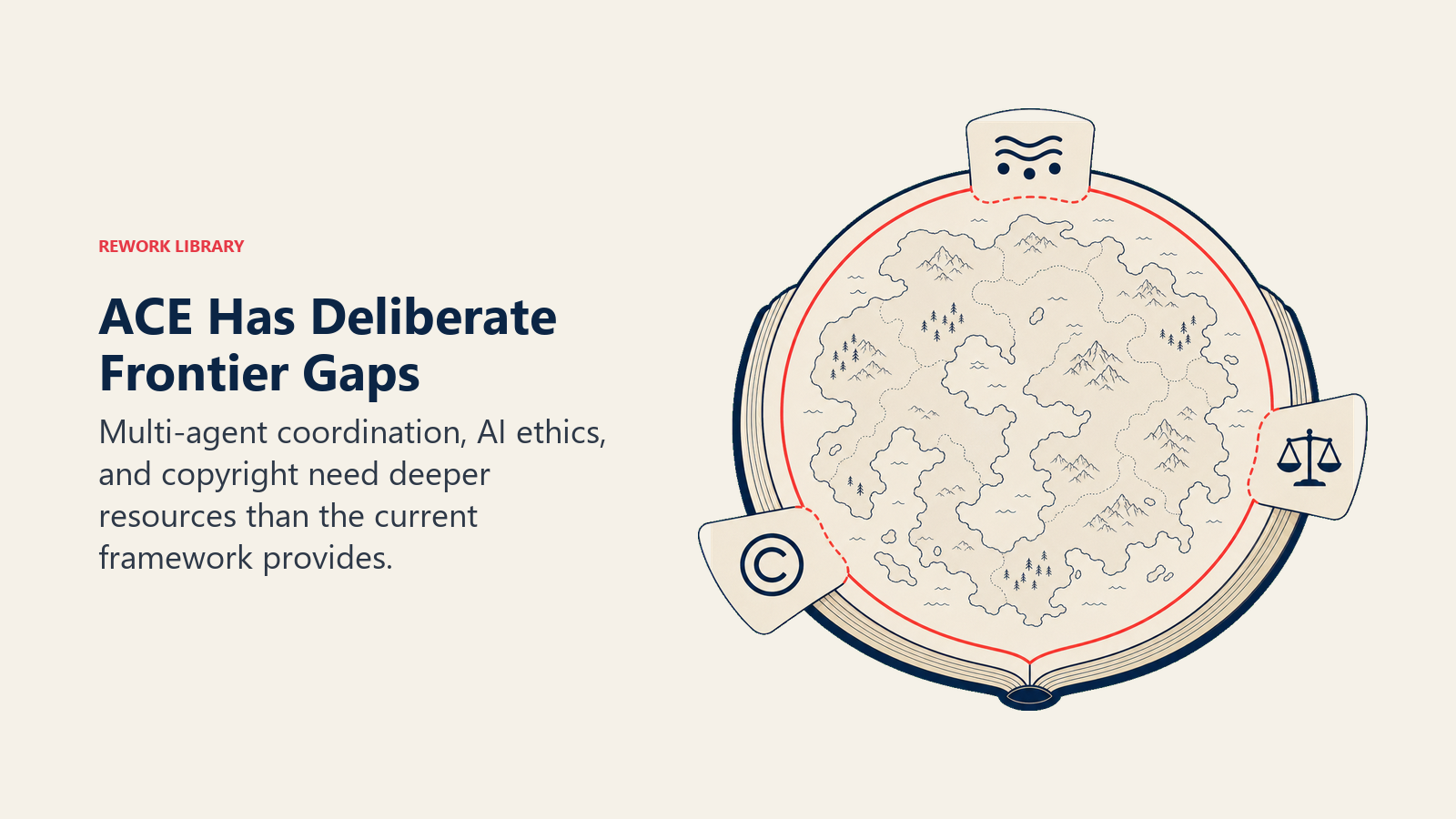
Penyelarasan berbilang ejen. Apabila lima ejen AI bekerjasama pada tugas bersama (satu menyelidik, satu menyusun, satu menyemak, satu melaksanakan, satu memantau), model keupayaan ACE menerangkan apa yang dilakukan oleh setiap ejen individu tetapi tidak menerangkan sepenuhnya cara mereka menyelaras. Itu adalah jurang yang kami jangka akan ditangani dalam pengembangan Corak Tahap 2 (corak Ejen Autonomi mula menyentuh ini, tetapi hanya bermula).
Etika AI pada skala. Rangka kerja ini menyebut tadbir urus dan risiko di Tahap 5, tetapi soalan etika khusus tentang kandungan yang dijana AI, keputusan pengambilan pekerja yang dipacu AI, dan produk kewangan yang dipengaruhi AI adalah cukup kompleks untuk mendapat rawatan tersendiri. Kami bercadang untuk menerbitkan rawatan itu. Kami belum berbuat demikian.
Hak cipta dan IP AI. Siapa yang memiliki output yang dijana AI? Apa yang berlaku apabila AI yang dilatih pada data pelanggan menghasilkan sesuatu yang kelihatan seperti IP pelanggan tersebut? Soalan-soalan ini tidak mempunyai jawapan yang tetap dalam undang-undang atau amalan. Rangka kerja ini merujuknya di Tahap 5 Pengurusan Risiko. Ia tidak menyelesaikannya.
Jurang ini adalah nyata. Pengendali yang bekerja dalam bidang ini perlu melengkapi Rangka Kerja ACE dengan sumber yang lebih khusus.
Rujukan pantas: apa yang BUKAN ia
| Dakwaan | Kebenaran |
|---|---|
| Preskripsi untuk apa yang perlu dilakukan | Ia memberikan perbendaharaan kata dan struktur; anda membekalkan keputusan |
| Model kematangan untuk maju melaluinya | Tindanan enam lapisan adalah struktural, bukan berturutan |
| Rangka kerja kekal | Jangkakan kemas kini suku tahunan apabila AI berkembang |
| Cadangan alat atau produk | Agnostik teknologi dengan reka bentuk |
| Pelan projek | Peta wilayah, bukan laluan melaluinya |
| Analisis yang mencukupi dengan sendirinya | Analisis sebenar memerlukan contoh sebenar dan mod kegagalan sebenar |
| Model yang disahkan secara empirikal | Diterbitkan April 2026; pengesahan datang dengan masa |
| Strategi jenama | Akronim adalah pemegang; nilainya adalah struktur yang mendasarinya |
| Lengkap pada setiap sempadan | Penyelarasan berbilang ejen, etika AI, IP AI kurang ditangani |
Apa yang IA ADALAH
Setelah semua itu, inilah dakwaan yang sempit dan tepat.
Rangka Kerja ACE adalah perbendaharaan kata dan struktur yang menjadikan perbualan AI dalam perniagaan anda lebih tepat.
Itu adalah perkara yang kecil. Tetapi perkara kecil sering merupakan perkara yang sebenarnya mengubah cara keputusan dibuat.
Apabila pasukan anda berkata "kita patut menilai vendor itu," perbendaharaan kata memberikan semua orang soalan bersama: keupayaan mana yang sebenarnya digunakannya? Apabila seseorang membuka kes guna vendor, rangka kerja memberikan mereka lima soalan untuk ditanya dan bukannya empat puluh. Apabila seorang pemimpin bercakap dengan lembaga pengarah tentang pelaburan AI, tindanan enam lapisan memberikan cara untuk menjelaskan di mana dalam tindanan pelaburan semasa mereka berada. Dan di mana jurangnya.
Perbendaharaan kata yang tepat tidak menyelesaikan setiap masalah. Tetapi perbendaharaan kata yang tidak tepat menjamin bahawa masalah yang salah dibincangkan. Pasukan membelanjakan belanjawan untuk "transformasi AI" tanpa dapat mengatakan keupayaan mana yang sebenarnya mereka gunakan. Vendor ditandatangani tanpa sesiapa di pihak pembeli dapat menyatakan tindakan Execute mana yang akan diambil oleh produk itu secara autonomi.
Dan jika had yang kami namakan di sini bermakna ia tidak sesuai dengan sesuatu yang anda sedang kerjakan, itu juga maklumat yang berguna. Letakkan ia. Gunakan sesuatu yang lain. Kembali apabila perbendaharaan kata membantu.
Kerja adalah kerja.
Apa yang perlu dibaca seterusnya
- Rangka Kerja ACE: Jadual Berkala untuk AI Perniagaan: perbendaharaan kata penuh, jika anda belum membacanya
- Mengapa Kebanyakan Rangka Kerja AI Gagal: kritikan jujur terhadap rangka kerja perundingan, vendor, akademik, dan hype (dan tentang kami)
- Cara Membaca Kes Guna AI: meletakkan perbendaharaan kata untuk bekerja dalam lima minit
- Evolusi AI Perniagaan: dari mana rangka kerja ini berasal, dan ke mana ia mungkin perlu pergi

Principal Solution Architect