Penugasan Semula Peringkat Akaun Masa Nyata dengan AI
Turn this article into takeaways for your work.


Each assistant summarizes the article only for you and suggests best practices for your work.
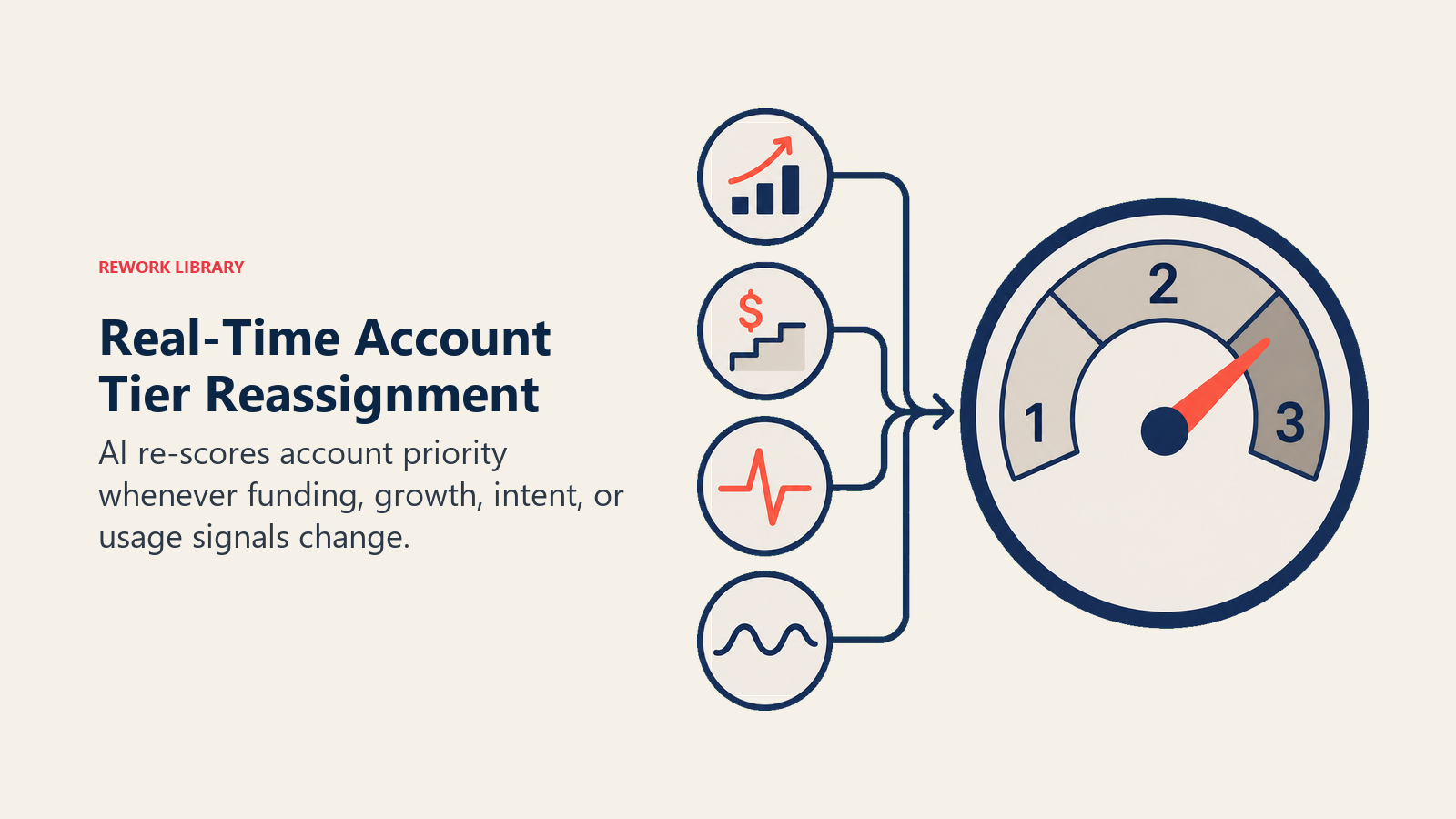
Akaun Peringkat 2 Anda baru sahaja mendapat Siri C bernilai $50 juta. CRM Anda masih menunjukkan mereka sebagai PKS mid-market, ditugaskan kepada wakil dalaman dengan kuasa urusan $25K. Itu adalah ketidakpadanan yang ketara: akaun baru memberi isyarat bahawa mereka akan dua kali ganda saiznya dalam tempoh 18 bulan dan Anda menjalankan playbook $25K pada mereka.
Peringkatan akaun adalah cara pasukan RevOps memperuntukkan sumber liputan. Peringkat 1 mendapat AE yang dinamakan, penglibatan eksekutif, dan cadangan tersuai. Peringkat 2 mendapat gabungan jualan dalaman dan program pemasaran. Peringkat 3 mendapat pemeliharaan automatik. Logiknya kukuh. Tetapi kebanyakan syarikat menugaskan peringkat tersebut sekali setahun semasa musim perancangan dan hampir tidak menyentuhnya lagi.
Syarikat yang memenangi akaun pada titik infleksi adalah mereka yang memerhati akaun tersebut setiap minggu, bukan sekali setahun. Ini adalah Corak 1 dalam AI Sales Operator: corak Scoring+Routing yang diterapkan kepada akaun sedia ada, bukan sekadar lead masuk.
Mengapa peringkatan akaun statik rosak
Semakan segmentasi tahunan adalah cara yang munasabah untuk menguruskan kitaran perancangan. Anda menarik data saiz syarikat, hasil, dan industri, menjaringkan terhadap ICP, dan menugaskan peringkat. Proses ini berfungsi dengan baik untuk akaun yang tidak banyak berubah.
Masalahnya ialah akaun berubah secara berterusan. Pusingan pembiayaan ditutup pada hari Selasa pada bulan Januari. Perubahan kepimpinan berlaku di pertengahan suku. Bilangan pekerja dua kali ganda sebelum tahun fiskal bergulir. Sebuah syarikat menambah Salesforce dan Slack ke timbunan teknologi mereka, memberi isyarat pelaburan operasi penskalaan. Setiap peristiwa ini adalah isyarat peringkat. Tiada satu pun menunggu kitaran perancangan tahunan Anda.
Kesan penggabungan adalah hanyutan liputan. Akaun yang sepatutnya Peringkat 1 berada di Peringkat 2 kerana tiada siapa yang menyedari Siri B. Akaun yang mengecut atau jadi senyap kekal Peringkat 1 dan terus menerima pelaburan yang tidak menghasilkan pulangan. Pasukan sales ops menghabiskan bulan pertama setiap tahun untuk membetulkan peringkat secara manual berdasarkan pemerhatian suku lalu, dan pembetulan itu sudah lapuk selama tiga bulan.
Penentuan semula peringkat yang dipacu AI menyelesaikan ini dengan menganggap peringkatan sebagai bacaan berterusan dan bukannya semakan berkala.
Fakta Utama: Peringkatan Akaun dan Pengesanan Isyarat
- Penyelidikan McKinsey mengenal pasti pemantauan AI terhadap atribut organisasi (pusingan pembiayaan, perubahan kepimpinan, pelancaran produk) sebagai salah satu aplikasi AI jualan yang paling bernilai, khususnya kerana isyarat ini muncul antara kitaran semakan tahunan
- Data Bombora dan 6sense menunjukkan bahawa syarikat yang menunjukkan skor niat pembeli yang tinggi biasanya mempunyai tetingkap keputusan pembelian 3-6 minggu sebelum niat turun; akaun Peringkat 3 dalam tetingkap tersebut yang tidak dinaikkan sering membeli dari pesaing yang menyedari isyarat itu dahulu
- Semakan peringkatan akaun tahunan purata membiarkan akaun dalam peringkat yang salah selama 3-9 bulan selepas peristiwa yang layak, kerana pusingan pembiayaan, perubahan bilangan pekerja, dan peralihan kepimpinan tidak menunggu musim perancangan
Doktrin Peringkat Dinamik
Doktrin Peringkat Dinamik menyatakan bahawa peringkat akaun bukan harta keadaan semasa akaun tetapi ramalan berterusan tentang trajektori nilainya. Menurut doktrin ini, penugasan peringkat membawa skor keyakinan dan cap masa ketaraman. Apabila sama ada keyakinan turun di bawah ambang (isyarat baru bertentangan dengan klasifikasi sedia ada) atau cap masa melebihi tetingkap kesegaran yang ditetapkan (tiada penilaian semula dalam 30+ hari), akaun masuk ke barisan penilaian semula. Ini adalah penyimpangan yang bermakna dari peringkatan tahunan statik: peringkat dilayan seperti output model yang merosot dari masa ke masa, bukan medan yang hanya berubah pada semakan perancangan.
Isyarat yang mencetuskan penentuan semula peringkat
Tidak setiap perubahan akaun menjustifikasi penugasan semula peringkat. Ini adalah isyarat dengan nilai ramalan tertinggi untuk peralihan peringkat:
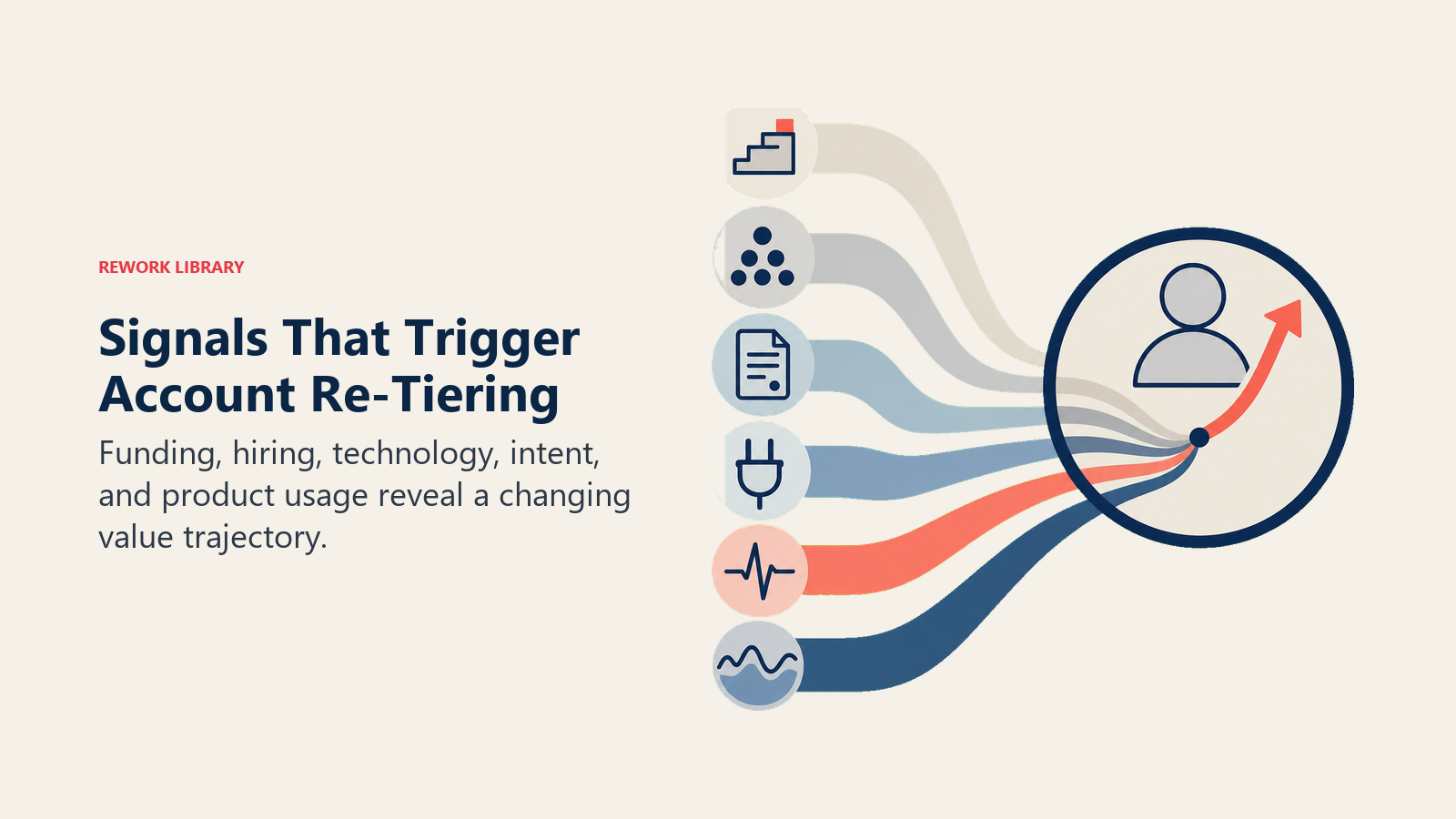
Pusingan pembiayaan: Syarikat yang mendapat Siri A, B, atau C hampir selalu berkembang ke profil pembeli yang lebih besar. Siri A biasanya memberi isyarat pelaburan operasi awal. Siri B biasanya memberi isyarat penskalaan go-to-market. Siri C dan ke atas sering memberi isyarat keupayaan perolehan peringkat perusahaan. Crunchbase dan ZoomInfo memaparkan ini hampir masa nyata.
Pertumbuhan bilangan pekerja: Syarikat yang berkembang dari 50 kepada 200 pekerja dalam tempoh 12 bulan telah melepasi ambang mid-market yang ditakrifkan kebanyakan pasukan RevOps sebagai Peringkat 2. LinkedIn dan Apollo menjejaki perubahan bilangan pekerja dengan menarik data profil awam, dan kedua-duanya menawarkan akses API untuk pengayaan CRM.
Iklan pekerjaan: Iklan pekerjaan adalah penunjuk terkemuka bahawa pembiayaan akan digunakan. Syarikat yang menyiarkan 20 peranan jualan akan segera melabur dengan ketara dalam go-to-market. Syarikat yang menyiarkan CRO dan VP of Operations sedang bersedia untuk fasa penskalaan. Apollo, ZoomInfo, dan Bombora semuanya menawarkan data iklan pekerjaan sebagai isyarat niat.
Penggunaan teknologi: Apabila akaun menambah alatan yang berkorelasi dengan profil pembeli Anda, itu adalah isyarat peringkat. Jika ICP Anda adalah pasukan ops mid-market yang menggunakan Salesforce, HubSpot, atau Slack, syarikat yang menggunakan alatan tersebut sedang bergerak ke arah profil pembeli Anda. G2 Buyer Intent, Bombora, dan platform yang serupa menjejaki penggunaan teknologi.
Lonjakan niat pembeli: Data niat pihak ketiga dari Bombora, 6sense, dan Demandbase menjejaki apabila syarikat menyelidiki kategori yang relevan dengan produk Anda. Forrester menyatakan bahawa menggabungkan isyarat niat dengan wawasan akaun lain membolehkan pasukan mengutamakan dan mempercepatkan kumpulan pembelian sebelum mereka berinteraksi secara langsung. Akaun yang menunjukkan skor niat tinggi untuk kategori Anda yang berada di Peringkat 3 layak untuk semakan penentuan semula peringkat.
Corak penggunaan pelanggan sedia ada: Untuk akaun yang sudah menjadi pelanggan, perubahan mendadak dalam penggunaan produk adalah isyarat penentuan semula peringkat. Akaun yang menggandakan bilangan pengguna aktif mereka dalam 60 hari mungkin menjustifikasi panggilan naik taraf dan harus naik peringkat. Yang menurun ke 2 pengguna aktif dari 30 adalah risiko churn dan mungkin menjustifikasi penurunan peringkat.
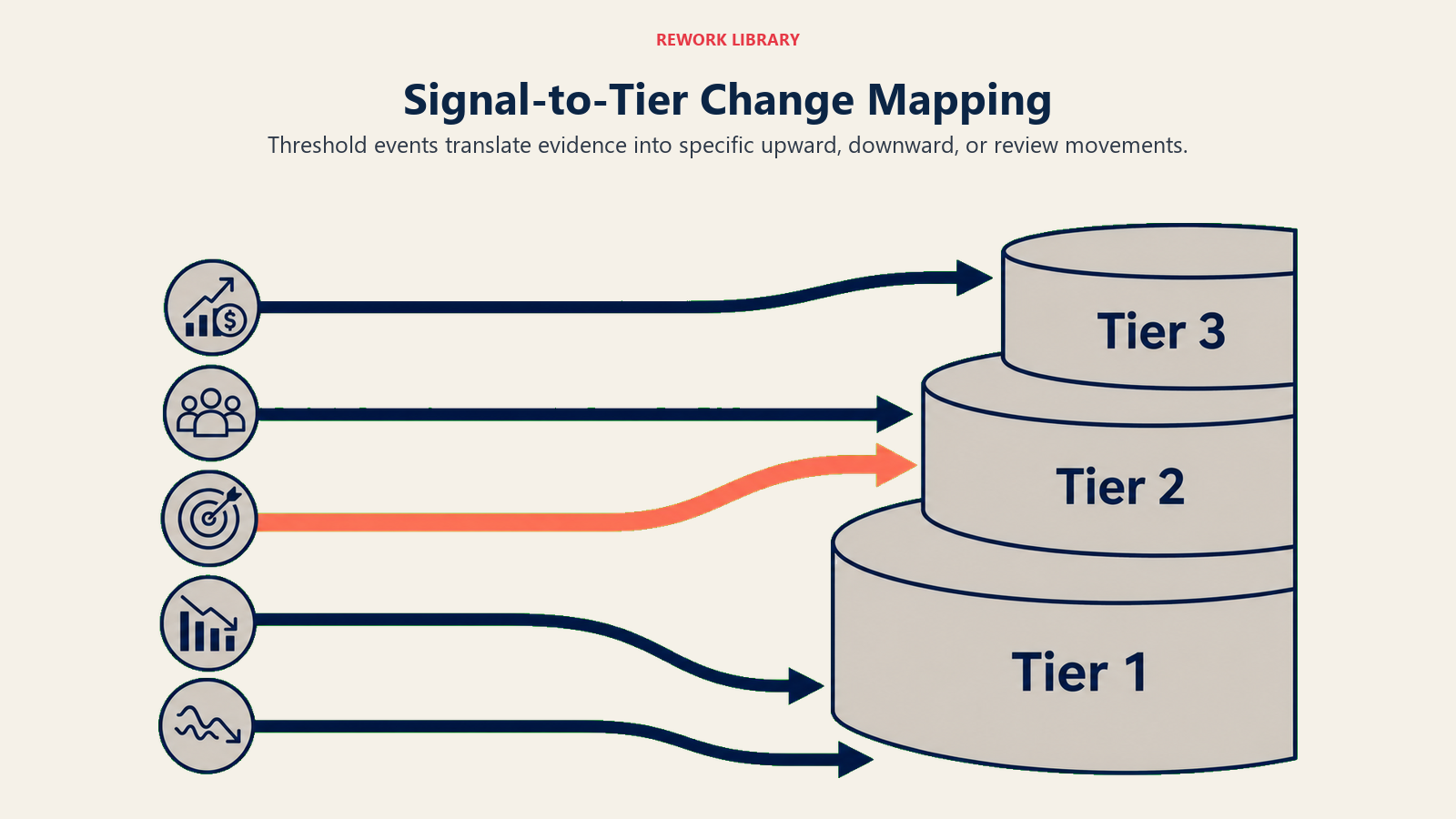
Pemetaan isyarat-ke-perubahan-peringkat
| Isyarat | Pergerakan peringkat biasa | Sumber data |
|---|---|---|
| Pusingan pembiayaan Siri A | Peringkat 3 ke Peringkat 2 | Crunchbase, ZoomInfo |
| Pusingan pembiayaan Siri B+ | Peringkat 2 ke Peringkat 1 | Crunchbase, ZoomInfo |
| Bilangan pekerja melepasi 200 | Peringkat 3 ke Peringkat 2 | LinkedIn, Apollo |
| Bilangan pekerja melepasi 500 | Peringkat 2 ke Peringkat 1 | LinkedIn, Apollo |
| 10+ iklan pekerjaan go-to-market terbuka | Pertimbangan Peringkat 2 | Apollo, ZoomInfo |
| Skor niat Bombora tinggi (60+ hari) | Peningkatan keutamaan Peringkat 2 atau 3 | Bombora |
| Timbunan teknologi menambah alatan sepadan ICP | Pertimbangan Peringkat 1 | Bombora, BuiltWith |
| MAU pelanggan sedia ada dua kali ganda | Peluang pengembangan, semakan peringkat | Analitik produk |
| MAU pelanggan sedia ada turun 50%+ | Semakan peringkat ke bawah, risiko churn | Analitik produk |
| Syarikat diakuisisi oleh akaun Peringkat 1 | Potensi roll-up ke peringkat induk | Crunchbase, suapan berita |
Cara penentuan semula peringkat dipacu AI berfungsi
Corak ACE Framework yang beroperasi di sini adalah Scoring + Routing: Ingest suapan isyarat, Analyze kematerialan setiap isyarat terhadap profil akaun semasa, Predict kebarangkalian peringkat baru, dan Execute kemas kini peringkat dalam CRM dengan notifikasi wakil.
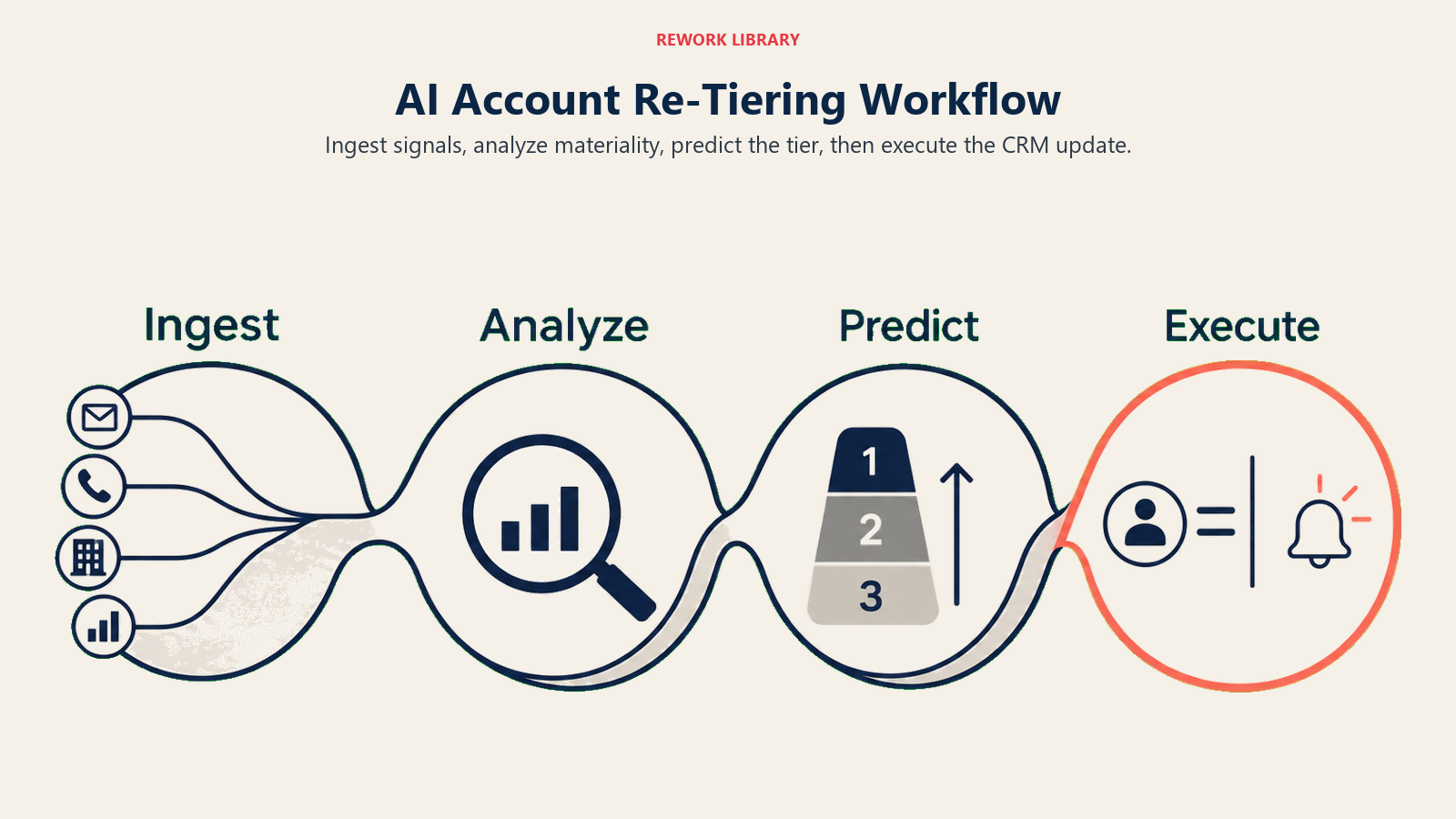
Ingest: Data isyarat mengalir masuk dari sumber pengayaan pihak ketiga (Crunchbase untuk pembiayaan, LinkedIn/Apollo untuk bilangan pekerja, Bombora/6sense untuk niat) ditambah analitik produk dalaman untuk pelanggan sedia ada. Kebanyakan timbunan RevOps moden menggunakan lapisan pengayaan yang memerhati suapan ini dan menolak kemas kini ke CRM apabila perubahan melebihi ambang yang ditetapkan.
Analyze: Tidak setiap isyarat adalah sama untuk setiap akaun. Pusingan pembiayaan dari syarikat yang berada di Peringkat 3 selama dua tahun tanpa penglibatan memerlukan lebih banyak analisis daripada isyarat pembiayaan dari akaun yang sedang dalam penilaian peringkat akhir yang aktif. Langkah Analyze mengklasifikasikan isyarat mengikut kematerialan: seberapa banyak ini mengubah skor profil akaun berbanding ICP Anda?
Predict: Model penentuan semula peringkat menjaringkan akaun terhadap kriteria Peringkat 1/2/3 Anda menggunakan atribut yang dikemas kini. Ini adalah output klasifikasi: berapa kebarangkalian akaun ini tergolong dalam Peringkat 1 vs. Peringkat 2 vs. Peringkat 3 berdasarkan data semasa? Model pemarkahan lead AI dan model peringkatan akaun berkongsi seni bina asas yang sama: ciri masuk, kelas kebarangkalian keluar.
Execute: Apabila output model melebihi ambang keyakinan, medan peringkat dalam CRM dikemas kini. Wakil yang ditugaskan kepada akaun menerima notifikasi dengan sebab perubahan. Jika akaun naik ke Peringkat 1, itu mungkin juga mencetuskan semakan penghalaan: adakah ia perlu dipindahkan ke wakil atau pasukan yang berbeza?
Aliran kerja apabila peringkat berubah
Perubahan peringkat adalah lebih dari sekadar kemas kini medan. Kesan hiliran harus ditakrifkan sebelum Anda melaksanakan automasi penentuan semula peringkat:
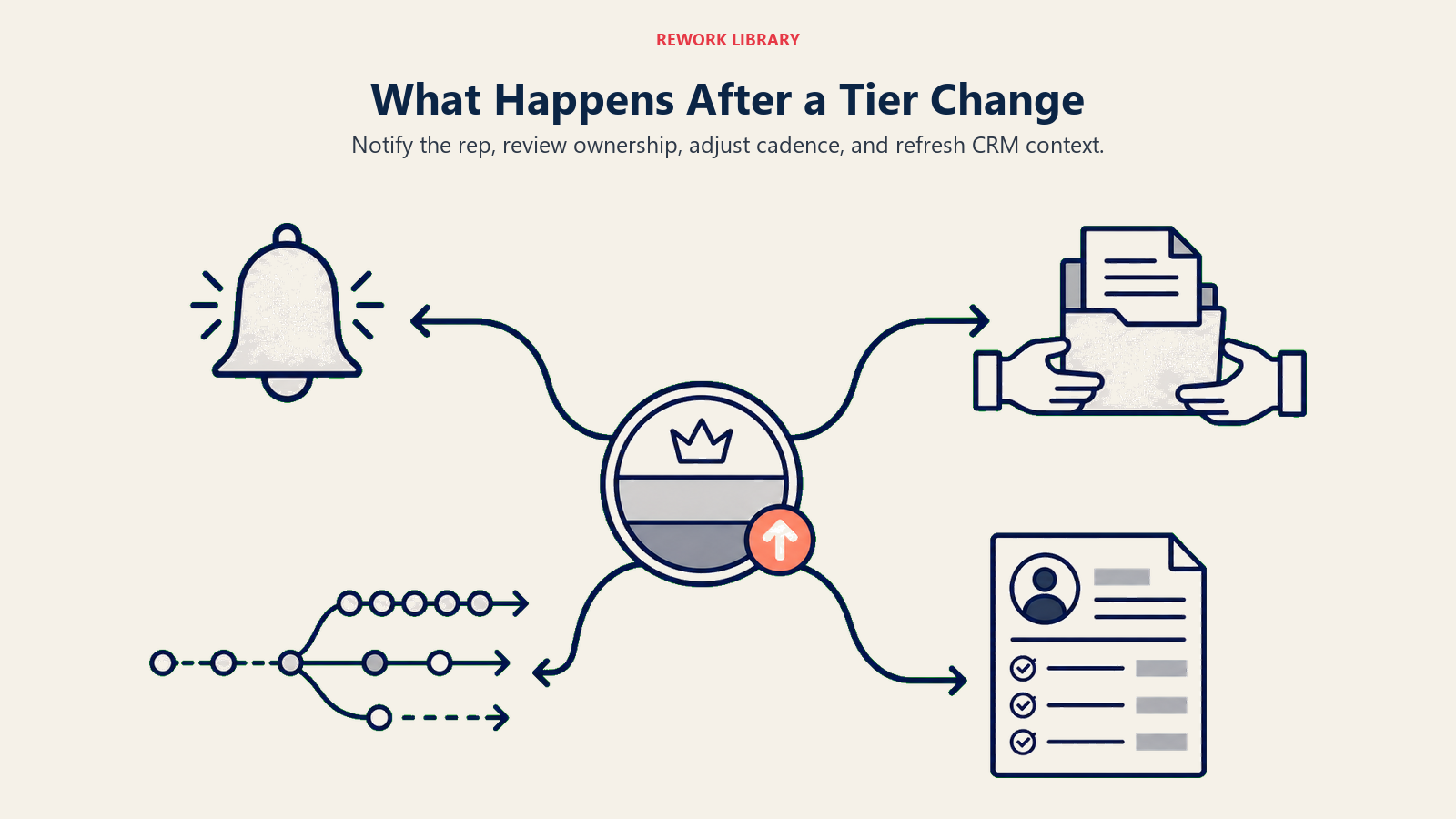
Notifikasi wakil dan konteks: Wakil yang ditugaskan mendapat amaran yang menerangkan apa yang berubah dan mengapa. Bukan sekadar "Akaun XYZ dipindahkan ke Peringkat 1" tetapi "Siri C diumumkan, bilangan pekerja kemungkinan melepasi 500, dinilai semula terhadap kriteria ICP Peringkat 1." Tanpa konteks, wakil mengabaikan perubahan peringkat.
Semakan penugasan wakil: Akaun Peringkat 3 yang naik ke Peringkat 1 mungkin perlu dipindahkan dari barisan wakil dalaman ke AE yang dinamakan. Ini adalah keputusan penghalaan dan harus mengikuti logik penghalaan lead automatik Anda. Jangan biarkan AE bangun pagi dengan 12 penugasan Peringkat 1 baru tanpa sebarang konteks atau tempoh peralihan.
Pelarasan urutan dan kadense: Perubahan peringkat harus mencetuskan perubahan pendaftaran urutan. Naik bermakna beralih ke kadense jangkauan sentuhan lebih tinggi; turun mungkin bermakna memasuki urutan pemeliharaan kos lebih rendah. Peralihan ini harus diotomatikkan dalam platform penglibatan jualan Anda (Outreach, Salesloft, Apollo), tetapi wakil manusia harus menyemak peralihan untuk mana-mana akaun yang sudah dalam perbualan aktif.
Tanda kebersihan data CRM: Jika akaun naik peringkat berdasarkan data firmografi baru, medan CRM yang lebih lama mungkin perlu dikemas kini. Julat hasil, bilangan pekerja, dan medan klasifikasi ICP harus dimuat semula.
Sumber data: apa yang disumbangkan oleh setiap satu
Apollo.io: Data bilangan pekerja, iklan pekerjaan, penemuan kenalan e-mel. Kukuh pada liputan kecil-ke-mid-market. Lebih mampu milik daripada ZoomInfo untuk pasukan di bawah skala perusahaan.
ZoomInfo: Kedalaman firmografi (hasil, bilangan pekerja, carta org), data penggunaan teknologi, isyarat niat, dan data pembiayaan. Sumber tunggal yang paling komprehensif tetapi mahal pada peringkat perusahaan.
Crunchbase: Pusingan pembiayaan, maklumat pelabur, dan peristiwa pengakuisisian. Terbaik dalam kelasnya untuk pengesanan isyarat pembiayaan. Peringkat percuma adalah terhad; Pro diperlukan untuk akses API dan amaran masa nyata.
LinkedIn Sales Navigator: Perubahan bilangan pekerja, perubahan personel (eksekutif baru, pembuat keputusan baru), dan iklan pekerjaan. Sumber paling boleh dipercayai untuk perubahan kepimpinan peringkat individu yang mempengaruhi kuasa pembelian.
Bombora: Data niat pihak ketiga yang menunjukkan syarikat mana yang sedang aktif menyelidiki kategori Anda merentasi ratusan tapak kandungan B2B. Berguna untuk memaparkan akaun Peringkat 3 yang telah menjadi pembeli aktif sebelum mereka berinteraksi dengan pasukan Anda.
6sense dan Demandbase: Serupa dengan Bombora, dengan pemarkahan ramalan peringkat akaun yang lebih kukuh dan keupayaan pengaktifan iklan. Biasanya digunakan oleh pasukan RevOps yang lebih besar yang menjalankan program ABM bersama penghalaan.
Tadbir urus: ambang lulus-automatik vs. semakan-wakil
Tidak setiap perubahan peringkat yang dicadangkan AI harus dilaksanakan secara automatik. Takrifkan dua ambang:
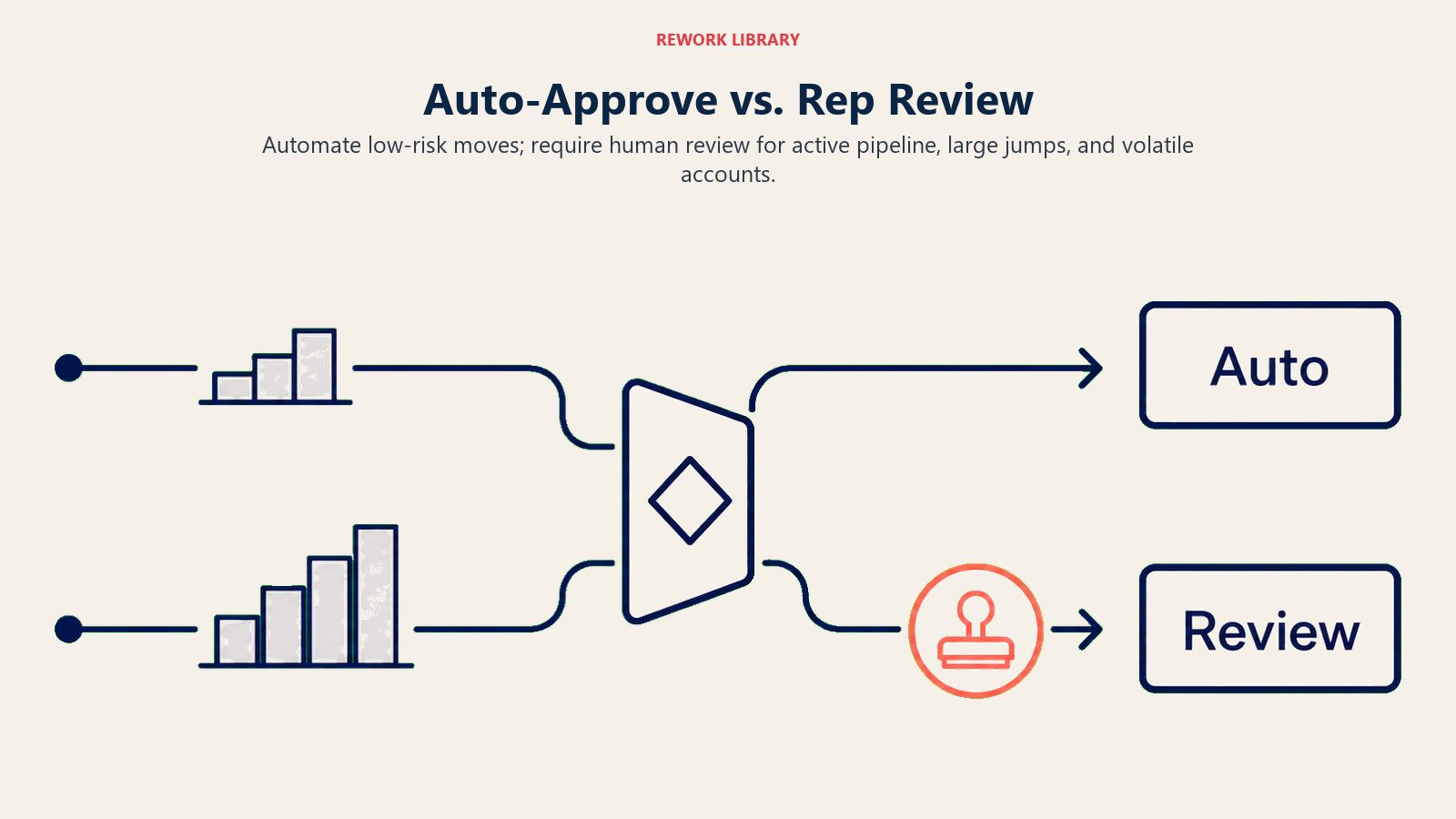
Lulus-automatik (tiada semakan manusia diperlukan):
- Kemas kini data firmografi (bilangan pekerja melepasi ambang yang ditakrifkan dalam ICP Anda) tanpa penglibatan wakil aktif pada akaun dalam 60 hari terakhir
- Isyarat niat pihak ketiga sahaja tanpa pengesahan pembiayaan atau bilangan pekerja
- Penurunan peringkat berdasarkan ketidakaktifan dan pengurangan bilangan pekerja (wakil menerima notifikasi tetapi tiada tindakan penyekat)
Semakan-wakil diperlukan sebelum pelaksanaan:
- Naik peringkat pada mana-mana akaun dengan pipeline aktif atau peluang terbuka
- Mana-mana akaun yang berpindah dari Peringkat 3 terus ke Peringkat 1 (lompatan besar menjustifikasi pengesahan manusia)
- Akaun dengan nuansa hubungan yang diketahui yang model tidak nampak (juara lama yang telah meninggalkan syarikat, sebagai contoh)
- Akaun yang telah ditentukan semula peringkat oleh AI lebih dari dua kali dalam 12 bulan (isyarat ketidakstabilan)
Keputusan tadbir urus pada akhirnya adalah tentang kos kesilapan. Naik peringkat positif palsu Peringkat 1 membuang masa AE dan merosakkan kepercayaan wakil terhadap sistem. Negatif palsu bermakna akaun berpotensi tinggi kekal di Peringkat 3 dan tidak pernah mendapat liputan yang betul. Kebanyakan pasukan RevOps menerima kadar positif palsu yang sedikit lebih tinggi pada naik peringkat, kerana kos terlepas peluang Peringkat 1 yang tulen melebihi kos semakan AE yang singkat.
Analisis Rework: Reka bentuk tadbir urus lulus-automatik vs. semakan-wakil adalah di mana kebanyakan pelaksanaan mendapat butiran yang salah. Pasukan lalai memerlukan semakan manusia pada segala-galanya, yang mengalahkan tujuan automasi, atau lulus-automatik segalanya, yang mewujudkan geseran wakil apabila mereka tiba di akaun dan mendapati peringkat berubah tanpa amaran. Corak peringkatan yang berfungsi adalah pendekatan tiga baldi: lulus-automatik untuk pergerakan kecil (Peringkat 3 ke Peringkat 2) pada akaun tanpa pipeline aktif, minta semakan wakil pada mana-mana akaun dengan peluang terbuka, dan tandai lompatan jarang Peringkat 3 ke Peringkat 1 untuk kelulusan RevOps. Itu merangkumi 90% kes tanpa mewujudkan simpanan yang pasukan berhenti proses.
Cabaran penggunaan wakil
Mod kegagalan yang paling biasa dalam penentuan semula peringkat dipacu AI bukan teknikal. Ia adalah penggunaan wakil. Wakil yang telah mengerjakan akaun selama berbulan-bulan menentang apabila AI "memberitahu mereka" bahawa akaun telah diklasifikasikan semula. Mereka berasa seperti pertimbangan mereka sedang dikesampingkan.
Pembaikannya adalah dalam pembingkaian. AI penentuan semula peringkat bukan memberitahu wakil akaun mereka berubah. Ia memberi wakil konteks yang tidak dapat mereka kumpulkan sendiri dengan memantau 50 sumber isyarat secara manual. Pembingkaian yang berfungsi: "Inilah yang berlaku di dunia akaun ini sejak Anda menyemaknya terakhir kali, dan inilah sebab kami fikir pendekatan liputan harus berubah."
Ringkasan mingguan wakil, menunjukkan kepada setiap wakil apa yang berubah merentasi portfolio mereka dengan sebab isyarat yang eksplisit, menukar lebih banyak yang skeptik daripada kemas kini CRM latar belakang yang senyap. Jadikan isyarat kelihatan; jangan sembunyikannya di dalam nilai medan. Wakil yang memahami mengapa peringkat berubah hampir selalu bersedia untuk bertindak berdasarkannya.
Ringkasan yang jujur
Peringkatan statik adalah gambaran sekilas. Penentuan semula peringkat AI adalah bacaan berterusan.
Perbezaan hasil biasanya bukan dalam kes yang jelas. Tiada siapa yang terlepas pengumuman Siri C dari akaun bernama yang sedang mereka kerjakan. Jurangnya ada pada akaun yang naik taraf secara senyap: bilangan pekerja dua kali ganda, kepimpinan berubah, timbunan teknologi beralih, niat melonjak. Semua itu berlaku antara semakan tahunan, dan tiada wakil yang mempunyai masa lapang untuk menyedarinya.
Penentuan semula peringkat AI menangkap isyarat tersebut. Tetapi ia hanya memberikan nilai apabila aliran kerja di sebaliknya direka bentuk: ambang yang jelas, notifikasi wakil dengan konteks, pelarasan urutan dan penghalaan hiliran, dan tadbir urus yang membezakan kes lulus-automatik dari semakan-manusia.
Akaun yang terlepas antara kitaran bukan hilang kepada persaingan kerana mereka lenyap. Mereka hilang kerana pasukan Anda mempunyai mereka di Peringkat 3 apabila mereka menjadi Peringkat 1.
Soalan Lazim
Apakah penugasan semula peringkat akaun masa nyata?
Penugasan semula peringkat akaun masa nyata adalah proses automatik mengemas kini keutamaan liputan jualan akaun (Peringkat 1/2/3) apabila isyarat yang layak berlaku, bukannya menunggu semakan perancangan tahunan. Isyarat yang mencetuskan penentuan semula peringkat termasuk pusingan pembiayaan, perubahan bilangan pekerja yang ketara, peralihan kepimpinan, penggunaan teknologi, dan lonjakan niat pembeli pihak ketiga. Matlamatnya adalah memastikan akaun bernilai tinggi menerima sumber jualan yang sesuai pada saat mereka paling bersedia untuk membeli.
Isyarat mana yang paling boleh dipercayai mencetuskan naik peringkat akaun?
Isyarat keyakinan tertinggi untuk naik peringkat adalah pusingan pembiayaan Siri B+ (menunjukkan keupayaan perolehan perusahaan), bilangan pekerja melepasi 200 atau 500, dan skor niat pembeli yang tinggi secara berterusan pada Bombora atau 6sense (penyelidikan kategori aktif 60+ hari). Isyarat keyakinan lebih rendah tetapi berguna termasuk iklan pekerjaan untuk peranan go-to-market dan penggunaan teknologi alatan yang sepadan dengan timbunan khas ICP Anda.
Bagaimana AI mengesan isyarat perubahan peringkat akaun secara automatik?
Penentuan semula peringkat AI menggunakan corak Ingest-Analyze-Predict-Execute. Data isyarat mengalir masuk dari sumber pengayaan seperti Crunchbase (pembiayaan), LinkedIn dan Apollo (bilangan pekerja), Bombora dan 6sense (niat), dan analitik produk dalaman (penggunaan pelanggan). Langkah Analyze mengklasifikasikan kematerialan isyarat, langkah Predict menghasilkan kebarangkalian peringkat baru, dan langkah Execute mengemas kini medan CRM dan mencetuskan notifikasi wakil apabila keyakinan melebihi ambang yang ditetapkan.
Haruskah penugasan semula peringkat adalah automatik atau memerlukan kelulusan manusia?
Kedua-dua, bergantung kepada status akaun. Lulus-automatik adalah sesuai untuk pergerakan peringkat kecil (Peringkat 3 ke Peringkat 2) pada akaun tanpa pipeline aktif dan isyarat firmografi yang jelas. Semakan wakil diperlukan untuk mana-mana akaun dengan peluang terbuka atau hubungan wakil yang aktif. Lompatan besar (Peringkat 3 ke Peringkat 1) harus memerlukan kelulusan RevOps kerana mereka mungkin mencetuskan penugasan semula wakil, yang merupakan keputusan dasar manusia.
Berapa lama akaun biasanya kekal dalam peringkat yang salah di bawah peringkatan tahunan statik?
Antara 3 dan 9 bulan, secara purata. Pusingan pembiayaan ditutup di pertengahan suku. Bilangan pekerja melepasi ambang sebelum tahun fiskal berakhir. Perubahan kepimpinan berlaku pada bulan yang semakan tahunan tidak merangkumi. Hasilnya ialah 30-60 hari pertama setiap kitaran perancangan biasanya dihabiskan untuk membetulkan peringkat berdasarkan peristiwa yang berlaku pada suku sebelumnya, menggunakan maklumat yang sudah agak lapuk.
Aliran kerja apa yang harus mengikuti naik peringkat?
Naik peringkat harus mencetuskan empat perkara: notifikasi wakil dengan isyarat khusus yang menyebabkan perubahan (bukan sekadar "peringkat dikemas kini" tetapi sebab sebenar), semakan penugasan wakil untuk mengesahkan orang yang betul memiliki akaun pada peringkat barunya, perubahan urutan atau kadense dalam platform penglibatan jualan, dan muat semula data CRM untuk mengemas kini medan firmografi yang mungkin berubah bersama pencetus peringkat. Tanpa langkah hiliran ini, medan peringkat berubah tetapi gerakan jualan sebenar tidak.
Sumber data apa yang diperlukan untuk penugasan semula peringkat akaun AI?
Timbunan minimum yang boleh dijalankan menggabungkan satu sumber pembiayaan/firmografi (Crunchbase atau ZoomInfo untuk isyarat pembiayaan dan bilangan pekerja), satu sumber niat (Bombora atau 6sense untuk isyarat penyelidikan kategori), dan analitik produk dalaman untuk akaun pelanggan sedia ada. ZoomInfo adalah sumber tunggal yang paling komprehensif tetapi paling mahal. Apollo merangkumi firmografi dan niat untuk pasukan di bawah skala perusahaan. Crunchbase adalah terbaik dalam kelasnya khusus untuk pengesanan isyarat pembiayaan.
Ketahui Lebih Lanjut

Co-Founder, Rework.com
On this page
- Mengapa peringkatan akaun statik rosak
- Doktrin Peringkat Dinamik
- Isyarat yang mencetuskan penentuan semula peringkat
- Pemetaan isyarat-ke-perubahan-peringkat
- Cara penentuan semula peringkat dipacu AI berfungsi
- Aliran kerja apabila peringkat berubah
- Sumber data: apa yang disumbangkan oleh setiap satu
- Tadbir urus: ambang lulus-automatik vs. semakan-wakil
- Cabaran penggunaan wakil
- Ringkasan yang jujur
- Ketahui Lebih Lanjut