Ringkasan Wawasan Industri untuk Account Executive
Turn this article into takeaways for your work.


Each assistant summarizes the article only for you and suggests best practices for your work.
Bayangkan seorang AE yang menuju ke mesyuarat semakan CFO di syarikat logistik mid-market. Dia mempunyai 20 minit sebelum panggilan. Jika dia bersedia dengan baik, dia sudah mengetahui bahawa normalisasi kos bahan api ditambah tekanan pengekalan pemandu yang berterusan menyempitkan margin logistik, bahawa 83% CFO logistik yang ditinjau dalam S1 menyatakan keutamaan teknologi teratas mereka adalah mengurangkan kos bergantung kepada headcount, dan bahawa pesaing terbesar syarikat itu baru mengumumkan perkongsian automasi last-mile minggu lalu.
Jika dia hanya membaca halaman LinkedIn syarikat dan mengimbas laman web, dia mengetahui bilangan pekerja dan pernyataan misi yang samar.
Perbezaan antara kedua-dua versi AE tersebut bukan bakat. Ia adalah infrastruktur penyelidikan. Dan untuk kebanyakan pasukan, jurang penyelidikan wujud kerana penyelidikan berkualiti mengambil masa 3 hingga 4 jam setiap akaun, dan kebanyakan wakil mempunyai 10 mesyuarat seminggu.
Ringkasan industri yang dijana AI adalah penyelesaian kepada jurang tersebut. Tetapi hanya jika anda membinanya dengan betul. Digest berita bukan ringkasan. Ringkasan tentang apa yang berlaku minggu lalu bukan apa yang pembeli enterprise perlu anda ketahui. Artikel ini merangkumi perbezaan, pipeline teknikal, dan persediaan operasi yang menjadikan ringkasan berfungsi pada skala.
Perbezaan antara digest berita dan ringkasan wawasan
Fakta Utama: Pembeli Enterprise dan Persediaan Jualan pada 2026
- Pembeli B2B melengkapkan 57-70% penyelidikan mereka sebelum menghubungi jualan, bermakna perbualan pertama AE berlaku setelah pembeli sudah membentuk senarai pendek vendor awal. (Gartner, 2025)
- 75% pembeli B2B lebih suka pengalaman bebas wakil, dan 73% secara aktif mengelakkan pembekal yang menghantar jangkauan yang tidak relevan. (Gartner, 2025)
- 89% pembeli enterprise melaporkan mengetahui apa yang mereka mahukan sebelum penyelidikan mereka bermula, menjadikan kefasihan domain AE sebagai prasyarat, bukan kelebihan. (6sense, 2025)
Perbezaan ini adalah keseluruhan hujah untuk melabur dalam ringkasan yang dijana AI. Ia juga yang memisahkan alat yang benar-benar digunakan wakil daripada yang mati dalam peti masuk mereka.
Digest berita memberitahu anda apa yang berlaku. "XYZ Logistics mengumumkan perkongsian penjejakan kargo baharu." "Pekerjaan lori turun 0.3% pada Mac." "Harga bahan api naik untuk minggu keempat berturut-turut." Maklumat tersebut tepat, dan tidak relevan untuk panggilan penemuan CFO.
Ringkasan wawasan memberitahu anda apa maksudnya untuk keputusan pembeli ini sekarang. "Pengumuman perkongsian penjejakan kargo menandakan XYZ menggandakan perkongsian pembawa berbanding membina kapasiti yang dimiliki, yang bermakna pasukan operasi mereka mengurus hubungan vendor, bukan sistem dalaman, dan teknologi-untuk-mengurangkan-kos-penyelarasan adalah keutamaan yang tulen." "Tekanan pengekalan pemandu bermakna pasukan HR dan pasukan operasi mereka bersaing untuk bajet headcount, yang mewujudkan keperluan mendesak untuk perisian produktiviti yang membenarkan lebih sedikit pengambilan."
Ringkasan mengekstrak implikasi daripada peristiwa. Ia menapis untuk relevansi peranan pembeli. Ia menghubungkan trend kepada keputusan khusus yang sedang cuba dibuat pembeli. Dan ia memberi AE bahasa yang membuatkan pembeli berasa difahami, bukan sekadar diteliti.
Dalam ACE Framework, ini adalah corak Generative Research: Ingest daripada pelbagai sumber, Analyze untuk sintesis dan menapis untuk relevansi, Generate output berstruktur. Keupayaan Generate melakukan kerja sintesis, bukan sekadar meringkaskan input. Itulah yang menjadikannya ringkasan berbanding digest.
Apa yang AI jana dalam ringkasan industri
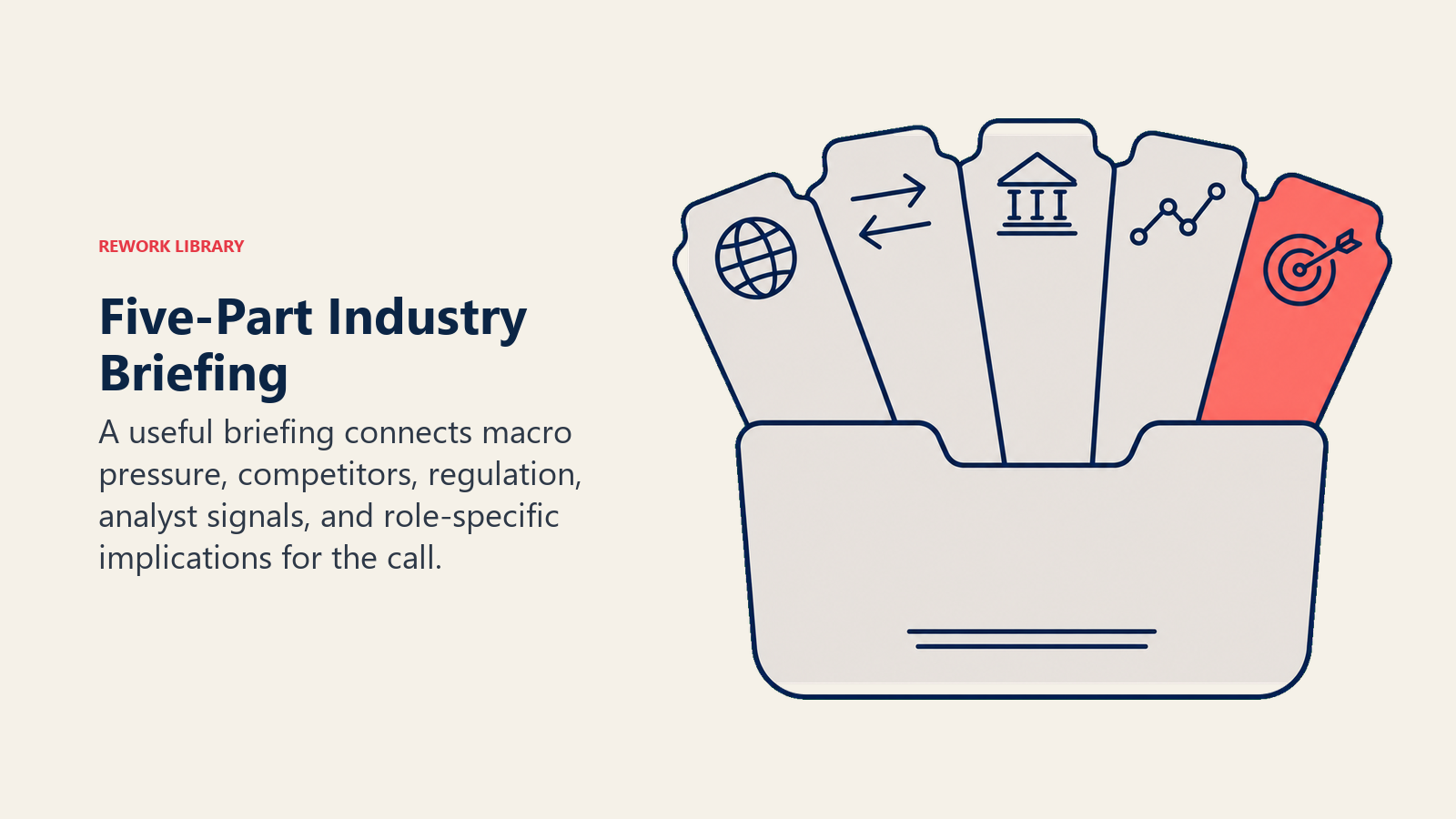
Ringkasan industri yang dikonfigurasi dengan baik untuk AE yang meliputi CFO logistik mengandungi lima bahagian:
1. Tekanan makro (teratas 3) Kekuatan ekonomi dan peraturan yang mewujudkan keperluan mendesak atau kekangan untuk pembeli dalam vertikal ini sekarang. Bukan tinjauan umum industri, khusus kepada peranan pembeli. CFO logistik mengambil berat tentang harga bahan api dan kos pemandu dan peraturan merentas sempadan secara berbeza daripada COO logistik.
2. Kecerdasan pesaing Apa yang pesaing langsung prospek lakukan yang penting untuk keputusan strategik mereka. Pengumuman produk terkini, perubahan kepimpinan, perkongsian, dan pergerakan pasaran. Bahagian ini memberi AE sesuatu untuk dikatakan yang tidak terkandung dalam mana-mana dek yang ditulis vendor.
3. Isyarat peraturan dan pematuhan Sebarang perubahan peraturan yang tertunda atau terkini dalam vertikal yang mempengaruhi keputusan teknologi, bajet, atau garis masa. Untuk logistik: kemas kini mandat ELD, keperluan pelaporan karbon, peraturan perdagangan merentas sempadan. Ini mewujudkan sama ada keperluan mendesak atau kehati-hatian dalam keputusan pembelian.
4. Isyarat panggilan pendapatan dan penganalisis Jika syarikat adalah awam atau pesaing mereka, apa yang pengurusan katakan tentang keutamaan pelaburan teknologi dalam panggilan suku tahunan terakhir. Ini adalah emas. Eksekutif memberitahu penganalisis perkara yang tidak mereka terbitkan dalam siaran akhbar.
5. Implikasi khusus peranan untuk panggilan Tiga hingga empat ayat yang menghubungkan perkara di atas kepada peranan khusus (CFO, VP Ops, CRO) yang AE temui. "Memandangkan tekanan pengekalan pemandu dan ulasan prospek S1 tentang mengurangkan kebergantungan headcount, soalan pembukaan perlu mengenai cara mereka memikirkan produktiviti per pemandu, bukan kecekapan keseluruhan."
Bahagian kelima adalah tempat ringkasan menjadi benar-benar berguna. Ia juga yang paling sukar untuk dijana secara automatik kerana ia memerlukan mengetahui produk yang dijual AE dan apakah kriteria pembelian yang mungkin. Ringkasan penyelidikan akaun AI menyuap bahagian ini, menghubungkan isyarat khusus syarikat dengan konteks vertikal.
Pipeline Generative Research untuk ringkasan
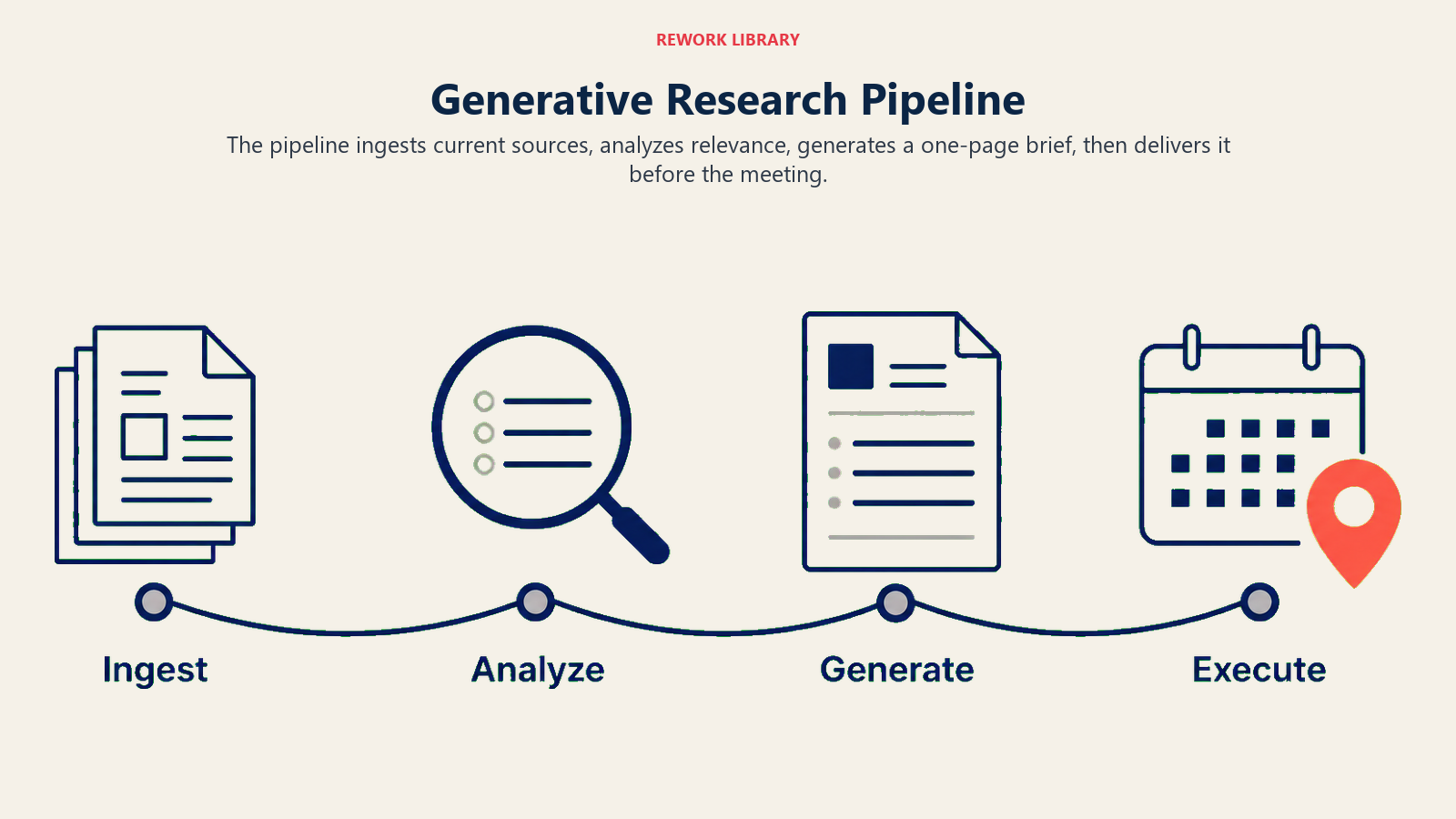
Membina ringkasan industri pada skala memerlukan menghubungkan beberapa sumber data ke dalam pipeline. Inilah cara ia berfungsi dalam perbendaharaan kata ACE Framework:
Ingest mengumpul daripada empat kategori sumber:
- Suapan berita industri yang ditapis mengikut vertikal dan keterkinian (30 hari lalu)
- Transkrip panggilan pendapatan dan laporan penganalisis (AlphaSense, Quartr)
- Isyarat pemantauan pesaing (Owler, Crayon, kemas kini LinkedIn)
- Penanda aras syarikat sebaya dan data tinjauan (persatuan industri, Gartner, Forrester). Siri pandangan industri Deloitte adalah suapan yang kukuh untuk vertikal pembuatan, logistik, dan perkhidmatan kewangan
Analyze menapis dan mensintesis:
- Penapisan relevansi: adakah isyarat ini bermakna untuk [CFO / VP Jualan / COO] dalam [logistik / pembuatan / SaaS]?
- Penyahduplikatan: cerita berita yang sama dari 12 sumber menjadi satu isyarat
- Pemberian berat keterkinian: 7 hari terakhir mendapat lebih berat berbanding 30 hari terakhir
- Terjemahan peranan: menukar berita industri kepada implikasi peranan pembeli
Generate menghasilkan dokumen ringkasan berstruktur:
- Format lima bahagian dengan pengepala yang konsisten
- Bahagian implikasi yang disesuaikan untuk jenis mesyuarat dan peranan pembeli
- Sasaran panjang: 1 halaman, boleh dibaca dalam 10 minit
Execute (pilihan) menghantar ringkasan:
- Tolak ke CRM AE apabila mereka membuka rekod akaun 24 jam sebelum mesyuarat
- Hantar melalui integrasi kalendar dengan jemputan mesyuarat
- Tersedia atas permintaan melalui pengayaan Sales Navigator atau bar sisi CRM
Cara mengkonfigurasi relevansi industri untuk vertikal anda
Ini adalah langkah operasi yang kebanyakan pasukan langkau, itulah sebabnya ringkasan mereka terasa umum. Anda tidak boleh membina ringkasan yang berguna tanpa memberitahu sistem industri mana yang anda jual dan peranan pembeli mana yang penting.
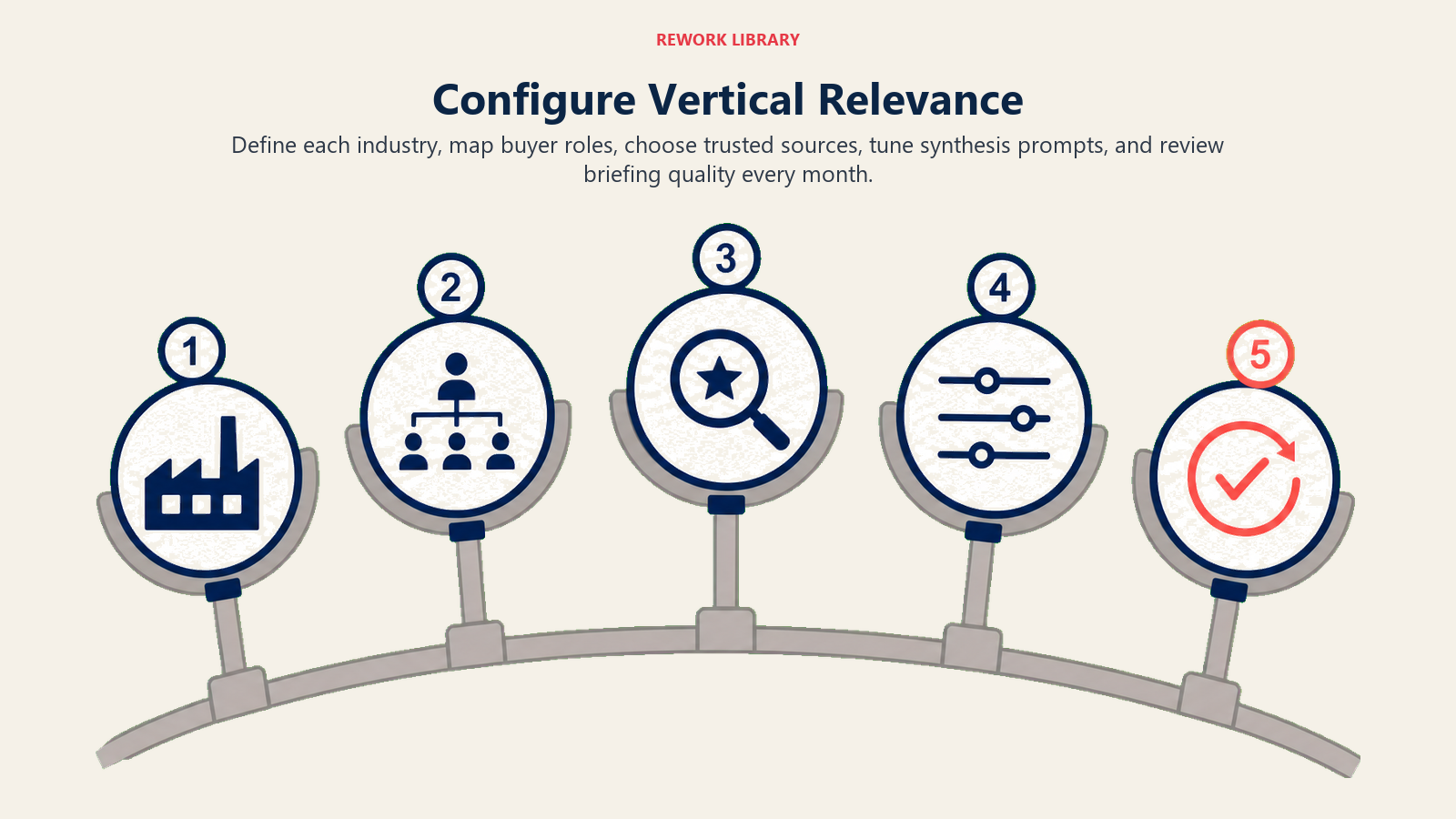
Langkah 1: Tentukan vertikal anda. Bukan "mid-market" atau "enterprise." Industri khusus: logistik dan rantaian bekalan, syarikat SaaS dengan 100 hingga 500 pekerja, sistem penjagaan kesihatan serantau, runcit berbilang lokasi. Setiap vertikal memerlukan konfigurasi suapan penyelidikan sendiri.
Langkah 2: Petakan vertikal kepada peranan pembeli. Untuk logistik: CFO (fokus pengurangan kos), VP Operasi (fokus kecekapan), Pengarah IT (fokus integrasi). Setiap peranan memerlukan kriteria penapisan yang berbeza. Ringkasan CFO menekankan tekanan kewangan; ringkasan VP Operasi menekankan trend aliran kerja dan produktiviti.
Langkah 3: Konfigurasi sumber. Untuk setiap vertikal, kenal pasti 8 hingga 12 suapan RSS, sumber berita, dan pembekal data untuk dipantau. AlphaSense merangkumi transkrip panggilan pendapatan dan laporan penganalisis merentasi kebanyakan vertikal B2B. Owler menjejak berita pesaing. Crystal dan LinkedIn Sales Navigator menambah konteks khusus akaun. Perplexity boleh digunakan untuk penyelidikan vertikal atas permintaan apabila suapan tidak merangkumi sektor khusus.
Langkah 4: Kejuruteraan prompt untuk sintesis relevan peranan. Langkah Generate memerlukan arahan eksplisit untuk menapis mengikut peranan pembeli. "Anda sedang menyediakan ringkasan industri untuk AE yang bertemu [CFO] di syarikat [logistik]. Ekstrak 3 tekanan makro yang paling relevan untuk CFO yang membuat keputusan pelaburan teknologi dalam S2 2026. Untuk setiap tekanan, tulis satu ayat tentang implikasi untuk keputusan pembelian, bukan sekadar peristiwa." Pendekatan prompting ini mencerminkan apa yang jangkauan diperibadikan yang dijana AI lakukan untuk mesej sentuhan pertama: struktur prompt menentukan sama ada output adalah wawasan atau kebisingan.
Langkah 5: Kadens semakan kualiti. Tugaskan seseorang dalam pengupayaan jualan atau RevOps untuk menyemak 5 ringkasan contoh setiap vertikal setiap bulan. Bukan untuk memeriksa fakta setiap ayat, tetapi untuk mengesan apabila penapisan relevansi telah menyimpang, apabila trend baharu tidak ditangkap, atau apabila sintesis menghasilkan pemerhatian umum berbanding implikasi yang tajam.
Format Ringkasan Vertikal Mingguan
Format Ringkasan Vertikal Mingguan adalah struktur ringkasan lima bahagian yang direka untuk AE yang meliputi berbilang akaun dalam vertikal yang sama. Ia merangkumi: tekanan makro (3 kekuatan relevan peranan teratas), kecerdasan pesaing (pergerakan terkini di pesaing langsung prospek), isyarat peraturan (perubahan tertunda atau terkini yang mempengaruhi keputusan teknologi), isyarat pendapatan/penganalisis (apa yang pengurusan katakan tentang keutamaan pelaburan), dan implikasi khusus peranan untuk panggilan yang akan datang. Setiap bahagian mempunyai penapis relevansi peranan yang wajib: hanya masukkan maklumat yang mempengaruhi keputusan peranan pembeli khusus, bukan berita industri umum. Ringkasan yang dibina dengan format ini mengambil masa 15 minit untuk dibaca dan secara konsisten mengatasi penyelidikan ad-hoc pada metrik kemajuan peringkat perjanjian.
AE yang menerima ringkasan industri khusus peranan sebelum panggilan penemuan enterprise adalah lebih berkemungkinan secara ketara untuk memajukan perjanjian melewati mesyuarat pertama berbanding rakan sebaya yang bergantung pada penyelidikan syarikat umum semata-mata, kerana mereka boleh merujuk trend vertikal yang tidak dijangka pembeli vendor ketahui.
Bila untuk menghantar ringkasan
Masa hampir sama pentingnya dengan kualiti. Ringkasan yang dihantar 5 hari sebelum panggilan akan terkubur. Ringkasan yang dihantar 1 jam sebelum tidak memberi AE masa yang cukup untuk membaca dan menghayati.
| Masa Penghantaran | Keperluan | Pengalaman wakil |
|---|---|---|
| 48 jam sebelum | Akses sistem kalendar, pengesanan mesyuarat | AE mempunyai masa untuk membaca dengan teliti, melakukan penyelidikan susulan |
| 24 jam sebelum | Sama | Paling berguna: cukup masa, masih segar |
| Pagi mesyuarat | Sama | Baik untuk persediaan cepat; menganggap AE berdisiplin |
| Atas permintaan dalam CRM | Pencetus rekod akaun | Paling sesuai untuk pengurusan akaun, bukan persediaan mesyuarat |
| Dalam jemputan kalendar | Integrasi dengan kalendar + CRM | Keterlihatan tinggi, mudah diabaikan |
Cadangan praktikal untuk kebanyakan pasukan: hantar ke CRM 24 jam sebelum mesyuarat dan sertakan pautan dalam jemputan kalendar sebagai sandaran. Kedua-duanya memerlukan integrasi CRM dan kalendar, tetapi kedua-duanya boleh dicapai dengan alat seperti Salesforce atau HubSpot ditambah lapisan middleware (Zapier, Make, atau integrasi asli).
Melapisi konteks akaun di atas ringkasan industri
Ringkasan industri memberi AE kefasihan vertikal. Ia tidak memberi mereka kecerdasan khusus akaun. Kedua-duanya penting. Dan menggabungkannya adalah tempat model persediaan 15 minit menjadi boleh dipercayai.
Ringkasan industri: apa yang berlaku merentasi sektor logistik sekarang, dan apa maksudnya untuk CFO.
Ringkasan akaun: apa yang khusus untuk syarikat ini, perjanjian ini, mesyuarat ini. Sejarah perbualan sebelumnya, peluang terbuka, berita akaun terkini, perubahan LinkedIn di syarikat, isyarat teknografi.
Artikel AI Account Research Before First Touch merangkumi ringkasan akaun secara terperinci. Titik relevan di sini adalah penjujukan: baca ringkasan industri dahulu (konteks yang lebih luas), kemudian ringkasan akaun (konteks khusus), dan AE mempunyai model mental yang koheren tentang kedua-dua pasaran dan syarikat sebelum panggilan.
Masa pembacaan gabungan: 15 minit. Liputan: setara dengan beberapa jam penyelidikan manual. Siling kualiti adalah lebih rendah daripada penyelidikan pakar mendalam, tetapi ia secara dramatik lebih baik daripada tiada, yang merupakan apa yang kebanyakan wakil lakukan pada masa ini.
Mengukur sama ada ringkasan benar-benar berfungsi
Di sinilah kebanyakan program senyap-senyap mati. Pasukan membina ringkasan, mengedarkannya, dan mengandaikan ia berfungsi kerana wakil tidak mengadu. Itu bukan pengukuran.
Metrik 1: Kadar buka ringkasan. Adakah AE membuka ringkasan sebelum panggilan? Kebanyakan CRM atau sistem penghantaran e-mel menjejak ini. Sasaran: 60% atau lebih tinggi untuk panggilan yang memerlukannya.
Metrik 2: Kadar kemajuan peringkat perjanjian mengikut penggunaan ringkasan. Bandingkan AE yang menggunakan ringkasan sebelum panggilan dengan mereka yang tidak (atau dengan garis dasar sebelum ringkasan wujud). Adakah panggilan dengan persediaan ringkasan maju ke peringkat seterusnya pada kadar yang lebih tinggi? Ini mengambil masa 3 hingga 4 bulan data untuk dilihat, tetapi ia adalah pengukuran yang tepat.
Metrik 3: Maklum balas kualitatif wakil. Tanya wakil setiap bulan: adakah ringkasan membantu anda mempunyai perbualan yang lebih baik? Apa yang hilang? Apa yang adalah kebisingan? Ini adalah maklum balas lebih pantas yang membolehkan anda meningkatkan kualiti sebelum isyarat kuantitatif tiba.
Metrik 4: Skor kualiti panggilan penemuan. Jika anda mempunyai alat kecerdasan mesyuarat (Gong, Chorus, atau seumpamanya), lihat nisbah bercakap-kepada-mendengar, kualiti soalan khusus, dan penglibatan pembeli dalam panggilan yang menggunakan ringkasan berbanding tidak. Buyer Intent Signal Synthesis With AI menerangkan cara data intent dan kualiti panggilan penemuan berhubung.
Metrik 5: Kadar kemenangan kompetitif dalam perjanjian yang disokong ringkasan. Jika ringkasan anda merangkumi kecerdasan pesaing, jejaki sama ada wakil yang terlibat dengan bahagian tersebut mempunyai hasil yang lebih baik pada perjanjian kompetitif. Artikel Competitor Battlecards Generated With AI berhubung dengan ini.
Jalankan semakan suku tahunan metrik ini dengan pengupayaan jualan dan RevOps. Hapuskan apa yang tidak digunakan. Gandakan apa yang memajukan perjanjian.
Apa yang ringkasan tidak gantikan
Ini patut diberi rawatan yang jelas kerana risiko itu nyata: AE yang menerima ringkasan yang telah dikemas boleh mula menganggap kepakaran domain sebagai pilihan. Ia bukan.
Ringkasan memberi anda isyarat semasa. Ia tidak memberi anda 10 tahun pengecaman corak yang telah dikembangkan AE pakar vertikal yang tulen. Ia tidak memberi anda hubungan dengan penganalisis dan pengamal industri. Ia tidak memberi anda pertimbangan untuk membezakan isyarat yang penting daripada yang kelihatan penting tetapi adalah kebisingan.
Sasarannya bukan AE yang membaca ringkasan AI berbanding mengembangkan kepakaran. Ia adalah AE yang menggunakan ringkasan untuk mempercepatkan kelok pembelajaran mereka sendiri dan untuk kekal semasa dalam vertikal yang bergerak pantas di mana ia adalah sangat sukar untuk membaca semua perkara. Ringkasan menambah kepakaran. Ia tidak menggantikannya.
AE yang terlibat secara aktif, yang menolak balik apabila ringkasan kelihatan salah, yang menyumbang pembetulan dan nuansa kepada gelung maklum balas, adalah yang mendapat nilai paling banyak. Penggunaan pasif menghasilkan hasil sederhana, sama seperti penyelidikan pasif. Panduan CFO Deloitte tentang Trend Teknologi adalah contoh praktikal jenis kecerdasan vertikal khusus peranan yang menjadikan ringkasan berguna untuk AE enterprise: ia menterjemahkan trend teknologi kepada implikasi membuat keputusan kewangan, tepat pembingkaian yang pembeli dalam peranan kewangan bertindak balas.
Artikel AI-Generated Personalized Outreach at Scale menunjukkan bagaimana prinsip yang sama terpakai pada jangkauan: kandungan yang dijana AI adalah titik permulaan, bukan produk siap.
Bermula tanpa pembinaan pipeline penuh
Kebanyakan pasukan tidak dapat membina pipeline ringkasan yang lengkap pada bulan pertama. Inilah perkembangan yang mungkin:
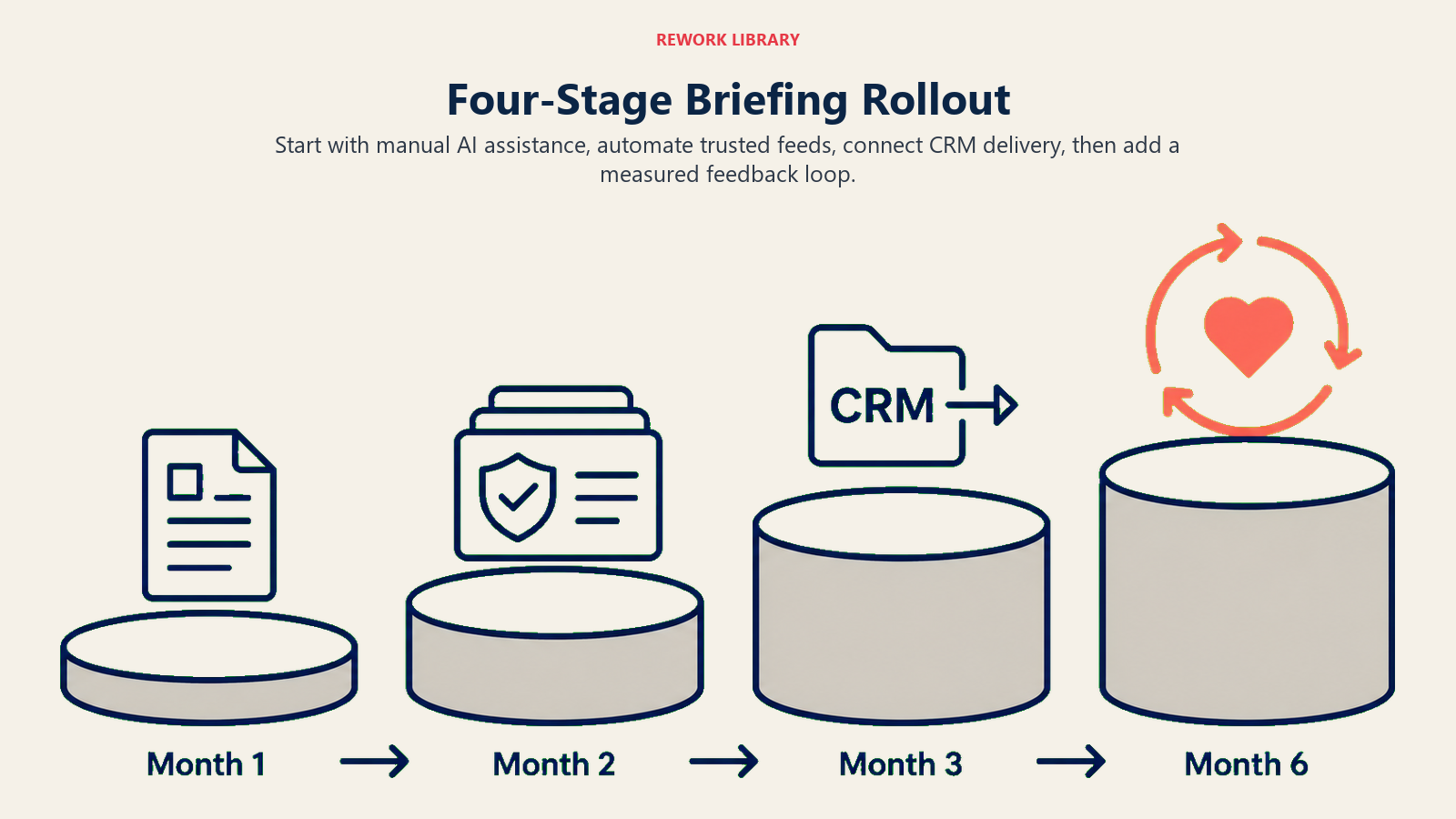
Bulan 1 (manual + bantuan AI): AE menggunakan Perplexity atau ChatGPT dengan templat prompt berstruktur untuk menjana ringkasan secara manual. Ini membina tabiat dan menguji format sebelum anda melabur dalam automasi. Templat prompt: "Anda sedang menyediakan ringkasan 1 halaman untuk AE yang bertemu [PERANAN] di syarikat [INDUSTRI]. Liputi: 3 tekanan industri teratas, pergerakan pesaing terkini, isyarat peraturan, dan 3 implikasi untuk mesyuarat ini. Jadilah khusus, bukan umum."
Bulan 2 (automasi ringan): Konfigurasikan suapan RSS untuk 3 vertikal teratas anda dan gunakan alat seperti AlphaSense atau Owler untuk menarik isyarat secara automatik. Tetapkan kadens mingguan untuk menjana ringkasan bagi akaun dengan panggilan dalam 7 hari akan datang.
Bulan 3 (integrasi CRM): Cetuskan penjanaan ringkasan daripada acara mesyuarat CRM. Hantar melalui bar sisi CRM atau integrasi kalendar. Mula mengukur kadar buka.
Bulan 6 (gelung maklum balas): Tambah pengumpulan maklum balas wakil, jalankan semakan keberkesanan suku tahunan pertama, dan laraskan konfigurasi vertikal berdasarkan apa yang menjana nilai.
Corak Generative Research adalah rangka kerja asas untuk pipeline penuh. Keupayaan Analyze merangkumi langkah sintesis secara terperinci teknikal, dan kesediaan data untuk AI patut disemak sebelum berskala, kerana kualiti ringkasan bergantung sepenuhnya pada kualiti suapan anda.
Analisis Rework: Berdasarkan corak perlaksanaan merentasi pasukan jualan B2B SaaS, model ringkasan 15 minit (5 minit untuk ringkasan industri ditambah 10 minit untuk ringkasan akaun) adalah siling praktikal untuk kebanyakan AE sebelum panggilan back-to-back. Ringkasan yang mengambil masa lebih lama diimbas atau dilangkau. Kekangan format 1 halaman bukan estetik: ia adalah mekanisme penghantaran. AE yang menerima ringkasan lebih panjang melaporkan kualiti persediaan yang serupa dengan mereka yang tidak menerima ringkasan langsung, kerana pembacaan berhenti sebelum bahagian implikasi (bahagian paling berharga) pernah dibaca.
Lantai kompetitif semakin naik
Pembeli enterprise mempunyai lebih banyak maklumat daripada sebelumnya. Mereka telah membaca blog syarikat anda, membandingkan anda di G2, dan bercakap dengan dua pelanggan sedia ada anda sebelum AE anda pernah masuk ke panggilan penemuan. Asimetri maklumat yang dahulu memihak kepada jualan telah terbalik. Penyelidikan McKinsey tentang masa depan jualan B2B mengesahkan peralihan ini: pembeli kini melengkapkan sebahagian besar penyelidikan produk mereka secara digital sebelum melibatkan wakil jualan, bermakna nilai wakil mesti datang dari wawasan dan konteks, bukan pemindahan maklumat.
Kefasihan industri adalah salah satu daripada sedikit cara AE boleh hadir dengan sesuatu yang pembeli tidak tahu lagi. Bukan pengetahuan produk, pembeli boleh membaca laman web anda. Bukan dek penemuan umum. Tetapi wawasan vertikal yang tulen, "inilah yang saya lihat merentasi syarikat logistik saiz anda, dan inilah soalan yang tiada siapa dapat menjawab" adalah perbualan yang berbeza.
Ringkasan AI menjadikan perbualan itu boleh diskala. Seorang AE yang meliputi 15 akaun merentasi 3 vertikal boleh hadir dengan kesedaran domain yang tulen di setiap mesyuarat, bukan sekadar yang di mana mereka kebetulan mempunyai masa untuk menyelidik. Itulah ROI-nya. Bukan metrik dashboard, tetapi AE yang memperoleh kepercayaan lebih cepat dalam perbualan yang benar-benar penting. Pembeli B2B yang memilih vendor selepas mesyuarat pertama paling kerap menyebut "wakil memahami situasi khusus kami" sebagai sebabnya. (Corporate Visions, 2025) Ringkasan industri adalah infrastruktur di belakang persepsi tersebut.
Soalan Lazim
Apakah ringkasan wawasan industri untuk jualan dan bagaimana ia berbeza daripada digest berita?
Ringkasan wawasan industri mensintesis trend sektor, pergerakan pesaing, dan isyarat peraturan kepada implikasi khusus peranan untuk mesyuarat jualan yang akan datang. Digest berita hanya meringkaskan apa yang berlaku. Perbezaan kritikal adalah lapisan implikasi: ringkasan memberitahu AE apa maksud kekurangan pemandu logistik untuk CFO yang membuat keputusan pelaburan teknologi, bukan sekadar bahawa kekurangan pemandu berlaku. Terjemahan peranan pembeli itu adalah yang menjadikan ringkasan berguna dalam perbualan.
Berapa lama masa yang diperlukan untuk membaca ringkasan industri AI yang direka dengan baik?
Ringkasan yang direka dengan baik mengikuti Format Ringkasan Vertikal Mingguan: lima bahagian dalam satu halaman, boleh dibaca dalam 10-15 minit. Ringkasan yang melebihi satu halaman melihat kadar penyelesaian yang jauh lebih rendah kerana kebanyakan AE mempunyai panggilan back-to-back. Kekangan format adalah mekanisme penghantaran: jika AE tidak menyelesaikan ringkasan, bahagian implikasi (bahagian paling berharga) tidak pernah dibaca.
Pada titik mana dalam perjalanan pembeli AE perlu menggunakan ringkasan industri?
Ringkasan industri paling berharga untuk panggilan penemuan pertama dan mesyuarat peringkat akhir dengan pemangku kepentingan kanan (CFO, CRO, VP). Jangkauan sejuk awal tidak memerlukan kedalaman ringkasan; ringkasan penyelidikan akaun sudah mencukupi. Tetapi setelah perjanjian berada dalam corong dan AE bertemu pembeli eksekutif, kefasihan vertikal adalah yang memisahkan vendor daripada rakan kongsi. Pembeli B2B melengkapkan 57-70% penyelidikan mereka sebelum menghubungi jualan, jadi panggilan pertama AE berlaku setelah pembeli membentuk keutamaan: ringkasan memastikan AE masuk dengan konteks yang sama atau lebih baik.
Sumber data mana yang perlu menyuap ringkasan industri AI?
Empat kategori sumber berfungsi paling baik: suapan berita industri yang ditapis mengikut vertikal dan keterkinian (30 hari lalu), transkrip panggilan pendapatan dan laporan penganalisis (AlphaSense, Quartr), isyarat pemantauan pesaing (Owler, Crayon), dan data tinjauan khusus vertikal (Gartner, Forrester, pandangan industri Deloitte). AlphaSense dan Owler merangkumi kebanyakan vertikal B2B. Siri pandangan industri Deloitte sangat berguna untuk pembuatan, logistik, dan perkhidmatan kewangan. Kualiti sumber menentukan kualiti ringkasan: suapan isyarat rendah menghasilkan ringkasan umum tanpa mengira kualiti prompt.
Bagaimana anda mengukur sama ada ringkasan industri meningkatkan prestasi jualan?
Jejaki lima metrik: kadar buka ringkasan sebelum panggilan (sasaran 60%+), kadar kemajuan peringkat perjanjian untuk panggilan dengan persediaan ringkasan berbanding tanpa, maklum balas kualitatif wakil tentang kebolehgunaan, skor kualiti panggilan penemuan melalui conversation intelligence (nisbah bercakap-kepada-mendengar, kualiti soalan), dan kadar kemenangan kompetitif dalam perjanjian yang disokong ringkasan. Metrik kuantitatif mengambil masa 3-4 bulan untuk terkumpul; maklum balas kualitatif boleh muncul penambahbaikan dalam beberapa minggu. Hapuskan konfigurasi ringkasan yang wakil berhenti membaca, tanpa mengira betapa baik binaannya.
Apakah panjang ringkasan yang tepat untuk AE enterprise?
Satu halaman, boleh dibaca dalam 10-15 minit. AE enterprise biasanya mempunyai 8-12 mesyuarat seminggu: ringkasan yang mengambil masa lebih daripada 15 minit akan secara konsisten dilangkau untuk 3 atau lebih mesyuarat tersebut. Kekangan satu halaman memaksa AI untuk mengutamakan implikasi relevan peranan berbanding liputan yang komprehensif. Pasukan yang membuat prototaip dengan ringkasan 3-4 halaman dan mendapati penggunaan wakil rendah hampir selalu boleh memulihkan penggunaan dengan memotong kepada satu halaman tanpa kehilangan kandungan yang bermakna.
Apa yang perlu dibaca seterusnya
- Generative Research: Compressing Hours of Reading: corak ACE yang menggerakkan pipeline ringkasan industri
- AI Account Research Before First Touch: ringkasan peringkat akaun yang dipasangkan dengan ringkasan industri
- Buyer Intent Signal Synthesis With AI: melapisi isyarat intent untuk mengetahui akaun mana yang paling bersedia untuk jangkauan
- Competitor Battlecards Generated With AI: memperluaskan pipeline penyelidikan kepada kecerdasan kompetitif

Co-Founder, Rework.com
On this page
- Perbezaan antara digest berita dan ringkasan wawasan
- Apa yang AI jana dalam ringkasan industri
- Pipeline Generative Research untuk ringkasan
- Cara mengkonfigurasi relevansi industri untuk vertikal anda
- Format Ringkasan Vertikal Mingguan
- Bila untuk menghantar ringkasan
- Melapisi konteks akaun di atas ringkasan industri
- Mengukur sama ada ringkasan benar-benar berfungsi
- Apa yang ringkasan tidak gantikan
- Bermula tanpa pembinaan pipeline penuh
- Lantai kompetitif semakin naik
- Apa yang perlu dibaca seterusnya