コラボレーションスキル:他者とうまく働く方法
Turn this article into takeaways for your work.


Each assistant summarizes the article only for you and suggests best practices for your work.
コラボレーションスキルとは、人々が共通の目標に向かって他者と生産的に協働できる行動や能力のセットです。あらゆるミーティング、すべての共同プロジェクト、クロスファンクショナルな取り組みすべてに現れ、マネージャーや役員が最も価値を置くコンピテンシーの一つとして常に位置付けられています。
コラボレーションスキルとは何か
コラボレーションスキルとは、人々が効果的に協働できる、対人的、コミュニケーション的、行動的な能力です。情報の共有方法、意見の相違への対処方法、他者のアイデアをどう発展させるか、チームメンバーへのコミットメントをどう守るかが含まれます。
テクニカルスキルと異なり、コラボレーションスキルは特定のツールや領域に縛られません。あらゆる役割、チーム、業界に転用できます。そして複利で積み上がります。全員がうまくコラボレーションするチームは、協調に苦労する個人の貢献者の集まりのチームより一貫して優れたパフォーマンスを発揮します。
重要なポイント
- **従業員の75%**がコラボレーションとチームワークを非常に重要と評価していますが、職場でコミュニケーションの評価を受けているのはわずか18%です(Salesforce State of the Connected Customer, 2023)。
- 効果的にコミュニケーションとコラボレーションを行うチームは、ハイパフォーマーである可能性が5倍高い(Institute for Corporate Productivity, 2022)。
- **従業員と役員の86%**が、コラボレーションの欠如または非効果的なコミュニケーションを職場の失敗の主要因として挙げています(Fierce Inc., 2020)。
コラボレーションの主要スキル
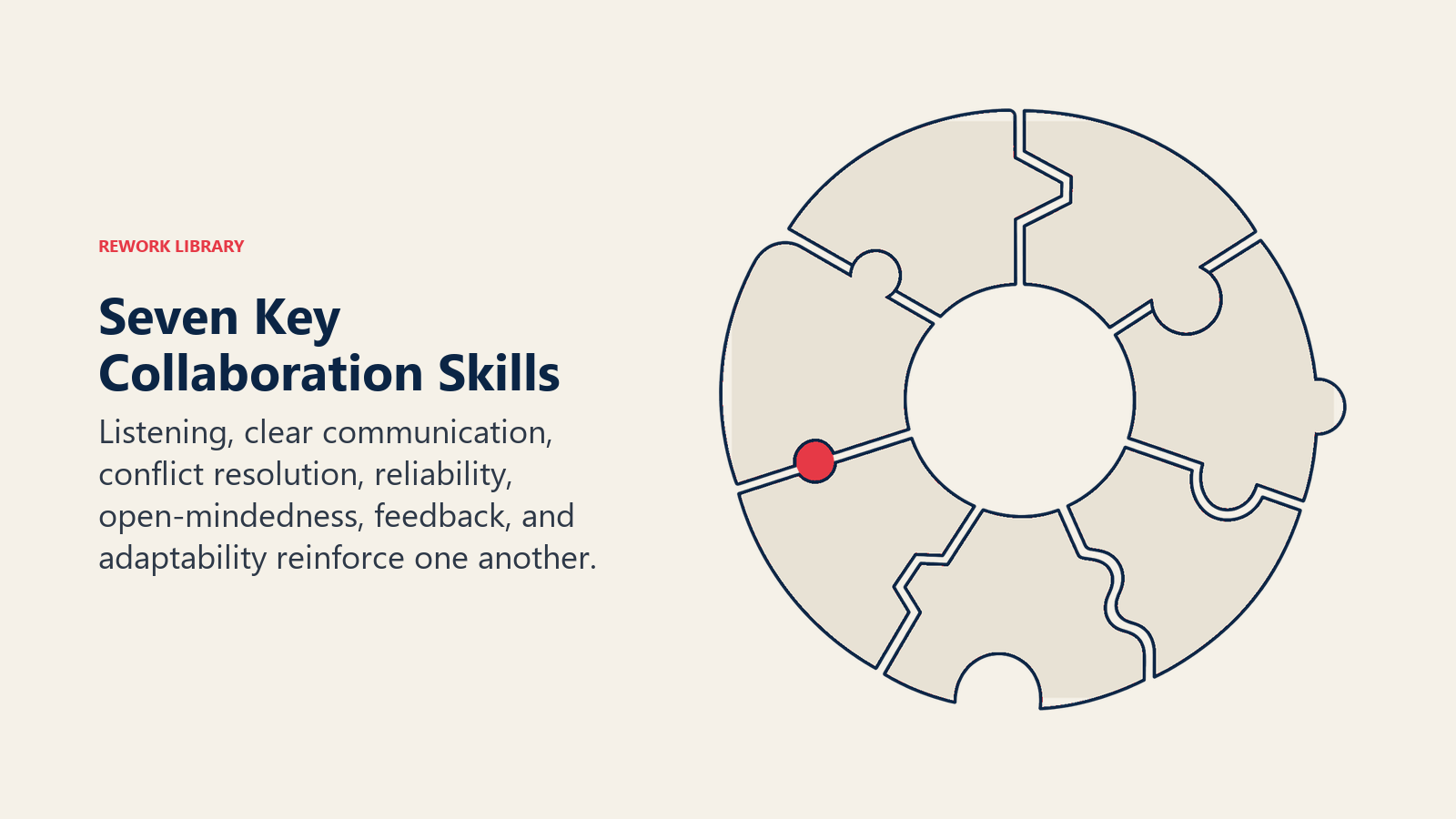
「コラボレーション」という言葉は関連するスキルの集まりを指します。最も重要なものの内訳を示します。
| スキル | 実践での具体的な姿 |
|---|---|
| アクティブリスニング | 話し手に完全に注意を向け、判断を保留し、返答する前に聞いたことを反映して確認する |
| 明確なコミュニケーション | 平易な言葉でアイデアを表現し、適切なチャネルを選び、共通理解を確認する |
| コンフリクト解決 | 意見の相違を避けたりエスカレートさせたりするのではなく、直接的かつ建設的に対処する |
| 信頼性 | コミットしたことを期限通りに届け、タイムラインが変わりそうなときは早めに伝える |
| オープンマインド | 進む方向を決める前に、自分とは異なる視点やアプローチを検討する |
| フィードバックを与え受け取る | 率直で具体的な意見を提供し、防御的にならずに批評を受け入れる |
| 適応力 | チームの方向性、優先事項、制約が変わったときにアプローチを調整する |
一つのスキルだけでは機能しません。アクティブリスニングはフィードバックをより伝わりやすくします。信頼性は、オープンマインドを安心して発揮できる信頼を築きます。これらは互いを強化し合います。
コラボレーションとチームワークの違い
「コラボレーション」と「チームワーク」は同義語として使われますが、知っておく価値のある本質的な違いがあります。
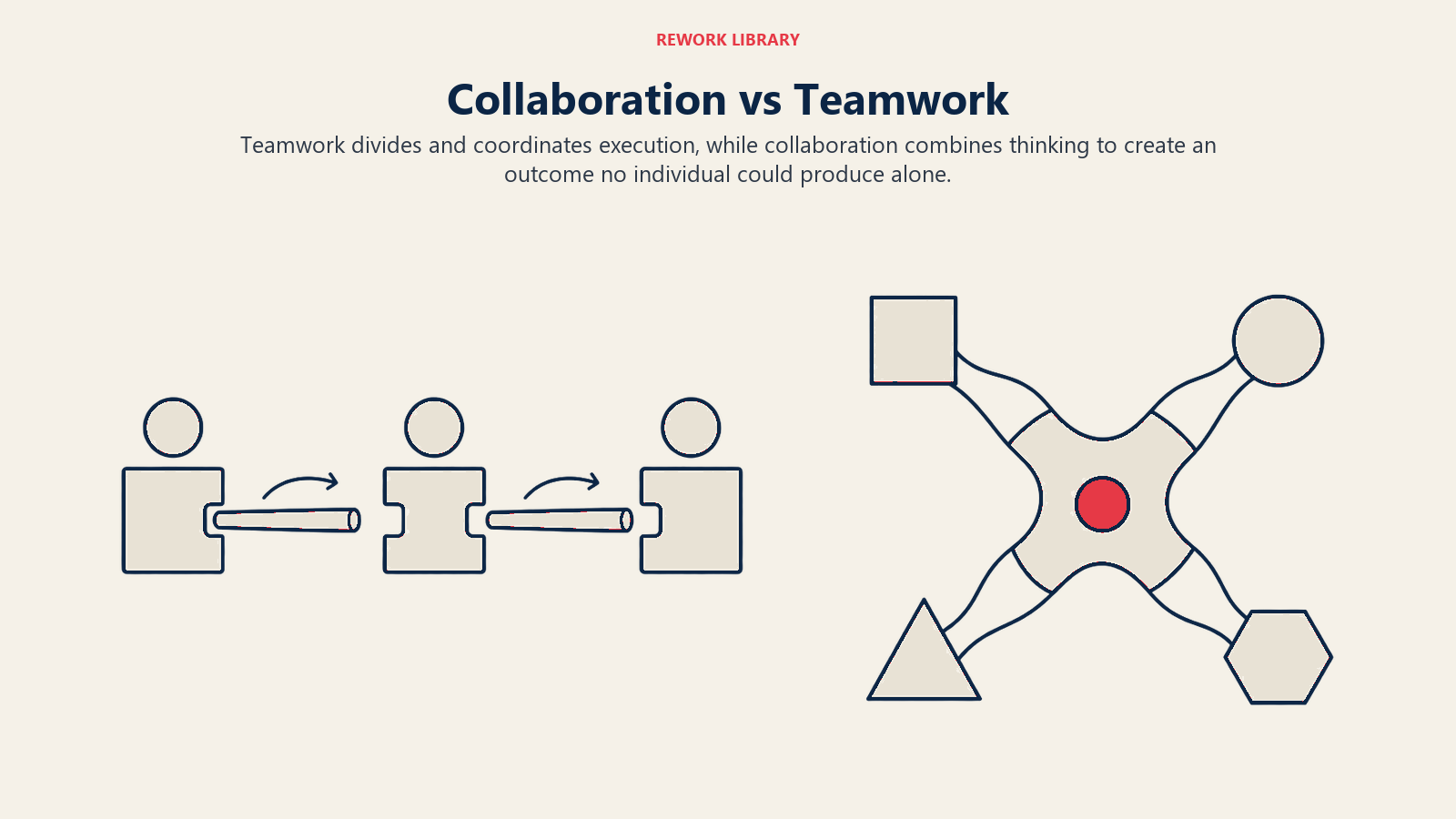
チームワークとは共に実行することです。各自が共通の目標に向かってそれぞれの役割を果たします。リレー競走をイメージしてください。各自が自分の区間を走り、きれいにバトンを渡します。
コラボレーションはさらに踏み込みます。タスクを分担するだけでなく、互いの思考を積極的に発展させることを意味します。コラボレーティブな仕事は、個人の誰かだけでは生み出せなかったアウトプットをもたらします。ジャズバンドの即興演奏をイメージしてください。各ミュージシャンがリアルタイムで聴いて反応し、互いの演奏を形作ります。
実践的には、ほとんどの職場プロジェクトには両方が必要です。明確な役割の所有権(チームワーク)と真のアイデア交換(コラボレーション)の組み合わせが、チームが最高の仕事をする場所です。実行面についての詳細はチームワークをご覧ください。
職場でコラボレーションスキルが重要な理由
キャリアアップ。 マネージャーやディレクターは、昇進の評価において「他者とうまく働ける」ことを決定要因として挙げることが一貫しています。テクニカルな能力は採用につながります。コラボレーションスキルはより大きな責任を任される信頼につながります。
プロジェクトの成果。 チームメンバーが明確にコミュニケーションを取り、互いの盲点を補い合い、早期に対立を解消すれば、プロジェクトはより速く進み、より良い結果をもたらします。不十分なコラボレーションは、プロジェクトが締め切りを逃したり予算を超過したりする最も一般的な理由の一つです。
組織の回復力。 企業は絶え間ない変化に直面しています。新しい市場、新しいツール、新しい構造。うまくコラボレーションするチームは、個々の領域を守ることなく情報を自由に共有し、共に軌道修正するため、より速く適応できます。
従業員エンゲージメント。 同僚と本当のつながりを感じている人は、より高いエンゲージメントを持ち、辞める可能性が低くなります。コラボレーションは、組織図や企業の価値声明では得られない形でそのつながりを作ります。
強い対人スキルが上記すべての基盤です。そして、コラボレーションはコミュニケーションと密接に関連しており、それが実際の仕事の流れを左右します。
コラボレーションスキルの向上方法
コラボレーションは学習可能なスキルです。以下の具体的なステップで向上させましょう。
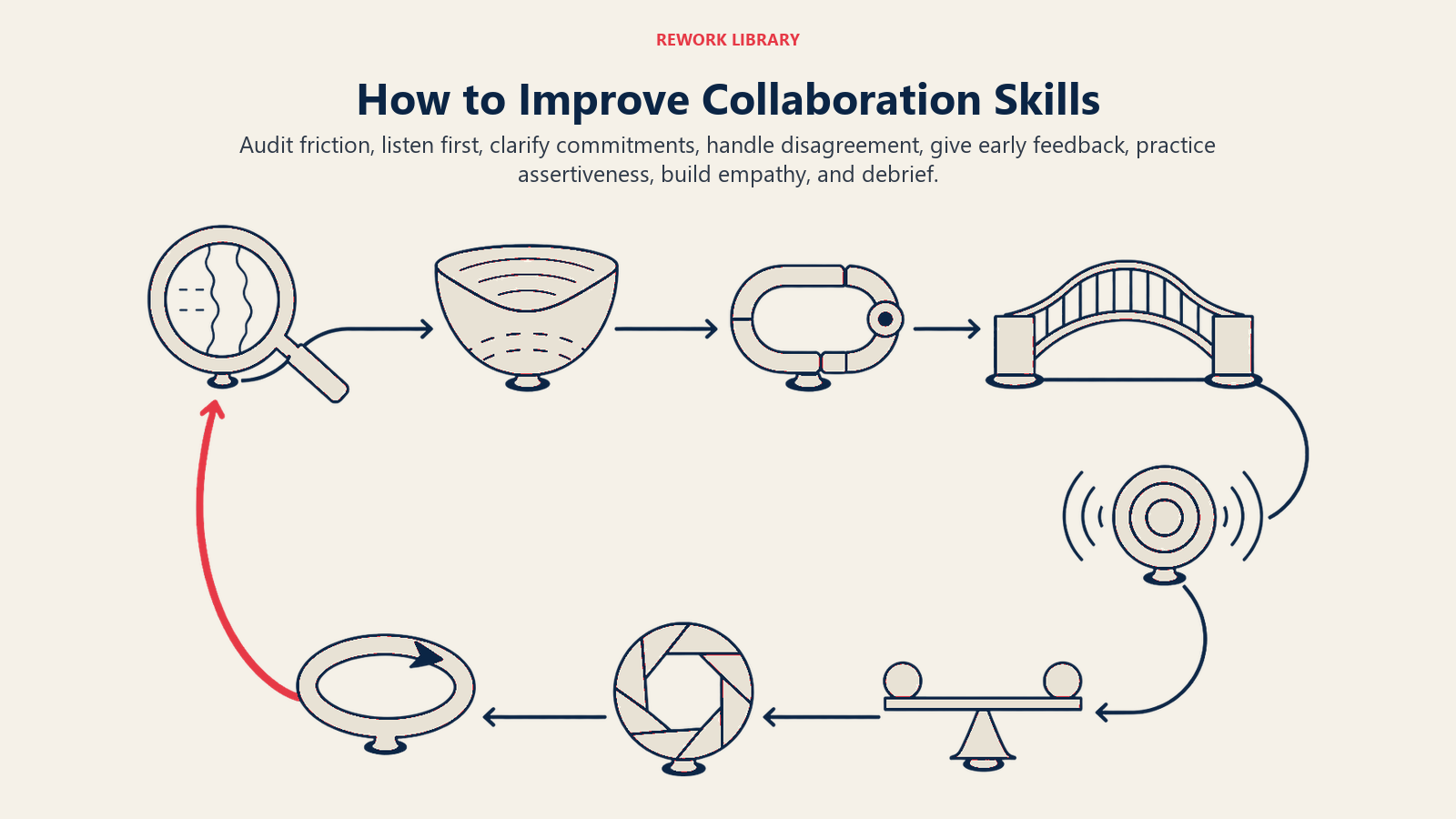
現在の自分のあり方を確認する。 信頼できる同僚に聞きましょう。「一緒に仕事をするとき、私はどこで物事をやりやすくして、どこで摩擦を生み出していますか?」自己評価と他者の体験のギャップに驚く人が多いです。
意図的にアクティブリスニングを練習する。 次のミーティングで、自分のアイデアを発言する前に少なくとも2つのフォローアップ質問をするという目標を設定しましょう。この一つの習慣が、コラボレーターとしてあなたの印象を変えます。具体的なテクニックはアクティブリスニングをご覧ください。
コミットメントを明確にする。 「近いうちにやります」という曖昧な合意は不確実性を生み信頼を損ないます。何を、いつ届けるかを具体的に伝えましょう。締め切りが遅れる場合は、後からではなく事前に伝えましょう。
意見の相違に慣れる。 生産的なコンフリクトはコラボレーションの失敗ではなく、心理的安全性のサインです。アイデアと人を切り離す練習をし、反論するときは「私は」を主語にした表現を使いましょう。「それは間違っています、なぜなら...」ではなく「私は違う見方をしています、なぜなら...」と言いましょう。
もっと早く、もっと頻繁にフィードバックを与える。 ほとんどの人はフィードバックを与える頻度が少なく、タイミングが遅すぎます。そのため小さな問題が大きくなります。その瞬間に届けられる短く具体的な観察(「価格の話に早く移ったとき、クライアントが混乱しているように見えました」)は、2週間後の包括的な批評よりずっと有用です。
アサーティブネスを磨く。 コラボレーションはすべてに同意することを意味しません。説得される可能性に本当にオープンでいながら、自分の視点を明確に主張できる必要があります。アサーティブネスこそがコラボレーションを誠実なものにします。
職場でのエンパシーを育てる。 相手が何を体験していて、なぜそのような反応をしているかを理解する能力は、協働的な問題解決を機能させるエンジンです。それなしには、コンフリクト解決はよくても摩擦管理にしかなりません。
プロジェクト後にデブリーフィングをする。 プロジェクト終了後、チームで20分間次の質問に答えましょう。何がうまくいったか?何が邪魔したか?次回は何を変えるか?一貫してデブリーフィングを行うチームは、そうでないチームよりもコラボレーションを速く向上させます。
実際のコラボレーションスキルの例
抽象的なスキルは具体的なシナリオで理解しやすくなります。職場での各スキルの具体例を示します。
| シナリオ | 発揮されているスキル |
|---|---|
| 同僚がうまくいかないと思うプロジェクトのアプローチを提案した。懸念を伝える前に、3つの質問をして相手の理由を理解した。 | アクティブリスニング+オープンマインド |
| 自分のタスクが遅れている。締め切りの2日前にプロジェクトリードにメッセージを送り、ブロッカーを説明し、修正した納期を提案した。 | 信頼性+明確なコミュニケーション |
| 2人のチームメンバーが共有リソースについて優先順位が衝突している。両者が受け入れられる文書化された合意につながる30分の話し合いをファシリテートした。 | コンフリクト解決+コミュニケーション |
| スライドが分かりにくいというフィードバックを受けた。相手に感謝し、確認の質問を一つし、クライアントミーティング前に修正した。 | フィードバックを与え受け取る+適応力 |
| 新しいチームメンバーがミーティングで発言するのをためらっているようだ。24時間前に簡単なアジェンダを送り始め、毎回のミーティングで一つのアジェンダ項目について意見を直接聞くようにした。 | エンパシー+インクルージョン行動 |
よくある質問
最も重要なコラボレーションスキルは何ですか?
アクティブリスニングと明確なコミュニケーションが最初に来ます。他のすべてのコラボレーションスキルはこれらに依存しているからです。次に、信頼性(言ったことをやること)、そして率直なフィードバックを与え受け取る能力です。この4つを一貫して実践することで、ほぼすべてのチーム環境で高い効果を発揮できます。
コラボレーションスキルは教えられますか、それとも性格によるものですか?
教えることができます。性格は出発点に影響しますが、良いコラボレーションを構成する具体的な行動、フォローアップの質問をする、早めにリスクを伝える、意見の相違と無礼を切り離すなどは、すべて習得可能な習慣です。ほとんどの人が意図的な実践を数週間続けることで実際の向上を見ます。
就職面接でコラボレーションスキルをどう示しますか?
具体的な例を使いましょう。「前職で、2人のエンジニアが同じ機能で重複作業をしていることに気づきました。20分のsyncを設定し、作業を明確に分担した結果、予定より2週間早くリリースできました。」具体性が、あなたのコラボレーションスキルが現実のものであることを示します。
コラボレーションとコオペレーションの違いは何ですか?
コオペレーションとは、自分の役割を果たし、利用可能な状態にあり、邪魔しないことです。コラボレーションはより積極的です。アイデアを提供し、前提に疑問を投げかけ、どちらか一方では生み出せなかったものを共同で作り出します。どちらも重要ですが、コラボレーションはより多くの価値をもたらします。
リモートチームはどのように強いコラボレーションスキルを維持しますか?
リモートワークにおける最大のリスクは情報の非対称性です。完全なコンテキストなしに意思決定が行われることです。ハイパフォーマンスのリモートチームは、状況を過剰なほど伝達し、個別のDMではなく共有ドキュメントを使用し、意図的な社交的インタラクションをスケジュールすることでこれに対抗します。コアスキルは変わりません。それを支えるシステムが変わります。
コラボレーションスキルは、本当の仕事の上に乗せられたソフトな付加物ではありません。能力ある人々の集まりが実際に共に何かを生み出すかどうかを決めるメカニズムです。自分が最も弱いと分かっている一つのスキルから始め、意図的に練習しましょう。残りは自然とついてきます。