More in
Berita Sales Tech
Tim Sales Berbasis AI Tumbuh 2,6x Lebih Cepat. Gartner Menyatakan Pembeli Masih Menginginkan Rep Manusia
Jun 6, 2026
Aircall Mengakuisisi Piper AI untuk Mengubah Setiap Sales Call Menjadi Pipeline
Jun 6, 2026
Salesforce Baru Saja Memberi Pemasar AI Agent yang Membangun Sales Pipeline
Jun 6, 2026
Revenue Intelligence Menunjukkan Risikonya. Revenue Execution Bertindak Atasnya.
Jun 5, 2026
Meta Menempatkan AI Agent di WhatsApp yang Menutup Penjualan untuk Bisnis Mana Pun
Jun 4, 2026
VC Menggelontorkan Lebih dari $200M ke Startup AI Sales: Sinyal GTM Stack
Jun 4, 2026
Apakah AI SDR Sepadan di 2026? Data Menunjukkan Bangun Tim Hibrida
Jun 3, 2026
GTM Engineering di 2026: Rekrutan Sales yang Menggantikan Tiga Peran Sekaligus
Jun 3, 2026
ZoomInfo Memasok Data Terverifikasi ke AI Sales Agent Anda: Pertimbangan Vendor Tunggal
Jun 3, 2026
Salesforce Summer '26 Menghadirkan Multi-Agent Orchestration pada 15 Juni. Inilah Audit Sales Ops Sebelum Agent Anda Mulai Melakukan Handoff
Jun 2, 2026
Bahasa Indonesia
Customer Agent HubSpot Mencapai Tingkat Penyelesaian 70 Persen di 9.000 Pelanggan: Audit Anggaran AI Baru untuk Sales Ops
Turn this article into takeaways for your work.


Each assistant summarizes the article only for you and suggests best practices for your work.
Angka yang perlu Anda catat adalah tujuh puluh.
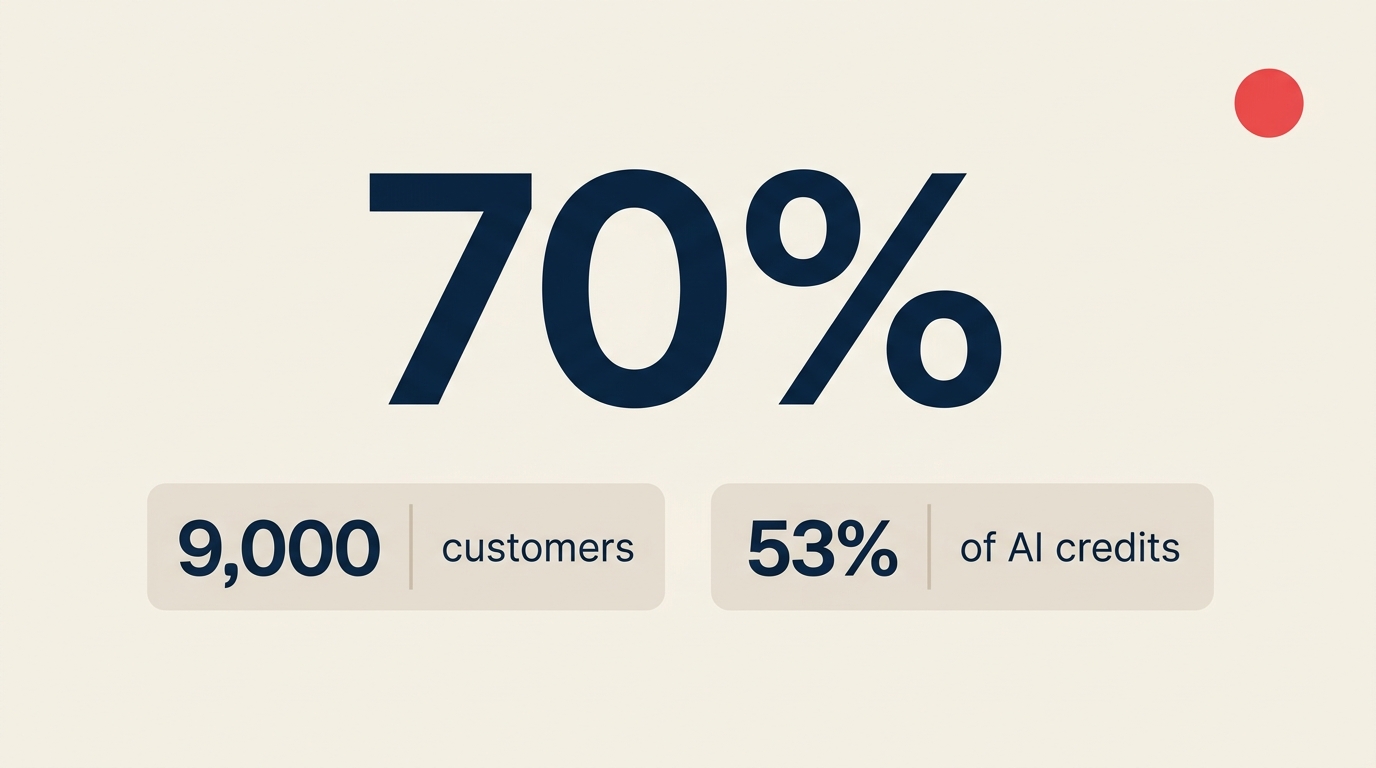
Dalam earnings call Q1 2026 pada 7 Mei, HubSpot mengungkapkan bahwa Customer Agent kini melayani 9.000 pelanggan dengan tingkat penyelesaian rata-rata 70%. Para pemain teratas melampaui 90%. Berdasarkan laporan CX Today tentang panggilan tersebut, angka itu naik lima poin persentase dari kuartal sebelumnya. CEO Yamini Rangan secara khusus menyebut Customer Agent sebagai contoh paling jelas dari AI yang mencapai traksi nyata di seluruh platform.
Ada satu angka lagi yang sama pentingnya. Customer Agent kini mengonsumsi 53% dari seluruh kredit AI di seluruh suite agen HubSpot. Prospecting Agent berada di 17%. Data Agent di 16%. Pembagian itu memberi tahu Anda ke mana anggaran sebenarnya mengalir di dalam pekerjaan AI yang menghadap pelanggan.
Bagi Sales Ops, ini adalah tolok ukur pertama dalam skala besar untuk agen pelanggan AI di pasar. Ini juga merupakan pertanyaan anggaran yang akan diajukan CRO Anda dalam dua kuartal ke depan.
Apa yang Sebenarnya Disampaikan Angka 70 Persen tentang AI-CX dalam Skala Besar
Sebelum pengungkapan ini, tolok ukur vendor agen pelanggan AI entah berupa data pilot (sampel kecil, pelanggan yang bersahabat) atau studi kasus satu logo (mengesankan tetapi tidak representatif). Angka 9.000 pelanggan HubSpot adalah pertama kalinya vendor customer relationship management (CRM) besar mencantumkan tingkat penyelesaian di seluruh portofolio secara resmi.
Fakta Kunci
- 70%: Rata-rata tingkat penyelesaian Customer Agent HubSpot di lebih dari 9.000 pelanggan (earnings call Q1 2026 HubSpot, 7 Mei 2026)
- 53%: Porsi seluruh kredit AI HubSpot yang dikonsumsi oleh Customer Agent (vs Prospecting 17%, Data 16%)
- 12 bulan: Waktu dari peluncuran hingga mencapai skala dan tingkat penyelesaian ini (linimasa produk HubSpot)
Yang dicakup oleh 70% tersebut: tiket di mana agen menyelesaikan masalah pelanggan dari awal hingga akhir, tanpa serah terima ke manusia. Sisanya 30% diarahkan ke agen dukungan manusia untuk kasus-kasus yang tidak dapat diselesaikan model. Para pemain teratas (90% ke atas) umumnya berbagi tiga ciri: konten basis pengetahuan yang bersih dan terkini, cakupan tiket yang sempit (pengembalian, pengaturan ulang kata sandi, status pesanan, perubahan paket), dan jalur eskalasi yang jelas.
Kesenjangan 30% itu bukan kegagalan. Itu adalah batas bawah baru dari apa yang akan dilihat tim manusia Anda. Tiket yang sampai ke tangan manusia kini cenderung lebih sulit, lebih emosional, dan lebih sensitif terhadap pendapatan. Jika model ketenagakerjaan dukungan Anda mengasumsikan distribusi kompleksitas tiket yang rata, model tersebut sudah tidak berlaku lagi.
Bias Kredit 53 Persen Adalah Kisah Sales Ops yang Sesungguhnya
Tingkat penyelesaian yang mendapat sorotan utama. Angka alokasi kredit inilah yang seharusnya muncul di dashboard Sales Ops.
Ketika 53% pengeluaran AI pelanggan mengalir ke agen pasca-penjualan dan hanya 17% ke prospecting, anggaran AI berat di bagian belakang. Itu tidak otomatis salah. Sinyal niat dari sisi pelanggan bersih (pelanggan memiliki tiket eksplisit, dalam kata-kata mereka sendiri). Sinyal prospecting berisik (Anda menyimpulkan niat dari perilaku). Tingkat penyelesaian pada sinyal yang lebih bersih akan selalu lebih tinggi, sehingga masuk akal bagi kredit untuk mengalir ke sana lebih dulu.
Namun "rasional" tidak sama dengan "disengaja." Sebagian besar tim Sales Ops tidak memilih alokasi ini. Alokasi ini muncul karena Customer Agent diluncurkan lebih awal, diskalakan lebih cepat, dan menghasilkan angka yang terlihat (tiket yang dialihkan, waktu respons yang berkurang) yang membenarkan pembelian kredit siklus anggaran berikutnya.
Jika alokasi anggaran AI Anda ditentukan oleh agen mana yang pertama kali diluncurkan, Anda menjalankan portofolio yang tidak terkelola. Solusinya adalah menempatkan pembagian yang disengaja di hadapan kepemimpinan: berapa banyak kredit yang ingin kita alirkan ke pasca-penjualan (CX), ke dalam-funnel (sales engagement), dan ke pra-funnel (prospecting dan pengayaan data)? Kemudian arahkan kredit sesuai itu.
Acuan yang berguna untuk perusahaan mid-market berbasis penjualan: 35% pasca-penjualan, 35% alur kerja penjualan dalam-funnel, 20% prospecting, 10% kualitas data dan pengayaan. Sesuaikan berdasarkan gerakan go-to-market. Perusahaan yang berorientasi produk dapat berjalan lebih ringan pada prospecting dan lebih berat pada CX. Toko outbound murni membaliknya.
Kerangka Tolok Ukur Baru: Audit Tiga Angka Sales Ops
Gunakan angka-angka HubSpot sebagai pemicu untuk audit AI Anda sendiri. Tiga angka, tiga minggu, satu dokumen keputusan.
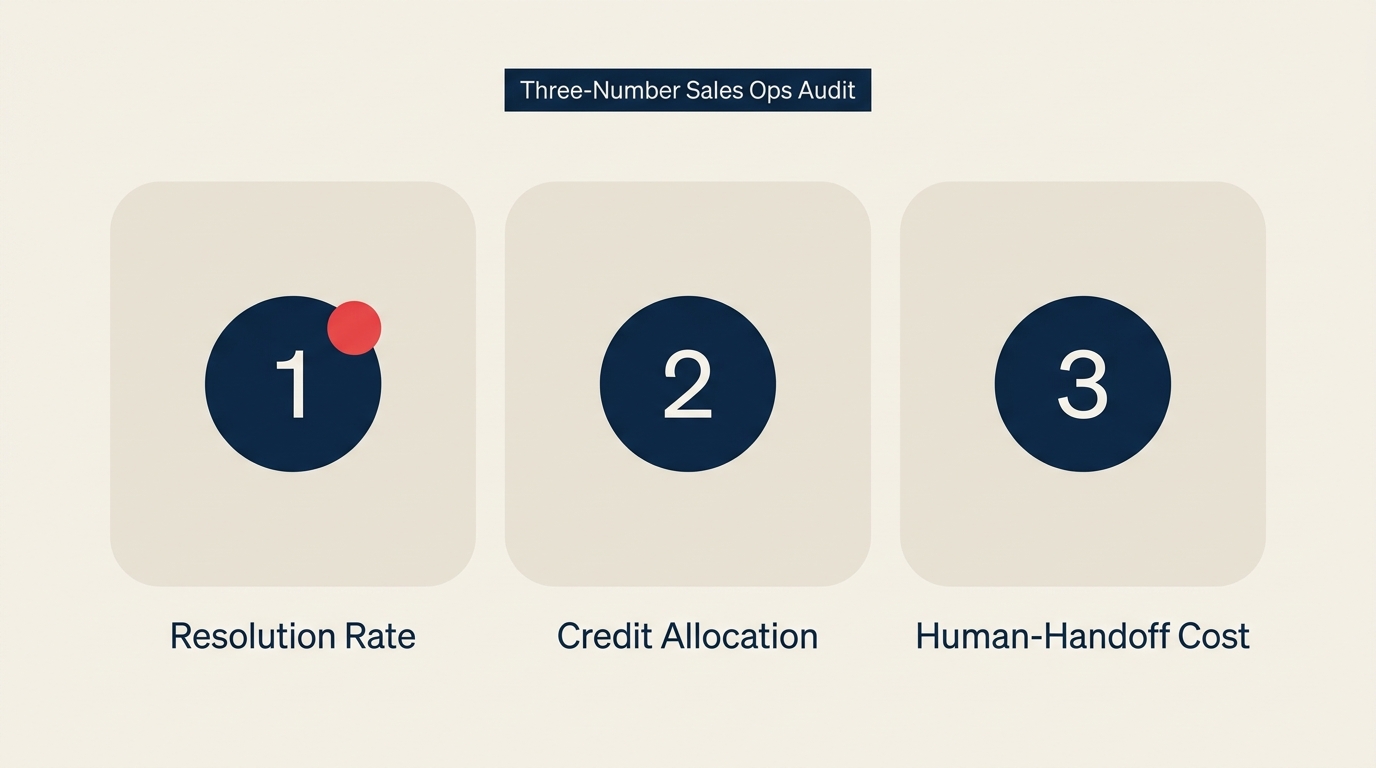
Kami menyebut ini Audit Tiga Angka. Setiap angka dipetakan ke satu keputusan anggaran.
Angka 1: Tingkat penyelesaian Anda. Tarik tingkat penyelesaian agen pelanggan AI (atau chatbot AI) Anda untuk 90 hari terakhir. Jika di bawah 50%, basis pengetahuan Anda adalah hambatan, bukan modelnya. Kirimkan audit konten sebelum Anda mengirimkan pemutakhiran model. Jika antara 50% dan 70%, Anda berada di tengah-tengah. Keuntungan tercepat berasal dari penyempitan cakupan (larang agen dari sengketa penagihan jika agen gagal menanganinya) dan peningkatan klasifikasi niat. Jika Anda sudah di 70% ke atas, dolar berikutnya digunakan untuk memperluas cakupan, bukan meningkatkan tingkat penyelesaian.
Angka 2: Alokasi kredit Anda per tahapan funnel. Jalankan perhitungan: berapa persentase kredit AI Anda yang mengalir ke agen pasca-penjualan, alat penjualan dalam-funnel, dan alat prospecting? Bandingkan dengan tujuan strategis Anda. Jika CEO Anda menginginkan pertumbuhan pipeline dan 60% kredit mengalir ke dukungan, investasi AI Anda tidak selaras dengan strategi.
Angka 3: Biaya serah terima ke manusia Anda. Berapa biaya tiket yang dieskalasi ke manusia sekarang, dihitung penuh, dibandingkan 18 bulan lalu? Jika kompleksitas telah bergeser tetapi biaya per tiket tetap stagnan, model dukungan Anda bocor margin. Baik perekrutan tingkat-1 perlu dikurangi (gantikan dengan pemecah masalah tingkat menengah) atau perutean eskalasi perlu melewati antrean generalis sepenuhnya.
Tim B2B SaaS dengan 90 perwakilan yang menjalankan agen AI di seluruh prospecting, sales engagement, dan CX harus dapat menghasilkan tiga angka ini dalam tiga minggu dengan upaya ringan. Jika tidak bisa, penerapan AI Anda tidak transparan bagi tim keuangan dan anggaran akan dipotong di siklus berikutnya.
Mengapa Angka HubSpot Adalah yang Tepat untuk Dijadikan Acuan
Sebagian pembeli sales tech akan (dengan alasan yang masuk akal) mempertanyakan. "Sierra punya 90%+ untuk CX enterprise. Salesforce Agentforce punya angkanya sendiri. Mengapa mengacu pada HubSpot secara khusus?"
Dua alasan.
Pertama, skala. Tingkat penyelesaian tinggi Sierra berasal dari penerapan yang di-tune dengan cermat di perusahaan besar dengan anggaran layanan yang dalam. Angka Agentforce dari Salesforce (di mana tersedia secara publik) mencerminkan bias penyetelan enterprise yang serupa. HubSpot 70% di 9.000 pelanggan rata-rata dari penerapan mulai dari startup 5 orang hingga enterprise mid-market, sebagian besar self-served, sebagian besar dengan konfigurasi default. Itu adalah proksi yang lebih dekat dengan apa yang akan dihasilkan penerapan Anda sendiri di tahun pertama.
Kedua, portabilitas perbandingan. Angka 70% dalam skala besar dapat dibandingkan antar vendor karena definisi operasionalnya (tanpa serah terima ke manusia) konsisten. Anda dapat menempatkan angka Anda sendiri di sebelahnya pada sumbu yang sama tanpa menormalkan untuk ukuran perusahaan atau industri. Itu adalah properti langka dalam tolok ukur vendor.
Cara yang tepat untuk membaca angka Sierra dan Agentforce yang lebih tinggi bukan "vendor tersebut lebih baik." Melainkan "angka tersebut mewakili potensi Anda di tahun ketiga, dengan anggaran layanan. HubSpot 70% mewakili batas bawah Anda di tahun pertama, tanpa anggaran layanan." Kedua titik data berguna. Keduanya melayani percakapan perencanaan yang berbeda.
Untuk disiplin forecasting, batas bawah tahun pertama inilah yang penting. Itulah yang dapat Anda rencanakan dengan keyakinan.
Yang Harus Dilakukan Minggu Ini
Angka 70% menciptakan risiko percakapan dewan jika Anda tidak dapat menjawab "berapa angka kita?" dalam dua minggu. Tiga tindakan:
Tarik tingkat penyelesaian Anda pada hari Jumat. Jika tidak bisa, itulah temuannya. Buat terlihat. Ketiadaan angka itulah masalahnya.
Petakan alokasi kredit ke tahapan funnel. Kumpulkan satu mitra keuangan dan satu analis RevOps dalam satu ruangan selama 90 menit. Tarik faktur kredit, tandai setiap baris berdasarkan tahapan funnel, totalkan. Jika alokasi tidak sesuai strategi, dokumentasikan kesenjangan dan bawa ke tinjauan kepemimpinan berikutnya.
Beri pengarahan kepada CRO Anda tentang pertanyaan 30%. 30% tiket yang sampai ke manusia kini cenderung lebih sulit. Komposisi keahlian tim dukungan Anda harus mengikuti perubahan itu. Jika Anda masih merekrut generalis tingkat-1 dengan laju yang sama seperti 18 bulan lalu, Anda melebih-rekrut lapisan yang diserap AI dan kekurangan rekrut lapisan yang membutuhkan penilaian senior.
Kebersihan pipeline sebagai praktik budaya dan lapisan model kematangan RevOps keduanya sudah mencakup tata kelola kredit AI dalam tahap matang mereka. Jika dokumen kondisi saat ini Anda belum mencakupnya, kuartal ini adalah saat untuk menambahkannya.
Tim Sales Ops yang keluar dari 2026 dengan posisi unggul bukan yang menjalankan paling banyak agen AI. Melainkan yang dapat menunjukkan kepada CFO mereka grafik kredit-per-tahapan-funnel dengan angka mereka sendiri di sebelah tolok ukur yang dipublikasikan. Grafik itu adalah pembelaan anggaran yang baru.
Pelajari Lebih Lanjut
- Agen AI dalam pipeline penjualan
- Mengukur ROI AI tanpa membangun ulang seluruh tumpukan teknologi
- Kopilot AI vs agen AI: perbedaan operasional
- Kesenjangan tata kelola yang sering salah dipahami pemimpin tentang AI di tempat kerja
FAQ
Apakah 70% sebenarnya tingkat penyelesaian yang baik, atau itu hanya batas bawah?
Untuk agen pelanggan AI generalis yang melayani ribuan penerapan self-served, 70% adalah batas bawah baru dalam skala besar. Untuk penerapan enterprise yang terfokus ketat dengan tim layanan berdedikasi (Sierra, peluncuran Salesforce Agentforce yang besar), 85% hingga 95% dapat dicapai. Perbandingan yang tepat tergantung pada postur mana yang Anda jalankan. Jika agen Anda melayani beberapa jenis tiket di beberapa unit bisnis dengan konfigurasi default, gunakan 70% sebagai acuan. Jika melayani satu unit bisnis dengan basis pengetahuan yang dikurasi dan cakupan ketat, rencanakan untuk 85% ke atas.
Haruskah Sales Ops memiliki anggaran kredit AI atau haruskah Keuangan?
Sales Ops harus memiliki logika alokasi berdasarkan tahapan funnel. Keuangan harus memiliki total dolar dan pelaporan varians. Pembagian ini penting karena alokasi kredit adalah keputusan operasional (apa yang paling dibutuhkan funnel Anda?) dan total dolar adalah keputusan keuangan (berapa yang mampu kita bayar?). Mencampurkan keduanya menghasilkan anggaran yang tidak sesuai strategi atau strategi yang tidak mendapat pendanaan. Masukkan kedua fungsi dalam tinjauan bulanan yang sama dan tetapkan kepemilikan yang jelas atas setiap lever.
Bagaimana ini mengubah investasi AI prospecting kami?
Tergantung pada strategi Anda. Jika kendala utama Anda adalah cakupan pipeline, porsi kredit prospecting 17% mungkin terlalu rendah dan Anda harus menyeimbangkan ulang. Jika kendala utama Anda adalah tingkat konversi (Anda punya cukup prospek terkualifikasi, tidak cukup deal), alokasi yang berat di bagian belakang mungkin sudah tepat. Angka HubSpot bukan preskriptif untuk tumpukan teknologi Anda. Ini adalah pemicu untuk membuat alokasi menjadi eksplisit alih-alih tidak disengaja.
