More in
Berita AI, Pekerjaan & Keterampilan
Sektor Keuangan Terus Kehilangan Pekerjaan saat Ekonomi Merekrut: Peringatan bagi Pekerja Kantoran
Jun 6, 2026
Keterampilan AI Menjadi Rekrutmen Paling Sulit di Dunia. Anda Tidak Bisa Keluar Hanya dengan Merekrut
Jun 6, 2026
Apakah AI Benar-benar Membunuh Pekerjaan? Angka Perekrutan Mei Mengatakan Jangan Terburu-buru
Jun 5, 2026
Anda Menempatkan AI Agent di Bagan Organisasi. Akuntabilitas Diam-diam Melemah
Jun 5, 2026
Semua Menyalahkan AI atas Krisis Kerja Gen Z. The Fed Menunjuk pada Kerja Jarak Jauh
Jun 5, 2026
Dampak Bersih AI pada Pekerjaan Turun ke 11.000 per Bulan. Sektor Konstruksi Menyembunyikan Kebenaran
Jun 4, 2026
AI Disalahkan atas 40% PHK AS di Bulan Mei, Bulan Ketiga Berturut-turut
Jun 4, 2026
Empat Masa Depan Pekerjaan hingga 2030: Titik Evaluasi Pertengahan 2026 bagi CEO
Jun 3, 2026
Bisakah Program Magang AI Federal Menutup Kesenjangan Keterampilan Anda Lebih Murah daripada Merekrut?
Jun 3, 2026
Gaji AI Engineer Terbagi Menjadi Dua Pasar. Hanya yang Teratas yang Merupakan Gelembung
Jun 3, 2026
Bahasa Indonesia
Survei Strada 2026 Menempatkan Literasi AI di Posisi Terakhir Prioritas Rekrutmen Lulusan Baru. Ini Reset Deskripsi Jabatan CHRO Sebelum Siklus Campus Berikutnya
Turn this article into takeaways for your work.


Each assistant summarizes the article only for you and suggests best practices for your work.
Tim rekrutmen kampus Anda kemungkinan sedang menyaring kandidat berdasarkan kriteria yang keliru. Jika "literasi AI" atau "pengalaman dengan alat AI" tercantum dalam deskripsi jabatan (JD) lulusan baru Anda sebagai keterampilan yang wajib dimiliki, sebuah survei yang ketat justru mengatakan Anda telah mengoptimalkan kriteria yang bertolak belakang dengan apa yang sebenarnya diinginkan rekan-rekan Anda sendiri.
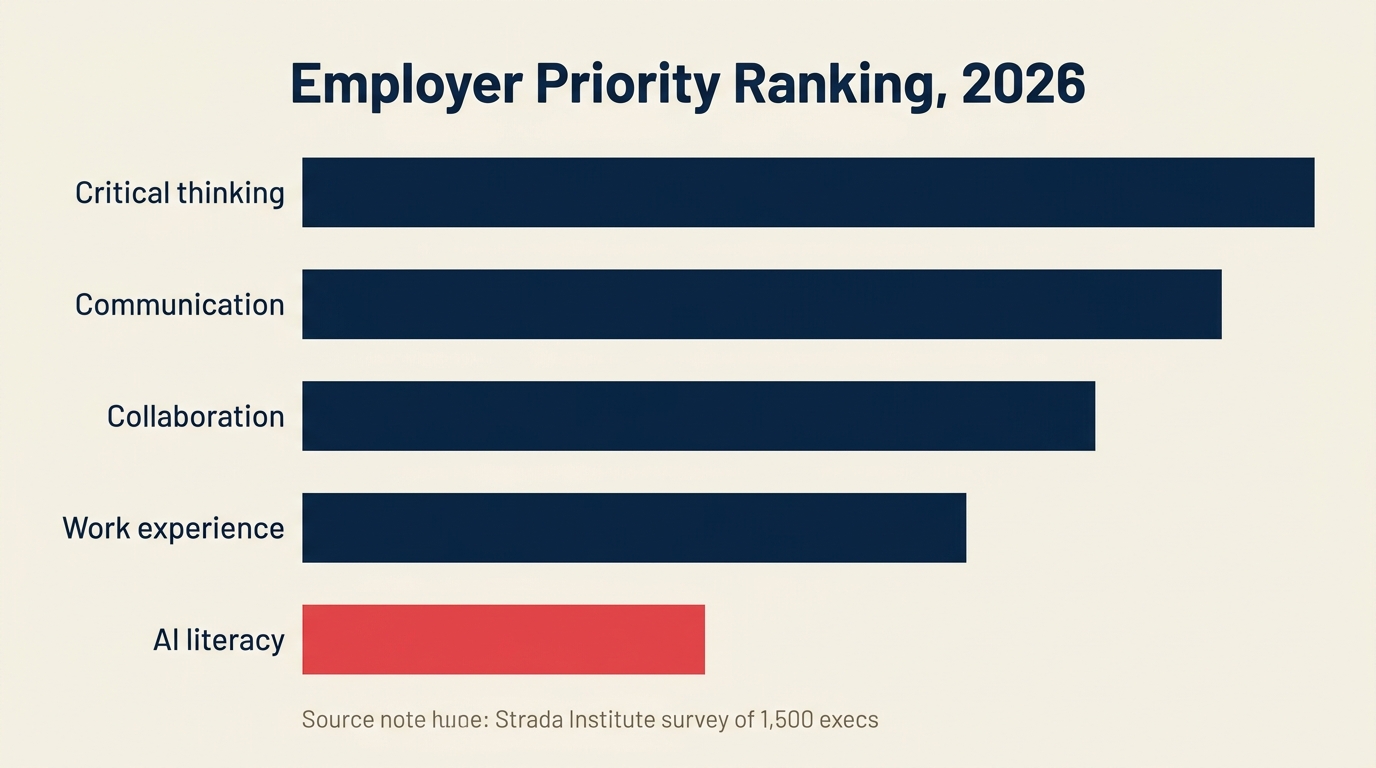
Strada Education Foundation mensurvei hampir 1.500 eksekutif dan pemimpin senior talenta dari berbagai industri di AS tentang prioritas rekrutmen posisi awal karier untuk 2026. Temuannya sangat to the point: literasi AI berada di posisi terakhir dari setiap kategori keterampilan yang mereka evaluasi. Bukan hampir terakhir. Terakhir. Dan ini satu-satunya kategori di mana penilaian diri lulusan baru justru melampaui apa yang dikatakan pemberi kerja mereka butuhkan.
Sebelum siklus campus musim gugur dibuka, setiap chief human resources officer (CHRO) perlu menarik JD lulusan baru mereka dan menjalankan audit yang cermat. Data Strada memberi Anda tepat apa yang perlu diperbaiki.
Apa yang Sebenarnya Ditemukan Strada
Strada Institute for the Future of Work mensurvei hampir 1.500 pemimpin talenta senior dan eksekutif dari berbagai industri. Pertanyaannya sederhana: apa yang sebenarnya Anda prioritaskan ketika merekrut kandidat posisi awal karier?
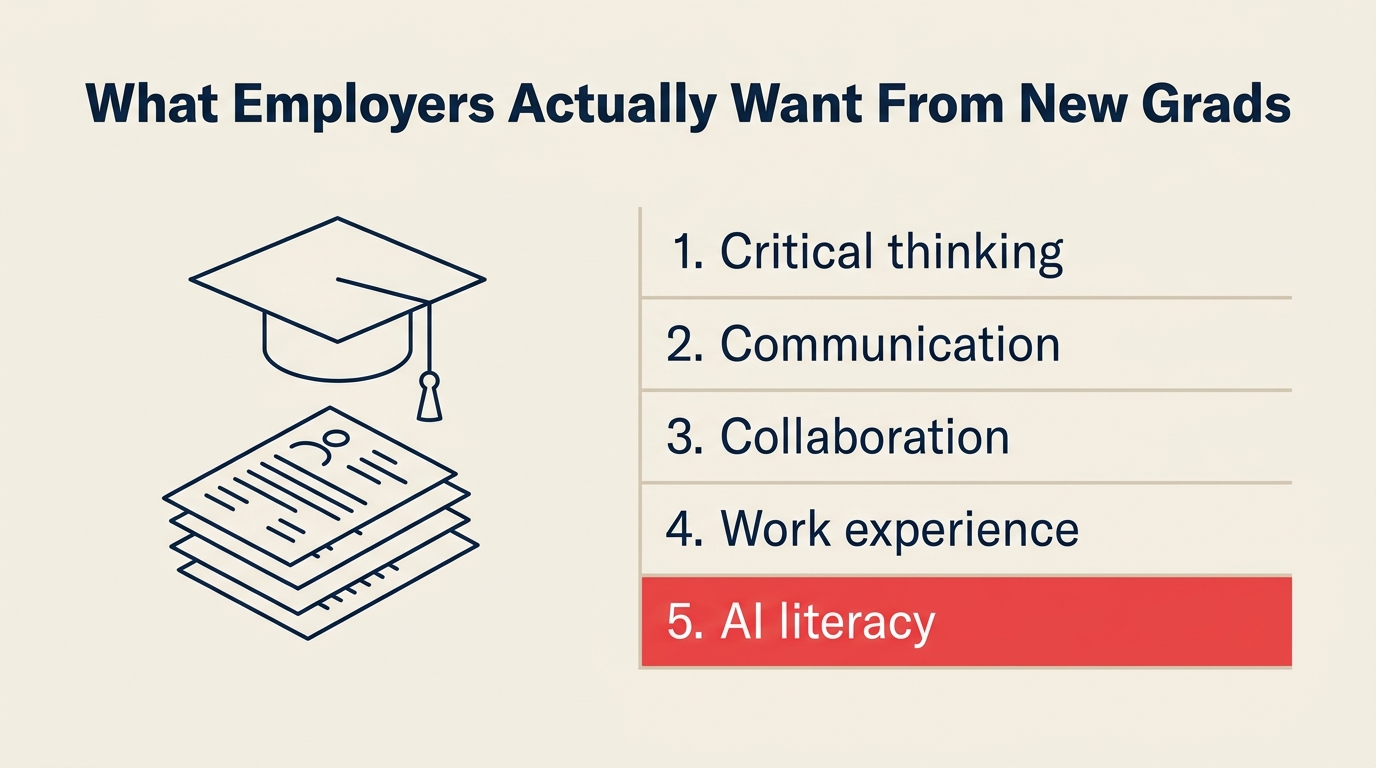
Tiga jawaban teratas, secara berurutan: berpikir kritis, komunikasi, dan kolaborasi. Ini bukan hal baru. Kompetensi dasar ini telah mendominasi daftar harapan pemberi kerja selama satu dekade. Namun laporan Strada menambahkan dua temuan yang seharusnya mengubah cara Anda menulis JD saat ini juga.
Pertama, literasi AI berada di posisi paling bawah daftar prioritas pemberi kerja. Ini juga satu-satunya keterampilan di mana lulusan menilai diri mereka lebih tinggi dari kebutuhan yang disampaikan pemberi kerja. Para lulusan merasa sudah mengatasinya. Pemberi kerja tidak menganggapnya sebagai celah karena memang bukan prioritas.
Kedua, kredensial paling bernilai untuk kandidat posisi awal karier adalah pengalaman kerja terkait sebelumnya, termasuk magang, proyek capstone, dan pembelajaran berbasis proyek. Profil yang paling tidak disukai adalah kandidat dengan nilai IPK sempurna, penghargaan akademis, namun tanpa riwayat kerja nyata. Dengan kata lain, bintang akademis tradisional tanpa pengalaman kerja mendapat penilaian lebih rendah dibandingkan mahasiswa dengan IPK 3,3 yang pernah magang.
Poin data ketiga bertolak belakang dengan setiap narasi ketakutan selama 18 bulan terakhir. Menurut temuan Strada, 2,7 kali lebih banyak pemimpin talenta senior yang memperkirakan alat AI akan meningkatkan rekrutmen posisi awal karier di organisasi mereka dibandingkan yang memperkirakan AI akan menguranginya. Ini bukan salah ketik. Lebih banyak tenaga kerja, bukan lebih sedikit, dengan syarat organisasi merekrut berdasarkan kriteria yang tepat.
Key Facts
- Literasi AI berada di posisi terakhir dari seluruh kategori keterampilan yang dievaluasi oleh hampir 1.500 pemberi kerja dalam survei Strada 2026.
- 2,7 kali lebih banyak pemimpin talenta senior yang memperkirakan AI akan meningkatkan, bukan mengurangi, rekrutmen posisi awal karier di organisasi mereka.
- Pengalaman kerja sebelumnya (magang, proyek capstone) mengungguli IPK sempurna ditambah penghargaan akademis dalam evaluasi resume lulusan baru.
Mengapa Ini Bertentangan dengan Narasi 2026
Temuan Strada berada dalam ketegangan langsung dengan dua sinyal yang mendominasi perhatian CHRO sepanjang tahun lalu.
Daftar peran dengan pertumbuhan tercepat dari LinkedIn menempatkan insinyur AI di posisi teratas. Data PwC menunjukkan premi upah keterampilan AI sebesar 56% yang terakumulasi dalam 12 bulan. Artikel sebelumnya kami tentang premi upah AI dan penataan ulang band kompensasi menunjukkan bahwa sinyal gaji itu nyata dan bergerak cepat.
Namun begini rekonsiliasi yang perlu dipahami: premi upah itu berlaku untuk peran berpengalaman dan spesialis, bukan untuk lulusan baru. Ketika seorang insinyur machine learning senior mendapat bayaran 56% lebih tinggi karena keterampilan AI-nya, itu adalah sinyal pasar untuk level mid-career atau ahli. Angka itu tidak memberitahu Anda apa yang seharusnya Anda syaratkan dari seseorang berusia 22 tahun yang memulai peran pertamanya.
Kesalahan CHRO yang diungkap data Strada adalah memperlakukan pendorong gaji peran senior sebagai kriteria penyaringan universal untuk posisi awal. Ketika applicant tracking system (ATS) Anda menyaring resume yang tidak menyertakan kata "AI" atau "Python," Anda tidak menangkap kandidat buruk. Anda menolak para pemikir kritis yang hanya tidak tahu harus mengisi kata kunci tersebut.
Artikel tentang peningkatan keterampilan LinkedIn yang kami bahas awal tahun ini menyampaikan poin serupa: bahkan di antara pekerja yang aktif membangun keterampilan AI, ada kesenjangan besar antara pembelajaran mandiri dan pengembangan yang didukung pemberi kerja. Jika staf lama Anda sendiri masih berupaya mengejar ketertinggalan soal alat AI, mensyaratkan lulusan baru untuk sudah mahir AI menetapkan standar yang tidak dipenuhi tim Anda sendiri saat ini.
Jalur bakat posisi awal karier juga menghadapi tekanan dari arah lain. Data keruntuhan lapangan kerja posisi awal Mei 2026 dan temuan ketidaksesuaian rekrutmen posisi awal iCIMS keduanya menunjuk pada kontraksi permintaan untuk kategori peran posisi awal tertentu. Temuan Strada yang berlawanan arus, bahwa AI justru diperkirakan akan memperluas jumlah karyawan posisi awal di banyak organisasi, hanya berlaku jika organisasi-organisasi tersebut merekrut berdasarkan kriteria yang tepat. Tambahkan filter yang salah dan kumpulan kandidat akan mengecil karena alasan yang juga salah.
Data kesenjangan kesiapan tenaga kerja dari siklus ini sebelumnya memperparah hal ini lebih jauh: organisasi yang tidak bisa menemukan kandidat posisi awal berkualitas sering kali memiliki JD yang tidak mencerminkan apa yang sebenarnya dipedulikan manajer setelah seseorang mulai bekerja.
Audit Deskripsi Jabatan (Reset 5 Langkah)
Anda tidak membutuhkan gugus tugas atau penulisan ulang kebijakan untuk memperbaiki ini. Lima penyuntingan terarah pada template JD lulusan baru Anda akan menyelaraskan persyaratan dengan apa yang dikatakan 1.500 pemberi kerja Strada sebenarnya mereka inginkan.
Hapus "wajib memiliki literasi AI" atau "pengalaman dengan ChatGPT/Copilot" dari daftar persyaratan utama. Jika ingin menyebutkannya, pindahkan ke bagian yang lebih disukai namun tidak wajib. Alat AI bisa dipelajari saat bekerja dalam hitungan minggu. Berpikir kritis tidak demikian. Jangan campur adukkan kemahiran menggunakan alat dengan kemampuan kognitif.
Tambahkan penyaringan berpikir kritis. Latihan tertulis 20 menit atau tinjauan portofolio lebih efektif dari pemeriksaan alat AI apa pun. Minta kandidat menganalisis skenario bisnis singkat secara tertulis dan merekomendasikan langkah yang perlu diambil. Kualitas penalaran mereka akan mengatakan lebih banyak daripada daftar alat yang mereka kuasai. Lihat bagaimana kerangka pengambilan keputusan dapat memberi informasi cara Anda menyusun penyaringan ini.
Naikkan bobot pengalaman kerja sebelumnya di atas IPK dalam rubrik penilaian resume Anda. Magang, proyek capstone, pekerjaan lepas, dan proyek berbayar harus naik ke bagian teratas kriteria penilaian Anda. IPK 3,3 dengan dua kali magang mengalahkan IPK 4,0 tanpa pengalaman sama sekali, menurut data Strada.
Ganti permintaan komunikasi yang generik dengan permintaan artefak tertulis yang spesifik. Alih-alih "kemampuan komunikasi tertulis yang kuat," minta kandidat menyerahkan memo 200 kata tentang sebuah keputusan bisnis yang ambigu secara nyata. Anda akan langsung melihat apakah mereka bisa menyusun argumen atau hanya mengandalkan kata-kata pengisi. Literasi digital dimulai dari penalaran tertulis yang jelas, bukan nama-nama alat.
Hapus filter kata kunci di ATS Anda yang secara otomatis menolak resume yang tidak mengandung token "AI" atau "Python." Ini adalah perbaikan dengan dampak tertinggi untuk kecepatan proses. Audit logika penolakan ATS Anda, temukan filter kata kunci terkait AI, dan hapus atau turunkan bobotnya untuk rekrutmen posisi awal. Jalankan perbandingan 30 hari atas kualitas pelamar sebelum dan sesudah perubahan ini.
FAQ
Mengapa Strada menemukan literasi AI berada di POSISI TERAKHIR padahal LinkedIn dan laporan lain mengatakan keterampilan AI sedang melonjak?
Keduanya mengukur hal berbeda untuk populasi yang berbeda. Data peran dengan pertumbuhan tercepat dari LinkedIn mencerminkan rekrutmen mid-career dan spesialis, di mana pemberi kerja bersaing keras untuk mendapatkan pekerja yang sudah tahu cara membangun dan menerapkan sistem AI. Strada berfokus secara khusus pada rekrutmen posisi awal, di mana pemberi kerja mencari kemampuan mentah yang bisa mereka kembangkan. Kemahiran menggunakan alat AI di tingkat posisi awal mudah dilatih. Berpikir kritis tidak demikian. Kedua temuan ini tidak bertentangan begitu Anda memisahkan populasi rekrutmen yang berbeda.
Apakah kita harus berhenti memprioritaskan peningkatan keterampilan AI untuk karyawan yang sudah ada?
Tidak. Peningkatan keterampilan AI internal untuk tenaga kerja Anda yang ada tetap menjadi investasi prioritas tinggi. Rekrutmen berbasis keterampilan dan strategi mobilitas internal keduanya bergantung pada pemberian alat kepada karyawan yang ada untuk mengembangkan kemampuan baru. Temuan Strada berlaku secara khusus untuk persyaratan JD lulusan baru. Karyawan berpengalaman Anda adalah kasus yang berbeda, dan mengembangkan keterampilan AI mereka berdampak langsung pada produktivitas dan retensi.
Seperti apa seharusnya deskripsi jabatan lulusan baru 2026?
Utamakan berpikir kritis, komunikasi, dan kolaborasi. Wajibkan pengalaman kerja sebelumnya dalam bentuk apa pun. Tambahkan latihan tertulis terstruktur ke dalam proses penyaringan. Hapus alat AI dari daftar persyaratan utama. Rujuk kerangka kesenjangan kesiapan kepemimpinan jika ingin memikirkan bagaimana kelas posisi awal ini akan berkembang menjadi talenta level menengah. JD bukan tempat Anda menyaring kemahiran AI. Rencana onboarding adalah tempatnya.
Yang Harus Dilakukan CHRO Sebelum Siklus Musim Gugur
Siklus rekrutmen kampus musim gugur biasanya dibuka pada akhir musim panas. Itu memberi Anda sekitar 60 hingga 90 hari untuk mereset template dan memberi arahan kepada tim. Berikut daftar singkatnya.
- Tarik 10 JD lulusan baru acak dari rekrutmen aktif Anda saat ini dan jalankan masing-masing melalui audit 5 langkah di atas. Tandai setiap JD yang mencantumkan literasi AI sebagai keterampilan wajib. Hitung persentase peran terbuka yang memiliki kesalahan ini. Angkanya kemungkinan akan mengejutkan Anda.
- Beri arahan kepada mitra rekrutmen kampus Anda. Banyak pemimpin rekrutmen kampus bekerja berdasarkan template JD yang terakhir diperbarui pada siklus 2024 atau 2025, ketika "keterampilan AI" ditambahkan secara refleks. Mereka butuh arahan eksplisit dari pimpinan HR untuk membalikkan penambahan itu sebelum mereka menyelesaikan materi musim gugur.
- Instruksikan hiring manager untuk menghapus demo alat AI dari loop wawancara posisi awal. Beberapa hiring manager telah menambahkan pengecekan informal, seperti meminta kandidat menggunakan ChatGPT secara langsung dalam wawancara. Data Strada mengatakan ini tidak prediktif terhadap keberhasilan posisi awal. Ganti dengan latihan menulis terstruktur dari langkah 2 audit.
- Revisi filter kata kunci ATS untuk semua rekrutmen posisi awal sebelum siklus musim gugur dibuka. Ini adalah perubahan teknis yang membutuhkan waktu satu sore untuk diterapkan dan memiliki dampak langsung pada kualitas kumpulan kandidat. Jangan tunda sampai penawaran pertama sudah diberikan.
Selengkapnya
