More in
Berita AI, Pekerjaan & Keterampilan
Sektor Keuangan Terus Kehilangan Pekerjaan saat Ekonomi Merekrut: Peringatan bagi Pekerja Kantoran
Jun 6, 2026
Keterampilan AI Menjadi Rekrutmen Paling Sulit di Dunia. Anda Tidak Bisa Keluar Hanya dengan Merekrut
Jun 6, 2026
Apakah AI Benar-benar Membunuh Pekerjaan? Angka Perekrutan Mei Mengatakan Jangan Terburu-buru
Jun 5, 2026
Anda Menempatkan AI Agent di Bagan Organisasi. Akuntabilitas Diam-diam Melemah
Jun 5, 2026
Semua Menyalahkan AI atas Krisis Kerja Gen Z. The Fed Menunjuk pada Kerja Jarak Jauh
Jun 5, 2026
Dampak Bersih AI pada Pekerjaan Turun ke 11.000 per Bulan. Sektor Konstruksi Menyembunyikan Kebenaran
Jun 4, 2026
AI Disalahkan atas 40% PHK AS di Bulan Mei, Bulan Ketiga Berturut-turut
Jun 4, 2026
Empat Masa Depan Pekerjaan hingga 2030: Titik Evaluasi Pertengahan 2026 bagi CEO
Jun 3, 2026
Bisakah Program Magang AI Federal Menutup Kesenjangan Keterampilan Anda Lebih Murah daripada Merekrut?
Jun 3, 2026
Gaji AI Engineer Terbagi Menjadi Dua Pasar. Hanya yang Teratas yang Merupakan Gelembung
Jun 3, 2026
Bahasa Indonesia
Data LinkedIn 2026 Menyebut AI Engineer Sebagai Peran yang Paling Cepat Berkembang. Kesenjangan Dukungan Adalah Kisah Nyata bagi CHRO
Turn this article into takeaways for your work.


Each assistant summarizes the article only for you and suggests best practices for your work.
Permintaan terhadap keterampilan kecerdasan buatan (AI) tumbuh dengan kecepatan yang tidak diantisipasi oleh sebagian besar perusahaan. Namun masalah yang lebih mendesak bagi Chief Human Resources Officers (CHRO) bukan pada lonjakan permintaan itu. Melainkan pada kesenjangan yang semakin melebar antara apa yang diharapkan eksekutif dari karyawan dan apa yang benar-benar disediakan pemberi kerja untuk membantu mereka sampai ke sana.
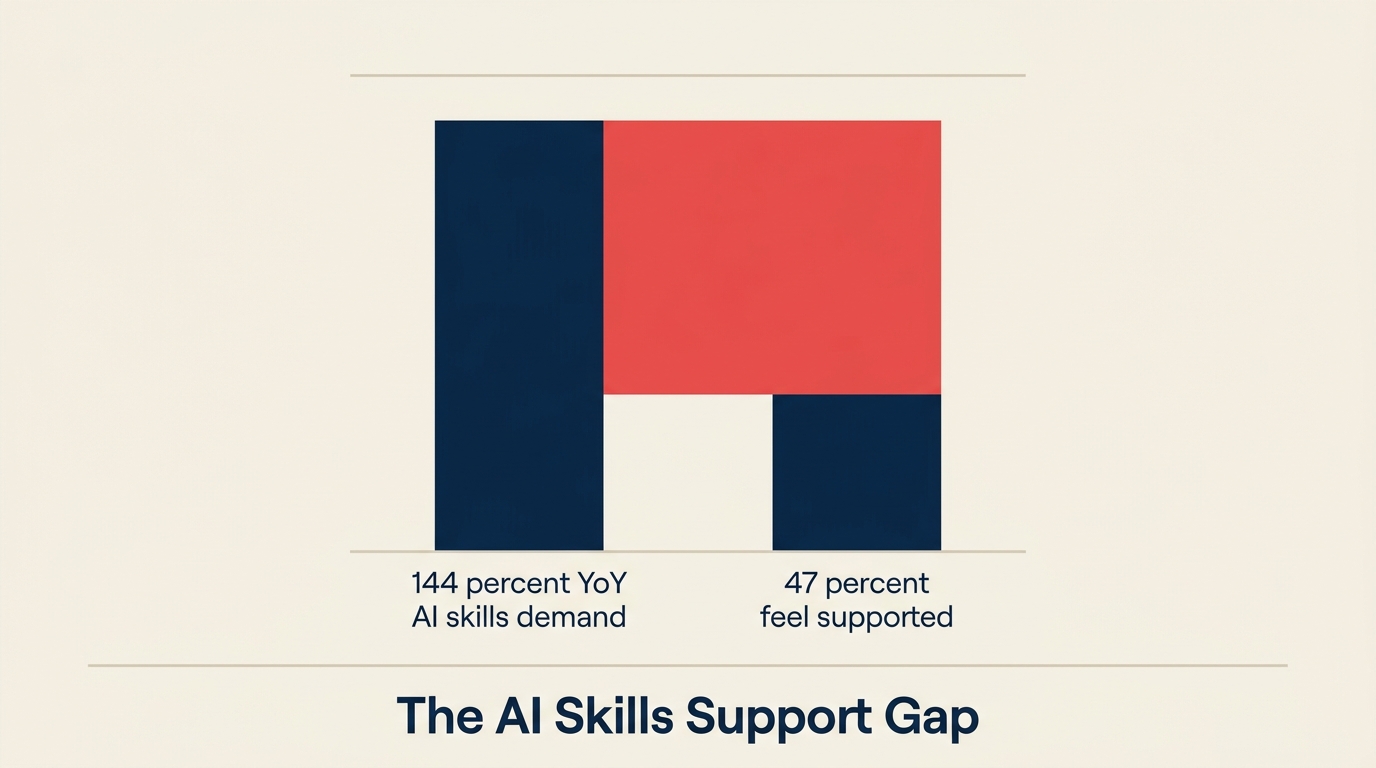
Dua pertiga eksekutif mengatakan mereka mengharapkan tenaga kerja mereka secara proaktif membangun keterampilan AI dalam enam bulan ke depan. Kurang dari separuh profesional di AS mengatakan mereka merasa didukung oleh organisasi mereka dalam melakukan hal tersebut. Ketidakseimbangan ini bukan sekadar masalah moral. Ini adalah risiko retensi yang tersembunyi di balik kumpulan data yang sama yang sedang dirayakan semua orang.
Apa yang Sebenarnya Ditunjukkan Data LinkedIn 2026
CIO Dive melaporkan, mengutip data LinkedIn's 2026 Skills on the Rise, bahwa AI engineer telah merebut posisi pertama dalam daftar Jobs on the Rise LinkedIn di Amerika Serikat. Tiga kategori keterampilan yang paling cepat berkembang adalah rekayasa AI, efisiensi operasional, dan strategi bisnis AI.
Angka rekrutmen yang mendasarinya cukup signifikan. Lowongan kerja di AS yang mensyaratkan keterampilan AI tumbuh sekitar 144% year-over-year (YoY) per April 2026. Lowongan yang berkaitan dengan literasi AI meningkat lebih dari 70% YoY di berbagai industri yang secara tradisional tidak merekrut software engineer, termasuk keuangan, pemasaran, dan operasional. HR Leader, yang meliput data LinkedIn yang sama, mengonfirmasi peringkat AI engineer dan mencatat konsentrasi peran tersebut di pusat teknologi seperti San Francisco, New York City, dan Dallas.
World Economic Forum, mengutip data LinkedIn Economic Graph, memberikan angka konkret untuk penciptaan peran baru: sekitar 1,3 juta posisi baru termasuk AI engineer, forward-deployed engineer, dan data annotator telah diciptakan oleh adopsi AI secara global.
Ini adalah sinyal pasar rekrutmen. Berguna untuk pembandingan. Namun jika Anda adalah seorang CHRO, pertanyaan yang relevan adalah apa yang terjadi di dalam organisasi Anda sendiri, bukan apa yang terjadi di papan lowongan LinkedIn.
Fakta Utama
- Pertumbuhan lowongan keterampilan AI sebesar 144% YoY (LinkedIn via CIO Dive, Mei 2026)
- Pertumbuhan lebih dari 70% YoY dalam lowongan terkait literasi AI di industri non-teknologi (LinkedIn Economic Graph, 2026)
- 1,3 juta peran baru diciptakan oleh adopsi AI secara global (LinkedIn via World Economic Forum, Januari 2026)
Kesenjangan Dukungan yang Tidak Dibicarakan Siapa Pun
Inilah bagian dari data LinkedIn yang tidak menjadi berita utama: dua pertiga eksekutif mengharapkan karyawan untuk secara mandiri meningkatkan keterampilan AI dalam enam bulan. Namun kurang dari separuh profesional AS mengatakan pemberi kerja mereka benar-benar mendukung mereka dalam membangun keterampilan tersebut.
Ini bukan sekadar selisih kecil yang bisa diabaikan. Ini adalah ketidakselarasan struktural.
Pikirkan siapa yang paling mungkin menanggapi ekspektasi eksekutif itu dengan serius dan mengambil tindakan. Itulah karyawan terbaik Anda. Mereka yang sudah melangkah melampaui deskripsi pekerjaan mereka. Engineer yang meluangkan waktu lebih untuk mempelajari LangChain atau RAG pipelines. Marketing manager yang membangun keakraban dengan prompt engineering di waktu luang mereka sendiri. Itulah profil yang muncul dalam LinkedIn Skills on the Rise 2026 sebagai pemimpin permintaan.
Dan karena mereka sudah membangun keterampilan tersebut, mereka kini juga lebih terlihat dan lebih mudah direkrut dibandingkan 12 bulan lalu. Pertumbuhan permintaan sebesar 144% YoY berarti rekruter eksternal secara khusus mencari orang-orang seperti mereka.
Maka urutannya berjalan seperti ini: karyawan terbaik Anda meningkatkan keterampilan AI tanpa dukungan organisasi yang berarti, menjadi lebih bernilai di pasar terbuka, lalu pergi ke perusahaan yang benar-benar membangun infrastruktur pengembangan AI. Anda tidak berinvestasi dalam pertumbuhan mereka. Perusahaan lain akan membayarnya.
Inilah risiko retensi peningkatan keterampilan AI yang juga ditandai oleh laporan Mercer Global Talent Trends 2026, yang mencatat bahwa 98% eksekutif sedang mendesain ulang pekerjaan di sekitar AI namun hanya separuh yang merasa siap secara organisasi untuk mendukung transisi tersebut. Kesenjangan dukungan ini bukan hanya ada dalam satu kumpulan data. Ini muncul di berbagai survei tenaga kerja secara bersamaan.
Apa Arti "Dukungan" di Tahun 2026
Kata "dukungan" bekerja keras dalam survei-survei ini, dan perlu diuraikan apa yang sebenarnya dibutuhkan karyawan versus apa yang ditawarkan sebagian besar organisasi.
Empat hal yang secara konsisten muncul ketika karyawan mendeskripsikan dukungan keterampilan AI yang bermakna:
Waktu belajar berbayar. Bukan sekadar daftar kursus online dalam LMS yang tidak digunakan siapa pun. Waktu kalender yang benar-benar diblokir, terlindung dari pekerjaan proyek, untuk bereksperimen, mengikuti pembelajaran terstruktur, dan membangun kemahiran nyata dengan alat seperti PyTorch, LangChain, atau kerangka kerja prompt engineering.
Akses alat dengan sandbox. Karyawan tidak dapat mengembangkan keterampilan AI nyata jika mereka tidak diizinkan menggunakan alat AI. Banyak organisasi telah membatasi akses ke platform AI generatif karena kekhawatiran keamanan IT atau kepatuhan, yang bisa dipahami. Namun tanpa lingkungan yang aman dan dikelola perusahaan di mana karyawan dapat menguji dan belajar, Anda telah meminta mereka untuk mahir dalam sesuatu yang tidak Anda izinkan mereka latih.
Manajer yang tidak dihukum karena waktu belajar. Jika metrik kuartalan manajer tidak memperhitungkan waktu pengembangan tim, mereka akan menarik karyawan dari kegiatan belajar untuk memenuhi target output setiap saat. Struktur insentif harus berubah sebelum perilaku berubah. Ini terkait langsung dengan masalah runtuhnya jalur bakat posisi awal karier: jika tim tidak dapat menumbuhkan kemahiran AI secara internal, tidak akan ada cadangan talenta.
Mobilitas internal ke peran-peran terkait AI. Sinyal retensi paling kuat yang dapat Anda kirimkan kepada karyawan yang sedang meningkatkan keterampilan adalah: "Ada jalur di sini untuk keterampilan yang sedang Anda bangun." Jika perusahaan sedang menciptakan peran AI engineer atau fungsi strategi bisnis AI (keduanya masuk dalam tiga kategori keterampilan teratas LinkedIn 2026), karyawan yang bekerja keras meningkatkan keterampilan mereka membutuhkan jalur yang jelas antara peran mereka saat ini dan posisi-posisi baru tersebut.
Tanpa keempat hal ini, "kami mendukung pengembangan keterampilan AI" adalah salinan pemasaran, bukan strategi talenta.
Matematika Risiko Retensi
Di sinilah kesenjangan dukungan menjadi pertanyaan neraca keuangan.
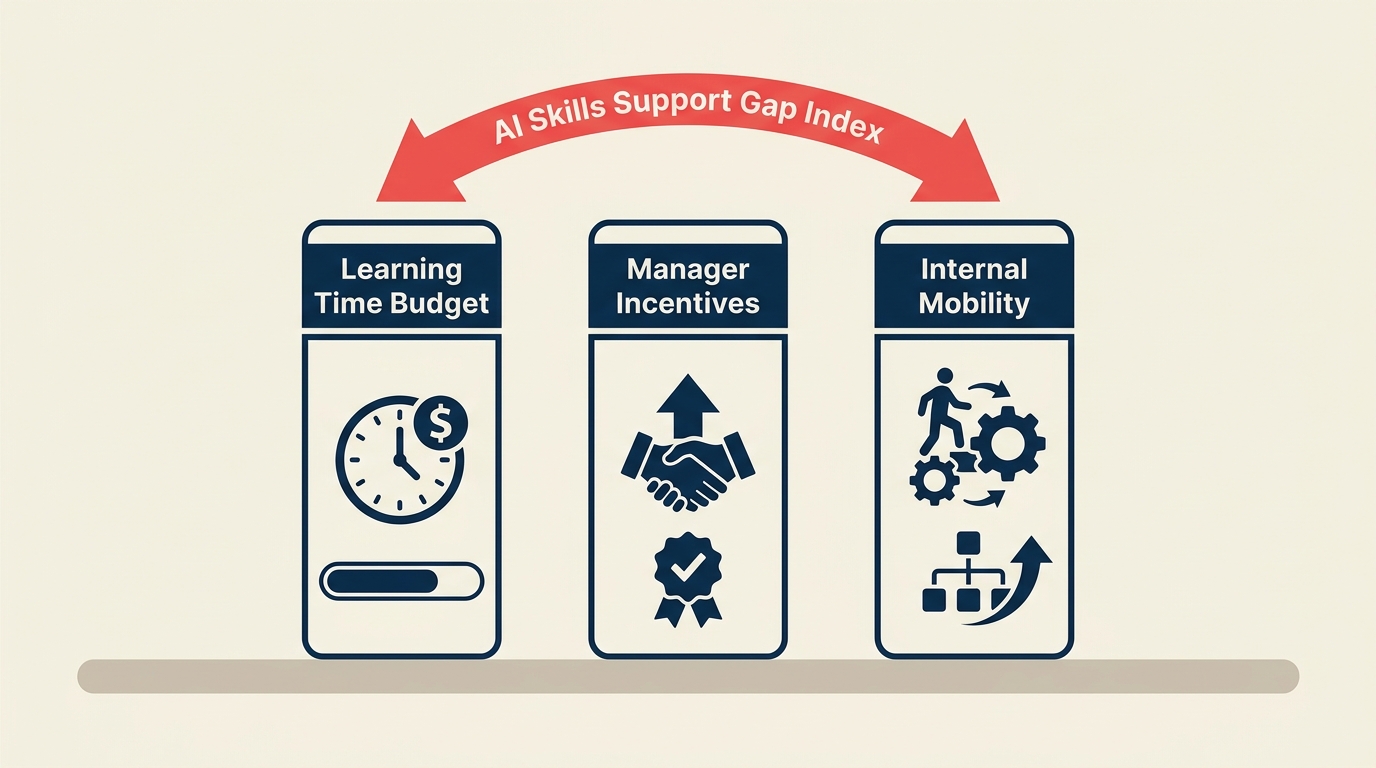
Pertimbangkan apa yang bisa disebut sebagai AI Skills Support Gap Index: tiga input terukur yang bersama-sama menentukan apakah organisasi Anda benar-benar menutup kesenjangan atau hanya membicarakannya.
| Input | Apa yang Diukur | Sinyal Berhasil |
|---|---|---|
| Anggaran waktu belajar | Jam berbayar per FTE per kuartal yang didedikasikan untuk pengembangan keterampilan AI | 8+ jam/kuartal per knowledge worker |
| Keselarasan insentif manajer | % manajer dengan peningkatan keterampilan AI tim dalam kriteria kinerja mereka | 50%+ dari people manager |
| Tingkat mobilitas internal | % karyawan yang berpindah ke peran terkait AI dalam 12 bulan setelah menyelesaikan pelatihan AI | Tingkat konversi 15%+ |
Sekarang jalankan dua skenario:
Skenario A (tanpa dukungan terstruktur): Karyawan berprestasi tinggi meningkatkan keterampilan secara mandiri selama enam bulan. Rekruter menawarkan kenaikan gaji 20-30% di perusahaan dengan program pengembangan AI yang sudah mapan. Karyawan menerima. Biaya penggantian mencapai 50-200% gaji tahunan untuk knowledge worker. Anda juga kehilangan enam bulan pengetahuan institusional yang terus berkembang.
Skenario B (program dukungan yang bernama): Karyawan yang sama meningkatkan keterampilan, namun dengan waktu berbayar, akses sandbox, manajer yang insentifnya mencakup pengembangan mereka, dan jalur mobilitas internal yang jelas. Tawaran datang. Karyawan mempertimbangkan jalur internal. Sebagian persentase dari mereka bertahan.
Anda tidak membutuhkan tingkat retensi yang sempurna untuk menang dalam perhitungan ini. Anda hanya perlu menggerakkan angkanya. Peningkatan retensi sebesar 10-15 persentase poin di antara karyawan yang sedang meningkatkan keterampilan sudah menutup biaya program terstruktur berkali-kali lipat, mengingat premi gaji talenta AI saat ini.
Premi gaji kemahiran AI mencapai 27% pada tahun 2026. Itulah dasar yang kini Anda hadapi ketika seorang rekruter menghubungi karyawan Anda yang paling berkemampuan AI.
Daftar Tindakan CHRO untuk 90 Hari ke Depan
Data sudah cukup jelas. Berikut langkah yang perlu diambil sebelum Q3:
Tetapkan anggaran waktu belajar. Delapan jam per kuartal per knowledge worker adalah dasar yang wajar. Tuliskan secara resmi, komunikasikan kepada manajer, dan pantau pemanfaatannya.
Publikasikan taksonomi keterampilan AI internal. Cantumkan keterampilan spesifik yang dihargai organisasi Anda: prompt engineering, arsitektur RAG, manajemen proyek AI, strategi bisnis AI, pengawasan anotasi data. Orang tidak bisa meningkatkan keterampilan menuju target yang tidak bisa mereka lihat.
Bangun jalur mobilitas internal ke peran-peran terkait AI. Sebelum posting eksternal untuk AI engineer atau rekrutan strategi AI berikutnya, jalankan proses mobilitas internal yang terstruktur. Meskipun Anda akhirnya merekrut dari luar, prosesnya memberi sinyal kepada karyawan yang sedang meningkatkan keterampilan bahwa ada jalur di sini.
Ukur kesenjangan dukungan secara langsung. Tambahkan dua pertanyaan ke survei keterlibatan berikutnya: "Apakah perusahaan ini memberi Anda waktu yang cukup untuk mengembangkan keterampilan AI?" dan "Apakah Anda memiliki akses ke alat yang Anda butuhkan?" Bandingkan dengan 47% orang secara nasional yang merasa tidak didukung.
Kaitkan insentif manajer dengan peningkatan keterampilan tim. Tambahkan metrik pengembangan keterampilan AI ke dalam tinjauan kinerja manajer. Tidak perlu menjadi metrik utama, namun keberadaannya memberi sinyal bahwa kemahiran AI tim adalah tanggung jawab manajemen.
Ciptakan jalur promosi berbasis keterampilan. Definisikan seperti apa tangga karier kemahiran AI di dalam organisasi Anda. Tuliskan, publikasikan secara internal, dan biarkan ia menarik orang untuk maju.
FAQ
T: Apakah permintaan AI engineer adalah gelembung atau tren yang tahan lama?
Pertumbuhan 144% YoY biasanya akan menimbulkan kekhawatiran tentang gelembung. Namun data LinkedIn menunjukkan permintaan yang menyebar ke fungsi-fungsi non-teknis seperti keuangan, pemasaran, dan hukum. Ketika persyaratan keterampilan AI muncul dalam lowongan pekerjaan yang tidak ada kaitannya dengan pengembangan perangkat lunak, itu adalah integrasi struktural, bukan rekrutmen spekulatif.
T: Bagaimana cara mengukur kesenjangan dukungan di tim sendiri?
Mulailah dengan dua pertanyaan survei langsung: "Apakah perusahaan ini memberi Anda waktu yang cukup untuk mengembangkan keterampilan AI?" dan "Apakah Anda memiliki akses ke alat AI yang Anda butuhkan?" Kemudian tambahkan sinyal perilaku: persentase karyawan yang menyelesaikan pelatihan AI dalam enam bulan terakhir, dan tingkat mobilitas internal ke peran terkait AI. Ketiga input tersebut memberikan versi kerja dari AI Skills Support Gap Index.
T: Tolok ukur apa yang harus digunakan untuk anggaran waktu belajar?
Delapan jam per kuartal per knowledge worker adalah minimum yang wajar. Rata-rata pengeluaran peningkatan keterampilan AI per karyawan sebesar $1.800 yang dilaporkan dalam tolok ukur korporat 2026 diterjemahkan menjadi sekitar 15-20 jam pelatihan terstruktur per tahun dengan tarif vendor yang umum. Mulailah dari sana dan sesuaikan berdasarkan kompleksitas peran.
Pelajari Lebih Lanjut
- 98% Eksekutif Mendesain Ulang Pekerjaan di Sekitar AI. Hanya Separuh yang Siap - Konteks kesenjangan kesiapan Mercer 2026 untuk CHRO.
- AI Merusak Posisi Awal Karier - Mengapa risiko jalur bakat semakin besar jika peningkatan keterampilan internal terhenti.
- Bumerang PHK AI - Apa yang terjadi ketika pemutusan hubungan kerja terlalu dalam dan biaya perekrutan ulang melebihi biaya retensi.
- Data LinkedIn Menunjukkan Permintaan Keterampilan AI Melonjak 142% dalam 12 Bulan - Liputan sisi permintaan sebelumnya yang ditindaklanjuti artikel ini.
Langkah berikutnya bukan program pelatihan. Melainkan audit. Ambil tiga input dari AI Skills Support Gap Index, cari tahu di mana posisi organisasi Anda sebenarnya, dan kemudian putuskan seberapa berharga kesenjangan itu untuk ditutup sebelum pesaing Anda menutupnya untuk Anda.

On this page
- Apa yang Sebenarnya Ditunjukkan Data LinkedIn 2026
- Kesenjangan Dukungan yang Tidak Dibicarakan Siapa Pun
- Apa Arti "Dukungan" di Tahun 2026
- Matematika Risiko Retensi
- Daftar Tindakan CHRO untuk 90 Hari ke Depan
- FAQ
- T: Apakah permintaan AI engineer adalah gelembung atau tren yang tahan lama?
- T: Bagaimana cara mengukur kesenjangan dukungan di tim sendiri?
- T: Tolok ukur apa yang harus digunakan untuk anggaran waktu belajar?
- Pelajari Lebih Lanjut