Bahasa Indonesia
Assertiveness: Cara Bersikap Asertif di Tempat Kerja (Dengan Contoh)
Turn this article into takeaways for your work.


Each assistant summarizes the article only for you and suggests best practices for your work.
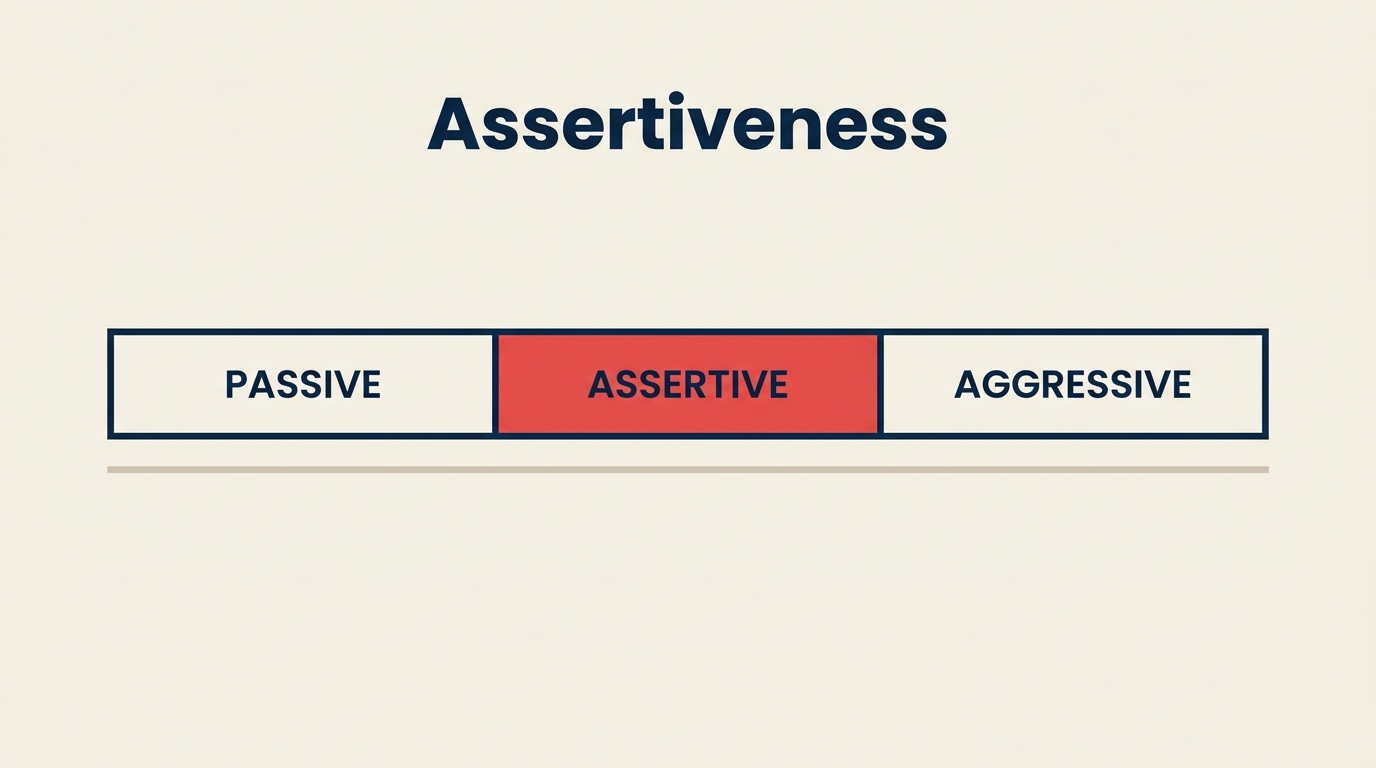
Assertiveness adalah kemampuan untuk mengekspresikan kebutuhan, pendapat, dan batasan Anda dengan jelas dan langsung sambil tetap menghormati perspektif orang lain. Ini adalah titik tengah komunikasi antara mengalah sepenuhnya dan memaksakan kehendak, dan merupakan salah satu keterampilan interpersonal yang paling dibutuhkan di setiap tempat kerja.
Apa Itu Assertiveness?
Assertiveness adalah gaya komunikasi dan keterampilan perilaku yang memungkinkan Anda membela diri sendiri secara jujur dan langsung tanpa harus bersikap agresif atau mundur ke dalam kepasifan. Orang yang asertif mengatakan apa yang mereka maksud, meminta apa yang mereka butuhkan, dan mempertahankan posisi mereka di bawah tekanan sambil tetap terbuka terhadap dialog yang tulus.
Para psikolog menempatkan assertiveness sebagai komponen inti kematangan emosional. Ini bukan sifat kepribadian yang Anda miliki atau tidak. Ini adalah keterampilan yang bisa dipelajari, dan sebagian besar orang dapat meningkatkannya dengan latihan yang disengaja.
Key Facts
- Riset dari American Psychological Association menunjukkan bahwa pelatihan assertiveness secara konsisten mengurangi kecemasan dan meningkatkan rasa percaya diri pada populasi klinis dan tempat kerja (APA, 2022).
- Studi Workplace Trends global oleh McKinsey menemukan bahwa karyawan yang berkomunikasi secara asertif 1,4 kali lebih mungkin dinilai sebagai high performer oleh manajer mereka (McKinsey, 2023).
- Menurut laporan State of the Global Workplace dari Gallup, hanya 23% karyawan yang merasa terlibat di tempat kerja, dan komunikasi yang buruk termasuk penghindaran konflik secara pasif disebutkan sebagai pendorong utama ketidakterlibatan (Gallup, 2023).
Asertif vs Agresif vs Pasif vs Pasif-Agresif
Sebagian besar orang secara otomatis menggunakan salah satu dari empat gaya komunikasi, sering kali tanpa menyadarinya. Memahami perbedaannya adalah langkah pertama untuk mengubah kebiasaan Anda.
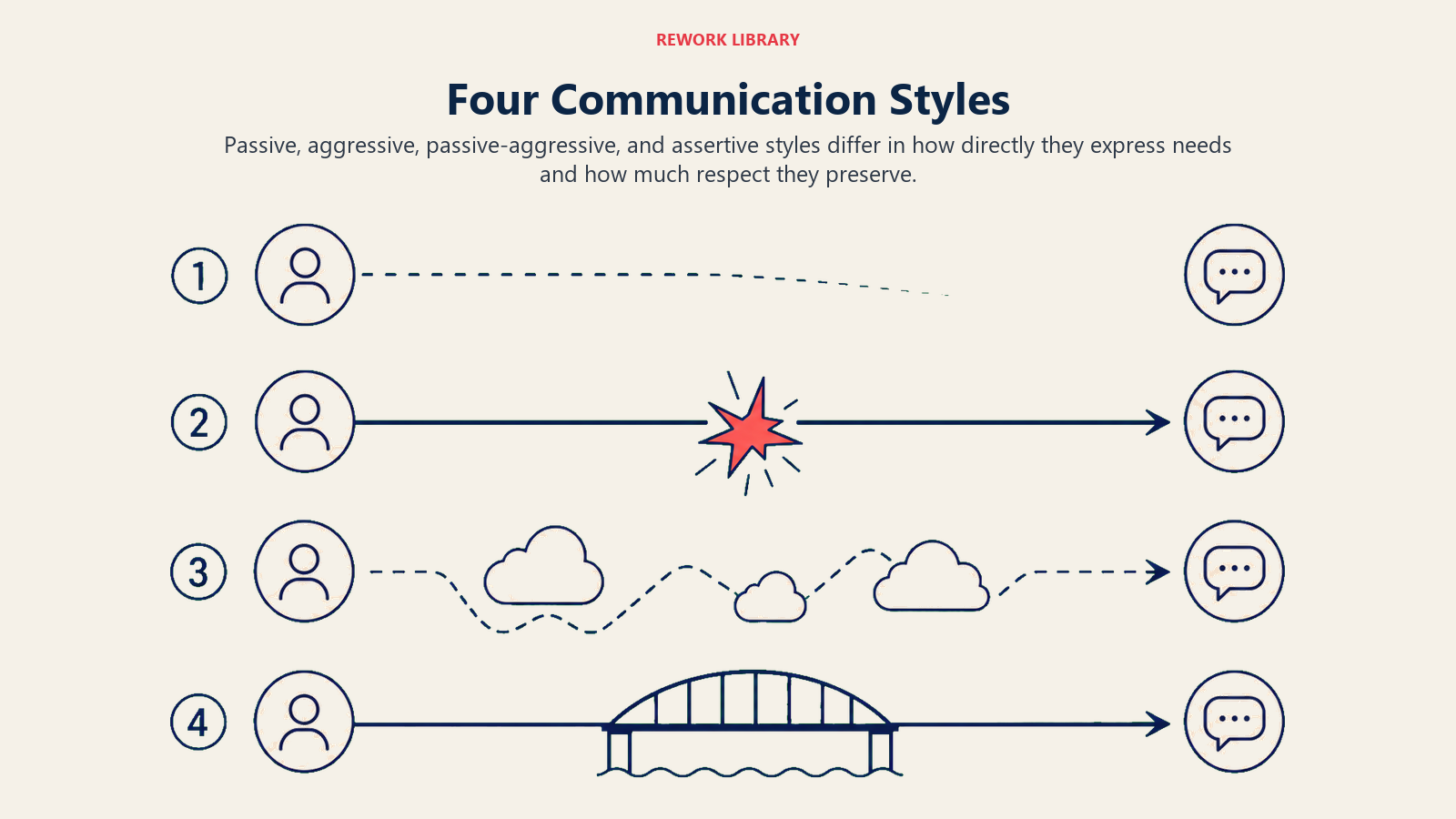
| Gaya | Perilaku utama | Mempertimbangkan perasaan orang lain? | Contoh ungkapan |
|---|---|---|---|
| Pasif | Menghindari konflik; mengalah pada orang lain; menahan pendapat | Terlalu iya | "Apa pun yang Anda rasa baik." |
| Asertif | Menyatakan kebutuhan dan batasan dengan jelas; menghormati orang lain | Seimbang | "Saya ingin mempertanyakan tenggat waktu itu. Ini alasannya." |
| Agresif | Mendorong agenda sendiri tanpa mempedulikan orang lain | Tidak | "Itu ide yang buruk. Kita lakukan dengan cara saya." |
| Pasif-Agresif | Menolak secara tidak langsung; setuju lalu merusak | Dengan rasa kesal | "Tentu, tidak masalah." (lalu tetap melewatkan tenggat waktu) |
Perilaku pasif-agresif adalah gaya yang paling merusak dalam lingkungan tim karena konflik tidak pernah diangkat ke permukaan. Ia hanya membusuk. Agresi merusak kepercayaan dengan cepat. Kepasifan berarti ide dan batasan Anda diabaikan. Assertiveness adalah satu-satunya gaya yang membangun kredibilitas jangka panjang.
Mengapa Assertiveness Penting di Tempat Kerja
Assertiveness memiliki dampak langsung dan terukur pada karier Anda dan kinerja tim.
Anda mendapat pengakuan atas ide-ide Anda. Jika Anda tidak berbicara dalam rapat, orang lain yang akan melakukannya. Komunikator yang asertif lebih mudah dilihat sebagai pemimpin karena mereka mengambil posisi dan menjelaskan alasannya.
Beban kerja Anda tetap terkendali. Orang yang tidak bisa berkata tidak akhirnya menanggung pekerjaan orang lain. Assertiveness memungkinkan Anda menetapkan ruang lingkup yang realistis dan melindungi fokus Anda. Itu bukan keegoisan. Itu keberlanjutan profesional.
Konflik diselesaikan, bukan ditumpuk. Penghindaran pasif mengubah ketidaksetujuan kecil menjadi dendam yang berkepanjangan. Orang yang asertif mengangkat masalah lebih awal, saat masalah masih bisa diselesaikan. Ini terhubung langsung dengan conflict resolution sebagai kompetensi yang lebih luas.
Hubungan Anda menjadi lebih kuat, bukan lebih lemah. Berlawanan dengan intuisi namun benar: orang lebih mempercayai rekan yang asertif karena mereka selalu tahu di mana posisi mereka berdiri. Tidak ada tebak-tebakan, tidak ada kejutan, tidak ada ketegangan pasif-agresif yang tersembunyi.
Anda menetapkan standar. Manajer yang berkomunikasi secara asertif menciptakan tim di mana orang berani berbicara, mengangkat masalah, dan memberikan feedback yang nyata. Itu adalah keuntungan keamanan psikologis. Ini memperkuat empathy at work karena assertiveness tanpa empati berubah menjadi agresi.
Teknik Assertiveness
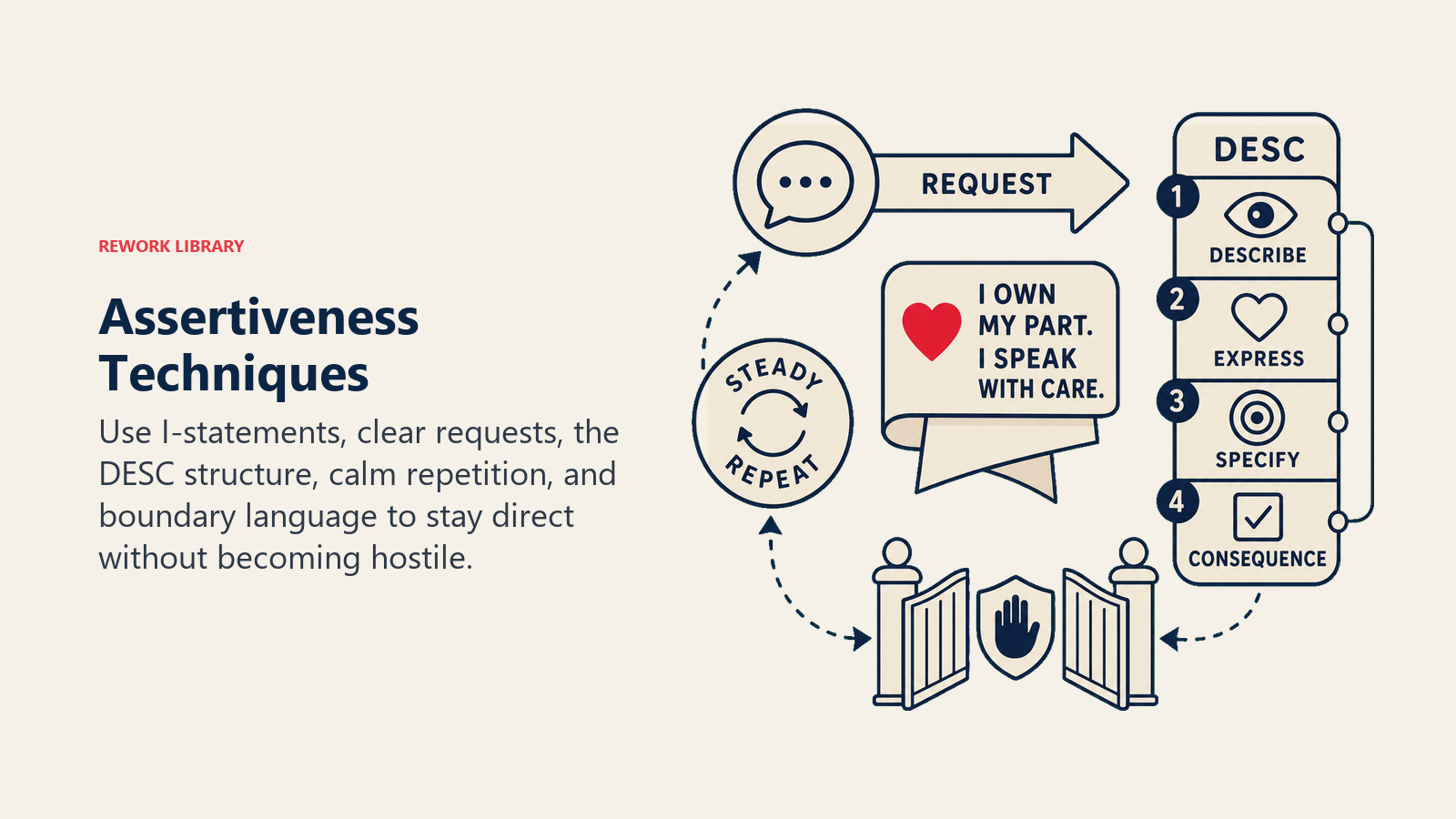
Ini adalah alat-alat praktis yang membedakan komunikasi asertif dari alternatifnya.
Pernyataan "Saya"
Beralih dari tuduhan ke kepemilikan. Alih-alih "Anda selalu memotong pembicaraan saya," katakan "Saya merasa sulit menyelesaikan pemikiran saya ketika dipotong di tengah jalan." Anda menggambarkan pengalaman Anda daripada menyerang perilaku, yang membuat lawan bicara kurang defensif.
Formula: "Saya merasa [emosi] ketika [situasi] karena [dampak]. Saya ingin [permintaan]."
Skrip DESC
DESC adalah struktur empat bagian yang dikembangkan dalam terapi perilaku dan banyak digunakan dalam workplace coaching:
- D = Describe (Jelaskan perilaku spesifik): "Ketika laporan tiba setelah pukul 12 siang pada hari Jumat..."
- E = Express (Ungkapkan dampaknya terhadap Anda): "...saya tidak punya waktu untuk meninjaunya sebelum panggilan klien"
- S = Specify (Tentukan apa yang Anda inginkan): "Saya ingin kita menyepakati tenggat waktu hari Kamis pukul 12 siang"
- C = Consequences (Konsekuensi, positif): "Itu memberi saya waktu tinjauan yang layak" (atau negatif jika diperlukan): "Jika tidak, saya harus menyerahkannya tanpa tinjauan"
DESC berhasil karena tetap bersifat perilaku dan konkret. Tidak ada penilaian karakter, tidak ada muatan emosional, hanya fakta yang dapat diamati dan permintaan yang jelas.
Broken Record
Ketika seseorang mendorong balik dengan alasan atau pengalihan, jangan terjebak dalam detail. Ulangi poin utama Anda dengan tenang. Bukan seperti robot. Tapi dengan tegas. "Saya memahami waktunya sulit. Saya tetap memerlukan laporan itu pada Kamis pukul 12 siang." Pengulangan memberi sinyal bahwa Anda tidak akan melepaskannya.
Fogging
Fogging berguna ketika seseorang mengkritik Anda. Alih-alih membela diri atau menyerah, Anda sebagian menyetujui apa yang benar tanpa mengakui keseluruhan argumen. "Anda benar bahwa saya seharusnya memberi tahu tentang keterlambatan lebih awal. Saya tetap berpikir keputusan desain utama sudah benar."
Ini melumpuhkan serangan. Setuju dengan butir yang benar, pertahankan posisi utama Anda.
Mengatakan Tidak Tanpa Meminta Maaf
Kebanyakan orang terlalu banyak meminta maaf saat menolak. "Saya sungguh minta maaf, saya benar-benar ingin bisa membantu, tapi mungkin jika..." Setiap kualifikasi melemahkan penolakan. Penolakan asertif yang bersih terdengar seperti: "Saya tidak bisa mengambil ini pada sprint ini. Saya sudah berkomitmen pada X dan Y." Tawarkan alternatif jika Anda benar-benar memilikinya. Jangan menciptakan alternatif hanya untuk melembutkan penolakan.
Keselarasan Bahasa Tubuh
Assertiveness verbal menjadi tidak efektif jika bahasa tubuh Anda bertentangan dengannya. Postur asertif berarti: tegak, kaki menapak, kontak mata stabil (tidak menatap lekat), suara tenang dan terukur. Menyilangkan tangan, menunduk, atau nada suara yang melemah di akhir kalimat memberi sinyal ketidakpastian bahkan ketika kata-kata Anda tidak demikian.
Cara Menjadi Lebih Asertif
Langkah 1: Audit gaya default Anda
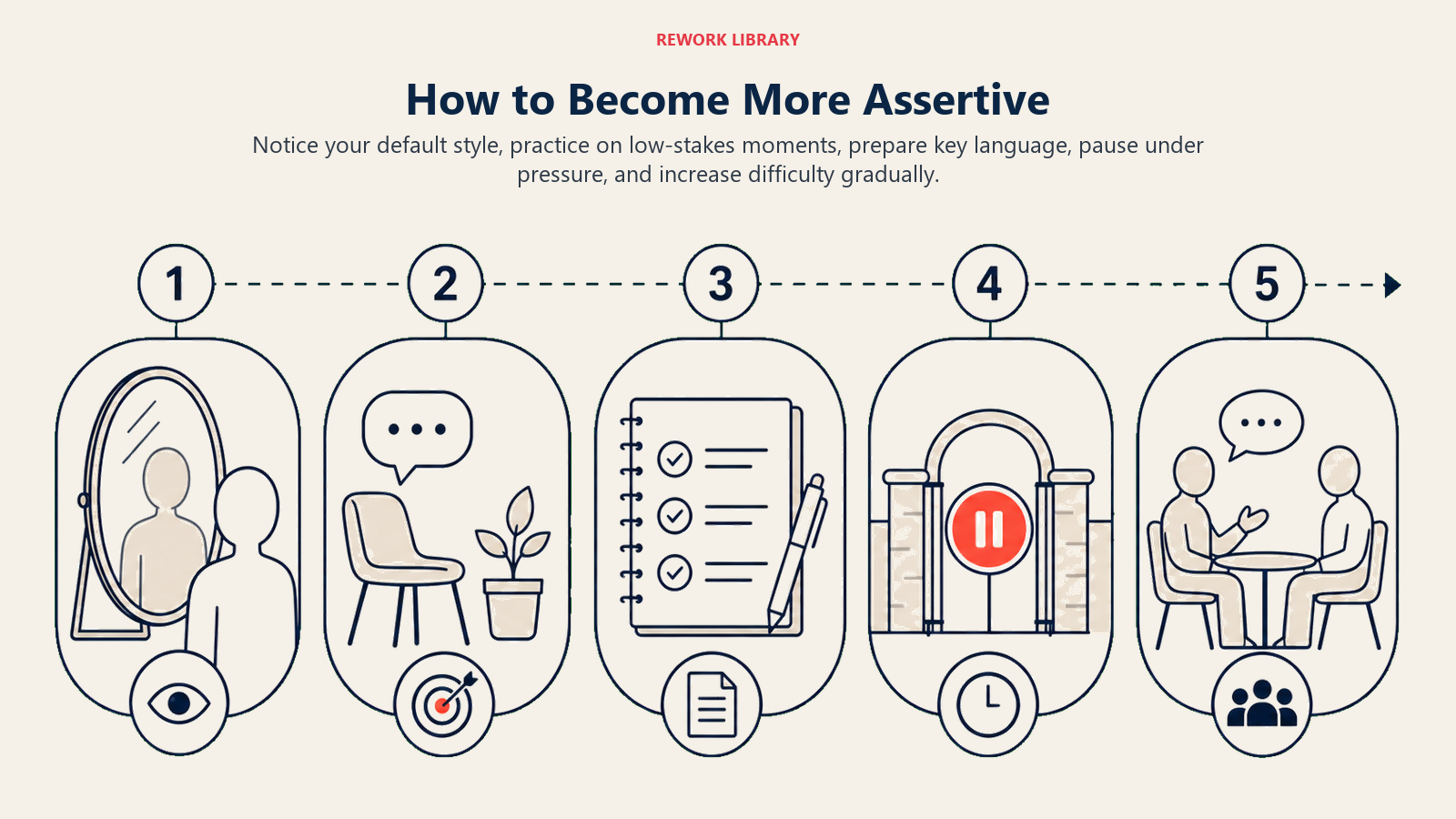
Sebelum Anda bisa berubah, Anda perlu mengetahui di mana posisi Anda. Selama satu minggu, catat respons Anda dalam momen-momen yang menantang. Apakah Anda setuju ketika ingin berkata tidak? Apakah Anda meninggikan suara ketika merasa tidak didengar? Pola-pola tersebut mengungkapkan gaya mana yang menjadi kebiasaan Anda.
Langkah 2: Mulailah dengan situasi yang tidak terlalu berisiko
Jangan buka dengan percakapan paling sulit Anda. Latih assertiveness pada momen-momen kecil: meminta barista mengulang pesanan yang salah, mengoreksi rekan kerja atas kesalahan fakta kecil, atau menyuarakan preferensi dalam keputusan makan siang tim. Kemenangan kecil membangun kemampuan ini.
Langkah 3: Siapkan frasa kunci sebelumnya
Anda tidak harus berimprovisasi. Sebelum rapat yang sulit, tuliskan poin utama yang ingin Anda sampaikan dan satu atau dua respons terhadap kemungkinan penolakan. Memiliki bahasa yang siap menghilangkan kepanikan yang mendorong reaksi pasif atau agresif. Ini sangat berguna saat mempersiapkan situasi di mana Anda membutuhkan influencing skills yang lebih kuat.
Langkah 4: Perlambat sebelum merespons
Assertiveness dan reaktivitas tidak cocok bersama. Ketika percakapan menjadi tegang, jeda sebelum Anda merespons. Tarik napas. Celah itu memisahkan insting dari pilihan. Ini juga merupakan latihan yang sama yang mendasari active listening: dengar pesan penuh sebelum Anda membalas.
Langkah 5: Evaluasi setelah momen asertif
Setelah percakapan di mana Anda mempraktikkan assertiveness, tanyakan pada diri sendiri: Apakah saya mengatakan apa yang saya maksud? Apakah saya tetap tenang? Apakah saya menghormati orang lain? Apa yang akan saya lakukan berbeda? Refleksi yang disengaja mempercepat keterampilan lebih cepat daripada pengulangan semata.
Langkah 6: Dapatkan feedback dari rekan yang dipercaya
Minta seseorang yang mengamati Anda dalam lingkungan profesional untuk jujur tentang kesan yang Anda berikan. Kadang-kadang kita pikir kita bersikap asertif sementara orang lain mengalami kita sebagai pasif atau agresif. Feedback eksternal mengkalibrasi persepsi diri Anda. Ini terhubung langsung dengan pengembangan interpersonal skills yang lebih luas.
Contoh Assertiveness (Skrip)
Berikut tampilan komunikasi asertif dibandingkan alternatif pasif atau agresif dalam skenario kerja yang umum.
| Situasi | Versi pasif | Versi agresif | Versi asertif |
|---|---|---|---|
| Diminta mengambil pekerjaan tambahan saat kapasitas penuh | "Baik, saya akan mencari cara untuk menyesuaikannya." | "Itu bukan tugas saya. Cari solusinya sendiri." | "Kapasitas saya sudah penuh dengan X dan Y. Saya bisa mengambil ini jika kita menunda yang lain, atau saya bisa menyerahkannya ke seseorang yang tersedia." |
| Tidak setuju dalam rapat | Diam atau berkata "Itu menarik..." | "Itu sepenuhnya salah." | "Saya melihatnya berbeda. Inilah yang ditunjukkan data dari kuartal lalu kami..." |
| Rekan kerja mengklaim ide Anda | Tidak berkata apa-apa | Menegurnya di depan umum | "Saya ingin menambahkan konteks untuk itu. Saya mengusulkan pendekatan ini Selasa lalu dalam dokumen perencanaan kami, jadi senang melihatnya mendapat perhatian." |
| Klien mendorong balik tenggat waktu Anda | "Kami akan mencoba agar berhasil dengan cara tertentu." | "Tenggat waktu itu tidak mungkin. Terima atau tinggalkan." | "Tenggat waktu itu tidak memberi kami kualitas yang Anda harapkan. Inilah yang secara realistis dapat kami kirimkan pada tanggal tersebut, dan inilah tampilan tenggat waktu lingkup penuh yang realistis." |
| Manajer memberikan feedback yang tidak jelas | Mengangguk dan pergi dengan bingung | "Feedback Anda tidak masuk akal." | "Saya ingin memastikan saya memahami apa yang Anda cari. Bisakah Anda menunjukkan contoh seperti apa 'lebih strategis' dalam konteks ini?" |

On this page
- Apa Itu Assertiveness?
- Asertif vs Agresif vs Pasif vs Pasif-Agresif
- Mengapa Assertiveness Penting di Tempat Kerja
- Teknik Assertiveness
- Pernyataan "Saya"
- Skrip DESC
- Broken Record
- Fogging
- Mengatakan Tidak Tanpa Meminta Maaf
- Keselarasan Bahasa Tubuh
- Cara Menjadi Lebih Asertif
- Langkah 1: Audit gaya default Anda
- Langkah 2: Mulailah dengan situasi yang tidak terlalu berisiko
- Langkah 3: Siapkan frasa kunci sebelumnya
- Langkah 4: Perlambat sebelum merespons
- Langkah 5: Evaluasi setelah momen asertif
- Langkah 6: Dapatkan feedback dari rekan yang dipercaya
- Contoh Assertiveness (Skrip)