Bahasa Indonesia
PM Ride-Along pada Panggilan Pelanggan: Cara Membuat Eksposur Langsung Memberikan Dampak
Turn this article into takeaways for your work.


Each assistant summarizes the article only for you and suggests best practices for your work.
PM yang telah membaca 200 tiket dukungan memahami area permukaan masalah pelanggan. Mereka tahu kategori, frekuensi, distribusi akun. Mereka memiliki data.
PM yang telah duduk dalam 10 panggilan pelanggan memahami sesuatu yang tidak terkandung dalam data: jeda sebelum pelanggan berkata "tidak apa-apa," solusi alternatif yang mereka bangun sendiri dan diceritakan hampir dengan bangga, fitur yang tidak mereka minta karena mereka sudah menyerah berharap fitur itu akan datang.
Keduanya penting. Tetapi hanya satu yang merupakan kalibrasi. Tiket dukungan memberi tahu Anda apa yang dilaporkan pelanggan. Panggilan pelanggan memberi tahu Anda apa yang dirasakan pelanggan. Dan perasaan itu sering kali merupakan indikator awal yang tidak muncul dalam laporan sampai akun sudah berwarna kuning.
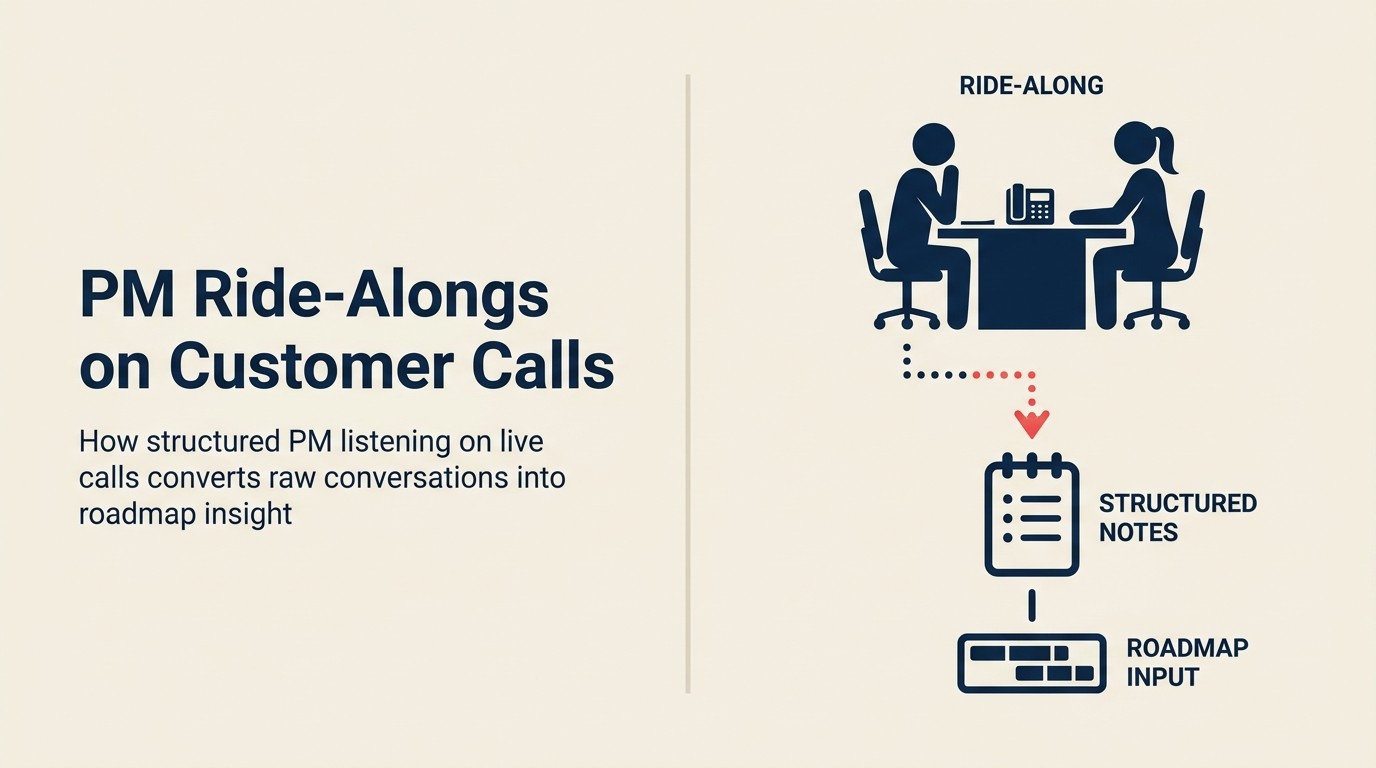
Ride-along adalah mekanisme yang memberi PM akses ke realitas pelanggan tanpa menggantikan peran CSM dalam hubungan tersebut. Tetapi ride-along hanya menghasilkan kalibrasi ketika terstruktur. Ride-along yang tidak terstruktur menghasilkan kesan. Yang terstruktur menghasilkan sinyal product. Riset Nielsen Norman Group tentang tanggung jawab product manager mencatat bahwa melibatkan PM dalam sesi observasi langsung (bukan menyaring semuanya melalui ringkasan tertulis) membantu mereka mempertahankan detail pengguna yang paling mempengaruhi keputusan penentuan prioritas.
Kerangka Ride-Along Pra-Panggilan/Saat-Panggilan/Pasca-Panggilan adalah model operasional tiga fase yang mengubah panggilan pelanggan dari agenda kalender PM menjadi observasi product yang terdokumentasi. Pra-Panggilan: briefing 10 menit yang mencakup konteks akun, agenda panggilan, titik-titik sensitif yang diketahui, dan apa yang tidak boleh dikatakan PM. Saat-Panggilan: postur mendengarkan-saja yang terstruktur menggunakan enam kategori observasi, dengan pencatatan secara real-time. Pasca-Panggilan: debrief 15 menit di hari yang sama di mana observasi PM dikoreksi oleh konteks akun CSM dan dicatat secara formal ke dalam taksonomi umpan balik bersama. Hilangkan salah satu fase dan panggilan tersebut menghasilkan anekdot, bukan sinyal.
Mengapa Sebagian Besar Ride-Along Tidak Berhasil
Riset McKinsey tentang apa yang membedakan product manager terbaik menemukan bahwa PM elit tidak hanya membaca umpan balik pelanggan. Mereka mengamati pelanggan di habitat alami mereka, mengunjungi mereka untuk menemukan alur kerja dan titik hambatan yang tidak pernah muncul dalam survei terstruktur. Pendekatan "follow me home" dari tim product Intuit adalah tolok ukur yang mereka kutip. Ride-along dalam B2B SaaS adalah padanan operasional yang paling dekat.
Tiga mode kegagalan yang membunuh program ride-along sebelum menghasilkan nilai.
Masalah pengamat diam. PM bergabung dalam panggilan pelanggan tanpa briefing, tanpa kerangka mendengarkan, dan tanpa struktur debrief. Mereka menyaksikan panggilan. Mereka pergi dengan kesan ("pelanggan tampaknya frustrasi dengan ekspor," "mereka menyebutkan sesuatu tentang integrasi") yang tidak dicatat di mana pun yang berguna. Dua minggu kemudian, kesan-kesan itu sudah hilang. PM menghadiri panggilan. Tidak ada yang masuk ke sistem product.
Kesan bukan sinyal product. Kesan adalah anekdot tanpa asal-usul. PM yang menghadiri 12 panggilan sebagai pengamat diam memiliki 12 anekdot. PM yang menghadiri 12 panggilan dengan panduan mendengarkan terstruktur dan debrief di hari yang sama memiliki 12 observasi terdokumentasi dalam taksonomi umpan balik bersama.
Masalah gangguan. CSM tahu PM ada dalam panggilan. Mereka memperketat agenda, menghindari memunculkan topik sulit yang biasanya mereka gali, dan tetap dekat dengan skrip. Pelanggan merasakan adanya penonton dan memberikan versi yang sedikit lebih formal dari umpan balik biasa mereka. Panggilan menjadi 15% kurang jujur dari yang seharusnya tanpa pengamat tersebut.
Ini tidak membuat ride-along tidak berguna. Tetapi berarti briefing CSM harus mencakup izin eksplisit untuk menjalankan panggilan secara normal, dan PM harus memiliki cukup konteks untuk mengenali ketika pelanggan sedang bersikap sopan daripada jujur.
Masalah satu kali. PM melakukan satu ride-along selama minggu orientasi mereka. Itu berharga. Mereka berniat melakukan lebih banyak. Tiga bulan kemudian, itu tidak terjadi karena tidak ada struktur kalender yang memaksanya. Wawasan dari panggilan tunggal itu sudah memudar. Sementara itu, PM membuat keputusan peta jalan produk berdasarkan data yang tiga bulan lebih tua dari realitas pelanggan terbaru mereka.
Solusinya bersifat struktural: ride-along memerlukan frekuensi minimum, pemilik penjadwalan, dan format yang cukup konsisten untuk membuat investasi tersebut sepadan.
Fakta Kunci: Mengapa Eksposur PM ke Pelanggan Penting
- PM yang berpartisipasi dalam panggilan pelanggan langsung setidaknya dua kali per bulan membuat keputusan product yang 37% lebih selaras dengan alur kerja pelanggan aktual dibandingkan PM yang hanya mengandalkan ringkasan umpan balik tertulis, menurut riset Nielsen Norman Group tentang eksposur tim product ke pelanggan.
- 63% product manager melaporkan bahwa model mental mereka tentang alur kerja pelanggan terutama didasarkan pada dokumentasi internal dan tiket dukungan, bukan interaksi pelanggan langsung. Ini berkorelasi dengan tingkat fitur "sudah dikirim tetapi kurang digunakan" yang 45% lebih tinggi, menurut laporan Product Benchmarks Pendo.
- Perusahaan di mana PM bergabung setidaknya 2 panggilan pelanggan per bulan memiliki siklus penemuan fitur 28% lebih pendek dibandingkan perusahaan di mana interaksi PM-pelanggan terutama dimediasi melalui tim CS, menurut riset ProductBoard.
Untuk Apa Ride-Along Sebenarnya
Menetapkan ruang lingkup sebelum menjadwalkan apa pun:
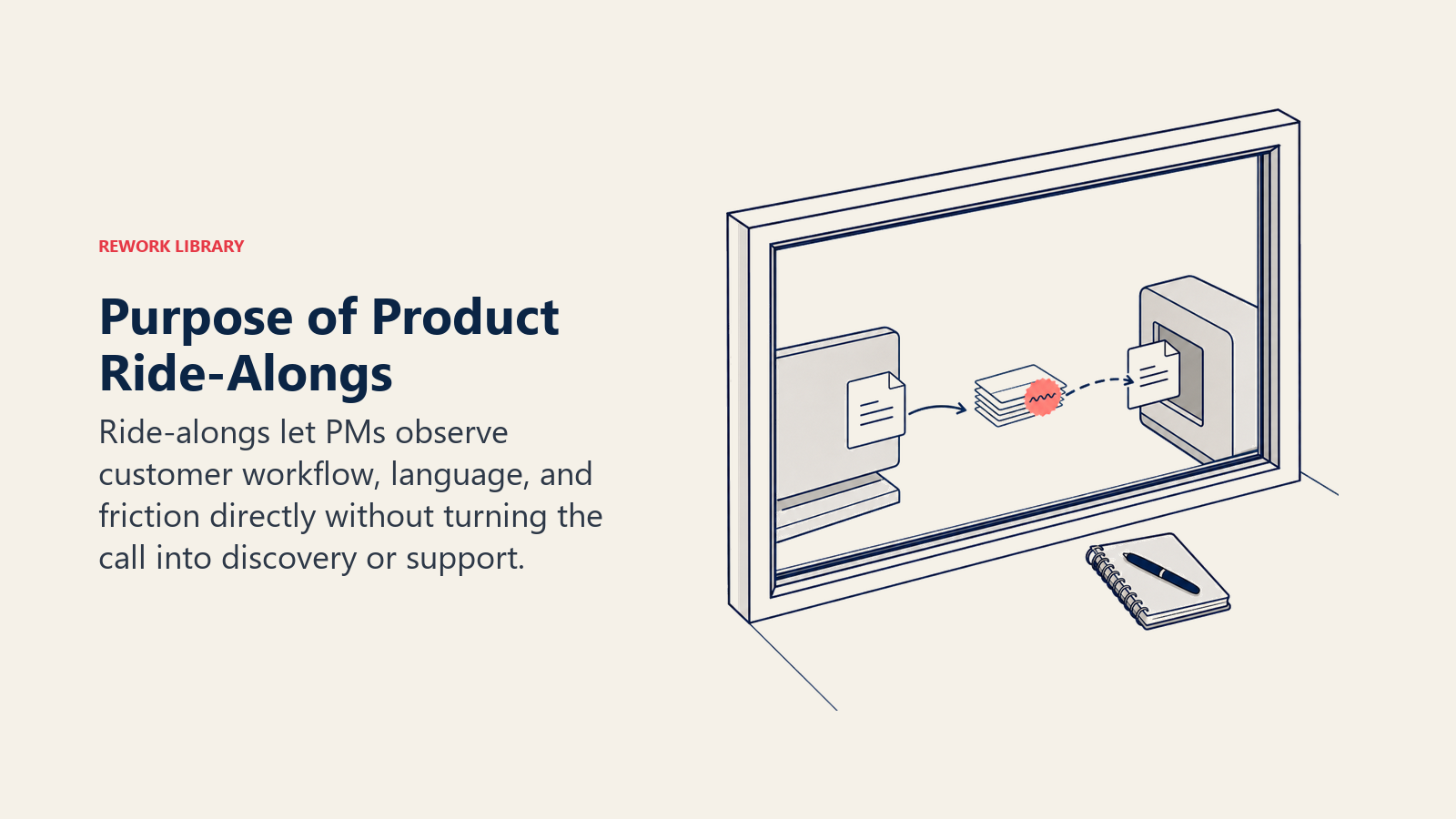
Ride-along kalibrasi: PM baru yang bergabung ke area product membutuhkan pemahaman pelanggan dasar sebelum membuat keputusan peta jalan produk yang signifikan. Ride-along kalibrasi adalah tentang membangun model mental: siapa yang menggunakan product ini, apa yang mereka pedulikan, bagaimana mereka mendeskripsikan masalah mereka? Target: 4-6 panggilan dalam 30 hari pertama, di berbagai segmen pelanggan dan tingkat kesehatan.
Ride-along pengujian hipotesis: PM memiliki pertanyaan spesifik yang bergantung pada peta jalan produk. "Apakah pelanggan meminta otomasi alur kerja karena mereka ingin mengurangi jumlah staf, atau karena mereka ingin mengurangi kesalahan?" Ride-along yang ditargetkan dirancang di sekitar pertanyaan itu. CSM tahu apa yang didengarkan PM. Debrief pasca-panggilan berfokus secara khusus pada apakah hipotesis tersebut divalidasi, dibantah, atau diperumit.
Ride-along intelijen retensi: PM duduk dalam panggilan pembaruan atau akun berisiko bukan untuk memahami preferensi product tetapi untuk mendengar keberatan secara langsung. Apa yang sebenarnya dikatakan pelanggan ketika mereka mempertimbangkan untuk tidak memperbarui? PM mendengar bahasanya, frustrasinya, celah alur kerja yang spesifik, bukan versi yang sudah disanitasi dalam tiket dukungan atau skor kesehatan. Ini adalah jenis ride-along yang paling tidak nyaman dan seringkali yang paling berharga. Pemantauan kesehatan pelanggan membantu CSM memutuskan akun berisiko mana yang cukup stabil untuk menyertakan pengamat PM tanpa panggilan menjadi sesi manajemen krisis daripada sesi mendengarkan.
Untuk apa ride-along BUKAN:
- Pelatihan penjualan (PM dalam panggilan penjualan bukan ride-along)
- Percepatan kesepakatan (partisipasi PM tidak boleh dipasarkan sebagai pengaruh product)
- Demo fitur (PM tidak boleh mempresentasikan dalam ride-along)
Jika panggilan menjadi demo fitur atau deep-dive product, kehadiran PM telah mengubah panggilan dari percakapan pelanggan menjadi percakapan product. Itu berguna dalam konteks yang berbeda. Itu bukan ride-along.
Mendapatkan jenis panggilan yang tepat hanyalah keputusan pertama. Seberapa sering PM ride-along, dan akun mana yang mereka observasi, menentukan apakah program menghasilkan kalibrasi atau hanya rasa kedekatan pelanggan yang palsu.
Model Frekuensi dan Rotasi
Frekuensi minimum yang layak: 2 panggilan pelanggan per PM per bulan. Bukan satu per kuartal. Bulanan. Satu per kuartal tidak cukup sering untuk mempertahankan kalibrasi. Lanskap pelanggan berubah lebih cepat dari yang dapat ditangkap oleh kadence kuartalan.
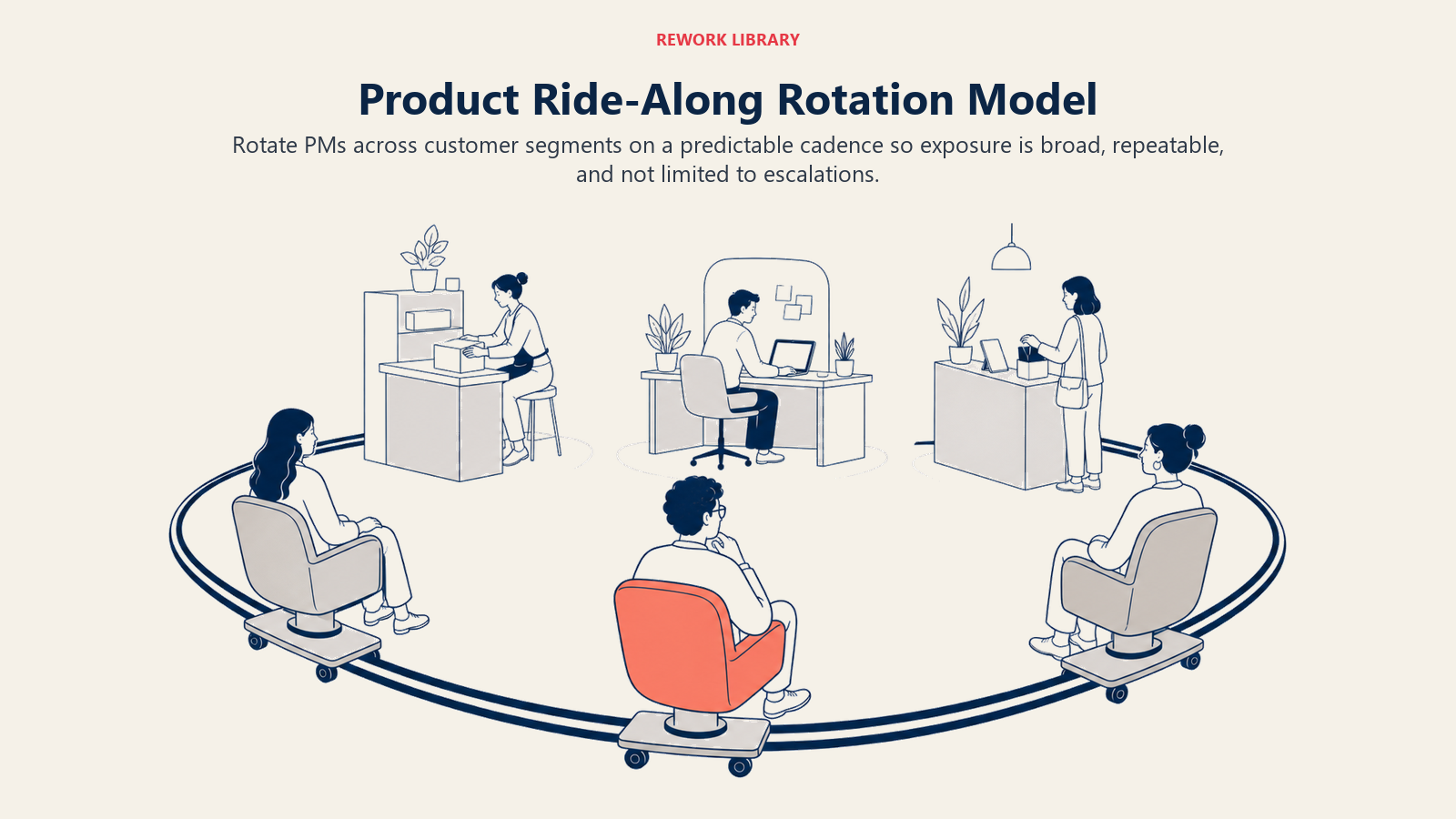
Mengapa 2 per bulan dan tidak lebih: Lebih dari 4 panggilan per bulan mulai menghabiskan waktu PM yang dibutuhkan untuk sintesis dan pekerjaan peta jalan produk. Tujuannya adalah kalibrasi, bukan etnografi. Dua panggilan per bulan, dilakukan secara konsisten dengan debrief terstruktur, menghasilkan sinyal product yang lebih baik daripada enam panggilan per bulan yang dihadiri secara informal.
Kriteria pemilihan akun:
Jangan biarkan PM memilih akun ride-along mereka sendiri. Jika dibiarkan memilih sendiri, PM cenderung tertarik ke pelanggan yang paling bahagia dan pendukung yang paling fasih. Itu adalah sampel yang paling tidak representatif.
CS Ops atau koordinator CSM yang ditunjuk membangun rotasi yang mencakup:
- Campuran skor kesehatan (hijau, kuning, merah; minimal satu yang bukan hijau per kuartal per PM)
- Campuran ukuran akun (SMB, mid-market, enterprise jika berlaku)
- Campuran kasus penggunaan product (bukan semua jenis alur kerja yang sama)
- Campuran masa akun (pelanggan baru dalam orientasi, akun yang sudah mapan, pra-pembaruan)
Logika rotasi: PM harus mencakup jenis akun yang berbeda setiap bulan, tidak mengulangi profil pelanggan yang sama. PM yang hanya ride-along pada akun enterprise yang sehat memiliki pandangan terdistorsi tentang realitas pelanggan yang akan muncul dalam keputusan peta jalan produk mereka.
Siapa yang menjadwalkan: CS Ops atau koordinator CSM yang ditunjuk. Tidak dibiarkan pada permintaan PM ad hoc. Tanggung jawab penjadwalan memerlukan pemilik yang disebutkan namanya, blok kalender bulanan, dan daftar akun yang disetujui untuk kuartal tersebut. Jika tidak dimiliki oleh seseorang, itu tidak akan terjadi.
Briefing Pra-Panggilan: Apa yang Diberitahu CS ke PM Sebelum Panggilan
Briefing adalah percakapan 10 menit atau catatan tertulis, bukan riwayat akun yang lengkap. PM tidak perlu mengetahui seluruh siklus hidup akun sebelum bergabung dalam panggilan. Mereka perlu tahu cukup untuk menginterpretasikan apa yang akan mereka dengar.
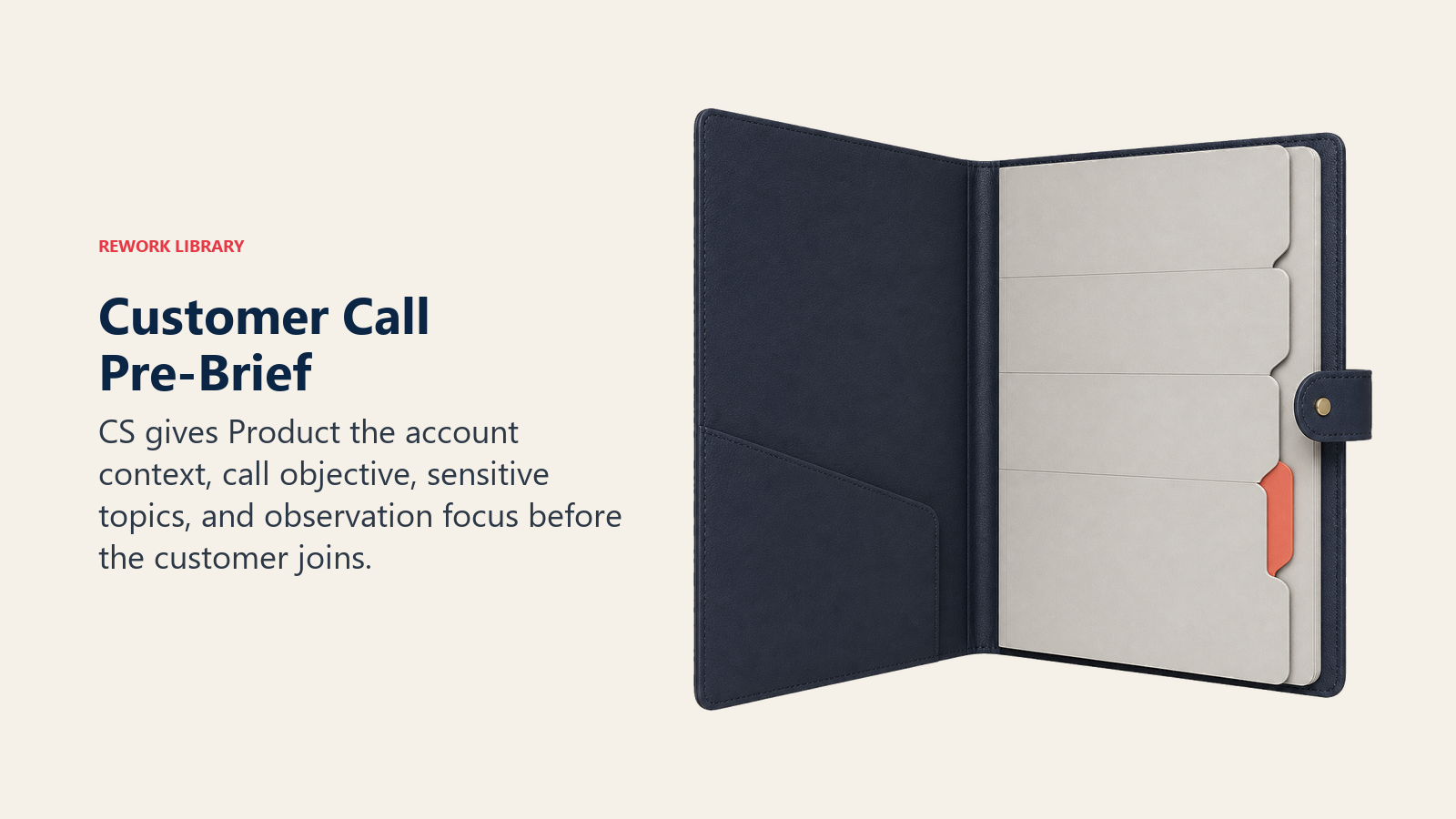
Format briefing pra-panggilan standar:
Konteks akun:
- Nama perusahaan dan industri
- ARR dan tier akun
- Kesehatan akun (Hijau / Kuning / Merah) dan pendorong kesehatan saat ini
- Masa akun (sudah berapa lama mereka menjadi pelanggan)

Agenda panggilan:
- Tentang apa panggilan ini (QBR, percakapan pembaruan, tinjauan fitur, dll.)
- Topik yang diharapkan muncul berdasarkan aktivitas CSM terkini

Titik-titik sensitif yang diketahui:
- Masalah terbuka, keluhan, atau frustrasi yang harus diketahui PM sebelum bergabung
- Topik yang sensitif atau yang direncanakan CSM untuk ditangani dengan hati-hati

Yang TIDAK boleh dilakukan dalam panggilan ini:
- Hal-hal spesifik yang harus dihindari PM untuk dikatakan atau dilakukan
  (mis., "jangan referensikan peta jalan produk, pelanggan ini pernah kecewa
  dengan janji peta jalan sebelumnya")
- Apakah PM harus memperkenalkan diri dan perannya atau tetap di latar belakang
Durasi: 10 menit, tertulis atau lisan. Jika briefing membutuhkan waktu lebih lama, itu menjadi orientasi akun, yang berharga secara terpisah tetapi bukan yang dibutuhkan di sini.
Apa yang terjadi tanpa briefing: PM masuk tanpa konteks. Mereka salah membaca nada pelanggan, mengacaukan kesopanan dengan kepuasan, atau frustrasi tentang masalah eksternal dengan frustrasi tentang product. Mereka membuat komentar yang tanpa disadari membuka kembali topik yang baru saja ditutup dengan hati-hati oleh CSM. CSM menghabiskan minggu berikutnya memperbaiki hubungan tersebut. Ride-along menghasilkan dampak negatif bersih. Praktik pemecahan masalah panggilan CS menguraikan bagaimana CSM berpengalaman menyusun panggilan yang sulit. Membacanya sebelum ride-along retensi memberi PM kosakata untuk memahami apa yang CSM lakukan secara real-time, dan mengapa.
Saat Panggilan: Peran PM dan Aturan Keterlibatan
Postur default: mendengarkan-saja. Kecuali CSM secara eksplisit mengundang PM untuk terlibat, tugas PM adalah mengamati dan mencatat. Tidak untuk memvalidasi, tidak untuk menjelaskan keputusan product, tidak untuk memberikan petunjuk peta jalan produk. Dengarkan.
Ini terasa tidak alami bagi sebagian besar PM. Mereka terbiasa berada dalam percakapan, bukan mengamatinya. Ketidaknyamanan itulah yang dimaksud. Observasi pasif memaksa perhatian pada hal-hal yang tersaring dalam percakapan aktif.
Kapan PM harus berbicara:
- Jika ditanya langsung oleh pelanggan ("Apa pendapat PM tentang ini?")
- Jika ada kesalahpahaman product yang akan merusak kepercayaan jika dibiarkan (pelanggan percaya bahwa sebuah fitur bekerja dengan cara yang akan menciptakan ekspektasi yang tidak dapat dipenuhi CS)
- Jika CSM secara eksplisit mengundang PM untuk berkomentar tentang topik tertentu
Dalam semua kasus lainnya, PM tetap diam dan mencatat.
Panduan mendengarkan terstruktur: kategori apa yang harus dilacak:
| Kategori | Apa yang harus didengarkan | Contoh |
|---|---|---|
| Hambatan alur kerja | Langkah spesifik di mana pelanggan kesulitan | "Kami harus mengekspor, memformat ulang di Excel, lalu mengimpor kembali" |
| Perilaku solusi alternatif | Hal-hal yang pelanggan lakukan secara manual yang seharusnya otomatis | "Kami memiliki tiga tab terbuka karena sistem tidak menghubungkan ini" |
| Pola bahasa | Bagaimana pelanggan mendeskripsikan masalah (verbatim penting) | "Kurang nyaman" vs "merusak alur kerja kami": sinyal keparahan yang berbeda |
| Isyarat emosional | Frustrasi, pasrah, antusias, bingung | Helaan napas sebelum "tidak apa-apa" |
| Pujian yang tidak diminta | Apa yang mereka sebutkan secara positif tanpa diminta | Ini adalah fitur yang paling stabil |
| Permintaan fitur yang dibingkai sebagai solusi alternatif | "Kami ingin sekali jika kami tidak harus melakukan X" | Permintaan fitur tersembunyi yang tertanam dalam deskripsi proses |
Apa yang harus ditangkap: Catatan yang berjalan secara real-time, menggunakan kategori panduan mendengarkan terstruktur. Bukan transkrip pertemuan, tetapi log observasi terstruktur. Jika tidak tertulis selama panggilan, tidak dapat diandalkan setelah panggilan.
Debrief Pasca-Panggilan: Di Sinilah Wawasan Menjadi Sinyal Product
Format debrief standar:
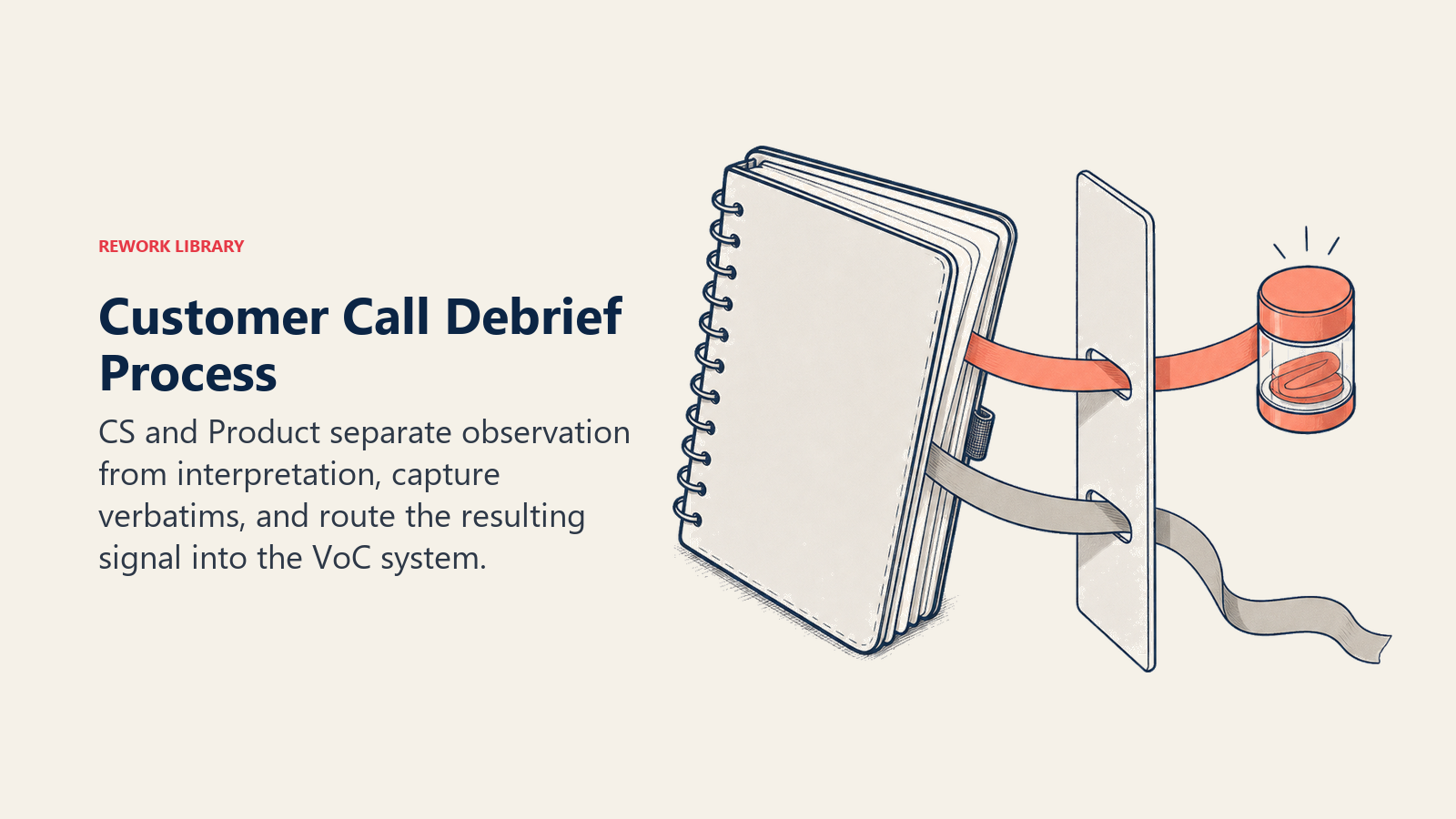
15 menit, di hari yang sama. Bukan "akan saya tulis nanti." Di hari yang sama, karena kalibrasi memudar cepat dan koreksi CSM paling akurat ketika panggilan masih segar.
Struktur:
- PM berbagi 3 observasi teratas, menggunakan kategori panduan mendengarkan (5 menit)
- CSM mengoreksi salah baca: tempat di mana interpretasi PM berbeda dari pemahaman CSM tentang situasi aktual pelanggan (5 menit)
- Observasi dicatat ke dalam taksonomi umpan balik bersama (5 menit, atau segera setelahnya)
Loop koreksi CSM: Di sinilah ride-along menghasilkan sesuatu yang unik. PM sering salah membaca pelanggan, bukan karena ketidakmampuan tetapi karena kurangnya konteks. CSM yang telah mengelola akun ini selama 18 bulan tahu bahwa frustrasi pelanggan yang tampak tentang ekspor sebenarnya adalah kecemasan tentang percakapan pembaruan yang belum dimulai. PM tidak akan tahu itu. CSM tahu.
Debrief adalah tempat di mana konteks itu ditransfer. Tanpa debrief, PM mencatat sinyal product yang didasarkan pada salah baca. Dengan debrief, PM mencatat sinyal product yang telah dikalibrasi terhadap realitas akun.
Bagaimana observasi dicatat: Ke dalam taksonomi umpan balik bersama, bukan buku catatan PM pribadi atau pesan Slack. Jika ada dalam taksonomi, bisa ditanyakan di seluruh akun. Jika ada di buku catatan PM, itu adalah anekdot dengan stempel waktu.
Mengagregasi Wawasan Ride-Along di Seluruh Tim PM
Metodologi wawancara pengguna NN/G menetapkan bahwa pertanyaan terstruktur dan panduan wawancara adalah yang mengubah percakapan menjadi riset yang dapat ditanyakan. Disiplin yang sama berlaku untuk catatan debrief ride-along PM. Kesan yang tidak terpandu dari panggilan tidak teragregasi; observasi terstruktur teragregasi.
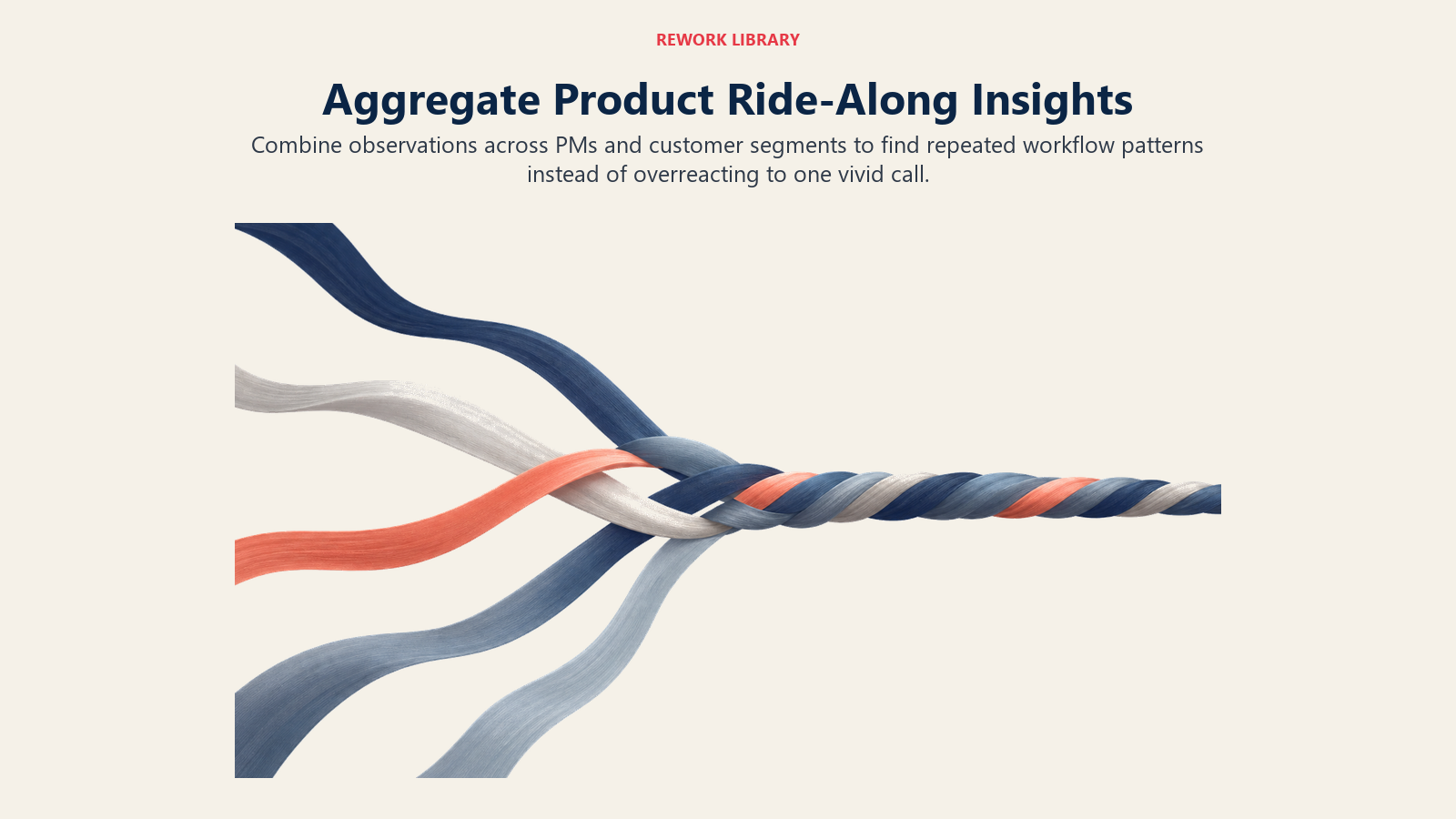
Ride-along individual menghasilkan observasi individual. Tetapi pola hanya muncul ketika observasi diagregasi di beberapa PM dan beberapa akun.
Sintesis ride-along PM bulanan:
Di akhir setiap bulan, Head of Product menjalankan sesi sintesis 30 menit di mana setiap PM berbagi 2-3 observasi dari ride-along mereka. Sintesis berfokus pada tumpang tindih: "Tiga PM mendengar pelanggan mendeskripsikan solusi alternatif dalam alur kerja ekspor. Itu adalah sebuah pola."
Observasi yang tumpang tindih di beberapa PM memiliki bobot lebih dari observasi PM tunggal mana pun karena telah divalidasi secara independen. PM yang mendengar satu pelanggan menyebutkan gesekan ekspor mungkin melihat masalah khusus akun. Tiga PM yang mendengar hal yang sama dari akun berbeda menggambarkan pola tingkat product.
Bagaimana ini memberi makan peta jalan produk: Bukan sebagai anekdot individual tetapi sebagai pola lintas-PM yang divalidasi. Output sintesis ("lima ride-along bulan ini memunculkan solusi alternatif alur kerja ekspor di tiga jenis akun berbeda") masuk ke dalam digest sinyal product bersama dengan skor dampak pelanggan dan digest bulanan CS. Bersama-sama, tiga masukan ini memberi peta jalan produk sebuah kasus pelanggan yang dapat dipertahankan.
Siapa yang meninjau sintesis: Head of Product dan VP CS, bersama-sama. Tidak secara terpisah. Tinjauan bersama memastikan konteks CS dan interpretasi product dikalibrasi satu sama lain sebelum sintesis mencapai diskusi peta jalan produk yang lebih luas.
Metrik untuk Mengukur Kesehatan Program
| Metrik | Target | Apa yang ditunjukkan jika meleset |
|---|---|---|
| Ride-along per PM per bulan (berdasarkan jenis) | 2+ (minimal 1 jenis non-kalibrasi per kuartal) | Pemilik penjadwalan tidak menjalankan rotasi; PM mendeprioritaskan |
| % ride-along dengan debrief pasca-panggilan tercatat | 90%+ | Debrief dilewati; wawasan memudar tanpa masuk ke taksonomi |
| Observasi ride-along yang masuk ke taksonomi bersama | 80%+ output debrief | Debrief terjadi tetapi tidak diformalkan |
| Bulan sejak ride-along terakhir PM pada panggilan berisiko atau perpindahan | kurang dari 3 bulan | PM hanya ride-along pada panggilan yang mudah; kalibrasi miring |
| Skor kepercayaan diri PM dalam pemahaman pelanggan | Penilaian mandiri kuartalan; target: stabil atau meningkat | Program ride-along tidak mempengaruhi model mental PM |
Tinjau ini setiap kuartal dalam tinjauan bersama Head of Product dan VP CS. Jika skor kepercayaan diri PM tetap datar meskipun partisipasi ride-along konsisten, format debrief tidak berfungsi. Observasi tidak masuk sebagai kalibrasi.
Cara Ride-Along Terhubung ke Sistem yang Lebih Luas
Ride-along adalah lapisan observasi langsung dari tumpukan umpan balik CS-product. Mereka memberikan kedalaman kualitatif yang tidak dapat direplikasi oleh sinyal berbasis volume mana pun. Tetapi mereka perlu terhubung ke sistem yang lebih luas untuk menghasilkan dampak peta jalan produk.
Observasi dari ride-along memberi makan pengenalan pola di seluruh CSM melalui taksonomi bersama. Ketika observasi ride-along PM sesuai dengan pola yang telah ditandai secara independen oleh tiga CSM, konvergensi bukti terstruktur dan observasional lebih kuat dari keduanya saja.
Pola-pola tersebut memberi makan penilaian dampak pelanggan untuk keputusan product, yang menambahkan dimensi ARR dan risiko perpindahan yang tidak dapat diberikan oleh observasi ride-along saja.
Tinjauan umpan balik pelanggan kuartalan adalah tempat semua masukan ini (ride-along, digest CS, pola tiket dukungan, skor dampak) berkumpul dalam satu forum di mana Head of Product dan VP CS secara bersama mengevaluasi kasus pelanggan untuk prioritas kuartal berikutnya.
Kadence CS-PM 1:1 adalah hubungan bilateral di mana wawasan ride-along dibahas secara real-time, sebelum mencapai sintesis formal. Dan jobs-to-be-done dari data CS mencakup bagaimana observasi ride-along, khususnya perilaku solusi alternatif dan pola bahasa, diterjemahkan ke dalam kerangka JTBD yang menginformasikan desain fitur.
Analisis Rework: Berdasarkan data program ride-along PM dari tim product B2B SaaS, perubahan dengan leverage tertinggi tunggal adalah persyaratan debrief di hari yang sama. Tim yang mengizinkan debrief terjadi "nanti minggu ini" melihat 60-70% observasi kualitatif gagal masuk ke taksonomi bersama. Observasi tersebut tetap ada di buku catatan PM atau pesan Slack, yang hanya dapat ditanyakan secara kebetulan. Kerangka Ride-Along Pra-Panggilan/Saat-Panggilan/Pasca-Panggilan mewajibkan debrief terjadi di hari yang sama karena koreksi CSM terhadap salah baca PM (yaitu "loop koreksi" di Fase 3) paling akurat dalam hitungan jam setelah panggilan, bukan hari. Rekomendasi kerangka kami: masukkan persyaratan debrief di hari yang sama ke dalam undangan kalender ride-along itu sendiri. Blokir 15 menit segera setelah setiap panggilan, dimiliki bersama oleh PM dan CSM, sebelum salah satu dari mereka pindah ke pertemuan berikutnya.
Pelajari Lebih Lanjut
- Pengenalan Pola di Seluruh CSM: Masalah Sistemik
- Penilaian Dampak Pelanggan untuk Keputusan Product
- Tinjauan Umpan Balik Pelanggan Kuartalan (Bersama)
- Kadence CS-PM 1:1
- Jobs-to-be-Done dari Data CS
Pertanyaan yang Sering Diajukan tentang PM Ride-Along pada Panggilan Pelanggan
Apa itu Kerangka Ride-Along Pra-Panggilan/Saat-Panggilan/Pasca-Panggilan?
Kerangka Ride-Along Pra-Panggilan/Saat-Panggilan/Pasca-Panggilan adalah model operasional tiga fase yang menyusun partisipasi PM dalam panggilan pelanggan untuk menghasilkan observasi product yang tercatat daripada kesan informal. Pra-Panggilan adalah briefing 10 menit dari CSM ke PM yang mencakup konteks akun, agenda panggilan, titik-titik sensitif yang diketahui, dan aturan saat-panggilan yang eksplisit. Saat-Panggilan adalah postur mendengarkan-saja terstruktur dengan pencatatan real-time di enam kategori observasi. Pasca-Panggilan adalah debrief 15 menit wajib di hari yang sama di mana observasi PM dikalibrasi terhadap pengetahuan akun CSM dan dicatat secara formal ke dalam taksonomi umpan balik bersama.
Mengapa sebagian besar program PM ride-along gagal?
Menurut survei Product Management Institute, 71% tim PM yang meninggalkan program ride-along menyebutkan "tidak ada format yang jelas tentang apa yang harus dilakukan saat panggilan" sebagai alasan utama. Program-program tersebut memiliki insting yang tepat (eksposur pelanggan langsung penting) tetapi tidak ada struktur untuk apa yang harus PM observasi, tangkap, atau lakukan dengan observasi tersebut setelahnya. Tanpa briefing Pra-Panggilan dan debrief Pasca-Panggilan, ride-along menghasilkan kesan yang memudar dalam beberapa hari. PM yang tidak terstruktur dan menghadiri 12 panggilan memiliki 12 anekdot. PM terstruktur yang menggunakan Kerangka Ride-Along memiliki 12 observasi terdokumentasi dalam taksonomi bersama.
Berapa banyak ride-along yang harus dilakukan PM per bulan?
Frekuensi minimum yang layak adalah 2 panggilan pelanggan per PM per bulan. Bukan satu per kuartal, yang terlalu jarang untuk mempertahankan kalibrasi. Lebih dari 4 per bulan menghabiskan waktu PM yang dibutuhkan untuk sintesis dan pekerjaan peta jalan produk; tujuannya adalah kalibrasi, bukan etnografi. Dua panggilan per bulan, yang secara konsisten dilaksanakan dengan debrief terstruktur, menghasilkan sinyal product yang lebih baik daripada enam panggilan yang dihadiri secara informal. Pemilihan akun tidak boleh diserahkan kepada PM individu; CS Ops membangun rotasi yang mencakup campuran skor kesehatan (minimal satu akun yang bukan hijau per kuartal per PM), ukuran akun, kasus penggunaan, dan masa akun.
Apa itu loop koreksi CSM dalam debrief pasca-panggilan?
Loop koreksi CSM adalah langkah debrief di mana CSM mengkalibrasi observasi PM terhadap konteks aktual akun. PM sering salah membaca pelanggan, bukan karena ketidakmampuan tetapi karena kurangnya riwayat akun. Frustrasi pelanggan yang tampak tentang ekspor sebenarnya mungkin kecemasan tentang percakapan pembaruan yang belum dimulai. CSM yang telah mengelola akun selama 18 bulan tahu ini; PM tidak. Debrief adalah tempat di mana konteks itu ditransfer. Tanpa loop koreksi, PM mencatat sinyal product berdasarkan salah baca. Dengan itu, observasi yang tercatat mencerminkan pola tingkat product dan nuansa spesifik akun, menghasilkan sinyal yang lebih andal ketika masuk ke model penilaian.
Kategori apa yang harus dilacak PM menggunakan panduan mendengarkan terstruktur?
Enam kategori: Hambatan alur kerja (langkah spesifik di mana pelanggan kesulitan), Perilaku solusi alternatif (hal-hal yang dilakukan secara manual yang seharusnya otomatis), Pola bahasa (deskripsi pelanggan verbatim, karena "kurang nyaman" vs. "merusak alur kerja kami" menandai keparahan yang berbeda), Isyarat emosional (frustrasi, pasrah, antusias, bingung), Pujian yang tidak diminta (fitur yang disebutkan secara positif tanpa diminta, yang paling stabil), dan Permintaan fitur yang dibingkai sebagai solusi alternatif ("kami ingin sekali jika kami tidak harus melakukan X"). Semua enam kategori harus dicatat secara real-time selama panggilan, tidak direkonstruksi dari memori setelahnya.
Bagaimana wawasan ride-along memberi makan sistem sinyal product yang lebih luas?
Observasi ride-along masuk ke taksonomi umpan balik bersama selama debrief pasca-panggilan, di mana mereka menjadi dapat ditanyakan bersama dengan eskalasi tiket dukungan dan laporan pola CSM. Ketika observasi ride-along PM sesuai dengan tema yang telah ditandai secara independen oleh tiga atau lebih CSM, konvergensi bukti terstruktur dan observasional lebih kuat dari sumber mana pun saja. Pola yang berkonvergensi tersebut memberi makan model penilaian dampak pelanggan, yang menambahkan dimensi ARR dan risiko perpindahan. Sintesis ride-along PM bulanan (Head of Product mengumpulkan 2-3 observasi dari setiap PM) menghasilkan laporan pola lintas-PM yang masuk ke dalam digest sinyal product bersama dengan skor dampak.
Apa itu ride-along intelijen retensi?
Ride-along intelijen retensi adalah ketika PM bergabung dalam panggilan pembaruan atau pelanggan berisiko secara khusus untuk mendengar bahasa perpindahan secara langsung. Bukan untuk memahami preferensi fitur, tetapi untuk mendengar keberatan aktual, frustrasi, dan celah alur kerja spesifik yang diungkapkan pelanggan ketika mempertimbangkan untuk tidak memperbarui. PM mendapatkan versi yang sudah disanitasi dari informasi ini melalui skor kesehatan dan tiket dukungan. Mendengarnya secara langsung, termasuk nada, kata-kata spesifik, dan solusi alternatif yang telah dibangun pelanggan, mengubah cara PM mendeskripsikan dan memprioritaskan celah product tersebut dalam percakapan peta jalan produk. Ini adalah jenis ride-along yang paling tidak nyaman dan seringkali yang paling berharga untuk keputusan product yang berfokus pada retensi.

Principal Solution Architect
On this page
- Mengapa Sebagian Besar Ride-Along Tidak Berhasil
- Untuk Apa Ride-Along Sebenarnya
- Model Frekuensi dan Rotasi
- Briefing Pra-Panggilan: Apa yang Diberitahu CS ke PM Sebelum Panggilan
- Saat Panggilan: Peran PM dan Aturan Keterlibatan
- Debrief Pasca-Panggilan: Di Sinilah Wawasan Menjadi Sinyal Product
- Mengagregasi Wawasan Ride-Along di Seluruh Tim PM
- Metrik untuk Mengukur Kesehatan Program
- Cara Ride-Along Terhubung ke Sistem yang Lebih Luas
- Pelajari Lebih Lanjut