Mejores alternativas a ServiceTitan en 2026: 14 herramientas para cada equipo de servicio de campo
Turn this article into takeaways for your work.


Each assistant summarizes the article only for you and suggests best practices for your work.
Actualizado en agosto de 2026: precios verificados en las 14 herramientas este mes.
ServiceTitan es la plataforma de servicio de campo más profunda para contratistas de HVAC, fontanería y electricidad que manejan 20 o más técnicos. Si su taller vive de listas de precios de tarifa fija, despacho con varias cuadrillas e informes de nivel enterprise, se gana su reputación. Esta guía cubre 14 alternativas para equipos que no encajan en ese perfil: cuadrillas más pequeñas en las que el costo y el tiempo de configuración son desproporcionados, y operadores más grandes que buscan una profundidad distinta.
Las herramientas se evalúan según transparencia de costos, tiempo hasta el primer trabajo despachado y ajuste residencial frente a comercial, contrastadas con las páginas de los proveedores y con rastreadores de terceros en agosto de 2026.
Datos Clave
- La tasa promedio de resolución en la primera visita en las organizaciones de servicio de campo es del 75%, así que una de cada cuatro llamadas requiere una costosa visita repetida, según Aberdeen Group. (ServicePower)
- El software de gestión de servicios de campo generará $3.1 mil millones en ingresos de la industria en EE. UU. en 2026, con una CAGR del 7.7%. (IBISWorld)
- Los equipos que modernizan su software de servicio de campo reportan aproximadamente un 40% menos de tiempo administrativo y un 10-20% menos de costos operativos. (IFS)
- Costo real de ServiceTitan: $245-$500 por técnico al mes, más $5,000-$50,000 o más en tarifas de implementación. (Procured)
- La brecha laboral de oficios calificados en EE. UU. llegó a unos 349,000 trabajadores en 2026, una de las razones por las que la eficiencia del despacho ahora importa tanto como el número de empleados. (Trade Colleges)
Tabla Comparativa Rápida
| Herramienta | Ideal para | Precio inicial | Fortaleza principal | Limitación principal |
|---|---|---|---|---|
| Jobber | Todo en uno sencillo, equipos pequeños | $49/mes (Core, 1 usuario) | Configuración rápida, sólida app móvil | Los planes para equipos empiezan en $139/mes (5 usuarios) |
| Housecall Pro | Pymes que quieren financiamiento y marketing | Desde $59/mes | Financiamiento al consumidor, marketing nativo | El plan Basic llega solo a 1 usuario |
| Workiz | Oficios con alto volumen de llamadas | Gratis (2 usuarios); desde $187/mes | Seguimiento nativo de llamadas, multicanal | Los complementos suben rápido |
| FieldEdge | HVAC/fontanería, precios de tarifa fija | Cotización personalizada (~$100 oficina + $125/técnico/mes) | Precios de tarifa fija de Coolfront | Implementación obligatoria de 5 semanas |
| Service Fusion | Equipos en crecimiento, usuarios ilimitados | Desde $208/mes (usuarios ilimitados) | Precio fijo sin importar el número de empleados | Informes más limitados |
| Rework | Trabajos de campo, CRM, tiempo del personal, una sola plataforma | Cotización a solicitud (rework.com/pricing) | Servicio de campo + CRM + People unificados | Sin lista de precios específica por oficio |
| FieldPulse | Cuadrillas pequeñas y pensadas primero para el móvil | Cotización personalizada (~$99-$399+/mes) | Experiencia móvil limpia, implementación rápida | Precios poco claros |
| ServiceM8 | Cuadrillas muy pequeñas, inicio gratuito | Gratis; desde $29/mes | Precio por volumen de trabajos, usuarios ilimitados | Limitado pasados 500 trabajos/mes |
| Kickserv | Equipos pequeños, despacho ligero | Desde ~$47/mes | Sencillo, económico, con larga trayectoria | Conjunto de funciones más reducido |
| Zuper | Equipos de campo multisector | Cotización personalizada (~$50-$150/usuario/mes) | Flujos de trabajo configurables | Más nuevo, base de soporte más pequeña |
| Simpro | Oficios comerciales, costeo de trabajos | Cotización personalizada (~$30-$300+/usuario/mes) | Costeo de trabajos e inventario profundos | Sin precios públicos |
| BuildOps | Comercial, más de 10 técnicos | Cotización personalizada (~$150-$300/usuario/mes) | Servicio comercial + facturación de proyectos | Excesivo para solo residencial |
| Salesforce Field Service | Empresas enterprise que usan Salesforce | Desde $165/usuario/mes (adicional) | CRM enterprise + programación con IA | Caro, requiere administradores |
| Dynamics 365 Field Service | Empresas enterprise que usan Microsoft | Desde $105/usuario/mes | Estrecho ajuste con el ecosistema de Microsoft | Complejidad de licencias por usuario |
1. Jobber: la configuración más rápida para equipos pequeños de servicios para el hogar
Jobber es la primera parada más común para los talleres demasiado pequeños para ServiceTitan: presupuestos, programación, facturación y pagos en una app móvil limpia, con un operador individual despachando la misma tarde en que se registra. Sumar personas lo empuja a niveles superiores, de Core a $49/mes para un usuario a Connect a $139/mes para cinco, y Marketing Suite y AI Receptionist son complementos de pago por debajo del nivel superior.
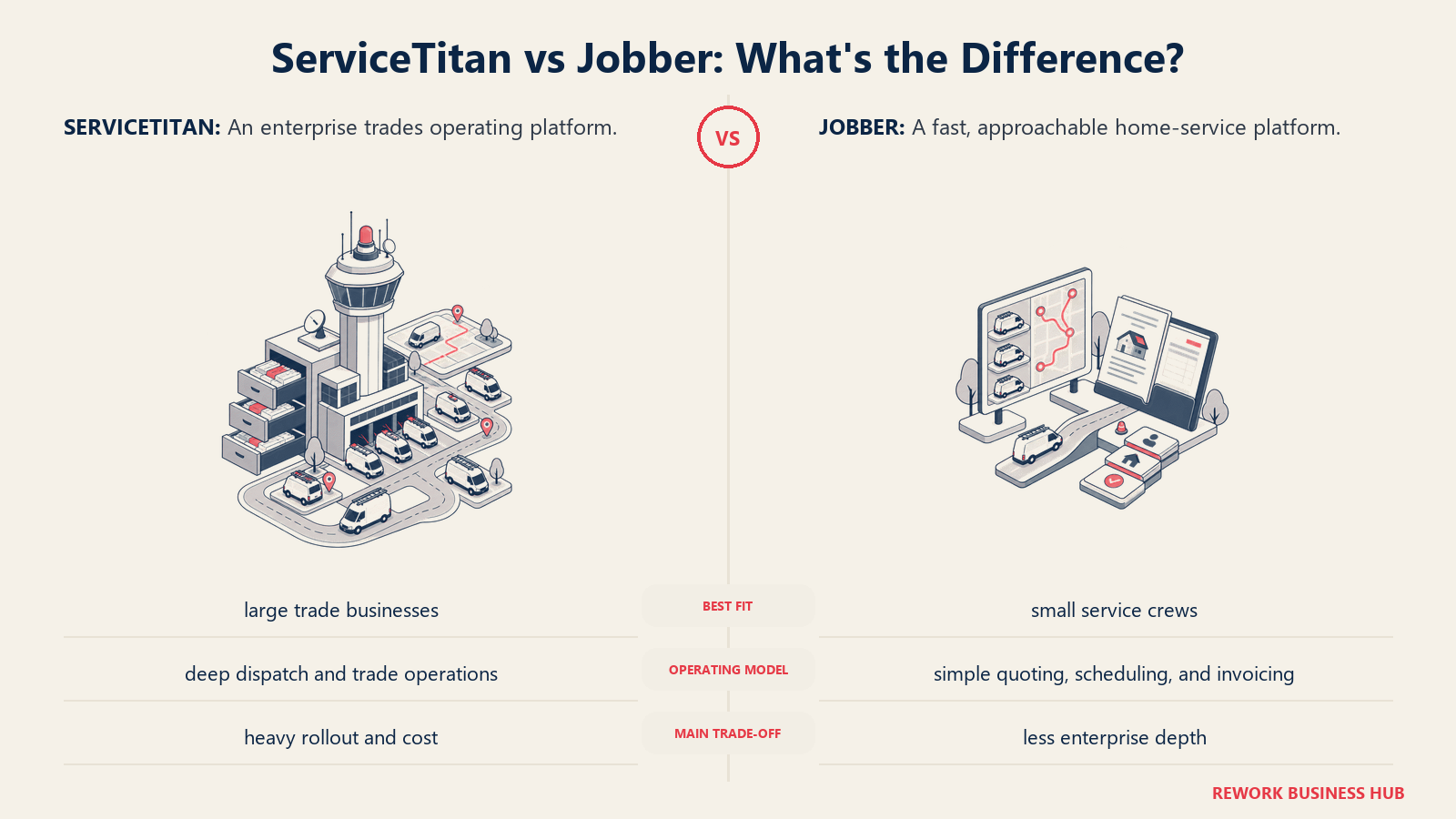
| Lo que obtiene | Lo que no obtiene |
|---|---|
| Configuración rápida, sólida app móvil | Listas de precios de tarifa fija específicas por oficio |
| Gran comunidad y plantillas de servicios para el hogar | Costeo de trabajos profundo para proyectos comerciales |
| Reservas en línea y portal de clientes integrados | Automatización gratuita más allá del nivel de entrada |
| Presupuestos, programación, facturación y pagos en un solo flujo | Bandeja de entrada multicanal nativa |
Precios: Core $49/mes (1 usuario) a Plus $499/mes (15 usuarios); Connect cuesta $139/mes para 5 usuarios y Grow $299/mes para 10; usuarios adicionales $29/mes. La facturación anual ahorra hasta un 25% sobre esas tarifas.
Ideal para: Operadores individuales y cuadrillas residenciales pequeñas (1-15 personas). Vea Mejores alternativas a Jobber. Vea también ServiceTitan vs Jobber. No es lo ideal para: Contratistas comerciales que necesitan costeo de trabajos o despacho con varias cuadrillas.
2. Housecall Pro: financiamiento y marketing integrados
La ventaja de Housecall Pro sobre Jobber: financiamiento al consumidor integrado al momento del pago para trabajos grandes de HVAC/fontanería, además de automatización de marketing nativa. El plan Basic llega solo a un usuario, lo que lleva a la mayoría de los equipos a Essentials ($149/mes, 5 usuarios) o MAX ($299/mes, más $35/mes por usuario adicional).
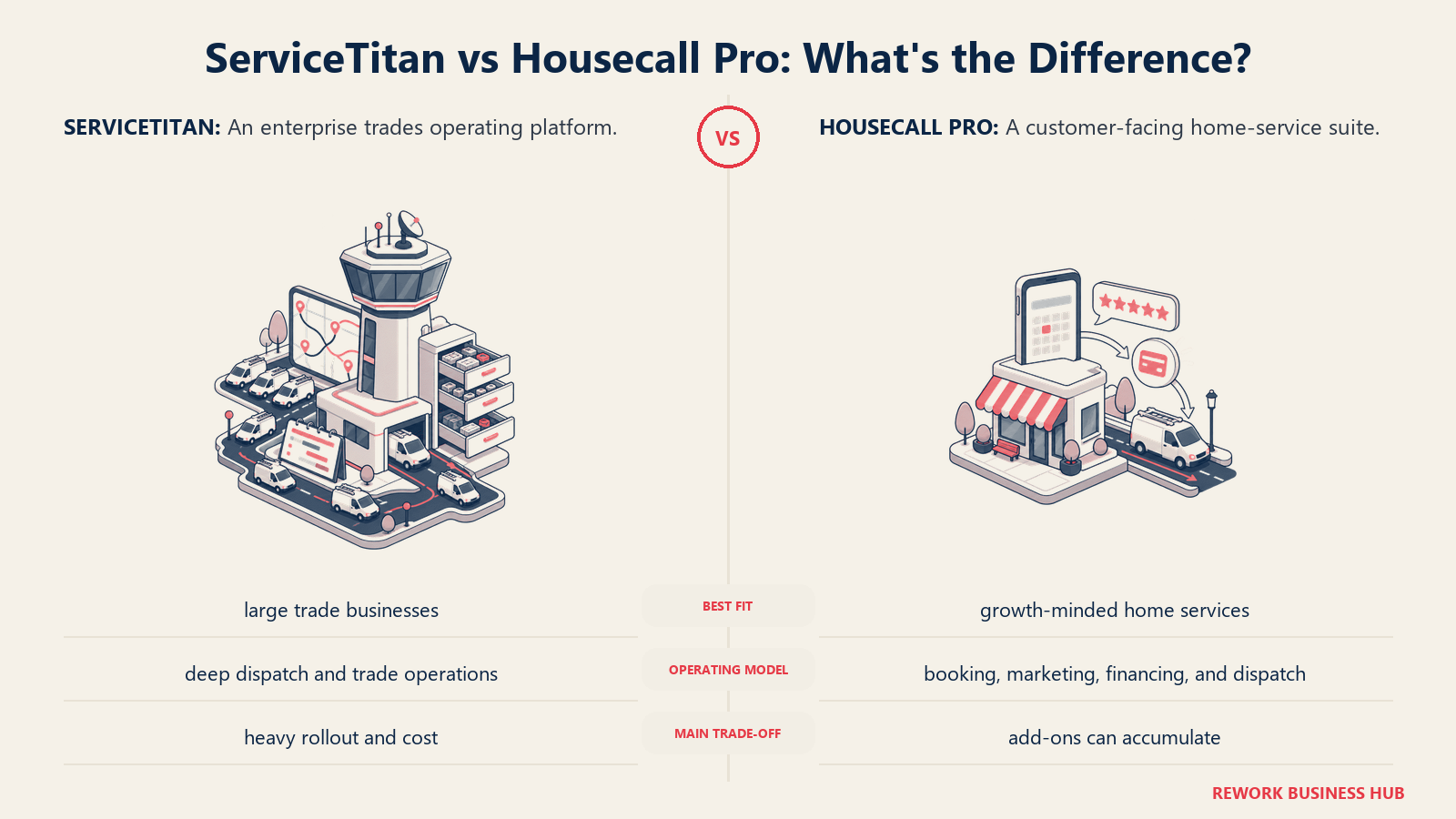
| Lo que obtiene | Lo que no obtiene |
|---|---|
| Financiamiento al consumidor integrado al momento del pago | Acceso de varios usuarios en el plan de entrada |
| Solicitudes de reseñas y marketing nativos | Costeo de trabajos comercial profundo |
| Implementación limpia, sólida app móvil | Nivel gratuito |
| Sincronización con QuickBooks y seguimiento GPS (Essentials+) | Automatización de la lista de precios con la profundidad de ServiceTitan |
Precios: Desde $59/mes (Basic, 1 usuario) hasta $299/mes (MAX), facturados anualmente; usuarios adicionales $35/mes.
Ideal para: Equipos residenciales que quieren financiamiento y marketing integrados en la programación. Vea ServiceTitan vs Housecall Pro o Mejores alternativas a Housecall Pro. No es lo ideal para: Talleres de un solo usuario con presupuesto limitado, o necesidades de costeo de trabajos comercial.
3. Workiz: diseñado para oficios con alto volumen de llamadas
Workiz está construido en torno al teléfono, no al trabajo: seguimiento nativo de llamadas y captación de leads multicanal integrados en el CRM, la mejor opción aquí para cerrajeros, reparación de electrodomésticos y talleres de HVAC donde las llamadas perdidas significan trabajos perdidos. Más allá del nivel gratuito Lite (2 usuarios), complementos como el despacho con IA se acumulan rápido; el uso real queda entre $150-$400/mes.
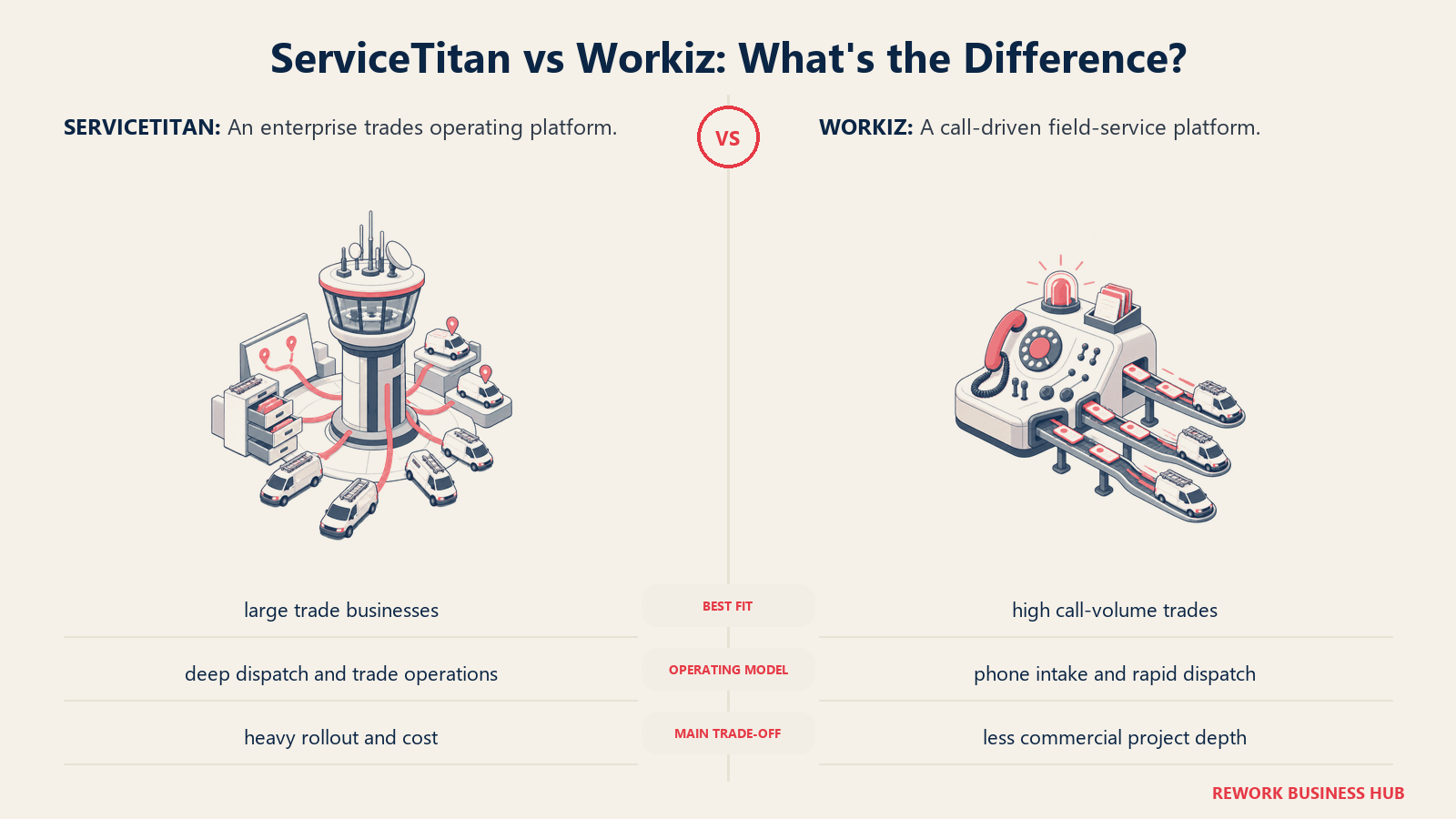
| Lo que obtiene | Lo que no obtiene |
|---|---|
| Seguimiento y grabación nativos de llamadas | Lista de precios de tarifa fija profunda |
| Captación de leads multicanal en el CRM | Precios predecibles a medida que crece el uso |
| Nivel gratuito para equipos muy pequeños | Profundidad de costeo de trabajos comercial |
| Sólida experiencia de despacho y programación | Herramientas nativas de RR. HH. u hojas de horas |
Precios: Plan Lite gratuito (2 usuarios); niveles de pago $187-$270/mes, más $30/mes por usuario adicional. Ultimate es personalizado.
Ideal para: Negocios de cerrajería, electrodomésticos, puertas de garaje y HVAC impulsados por leads telefónicos. Para la lógica de despacho en sí, vea cómo elegir software de programación. No es lo ideal para: Equipos sin un alto volumen de llamadas.
4. FieldEdge: precios de tarifa fija para HVAC y fontanería
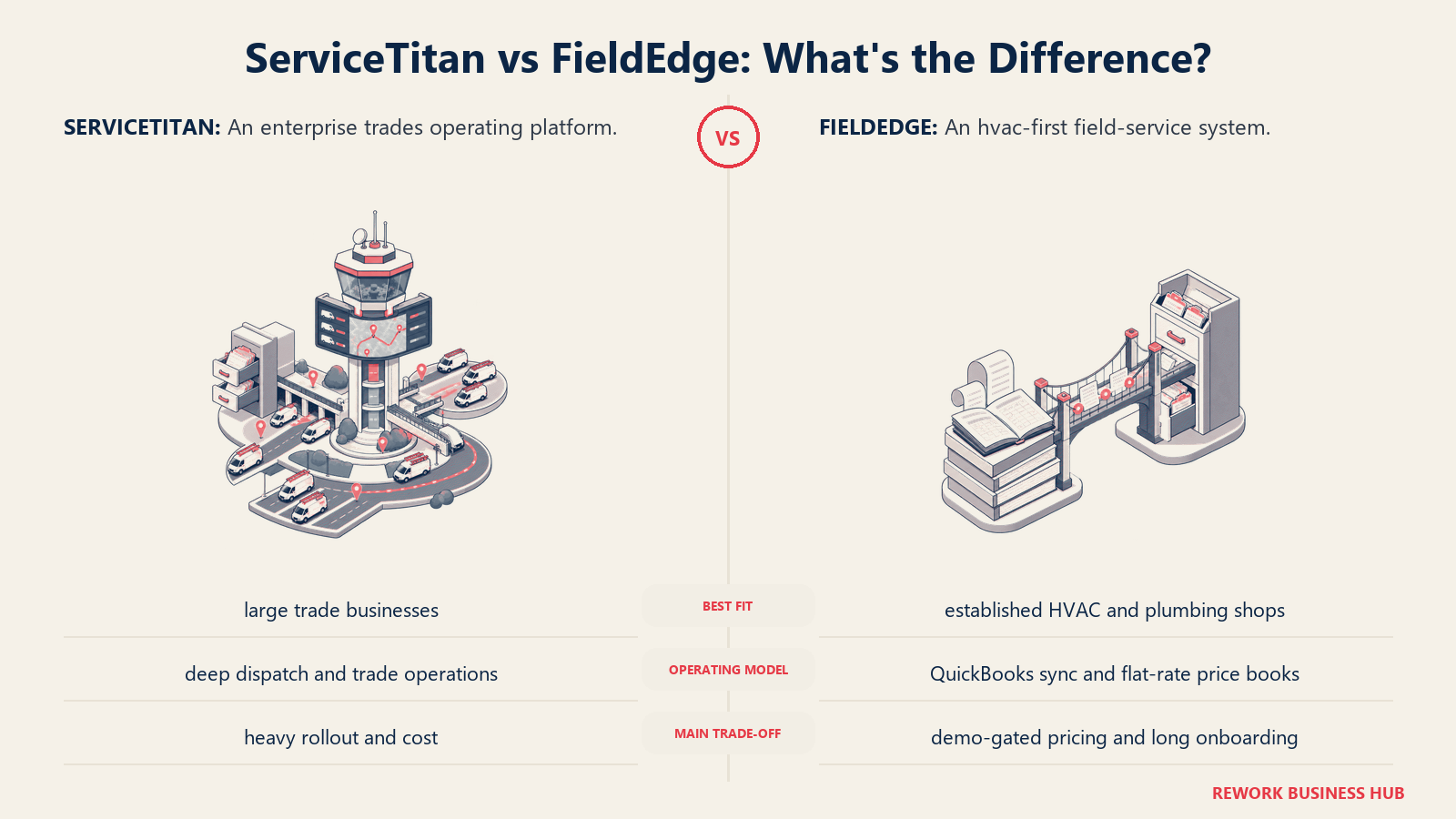
FieldEdge es el competidor directo más cercano de ServiceTitan en HVAC y fontanería, y ofrece el mismo concepto de precios de tarifa fija de Coolfront con un techo más bajo. La contrapartida: sin precios publicados, una implementación obligatoria de 5 semanas, y el inventario ($39/mes) y los informes avanzados ($49/mes) como complementos aparte; la mayoría de los contratistas termina en $200-$400/mes una vez sumados.
| Lo que obtiene | Lo que no obtiene |
|---|---|
| Lista de precios de tarifa fija de Coolfront | Precios publicados y transparentes |
| Conjunto de funciones maduro para HVAC y fontanería | Implementación rápida (5 semanas obligatorias) |
| Seguimiento de contratos de servicio y mantenimiento | Prueba gratuita |
| Integración con QuickBooks | Bandeja de entrada multicanal o suite de marketing |
Precios: Solo con cotización, aproximadamente $100 por usuario de oficina más $125 por técnico al mes, antes de complementos.
Ideal para: Talleres de HVAC y fontanería que quieren vender con lista de precios de tarifa fija sin el precio de ServiceTitan. No es lo ideal para: Equipos que quieren despachar la misma semana en que se registran, o negocios fuera de HVAC/fontanería.
5. Service Fusion: usuarios ilimitados, sin cuentas por puesto
El planteamiento de Service Fusion: un precio fijo cubre usuarios ilimitados, de modo que un taller de 30 técnicos no paga 6 veces lo que paga uno de 5 técnicos. La contrapartida es la profundidad de los informes: programación, despacho y facturación sólidos, pero analíticas que no igualan la capa enterprise de ServiceTitan.
| Lo que obtiene | Lo que no obtiene |
|---|---|
| Precio fijo sin importar el número de empleados | Informes y pronósticos de nivel enterprise |
| Programación, despacho y facturación básicos | Automatización de marketing nativa |
| Integración con QuickBooks incluida | Costeo de trabajos avanzado para proyectos grandes |
| Precios publicados y transparentes | Lista de precios de tarifa fija específica por oficio |
Precios: Desde $208/mes (Starter) hasta $533/mes (Pro), facturados anualmente, usuarios ilimitados.
Ideal para: Negocios residenciales en crecimiento (15-50+ técnicos) que quieren dejar las cuentas por puesto. No es lo ideal para: Equipos que necesitan informes al nivel de ServiceTitan o marketing integrado.
6. Rework: servicio de campo dentro de una plataforma operativa unificada
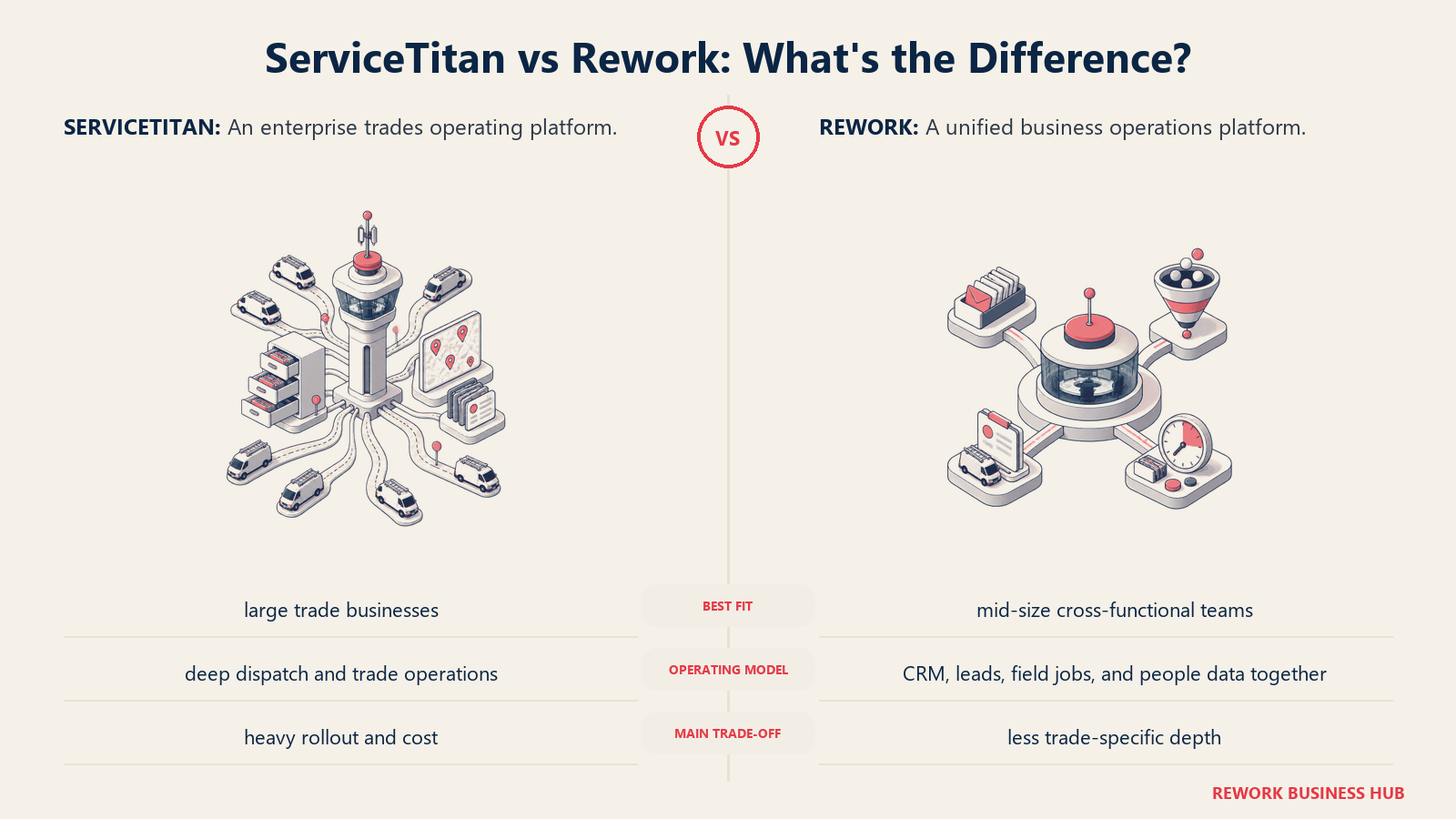
El módulo de servicio de campo de Rework, Visit, maneja la programación de trabajos, el despacho y los registros de clientes dentro de la misma plataforma que sus apps de CRM/Ventas, Lead Management, Work Ops y People (HRIS, tiempo y asistencia). El argumento no es el tablero de despacho más profundo; es que los trabajos de campo, los registros de clientes y el tiempo del personal no deberían vivir en tres sistemas separados.
| Lo que obtiene | Lo que no obtiene |
|---|---|
| Trabajos de campo, CRM y People (HRIS) en una sola plataforma | Listas de precios de tarifa fija profundas específicas por oficio |
| Registros de clientes compartidos entre ventas y operaciones de campo | La profundidad del tablero de despacho de ServiceTitan o Simpro |
| Tiempo del personal y hojas de horas vinculados a los mismos trabajos | Marketplace de integraciones con proveedores específicos por oficio |
| Precios anuales en paquetes, sin sorpresas de precio por técnico | Nivel gratuito o para operadores individuales |
Precios: Rework no publica un precio para el módulo Visit. Rework vende planes en paquetes, no licencias por técnico, y el servicio de campo se cotiza por organización. Vea rework.com/pricing para conocer las líneas de producto publicadas, o pida al equipo una cotización de Visit.
Ideal para: Negocios de servicios de tamaño mediano (aproximadamente de 20 a 200 personas) que quieren trabajos de campo, registros y tiempo del personal en un solo sistema. No es lo ideal para: Contratistas que necesitan una lista de precios de tarifa fija profunda o la profundidad de un tablero de despacho, u operadores individuales por debajo de los mínimos de los paquetes.
7. FieldPulse: pensado primero para el móvil, para cuadrillas pequeñas en crecimiento
FieldPulse apuesta con más fuerza por la experiencia móvil para propietarios-operadores que dirigen el negocio desde un camión, con una implementación rápida que se mantiene limpia a medida que se suma personal. Los precios se basan en cotización en tres niveles; VoIP, despacho con IA y seguimiento de flota (~$30/vehículo/mes) quedan tras complementos de pago.
| Lo que obtiene | Lo que no obtiene |
|---|---|
| App móvil limpia y rápida | Precios publicados |
| Implementación rápida para cuadrillas pequeñas | Prueba gratuita (solo demo) |
| Sólido flujo de presupuestos y facturación | Profundidad de costeo de trabajos comercial |
| Complementos de VoIP, despacho con IA y seguimiento de flota | Lista de precios de tarifa fija |
Precios: Solo con cotización. Los costos reportados por contratistas van de aproximadamente $99/mes para un equipo pequeño a $399 o más para cuadrillas más grandes.
Ideal para: Cuadrillas pequeñas y pensadas primero para el móvil (2-15 personas) que quieren una app moderna por encima de funciones profundas de back office. No es lo ideal para: Equipos que quieren precios transparentes y de autoservicio sin una llamada de ventas.
8. ServiceM8: precio por volumen de trabajos para equipos muy pequeños
ServiceM8 fija precios por volumen de trabajos, no por puesto, con un plan gratuito realmente utilizable (50 trabajos/mes, usuarios ilimitados), la entrada de menor costo aquí para una cuadrilla pequeña. Los niveles de pago limitan el volumen mensual de trabajos (de 150 a 1,500 o más), así que las cuadrillas de alto volumen superan rápido los planes inferiores.
| Lo que obtiene | Lo que no obtiene |
|---|---|
| Nivel gratuito con usuarios ilimitados | Volumen de trabajos ilimitado en los niveles inferiores |
| Precio por volumen de trabajos en lugar de por puesto | Costeo de trabajos comercial profundo |
| Asistencias de IA ilimitadas en todos los planes | Lista de precios de tarifa fija nativa |
| Flujo de trabajo sencillo y pensado primero para el móvil | Tablero avanzado de despacho con varias cuadrillas |
Precios: Gratis (50 trabajos/mes); niveles de pago desde $29/mes hasta $349/mes (1,500 o más trabajos/mes).
Ideal para: Cuadrillas residenciales muy pequeñas (1-5 personas) o negocios de temporada. No es lo ideal para: Talleres de mayor volumen que superarán los límites de trabajos.
9. Kickserv: una herramienta de despacho ligera y de larga trayectoria
Kickserv lleva en la categoría más tiempo que la mayoría de los nombres de aquí y se mantiene deliberadamente ligero: programación, presupuestos, facturación y un CRM básico. Los precios publicados varían entre rastreadores y los nombres de los niveles cambian de vez en cuando, así que confirme los planes vigentes directamente; espere un nivel gratuito para equipos muy pequeños y niveles de pago de unos pocos cientos al mes.
| Lo que obtiene | Lo que no obtiene |
|---|---|
| Sencillo, con una curva de aprendizaje baja | Automatización profunda o motor de flujos de trabajo |
| Larga trayectoria en la categoría | Lista de precios nativa o costeo de trabajos |
| Nivel de entrada económico | Bandeja de entrada multicanal |
| Plan gratuito para equipos muy pequeños | Informes enterprise |
Precios: Aproximadamente $47-$239/mes según los niveles y el número de usuarios, más un plan gratuito.
Ideal para: Equipos pequeños (2-15 personas) que quieren despacho y facturación básicos sin curva de aprendizaje. No es lo ideal para: Equipos que necesitan costeo de trabajos, listas de precios o automatización avanzada.
10. Zuper: flujos de trabajo flexibles más allá de los servicios para el hogar
Zuper se adapta a equipos de campo fuera del molde clásico de HVAC/fontanería/electricidad (telecomunicaciones, energía solar, equipos médicos) en los que el flujo de trabajo no encaja en una plantilla de servicios para el hogar. Su motor configurable modela tipos de trabajo que las herramientas pensadas primero para lo residencial no anticipan, aunque el ecosistema es más pequeño y los precios son totalmente personalizados.
| Lo que obtiene | Lo que no obtiene |
|---|---|
| Flujos de trabajo configurables entre sectores | Un gran marketplace de integraciones |
| Arquitectura moderna y API-first | Precios publicados |
| Buen ajuste para servicio de campo ajeno a los oficios | Lista de precios de tarifa fija profunda para oficios del hogar |
| Programación, despacho e inventario | Comunidad de soporte a la escala de ServiceTitan |
Precios: Cotización personalizada. Los análisis de terceros reportan aproximadamente $50-$150 por usuario al mes.
Ideal para: Equipos de campo fuera de los oficios clásicos de servicios para el hogar que necesitan un motor configurable. No es lo ideal para: Talleres de servicios para el hogar que quieren un flujo estándar de despacho y facturación.
11. Simpro: costeo de trabajos profundo para oficios comerciales
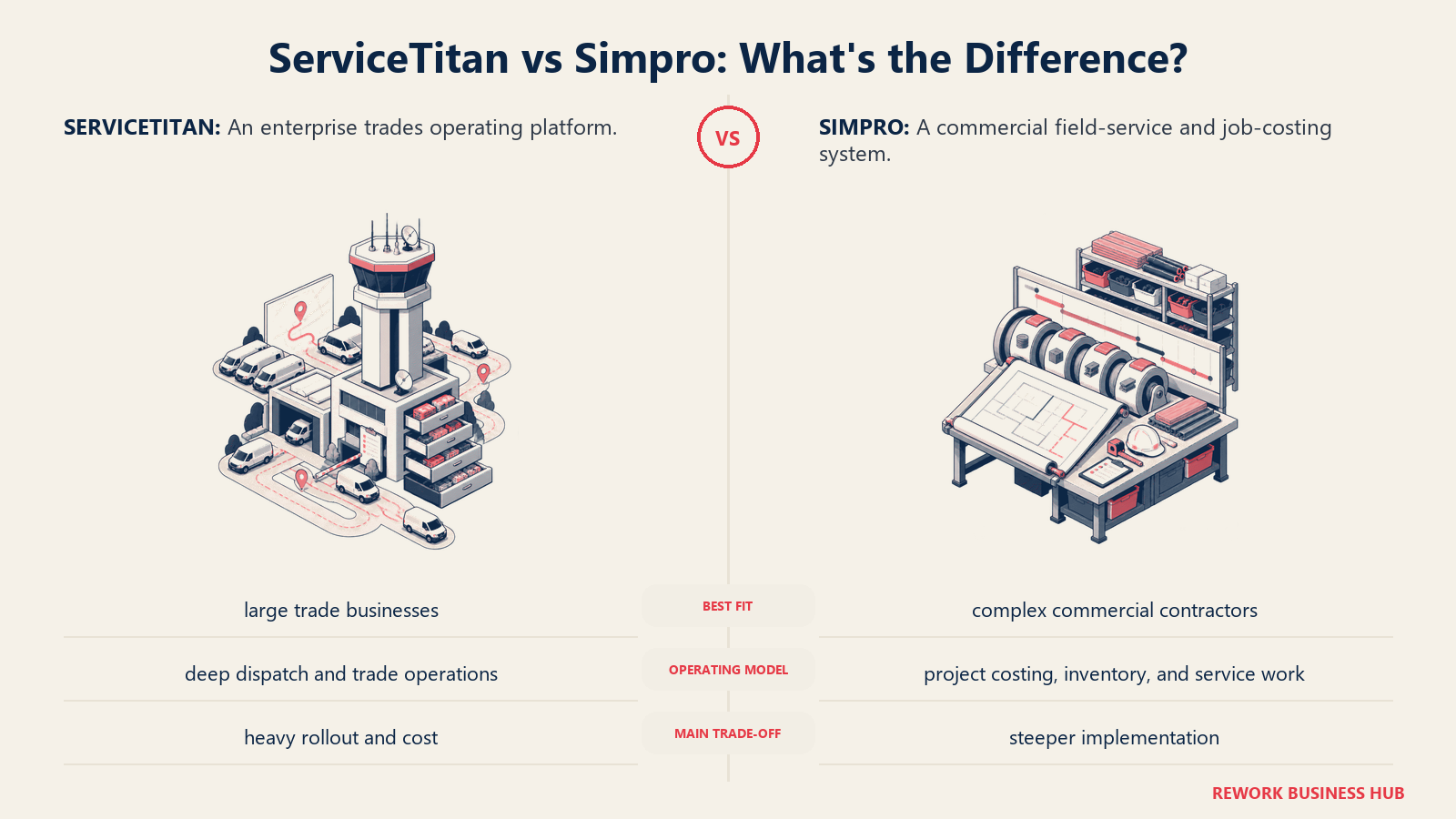
Simpro se adapta a un equipo que deja ServiceTitan porque necesita más costeo de trabajos y profundidad de proyectos, no menos: está diseñado para oficios comerciales y multisede que manejan proyectos complejos. Como ServiceTitan, no publica sus precios, y la curva de aprendizaje es empinada. Vea nuestro resumen Mejor software de gestión de servicios de campo para el panorama completo de la categoría.
| Lo que obtiene | Lo que no obtiene |
|---|---|
| Costeo de trabajos y gestión de inventario profundos | Precios publicados |
| Diseñado para proyectos complejos y multisede | Implementación rápida |
| Informes maduros para operaciones más grandes | Sencillez para cuadrillas residenciales pequeñas |
| Base establecida de más de 5,000 clientes | Bandeja de entrada multicanal nativa |
Precios: Cotización personalizada. Los análisis de terceros reportan aproximadamente $30-$300 o más por usuario al mes.
Ideal para: Contratistas de oficios comerciales que manejan proyectos complejos y necesitan costeo de trabajos profundo y seguimiento de repuestos (vea cómo elegir software de gestión de inventario). No es lo ideal para: Talleres residenciales pequeños; la complejidad y el costo no se justifican por debajo de cierto tamaño.
12. BuildOps: nivel comercial, diseñado para más de 10 técnicos
BuildOps apunta a los mismos contratistas comerciales de HVAC, fontanería y electricidad que atiende ServiceTitan: servicio, proyectos y facturación de construcción en una sola plataforma, diseñada para más de 10 técnicos y personal de back office dedicado. Los usuarios señalan una implementación de varios meses y una interfaz densa para los técnicos de campo; los equipos con esa madurez la encontrarán un par, no un sustituto más barato.
| Lo que obtiene | Lo que no obtiene |
|---|---|
| Servicio comercial, proyectos y facturación de construcción | Ajuste para talleres solo residenciales o muy pequeños |
| Diseñado para flujos de trabajo complejos de contratistas comerciales | Implementación rápida y ligera |
| Informes profundos para operaciones con varias cuadrillas | Precios publicados |
| Buen ajuste para los negocios que ServiceTitan atiende bien | Experiencia móvil sencilla para el técnico |
Precios: Cotización personalizada. Los análisis de terceros reportan aproximadamente $150-$300 por usuario al mes.
Ideal para: Contratistas comerciales con más de 10 técnicos y personal de back office dedicado. No es lo ideal para: Talleres solo residenciales o equipos de menos de 10 técnicos.
13. Salesforce Field Service: profundidad enterprise para talleres con Salesforce
Salesforce Field Service tiene sentido en un solo escenario: su empresa ya usa Service Cloud con un equipo de administradores de Salesforce que quiere programación asistida por IA y seguimiento de activos/garantías a escala enterprise. Fuera de ese escenario es difícil de justificar: las licencias de despachador/técnico cuestan $165-$330/usuario/mes según la edición, adicionales a los costos del CRM base, y el nivel de IA (Agentforce Field Service) ronda los $650/usuario/mes.
| Lo que obtiene | Lo que no obtiene |
|---|---|
| CRM enterprise más optimización de programación con IA | Precios accesibles para equipos de campo pyme |
| Ajuste nativo si ya se usa Salesforce Service Cloud | Configuración sencilla y rápida |
| Gestión de permisos e informes de nivel enterprise | Precios de servicio de campo independientes |
| Seguimiento de activos y garantías a escala | Facilidad de uso para los técnicos de campo |
Precios: Desde $165/usuario/mes (Enterprise Edition) hasta $330/usuario/mes (Unlimited); Agentforce Field Service ~$650/usuario/mes, adicional a las licencias de Service Cloud.
Ideal para: Grandes empresas ya estandarizadas en Salesforce. No es lo ideal para: Negocios de servicio de campo pequeños o medianos.
14. Dynamics 365 Field Service: profundidad enterprise para talleres con Microsoft
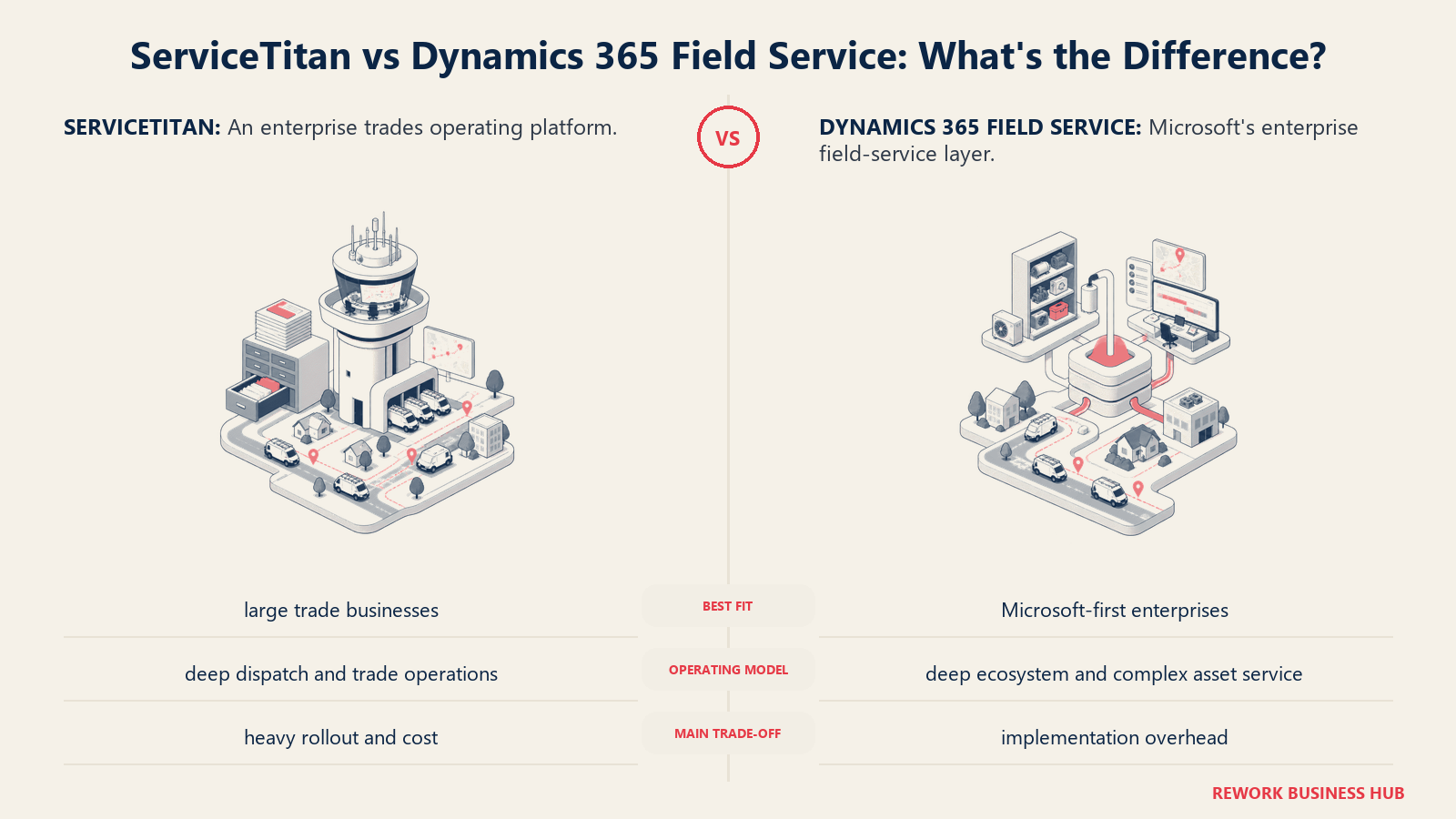
Dynamics 365 Field Service es la respuesta de Microsoft al mismo problema enterprise: gestión de órdenes de trabajo, programación de recursos, mantenimiento predictivo con IoT y seguimiento de activos para organizaciones estandarizadas en Dynamics 365 y Microsoft 365. El licenciamiento es más sencillo que el modelo por niveles de Salesforce, pero sigue siendo adicional a una implementación más amplia, y el valor real requiere experiencia en Microsoft que a la mayoría de los equipos pyme les falta internamente.
| Lo que obtiene | Lo que no obtiene |
|---|---|
| Estrecha integración con Microsoft 365 y Dynamics 365 | Configuración sencilla y de autoservicio |
| Capacidad de IoT y mantenimiento predictivo | Precios amigables para pymes |
| Complemento Resource Scheduling Optimization | Listas de precios de tarifa fija específicas por oficio |
| Gestión de órdenes de trabajo y activos de nivel enterprise | Obtención de valor rápida sin administradores de Microsoft |
Precios: Licencia de Field Service desde $105/usuario/mes; licencia Contractor desde $50/usuario/mes; complemento Resource Scheduling Optimization $30/recurso/mes.
Ideal para: Empresas enterprise que ya usan Dynamics 365 o el ecosistema más amplio de Microsoft. No es lo ideal para: Equipos de servicio de campo pyme sin una inversión previa en Microsoft.
Por qué los equipos abandonan ServiceTitan
Las fortalezas de ServiceTitan son reales y vale la pena nombrarlas antes de las quejas: su lista de precios de tarifa fija, su tablero de despacho con varias cuadrillas y su capa de informes son los más profundos de la categoría, y por eso la investigación de Aberdeen Group sobre la resolución en la primera visita (75% en promedio, con los mejores muy por encima) se corresponde directamente con lo que está diseñado para resolver. Aberdeen también encontró que el 57% de los clientes quiere mejores tasas de resolución en la primera visita. (ServicePower) Para una operación de 50 técnicos, esa profundidad se paga sola.
Las tres razones por las que los equipos se van de todos modos:
Costo. Los precios reales rondan los $245-$500 por técnico al mes en los niveles Starter, Essentials y Works, más $5,000-$50,000 o más en tarifas de implementación y un contrato anual obligatorio. (Procured) Para un taller de 15 técnicos, eso son $44,000-$90,000 de costo en el primer año antes de las tarifas de configuración. El software moderno de servicio de campo ofrece aproximadamente un 40% menos de tiempo administrativo y un 10-20% menos de costos operativos, según IFS, pero el precio de ServiceTitan hace que un taller más pequeño necesite más técnicos antes de que esa cuenta salga. (IFS)
Complejidad y desajuste de escala. ServiceTitan ha dicho a talleres más pequeños, en respuesta a sus quejas, que su plataforma no está optimizada para empresas con tres técnicos o menos. Está diseñada para contratistas medianos y grandes que manejan 20 o más técnicos, y esa profundidad se vuelve una carga para un taller de 5 personas que solo necesita programar y facturar un trabajo.
Implementación larga. La implementación suele tomar de 3 a 6 meses, y algunos contratistas reportan 12 meses o más antes de estar totalmente en marcha, frente a Jobber o Housecall Pro, donde un operador individual puede despachar el mismo día. Para un taller en crecimiento que necesita que el software funcione ahora, esa diferencia suele ser el factor decisivo.
Cómo elegir: marco de decisión
| Si su equipo necesita... | Mejor opción |
|---|---|
| Trabajos de campo, CRM y tiempo del personal en una sola plataforma, no en tres | Rework |
| La ruta más sencilla del presupuesto a la factura pagada | Jobber |
| Financiamiento al consumidor y automatización de marketing integrados | Housecall Pro |
| Captación intensiva de leads por teléfono (cerrajería, electrodomésticos, HVAC) | Workiz |
| Venta con lista de precios de tarifa fija sin el precio de ServiceTitan | FieldEdge |
| Usuarios ilimitados sin cuentas de precio por puesto | Service Fusion |
| Un inicio gratuito o casi gratuito para una cuadrilla de 1-3 personas | ServiceM8 |
| Costeo de trabajos profundo para proyectos comerciales complejos | Simpro o BuildOps |
| Servicio de campo enterprise sobre Salesforce o Microsoft | Salesforce Field Service o Dynamics 365 |
Qué hacer a continuación
Haga coincidir el tamaño de su equipo y su sector con el marco anterior, y luego haga un piloto de sus dos mejores opciones con trabajos reales, no con una demo en un entorno de pruebas. Cargue registros reales de clientes y despache a técnicos reales para ver cuál herramienta quiere abrir realmente su cuadrilla cada mañana. Si el costo y el tiempo de implementación son la razón por la que deja ServiceTitan, y además quiere CRM y tiempo del personal en un solo sistema, empiece con el módulo Visit de Rework y compárelo con una herramienta FSM dedicada como Jobber o Housecall Pro.

On this page
- Datos Clave
- Tabla Comparativa Rápida
- 1. Jobber: la configuración más rápida para equipos pequeños de servicios para el hogar
- 2. Housecall Pro: financiamiento y marketing integrados
- 3. Workiz: diseñado para oficios con alto volumen de llamadas
- 4. FieldEdge: precios de tarifa fija para HVAC y fontanería
- 5. Service Fusion: usuarios ilimitados, sin cuentas por puesto
- 6. Rework: servicio de campo dentro de una plataforma operativa unificada
- 7. FieldPulse: pensado primero para el móvil, para cuadrillas pequeñas en crecimiento
- 8. ServiceM8: precio por volumen de trabajos para equipos muy pequeños
- 9. Kickserv: una herramienta de despacho ligera y de larga trayectoria
- 10. Zuper: flujos de trabajo flexibles más allá de los servicios para el hogar
- 11. Simpro: costeo de trabajos profundo para oficios comerciales
- 12. BuildOps: nivel comercial, diseñado para más de 10 técnicos
- 13. Salesforce Field Service: profundidad enterprise para talleres con Salesforce
- 14. Dynamics 365 Field Service: profundidad enterprise para talleres con Microsoft
- Por qué los equipos abandonan ServiceTitan
- Cómo elegir: marco de decisión
- Qué hacer a continuación