More in
Noticias de Sales Tech
Los Equipos de Ventas con IA Crecen 2.6 Veces Mas Rapido: Gartner Dice que los Compradores Aun Quieren un Representante
jun. 6, 2026
Aircall Compro Piper AI para Convertir Cada Llamada de Ventas en Pipeline
jun. 6, 2026
Salesforce Acaba de Dar a los Marketers Agentes de IA que Construyen el Pipeline de Ventas
jun. 6, 2026
La Revenue Intelligence Mostraba el Riesgo. La Revenue Execution Actua Sobre Él.
jun. 5, 2026
Meta Colocó un Agente de IA en WhatsApp que Cierra Ventas para Cualquier Negocio
jun. 4, 2026
Los VCs Invirtieron Mas de $200M en Startups de Ventas con IA: La Señal para Su GTM Stack
jun. 4, 2026
¿Valen la Pena los AI SDRs en 2026? Los Datos Dicen que Construya un Equipo Híbrido
jun. 3, 2026
GTM Engineering en 2026: El Perfil de Ventas que Reemplaza Tres Roles
jun. 3, 2026
ZoomInfo Alimenta con Datos Verificados a Sus Agentes de Ventas con IA: La Contrapartida de Depender de un Solo Proveedor
jun. 3, 2026
Salesforce Summer '26 Lanza la Orquestación Multi-Agente el 15 de Junio: La Auditoría de Sales Ops Antes de Que Sus Agentes Comiencen a Transferir Tareas
jun. 2, 2026
Sprouts.ai acaba de recaudar $9M para agentes de ingresos por cuenta. La decisión de arquitectura de Sales Ops antes de su próxima renovación de stack
Turn this article into takeaways for your work.


Each assistant summarizes the article only for you and suggests best practices for your work.
Una recaudación de $9M en una pre-Serie A en una categoría saturada no suele ser la noticia. La apuesta de arquitectura de Sprouts.ai sí lo es.
La mayoría de las herramientas de IA para ventas están construidas alrededor del representante. Sprouts.ai está construida alrededor de la cuenta. Esa sola frase contiene una decisión de arquitectura de stack que los equipos de Sales Ops no habían tenido que nombrar antes. Y los ciclos de renovación no esperarán a que el sector lo nombre por usted.
Qué recaudó Sprouts.ai y para qué
Según el anuncio en PR Newswire del 15 de mayo de 2026, Sprouts.ai cerró una pre-Serie A de $9M liderada por True Global Ventures (TGV) y Accel. Eso eleva el financiamiento total a $14M. El uso declarado del capital: escalar su plataforma de Revenue Agents para empresas B2B, con un enfoque particular en profundizar la capa de datos GTM propietaria que impulsa esos agentes.
Los Revenue Agents de la empresa gestionan la prospección, el enriquecimiento de contactos, el mapeo de roles de compradores en una cuenta y la prospección multicanal. Entre los clientes nombrados públicamente se encuentran Hewlett Packard, Razorpay, HighRadius y Udemy. La plataforma se conecta a Salesforce, Microsoft Dynamics 365 y puede operar a través de plataformas LLM, incluido Claude.
Datos clave
- Sprouts.ai recaudó $9M en una pre-Serie A el 15 de mayo de 2026, liderada por True Global Ventures y Accel, elevando el financiamiento total a $14M. (PR Newswire, 15 de mayo de 2026)
- Los clientes nombrados públicamente incluyen a Hewlett Packard, Razorpay, HighRadius y Udemy. (Crowdfund Insider, mayo de 2026)
- Sprouts.ai se integra con Salesforce, Microsoft Dynamics y plataformas LLM, incluido Claude. (PR Newswire, 15 de mayo de 2026)
Por qué Sales Ops debería prestar atención a esta ronda específica (no al dinero, sino a la arquitectura)
La ronda en sí no es suficiente para justificar atención. Lo interesante es lo que financia: una plataforma construida sobre la premisa de que la unidad de análisis para la IA es la cuenta, no el representante.
Esa es una apuesta diferente a la que hizo la mayor parte del mercado. Salesloft AI, Outreach AI y HubSpot Breeze amplifican lo que hace cada vendedor individualmente. Se sitúan junto al representante, identifican la siguiente mejor acción y redactan el seguimiento. Apollo y 6sense combinan señales a nivel de cuenta con funcionalidades orientadas al representante. Salesforce Agentforce es mixto, según el caso de uso que se configure.
Sprouts.ai está posicionando sus agentes como observadores persistentes a nivel de cuenta: un agente por cuenta objetivo, acumulando señales de compradores, mapeando stakeholders y ejecutando prospección sin necesidad de pasar por un humano cada vez. El representante no es el ancla. La cuenta lo es.
Esta distinción le importa a Sales Ops por una razón: determina si está comprando una herramienta que hace que su organización actual sea más rápida, o una herramienta que cambia si una capa de su organización actual necesita existir. Esas son decisiones de compra diferentes, conversaciones de gobernanza diferentes y matemáticas de renovación diferentes.
La división entre agentes de ventas por representante y por cuenta
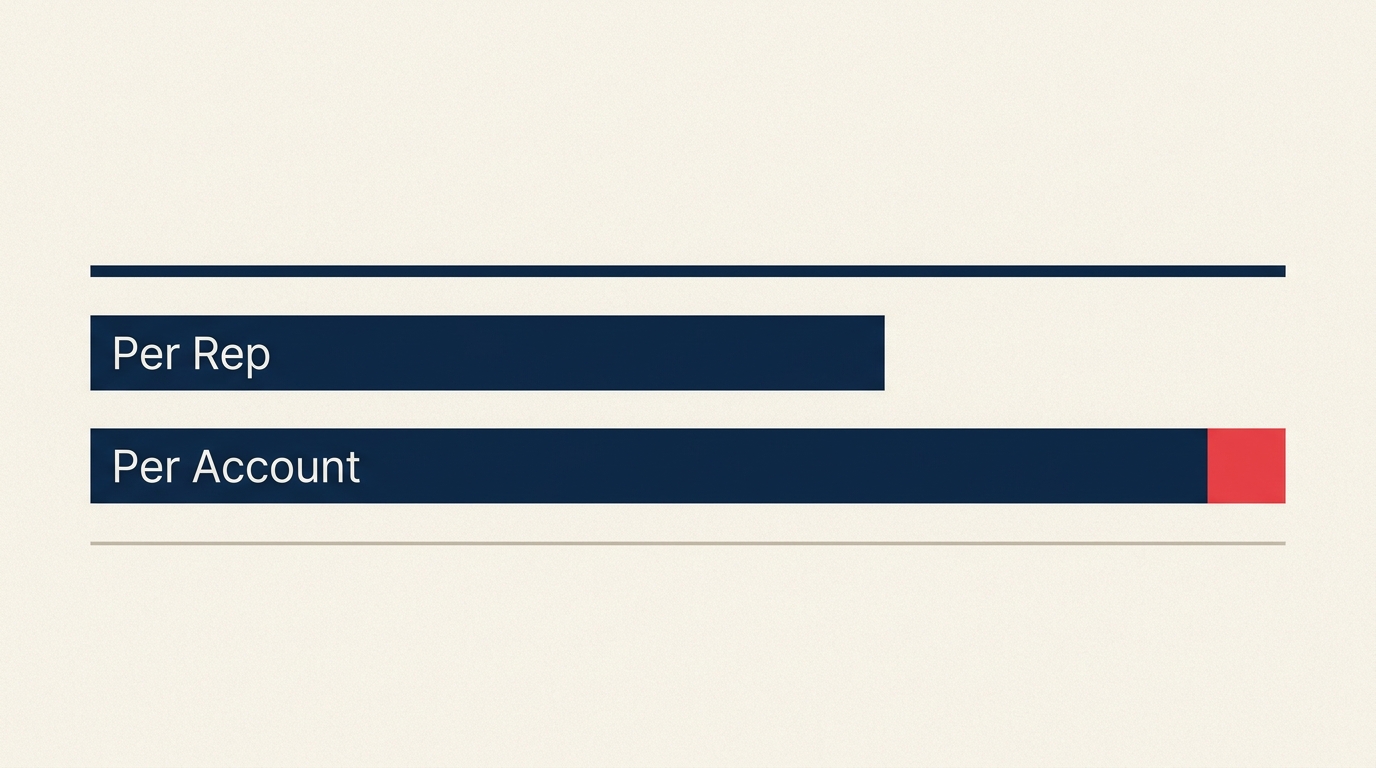
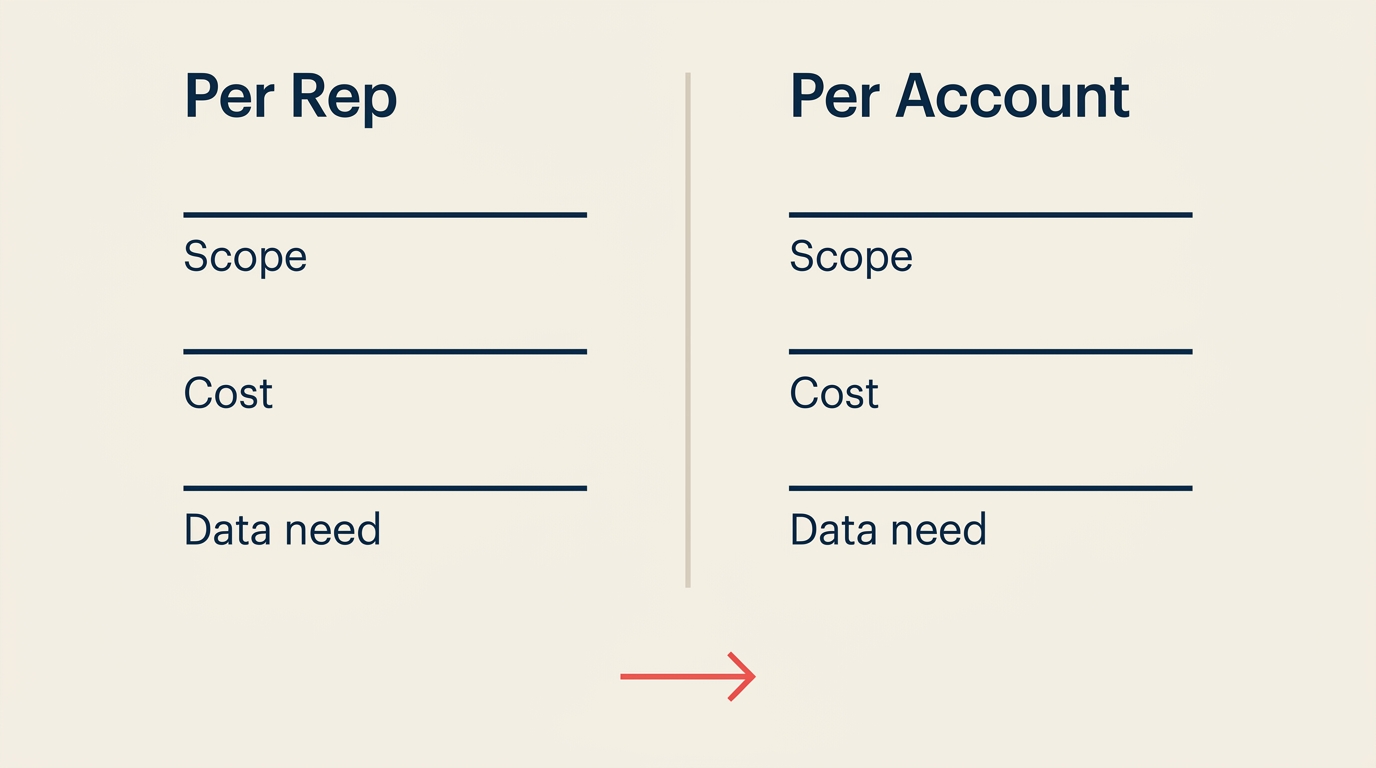
La distinción entre "agentes por representante" y "agentes por cuenta" es un marco útil para pensar qué tipo de cobertura de IA está comprando realmente.
Los agentes por representante se sitúan encima de su movimiento de ventas existente. El agente ayuda a cada representante a investigar más rápido, redactar mejor y hacer seguimiento de forma más consistente. El cuello de botella que resuelven es la capacidad y consistencia del representante. El modelo de costo se mapea directamente a la plantilla: más representantes, más licencias, más gasto. La dependencia de datos es relativamente baja, ya que el agente principalmente necesita los datos de actividad del representante y los registros de su CRM para funcionar. La implicación para la organización es aditiva. Amplifica la capa que ya tiene.
Los agentes por cuenta tienen una forma diferente. En lugar de darle a cada representante un copiloto, se despliega un agente por cuenta objetivo. Ese agente rastrea señales de compradores en toda la cuenta, mapea el comité de compras y ejecuta secuencias de prospección sin esperar a que un representante revise su lista de tareas. El cuello de botella que resuelven es la escasez de cobertura de cuentas. La mayoría de los equipos de mercado medio a empresarial pueden cubrir de forma realista entre 30 y 80 cuentas nombradas con atención humana activa en cualquier momento dado. Un agente por cuenta no necesita parar entre contactos con prospectos.
El modelo de costo también cambia. Los precios por cuenta (hacia los que Sprouts.ai está avanzando) se desvinculan de la plantilla. Podría cubrir 300 cuentas con agentes manteniendo el mismo equipo humano para los 50 negocios de mayor complejidad. La dependencia de datos es mayor, no obstante. Un agente de cuenta solo es tan inteligente como los datos de cuenta que tiene debajo.
Aquí es donde los agentes por cuenta fallan con una mala higiene del CRM. Si sus registros de cuenta son inconsistentes, están desactualizados o carecen de datos estructurados sobre la etapa de compra y los roles de stakeholders, el agente no tiene nada desde lo que razonar.
Cómo la apuesta por la capa de datos de Sprouts.ai cambia la ecuación
La mayoría de los proveedores de IA para ventas construyen su agente sobre los datos de CRM que usted ya tiene. Usted aporta los datos; ellos aportan la lógica del agente. Eso crea un techo: la precisión del agente alcanza como máximo la calidad de sus datos de entrada.
La afirmación diferenciadora de Sprouts.ai es la capa de datos GTM que posee por debajo del agente. Firmografía propietaria, señales de intención y datos de mapeo de compradores que complementan (o en algunos casos sustituyen) lo que hay en su CRM. Es una afirmación significativa si se sostiene, porque significa que el agente comienza con un contexto más rico que el que ofrecen sus registros internos.
También cambia el cálculo de dependencia del proveedor. Si está adoptando un agente por cuenta cuya calidad proviene de la capa de datos propietaria del proveedor, no está comprando solo lógica de agente. Está comprando una suscripción de datos envuelta en una interfaz de agente. Eso importa en la renovación del contrato. Si quiere cambiar de agente en dos años, no solo necesita reentrenar. También pierde el contexto de datos que el agente anterior acumuló.
Esta es la misma preocupación sobre el efecto de lock-in de datos que surgió cuando Apollo avanzó hacia una plataforma GTM agéntica: el agente es la interfaz de usuario, pero los datos son el mecanismo de retención. Los equipos de Sales Ops que evalúan Sprouts.ai deberían preguntar si pueden exportar o auditar la inteligencia de cuentas que construyen los agentes, o si ese contexto vive únicamente dentro de la plataforma.
Como comparación, el modelo de colaborador de Salesforce Agentforce ancla la calidad del agente a la completitud de su Data Cloud. Sprouts apuesta a que su capa propietaria reduce esa dependencia. Pero la respuesta honesta es que la apuesta por la capa de datos es el diferenciador real que hay que poner a prueba, no la interfaz del agente.
La auditoría de renovación de 4 preguntas de Sales Ops
Antes de su próxima conversación de renovación de stack, trabaje la "auditoría de renovación de 4 preguntas de Sales Ops". Estas preguntas no requieren una comparativa con Sprouts.ai. Aclaran qué arquitectura necesita realmente.
P1: ¿El cuello de botella son sus representantes o la cobertura de cuentas?
Si el cuello de botella son los representantes, tienen las cuentas pero no el tiempo para trabajarlas adecuadamente. Las herramientas por representante resuelven eso haciendo que la atención existente sea más eficiente. Si el cuello de botella es la cobertura de cuentas, tiene más territorio del que la capacidad de sus representantes puede cubrir de forma realista. Los agentes por cuenta amplían la cobertura sin aumentar la plantilla. La mayoría de los equipos de Sales Ops no han hecho este diagnóstico explícitamente. Hágalo antes de la conversación de renovación, o el proveedor lo hará por usted.
P2: ¿Qué parte de los datos de su CRM está suficientemente estructurada para que un agente actúe sobre ella?
Los agentes por cuenta fallan de forma silenciosa con datos incorrectos. No generan errores. Producen prospección con personas equivocadas, firmografía desactualizada o contexto del comité de compras incompleto. Antes de evaluar herramientas por cuenta, audite una muestra de 50 cuentas objetivo en su CRM: ¿cuántas tienen contactos actuales, cargos verificados, etapa de compra precisa y al menos dos stakeholders mapeados? Si menos del 60% supera esa verificación, su problema de agentes por cuenta es en realidad un problema de datos.
El 87% de las empresas que no alcanzaron sus objetivos de ingresos a pesar de un gasto récord en IA encontró exactamente esto: el agente no fue el punto de fallo. Los datos que se le proporcionaron al agente sí lo fueron.
P3: ¿En qué parte del funnel la inteligencia por cuenta es realmente diferente de la automatización por representante?
Los agentes por cuenta rinden más en la parte superior del funnel, donde la amplitud de cobertura importa y la atención humana es genuinamente escasa. Son más débiles en las etapas tardías y de alta complejidad, donde la relación humana tiene mayor peso en la conversión. Si su mayor riesgo de ingresos son las brechas de cobertura en la parte superior del funnel, los agentes por cuenta tienen sentido. Si su mayor riesgo está en la ejecución de negocios en etapas tardías, las herramientas por representante siguen siendo más efectivas en esa zona.
P4: ¿Está comprando un agente o una capa de datos disfrazada de agente?
Esta es la pregunta para Sprouts.ai, pero aplica a cualquier proveedor que lidere con datos propietarios. Pregúntele al proveedor: ¿qué pasa con la inteligencia de cuentas que construyen mis agentes si no renuevo? ¿Puedo exportar datos de enriquecimiento a nivel de contacto y de cuenta en formato estructurado? ¿Puedo ver un output de muestra del modelo de cuenta interno del agente? Los proveedores con fosos de datos duraderos no darán respuestas claras. Eso le dice algo.
Qué hacer esta semana
No necesita evaluar Sprouts.ai antes del viernes. Pero la pregunta arquitectónica que plantea es una que debería resolver antes de su próxima renovación.
Tres cosas que vale la pena hacer ahora:
Primero, clasifique su stack actual por orientación de representante o de cuenta. Enumere sus herramientas de IA de ventas activas y anote qué modelo de costo usan y qué cuello de botella abordan. La mayoría de los equipos de Sales Ops descubren que están completamente orientados al representante, lo cual está bien si la cobertura no es el problema.
Segundo, ejecute la auditoría del CRM de la P2 anterior en una muestra de 50 cuentas nombradas. El resultado le indica si está listo para agentes por cuenta en absoluto, independientemente del proveedor.
Tercero, antes de su próxima renovación con cualquier proveedor de IA de ventas, agregue dos preguntas a la evaluación: "¿Cuál es su historia de datos a nivel de cuenta?" y "¿Qué construye el agente sobre mis cuentas que puedo llevarme conmigo?" Esas dos preguntas sacarán a la luz el riesgo de lock-in real más rápido que cualquier lista de funcionalidades.
Las herramientas que surgen de rondas de financiamiento como la de Sprouts.ai están madurando rápido. Gong cruzando los $500M de ARR con la consolidación del stack, los agentes de OpenAI integrándose en Salesforce y Slack, y Snowflake convirtiendo su data warehouse en una capa de acción van todos en la misma dirección: la capa de agentes se está convirtiendo en una commodity, y la capa de datos es donde la diferenciación se acumula.
Sprouts.ai recaudó $9M apostando a que vale la pena ser dueño de la capa de datos GTM. Para Sales Ops, la decisión no es si esa apuesta es correcta. Es si usted ha diagnosticado qué cuello de botella está intentando resolver realmente antes de firmar el próximo contrato.
Preguntas frecuentes
¿Es mejor un agente de IA por cuenta que un agente de IA por representante?
Ninguno es inherentemente mejor. La respuesta depende de su cuello de botella. Los agentes por representante hacen que sus vendedores existentes sean más rápidos y consistentes. Los agentes por cuenta extienden la cobertura a cuentas que su equipo no tiene capacidad para trabajar activamente. Si la escasez de cobertura es el problema, los agentes por cuenta ganan. Si el problema es la calidad de ejecución por representante, las herramientas por representante lo abordan de forma más directa. La mayoría de los equipos de ventas de mercado medio tienen ambos problemas, por eso plataformas mixtas como Apollo y 6sense venden bien.
¿Necesitamos limpiar nuestro CRM antes de desplegar un agente por cuenta?
Sí, hasta un umbral práctico. No necesita un CRM perfecto, pero sí necesita suficientes datos estructurados por cuenta para que el agente pueda razonar: contactos primarios actuales, etapa de compra verificada, al menos firmografía básica de la cuenta. Un diagnóstico aproximado: audite 50 cuentas objetivo y compruebe si cada una tiene dos o más contactos mapeados con cargos actuales y al menos un registro de actividad en los últimos 90 días. Si menos de la mitad supera esa verificación, limpie primero los datos. Un agente por cuenta con datos incorrectos no falla de forma obvia; genera prospección con argumentos plausibles dirigida a las personas equivocadas.
¿Cómo se compara Sprouts.ai con Apollo o 6sense?
Apollo y 6sense combinan inteligencia a nivel de cuenta con activación orientada al representante. El punto fuerte de Apollo es la amplitud de datos (cobertura de contactos y firmografía) con secuencias agénticas crecientes superpuestas. 6sense lidera con el modelado de señales de intención para la priorización de cuentas. Sprouts.ai es más reciente, más pequeña y apuesta de forma más explícita en un modelo de agente persistente por cuenta en lugar de funcionalidades de copiloto orientadas al representante. La respuesta honesta para una evaluación de Sales Ops: Sprouts vale un piloto si la amplitud de cobertura de cuentas es su problema declarado y está dispuesto a poner a prueba la afirmación sobre la capa de datos. Apollo y 6sense son opciones de menor riesgo si busca escala probada y ecosistemas de integración establecidos hoy.

On this page
- Qué recaudó Sprouts.ai y para qué
- Por qué Sales Ops debería prestar atención a esta ronda específica (no al dinero, sino a la arquitectura)
- La división entre agentes de ventas por representante y por cuenta
- Cómo la apuesta por la capa de datos de Sprouts.ai cambia la ecuación
- La auditoría de renovación de 4 preguntas de Sales Ops
- Qué hacer esta semana