More in
Noticias de Sales Tech
Los Equipos de Ventas con IA Crecen 2.6 Veces Mas Rapido: Gartner Dice que los Compradores Aun Quieren un Representante
jun. 6, 2026
Aircall Compro Piper AI para Convertir Cada Llamada de Ventas en Pipeline
jun. 6, 2026
Salesforce Acaba de Dar a los Marketers Agentes de IA que Construyen el Pipeline de Ventas
jun. 6, 2026
La Revenue Intelligence Mostraba el Riesgo. La Revenue Execution Actua Sobre Él.
jun. 5, 2026
Meta Colocó un Agente de IA en WhatsApp que Cierra Ventas para Cualquier Negocio
jun. 4, 2026
Los VCs Invirtieron Mas de $200M en Startups de Ventas con IA: La Señal para Su GTM Stack
jun. 4, 2026
¿Valen la Pena los AI SDRs en 2026? Los Datos Dicen que Construya un Equipo Híbrido
jun. 3, 2026
GTM Engineering en 2026: El Perfil de Ventas que Reemplaza Tres Roles
jun. 3, 2026
ZoomInfo Alimenta con Datos Verificados a Sus Agentes de Ventas con IA: La Contrapartida de Depender de un Solo Proveedor
jun. 3, 2026
Salesforce Summer '26 Lanza la Orquestación Multi-Agente el 15 de Junio: La Auditoría de Sales Ops Antes de Que Sus Agentes Comiencen a Transferir Tareas
jun. 2, 2026
Los Workspace Agents de OpenAI Ahora se Integran con Salesforce y Slack: La Auditoría de 4 Preguntas que Sales Ops Debe Ejecutar Antes del 6 de Julio
Turn this article into takeaways for your work.


Each assistant summarizes the article only for you and suggests best practices for your work.
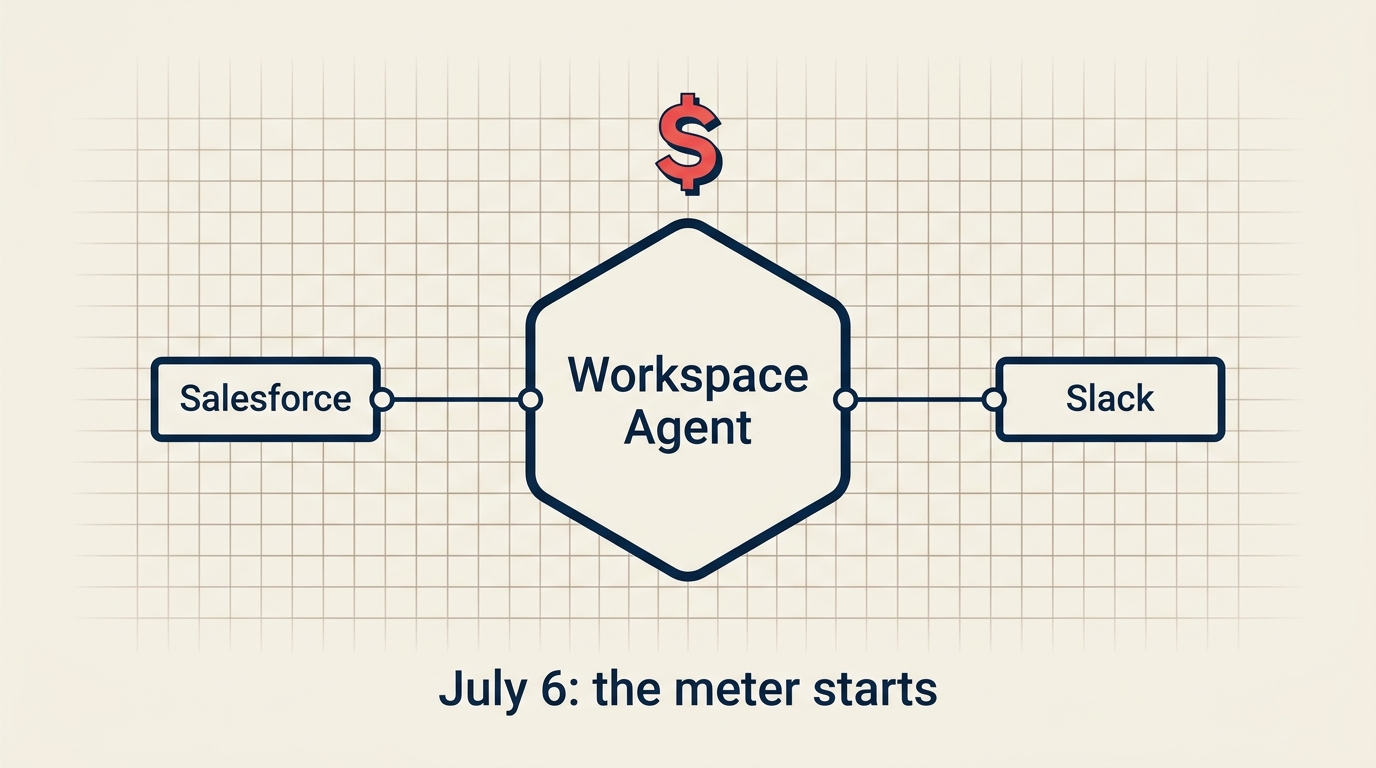
ChatGPT dejó de ser una ventana de chat individual para sus representantes y se convirtió en un artefacto de equipo compartido que se integra directamente con Salesforce y Slack. El contador arranca el 6 de julio de 2026.
Esa es la versión resumida de lo que OpenAI publicó esta semana con los Workspace Agents en ChatGPT. Y para los equipos de Sales Ops que construyeron flujos de trabajo compartidos sobre GPT personalizados, las implicaciones no son abstractas. Tienen una decisión de migración, una decisión de costos y una decisión de gobernanza que tomar antes de una fecha límite inamovible.
Lo que OpenAI Acaba de Publicar
Según la cobertura de VentureBeat sobre el lanzamiento, los Workspace Agents de OpenAI están posicionados como el sucesor de los GPT personalizados, construidos desde cero para el uso compartido de equipos en lugar de sesiones de chat individuales. Están disponibles ahora en vista previa de investigación.
La elegibilidad de planes es limitada: ChatGPT Business, Enterprise, Education y Teachers. Si su organización está en uno de esos niveles, puede comenzar a construir y probar hoy. Los usuarios Free y Plus no tienen acceso en esta primera ola.
Bajo el capó, los Workspace Agents corren sobre Codex, el modelo capaz de codificación de OpenAI. Es la misma familia de modelos detrás de las funcionalidades más capaces de GitHub Copilot, lo que dice algo sobre lo que OpenAI imagina que estos agentes harán: no solo responder preguntas, sino ejecutar flujos de trabajo estructurados. Los Sales Development Representatives (SDR) que piden a un agente que extraiga el historial de cuenta de Salesforce, los Account Executives (AE) que le piden que registre automáticamente un resumen de llamada, esos son los casos de uso que la ejecución respaldada por Codex está diseñada para manejar.
La propia publicación de introducción de OpenAI confirma que los conectores de primera clase para Slack y Salesforce se incluyen en el lanzamiento. Sin trabajo de API personalizado, sin middleware. Los administradores conectan el conector y el agente tiene acceso. Esa es una diferencia significativa respecto a las soluciones alternativas que los equipos construían con GPT personalizados.
Los controles de administrador también merecen atención. Los administradores ahora pueden definir exactamente quién puede construir un Workspace Agent, quién puede compartirlo en toda la organización y quién puede invocarlo. Esa capa de gobernanza no existía con los GPT personalizados de ninguna forma significativa.
Sobre los precios: la ventana gratuita estaba originalmente programada para cerrar el 6 de mayo. OpenAI la extendió. La nueva fecha de transición es el 6 de julio de 2026, cuando entran en vigencia los precios basados en créditos. Las tarifas por crédito no se han publicado completamente aún, pero se esperan antes de la fecha límite.
La cobertura de Reworked.co sobre el anuncio también destaca los elementos del roadmap que OpenAI ha señalado: agentes activados por eventos (de modo que una nueva oportunidad en Salesforce podría iniciar automáticamente un flujo de trabajo de agente), dashboards de uso para administradores, acceso más amplio a herramientas e integración más estrecha con aplicaciones de Codex.
Datos Clave
- Gratuito hasta el 6 de julio de 2026, luego precios basados en créditos. OpenAI Help Center
- Funciona con Codex. OpenAI
- Elegibilidad de planes: ChatGPT Business, Enterprise, Education, Teachers. OpenAI
Por Qué Esto es Diferente de la Plataforma de Agentes Enterprise
Los equipos de Sales Ops con memoria de largo plazo notarán que OpenAI publicó una Plataforma de Agentes Enterprise en febrero de 2026. Ese anuncio fue sobre una superficie de construcción para desarrolladores, una forma para que su equipo de ciencia de datos o TI construya agentes personalizados usando la API y las herramientas de OpenAI. Si quiere contexto sobre esa capa, nuestra cobertura anterior de la Plataforma de Agentes Enterprise de OpenAI explica lo que RevOps necesita entender antes de que su equipo de ingeniería empiece a construir.
Los Workspace Agents son algo distinto. No son una superficie para desarrolladores. Son una superficie de equipo compartido dentro del propio ChatGPT, el sucesor directo de la funcionalidad de GPT personalizados que millones de usuarios enterprise ya venían usando. La distinción clave es dónde vive el agente y quién lo gestiona.
Los GPT personalizados vivían en la cuenta de un usuario individual. Podían compartirse, pero la gobernanza era laxa. Los Workspace Agents viven a nivel organizacional, con controles de administrador sobre creación, uso compartido e invocación, y vienen con los conectores de Slack y Salesforce integrados. La historia de los workspace agents enterprise de ChatGPT trata de convertir ChatGPT en un activo organizacional, no solo en uno personal.
Ese cambio tiene implicaciones directas para Sales Ops: los equipos que construyeron GPT compartidos para apoyar a los representantes ahora necesitan evaluar qué migra, qué se reconstruye y qué se retira. Y deben hacerlo antes del 6 de julio.
La Auditoría de 4 Preguntas que Debe Ejecutar Sales Ops
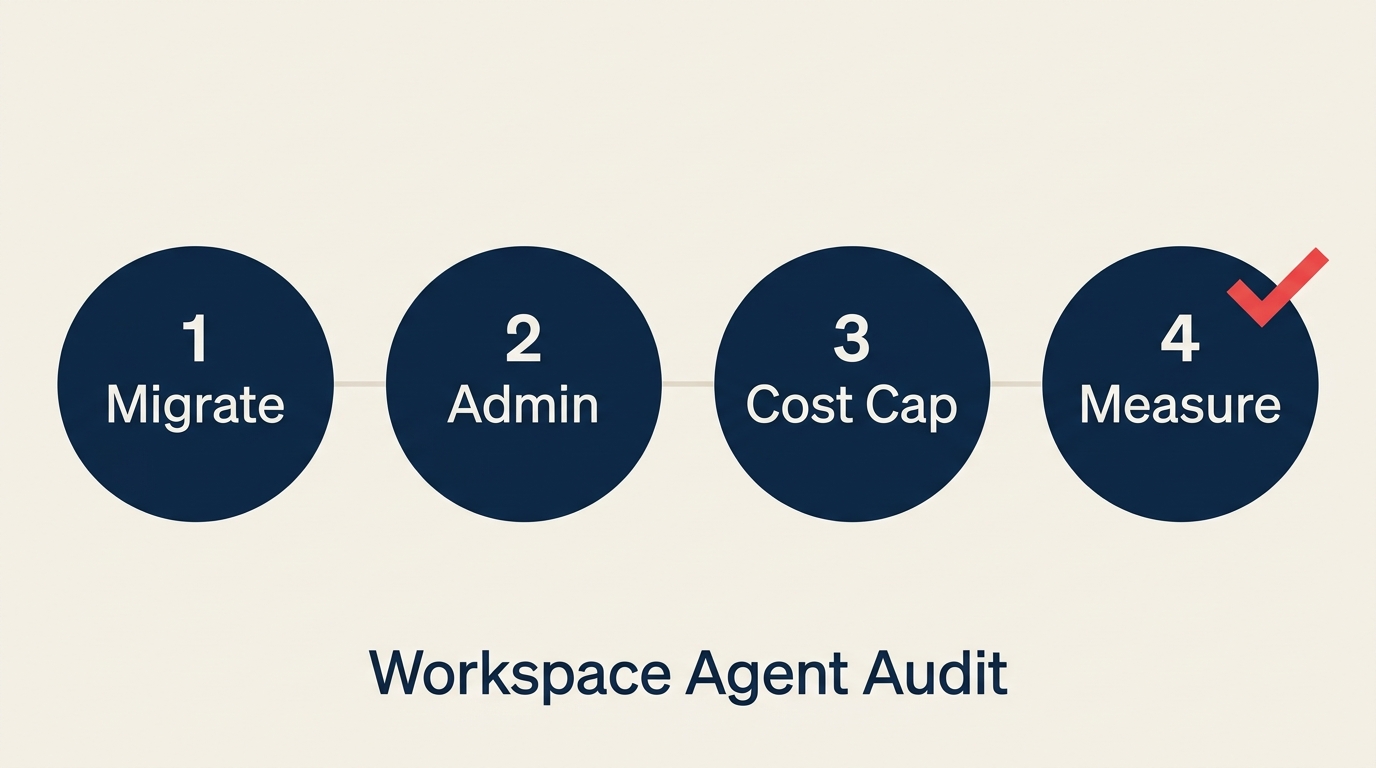
Este es el núcleo de lo que denominamos la Auditoría del Workspace Agent (AWA): cuatro preguntas que le dan a Sales Ops una forma estructurada de evaluar el lanzamiento de Workspace Agents antes de que el contador de precios arranque. La AWA no trata de entusiasmarse con las funcionalidades. Se trata de convertir un anuncio de proveedor en una lista de acciones concretas con un responsable y una fecha límite.
P1: ¿Qué flujos de trabajo ya viven en GPT compartidos y necesitan migrar?
Comience con un inventario. Consulte los GPT personalizados compartidos actuales de su organización y mapee cada uno a su caso de uso principal. Ejemplos comunes: un GPT de "Resumen de Cuenta" que los representantes usan antes de llamadas de descubrimiento, un GPT de "Borrador de Propuesta" que los AE activan para negocios en el medio del funnel, un GPT de "Resumen de Llamada" que los gerentes usan para revisar la actividad de los representantes.
Para cada uno, responda dos preguntas. Primero: ¿se beneficia este flujo de trabajo de la conectividad con Salesforce o Slack? Si la respuesta es sí, es un candidato para migración. Un agente de "Resumen de Cuenta" que puede extraer directamente el registro de cuenta en Salesforce en lugar de depender de lo que el representante pegue es una herramienta significativamente mejor.
Segundo: ¿este flujo de trabajo está activamente en uso o es un agente zombie? La proliferación de GPT personalizados es real. Muchas organizaciones construyeron una docena de GPT en 2024 y 2025 que nadie abre. La fecha límite del 6 de julio es una buena función de fuerza para eliminar los de bajo valor antes de llevarlos a un sistema facturado por uso.
P2: ¿Qué están haciendo por separado su administrador de Slack y el de Salesforce con el nuevo conector?
Esta pregunta pone en evidencia un riesgo de coordinación que los equipos de Sales Ops suelen pasar por alto. Los Workspace Agents tienen conectores para Slack y Salesforce, pero esos conectores requieren aprobación en el lado de la plataforma, no solo en el de OpenAI. Su administrador de Salesforce controla qué objetos y campos puede leer y escribir una aplicación conectada por OAuth. Su administrador de Slack controla qué aplicaciones pueden publicar en qué canales y qué usuarios pueden instalar integraciones a nivel de workspace.
Si Sales Ops avanza con Workspace Agents sin involucrar a ambos administradores, ocurre una de dos cosas: el agente queda bloqueado a nivel del conector y no funciona, o el agente se aprueba con permisos demasiado amplios porque nadie definió el alcance con anticipación. Ningún resultado es aceptable.
La solución es una sesión de planificación conjunta, con Sales Ops, el administrador de Salesforce y el administrador de Slack, antes de que cualquier agente pase a producción. Defina los permisos mínimos que necesita el agente, documéntelos y lleve la aprobación a través de su proceso de gestión de cambios existente.
P3: ¿Cuál es su tope de costos cuando entren en vigencia los precios basados en créditos el 6 de julio?
OpenAI aún no ha publicado las tarifas por crédito, pero la estructura de precios (créditos consumidos por acción del agente) está confirmada. Eso significa que Sales Ops necesita trabajar desde el presupuesto hacia atrás, no desde el uso hacia adelante.
Comience con un modelo aproximado. ¿Cuántos agentes espera tener activos para el 6 de julio? ¿Cuántas veces al día se invocará cada agente? Multiplique por una suposición conservadora de costo por crédito (actualícela cuando se publiquen las tarifas) y agregue un margen del 30% para picos. Ese número se convierte en su solicitud de tope mensual inicial a finanzas.
Vale la pena señalar el paralelismo: cuando HubSpot pasó a precios basados en resultados para sus agentes de AI, los CRO que no habían presupuestado de antemano el costo variable se encontraron con reasignaciones de presupuesto a mitad de año. La historia de los precios basados en resultados de HubSpot es una referencia útil. El cambio en los precios de los flujos de trabajo de ventas de OpenAI Codex seguirá el mismo patrón: los que se mueven primero y definen el tope tienen más control que los que reaccionan ante una factura.
Una consideración adicional: ¿quién paga por defecto? Si su equipo de Sales Ops está construyendo y desplegando los agentes, aclare ahora si el uso se carga a un pool central de créditos de TI o al presupuesto de su departamento.
P4: ¿Cómo medirá el valor del agente frente al tiempo de SDR y AE que reemplaza?
Esta es la pregunta que la mayoría de los equipos omite, y es la que determina si los Workspace Agents sobreviven a su primera revisión trimestral. Sin un marco de medición, queda defendiendo costos de uso con anécdotas. Con uno, puede mostrar los números.
La medición base es directa: antes de desplegar un Workspace Agent, mida cuánto tiempo dedica actualmente un representante a la tarea que reemplazará. Un SDR que construye un resumen de cuenta manualmente puede tardar entre 12 y 15 minutos por cuenta. Si ese SDR hace 20 por semana, el agente está reemplazando aproximadamente 4 a 5 horas de trabajo semanal por SDR.
La comparación de ROI es entonces: costo en créditos por invocación multiplicado por invocaciones semanales frente a horas ahorradas multiplicadas por el costo totalmente cargado del representante por hora. Si el agente cuesta 0,50 dólares por ejecución y el SDR lo ejecuta 20 veces a la semana, eso son 10 dólares por SDR a la semana frente a 4 o 5 horas de tiempo recuperado. Ese caso es fácil de defender, pero solo si capturó primero la línea base.
Decida ahora cuál es la línea base "antes", quién la rastrea y en qué intervalo ejecutará la comparación. Esa es la línea base de valor por agente que le permite eliminar los agentes de bajo rendimiento antes de que acumulen gasto en créditos.
Una Tabla Comparativa: GPT Personalizados vs Workspace Agents
| Dimensión | GPT Personalizados | Workspace Agents |
|---|---|---|
| Alcance | Artefacto por usuario, compartible por enlace | Artefacto de equipo organizacional con gobernanza de administrador |
| Entorno de ejecución | Solo interfaz de chat de ChatGPT | ChatGPT + Slack + Salesforce mediante conectores nativos |
| Conectores | Ninguno nativo (alternativas mediante plugins) | Slack y Salesforce de primera clase, más en el roadmap |
| Gobernanza | Ninguna (el creador puede compartir con cualquiera) | Controles de administrador sobre quién construye, comparte e invoca |
| Precios | Incluido en el plan de ChatGPT | Gratuito hasta el 6 de julio de 2026, luego basado en créditos |
La Lista de Acciones para Sales Ops en los Próximos 30 Días
Haga un inventario de sus GPT personalizados compartidos. Liste cada GPT compartido que su equipo de Sales Ops o RevOps haya construido o aprobado. Etiquete cada uno como activo, inactivo o zombie. Los activos se evalúan para migración. Los inactivos reciben una verificación de uso de 30 días. Los zombies se archivan.
Programe una sesión conjunta con sus administradores de Salesforce y Slack. No envíe un mensaje de Slack: reserve una llamada de 30 minutos. Llegue con los objetos y canales específicos a los que desea que accedan los agentes. Salga con un alcance documentado y un cronograma de aprobación.
Redacte una política de tope de costos. Incluso sin las tarifas de crédito finales, documente el proceso: quién aprueba un nuevo Workspace Agent, qué umbral de uso activa una revisión y quién tiene autoridad para suspender un agente que consume créditos de forma inesperada. Esto es más fácil de redactar antes de que el contador arranque que después.
Defina una línea base de valor por agente para su primer candidato a migración. Elija un flujo de trabajo, el de mayor frecuencia, y mídalo manualmente antes de migrarlo a un Workspace Agent. Documente la línea base. Ese es su grupo de control.
Construya un calendario de eliminación para agentes de bajo valor. Fije una fecha de revisión a 60 días para cada agente que despliegue. A los 60 días, si el agente no muestra valor medible frente a su costo en créditos, se suspende. Esto evita que el problema de proliferación migre desde los GPT personalizados al nuevo sistema.
Monitoree la página de precios de OpenAI antes del 6 de julio. Cuando se publiquen las tarifas de crédito, actualice su modelo de costos y revalide la solicitud de tope con finanzas. No espere a la primera factura para conocer las tarifas.
FAQ
¿Los Workspace Agents reemplazan los GPT compartidos?
Sí, funcionalmente. OpenAI ha posicionado a los Workspace Agents como el sucesor de los GPT personalizados para casos de uso en equipo. Los GPT personalizados existentes no desaparecerán de inmediato, pero la inversión de OpenAI se orienta claramente hacia los Workspace Agents. Los equipos deben planificar migrar sus GPT compartidos de mayor valor al nuevo sistema antes de la transición a precios basados en créditos.
¿Quién paga por el uso basado en créditos de forma predeterminada?
Eso depende de cómo esté estructurado el plan ChatGPT Enterprise de su organización. El uso generalmente se carga a un pool de créditos organizacional gestionado por el administrador de la cuenta. Los equipos de Sales Ops que despliegan agentes deben confirmar con su contacto de TI o adquisiciones si el uso de agentes se atribuye a un pool central o a un presupuesto departamental, y configurar la visibilidad del uso antes del 6 de julio.
¿Pueden estos agentes escribir de vuelta en Salesforce?
Según lo anunciado, sí, pero el alcance de acceso de escritura depende de cómo su administrador de Salesforce configure el conector. Los permisos de lectura y escritura se establecen a nivel de aplicación conectada en Salesforce. Antes de desplegar un agente que registre actividades de llamada o actualice etapas de oportunidad, confirme los permisos exactos con su administrador de Salesforce y documente qué puede tocar el agente.
Aprenda Más
- Plataforma de Agentes Enterprise de OpenAI: Lo que RevOps Necesita Saber Antes de que su Equipo Empiece a Construir
- El Movimiento al Servidor MCP de Outreach Cambia Cómo se Construyen los Flujos de Trabajo de Ventas con AI
- HubSpot Acaba de Reescribir las Reglas de Precios de AI
- Salesforce Puso un Colaborador de AI en Cada Barra de Búsqueda
Si su equipo está en ChatGPT Business o Enterprise, el próximo paso no es leer más sobre los Workspace Agents. Es abrir su lista de GPT personalizados compartidos y comenzar el inventario. La fecha límite del 6 de julio es real, el cambio de precios está confirmado, y los equipos que hagan este trabajo ahora tendrán una gobernanza más limpia, un modelo de costos y una línea base de valor antes de que el contador arranque. La transición a precios basados en créditos de los workspace agents no tiene que ser una sorpresa.

On this page
- Lo que OpenAI Acaba de Publicar
- Por Qué Esto es Diferente de la Plataforma de Agentes Enterprise
- La Auditoría de 4 Preguntas que Debe Ejecutar Sales Ops
- P1: ¿Qué flujos de trabajo ya viven en GPT compartidos y necesitan migrar?
- P2: ¿Qué están haciendo por separado su administrador de Slack y el de Salesforce con el nuevo conector?
- P3: ¿Cuál es su tope de costos cuando entren en vigencia los precios basados en créditos el 6 de julio?
- P4: ¿Cómo medirá el valor del agente frente al tiempo de SDR y AE que reemplaza?
- Una Tabla Comparativa: GPT Personalizados vs Workspace Agents
- La Lista de Acciones para Sales Ops en los Próximos 30 Días
- FAQ
- ¿Los Workspace Agents reemplazan los GPT compartidos?
- ¿Quién paga por el uso basado en créditos de forma predeterminada?
- ¿Pueden estos agentes escribir de vuelta en Salesforce?
- Aprenda Más