Automotivación: Cómo Mantenerse Impulsado en el Trabajo

Turn this article into takeaways for your work.


Each assistant summarizes the article only for you and suggests best practices for your work.
La automotivación es lo que le mantiene avanzando cuando nadie está mirando. Es la diferencia entre los profesionales que sostienen un alto output durante años y los que necesitan presión externa para hacer las cosas.
¿Qué es la Automotivación?
La automotivación es el impulso interno para iniciar y persistir en las tareas sin necesidad de dirección o recompensa externa. Es lo que lleva a alguien a comenzar un proyecto antes de que su gerente lo solicite, a superar un problema difícil en lugar de postergarlo, y a seguir mejorando mucho después de cumplir el mínimo requerido.
Los psicólogos rastrean las raíces de la automotivación en la teoría de la autodeterminación (SDT), desarrollada por Deci y Ryan. La SDT identifica tres necesidades psicológicas fundamentales que, cuando se satisfacen, producen motivación intrínseca: autonomía (sensación de control sobre las propias decisiones), competencia (creencia de que se puede crecer y tener éxito) y pertenencia (conexión con el trabajo significativo y con las personas). Cuando los tres están presentes, las personas no necesitan que un gerente las empuje. Se impulsan solas.
Punto clave: La automotivación no es un rasgo de personalidad que se tiene o no se tiene. Es una habilidad que opera a través de hábitos, entorno y pensamiento claro sobre lo que importa y por qué.
Datos clave
- En un estudio de Gallup sobre más de 100.000 equipos, los empleados que sienten que sus fortalezas se utilizan a diario tienen seis veces más probabilidades de estar comprometidos, lo que se correlaciona estrechamente con la motivación intrínseca.
- Una investigación publicada en el Journal of Personality and Social Psychology encontró que las personas que persiguen metas vinculadas a razones autónomas (elegidas por ellas mismas) muestran mayor persistencia y bienestar que las impulsadas por presiones externas.
- Una encuesta de McKinsey de 2023 reveló que el 55% de los empleados cita la "falta de sentido en el trabajo" como principal causa de desvinculación, lo que sugiere que los problemas de automotivación suelen surgir de déficits de propósito, no de pereza.
Motivación Intrínseca vs. Motivación Extrínseca
La mayoría de las personas funciona con una combinación de ambas. Entender la diferencia importa porque la motivación intrínseca es más duradera y se transfiere a contextos donde las recompensas externas no están disponibles.
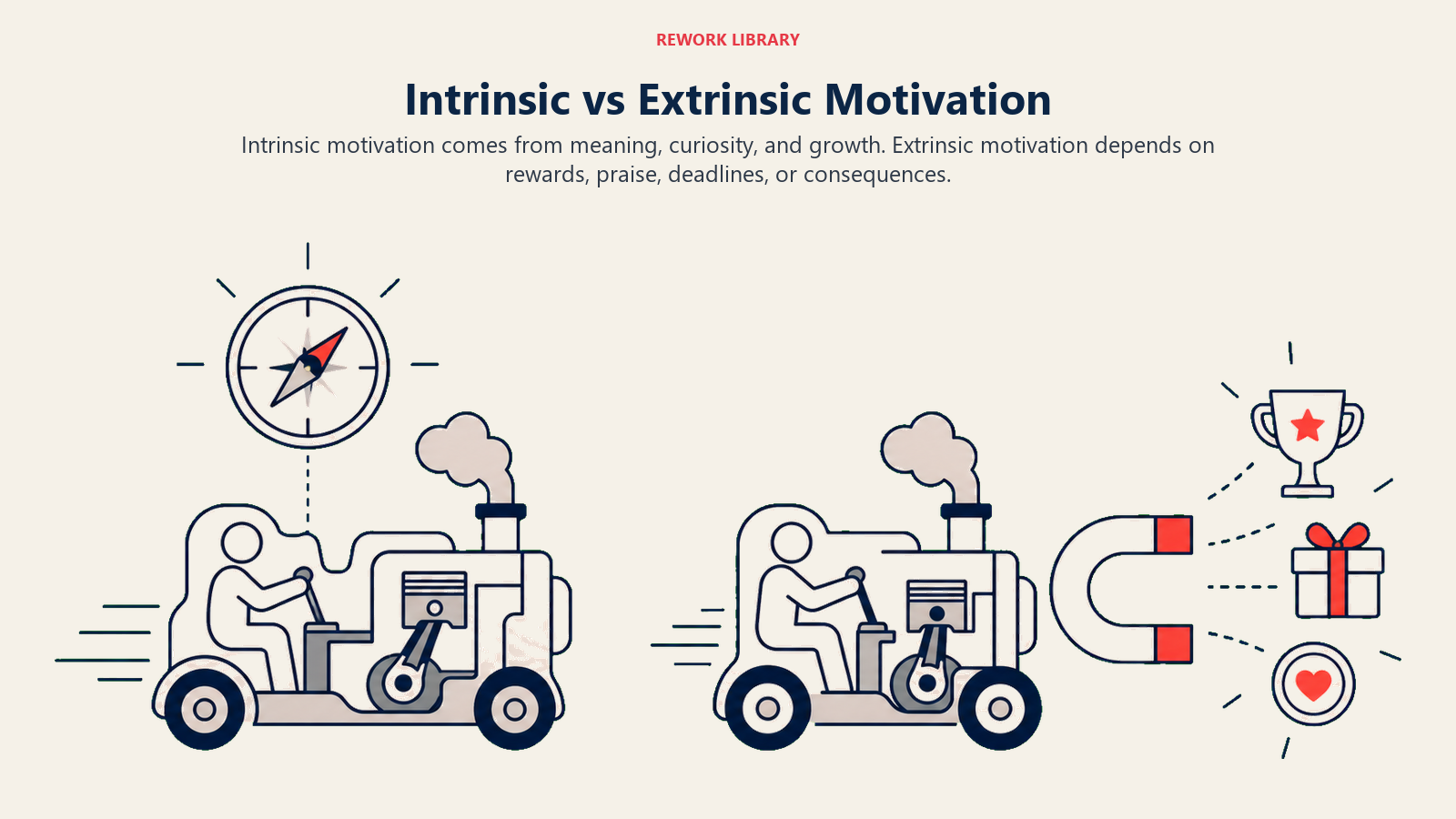
| Dimensión | Motivación Intrínseca | Motivación Extrínseca |
|---|---|---|
| Fuente | Interna (valores, curiosidad, crecimiento) | Externa (salario, reconocimiento, plazos) |
| Durabilidad | Persiste sin estímulos externos | Se desvanece cuando se retira la recompensa |
| Calidad del trabajo | Generalmente mayor; el compromiso impulsa el cuidado | Adecuada; cumple el estándar mínimo |
| Ejemplo en el trabajo | Quedarse hasta tarde para resolver un problema difícil que le resulta interesante | Completar un informe para evitar una observación en la evaluación de desempeño |
| Riesgo | Puede interrumpirse por un entorno deficiente o un propósito poco claro | Crea dependencia de la validación externa |
El objetivo no es eliminar los motivadores extrínsecos. El salario, el reconocimiento y los plazos son importantes. Pero los profesionales que también pueden activar la motivación intrínseca no se derrumban cuando las recompensas externas se agotan o se estancan.
Por qué Importa la Automotivación en el Trabajo
Desempeño. Los empleados automotivados superan consistentemente a sus compañeros en trabajo complejo y abierto. Cuando una tarea no está completamente especificada, la persona con impulso interno descubre qué significa "bien hecho". La persona que espera instrucciones se detiene.
Resiliencia. Los contratiempos son rutinarios. Los deals se caen, los proyectos se cancelan, el feedback duele. Las personas automotivadas tratan estos eventos como datos en lugar de veredictos. Comparten mucho ADN con la resiliencia como competencia: ambas requieren mantener una orientación interna estable cuando las condiciones externas son adversas.
Crecimiento profesional. Las empresas promueven a las personas que no necesitan ser gestionadas de cerca. Si su output solo aparece cuando se aproxima un plazo o el gerente hace seguimiento, eso es una señal para el liderazgo. La automotivación señala confiabilidad y disposición para asumir mayor alcance.
Entorno de equipo. Las personas automotivadas marcan el tono. No esperan a que les pregunten. Son las primeras en detectar un vacío y abordarlo. Esa iniciativa se multiplica en un equipo; una persona proactiva puede transformar la energía de quienes la rodean.
Los Rasgos de las Personas Automotivadas
Los profesionales automotivados tienden a compartir un conjunto reconocible de comportamientos. No son dones mágicos de personalidad. Son hábitos desarrollados con el tiempo.
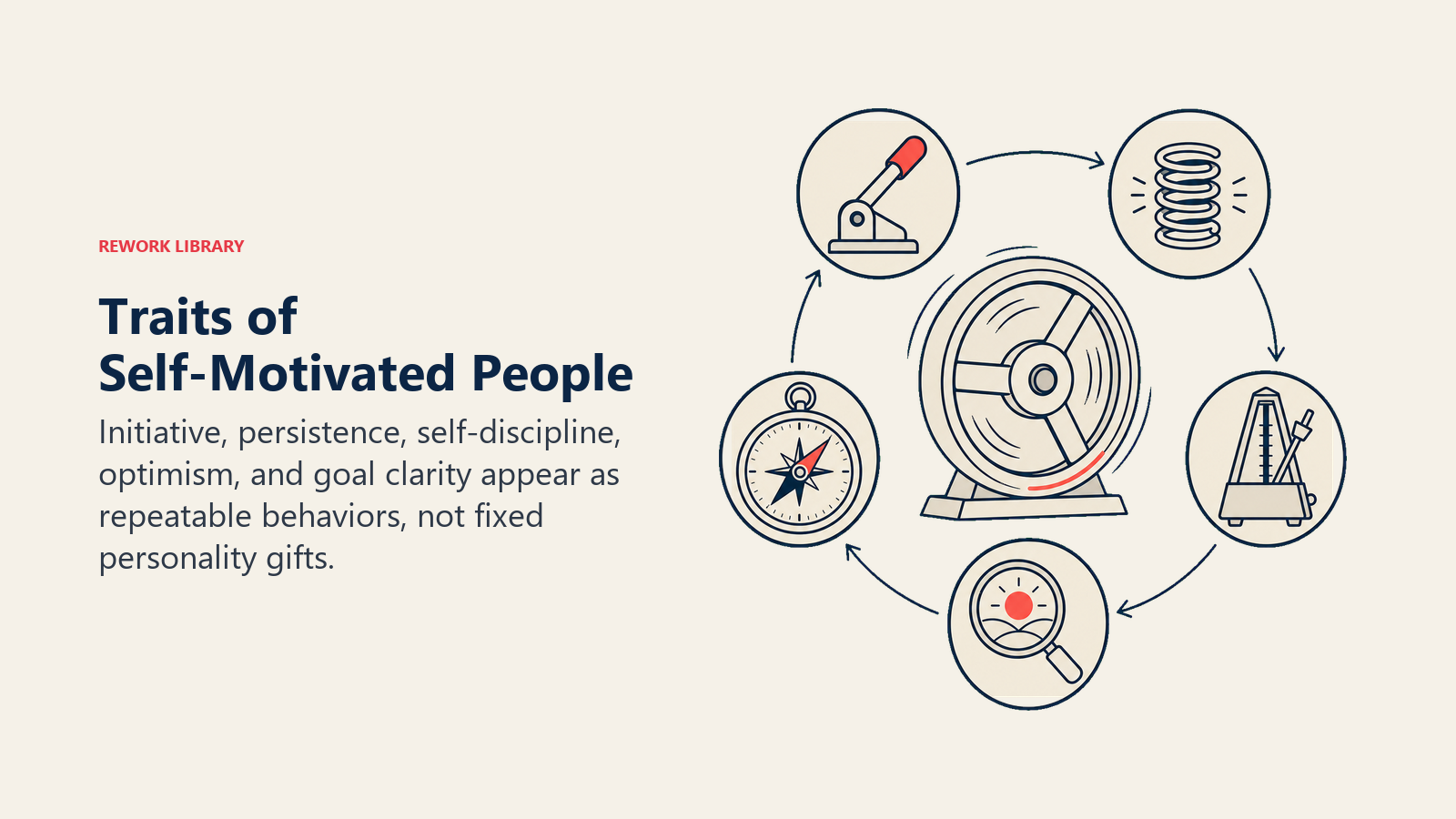
| Rasgo | Cómo se ve en la práctica |
|---|---|
| Iniciativa | Comienza tareas antes de que se lo pidan; propone soluciones en lugar de solo nombrar problemas |
| Persistencia | Vuelve a los problemas difíciles después de toparse con un obstáculo en lugar de abandonarlos |
| Orientación a metas | Mantiene una idea clara de hacia dónde trabaja y revisa el progreso con regularidad |
| Realismo optimista | Espera desafíos pero no los catastrofiza; se ajusta en lugar de rendirse |
| Responsabilidad personal | Asume los errores sin esquivarlos; aprende del fracaso en lugar de evitarlo |
| Satisfacción intrínseca | Encuentra recompensa genuina en el trabajo de calidad, no solo en el reconocimiento de este |
Cómo Desarrollar la Automotivación
La automotivación se construye mediante sistemas, no a través de la fuerza de voluntad. Depender del estado de ánimo o la inspiración para ponerse en marcha es una estrategia perdedora. Depender de un propósito claro, hábitos estructurados y un seguimiento honesto de uno mismo es una estrategia ganadora.
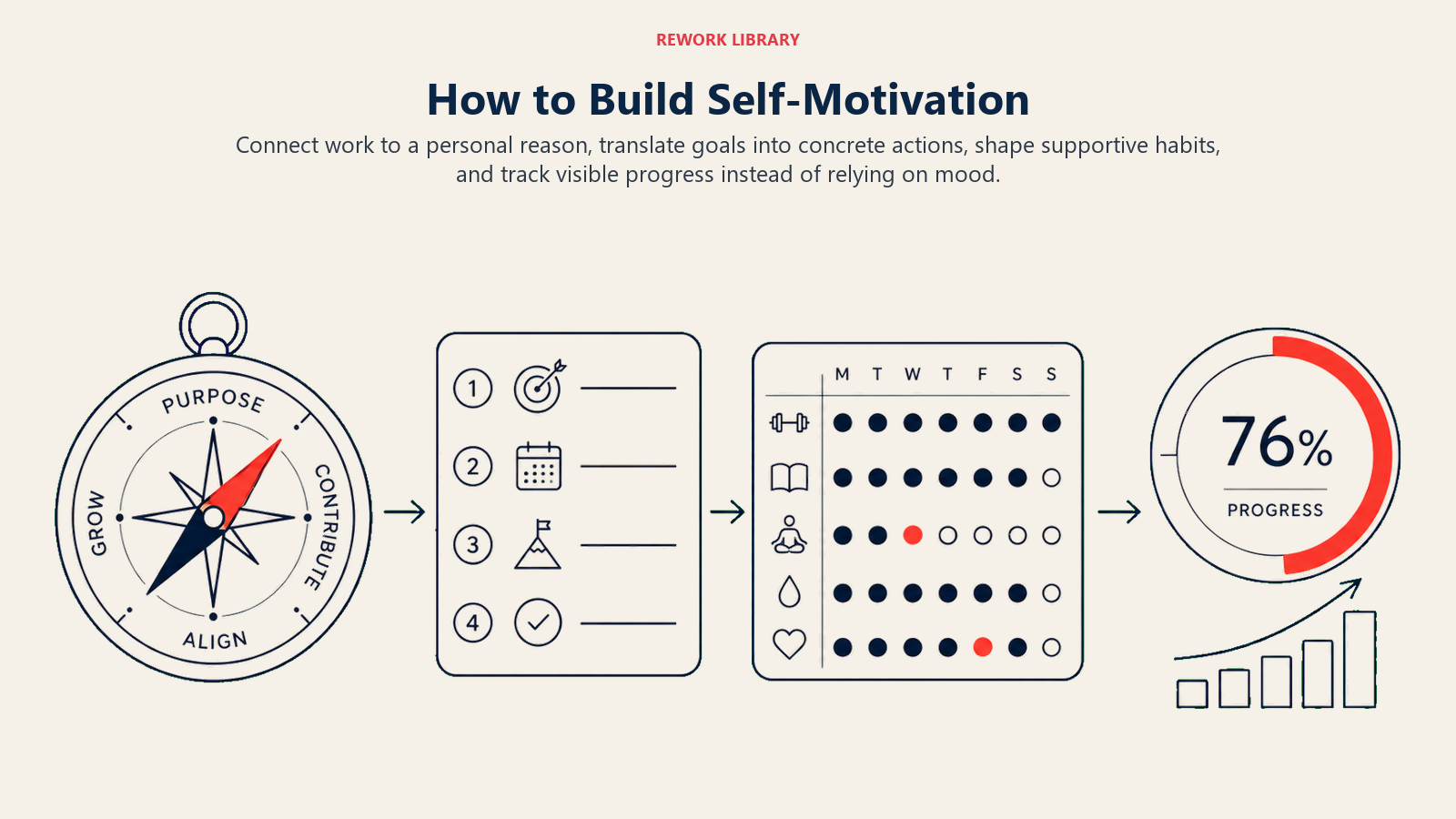
Paso 1: Conecte su trabajo con algo que le importe
El trabajo vago produce esfuerzo vago. Cuando puede articular por qué una tarea importa, crea una razón privada para importarle que existe independientemente de si alguien la observa. No se requiere que su trabajo sea su vocación de vida. Significa encontrar un vínculo: este proyecto desarrolla una habilidad que deseo. Esta relación con el cliente es práctica para algo más grande. Esta disciplina apoya una meta que me importa también fuera del trabajo.
Complemente esto con el pensamiento de growth mindset: enmarque las tareas como constructoras de capacidad, no solo como entregables.
Paso 2: Establezca metas lo suficientemente específicas para ser accionables
Una meta como "mejorar en comunicación" no produce nada. Una meta como "preparar tres puntos concretos de agenda antes de cada reunión este mes" es algo sobre lo que puede actuar hoy. Las personas automotivadas a menudo simplemente son más precisas sobre lo que intentan lograr. Tienen victorias a corto plazo vinculadas a un destino más largo, de modo que el progreso se siente real en lugar de abstracto.
El buen establecimiento de metas no es retórica motivacional. Es estructural. Los objetivos claros reducen la carga cognitiva de decidir qué hacer a continuación.
Paso 3: Divida el trabajo en victorias visibles
El impulso se construye sobre sí mismo. Cuando un proyecto parece monolítico, es fácil sentirse atascado antes de empezar. Dividir grandes metas en subtareas concretas que pueden completarse y tacharse le da una serie de señales reforzadoras de que está avanzando. Estas micro-victorias activan el circuito de recompensa del cerebro de maneras que mantienen la motivación funcional entre los grandes hitos.
Mantenga una "lista de lo realizado" diaria junto a su lista de tareas pendientes. Revisar lo que ha completado es más motivador que mirar lo que queda.
Paso 4: Gestione su energía, no solo su tiempo
Puede tener total claridad sobre qué hacer y no lograr nada si su energía está agotada. Las personas automotivadas prestan atención a cuándo rinden mejor y protegen esas ventanas para las tareas exigentes. Toman descansos reales en lugar de simular ocupación. Monitorizan las señales de burnout antes de que se instale. Esto se superpone directamente con la ética de trabajo como competencia: presentarse bien de forma consistente requiere gestionar el lado de la entrada de su desempeño, no solo el de la salida.
Paso 5: Construya estructuras de responsabilidad que no dependan de la fuerza de voluntad
Cuéntele su compromiso a alguien. Cree un ritmo de revisión con un compañero. Use un seguimiento simple. La responsabilidad externa no es una muleta; es un andamiaje que apoya la motivación interna hasta que sea lo suficientemente fuerte para sostenerse sola. Con el tiempo, el seguimiento propio se vuelve tan fiable como el seguimiento con otra persona.
Esto se conecta directamente con la responsabilidad como habilidad: el objetivo es internalizar los estándares, no depender indefinidamente de la aplicación externa.
Técnicas de Automotivación para los Días Difíciles
No todos los días traen un propósito claro y energía abundante. En los días planos y rutinarios, funcionan tácticas diferentes.

Comience con la regla de los 2 minutos. Si está evitando una tarea, comprométase a trabajar en ella durante solo dos minutos. La mayor parte de la resistencia está en el inicio. Una vez que ha empezado, terminar suele ser más fácil.
Cambie su entorno. El espacio físico afecta el estado mental. Si está bloqueado, moverse a una habitación diferente, un café o simplemente ponerse de pie mientras trabaja puede romper el ciclo.
Tome prestada motivación de una versión futura de usted mismo. Pregúntese: ¿cómo sería la versión de mí que manejó esto bien? ¿Qué habrían hecho hoy? Este reencuadre le cambia de la evitación al modo de desempeño.
Reduzca el alcance. Cuando la motivación es baja, el perfeccionismo es el enemigo. En lugar de preguntar "¿cómo hago esto bien?", pregúntese "¿cuál es el movimiento más pequeño y útil que puedo hacer?" Completar algo imperfecto supera a no completar nada.
Reconéctese con un logro anterior. Lea feedback positivo antiguo, observe un proyecto del que esté orgulloso o hable con alguien cuyo trabajo le dé energía. La motivación es en parte un estado, y los estados pueden modificarse deliberadamente.
Ejemplos de Automotivación
La automotivación se manifiesta de manera diferente según el rol y el contexto. Así se ve en la práctica:
| Escenario | Sin Automotivación | Con Automotivación |
|---|---|---|
| El proyecto supera el alcance | Espera a que el gerente reestablezca la dirección | Identifica el problema de forma proactiva y lleva tres opciones a la próxima revisión |
| Se identifica una brecha de habilidades | Espera que le asignen una capacitación | Se inscribe en un curso de forma independiente; practica en un proyecto paralelo |
| Semana tranquila sin plazos urgentes | Ocupa el tiempo con actividades de bajo valor | Usa el espacio para avanzar en una prioridad a largo plazo o mejorar un proceso |
| Recibió feedback de desempeño difícil | Se pone a la defensiva o se desanima | Hace preguntas de aclaración y construye un plan de mejora específico en una semana |
| Tarea repetitiva y monótona | Hace el mínimo; la atención se dispersa | Encuentra la forma de hacerlo más rápido, documentarlo o delegarlo de forma inteligente |
Preguntas Frecuentes
¿Cuál es la diferencia entre automotivación y disciplina?
La disciplina es la capacidad de actuar incluso cuando no tiene ganas. La automotivación es el sentido más profundo de propósito e impulso que hace que la disciplina sea más fácil de sostener. Las dos se refuerzan mutuamente, pero la automotivación tiende a ser más duradera porque está vinculada al significado en lugar de a la pura fuerza de voluntad.
¿Puede aprenderse la automotivación, o es algo fijo?
Absolutamente puede aprenderse. La teoría de la autodeterminación y un amplio cuerpo de investigación conductual confirman que la motivación responde al entorno, al reencuadre y al desarrollo de habilidades. Las personas que creen que la motivación es un rasgo fijo a menudo están atascadas no por biología sino porque no han cambiado las condiciones que la apoyarían.
¿Qué mata la automotivación en el trabajo?
Los mayores factores son el propósito poco claro (no sabe hacia dónde trabaja ni por qué importa), la microgestión persistente (que socava la autonomía que requiere la motivación intrínseca), el agotamiento crónico y una cultura que recompensa la apariencia por encima de los resultados. Abordar estos problemas estructurales importa más que el trabajo individual de mentalidad por sí solo.
¿Cómo sabe un gerente si un empleado carece de automotivación o de claridad?
Observe qué ocurre cuando las expectativas se hacen explícitas. Un problema de claridad se resuelve con mejor dirección. Un problema de motivación no. Si alguien se desempeña bien cuando las metas son específicas y las consecuencias son claras, pero se desvanece cuando se le da trabajo abierto, esa es una brecha de automotivación que vale la pena abordar directamente.
¿La automotivación es lo mismo que ser proactivo?
En gran medida sí, pero "proactivo" generalmente describe el output conductual (toma iniciativa, pone las cosas en marcha) mientras que la automotivación es el impulso subyacente que produce ese comportamiento. Las personas proactivas tienden a estar automotivadas, pero la automotivación también incluye la persistencia a través de las fases difíciles, no solo la energía para empezar.
Lectura Relacionada
- Iniciativa -- cómo actuar antes de que se le pida y cerrar la brecha entre notar y hacer
- Resiliencia -- mantenerse funcional cuando las condiciones empujan en contra de sus metas
- Growth Mindset -- el sistema de creencias que hace que el aprendizaje automotivado sea sostenible
- Ética de Trabajo -- cómo la fiabilidad y la autodisciplina se manifiestan como competencia visible
- Responsabilidad -- convertir la automotivación en compromisos visibles en los que otros pueden confiar
La automotivación es en última instancia una apuesta que hace en usted mismo: que su esfuerzo, dirección y persistencia se acumularán en algo que vale la pena tener. Los profesionales que la sostienen más tiempo no siempre son los más naturalmente enérgicos. Son los que han construido las condiciones, hábitos y claridad correctos para seguir adelante cuando la energía no es automática.

Senior Customer Retention Strategist
On this page
- ¿Qué es la Automotivación?
- Motivación Intrínseca vs. Motivación Extrínseca
- Por qué Importa la Automotivación en el Trabajo
- Los Rasgos de las Personas Automotivadas
- Cómo Desarrollar la Automotivación
- Paso 1: Conecte su trabajo con algo que le importe
- Paso 2: Establezca metas lo suficientemente específicas para ser accionables
- Paso 3: Divida el trabajo en victorias visibles
- Paso 4: Gestione su energía, no solo su tiempo
- Paso 5: Construya estructuras de responsabilidad que no dependan de la fuerza de voluntad
- Técnicas de Automotivación para los Días Difíciles
- Ejemplos de Automotivación
- Lectura Relacionada