Habilidades analíticas: Definición, ejemplos y cómo mejorarlas
Turn this article into takeaways for your work.


Each assistant summarizes the article only for you and suggests best practices for your work.
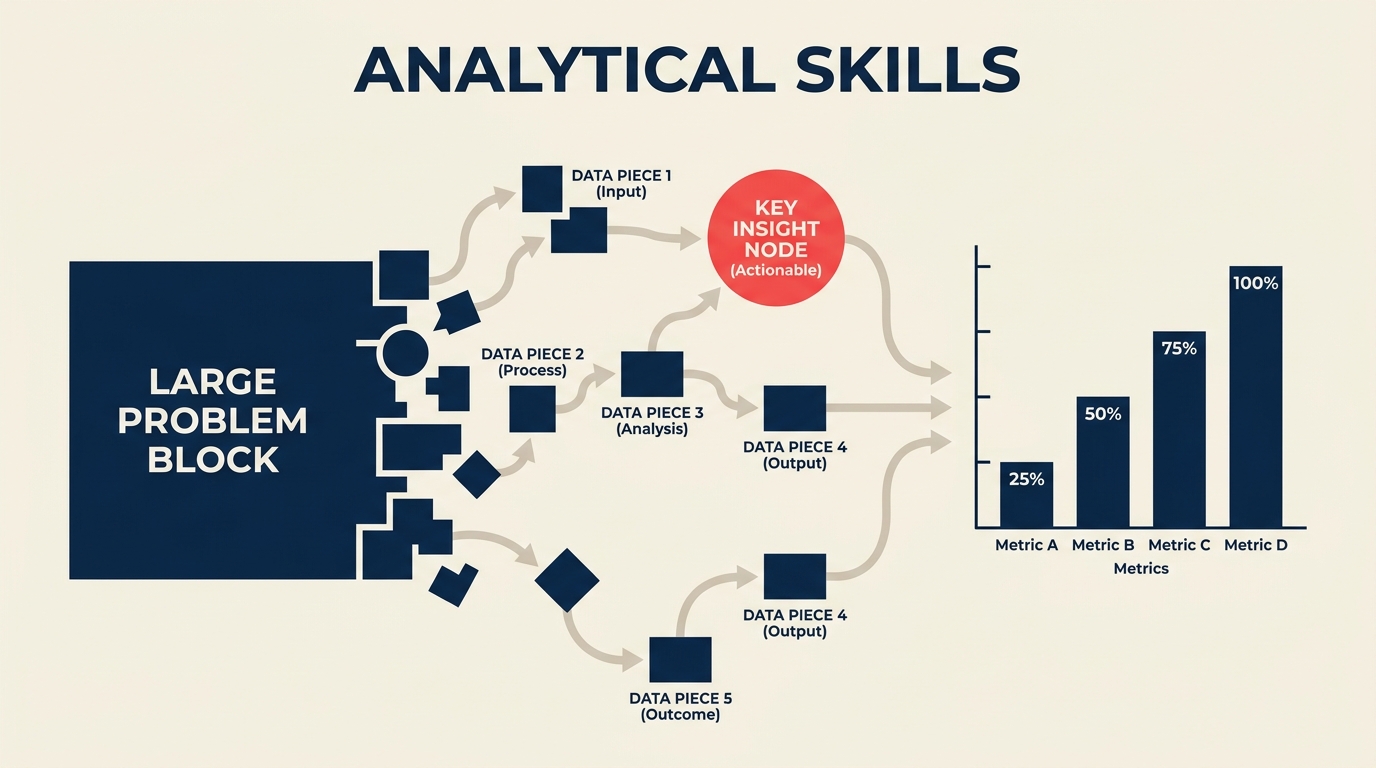
Las habilidades analíticas son las que le permiten tomar un conjunto de información confusa y convertirla en algo sobre lo que puede actuar. Aparecen cada vez que usted soluciona un proceso, interpreta un Dashboard, diagnostica por qué una campaña tuvo un rendimiento inferior o decide qué proveedor elegir. Y aunque la gente suele asumir que estas habilidades pertenecen a los científicos de datos y economistas, la realidad es que los empleadores de todos los sectores las buscan activamente.
La mayoría de los roles generan hoy más datos que nunca, pero los datos sin análisis son solo ruido. La persona que puede atravesar ese ruido, identificar lo que importa y explicarlo con claridad es la que recibe la confianza para tomar decisiones más importantes.
¿Qué son las habilidades analíticas?
Las habilidades analíticas son la capacidad de recopilar información, descomponerla en sus componentes, identificar patrones o problemas y llegar a conclusiones sólidas. Combinan la observación, el razonamiento y el pensamiento estructurado para pasar de los hechos brutos al conocimiento útil.
Piense en ello como un ciclo: usted recopila información, cuestiona lo que ve, busca relaciones y contradicciones, y llega a una conclusión que puede defender. Ese ciclo se aplica tanto si lee un informe financiero, como si depura un error de software o trata de entender por qué la satisfacción del cliente bajó en el último trimestre.
Las habilidades analíticas se sitúan en la intersección de varias capacidades relacionadas: pensamiento crítico, resolución de problemas, análisis de datos e habilidades de investigación. Comprender cómo se conectan, y en qué se diferencian, le ayuda a desarrollarlas de forma más deliberada.
Datos clave
- El Informe sobre el Futuro del Empleo 2025 del Foro Económico Mundial clasifica el pensamiento analítico como la habilidad central más importante para los trabajadores hasta 2030, por encima del pensamiento creativo y la alfabetización en IA. (WEF, 2025)
- El Informe de Aprendizaje en el Lugar de Trabajo 2024 de LinkedIn encontró que el razonamiento analítico se encuentra entre las cinco habilidades más mencionadas por los empleadores en las ofertas de empleo de todos los sectores, desde la salud hasta la manufactura. (LinkedIn, 2024)
- Un análisis del McKinsey Global Institute encontró que la demanda de habilidades cognitivas superiores, incluido el análisis y el razonamiento complejo, está proyectada para crecer un 19% hasta 2030 en las economías avanzadas. (McKinsey, 2021)
Tipos de habilidades analíticas
La capacidad analítica real no es algo único. Es un conjunto de habilidades relacionadas que se refuerzan mutuamente.
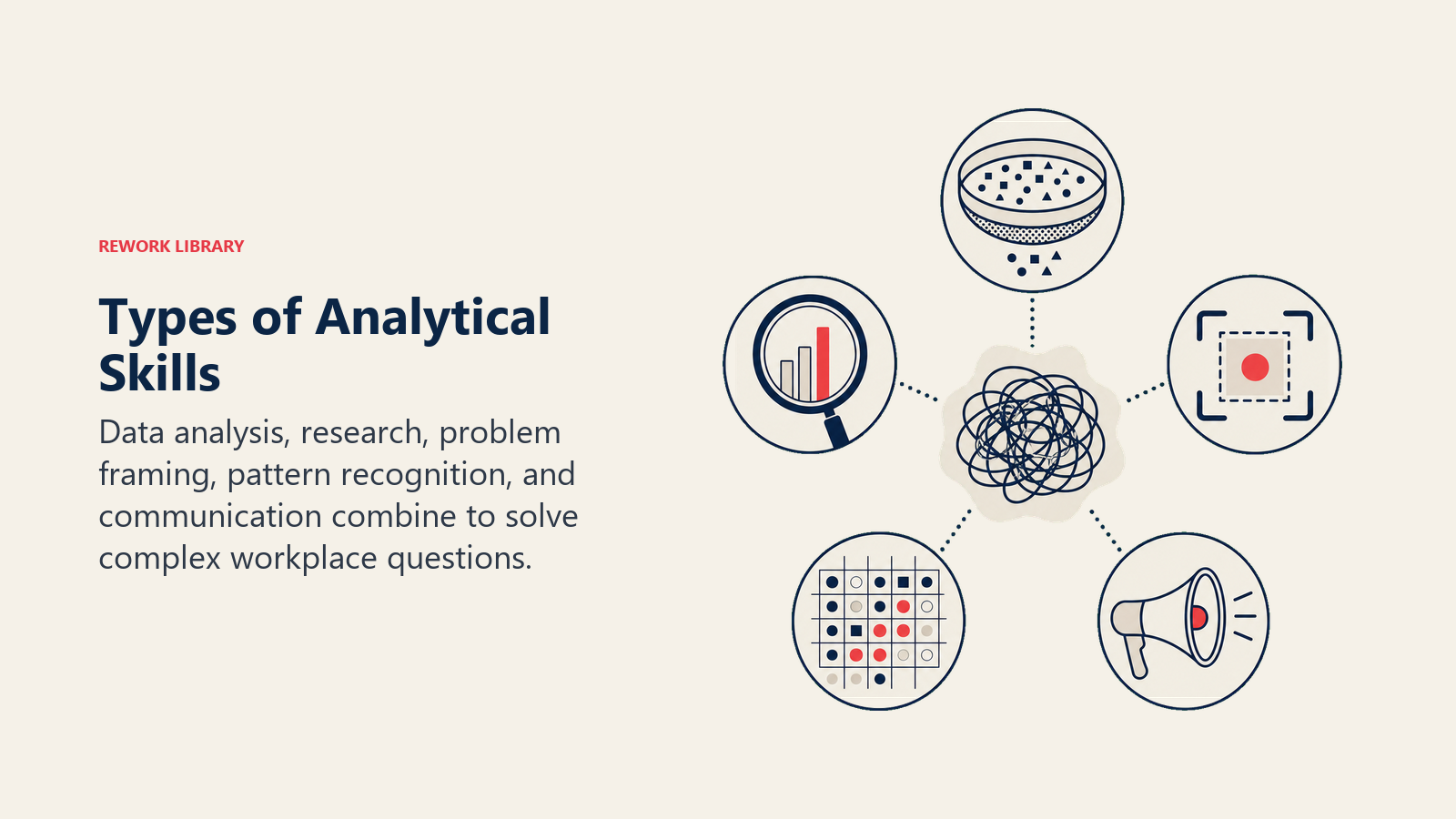
| Habilidad | Qué significa | Ejemplo |
|---|---|---|
| Pensamiento crítico | Evaluar argumentos y evidencia sin aceptarlos al pie de la letra | Cuestionar si un caso de estudio de una empresa se aplica a su propio contexto |
| Análisis de datos | Leer, interpretar y extraer conclusiones de datos cuantitativos o cualitativos | Detectar que una caída en ventas se correlaciona con una categoría de producto específica, no con toda la línea |
| Investigación | Recopilar información relevante y confiable de fuentes apropiadas | Saber en qué informes del sector confiar y cuáles tratar con escepticismo |
| Resolución de problemas | Definir un problema con claridad, generar opciones y seleccionar el mejor camino | Diagnosticar por qué el onboarding tarda 30 días cuando el promedio del sector es 14 |
| Razonamiento lógico | Aplicar lógica estructurada para que las conclusiones se deriven de las premisas | Identificar que si A causa B y B causa C, solucionar A previene C |
| Comunicación de hallazgos | Traducir análisis complejos en lenguaje claro para distintos públicos | Presentar un análisis de causa raíz a un equipo directivo en tres diapositivas |
Cada una de estas habilidades tiene su propia profundidad. El pensamiento sistémico, por ejemplo, extiende el razonamiento lógico hacia el mapeo de cómo diferentes partes de una organización o proceso interactúan. La toma de decisiones toma el resultado del análisis y lo convierte en un curso de acción elegido.
Habilidades analíticas vs. pensamiento crítico
Las personas suelen usar estos términos de forma intercambiable, pero hay una distinción útil.
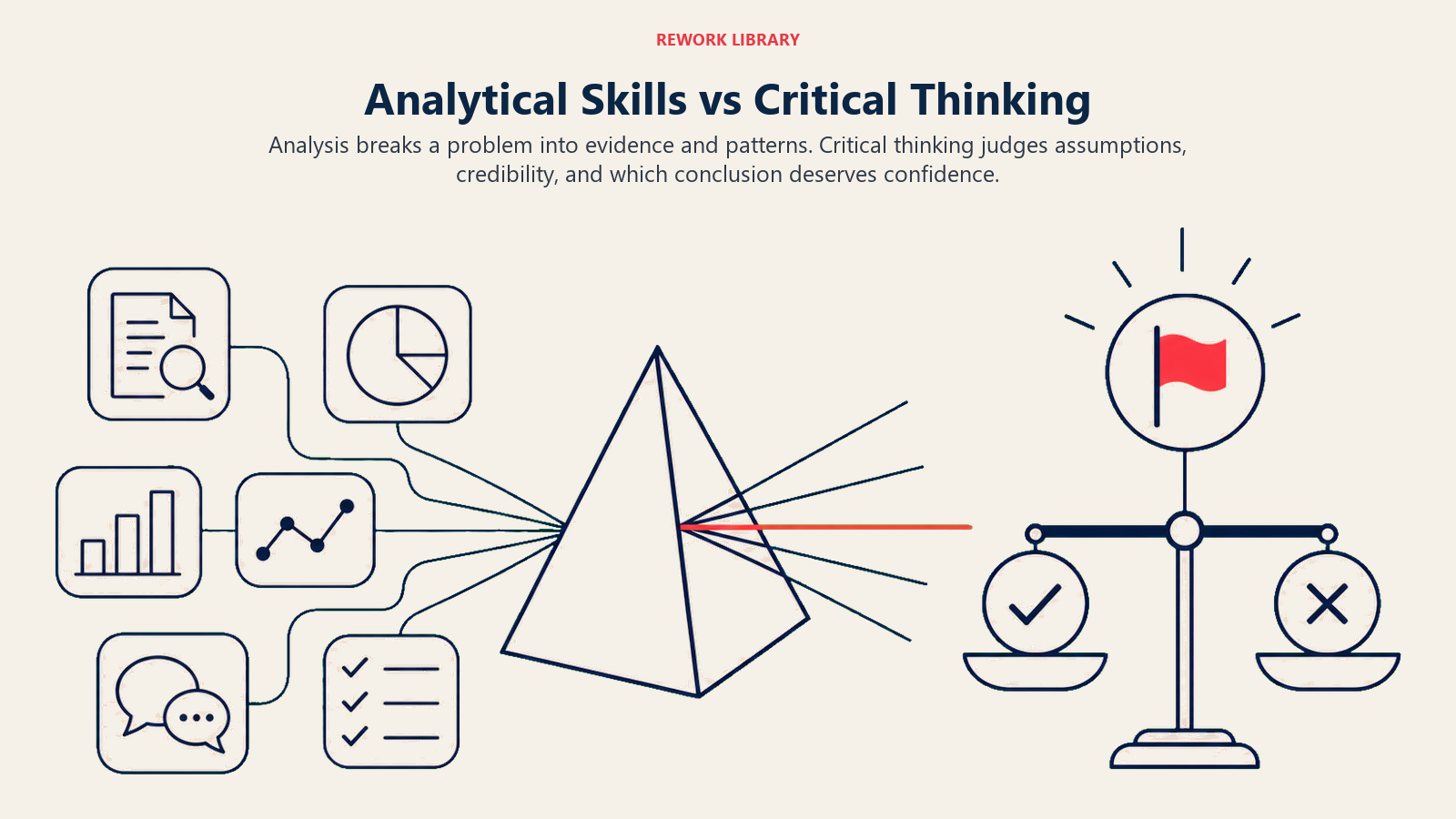
El pensamiento crítico es principalmente evaluativo. Pregunta: "¿Es sólido este argumento? ¿Es confiable esta evidencia? ¿Me está induciendo a error algún sesgo cognitivo?" Se trata de escrutinio.
Las habilidades analíticas son más amplias. Incluyen el acto de descomponer algo, no solo de juzgarlo. Usted puede ser analítico sobre un proceso, un conjunto de datos, un modelo financiero o un mercado. El pensamiento crítico es una herramienta dentro del conjunto de herramientas analíticas.
En la práctica, trabajan juntos. Usted utiliza las habilidades analíticas para descomponer un problema en partes, y el pensamiento crítico para asegurarse de no estar extrayendo conclusiones erróneas de lo que encuentra. Los analistas sólidos hacen ambas cosas sin separarlas conscientemente.
Ejemplos de habilidades analíticas
Las definiciones abstractas solo llegan hasta cierto punto. Así es como se ven unas sólidas habilidades analíticas en roles reales.
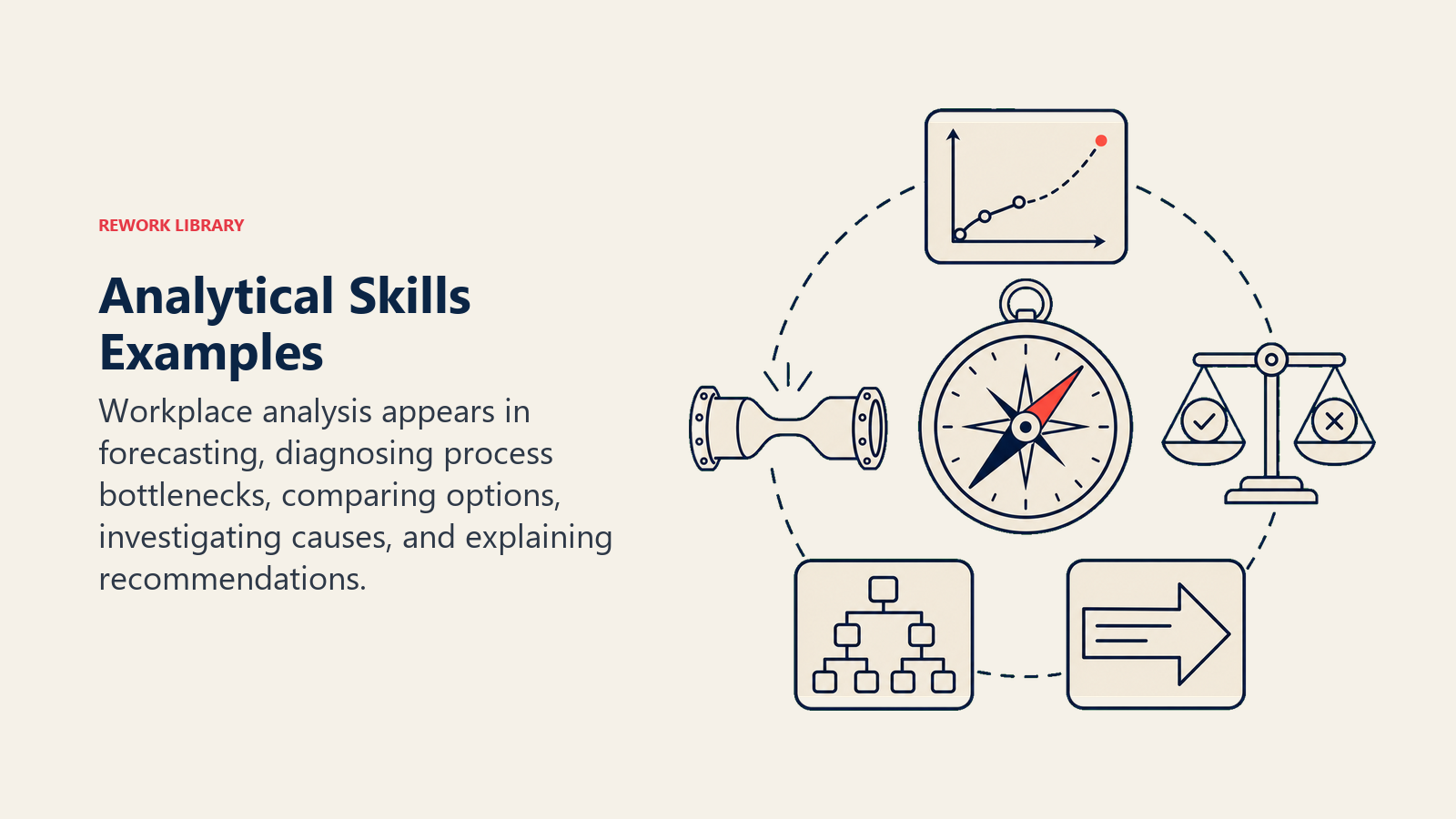
Analista de negocios. Una BA nota que el Churn de clientes aumentó en una región pero no en otras. En lugar de asumir que es un problema de ventas, segmenta los datos por nivel de producto, representante de ventas y tasa de finalización del onboarding. Descubre que los clientes que se dieron de baja en esa región tenían puntuaciones de onboarding por debajo del promedio. Presenta el hallazgo con una recomendación clara: mejorar el onboarding, no el equipo de ventas.
Gerente de marketing. Una campaña genera tasas de clics altas pero conversiones bajas. En lugar de considerarla un éxito (los clics se ven bien) o un fracaso (los ingresos no se movieron), el gerente descompone el Funnel por etapas, identifica que la mayor caída ocurre en la página de precios y recomienda una prueba A/B del diseño de esa página. Eso es análisis, no solo informes.
Gerente de operaciones. Una línea de producción no alcanza sus objetivos semanales por un 8-12%. En lugar de contratar más personal, el gerente mapea cada paso del proceso, mide el tiempo de cada etapa y descubre que un paso tarda un 40% más de lo diseñado debido a un problema de transferencia de software. Solucionar la transferencia restaura el rendimiento total. La clave fue observar el sistema, no culpar a las personas.
Ingeniero de software. Un servicio de back-end comienza a devolver errores en intervalos aleatorios. En lugar de adivinar, el ingeniero extrae los registros, filtra por tipo de error y nota que los errores se agrupan entre las 2am y las 4am. Cruza los datos con la carga del servidor y descubre que un trabajo por lotes programado compite por el mismo grupo de conexiones de base de datos. Aislar el trabajo por lotes resuelve el problema.
Director de RRHH. La rotación voluntaria aumenta un 15% año a año. Las entrevistas de salida mencionan "falta de crecimiento". El director cruza esto con datos de movilidad interna y encuentra que los empleados que se trasladaron a al menos un nuevo rol tienen una rotación un 60% menor que los que permanecieron en una sola función. Rediseña el programa de movilidad para facilitar los traslados. Ese es el pensamiento analítico aplicado a los datos de personas.
Cómo mejorar sus habilidades analíticas
Las habilidades analíticas mejoran a través de la práctica deliberada, no de la exposición pasiva a más información.
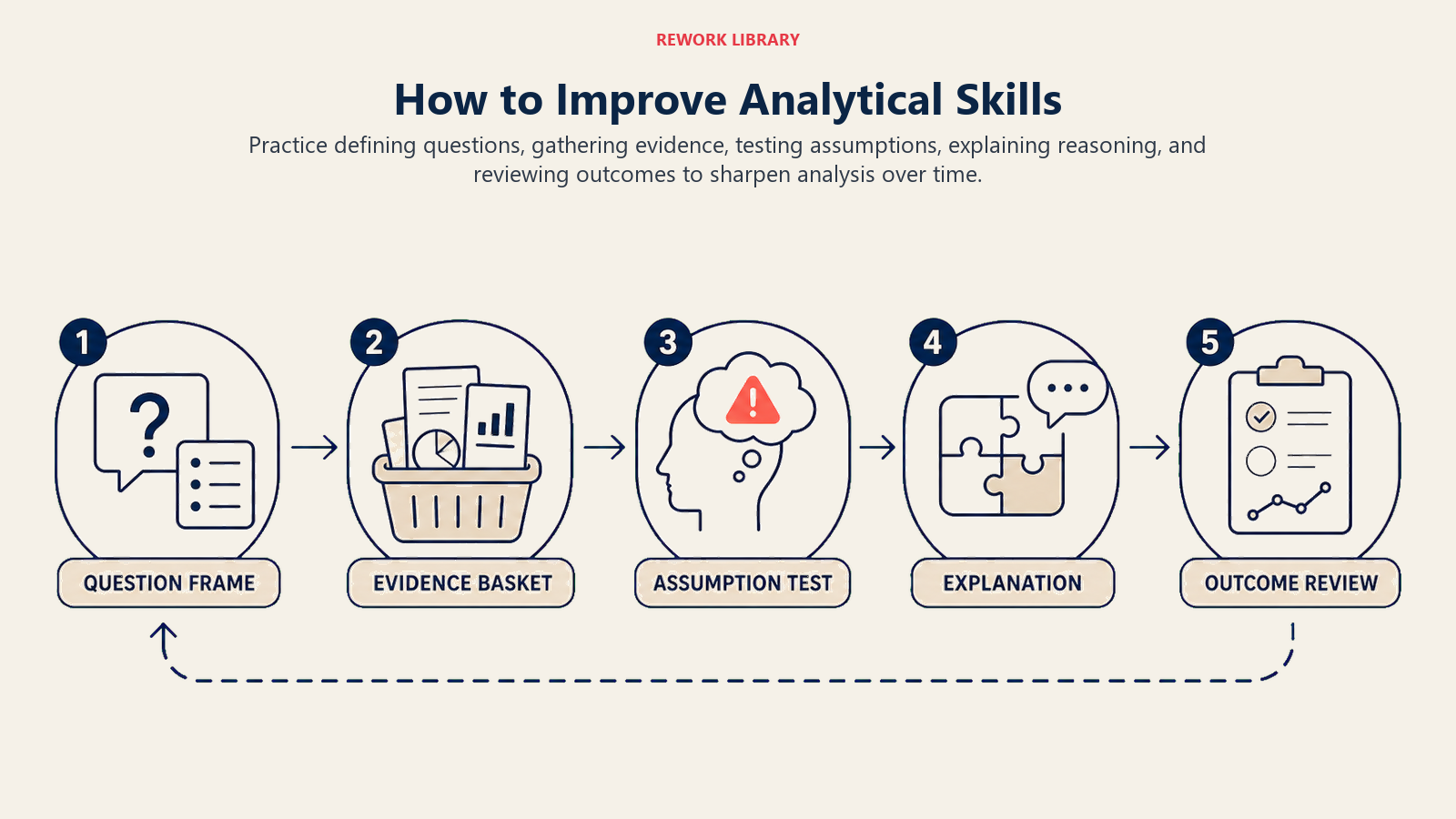
Paso 1: Practique la descomposición estructurada de problemas
Antes de intentar resolver cualquier cosa, dedique tiempo a definirla. Anote: ¿Cuál es exactamente el problema? ¿Qué sé con certeza? ¿Qué estoy asumiendo? ¿Qué información me falta? Este hábito le impide saltar a soluciones antes de entender el problema real. Use marcos como los 5 Porqués o un árbol de problemas para descomponer un problema en sus partes.
Paso 2: Establezca una base en alfabetización de datos
No necesita convertirse en un científico de datos, pero sí debe sentirse cómodo con estadísticas básicas: promedios, medianas, porcentajes, tasas de cambio, correlación vs. causalidad. Tome un curso gratuito sobre alfabetización de datos (Google, Coursera y Khan Academy tienen buenas opciones). Practique leyendo un informe con mucho contenido de datos cada semana y preguntándose: ¿Qué muestra esto realmente? ¿Qué podría explicar este patrón?
Paso 3: Busque problemas para analizar en su rol actual
No espere a que el análisis llegue a su escritorio. Busque un problema recurrente en su equipo o departamento, algo de lo que la gente se queje o con lo que trabaje. Ofrezca investigarlo. La práctica de recopilar datos, formar una hipótesis, probarla y presentar los hallazgos es como la habilidad se multiplica.
Paso 4: Aprenda a argumentar el otro lado
Después de llegar a una conclusión, dedique cinco minutos a intentar refutarla. ¿Qué evidencia contradiría su hallazgo? ¿Qué explicaciones alternativas existen? Es incómodo, pero es el hábito central que separa a los analistas rigurosos de las personas que simplemente confirman lo que ya creían. El pensamiento crítico y la habilidad analítica crecen juntos a través de esta práctica.
Paso 5: Mejore cómo comunica su análisis
Un conocimiento que no se entiende no tiene valor. Practique escribir memorandos cortos que comiencen con su conclusión, expliquen su método brevemente y muestren solo la evidencia que importa. Aprenda a leer la sala: los ejecutivos quieren el "¿y qué?" primero; los colegas técnicos quieren la metodología. Ajuste en consecuencia. Unas sólidas habilidades organizativas le ayudan a estructurar su pensamiento antes de presentarlo.
Errores comunes
Incluso los profesionales experimentados caen en trampas predecibles.
Parálisis por análisis. Esto es recopilar más y más datos para evitar tomar una decisión. En algún punto, más información deja de reducir la incertidumbre y comienza a retrasar la acción. Establezca una fecha límite de decisión antes de comenzar el análisis. Decida de antemano qué evidencia sería "suficientemente buena" para actuar.
Sesgo de confirmación. Usted forma una hipótesis y luego filtra inconscientemente los datos que la apoyan. Para contrarrestar esto, busque activamente evidencia que la contradiga antes de concluir. Pregúntese: "¿Qué esperaría ver si estoy equivocado?" Si no puede encontrar nada, probablemente no esté mirando con suficiente atención.
Ignorar las tasas base. Si el 95% de los nuevos lanzamientos de productos fracasan, sus entusiastas proyecciones de ventas necesitan evidencia mucho más sólida de lo habitual para ser creíbles. Las tasas base le indican dónde establecer su punto de partida. Saltarse este paso lleva a la sobreconfianza. Compruebe los benchmarks históricos antes de evaluar cualquier número nuevo.
Confundir correlación con causalidad. Que dos cosas se muevan juntas no significa que una cause la otra. Las ventas de helados y las tasas de ahogamiento aumentan en verano. Compartir un conjunto de datos sin probar variables de confusión es un error analítico común que lleva a intervenciones equivocadas.
Presentar el análisis sin una recomendación. Darle a alguien un gráfico y decir "interesante, ¿verdad?" no es análisis. El análisis solo está completo cuando responde: ¿Y qué? ¿Qué deberíamos hacer? Ser claro sobre las implicaciones forma parte del conocimiento comercial y es lo que separa a los analistas de los informadores.
Cómo mostrar habilidades analíticas en un currículum y en entrevistas
En un currículum, cuantifique el resultado de su análisis, no solo la actividad. En lugar de "analicé datos de clientes", escriba "analicé datos de Churn de clientes en tres líneas de productos, identificando una causa raíz que redujo el Churn mensual en 2,3 puntos porcentuales". El número hace real el análisis y muestra que siguió el proceso hasta el impacto.
En las entrevistas, use la estructura situación-acción-resultado (SAR) cuando le hagan preguntas de comportamiento. Ejemplo de formulación:
- "Cuando nuestra tasa de conversión cayó en el tercer trimestre, segmenté el tráfico por fuente y descubrí que un canal de pago estaba generando el 60% de los Leads de baja calidad. Recomendé pausar ese canal y reasignar el presupuesto, lo que mejoró nuestra tasa de SQL en un 18% el mes siguiente."
Esto muestra que identificó el problema (analítico), actuó sobre él (decisivo) y siguió el resultado (orientado a resultados). Los entrevistadores que preguntan "¿cómo aborda los problemas complejos?" están probando específicamente este tipo de pensamiento estructurado.
En las entrevistas de casos (comunes en consultoría y roles de estrategia), piense en voz alta. Guíe al entrevistador a través de su descomposición: "Comenzaría por separar esto en dos partes..." Demostrar su marco es a menudo tan importante como llegar a la respuesta correcta.
Las habilidades analíticas son una de esas competencias que crecen silenciosamente en segundo plano, acumulándose con cada problema que resuelve. El analista que construye este hábito temprano termina con una ventaja profesional difícil de replicar: ve con más claridad, decide con más confianza y explica su razonamiento de una forma que genera confianza. Eso no es un beneficio menor. Se refleja en ascensos, en la asignación de proyectos y en quién es convocado a la sala cuando hay que tomar las decisiones difíciles.
Si desea profundizar, las habilidades de investigación y el pensamiento sistémico son complementos sólidos de lo que ha visto aquí.

On this page
- ¿Qué son las habilidades analíticas?
- Tipos de habilidades analíticas
- Habilidades analíticas vs. pensamiento crítico
- Ejemplos de habilidades analíticas
- Cómo mejorar sus habilidades analíticas
- Paso 1: Practique la descomposición estructurada de problemas
- Paso 2: Establezca una base en alfabetización de datos
- Paso 3: Busque problemas para analizar en su rol actual
- Paso 4: Aprenda a argumentar el otro lado
- Paso 5: Mejore cómo comunica su análisis
- Errores comunes
- Cómo mostrar habilidades analíticas en un currículum y en entrevistas