Resumen de Métricas Empresariales: Los Números que Realmente Indican el Estado de su Empresa
Turn this article into takeaways for your work.


Each assistant summarizes the article only for you and suggests best practices for your work.
La mayoría de las empresas tiene un problema con las métricas. Y no es que midan demasiado poco.
El problema es que miden todo, reportan sobre la mayor parte, actúan sobre casi nada y luego se preguntan por qué el negocio se desvía. Finanzas rastrea un conjunto de números. Sales rastrea otro. Marketing tiene un tercero. Y cuando el CEO pregunta "¿cómo vamos?", nadie puede dar una respuesta clara.
Esta guía resuelve eso. Cubre qué son realmente las métricas empresariales, cuáles importan por función, cómo evitar las trampas más comunes y cómo construir un enfoque de medición que realmente impulse decisiones.
Key Facts
- Solo el 23% de las empresas afirma tomar decisiones basadas en datos la mayor parte del tiempo, según la investigación de Gartner sobre cultura basada en datos. La brecha entre recopilar métricas y actuar sobre ellas es el fallo de medición más común.
- Las organizaciones que rastrean y revisan activamente los KPIs financieros tienen un 12% más de probabilidad de alcanzar sus objetivos de ingresos anuales que aquellas que reportan sin revisión estructurada, según la investigación de McKinsey sobre gestión del rendimiento.
- La empresa promedio del mercado medio rastrea de 25 a 40 métricas a nivel ejecutivo. La mayoría de los consultores de estrategia recomiendan de 10 a 15 para mayor claridad en la toma de decisiones.
Qué Son las Métricas Empresariales (y Qué No Son)
Una métrica empresarial es una medida cuantificable usada para rastrear el rendimiento frente a un objetivo específico. Esa es la definición clara. La distinción práctica es entre métricas y datos.
Tiene datos en todas partes: clics, transacciones, número de empleados, tickets de soporte. Las métricas son el subconjunto de datos que ha elegido deliberadamente rastrear porque se conectan con un resultado empresarial que le importa.
La diferencia importa. Rastrear vistas de página le dice algo. Rastrear la tasa de conversión de vista de página a prueba le dice algo accionable. Lo primero son datos. Lo segundo es una métrica.
Las buenas métricas comparten algunas propiedades:
- Están vinculadas a una decisión o resultado (no solo recopiladas porque es fácil recopilarlas)
- Son comparables a lo largo del tiempo o frente a un benchmark
- Alguien es responsable de ellas
- Responden a acciones que su equipo puede tomar
Si un número no cumple esos criterios, probablemente es una métrica de vanidad: algo que se ve bien en una presentación de directorio pero no cambia cómo gestiona el negocio.
Las Categorías Principales de Métricas Empresariales
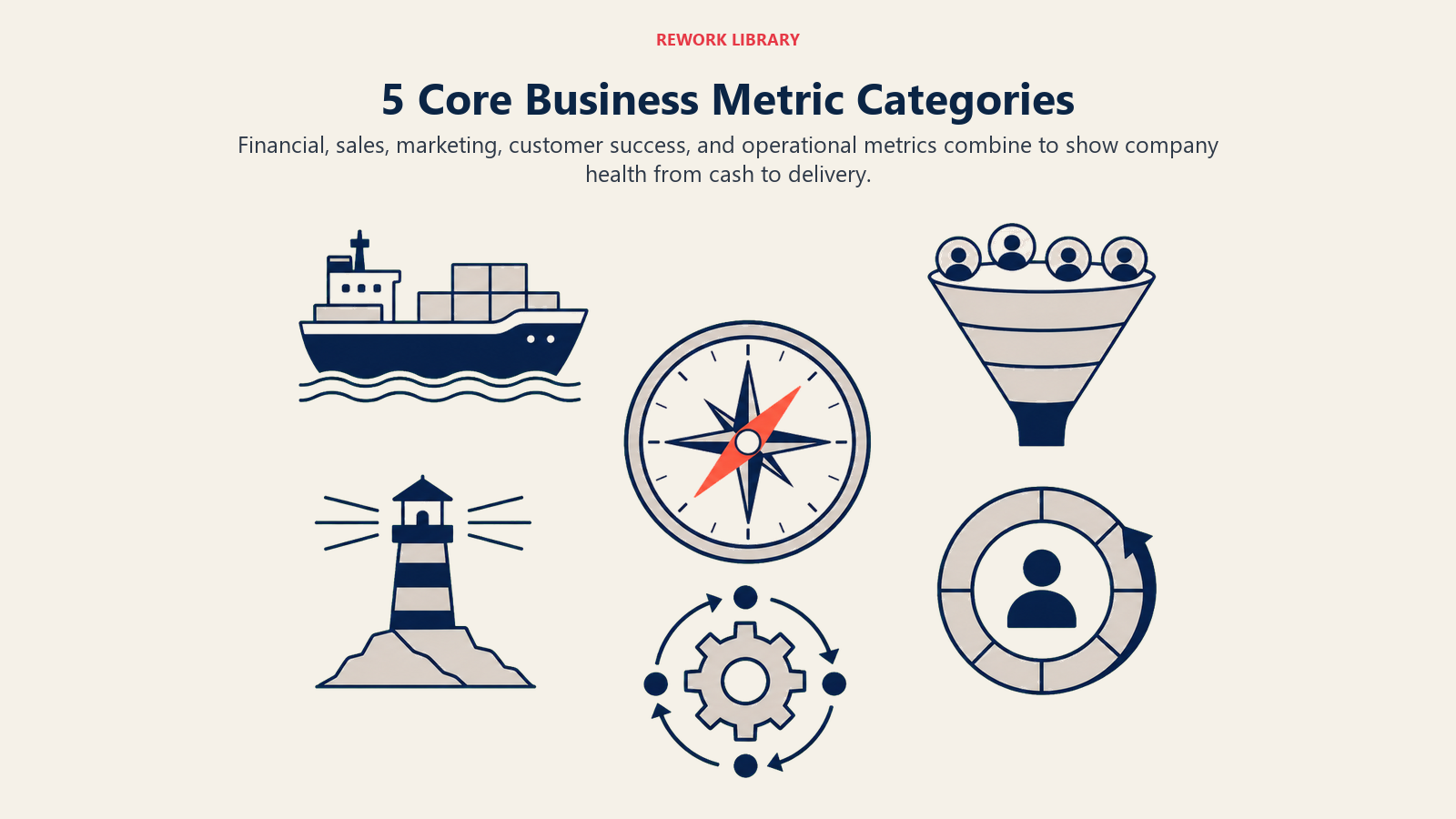
El marco combina cinco visiones funcionales para que los líderes puedan conectar la salud de la empresa, desde la generación de caja hasta los resultados de clientes y la entrega operativa.
Métricas Financieras
Estas son las más universales. Cada función conecta en última instancia con el rendimiento financiero.
Las métricas de ingresos le dicen cuánto dinero está entrando y de dónde. Los ingresos totales son el titular, pero los cortes más útiles son por segmento, línea de productos, geografía o tipo de cliente. La tasa de crecimiento de ingresos muestra el impulso. Los ingresos por empleado son una medida aproximada de eficiencia operativa.
Las métricas de rentabilidad le dicen cuánto conserva. El margen bruto mide la rentabilidad de su producto o servicio antes de los gastos generales. El EBITDA (ganancias antes de intereses, impuestos, depreciación y amortización) es un indicador común de rentabilidad operativa, particularmente útil para comparar empresas con diferentes estructuras de capital. El margen de beneficio neto es lo que queda después de todo.
Las métricas de flujo de caja están frecuentemente infravaloradas en relación con las métricas de ganancias, pero para las empresas del mercado medio son más relevantes operativamente. Una empresa rentable aún puede quedarse sin efectivo. El flujo de caja operativo, el free cash flow y la tasa de quema le cuentan la historia real sobre la salud financiera.
Los unit economics importan especialmente para las empresas con ingresos por suscripción o recurrentes. El costo de adquisición de clientes (CAC) y el valor del ciclo de vida del cliente (LTV) son el par central. La relación LTV:CAC le dice si está construyendo un negocio sostenible o simplemente comprando crecimiento. Una relación por debajo de 3:1 es una señal de advertencia.
Métricas de Sales
Las métricas de sales miden la eficiencia y efectividad de su proceso de generación de ingresos.
Las métricas de pipeline rastrean lo que viene: valor del pipeline, ratio de cobertura de pipeline (pipeline dividido por cuota) y velocidad de pipeline (qué tan rápido se mueven los deals). Un ratio de cobertura por debajo de 3 veces la cuota es típicamente una señal de alerta. La velocidad de pipeline calculada como (número de deals x win rate x tamaño promedio de deal) / ciclo de venta promedio le permite modelar los ingresos sin esperar a que se cierren los deals.
Las métricas de conversión miden dónde se ganan y pierden los deals. El win rate, las tasas de conversión etapa por etapa y las razones de pérdida le dan una imagen diagnóstica de su proceso de sales. Si está perdiendo el 60% de los deals por "sin decisión", ese es un problema diferente a perder frente a un competidor específico.
Las métricas de eficiencia incluyen el logro de cuota (qué porcentaje de los reps alcanza la cuota), el tiempo de adaptación para nuevos empleados y las métricas de actividad como llamadas y reuniones. Tenga cuidado con las métricas de actividad: miden inputs, no resultados, y pueden manipularse.
Métricas de Marketing
Las métricas de marketing tienen un problema de reputación. Demasiados equipos de marketing optimizan para métricas que no se conectan con los ingresos.
Las métricas de generación de demanda miden qué tan bien el marketing está llenando el pipeline. El pipeline originado por marketing, el pipeline influenciado por marketing y el costo por lead por canal son la base. La pregunta que conecta estas con el negocio es: con las tasas de conversión actuales, ¿el pipeline que estamos generando apoya nuestro objetivo de ingresos?
Las métricas de adquisición de clientes que incluyen CAC por canal y el periodo de recuperación conectan el gasto de marketing con los resultados de ingresos. Si su periodo de recuperación de CAC es de 18 meses, necesita mejorar la conversión, mejorar la retención o reducir el costo de adquisición.
Las métricas de marca son más difíciles de medir pero importan a escala. El share of voice, las encuestas de reconocimiento de marca y el Net Promoter Score (NPS) son los indicadores más comunes. Son lagging indicators, pero rastrean algo real.
Métricas de Customer Success
La retención es más barata que la adquisición. Estas métricas le dicen si está conservando lo que ha ganado.
Las métricas de retención incluyen la tasa de retención de clientes, la tasa de retención de ingresos (a veces llamada net revenue retention o NRR) y la tasa de churn. Net Revenue Retention por encima del 100% significa que sus clientes existentes están creciendo lo suficientemente rápido como para compensar el churn, lo cual es una posición poderosa.
Las métricas de satisfacción como NPS, Customer Satisfaction Score (CSAT) y Customer Effort Score (CES) miden cómo los clientes experimentan su producto o servicio. Son predictivas de la retención pero imperfectas: un cliente puede tener un NPS alto y aún hacer churn por razones no relacionadas con la satisfacción.
Las métricas de engagement miden el uso del producto o servicio. En SaaS, los Daily Active Users (DAU), la adopción de funcionalidades y la frecuencia de inicio de sesión son leading indicators de retención. En empresas de servicios, la frecuencia de reuniones, las tasas de finalización de entregables y las tasas de escalación cumplen una función similar.
Métricas Operativas
Las métricas de operaciones miden qué tan eficientemente el negocio entrega su producto o servicio.
Las métricas de rendimiento rastrean el volumen: unidades producidas, tickets resueltos, proyectos completados. Importan para la planificación de capacidad y el benchmarking.
Las métricas de calidad rastrean errores, defectos, tasas de retrabajo y quejas de clientes. En una empresa de servicios, estas incluyen tasas de error en los entregables para clientes y la frecuencia de escalaciones. Los problemas de calidad se componen: consumen costos para corregirse y dañan las relaciones con los clientes.
Las métricas de eficiencia miden el output por unidad de input. Los ingresos por empleado, el costo por unidad y las tasas de utilización (para empresas de servicios, qué porcentaje de las horas facturables se facturan realmente) son los más comunes.
Cómo Elegir las Métricas Correctas para su Negocio
La parte más difícil de las métricas no es la medición. Es la selección.
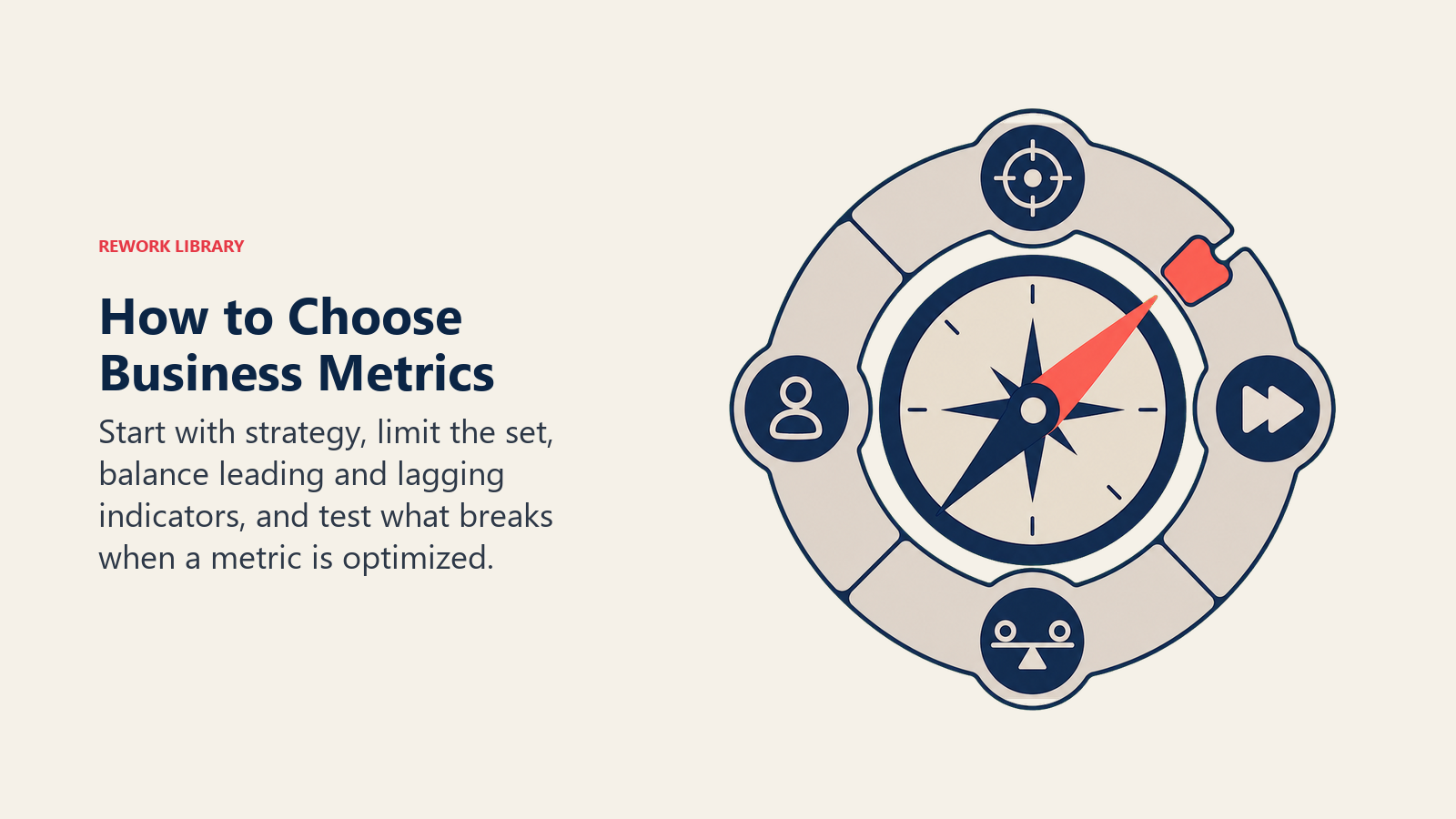
Comience con la estrategia. ¿Qué está tratando de lograr en los próximos 12-24 meses? Cada métrica que rastree debe conectarse con uno de esos objetivos. Si no puede trazar una línea desde una métrica hasta un objetivo estratégico, esa métrica probablemente es un gasto general.
Límitese. Existe un concepto llamado OKRs (Objectives and Key Results) que fuerza la priorización por diseño: usted define de 3 a 5 objetivos, cada uno con 2 a 3 resultados clave medibles. Eso es de 6 a 15 números para toda la empresa. Es una restricción útil incluso si no adopta formalmente los OKRs.
Distinga los leading indicators de los lagging indicators. Los ingresos son un lagging indicator: le dicen lo que ya ocurrió. La cobertura de pipeline es un leading indicator: predice lo que probablemente ocurrirá. Ambos importan, pero los lagging indicators le dicen el marcador; los leading indicators le dicen si va a ganar.
Esté atento a la canibalización de métricas. A veces optimizar una métrica rompe otra. Optimizar el volumen de llamadas (una métrica de actividad) a menudo reduce la calidad del deal y las tasas de cierre. Optimizar el NPS a corto plazo mediante descuentos puede dañar el margen bruto. Antes de fijar un objetivo para una métrica, pregúntese qué se rompe si la optimiza al máximo.
Errores Comunes con las Métricas
Reportar sin analizar. Muchas empresas producen elaborados informes mensuales que nadie lee detenidamente y que no cambian ninguna decisión. La investigación de Bain sobre efectividad en la toma de decisiones encontró que las empresas con procesos de toma de decisiones efectivos tienen un 95% más de probabilidad de ser líderes financieros del primer cuartil. Si su revisión de métricas termina con "interesante" en lugar de "esto es lo que vamos a cambiar", está rastreando, no gestionando.
Demasiados dashboards. Cuando todos tienen su propio dashboard y nadie comparte una visión del negocio, surgen problemas de alineación. Un conjunto compartido de 10-15 métricas a nivel de empresa, revisado regularmente por el equipo de liderazgo, vale más que 10 dashboards específicos de funciones que nunca se conectan.
Ignorar el contexto. Una métrica que sube no siempre es buena. El crecimiento de ingresos a través de un cambio de precio que destruye la satisfacción del cliente es un logro a corto plazo y un problema a largo plazo. Las métricas necesitan contexto: ¿por qué se movió esto y qué significa?
Medir lo que es fácil, no lo que es importante. El tráfico web es fácil de medir. La confianza en la marca es difícil. La actividad de sales es fácil de medir. La calidad de sales es más difícil. Los impulsores más importantes del negocio son a menudo los más difíciles de cuantificar, que es exactamente por qué no se miden.
Construir un Sistema de Métricas que Funcione
El objetivo no es una hoja de cálculo de métricas. Es un sistema de medición que conecta lo que sus equipos hacen cada día con los resultados que le importan.
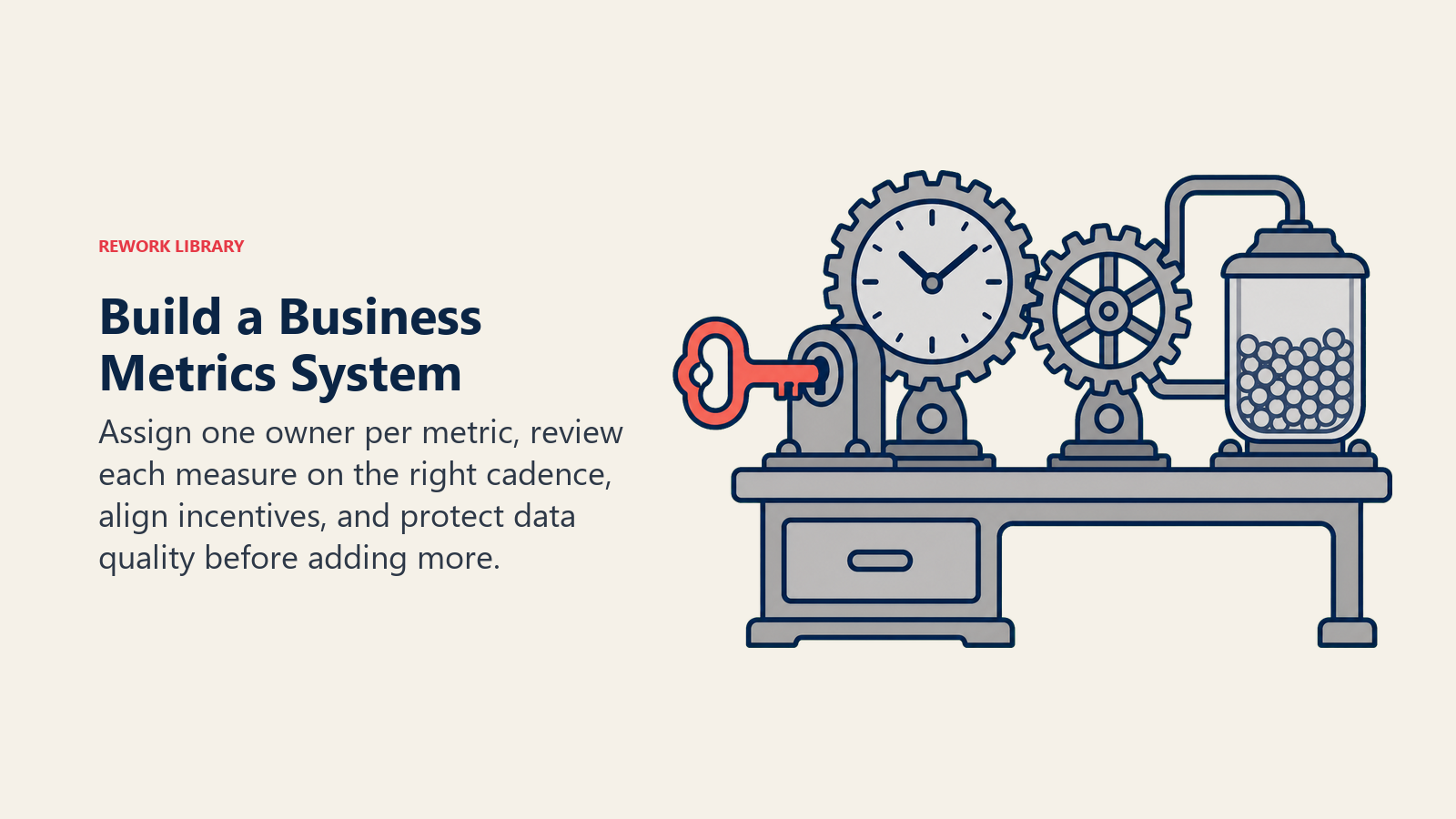
Definir la responsabilidad claramente. Cada métrica necesita un responsable. No un comité. No "el negocio". Una persona que sea responsable de explicar el número y llevarlo en la dirección correcta.
Establecer una cadencia de revisión. Diferentes métricas tienen diferentes ritmos. Las métricas operativas pueden revisarse semanalmente. Las métricas estratégicas, mensual o trimestralmente. No mezcle ambas en el mismo meeting.
Conectar métricas con incentivos. Si sus estructuras de compensación recompensan la actividad y su sistema de gestión recompensa los resultados, tiene un conflicto. Las métricas por las que hace responsables a las personas deben coincidir con lo que realmente quiere.
Invertir en calidad de datos antes que en cantidad de datos. Una fuente limpia y confiable para 10 métricas vale más que una fuente inconsistente y poco confiable para 50. Antes de expandir su sistema de medición, asegúrese de que los cimientos sean sólidos.
Las métricas empresariales bien implementadas le dan una imagen en tiempo real de la salud organizacional y un lenguaje común para las decisiones. Mal implementadas, se convierten en ruido burocrático que obscurece más de lo que revela. La diferencia está casi siempre en la selección y la disciplina de uso, no en la sofisticación de la medición.
Para más información sobre cómo construir una cultura de métricas, el marco de medición de Harvard Business Review y el trabajo del MIT Sloan sobre cultura analítica ofrecen marcos prácticos útiles.
Métricas Clave por Función: Referencia Rápida
| Función | Métricas Primarias | Leading Indicators |
|---|---|---|
| Finanzas | Ingresos, Margen Bruto, EBITDA, Flujo de Caja | Pipeline, Bookings |
| Sales | Win Rate, Logro de Cuota, Cobertura de Pipeline | Velocidad de Pipeline, Tasas de Actividad |
| Marketing | Pipeline originado por Marketing, CAC, Tasa MQL-a-SQL | Volumen de Leads, Engagement |
| Customer Success | NRR, Tasa de Churn, NPS | Uso del Producto, Tasa de Escalación |
| Operaciones | Ingresos por Empleado, Utilización, Tasa de Calidad | Capacidad, Tasa de Error |
Lecturas relacionadas:
- KPIs vs. Métricas: Entender la Diferencia
- OKRs: Alinear Equipos en Torno a Resultados
- Fundamentos de Medición del ROI
- Unit Economics para Líderes del Mercado Medio
- Toma de Decisiones Basada en Datos
- Modelos de Negocio de Franquicia - Cuándo conviene más escalar mediante franquicias que mediante expansión directa
- Decisiones de Salida de la Bolsa (Going Private) - Cómo cambian las métricas que importan cuando una empresa deja los mercados públicos
- Estrategia de Inversión en Tecnología - Cómo medir y gobernar el gasto en tecnología en toda la organización

Co-Founder, Rework.com
On this page
- Qué Son las Métricas Empresariales (y Qué No Son)
- Las Categorías Principales de Métricas Empresariales
- Métricas Financieras
- Métricas de Sales
- Métricas de Marketing
- Métricas de Customer Success
- Métricas Operativas
- Cómo Elegir las Métricas Correctas para su Negocio
- Errores Comunes con las Métricas
- Construir un Sistema de Métricas que Funcione
- Métricas Clave por Función: Referencia Rápida