More in
Sales-Tech-Nachrichten
AI-Vertriebsteams wachsen 2,6-mal schneller. Gartner sagt: Käufer wollen trotzdem einen Ansprechpartner
Juni 6, 2026
Aircall kauft Piper AI, um jeden Verkaufsanruf in Pipeline zu verwandeln
Juni 6, 2026
Salesforce gibt Marketingteams AI-Agents, die Sales Pipeline aufbauen
Juni 6, 2026
Revenue Intelligence hat das Risiko gezeigt. Revenue Execution handelt danach.
Juni 5, 2026
Meta hat einen AI-Agent in WhatsApp integriert, der für jedes Unternehmen Verkäufe abschließt
Juni 4, 2026
VCs haben über 200 Mio. Dollar in AI-Sales-Startups investiert: Das GTM-Stack-Signal
Juni 4, 2026
Sind AI SDRs in 2026 ihr Geld wert? Die Daten sprechen für ein hybrides Team
Juni 3, 2026
GTM Engineering in 2026: Die Vertriebsstelle, die drei Rollen ersetzt
Juni 3, 2026
ZoomInfo versorgt Ihre AI-Sales-Agents mit verifizierten Daten: Der Kompromiss beim Single-Vendor-Ansatz
Juni 3, 2026
Salesforce Summer '26 bringt Multi-Agent-Orchestration am 15. Juni. Das Sales-Ops-Audit, bevor Ihre Agents anfangen, Aufgaben weiterzureichen
Juni 2, 2026
87% der Unternehmen verfehlten ihre Umsatzziele trotz Rekordausgaben für AI. Die Lösung beginnt bei Ihren Daten
Turn this article into takeaways for your work.


Each assistant summarizes the article only for you and suggests best practices for your work.
Die Budgets wurden erhöht. Die Tools wurden mehr. Die Ziele wurden trotzdem verfehlt.
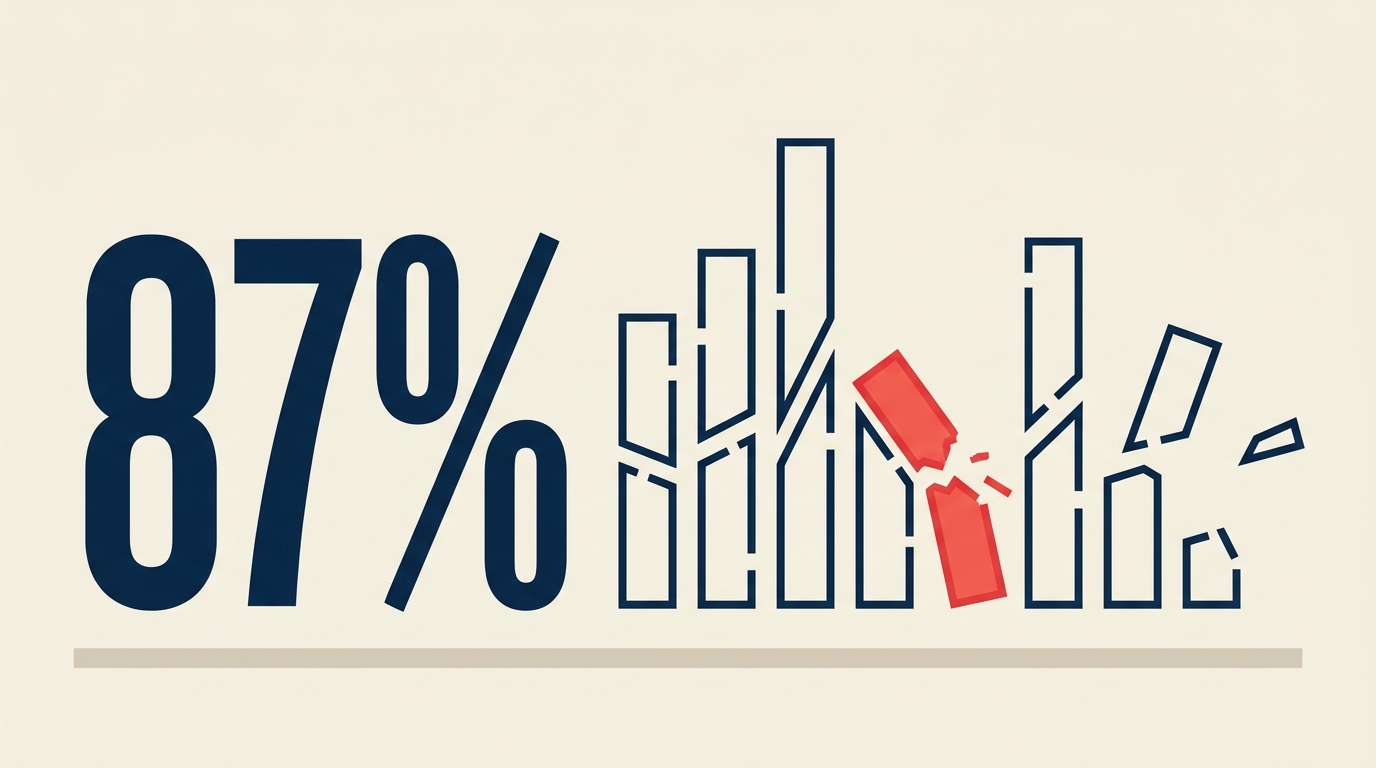
Das ist die unbequeme Schlagzeile einer neuen Studie von Clari Labs, die im Januar 2026 veröffentlicht wurde. Demnach haben 87% der Unternehmen ihre Umsatzziele für 2025 nicht erreicht, obwohl die AI-Ausgaben Rekordhöhen erzielten. Die Studie befragte Umsatzverantwortliche in Enterprise-Vertriebsorganisationen und stellte ein Muster fest, das die meisten Sales Ops Teams bereits ahnen: Das Problem liegt nicht im fehlenden Tool-Angebot, sondern in der Datenbasis, auf der diese Tools aufsetzen.
Laut Clari Labs geben 48% der Revenue Teams an, dass ihre Daten schlicht nicht für den AI-Einsatz bereit sind. Und 55% erfahren widersprüchliche Pipeline-Signale aus voneinander getrennten Datenquellen. Das bedeutet: Die AI schafft keine Klarheit, sie produziert schnelleres Rauschen.
Warum mehr AI auf schlechten Daten die Lage verschlechtert
Das ist der Teil, der in Vendor-Keynotes selten vorkommt. AI-Modelle beheben keine Datenprobleme. Sie skalieren sie.
Wenn Ihre Umsatzdaten in Silos liegen (CRM, Marketing-Automation, Support-Tickets, Produktnutzungslogs), erzählt jedes System eine andere Geschichte über den Gesundheitszustand eines Deals. Ein menschlicher Analyst kann diese Versionen mit Kontext abgleichen. Ein KI-Agent kann das nicht. Er erkennt Muster in den Signalen, die er sehen kann. Widersprechen sich diese Signale, liefert er widersprüchliche Ergebnisse. Genau das erleben 55% der Unternehmen aus der Clari-Labs-Studie.
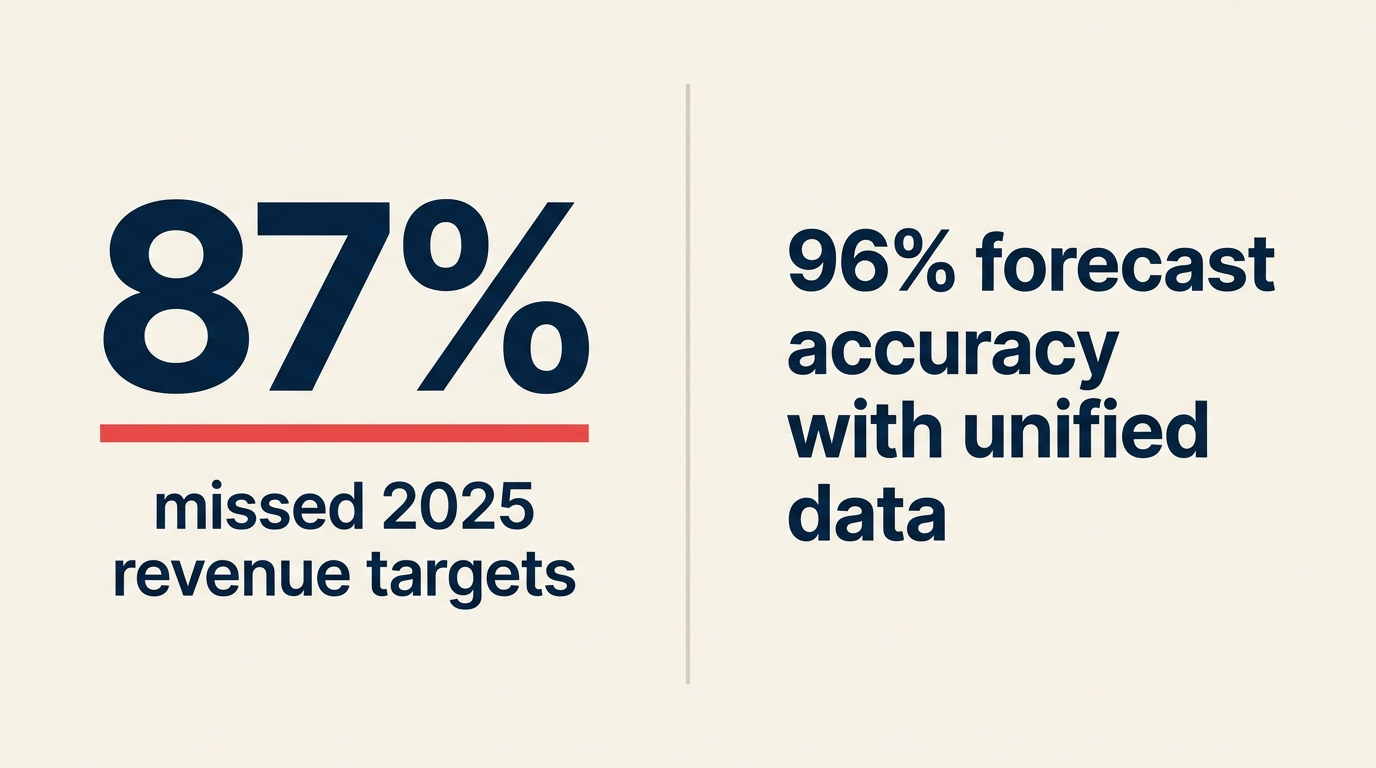
Der Kontrast in der Studie ist deutlich. Unternehmen, die ihre Umsatzdaten vereinheitlicht und mit Governance versehen haben, erreichten eine Forecast-Genauigkeit von 96%, erzielten eine Verlängerungsrate, die um 20 Prozentpunkte stieg, und lieferten einen ROI von 398%, was etwa 96,2 Millionen US-Dollar an Dreijahresvorteilen entspricht. Gleiche AI-Fähigkeiten. Grundlegend andere Ergebnisse. Die entscheidende Variable ist Datenqualität und Data Governance, nicht der AI-Stack selbst.
Key Facts
- 87% der Unternehmen verfehlten ihre Umsatzziele für 2025 trotz Rekordinvestitionen in AI (Clari Labs, Jan. 2026)
- 55% erleben widersprüchliche Pipeline-Signale aus voneinander getrennten Datenquellen (Clari Labs, Jan. 2026)
- Unternehmen mit vereinheitlichten, governed Umsatzdaten erreichten 96% Forecast-Genauigkeit und einen ROI von 398% (Clari Labs, Jan. 2026)
Die Governance-Lücke ist ebenfalls real. Clari Labs stellte fest, dass 42% der Unternehmen keinen formalen Rahmen für Datenkonsistenz und Verantwortlichkeit im gesamten Revenue Operations-Bereich haben. Und 39% kalibrieren ihre Forecast-Modelle nur wöchentlich oder monatlich, nicht kontinuierlich. Beides sind strukturelle Probleme, die sich durch noch so hohe AI-Ausgaben nicht überbrücken lassen.
Der Markt holt auf, was Sales Ops schon lange weiß
Das fusionierte Unternehmen Clari plus Salesloft, das seit dem Zusammenschluss seinen Predictive Revenue System skaliert, wurde im ersten Gartner Magic Quadrant für eine Kategorie aufgeführt, die Gartner nun "Revenue Action Orchestration" nennt. Der Kategorienname selbst ist bezeichnend.
Orchestrierung. Nicht Generierung. Nicht Automatisierung. Orchestrierung.
Gartner erkennt formell an, dass der nächste Wettbewerbsvorteil in der Revenue-Technologie nicht darin besteht, einen weiteren KI-Punkt-Tool-Stack hinzuzufügen. Es geht darum, AI-Aktionen über eine saubere, vereinheitlichte, governed Datenschicht zu koordinieren. Das war das Sales Ops-Argument seit Jahren. Der Markt holt jetzt auf.
Clari plus Salesloft ernannte außerdem Brian Benfer zum Chief Revenue Officer und Rajesh Krishnaswami zum Chief Technology Officer im Mai 2026, was die weitere Investition in den Enterprise-Ausbau der kombinierten Plattform signalisiert. Weitere Entwicklungen finden Sie im Clari-Pressebereich.
Wenn Sie bewerten, wie sich die Plattformlandschaft insgesamt verschiebt, behandelt unsere Analyse des Gong-$500M-ARR-Meilensteins, was "Revenue Intelligence at scale" tatsächlich von Ihrer Dateninfrastruktur erfordert. Und unser CRO-Evaluierungsleitfaden für die Clari-plus-Salesloft-Fusion geht tiefer darauf ein, was die kombinierte Plattform für Ihren bestehenden Stack bedeutet.
Der Revenue Data Readiness Check (eine Sales Ops Diagnose)
Bevor Ihr Unternehmen eine weitere KI-Agent-Implementierung freigibt, sollte Sales Ops das durchführen, was wir den Revenue Data Readiness Check nennen. Drei Fragen. Ehrliche Antworten.
Frage 1: Sind Ihre Umsatzdaten vereinheitlicht? Kann eine einzige Abfrage eine konsistente Sicht auf den Gesundheitszustand eines Deals über CRM, Marketing, Support und Produktnutzung hinweg liefern? Wenn die Antwort ein manuelles Zusammenführen von Exporten aus mehreren Systemen erfordert, sind Ihre Daten nicht vereinheitlicht.
Frage 2: Sind Ihre Umsatzdaten governed? Gibt es dokumentierte Verantwortlichkeiten, Validierungsregeln und Rechenschaftspflichten für jedes Datenfeld, das in Ihre Prognose einfließt? Wenn verschiedene Teams "qualifizierte Opportunity" unterschiedlich definieren, haben Sie ein Governance-Problem, kein Technologieproblem.
Frage 3: Ist Ihr Forecast-Modell aktuell? Wie oft kalibriert Ihr Team das Modell anhand tatsächlicher Ergebnisse neu? Clari Labs fand heraus, dass 39% der Unternehmen dies nur wöchentlich oder monatlich tun. In einem Markt, in dem sich die Deal-Geschwindigkeit schneller verändert als ein Quartalstakt, potenziert sich diese Verzögerung zu systematischen Forecast-Fehlern.
Wenn einer dieser drei Antworten "nein" oder "wir sind uns nicht sicher" lautet, wird das Hinzufügen weiterer KI-Agenten das Rauschproblem beschleunigen, nicht lösen.
Die Daten-vor-Agenten-Sequenz
Hier ist die praktische Abfolge, die wir Sales Ops Teams empfehlen, die AI-Ausgaben in echte Umsatzleistung umwandeln wollen:
Schritt 1: Prüfen Sie Ihre Datenquellen. Kartieren Sie jedes System, das Daten zu Ihrem Umsatz-Forecast beiträgt. Markieren Sie alle, die nicht automatisch synchronisieren, manuelle Abstimmung erfordern oder Felder mit inkonsistenten Definitionen liefern.
Schritt 2: Etablieren Sie eine Governance-Schicht. Definieren Sie die Verantwortlichkeit für jedes kritische Datenfeld. Weisen Sie jedem System einen Data Steward zu. Dokumentieren Sie, was für jede Kennzahl als "sauber" gilt, und bauen Sie leichtgewichtige Validierungsprüfungen in Ihren CRM-Workflow ein.
Schritt 3: Legen Sie einen Kalibrierungsrhythmus fest. Wechseln Sie von wöchentlichen oder monatlichen Modellaktualisierungen zu kontinuierlicher oder zumindest wöchentlicher Neukalibrierung auf Basis tatsächlicher Abschluss-/Verlust-Daten. Die Forecast-Genauigkeit nimmt ab, wenn Modelle von den aktuellen Marktbedingungen abdriften.
Schritt 4: Dann implementieren Sie die AI. Mit vereinheitlichten, governed und aktuellen Daten operieren KI-Agenten auf intern konsistenten Signalen. Dann sind die 96% Forecast-Genauigkeit erreichbar.
Diese Abfolge gilt unabhängig davon, ob Sie neue Plattformen evaluieren oder mehr aus Ihrem aktuellen Stack herausholen möchten. Für Teams, die im Rahmen dieser Arbeit die Pipeline-Datenqualität überprüfen, haben sich die Grundprinzipien nicht geändert: Garbage in, Garbage out, nur in AI-Geschwindigkeit.
Wenn Sie verstehen möchten, wie AI die Sales Ops-Rolle selbst verändert, behandelt unsere AI Sales Operator Library die vier Muster, die definieren, wie sich diese Funktion weiterentwickelt.
Weiterführende Lektüre zur KI-Agent-Implementierung: Salesforce Agentforce ist jetzt ein Kollege und 6senses RevvyAI überträgt die Account-Qualifizierung an AI. Beide Artikel behandeln dieselbe Spannung: Die AI-Fähigkeit ist bereit, aber die Frage der Datenbereitschaft ist weiterhin der entscheidende Faktor.
Häufig gestellte Fragen
Warum verbessern AI-Tools unsere Vertriebsprognosegenauigkeit nicht?
Die meisten AI-Forecasting-Tools sind nur so gut wie die Daten, die sie verarbeiten. Wenn Ihre Umsatzdaten in getrennten Systemen liegen, inkonsistente Felddefinitionen verwenden oder selten neu kalibriert werden, liefert die AI widersprüchliche Signale statt einer kohärenten Sicht. Clari Labs stellte fest, dass 55% der Unternehmen dies bereits erleben. Die Lösung ist Data Governance und Vereinheitlichung zuerst, AI-Implementierung danach.
Was bedeutet "Revenue Action Orchestration" für Sales Ops?
Das ist die Kategorie, die Gartner eingeführt hat, um Plattformen zu beschreiben, die AI-Aktionen über den gesamten Umsatzzyklus hinweg auf einer vereinheitlichten Datenschicht koordinieren. Für Sales Ops bedeutet das: Der Markt bestätigt, was die Funktion schon lange weiß. Der Wert liegt nicht darin, mehr AI-Tools zu haben, sondern in einer einzigen, governed Datenumgebung, aus der alle Tools schöpfen. Sales Ops ist von Natur aus prädestiniert, diese Schicht zu besitzen.
Wie beginnen wir mit der Behebung von Umsatzdaten-Fragmentierung, ohne die gesamte Plattform zu ersetzen?
Beginnen Sie mit den drei Diagnosefragen oben (vereinheitlicht, governed, aktuell). Identifizieren Sie die Lücke mit dem größten Handlungsbedarf. Ein Governance-Rahmen kann oft mit vorhandenen Tools, Feldzuweisungen und dokumentierten Definitionen implementiert werden, noch bevor eine neue Technologie angeschafft wird. Diese Grundlage macht jede nachfolgende AI-Implementierung effektiver, einschließlich der Tools, die Sie bereits besitzen.
Was Sales Ops diese Woche tun sollte
Führen Sie den Revenue Data Readiness Check durch. Beantworten Sie die drei oben genannten Fragen für Ihre aktuellen Forecast-Daten. Schreiben Sie die Antworten auf. Wenn eine davon "nein" oder "unklar" ist, ist das Ihr höchstes Risikofeld vor jedem neuen AI-Rollout.
Kartieren Sie Ihre Datenquellen. Listen Sie jedes System auf, das Ihren Umsatz-Forecast berührt. Identifizieren Sie, welche automatisch synchronisieren und welche manuelle Eingriffe erfordern. Bei manueller Abstimmung potenzieren sich Fehler.
Planen Sie eine Governance-Überprüfung. Bringen Sie den CRM-Administrator, den RevOps-Lead und mindestens einen AE-Vertreter zusammen. Einigen Sie sich auf die Definition von "qualifizierter Opportunity". Dokumentieren Sie sie. Machen Sie es offiziell.
Überprüfen Sie Ihren Kalibrierungsrhythmus. Wenn Ihr Forecast-Modell in den letzten 30 Tagen nicht anhand tatsächlicher Ergebnisse neu kalibriert wurde, planen Sie das jetzt. Veraltete Modelle sind systematische Fehlerquellen.
Erstellen Sie den Business Case. Die Clari-Labs-Zahlen sind überzeugend: 398% ROI und 96% Forecast-Genauigkeit durch Datenvereinheitlichung. Nutzen Sie diese Benchmarks, um eine Investition in Datenbereitschaft gegenüber Ihrem CFO zu begründen, bevor die nächste Anfrage für einen KI-Agent-Kauf eintrifft.
Die Unternehmen in der Clari-Labs-Studie, die ihre Ziele verfehlten, litten nicht an einem Mangel an AI-Tools. Ihnen fehlte Datendisziplin. Sales Ops ist Eigentümer dieser Disziplin. Das ist Ihr Moment.
Plattformen wie Rework basieren auf der Prämisse, dass vereinheitlichte, governed Umsatzdaten die Grundlage sind, kein Zusatzfeature. Doch unabhängig von Ihrem Stack gilt dieselbe Abfolge: Daten bereinigen, Governance einführen, dann die AI laufen lassen.
Mehr erfahren
- Gongs $500M ARR-Meilenstein und was Revenue Intelligence at scale erfordert
- Clari plus Salesloft: Was die Fusion für Ihre CRO-Evaluierung bedeutet
- Salesforce Agentforce als Kollege: Was Sales Ops wissen muss
- 6sense RevvyAI: AI-gesteuerte Account-Qualifizierung für RevOps
- AI Sales Operator: 4 Muster, die modernes Sales Ops prägen

On this page
- Warum mehr AI auf schlechten Daten die Lage verschlechtert
- Der Markt holt auf, was Sales Ops schon lange weiß
- Der Revenue Data Readiness Check (eine Sales Ops Diagnose)
- Die Daten-vor-Agenten-Sequenz
- Häufig gestellte Fragen
- Warum verbessern AI-Tools unsere Vertriebsprognosegenauigkeit nicht?
- Was bedeutet "Revenue Action Orchestration" für Sales Ops?
- Wie beginnen wir mit der Behebung von Umsatzdaten-Fragmentierung, ohne die gesamte Plattform zu ersetzen?
- Was Sales Ops diese Woche tun sollte
- Mehr erfahren