Digital Lead Generation for Healthcare: A Multi-Channel Acquisition Framework
Turn this article into takeaways for your work.


Each assistant summarizes the article only for you and suggests best practices for your work.
Most practices get new patients from one or two sources. Referrals from other physicians. The insurance directory. Maybe word of mouth. When those sources slow down, so does the practice. There's no backup, no system to switch on, no way to adjust quickly.
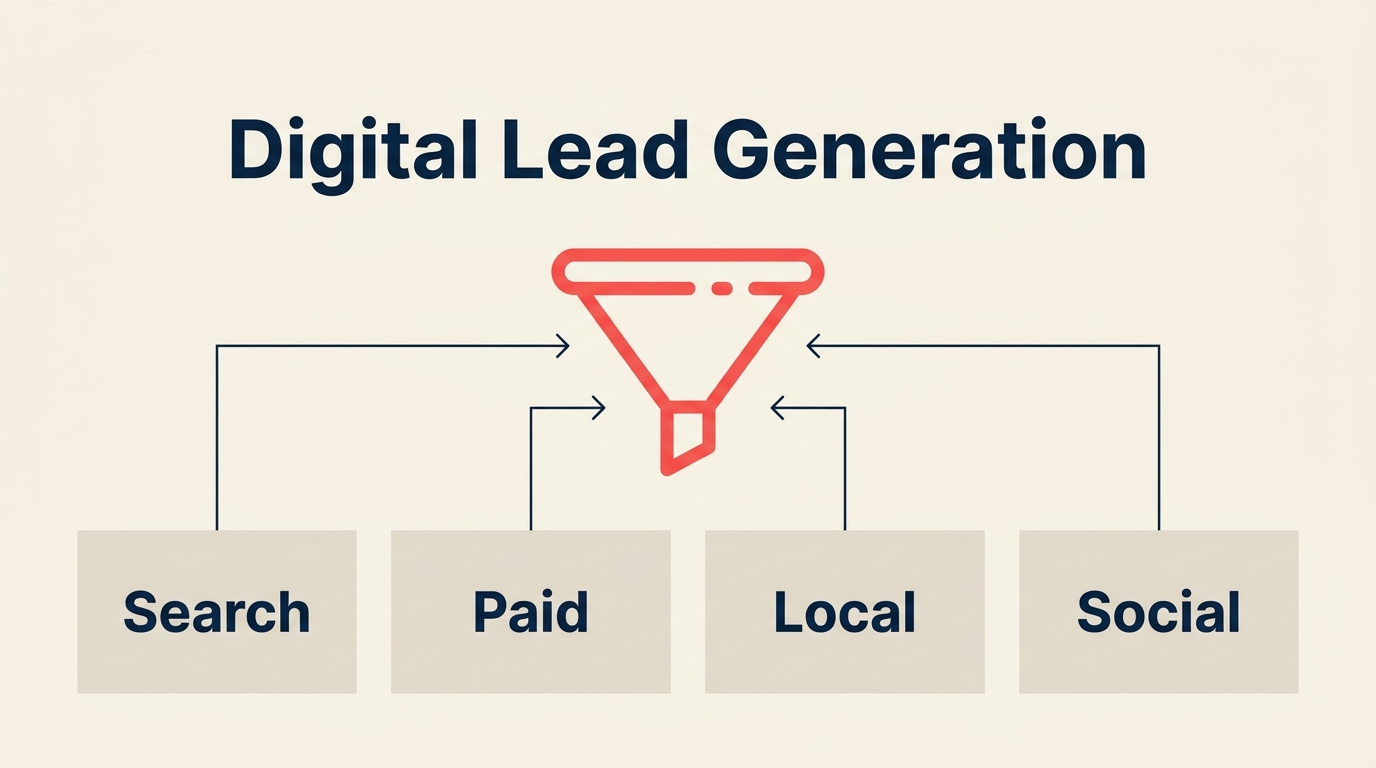
Digital lead generation fixes that dependency. It creates multiple online channels that run in parallel, so a slow month on paid search doesn't mean a slow month for the practice. And unlike traditional outreach, digital channels produce trackable data: you know which keywords drive appointments, which landing pages convert, and what your cost per new patient actually is.
This guide builds a practical digital lead generation framework for mid-market healthcare practices. Not a startup trying to acquire 10 patients, and not a health system with a $2M marketing budget. A 5-20 provider practice that needs consistent, qualified patient flow.
Why Digital Lead Generation Is Different for Healthcare
Healthcare marketing operates under constraints that most other industries don't face.
Healthcare marketing compliance rules limit what you can say and how you can say it. You can't claim outcomes you can't substantiate. You can't use patient information to target advertising without specific consent. You can't imply that your practice is the best unless you can support that claim.
HIPAA-compliant marketing adds another layer. Retargeting campaigns, which work brilliantly for e-commerce, require careful setup in healthcare. A pixel that captures information about someone who visited your "anxiety treatment" page could inadvertently expose protected health information.
And the patient journey is longer than most purchases. Someone experiencing lower back pain might search for information for weeks before booking an appointment. They compare providers, read reviews, look at credentials. Your digital presence needs to show up across that entire research period, not just at the moment they're ready to call.
Within these constraints, digital lead generation is still highly effective. It's just more deliberate.
The Four Pillars of Healthcare Digital Lead Generation
A durable patient acquisition system relies on four channels, each with a different time horizon and function.
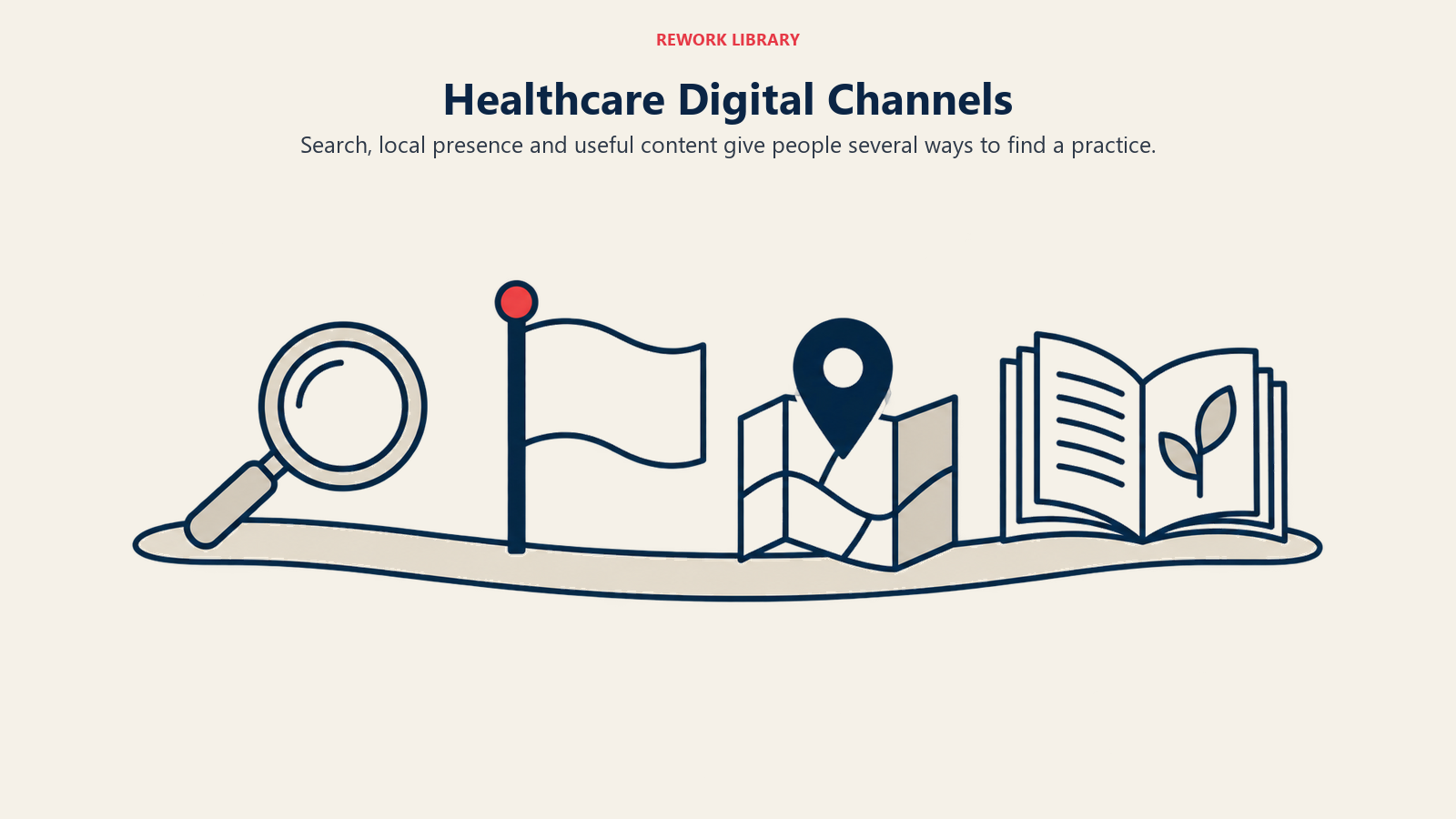
Organic Search (SEO)
Healthcare SEO strategy is the longest-term investment and the highest-return one. Articles that answer specific patient questions rank in search results and drive traffic without ongoing cost. A well-written piece on "when to see a specialist for knee pain" can attract patients for years.
The compounding effect matters here. Your first 10 articles might generate minimal traffic. After 50, you start seeing consistent inbound visits. After 100, organic search becomes a primary acquisition channel.
Key elements for healthcare SEO:
- Condition and treatment pages for your core services
- FAQ content targeting specific patient questions
- Location pages for multi-site practices
- Provider bios that establish expertise (E-E-A-T signals Google uses for medical content)
Organic search takes 6-12 months to build meaningful results. Start now, because the delay is fixed whether you start today or next quarter.
Paid Search (PPC)
Healthcare PPC advertising is the fastest channel. You can have ads running within hours. Patients searching "back pain specialist near me" see your practice at the top of results.
The tradeoff is cost. Healthcare PPC is competitive and expensive in most markets. Orthopedics, dentistry, and cosmetic procedures often cost $50-150 per click. The math only works if your conversion rate is solid and your patient lifetime value is high.
Paid search is most effective for:
- Time-sensitive services (urgent care, emergency dental)
- High-value elective procedures where margin supports the cost
- New practices that need patients before SEO kicks in
- Specific campaigns tied to seasonal demand
Use paid search for immediate results while building the slower organic channels.
Local Presence and Reviews
Google My Business for healthcare optimization is often the most underrated digital tactic for local practices. A complete, well-maintained Google Business Profile appears in map results and drives significant call volume from patients who are ready to book.
Online reviews management is inseparable from local search. Practices with strong review profiles convert dramatically better from every digital channel. A patient who finds you through paid search will still check your reviews before calling.
Review generation should be systematic: consistent post-visit requests, easy review submission, prompt responses to both positive and negative feedback.
Content and Social Distribution
Organic social media rarely drives meaningful appointment volume on its own. But it supports every other channel.
A patient who found your article through search, saw your Google ad, and then noticed your practice posting consistently on social media is far more likely to convert than one who saw a single touchpoint. Social builds familiarity and trust over repeated exposures.
Content distribution also earns backlinks, which improves SEO performance. And email newsletters to existing patients keep your practice top-of-mind for referrals and return visits.
Building a Lead Generation System, Not a Campaign
The difference between practices that get consistent patient flow and those that don't isn't budget. It's systems.
A campaign runs for 90 days and stops. A system runs continuously, improves over time, and adapts based on what's working.
Lead capture infrastructure
Every digital channel drives people to your website. If your website doesn't capture leads effectively, you're paying for traffic that doesn't convert.
Essentials for healthcare lead capture:
- Click-to-call buttons prominent on mobile (most healthcare searches happen on phones)
- Simple appointment request forms with minimal required fields
- Online scheduling integration where possible
- Chat options for patients who aren't ready to call
Test your own mobile experience right now. Try to book an appointment using your phone. Count how many taps it takes. That friction is costing you patients.
Speed matters more than most practices realize
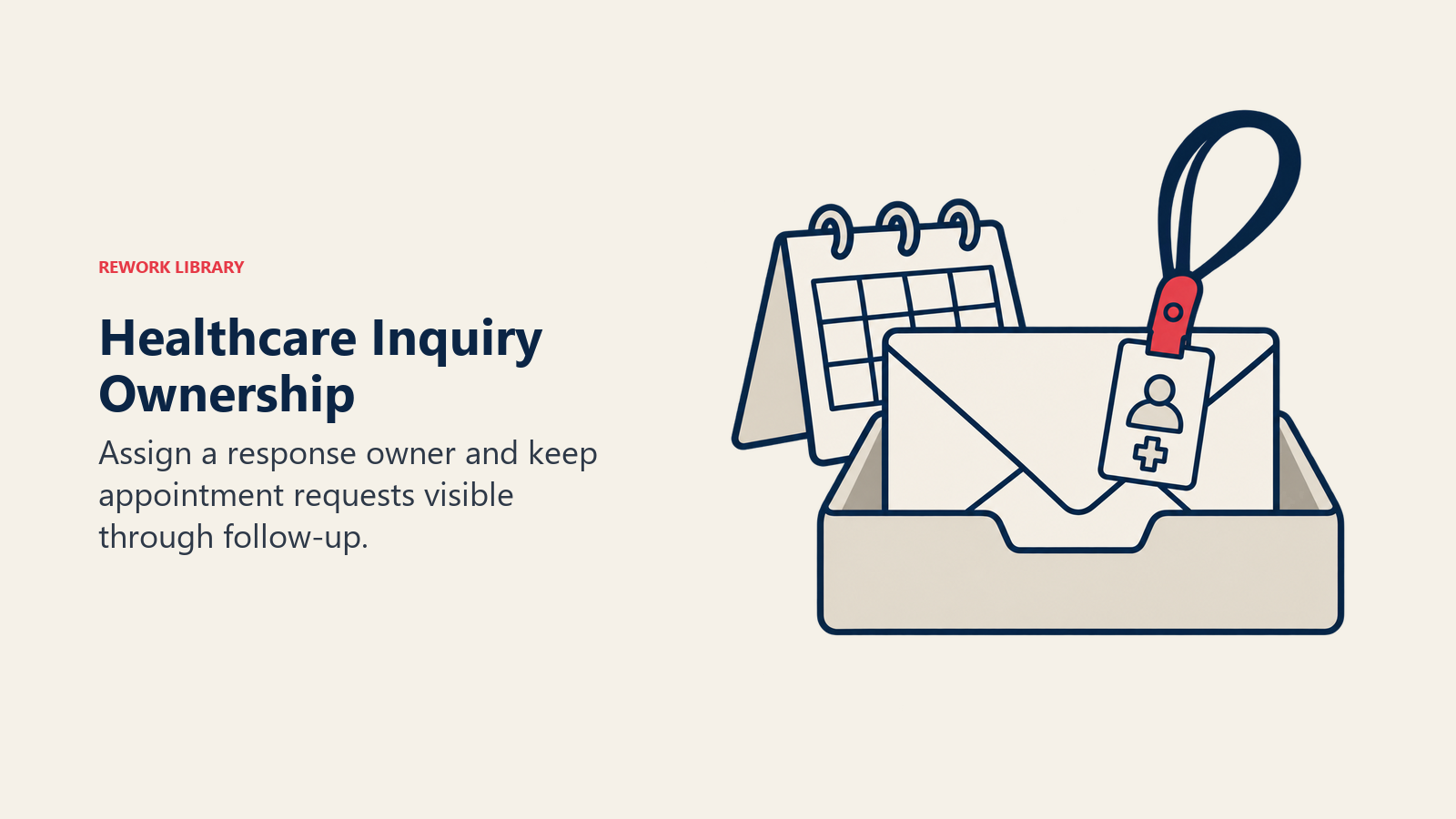
When a patient submits a contact form or calls and leaves a message, response time is critical. Studies consistently show conversion rates drop substantially after the first hour. After 24 hours, the patient has likely called a competitor.
Assign clear ownership for lead follow-up. Know who responds to online inquiries, how quickly, and what they say. Build that process before spending on lead generation.
Tracking and attribution
You need to know which channels are producing patients, not just leads. Set up call tracking with unique phone numbers per channel. Use UTM parameters on all digital links. Ask new patients how they found you and record the answer.
Healthcare practice metrics should include digital acquisition data: cost per lead by channel, lead-to-appointment conversion rate, and cost per new patient. Without these numbers, you're optimizing blind.
Budgeting Digital Lead Generation
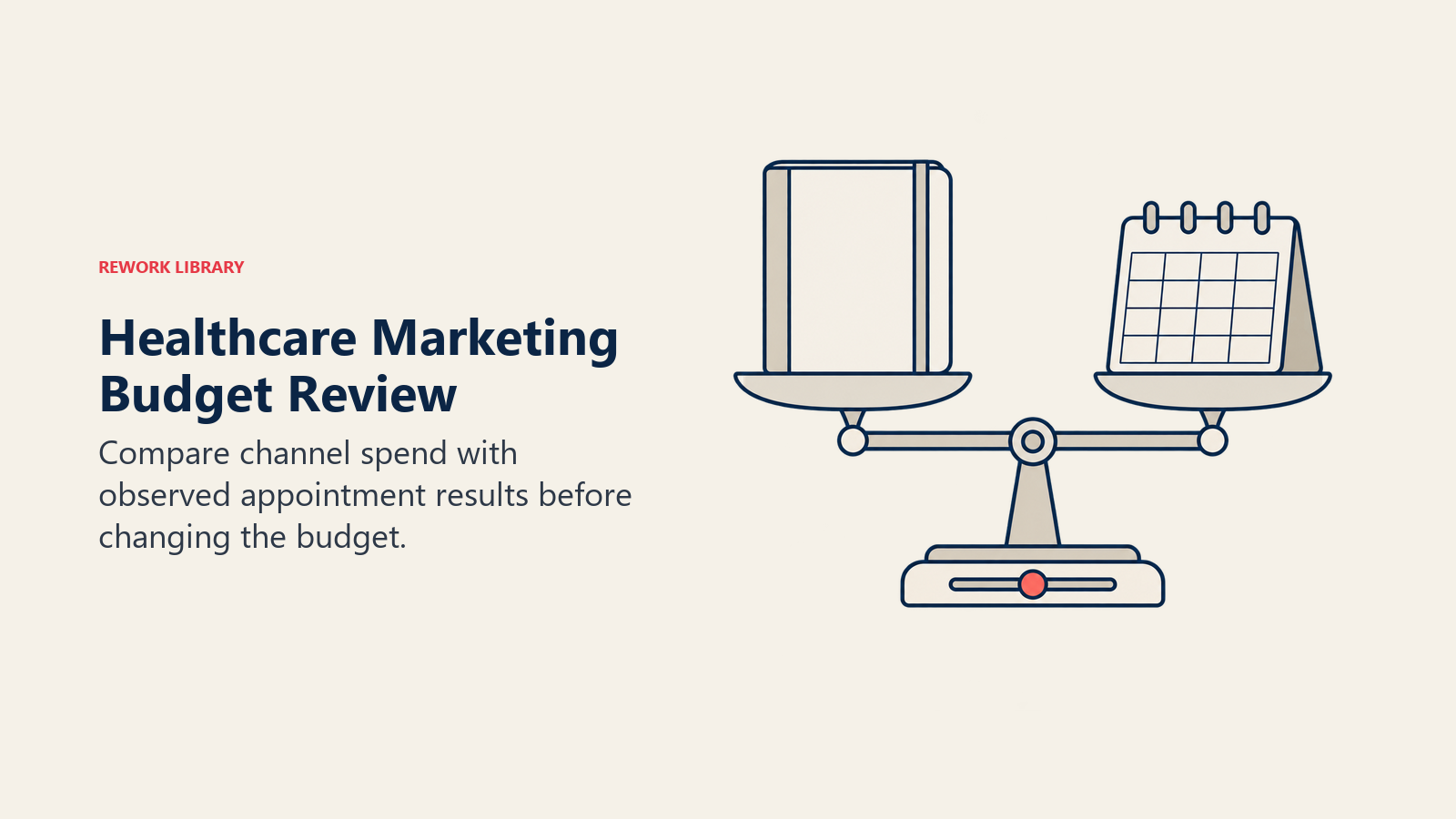
A common mistake is treating digital marketing as a fixed cost rather than a variable investment. The right question isn't "how much should we spend on marketing" but "what's our target cost per new patient acquisition and how many do we need?"
A typical mid-market practice might do this math:
- Target: 40 new patients per month
- Average new patient value: $2,000 over the first year
- Acceptable acquisition cost: $200 per new patient (10% of first-year value)
- Maximum monthly budget: $8,000
Within that $8,000, allocate across channels based on performance. If paid search produces patients at $150 each, increase spend there. If a content push produces organic traffic at $50 per patient, invest in more content.
Start conservatively, measure everything, and scale what works. Don't cut channels after 30 days because they haven't produced results. Paid search might need 60-90 days to optimize. SEO needs 6-12 months. Give channels enough time to produce data before making decisions.
Practical Starting Points by Practice Size
Different practice sizes have different starting points.
Small practices (1-3 providers): Start with Google Business Profile optimization and a focused PPC campaign on your highest-value service. Add content production once you have the PPC data to know what topics your patients are searching. Budget $3,000-5,000/month initially.
Mid-size practices (4-10 providers): Run paid search across all core services, invest in structured content production (2-4 articles per month), and implement systematic review generation. Budget $8,000-15,000/month across channels.
Larger practices (10+ providers): All of the above plus dedicated SEO investment, retargeting campaigns (with proper HIPAA setup), and email automation for patient nurture sequences. Monthly budgets of $20,000+ become efficient at this scale.
These ranges assume you're in a competitive market. Rural or low-competition markets often achieve results at 50-60% of these costs.
The Integration Advantage
The practices that generate leads most efficiently don't treat channels as separate activities. They build systems where each channel supports the others.
A patient might find your practice through a search for "plantar fasciitis specialist," land on your content article, and not book. A week later they see a Facebook ad reminding them of your practice. The following week they search again and find your paid search ad prominently placed. That multiple-exposure pattern converts much better than any single channel alone.
This integration requires coordination, but it doesn't require complexity. Set up your campaigns so they're all driving to the same landing pages, using consistent messaging, and captured in the same tracking system.
Your new patient lead generation efforts become significantly more effective when digital channels are pulling in the same direction.
Making Digital Lead Generation Sustainable
Digital lead generation isn't a project you complete. It's an ongoing investment that requires monthly attention.
Review performance monthly. Make small adjustments based on what's working. Add channels when existing ones are optimized and budget allows. Build content consistently rather than in bursts.
The practices that dominate local digital search didn't get there by running a single campaign. They published consistently, built their review profiles systematically, and kept their paid search campaigns running and improving over months and years.
Start with one channel. Do it well. Then add the next. A simple system that runs consistently beats a complex system that gets abandoned after the first frustrating month.
Track results, iterate, and build toward the point where digital channels are predictably delivering the patient volume your practice needs to grow.
Key Facts
- Healthcare PPC clicks in competitive specialties often cost $50-150; the math only works with high lifetime patient value.
- Response time to digital leads is critical: conversion rates drop sharply after the first hour of non-response.
- Local map/Google Business Profile listings drive significant call volume for practices that optimize them.
- Most new patient digital journeys involve multiple touchpoints before a booking; single-channel thinking misses conversions.
Frequently Asked Questions about Digital Lead Generation for Healthcare
What digital channel should a healthcare practice start with first?
Google Business Profile optimization and paid search deliver the fastest results. They require less lead time than SEO and produce trackable volume within weeks. Most practices should start there, then layer in content and SEO once PPC data shows what patients are actually searching for.
How long does it take to see results from healthcare digital lead generation?
Paid search and Google Business Profile improvements show results in 30-60 days. Content and SEO take 6-12 months to build meaningful organic traffic. A full digital system typically reaches efficient operation after 9-18 months of consistent investment.
What's the typical cost per new patient from digital channels?
Varies significantly by market and specialty. General dentistry in competitive markets runs $150-300 per new patient from paid channels. Specialty practices with higher patient values can profitably spend $300-500. Organic search and referrals typically cost $50-100 once built.
How does HIPAA affect healthcare digital advertising?
Standard retargeting pixels can inadvertently capture protected health information (PHI) if placed on pages that reveal a patient's condition. Healthcare marketers should work with their compliance team on pixel placement and use healthcare-specific advertising platforms that offer BAA agreements with Google and Meta where required.

Senior Operations & Growth Strategist
On this page
- Why Digital Lead Generation Is Different for Healthcare
- The Four Pillars of Healthcare Digital Lead Generation
- Organic Search (SEO)
- Paid Search (PPC)
- Local Presence and Reviews
- Content and Social Distribution
- Building a Lead Generation System, Not a Campaign
- Budgeting Digital Lead Generation
- Practical Starting Points by Practice Size
- The Integration Advantage
- Making Digital Lead Generation Sustainable
- Key Facts