More in
Notícias de Sales Tech
Times de Vendas com IA Crescem 2,6x Mais Rápido. O Gartner Diz que os Compradores Ainda Querem um Representante Humano
jun 6, 2026
Aircall Adquiriu a Piper AI para Transformar Cada Ligação de Vendas em Pipeline
jun 6, 2026
Salesforce Acaba de Dar aos Profissionais de Marketing Agentes de IA que Constroem Pipeline de Vendas
jun 6, 2026
Revenue Intelligence Mostrou o Risco. Revenue Execution Age Sobre Ele.
jun 5, 2026
A Meta Colocou um Agente de IA no WhatsApp que Fecha Vendas para Qualquer Empresa
jun 4, 2026
Investidores Aplicaram Mais de $200M em Startups de Vendas com IA: O Sinal para o GTM Stack
jun 4, 2026
AI SDRs Valem a Pena em 2026? Os Dados Indicam: Monte um Time Híbrido
jun 3, 2026
GTM Engineering em 2026: A Contratação de Vendas que Substitui Três Funções
jun 3, 2026
ZoomInfo Fornece Dados Verificados para Seus Agentes de Vendas com IA: O Risco de Depender de um Único Fornecedor
jun 3, 2026
O Salesforce Summer '26 Lança Orquestração Multi-Agente em 15 de Junho. Veja a Auditoria de Sales Ops Antes que Seus Agentes Comecem a Passar Tarefas
jun 2, 2026
A Gartner Acabou de Criar a Categoria Revenue Action Orchestration. Aqui Está o Playbook para o Magic Quadrant 2026
Turn this article into takeaways for your work.


Each assistant summarizes the article only for you and suggests best practices for your work.
A Gartner acaba de fazer algo que nunca havia feito antes: publicou um Magic Quadrant (MQ) para uma categoria chamada Revenue Action Orchestration (RAO). Isso muda a forma como todo CRO deve conduzir a avaliação de fornecedores até o final de 2026.
Não se trata de uma simples renomeação de categoria. Segundo a cobertura da Clari sobre o MQ inaugural, Revenue Action Orchestration representa a convergência formal de três mercados que operavam de forma separada até agora: sales engagement, inteligência de receita e automação da força de vendas (SFA). A Gartner traçou um limite único em torno dos três e disse que agora são uma só categoria. Os fornecedores competem dentro dela ou se tornam um componente.
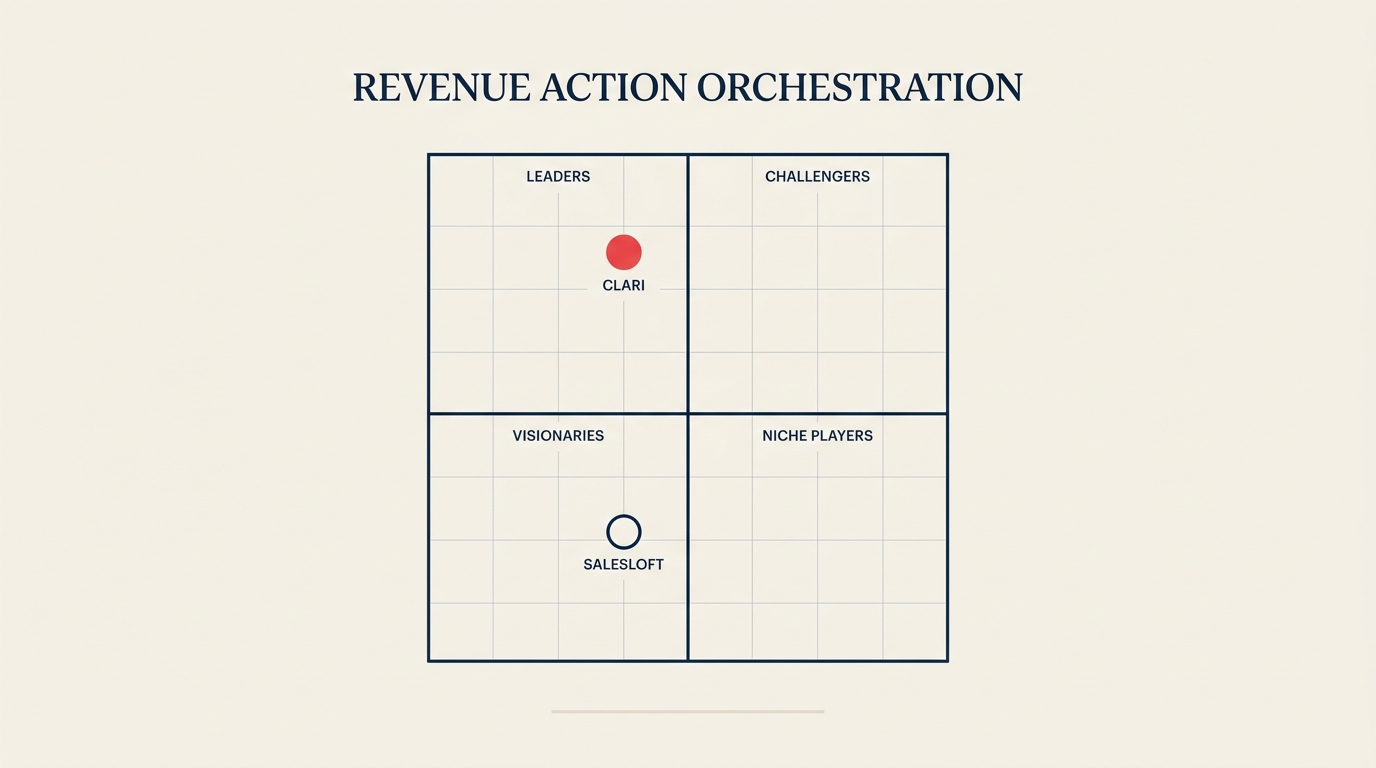
No primeiro posicionamento, a Clari foi nomeada Líder. A Salesloft foi nomeada Visionária. Ambos são resultados relevantes, dado que Clari e Salesloft concluíram uma fusão no início de 2025, criando uma empresa combinada que afirma gerenciar trilhões de dólares em dados de receita em sua base de clientes.
O Que é Revenue Action Orchestration, de Fato
A maior parte da cobertura analítica vai resumir quem ficou onde no quadrante. Isso não é o que importa. O que importa é entender o que a Gartner está afirmando ao criar essa categoria.
Dados-Chave
- O inaugural Magic Quadrant da Gartner para RAO unifica formalmente sales engagement, inteligência de receita e SFA em uma única categoria avaliável (Fonte: cobertura do MQ pela Clari)
- 87% das empresas que aumentaram o investimento em AI para vendas ainda não atingem suas metas de receita (Fonte: análise Rework de dados do setor)
- O Gong cruzou US$ 500M ARR em grande parte consolidando o que os compradores adquiriam anteriormente como ferramentas separadas
RAO é o reconhecimento da Gartner de que o antigo modelo de três categorias parou de descrever a forma como os compradores realmente compram. Nenhum time de receita sério em 2026 adquire ferramentas de engagement e ferramentas de inteligência de fornecedores distintos e assume que vão integrar bem. Os dados não fluem. Os sinais não fecham ciclos. O vendedor acaba alternando entre dashboards. A Gartner nomeou o problema e deu aos fornecedores um único scorecard para competir.
A Clari descreve a visão como AI e dados convergindo para que cada vendedor tenha capacidades que antes estavam disponíveis apenas para o nível executivo, com o enquadramento de transformar cada representante no CRO de seu próprio território. É um posicionamento de produto, mas a lógica subjacente é sólida. Quando sua plataforma de engagement sabe quais negócios estão em risco, quando sua camada de inteligência pode acionar automaticamente a próxima melhor ação, e quando seu SFA registra os resultados para que o modelo melhore, você tem um sistema. Quando os três são fornecedores separados, você tem três sistemas fingindo ser um.
O timing não é acidental. O Gong chegou a US$ 500M ARR consolidando o que os compradores adquiriam como ferramentas separadas. O Agentforce da Salesforce cruzou US$ 800M ARR anexando execução de AI à camada de dados existente do CRM. Os recursos Smart Deal Progression e AEO do HubSpot avançaram ainda mais para o território de inteligência de receita. Essas não foram apostas de produto isoladas. Eram todos sinais de que o modelo de três categorias estava entrando em colapso. O MQ da Gartner é a confirmação.
A Auditoria de Fornecedor RAO: 5 Perguntas Antes de Assinar
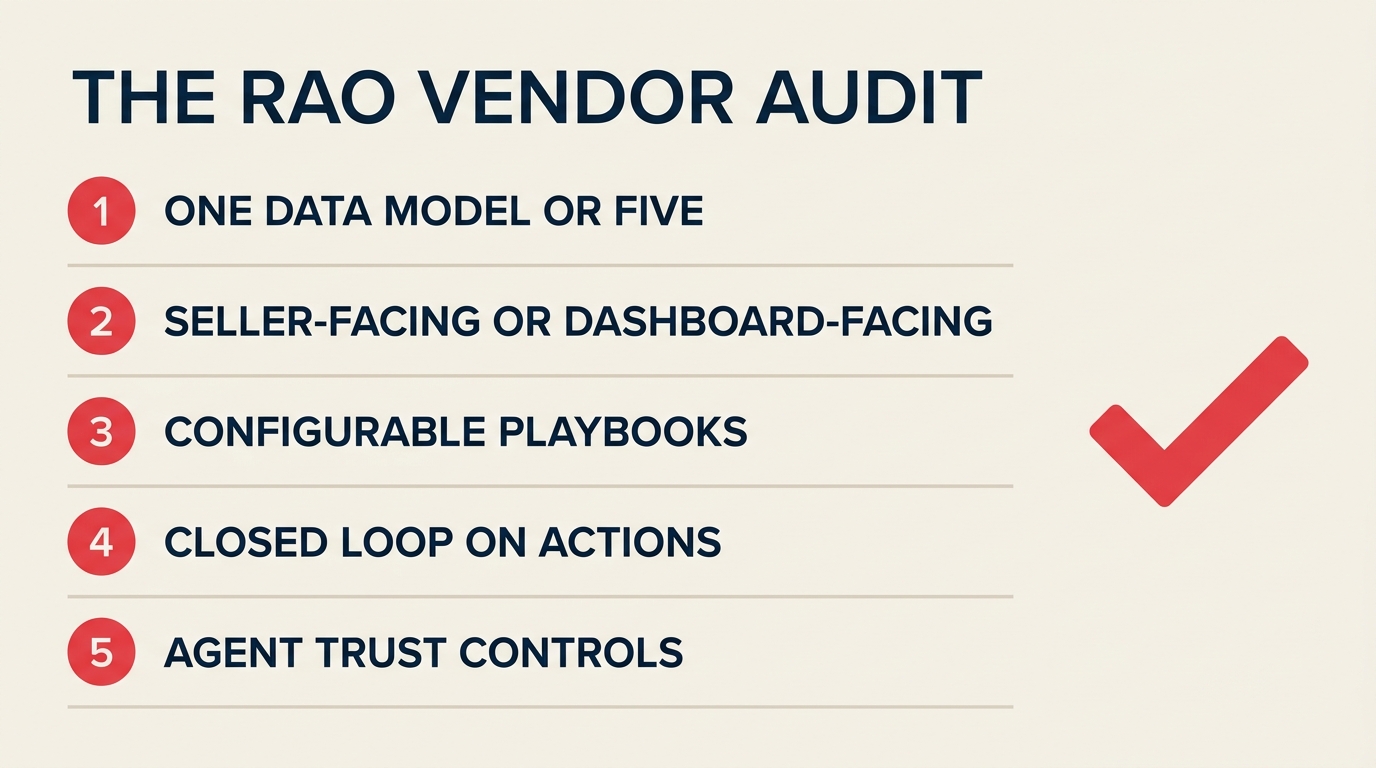
O MQ dá um ponto de partida. Mas a posição no quadrante sozinha não diz se um fornecedor se encaixa na sua arquitetura, na maturidade do seu time ou nas suas restrições de integração. Aqui estão cinco perguntas que convertem o framework do MQ em um checklist real de procurement.
1. Um modelo de dados ou cinco?
A promessa central do RAO é uma camada de dados unificada cobrindo engagement, inteligência e SFA. Antes de assinar, peça ao fornecedor para mostrar o schema subjacente. Seus registros de contato, dados de chamadas, estágios de negócios e sinais de próxima melhor ação ficam todos armazenados em um único lugar? Ou a "plataforma unificada" são na verdade três produtos adquiridos com uma camada de API por cima? A resposta muda seus custos de integração em uma ordem de magnitude.
2. Voltado para o vendedor ou para o dashboard?
As plataformas de inteligência de receita historicamente foram construídas para o líder de receita, não para o representante. Os relatórios analíticos chegam na caixa de entrada do VP. Os dashboards vivem no deck da QBR. O RAO como categoria exige que a inteligência apareça dentro do workflow do vendedor real, nas ferramentas que ele usa todos os dias. Peça para ver a interface do representante, não o resumo executivo.
3. Os playbooks são configuráveis para o seu modelo de vendas?
Recomendações genéricas de próxima melhor ação não são úteis em uma motion de vendas especializada. Um fornecedor que vende para ciclos de procurement enterprise precisa de uma lógica de playbook diferente de um que opera com uma motion de conversão PLG. Pergunte especificamente como a camada de playbook do fornecedor lida com definições de estágio personalizadas, jornadas de negócios não lineares e comitês de compra com múltiplos stakeholders. Se a resposta for "temos templates", não é suficiente.
4. O sistema fecha o ciclo sobre as ações?
RAO sem feedback de ciclo fechado é apenas um CRM melhorado. A categoria existe porque sistemas de AI precisam de dados de resultado para melhorar. Quando um representante segue uma ação recomendada, a plataforma registra o que aconteceu? Ela atualiza o modelo? O próximo representante em situação semelhante recebe uma recomendação melhor por causa disso? Exija uma demonstração concreta, não um slide de roadmap de produto.
5. Quais são os controles de confiança do agente?
Essa pergunta não existia há três anos. Ela importa agora. À medida que camadas de agentes de IA substituem ou se posicionam acima do CRM, os CROs precisam saber o que acontece quando uma recomendação de AI está errada. Os representantes podem substituir? Há um log de auditoria? É possível ajustar o limiar de confiança antes que o sistema aja de forma autônoma? Fornecedores que não conseguem responder isso claramente estão vendendo teatro de AI, não infraestrutura de AI.
O Que a Posição de Líder da Clari Significa na Prática
A Clari chegar como Líder no MQ inaugural tem mais peso do que uma designação típica de Líder. Em uma categoria madura com múltiplas iterações de MQ, Líder significa apenas "ainda estamos aqui". Em um MQ inaugural, significa que os analistas da Gartner olharam para os fornecedores competindo nesse espaço e decidiram que a Clari tinha tanto a visão mais clara quanto a execução mais demonstrada.
O contexto da fusão importa aqui. A Salesloft traz um DNA profundo de sales engagement de sua história de mais de uma década no mercado de outreach e sequenciamento. A Clari traz profundidade em inteligência de receita e forecasting. A entidade combinada é essencialmente a arquitetura de referência do RAO tornada real: uma plataforma, um modelo de dados, engagement mais inteligência mais sinais de SFA. É provavelmente por isso que a Gartner os posicionou onde posicionou. Não é apenas capacidade de produto. É que a própria fusão é uma demonstração funcional da tese da categoria.
O posicionamento Visionário da Salesloft merece atenção separada. Visionários em MQs inaugurais são frequentemente mais interessantes do que o posicionamento superficial sugere. A designação significa visão forte com execução ainda em maturação, o que em uma categoria nova significa que há um upside real à medida que a plataforma amadurece. Para compradores que querem visão de liderança na categoria e estão dispostos a crescer junto com um fornecedor, o posicionamento da Salesloft não é um alerta. É um sinal.
FAQ: Revenue Action Orchestration para CROs
O que é Revenue Action Orchestration?
Revenue Action Orchestration (RAO) é a categoria definida pela Gartner que unifica sales engagement, inteligência de receita e automação da força de vendas em uma única plataforma nativa de AI. A categoria formaliza o que times de receita líderes vinham montando manualmente: ferramentas de outreach, inteligência de negócios e execução no CRM reunidas em um sistema com um modelo de dados compartilhado e feedback de ciclo fechado.
Qual a diferença entre RAO e um CRM?
Um sistema de CRM registra o que aconteceu. As plataformas RAO são projetadas para recomendar o que deve acontecer a seguir e então executar, com o resultado alimentando de volta o sistema para melhorar recomendações futuras. O RAO fica acima ou substitui a camada de execução do CRM, não sua função de armazenamento de dados. O debate sobre se vale a pena adicionar AI em cima de um CRM ou substituí-lo inteiramente é diretamente relevante aqui.
Devemos esperar pelo segundo MQ antes de avaliar?
Não. Esperar pelo segundo MQ significa aguardar de um a dois anos, período em que seus concorrentes estão consolidando seus stacks e capturando os ganhos de eficiência. O MQ inaugural é suficiente para iniciar a avaliação de fornecedores com um framework estruturado. Use a Auditoria de Fornecedor RAO acima para conduzir sua própria avaliação em vez de esperar que a Gartner faça uma segunda iteração.
O Que Fazer Esta Semana
- Envie o link do MQ ao seu Head de Sales Ops e peça que ele mapeie o seu stack atual em relação aos três componentes do RAO: engagement, inteligência e SFA. Se você tiver três fornecedores separados, tem risco de consolidação.
- Agende uma demo com qualquer fornecedor de RAO que já esteja dentro da sua janela de renovação. Use as cinco perguntas da Auditoria de Fornecedor RAO como script de avaliação, não o fluxo de demo padrão do fornecedor.
- Verifique se sua plataforma de forecasting atual fecha o ciclo sobre as ações dos representantes. Se sua ferramenta de inteligência de receita não alimenta os resultados de volta para o seu próprio modelo, você não está rodando RAO. Está rodando uma camada de reporting em cima do seu CRM.
Saiba Mais
