Thought Leadership for CEO: Building Your Voice and Industry Influence
Turn this article into takeaways for your work.


Each assistant summarizes the article only for you and suggests best practices for your work.
Executive Summary
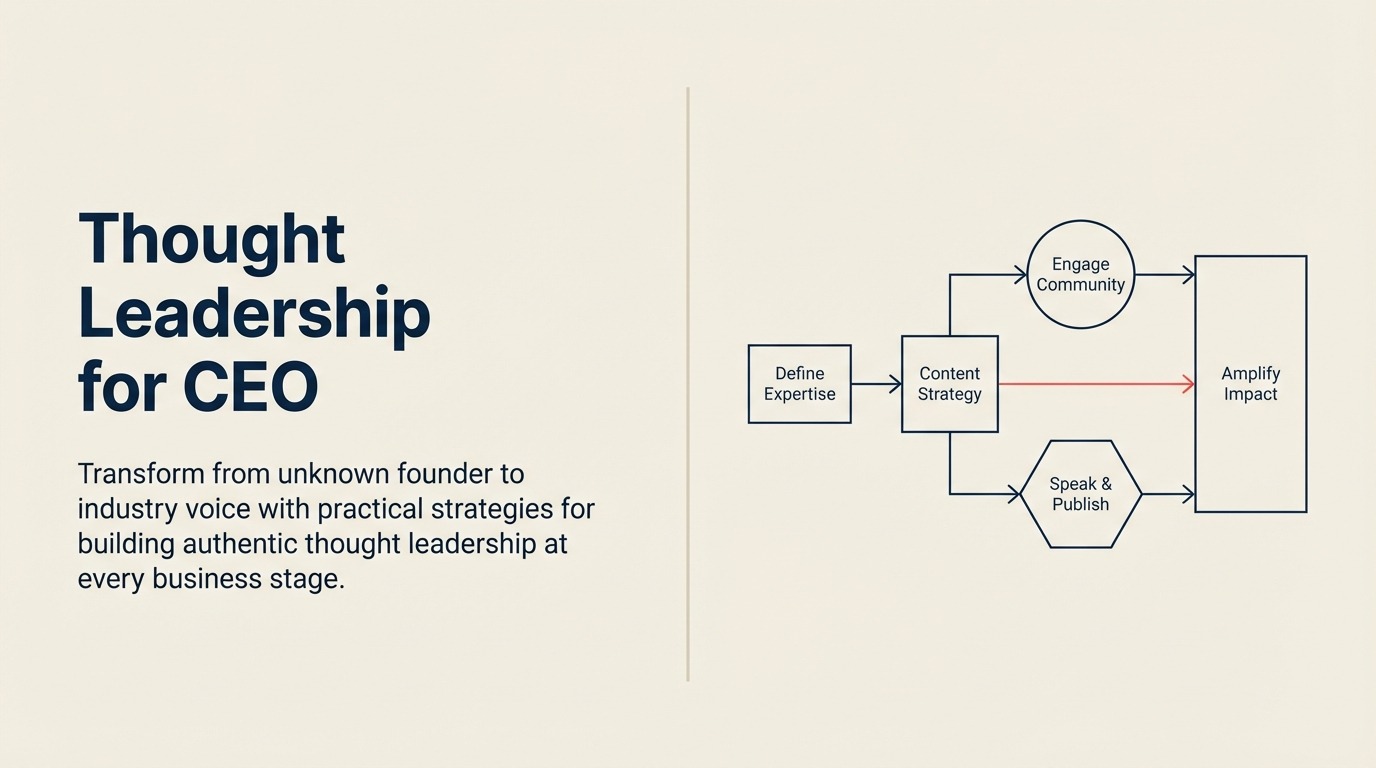
Thought leadership transforms you from a business owner into an industry authority. It's not about promoting yourself - it's about advancing important conversations, sharing insights that actually help people, and building trust through real expertise. As CEO, your thought leadership drives company growth, attracts great talent, and creates opportunities that traditional marketing can't. This guide shows you how to build authentic thought leadership from unknown founder to recognized industry voice.
Part I: Solo/Founder Stage (0-5 employees)
Your Reality
You're unknown, but you have unique insights from building something new. Time is scarce, but authenticity is your advantage. Every piece of content matters. You're building credibility while building your product.
Core CEO Actions
1. Define Your Unique Perspective
Start by identifying what you know that others don't. This comes from your specific experience, the problems you've solved, patterns you've noticed, or conventional wisdom you've challenged. Write down five insights that feel obvious to you but might surprise others in your industry. These become your foundation topics. Your perspective should feel natural to share and impossible for others to replicate exactly, because it comes from your unique journey.
Document your contrarian views, where do you disagree with industry conventional wisdom? What assumptions do you question? These contrarian positions often generate the most engaging discussions and help you stand out in crowded conversations. Remember, thought leadership isn't about being provocative for attention; it's about sharing genuinely different viewpoints based on real experience.
2. Choose Your Primary Platform
Focus on one platform initially rather than spreading thin across many. Choose based on where your audience spends time and where you feel most comfortable expressing ideas. LinkedIn works well for B2B insights and professional perspectives. Twitter enables real-time commentary and conversation. Industry blogs and publications offer deeper, more authoritative pieces.
Start with the platform where you already have some presence or network. Success on one platform makes expansion to others easier. Quality and consistency matter more than quantity or reach at this stage. One thoughtful post weekly beats seven shallow ones.
3. Document Your Learning Journey
Share what you're learning as you build your company. This creates authentic content while providing value to others on similar journeys. Document failures and recoveries, these stories resonate more than success stories alone. Share resources you've discovered, frameworks you've developed, or insights from mentors and advisors.
Create "learning in public" content: lessons from customer conversations, insights from hiring mistakes, revelations from competitive analysis. This approach generates content naturally while establishing your credibility as someone actively solving problems others face.
4. Engage Authentically
Thought leadership requires two-way conversation, not broadcasting. Comment meaningfully on others' content, add insights, ask thoughtful questions, or share related experiences. Engage with industry conversations by offering your perspective, especially when it differs from the mainstream view.
Respond to every comment and message personally at this stage. These early relationships become your foundation network. Build genuine relationships with other thought leaders, industry experts, and potential customers through consistent, valuable engagement.
Key Thought Leadership Elements to Establish
- Core perspective and unique insights
- Consistent voice and style
- Primary content platform
- Regular publishing schedule
- Engagement strategy
- Learning documentation system
Early Thought Leadership Tactics
- Weekly insights posts
- Real-time problem solving
- Behind-the-scenes content
- Industry commentary
- Resource sharing
- Question asking
Warning Signs You're Ready for the Next Stage
Multiple platforms requesting content. Invitations to speak or be interviewed. Consistent engagement from industry peers. Need for more sophisticated content strategy.
Part II: Small Business Stage (5-50 employees)
Your Reality
Visibility is increasing but credibility needs strengthening. Multiple content opportunities compete for attention. Team can support content creation. Industry connections are growing.
Core CEO Actions
1. Develop Content Strategy
Move beyond reactive posting to strategic content planning. Identify three to five key themes that align with your business goals and personal expertise. Create content calendar that balances educational, inspirational, and industry commentary pieces. Plan content around industry events, seasonal trends, and company milestones.
Develop signature content formats, maybe weekly industry updates, monthly deep-dive analyses, or quarterly trend predictions. Consistency in format helps audience know what to expect and builds anticipation for your content. Document your content strategy so team members can support execution while maintaining your authentic voice.
2. Build Speaking Opportunities
Speaking amplifies your reach and establishes authority faster than written content alone. Start with local business groups, industry meetups, and virtual conferences. Develop three to five signature presentations on your core expertise areas. Practice these talks until they feel natural and conversational.
Create speaker assets: professional photos, bio variations for different audiences, topic summaries with key takeaways. Make it easy for event organizers to say yes by providing everything they need. Record your presentations to create additional content and improve your speaking skills.
3. Establish Media Relationships
Build relationships with journalists and industry publications that cover your sector. Offer yourself as expert source for industry trends and commentary. Respond quickly and thoughtfully to media requests, even for quotes in other people's stories. This builds your reputation as reliable expert source.
Pitch story ideas based on your unique insights or company experiences. Journalists need fresh angles and insider perspectives, you can provide both. Start local and industry-specific before approaching national publications. One good relationship with a journalist often leads to multiple opportunities.
4. Create Premium Content
Develop longer-form content that showcases deep expertise: white papers, research reports, or comprehensive guides. This content positions you as serious expert while providing valuable lead generation tools. Partner with industry research firms or consultants if you need additional credibility or resources.
Host webinars, create online courses, or launch podcasts that establish your voice in regular, structured formats. Premium content takes more effort but creates lasting assets that continue working for your thought leadership long after publication.
5. Measure and Iterate
Track metrics that matter: engagement quality, speaking invitations, media mentions, and business impact. Use analytics to understand which topics resonate most with your audience. Survey your network to understand how your thought leadership influences their perception of you and your company.
Adjust your strategy based on what works. If video content gets more engagement than written posts, shift resources accordingly. If certain topics generate business leads while others don't, refocus your content themes. Thought leadership strategy should evolve based on results and opportunities.
Thought Leadership Framework
Strategic Content Planning
- Quarterly theme development
- Content calendar management
- Multi-format content creation
- Platform-specific optimization
- Audience segmentation strategy
- Content performance analysis
Speaking and Media Strategy
- Speaker profile development
- Media relationship building
- Press kit creation
- Interview preparation
- Event networking strategy
- Reputation monitoring
Key Metrics to Track
- Content engagement rates
- Speaking opportunities secured
- Media mentions and coverage
- Website traffic from thought leadership
- Lead generation attribution
- Network growth quality
CEO's Monthly Thought Leadership Review
Assess content performance and audience feedback. Review upcoming speaking and media opportunities. Evaluate thought leadership's impact on business goals. Guide team on content priorities. Identify new relationship opportunities.
Warning Signs You're Ready for the Next Stage
National media attention. Major conference speaking invitations. Industry analyst recognition. Need for professional content support. Thought leadership driving significant business impact.
Part III: Mid-Market Stage (50-500 employees)
Your Reality
Industry recognition is growing. Thought leadership drives significant business value. Multiple stakeholders want to leverage your platform. Global opportunities emerging.
Core CEO Actions
1. Build Thought Leadership Team
Hire experienced professionals to support your thought leadership: content managers, publicists, and social media specialists. Build team that understands both content creation and business strategy. Establish clear processes for content development, review, and distribution while maintaining your authentic voice.
Create governance structure that ensures all thought leadership aligns with business strategy and brand values. Train team members on your voice, perspectives, and key messages. Invest in professional tools for content creation, distribution, and measurement. Professional support amplifies your reach while freeing time for strategic activities.
2. Develop Signature Frameworks
Create proprietary methodologies, models, or frameworks that become associated with your expertise. These intellectual property assets differentiate your thought leadership and provide structured ways to share complex insights. Name your frameworks memorably and use them consistently across all content.
License or productize your frameworks through training programs, certification courses, or consulting offerings. This creates additional revenue streams while reinforcing your thought leadership position. Protect intellectual property while making frameworks accessible enough to spread through the industry.
3. Launch Signature Initiatives
Start industry initiatives that position you as convenor and catalyst: industry reports, award programs, or conference series. These initiatives establish your leadership beyond individual content pieces. Partner with other industry leaders to create initiatives too large for any single company.
Host regular events that bring together industry leaders around important topics. Create advisory boards or expert panels that provide valuable networking while positioning you as central figure. These initiatives require significant investment but create lasting platforms for ongoing thought leadership.
4. Engage with Industry Transformation
Take positions on major industry changes and trends. Predict future developments based on your unique vantage point. Challenge industry status quo when appropriate. Lead conversations about regulation, technology adoption, or market evolution.
Build coalition with other leaders around important industry issues. Your voice carries more weight as part of broader movement. Engage with policymakers and regulators on issues affecting your industry. Thought leaders help shape industry direction, not just comment on it.
5. Expand Global Reach
Adapt your thought leadership for international audiences and markets. Speak at global conferences and contribute to international publications. Build relationships with thought leaders in key global markets. Create content that addresses global trends while maintaining local relevance.
Consider translation and localization for content in key markets. Partner with local experts to ensure cultural appropriateness. Global thought leadership requires understanding different business contexts and communication styles while maintaining consistent core messages.
Advanced Thought Leadership Strategies
Content Excellence Programs
- Editorial calendar sophistication
- Multi-channel content optimization
- Thought leadership measurement
- Competitive thought leader analysis
- Content partnership strategies
- Premium content development
Industry Leadership Initiatives
- Conference and event hosting
- Industry research partnerships
- Coalition building activities
- Advisory role development
- Regulatory engagement
- Standards development participation
Global Expansion Strategy
- International speaking circuits
- Global media relationships
- Cross-cultural content adaptation
- Regional partnership development
- Multilingual content strategy
- Global trend analysis
Key Metrics to Track
- Share of voice in industry conversations
- Speaking engagement quality and reach
- Media coverage sentiment analysis
- Thought leadership attribution to revenue
- Industry influence measures
- Global recognition metrics
CEO's Quarterly Thought Leadership Strategy Review
Assess industry position and competitive landscape. Review global expansion opportunities. Evaluate team performance and resource needs. Approve major initiatives and partnerships. Align thought leadership with business strategy evolution.
Warning Signs You're Ready for the Next Stage
Global recognition as industry authority. Requests for board positions and advisory roles. Government and regulatory engagement opportunities. Thought leadership becoming key enterprise asset.
Part IV: Enterprise Stage (500+ employees)
Your Reality
You're recognized industry voice with global platform. Thought leadership significantly impacts enterprise value. Legacy and succession planning considerations. Responsibility for industry advancement.
Core CEO Actions
1. Champion Industry Evolution
Use your platform to advance entire industry forward. Advocate for beneficial regulations, standards, and practices. Challenge industry to address major societal issues. Lead by example in areas like sustainability, diversity, or innovation.
Convene industry leaders around transformational challenges. Create forums for collaboration on issues too large for individual companies. Your thought leadership becomes catalyst for industry-wide progress. This level of leadership builds lasting legacy beyond individual company success.
2. Develop Next Generation Leaders
Mentor other executives and entrepreneurs in your industry. Share platforms with rising voices. Create formal mentorship programs or advisory roles. Your thought leadership platform becomes launching pad for others.
Teach at universities or business schools. Write books that capture your insights and experience. Develop case studies of your leadership decisions for educational purposes. Legacy thought leaders create knowledge that outlasts their active leadership.
3. Build Global Influence Networks
Participate in global forums like World Economic Forum or industry summits. Engage with heads of state and global business leaders. Address international organizations and government bodies. Your voice influences global policy and business practice.
Build relationships with academic institutions and think tanks. Fund or participate in research that advances understanding of critical industry issues. Global thought leaders bridge practical business experience with academic research.
4. Create Lasting Intellectual Contributions
Write definitive works on your areas of expertise. Create enduring frameworks and methodologies. Establish research institutes or foundations that continue your work. Build intellectual property that outlasts your active leadership.
Document decision-making processes and leadership approaches for future generations. Create leadership development programs based on your experience. Your thought leadership becomes educational resource for decades.
5. Manage Legacy and Transition
Plan for thought leadership succession and continuity. Develop other voices within organization who can carry forward important messages. Create systems that maintain thought leadership platform beyond your tenure.
Balance current leadership responsibilities with legacy building. Ensure thought leadership serves current business needs while building lasting value. Consider how your voice and platform can best serve industry long-term development.
Enterprise Thought Leadership Excellence
Global Influence Management
- International forum participation
- Government relations strategy
- Academic partnership development
- Think tank collaboration
- Policy advocacy initiatives
- Cross-industry leadership
Legacy Building Programs
- Knowledge capture systems
- Succession planning processes
- Educational contribution development
- Research institution partnerships
- Foundation establishment
- Industry advancement initiatives
Platform Optimization
- Multi-stakeholder communication
- Global media strategy
- Executive ghostwriting teams
- Digital platform management
- Speaking bureau relationships
- Publishing partnership development
Key Metrics for the Board
- Global thought leadership impact
- Industry influence assessment
- Reputation value measurement
- Legacy program effectiveness
- Succession readiness evaluation
- Competitive thought leadership position
CEO's Annual Thought Leadership Summit
Review global influence and impact. Assess industry leadership opportunities. Evaluate legacy building programs. Set long-term thought leadership vision. Align global leadership team on platform priorities.
Critical Success Factors Across All Stages
Authentic Voice Development
Your thought leadership must feel genuinely yours. Don't try to sound like other leaders or follow popular formulas. Develop distinctive voice that reflects your personality, values, and experience. Authenticity creates connection that professional polish alone cannot achieve.
Consistent Value Creation
Every piece of content should provide genuine value to your audience. Ask: "What will people learn, think differently about, or be able to do better after consuming this?" Value creation builds loyal following and establishes authority more effectively than self-promotion.
Long-Term Relationship Building
Thought leadership is relationship business. Invest time in building genuine connections with other leaders, media professionals, and industry experts. These relationships create opportunities that no amount of content can generate alone.
Strategic Business Alignment
Ensure thought leadership serves business objectives while providing authentic value to others. Best thought leadership creates win-win situations where helping others advances your business goals naturally. Avoid obvious selling, but ensure clear connection between expertise and company value.
Conclusion: Your Thought Leadership Journey
Thought leadership excellence creates opportunities beyond traditional marketing. Your voice becomes platform for advancing industry, building relationships, and creating lasting value for stakeholders.
Start by sharing what you uniquely know. Build consistency in valuable content creation. Invest in relationships and authentic engagement. Scale thoughtfully while maintaining authenticity.
Remember: Thought leadership is earned through consistent value creation over time. It requires patience, authenticity, and commitment to helping others succeed. But the rewards, industry influence, business growth, and personal fulfillment, justify the investment.
Your insights matter. Your experience provides unique perspective that others need. Share generously, engage authentically, and lead conversations that advance everyone.
The strongest thought leaders started by helping one person understand something better. Focus on value creation, and influence will follow. Your voice can shape industry direction and inspire next generation of leaders.
Build your platform thoughtfully. Use it responsibly. Leave industry better than you found it.

Co-Founder & COO
On this page
- Executive Summary
- Part I: Solo/Founder Stage (0-5 employees)
- Your Reality
- Core CEO Actions
- Key Thought Leadership Elements to Establish
- Early Thought Leadership Tactics
- Warning Signs You're Ready for the Next Stage
- Part II: Small Business Stage (5-50 employees)
- Your Reality
- Core CEO Actions
- Thought Leadership Framework
- Key Metrics to Track
- CEO's Monthly Thought Leadership Review
- Warning Signs You're Ready for the Next Stage
- Part III: Mid-Market Stage (50-500 employees)
- Your Reality
- Core CEO Actions
- Advanced Thought Leadership Strategies
- Key Metrics to Track
- CEO's Quarterly Thought Leadership Strategy Review
- Warning Signs You're Ready for the Next Stage
- Part IV: Enterprise Stage (500+ employees)
- Your Reality
- Core CEO Actions
- Enterprise Thought Leadership Excellence
- Key Metrics for the Board
- CEO's Annual Thought Leadership Summit
- Critical Success Factors Across All Stages
- Authentic Voice Development
- Consistent Value Creation
- Long-Term Relationship Building
- Strategic Business Alignment
- Conclusion: Your Thought Leadership Journey