More in
AI at Work ニュース
OpenAIがChatGPT広告を中小企業に予算制限なく開放した
6月 6, 2026
AIは職場のあらゆる場所に浸透した:しかし「仕事を根本から変えた」と言える人は10人に1人だけ
6月 6, 2026
Vibe Codingの105億ドルの瞬間:AIが新規ソフトウェア開発の大半を担うようになった
6月 6, 2026
AIエージェントは今や従業員よりも多くのシステムアクセス権を持っている:しかしセキュリティ対策はほとんど追いついていない
6月 5, 2026
AIは自社開発すべきか、購入すべきか。巨大企業が何を買収したかを見れば答えが見えてくる
6月 5, 2026
Uberは予算超過を受け、従業員1人あたりのAI利用上限を1,500ドルに設定した
6月 5, 2026
TrumpのAI大統領令は規制緩和を志向:しかし御社のコンプライアンスリスクは変わっていない
6月 4, 2026
AIが220社のユニコーン企業を時価総額10億ドル未満に押し下げた:ChatGPT以前のスタートアップは転換点を迎えている
6月 4, 2026
トークン価格は今年67%下落した:それでもAI費用は増え続けている
6月 3, 2026
AIを活用する中小企業は売上増加と勤務時間短縮を同時に実現している
6月 3, 2026
MicrosoftがBuild 2026でWindowsをエージェントプラットフォームに: Windows Agent StoreがGA前にCTOが下すべきランタイムの決断
Turn this article into takeaways for your work.


Each assistant summarizes the article only for you and suggests best practices for your work.
MicrosoftのBuild 2026基調講演は単に機能のプレビューではありませんでした。Windows上のエンタープライズエージェント展開の調達モデルを変えました。そして、Q3にチームが下す決断が、Windows Agent Store(WAS)が一般提供(GA)になった後の柔軟性を左右します。
6月2日、サンフランシスコのFort Masonで、Satya NadellaがBuild 2026を一連の発表で開幕しました。まとめて見ると、組織内でエージェントを動かすことの意味を根本から描き直す内容でした。ChatForestのBuild 2026まとめによると、MicrosoftはWindows Agent Framework(WAF)をMITライセンスのオープンソースプロジェクトとして出荷し、Windows Agent Runtime(WAR)をプレビュー公開し、85/15の開発者収益分配でWindows Agent Storeをオープンし、Project PolarisをGitHub Copilotの2026年8月からのデフォルトモデルとして発表しました。
最後の点はもう一度読む価値があります。MicrosoftがGPT-4を自社の開発者製品で自社開発のモデルに置き換え、自社のMaiaアクセラレーター上で動作させます。AI戦略をOpenAI上に構築してきた企業が、今やモデル層を垂直統合しています。OpenAIのモデル品質に基づいてGitHub Copilotのシート数を承認したCTOにとって、これは注釈ではありません。更新の会話です。
Build 2026で実際に発表されたもの
重要なポイント:
- 85/15の開発者収益分配: Windows Agent Storeは開発者に85%を支払います。Apple App StoreとMac App Storeの70/30に対して。MicrosoftはISVのディストリビューションを獲得するため両プラットフォームをアンダーカットしています。(出典: ChatForest Build 2026まとめ)
- Project PolarisがGitHub Copilotのデフォルトになる: 2026年8月、3ヶ月間のGPT-4オプションフォールバック期間あり。MicrosoftのMaiaアクセラレーター上で動作。(出典: ChatForest)
- Build 2026基調講演: 2026年6月2日、サンフランシスコFort Mason、Satya Nadella開幕。(出典: NotebookCheck)
マーケティング層を取り除いて、Microsoftが実際に発表した内容を示します:
- Windows Agent Framework(WAF): Windows OSシェルにネイティブエージェントAPI(アプリケーションプログラミングインターフェース)を組み込んだMITライセンスのオープンソースエージェント開発フレームワーク。MITライセンスにより、標準化が早期に進むでしょう。数ヶ月以内にサードパーティのエージェントビルダーがWAFをターゲットにし始めることが見込まれます。
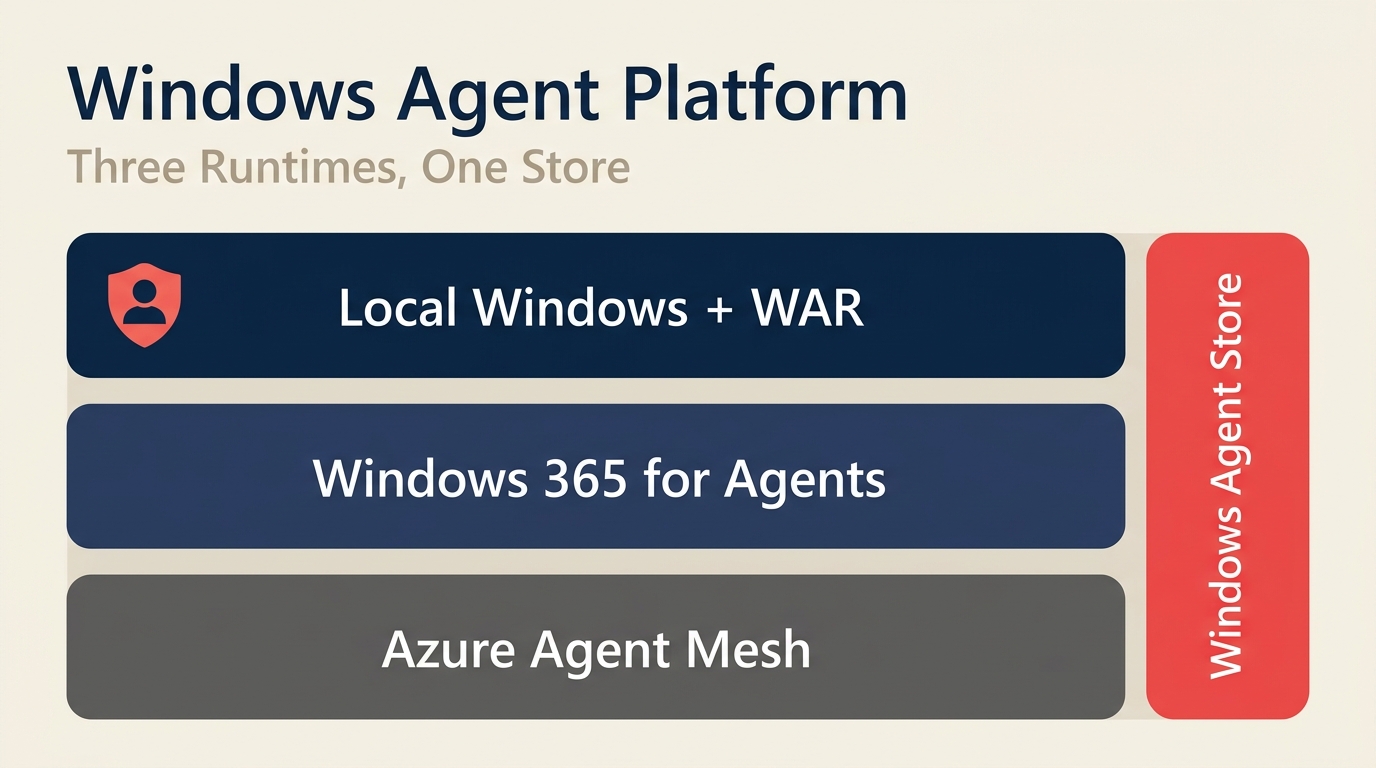
- Windows Agent Runtime(WAR): Windowsデバイス上でエージェントを直接ホストし実行するプレビューランタイム。ローカル実行環境です。エージェントホストとしてクラウドPC(Cloud PC)を使用する既存のWindows 365 for Agentsと組み合わせて機能します。Azureを除いてもWindowsエージェント向けに2つのランタイムが存在することになります。
- Windows Agent Store(WAS): エンタープライズユーザーにエージェントを配布するためのキュレーションされたマーケットプレース。AdobeとZoomがデザインパートナーとして名前が挙がっています。85/15の収益分配が見出しです。開発者により多くが残るため、より多くの開発者がWindowsを優先してビルドします。
- Project Polaris: Microsoftの自社開発コーディングモデル。2026年8月にGPT-4を置き換えてGitHub Copilotのデフォルトになります。3ヶ月間のGPT-4へのフォールバックが利用可能です。PolarisはMicrosoftのMaiaカスタムアクセラレーター上で動作するため、推論コスト構造は今後完全にMicrosoftのコントロール下に置かれます。
3つのランタイムこそが本当の話
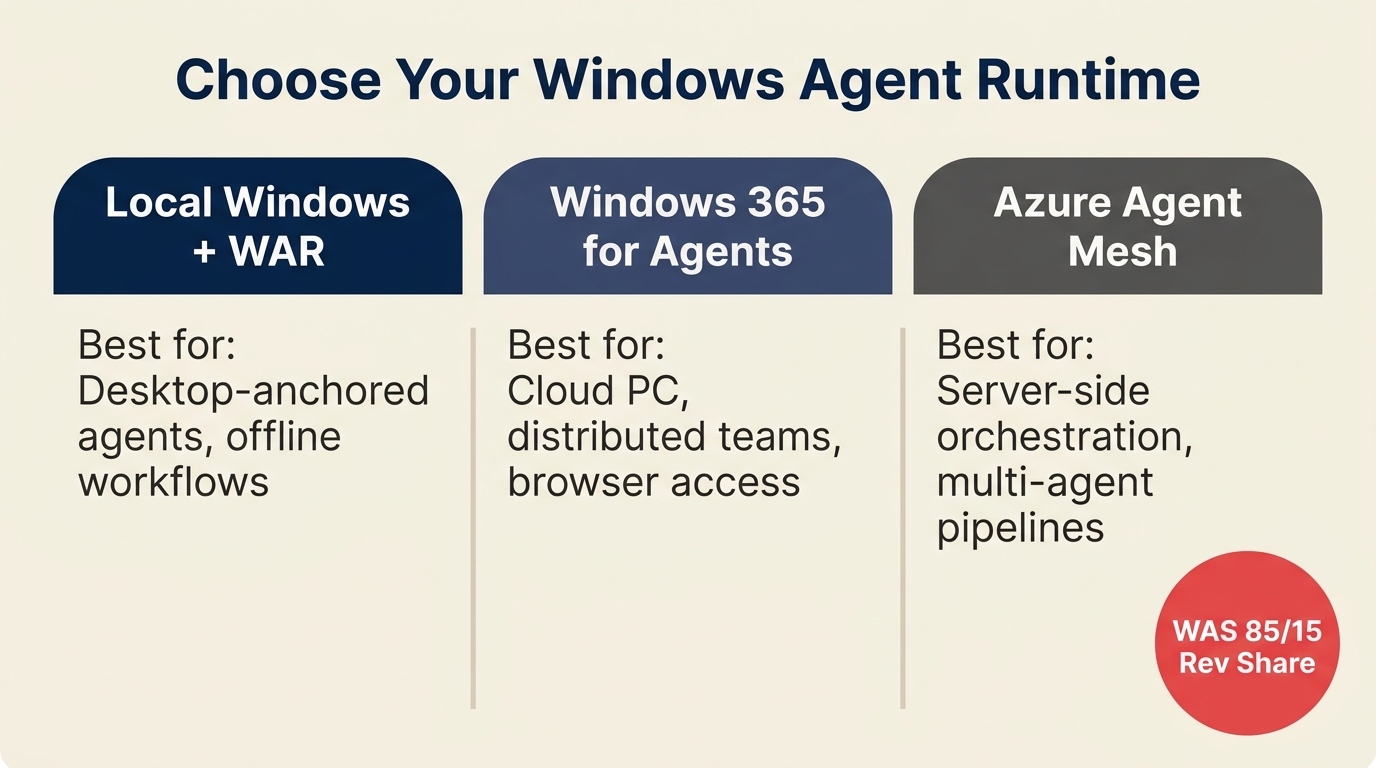
最も多くの報道を得ているのはWindows Agent Storeです。しかし、その下にある構造的な決定はあまり明らかではありません。MicrosoftはエンタープライズCTOにWindowsエージェント向けの3つの異なるランタイム環境を提供しており、ストアはその3つすべてと接続されています。
内訳は以下の通りです:
| ランタイム | 最適なユースケース | アイデンティティオーナー | 監査ログの場所 |
|---|---|---|---|
| ローカルWindows + WAR | デスクトップ固定エージェント、オフライン対応ワークフロー | デバイスアイデンティティ(Entra参加済み) | ローカルイベントログ + SIEM転送 |
| Windows 365 for Agents(Cloud PC) | ブラウザアクセス可能エージェント、分散チーム、VDI置き換え | クラウドアイデンティティ(Entra ID) | Microsoft 365コンプライアンスセンター |
| Azure Agent Mesh | サーバーサイドオーケストレーション、マルチエージェントパイプライン、APIレイヤーエージェント | サービスプリンシパルまたはマネージドアイデンティティ | Azure Monitor + Sentinel |
これらは互換性がありません。ローカルWindows + WARで構築されたエージェントは、Windows 365 Cloud PC内で動作するエージェントとは根本的に異なるアイデンティティモデルを持っています。明示的な選択なしに混在させると監査のギャップが生まれ、コンプライアンスリスクになります。
Appleがディストリビューションを処理する方法と比べてみましょう。App Store(70/30)とMac App Store(70/30)はどちらも単一のランタイムにつながっています。Microsoftはより複雑なアーキテクチャを運用しており、85/15のWAS収益分配はISVが3つのランタイムすべてにまたがって構築するための誘因です。
AIツールのベンダー評価フレームワークを構築しているCTOにとって、このランタイムの三項構造は特定のエージェントが承認される前に明示的な評価軸として含める必要があります。エージェントがすでに展開されてから「これらはどのランタイムで動作しているのか」と問うと、3つの異なるガバナンスサーフェスに散らばった答えが返ってきます。
この考え方のフレームワークとしてスリーランタイムテストがあります。新しいWindowsエージェントの展開を承認する前に、3つの質問をしてください。このエージェントはどのランタイムに存在するか(ローカルWAR / Windows 365 Cloud PC / Azure Agent Mesh)? アイデンティティと監査ログの責任者は誰か? ランタイムが廃止されるかベンダーがストアから撤退した場合のロールバックパスは何か?
GitHub Copilot更新で変わること
Project Polarisは単なるモデルの入れ替えではありません。MicrosoftがAI製品スタック全体を再保証することです。
組織がGitHub Copilotのシートを承認したとき、Microsoftの製品内でOpenAIのモデル品質を購入していました。2026年8月から、デフォルトモデルはMaiaアクセラレーター上で動作するMicrosoft製コーディングモデルのPolarisになります。3ヶ月のGPT-4フォールバックは時間的な猶予を与えますが、あくまで一時的な措置です。その窓が過ぎると、Copilot内でGPT-4に留まるには明示的な設定変更または異なる製品ティアが必要になる可能性があります。
8月のデフォルト切り替え前にチームが答えるべき質問:
- CopilotのシートはモデルのベンチマークAに基づいて承認されましたか? そうであれば、今すぐフォールバック期間中にPolarisでそのベンチマークを実行してください。
- 組織はモデルカスタマイズアクセスを持つGitHub Enterpriseライセンスを持っていますか? そうであれば、Polarisへの移行は更新の決定だけでなく設定の決定でもあります。
- セキュリティチームのAI使用ポリシーはOpenAIを具体的に参照していますか、それとも「Copilotを動かすモデル」を参照していますか? いずれにせよ、ポリシーの見直しが必要です。AIユースポリシーの構築でその見直しで何をカバーすべきかを確認してください。
より深い問題はベンダー集中です。MicrosoftのPolarisへの移行は、AIベンダーロックイン緩和戦略が早期に発見するように設計されたシングルベンダーロックインのシフトそのものです。Polarisで問題ないかもしれませんが、それを受け入れる決定はデフォルトではなく、明示的であるべきです。
FAQ
8月にGitHub CopilotのGPT-4から移行する必要があるか?
すぐにではありません。MicrosoftはPolarisがデフォルトになった後、3ヶ月間GPT-4へのオプションフォールバックを提供しています。ただし、フォールバックは一時的です。正しいアクションは、プレビュー期間中に実際のコーディングワークフローでPolarisをテストし、フォールバックを評価のバッファとして扱うことです。永続的な維持手段ではありません。
Windows Agent Storeはエンタープライズ管理型のマーケットプレースか、オープンなマーケットプレースか?
Microsoftはキュレーションされたものと説明しており、AdobeとZoomをデザインパートナーとして挙げています。しかし「キュレーション」はIT管理型を意味しません。エンタープライズ管理者は、Microsoft IntuneまたはEntraベースの条件付きアクセスを通じてWASのアクセスポリシーを設定する必要があるでしょう。そのコントロールがどれほど細かくできるかは、GAまで明確になりません。CTOはWASソースのエージェントを承認する前に、エンタープライズテナントコントロールの詳細についてMicrosoftのアカウントチームに確認すべきです。
Q3のWindows Agent調達チェックリスト
Windows Agent StoreがGAになる前に、アーキテクチャとセキュリティのリードとともに実施してください:
ステップ1: 現在および計画中のすべてのWindowsエージェントをランタイムに割り当てる。 各エージェント(GitHub Copilot、Azure OpenAI統合、Windowsクライアントを持つISVツールを含む)を3つのランタイム(ローカルWindows + WAR、Windows 365 Cloud PC、Azure Agent Mesh)のいずれかにマッピングしてください。未割り当てのエージェントを許可しないでください。AI承認ゲートとベンダーレビュープロセスを使ってこれを徹底してください。
ステップ2: ランタイムごとにアイデンティティと監査の責任者を定義する。 使用している各ランタイムについて、アイデンティティサーフェスを担当するチーム(IT、セキュリティ、またはプラットフォームエンジニアリング)と監査ログの格納場所を指定してください。WASソースのエージェントが承認される前に、AIアクション実行の監査証跡ドキュメントにこれを明記してください。
ステップ3: 8月前にPolarisの評価ゲートを設定する。 3ヶ月のフォールバック期間中にCopilotの品質レビューをスケジュールしてください。上位3〜5のコーディングワークフローをPolarisで実行してください。GPT-4ベースラインと出力品質を比較してください。Polarisをデフォルトとして受け入れるか、拡張GPT-4アクセスをリクエストするかを明示的に決定してください。8月のデフォルト切り替えを記録された決定なしに発生させてはなりません。
ステップ4: ベンダーリスク登録を更新する。 Windows Agent Storeをディストリビューションチャネルのリスク項目として追加してください。WASソースのエージェントは複数のランタイムにまたがって動作する可能性があり、MicrosoftがRevShare、キュレーション基準、ランタイム互換性仕様をコントロールすることに注意してください。WASソースのエージェントを大規模に承認する前に、AIベンダーロックイン緩和戦略と照合して許容可能な露出を文書化してください。
今週取るべきアクション
WASはまだGAではありません。それがあなたの機会の窓です。GAになる前に重要なことは:
- Microsoftのアカウントチームにランタイムアーキテクチャについて確認してください。 GAローンチのトラフィックが殺到する前に、エンタープライズテナントコントロールに関する具体的な回答を得てください。
- GitHub Copilotの更新日を確認してください。 更新まで6ヶ月以内であれば、今すぐPolarisの評価を始めてください。3ヶ月のフォールバック期間がその窓内に収まる必要があります。
- WAFのMITライセンスを読んでください。 オープンソースのライセンスはセキュリティレビューのプロセスを変えます。AppSecチームは、内部チームがその上に構築する前にWAFを評価する必要があります。MITは許諾的ですが、両刃の剣です。
- 次のアーキテクチャレビューのアジェンダに「3つのランタイム」を追加してください。 今日Windowsエージェントを積極的に展開していない組織でも、ランタイムアーキテクチャの決定が将来のすべてのベンダー評価に影響します。まだ意図的に選択できる今のうちに先手を打ってください。
- AI使用ポリシーがエージェント配布マーケットプレースをカバーしているか確認してください。 2026年以前に書かれたほとんどのポリシーはカバーしていません。WASは独自のセキュリティと調達の影響を持つ新しいディストリビューションサーフェスです。
このような決定が複数年のAI展開戦略にどのように収まるかの広範なフレームワークについては、AIの成熟度の5段階モデルが組織の現在の準備状況を把握し、初期のWAS採用にどれほど積極的になるべきかを判断するのに有用な参考資料です。
関連記事

Co-Founder, Rework.com