More in
Berita AI, Pekerjaan & Keterampilan
Sektor Keuangan Terus Kehilangan Pekerjaan saat Ekonomi Merekrut: Peringatan bagi Pekerja Kantoran
Jun 6, 2026
Keterampilan AI Menjadi Rekrutmen Paling Sulit di Dunia. Anda Tidak Bisa Keluar Hanya dengan Merekrut
Jun 6, 2026
Apakah AI Benar-benar Membunuh Pekerjaan? Angka Perekrutan Mei Mengatakan Jangan Terburu-buru
Jun 5, 2026
Anda Menempatkan AI Agent di Bagan Organisasi. Akuntabilitas Diam-diam Melemah
Jun 5, 2026
Semua Menyalahkan AI atas Krisis Kerja Gen Z. The Fed Menunjuk pada Kerja Jarak Jauh
Jun 5, 2026
Dampak Bersih AI pada Pekerjaan Turun ke 11.000 per Bulan. Sektor Konstruksi Menyembunyikan Kebenaran
Jun 4, 2026
AI Disalahkan atas 40% PHK AS di Bulan Mei, Bulan Ketiga Berturut-turut
Jun 4, 2026
Empat Masa Depan Pekerjaan hingga 2030: Titik Evaluasi Pertengahan 2026 bagi CEO
Jun 3, 2026
Bisakah Program Magang AI Federal Menutup Kesenjangan Keterampilan Anda Lebih Murah daripada Merekrut?
Jun 3, 2026
Gaji AI Engineer Terbagi Menjadi Dua Pasar. Hanya yang Teratas yang Merupakan Gelembung
Jun 3, 2026
Bahasa Indonesia
Stanford AI Index 2026 Melaporkan Rekrutmen Developer Junior Turun 20% Sementara Lowongan Agentic AI Melonjak 10.854%. Ini Panduan Reset Arsitektur Jabatan untuk CHRO
Turn this article into takeaways for your work.


Each assistant summarizes the article only for you and suggests best practices for your work.
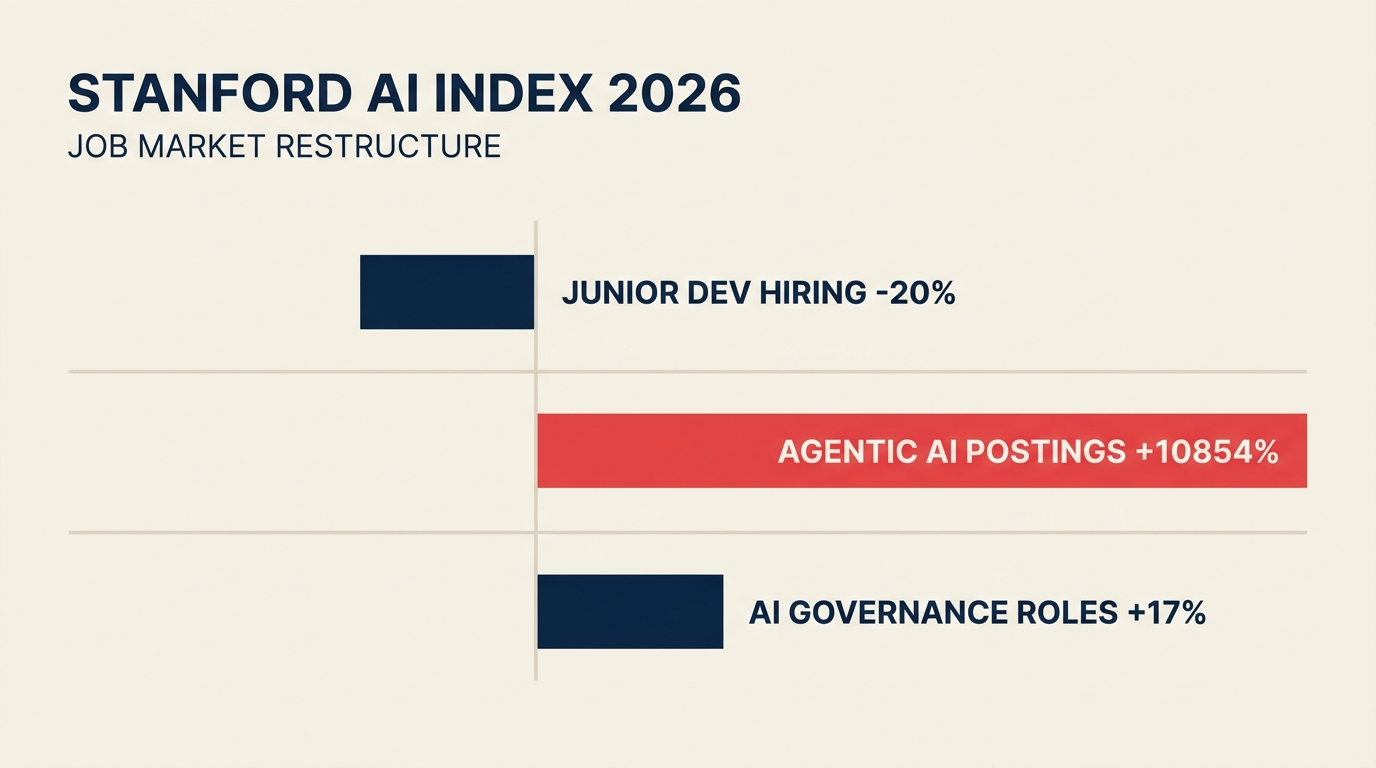
Narasi nyaman yang mengatakan AI menciptakan lapangan kerja sebanyak yang disingkirkannya kini kehilangan landasan terakhirnya. Dua angka dari data lapangan kerja Stanford AI Index 2026 membuat gambarannya tak terbantahkan: penurunan hampir 20% lapangan kerja bagi pengembang perangkat lunak termuda, dan lowongan agentic AI yang tumbuh dengan kecepatan yang membuat kata "eksponensial" terasa terlalu konservatif. CHRO yang masih merekrut berdasarkan komposisi tenaga kerja siklus sebelumnya bukan sedang bersikap hati-hati. Mereka sedang membangun organisasi yang salah.
Menurut Laporan AI Index 2026 Stanford HAI, lapangan kerja bagi pengembang perangkat lunak berusia 22 hingga 25 tahun turun hampir 20% dari puncaknya pada 2024. Kontraksi ini bukan anomali yang terkait kondisi makro. Ini terjadi sementara perekrutan teknologi secara keseluruhan terus berlangsung di arah lain, yang berarti sinyalnya bersifat struktural, bukan siklus.
Laporan yang sama mendokumentasikan bahwa keterampilan AI kini muncul di 2,5% dari seluruh lowongan kerja di AS, angka yang merepresentasikan kenaikan 297% selama satu dekade terakhir. Angka itu adalah konfirmasi paling jelas sejauh ini bahwa permintaan terhadap talenta manusia tidak menyusut secara keseluruhan. Yang terjadi adalah perombakan menuju seperangkat kemampuan yang secara fundamental berbeda. CHRO yang memahami perbedaan ini lebih awal akan merekrut untuk peran yang tepat. Mereka yang tidak akan terus kehilangan anggaran untuk tenaga kerja yang tidak menggerakkan agenda AI mereka.
Mengapa Penurunan 20% Rekrutmen Developer Junior Adalah Angka Terpenting dalam Laporan Ini
Key Facts
- Penurunan 20% lapangan kerja bagi pengembang perangkat lunak usia 22 hingga 25 tahun dari puncak 2024 (Stanford AI Index 2026)
- Pertumbuhan 10.854% lowongan agentic AI secara year-over-year (Stanford AI Index 2026)
- Pertumbuhan 17% peran AI governance, kelompok jabatan berbasis AI dengan pertumbuhan tercepat (Stanford AI Index 2026)
Penurunan developer junior lebih penting dari angka agentic AI yang menjadi headline karena satu alasan: ini mengonfirmasi bahwa AI sedang mengompresi lapisan bawah piramida talenta teknis, bukan hanya mengaugmentasi lapisan atas. Sebagian besar CHRO memiliki rencana tenaga kerja yang mengasumsikan model tiga tingkat tradisional (junior, mid-level, senior), di mana junior menangani tugas-tugas yang terdefinisi di bawah pengawasan sambil mengakumulasi pengalaman. Sistem agentic kini mengerjakan sebagian besar pekerjaan tugas-terdefinisi itu lebih cepat dengan biaya lebih rendah.
Ini bukan ramalan jangka panjang. Penurunannya sudah tercermin dalam data pasar tenaga kerja. Dan polanya konsisten dengan temuan analisis perekrutan posisi awal karier iCIMS 2026 secara independen: organisasi mengurangi perekrutan posisi awal bukan karena kumpulan talenta dangkal, melainkan karena pekerjaan yang menjadi landasan peran-peran itu sedang menyusut.
Respons taktis CHRO di sini sangat spesifik. Sebelum siklus perencanaan tenaga kerja Anda berikutnya, audit berapa banyak posisi junior atau koordinator yang terbuka dan terutama ada untuk menangani volume atau tugas rutin. Jika jawabannya "sebagian besar dari mereka," peran-peran itu perlu didesain ulang, bukan sekadar diisi ulang.
Lonjakan 10.854% Lowongan Agentic AI Bukan Lonjakan Sesaat. Ini Pergeseran Komposisi
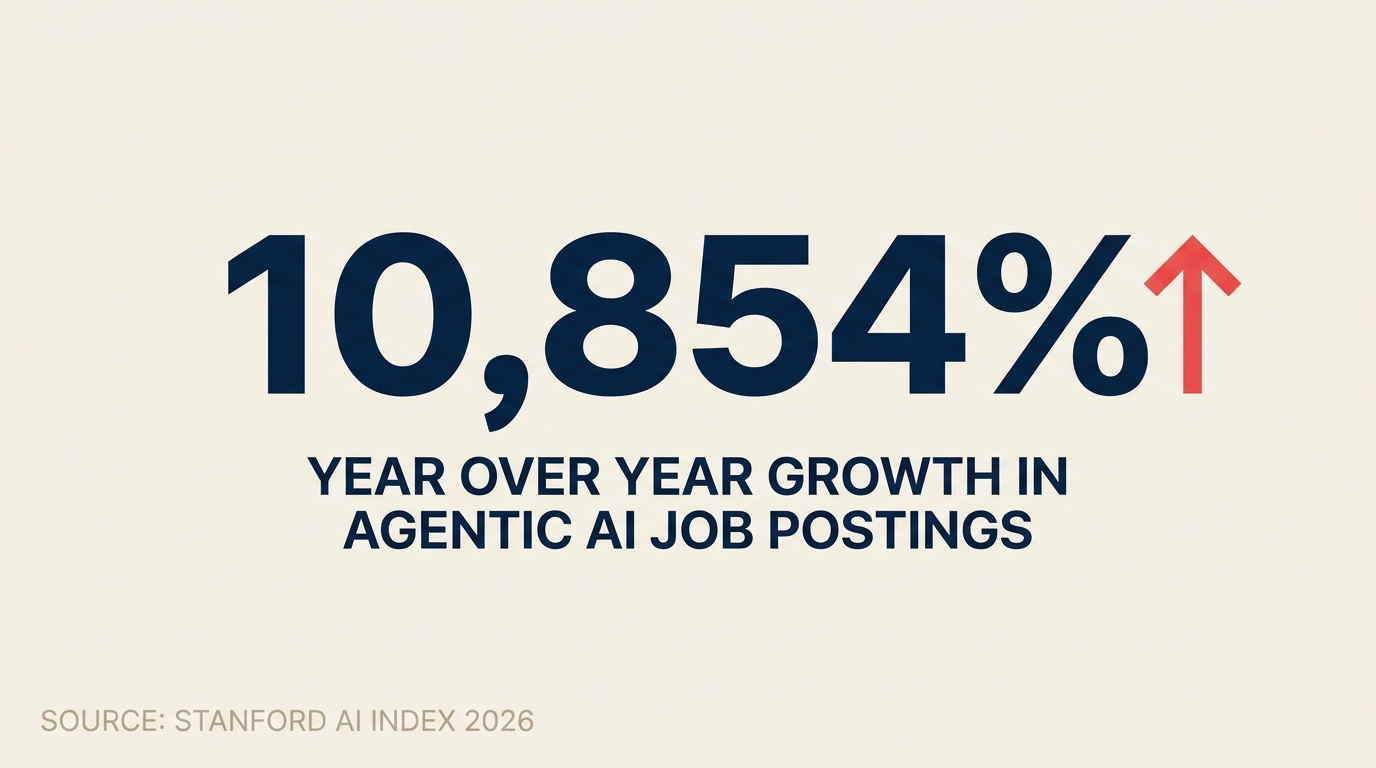
Angka pertumbuhan 10.854% lowongan agentic AI terdengar seperti anomali data. Bukan. Agentic AI merujuk pada sistem AI otonom yang merencanakan, mengambil tindakan, dan menyelesaikan tugas bertahap tanpa perlu manusia menyetujui setiap langkahnya. Pertumbuhan lowongan 10.854% year-over-year yang mencari orang untuk membangun, mengelola, dan mengoperasikan sistem-sistem tersebut mencerminkan seberapa cepat organisasi beralih dari AI sebagai alat menjadi AI sebagai pekerja.
Apa artinya secara praktis: sebuah kategori peran baru sedang terbentuk secara nyata. Ini bukan prompt engineer atau AI trainer, peran-peran yang menarik perhatian awal. Agentic Operator adalah orang-orang yang mengonfigurasi, mengawasi, mengaudit, dan mengoreksi alur kerja AI otonom. Mereka berada di antara insinyur perangkat lunak dan manajer operasional dalam bagan organisasi, dan tidak ada kelompok jabatan tradisional yang menampung mereka dengan baik.
Dashboard AI Skills dari Bipartisan Policy Center per April 2026 menunjukkan lowongan AI skills di AS naik 144% year-over-year, yang secara independen mendukung arah yang diidentifikasi Stanford. Kedua dataset menunjuk pada kesimpulan yang sama: permintaan terhadap keterampilan manusia berbasis AI itu nyata, berkelanjutan, dan semakin cepat. Namun terkonsentrasi di area kompetensi baru yang spesifik, bukan tersebar merata di seluruh fungsi tradisional.
Bagi CHRO, celah perekrutan bukan karena perusahaan Anda tidak menginginkan orang-orang ini. Masalahnya adalah deskripsi jabatan, band kompensasi, dan kerangka karier Anda tidak memiliki tempat yang jelas bagi mereka. Itulah masalah arsitektur yang perlu diselesaikan sekarang.
Peran AI Governance Adalah Cerita 17% yang Diam-diam Terlewat Banyak CHRO
Angka pertumbuhan peran AI governance dari laporan Stanford, 17% year-over-year, tidak menghasilkan reaksi yang sama dengan angka agentic AI. Seharusnya begitu. Peran governance tumbuh karena 74% organisasi kini menyebut ketidakakuratan AI sebagai risiko AI teratas mereka, naik 14 poin dalam satu tahun. Keamanan siber menempati posisi kedua dengan 72%. Kepatuhan regulasi dan privasi menyusul.
Empat kategori risiko itu tidak dikelola oleh orang yang sama yang membangun fitur AI. Ini membutuhkan kombinasi spesifik antara literasi teknis, kesadaran hukum, dan otoritas lintas fungsi. Organisasi yang tertinggal 12 bulan dalam hal ini sudah terpapar risiko. Dan pasar talenta untuk profesional AI governance yang berkualifikasi tipis relatif terhadap permintaan.
CHRO seharusnya memperlakukan pertumbuhan peran governance 17% ini sebagai indikator terdepan, bukan yang tertinggal. Peran-peran yang ada saat ini kekurangan staf. Lingkungan regulasi semakin ketat. Paparan risiko yang didokumentasikan oleh data Stanford berarti perekrutan governance akan semakin cepat terlepas dari apakah Anda merencanakannya atau tidak. Pertanyaannya adalah apakah Anda membangun fungsi ini secara terencana atau reaktif.
Bacaan terkait: Mengapa peran CAIO bukan tren sesaat untuk perusahaan mid-market dan cara membuat business case investasi tenaga kerja AI kepada dewan tanpa hype berlebihan.
Mengapa Model Piramida Tiga Lapisan Lama (Junior, Mid, Senior) Tidak Lagi Berfungsi di 2027
Model piramida bekerja ketika pengetahuan dan penilaian terakumulasi secara linear melalui tahun-tahun pengalaman. Staf junior menangani volume. Staf mid-level menambahkan konteks. Staf senior mengambil keputusan. Setiap lapisan membenarkan keberadaannya dengan melakukan pekerjaan yang tidak bisa dilakukan lapisan di atasnya secara ekonomis.
Agentic AI meruntuhkan fondasi model itu. Sistem ini bisa menangani volume dengan murah. Ia tidak memerlukan fungsi lapisan junior untuk tetap ada agar lapisan mid dan senior bisa beroperasi penuh. Apa yang dihasilkan dalam praktik adalah komposisi talenta yang lebih datar dan lebih mahal, di mana proporsi peran senior dan spesialis tumbuh relatif terhadap jumlah karyawan keseluruhan.
88% organisasi yang sudah menggunakan AI di setidaknya satu fungsi bisnis sedang mempelajari hal ini secara nyata. Mereka yang mereset arsitektur jabatan secara proaktif akan memiliki keunggulan biaya talenta. Mereka yang terus merekrut dengan komposisi yang sama dan berharap AI mengaugmentasi daripada menggantikan fungsi junior akan mendapati anggaran tenaga kerja mereka membiayai komposisi yang salah.
Wawasan restrukturisasi tenaga kerja AI tentang desain ulang bagan organisasi membahas mekanika strukturalnya lebih rinci, termasuk bagaimana hierarki departemen perlu bergeser seiring sistem agentic menyerap volume tugas tingkat awal.
Reset Arsitektur Jabatan CHRO: Tiga Kategori Peran yang Mencerminkan Data Baru
Data Stanford menunjuk pada tiga kategori peran yang perlu dimasukkan CHRO dalam rencana tenaga kerja berikutnya:
Agentic Operator. Orang-orang yang mengonfigurasi dan mengawasi sistem AI otonom di seluruh fungsi bisnis. Peran-peran ini membutuhkan pengetahuan proses, kenyamanan dengan alat AI, dan penilaian tentang kapan sebuah sistem menyimpang dari perilaku yang dimaksudkan. Mereka tidak perlu latar belakang rekayasa yang dalam, tetapi juga tidak bisa sekadar generalis domain murni. Kelompok jabatan Anda saat ini mungkin tidak memiliki tempat yang jelas untuk mereka. Buat satu.
AI Governance Specialist. Orang-orang dengan otoritas lintas fungsi untuk mengaudit output AI, mengelola paparan regulasi, dan menetapkan kebijakan penggunaan internal. Ini bukan peran IT atau hukum secara eksklusif. Peran ini menggabungkan manajemen risiko, kepatuhan, dan domain teknis secara bersamaan. Seiring angka risiko ketidakakuratan dan regulasi dari Stanford terus meningkat, permintaan terhadap fungsi ini hanya akan tumbuh dari titik ini.
Senior Builder. Insinyur dan arsitek yang merancang, mengevaluasi, dan memelihara sistem AI yang dioperasikan oleh Agentic Operator. Peran-peran ini semakin menjadi pusat strategis, bukan sebaliknya. Kontraksi di ujung junior pasar developer akan meningkatkan persaingan dan tekanan kompensasi untuk talenta teknis senior. Band kompensasi Anda untuk peran-peran ini perlu ditinjau sekarang, sebelum pasar menyesuaikan diri lebih jauh.
Kerangka keputusan peningkatan keterampilan vs. rekrutmen berguna sebagai pelengkap di sini. Untuk Agentic Operator, pengembangan internal dari karyawan yang sudah mengenal proses bisnis sering kali memiliki ROI lebih baik daripada rekrutmen eksternal. Untuk Senior Builder dan Governance Specialist, pasar eksternal cukup tipis sehingga pendekatan hibrida biasanya diperlukan.
Yang Harus Dilakukan Minggu Ini
Temuan Stanford membutuhkan tindakan nyata dalam jangka dekat, bukan komite perencanaan. Berikut fokus yang perlu diambil:
Pertama, tarik semua permintaan rekrutmen yang terbuka dan tandai setiap peran yang terutama mengisi volume tugas tingkat awal. Itulah peran-peran yang paling terpapar pergeseran agentic AI. Jangan hapus begitu saja, tetapi jangan isi secara refleks juga.
Kedua, periksa apakah arsitektur jabatan Anda memiliki slot eksplisit untuk Agentic Operator dan AI Governance Specialist. Jika organisasi Anda telah menjalankan AI dalam produksi lebih dari enam bulan tanpa peran-peran itu terdefinisi, Anda memiliki celah cakupan yang merugikan dalam hal paparan risiko dan efisiensi operasional secara bersamaan.
Ketiga, tinjau data kompensasi Anda untuk peran teknis senior. Analisis premi upah AI dari awal tahun ini menunjukkan premi untuk talenta berketerampilan AI tumbuh tajam. Jika band Anda tidak bergerak sejak 2024, Anda berada di bawah pasar dalam kategori dengan persaingan paling ketat.
Gambaran utuh dari data Stanford AI Index 2026 adalah bahwa pasar tenaga kerja tidak menyusut. Ia sedang menyortir ulang. CHRO yang membangun arsitektur jabatan sesuai logika penyortiran baru ini akan merekrut lebih efisien dan dengan tingkat retensi yang lebih baik daripada mereka yang masih merekrut berdasarkan komposisi lama.
Selengkapnya
- Keruntuhan lapangan kerja tingkat awal AI dan dampaknya bagi jalur bakat Anda
- Data LinkedIn 2026 tentang kesenjangan peningkatan keterampilan insinyur AI
- Peta jalan tenaga kerja AI 12 bulan untuk organisasi 200 orang
Pertanyaan yang Sering Diajukan
Apakah penurunan rekrutmen developer junior ini permanen, atau akan berbalik setelah adopsi AI stabil?
Data Stanford AI Index 2026 menunjukkan ini adalah pergeseran struktural, bukan koreksi sementara. Kontraksi terjadi secara spesifik di kalangan developer termuda, kohort yang output perannya paling banyak tumpang tindih dengan apa yang bisa ditangani sistem AI saat ini dengan andal. Seiring sistem agentic semakin canggih, porsi pekerjaan yang membutuhkan kontributor manusia junior semakin menyempit. Beberapa volume posisi awal akan tetap ada, terutama di domain di mana output AI memerlukan tinjauan manusia yang ketat, tetapi proporsi keseluruhan peran teknis junior di sebagian besar organisasi kemungkinan akan tetap lebih rendah dari puncak 2022-2024. CHRO sebaiknya merencanakan piramida talenta teknis yang lebih datar sebagai kondisi permanen, bukan anomali sementara.
Bagaimana CHRO seharusnya membangun peran Agentic Operator ketika belum ada kelompok jabatan yang mapan untuk mereka?
Mulai dari pengetahuan proses, bukan kredensial teknis. Agentic Operator terbaik di awal di kebanyakan organisasi adalah orang-orang yang sudah memahami alur kerja bisnis tempat sistem AI diterapkan. Mereka tahu seperti apa output yang "benar," sehingga efektif dalam mendeteksi penyimpangan dan melakukan eskalasi dengan tepat. Dari sisi arsitektur jabatan, peran-peran ini berada antara operasional dan teknologi, dan paling efektif ketika melapor melalui fungsi yang memiliki proses bisnis yang diotomasi. Kompensasi sebaiknya mengacu pada patokan operasional dan teknis ringan. Bangun deskripsi jabatan berdasarkan hasil: uptime sistem, pengurangan tingkat kesalahan, akurasi eskalasi, dan throughput proses, bukan kredensial.
Dengan peran AI governance tumbuh 17% year-over-year, bagaimana CHRO menghindari terciptanya lapisan birokrasi yang memperlambat adopsi AI?
Peran governance yang menciptakan hambatan biasanya dirancang untuk berkata tidak. Peran yang mempercepat adopsi dirancang untuk menciptakan kejelasan. Fungsi AI governance yang terstruktur dengan baik mengurangi waktu yang dibutuhkan unit bisnis untuk mendapatkan persetujuan inisiatif AI, dengan menyediakan kerangka yang sudah disetujui sebelumnya, template evaluasi vendor, dan panduan klasifikasi risiko yang bisa diterapkan tim tanpa harus mulai dari awal setiap kali. CHRO yang membangun fungsi ini sebaiknya mendefinisikannya sebagai pihak yang memungkinkan kecepatan dalam batasan tertentu, bukan sebagai penjaga gerbang. Isi dengan orang yang memiliki kredibilitas operasional di dalam bisnis, bukan hanya keahlian regulasi. Dan ukur dengan kecepatan adopsi dan tingkat insiden risiko secara bersamaan, agar fungsi tersebut memiliki insentif untuk memungkinkan daripada membatasi.
Sumber: Laporan AI Index 2026 Stanford HAI. Data pendukung dari liputan IEEE Spectrum dan Dashboard AI Skills Bipartisan Policy Center.

On this page
- Mengapa Penurunan 20% Rekrutmen Developer Junior Adalah Angka Terpenting dalam Laporan Ini
- Lonjakan 10.854% Lowongan Agentic AI Bukan Lonjakan Sesaat. Ini Pergeseran Komposisi
- Peran AI Governance Adalah Cerita 17% yang Diam-diam Terlewat Banyak CHRO
- Mengapa Model Piramida Tiga Lapisan Lama (Junior, Mid, Senior) Tidak Lagi Berfungsi di 2027
- Reset Arsitektur Jabatan CHRO: Tiga Kategori Peran yang Mencerminkan Data Baru
- Yang Harus Dilakukan Minggu Ini
- Selengkapnya
- Pertanyaan yang Sering Diajukan
- Apakah penurunan rekrutmen developer junior ini permanen, atau akan berbalik setelah adopsi AI stabil?
- Bagaimana CHRO seharusnya membangun peran Agentic Operator ketika belum ada kelompok jabatan yang mapan untuk mereka?
- Dengan peran AI governance tumbuh 17% year-over-year, bagaimana CHRO menghindari terciptanya lapisan birokrasi yang memperlambat adopsi AI?