More in
Berita AI di Tempat Kerja
OpenAI Membuka Iklan ChatGPT untuk Bisnis Kecil dengan Anggaran Berapa Pun
Jun 6, 2026
AI Ada di Mana-mana di Tempat Kerja. Hanya 1 dari 10 yang Menyatakan AI Benar-benar Mengubah Pekerjaan Mereka
Jun 6, 2026
Momen $10,5 Miliar Vibe Coding: AI Kini Memulai Sebagian Besar Pembangunan Perangkat Lunak Baru
Jun 6, 2026
AI Agent Kini Memiliki Akses Sistem Lebih Besar dari Karyawan Anda. Sedikit yang Sudah Diamankan
Jun 5, 2026
Bangun atau Beli AI Anda? Perhatikan Apa yang Dibeli Para Raksasa.
Jun 5, 2026
Uber Membatasi Pengeluaran AI Karyawan di $1.500 per Kursi Setelah Anggaran Jebol
Jun 5, 2026
Perintah Eksekutif AI Trump Bersifat Deregulasi. Risiko Kepatuhan Anda Tidak Berubah
Jun 4, 2026
AI Mendorong 220 Unicorn Turun di Bawah $1 Miliar. Perusahaan Pra-ChatGPT Menghadapi Tantangan Besar
Jun 4, 2026
Harga Token Turun 67% Tahun Ini. Tagihan AI Anda Tetap Naik
Jun 3, 2026
Bisnis Kecil yang Menggunakan AI Melaporkan Pendapatan Lebih Tinggi dan Jam Kerja Lebih Singkat
Jun 3, 2026
Bahasa Indonesia
OpenAI Menerbitkan Kerangka Tata Kelola Frontier-nya. Inilah Keputusan CTO: Adopsi, Tetap dengan NIST AI RMF, atau Jalankan Keduanya?
Turn this article into takeaways for your work.


Each assistant summarizes the article only for you and suggests best practices for your work.
Sebagian besar dokumen tata kelola AI terasa seolah ditulis untuk auditor yang tidak akan pernah menyentuh lingkungan produksi. Kerangka Tata Kelola Frontier baru OpenAI berbeda. Kerangka ini memiliki ambang batas insiden, kategori risiko CBRN, dan keselarasan regulasi yang eksplisit. Itu menjadikannya keputusan CTO yang nyata, bukan sekadar pengajuan tim kepatuhan.
Menurut pengumuman OpenAI pada 29 Mei 2026, perusahaan menerbitkan Kerangka Tata Kelola Frontier untuk menunjukkan bagaimana praktik keamanan internalnya selaras dengan Undang-Undang Transparansi AI California dan Kode Praktik EU AI Act untuk AI Tujuan Umum. Ini adalah pengungkapan tata kelola terstruktur dengan sembilan domain bernama, ambang batas risiko terkuantifikasi, dan komitmen untuk berkembang seiring kemampuan dan regulasi berubah.
Kini Anda memiliki dokumen tata kelola yang diterbitkan vendor yang dapat Anda baca bersamaan dengan kebijakan internal Anda sendiri. Pertanyaannya adalah apa yang harus dilakukan dengannya.
Apa yang Sebenarnya Dicakup oleh Kerangka Tata Kelola Frontier
Fakta Kunci
- Kerangka OpenAI mendefinisikan "risiko sistemik" sebagai skenario di mana sebuah model dapat berkontribusi pada lebih dari 50 kematian atau menyebabkan kerusakan properti lebih dari $1 miliar dalam satu insiden. (Sumber: Kerangka Tata Kelola Frontier OpenAI, Mei 2026)
- Kerangka ini mencakup sembilan domain tata kelola, termasuk risiko serangan siber dan risiko CBRN (kimia/biologi/radiologi/nuklir), dua kategori yang tidak ada dalam sebagian besar kebijakan tata kelola AI perusahaan. (Sumber: Kerangka Tata Kelola Frontier OpenAI, Mei 2026)
- Pengungkapan OpenAI dirancang untuk selaras dengan Undang-Undang Transparansi AI California dan Kode Praktik EU AI Act untuk AI Tujuan Umum. (Sumber: OpenAI, Mei 2026)
Sembilan domain yang dicakup kerangka ini adalah: penilaian risiko, mitigasi risiko, risiko serangan siber, risiko CBRN, risiko manipulasi berbahaya, risiko kehilangan kontrol, pelaporan model, manajemen risiko keamanan, respons insiden, dan masukan pakar eksternal.
Domain CBRN layak mendapat perhatian khusus. Panduan risiko kimia, biologi, radiologi, dan nuklir tidak muncul dalam kerangka tata kelola AI perusahaan standar karena kerangka tersebut ditulis untuk model ML sempit dan copilot SaaS. OpenAI mengungkapkan cara menangani kategori ancaman tersebut di tingkat model, pertama kali untuk vendor frontier utama.
Domain serangan siber sama pentingnya. OpenAI mengakui bahwa model frontier dapat membantu operasi siber ofensif, dan kerangka ini mendokumentasikan kontrol yang dirancang untuk mencegah hal tersebut. Bagi CTO yang menjalankan beban kerja OpenAI pada infrastruktur yang menyentuh sistem sensitif, ini adalah pengungkapan risiko yang material.
Ambang batas terkuantifikasi adalah bagian yang paling langsung dapat ditindaklanjuti. Lima puluh kematian atau kerusakan properti senilai $1 miliar sebagai definisi "risiko sistemik" memberi tim risiko perusahaan dasar konkret untuk mengkalibrasi register risiko mereka sendiri.
Mengapa Ini Adalah Pertanyaan CTO, Bukan Pertanyaan Tim Kepatuhan
Sebagian besar dokumen tata kelola berakhir di meja tim kepatuhan dan berhenti di sana. Dokumen ini seharusnya tidak.
Kerangka Tata Kelola Frontier OpenAI bukan kebijakan privasi. Ini adalah dokumen tentang apa yang dapat diinduksi sistem AI frontier untuk dilakukan sehingga menyebabkan kerugian skala besar. Jika daftar periksa AI standar tim kepatuhan Anda mencakup lokasi penyimpanan data dan audit bias tetapi tidak memiliki kolom untuk "kemampuan serangan siber" atau "mitigasi risiko CBRN," OpenAI baru saja mengekspos kesenjangan antara apa yang dicakup tata kelola Anda dan apa yang dikelola vendor Anda.
Kesenjangan tersebut adalah masalah CTO. Mendelegasikannya ke kepatuhan berarti orang-orang yang membuat keputusan penerapan dan orang-orang yang menulis kebijakan tata kelola bekerja dari model risiko yang berbeda. Dengan lebih dari 70% CEO kini disebut sebagai pengambil keputusan AI utama (BCG AI Radar 2026), dewan direksi menanyakan tentang risiko AI di tingkat strategi. CTO yang dapat memetakan ambang batas insiden OpenAI ke register risiko perusahaan sendiri menyampaikan kisah tata kelola yang jauh lebih kredibel.
Jika Anda sedang memikirkan struktur tata kelola yang lebih luas, membangun kebijakan penggunaan AI Anda adalah panduan yang berguna sebagai pelengkap artikel ini.
Perbandingannya dengan NIST AI RMF dan ISO 42001
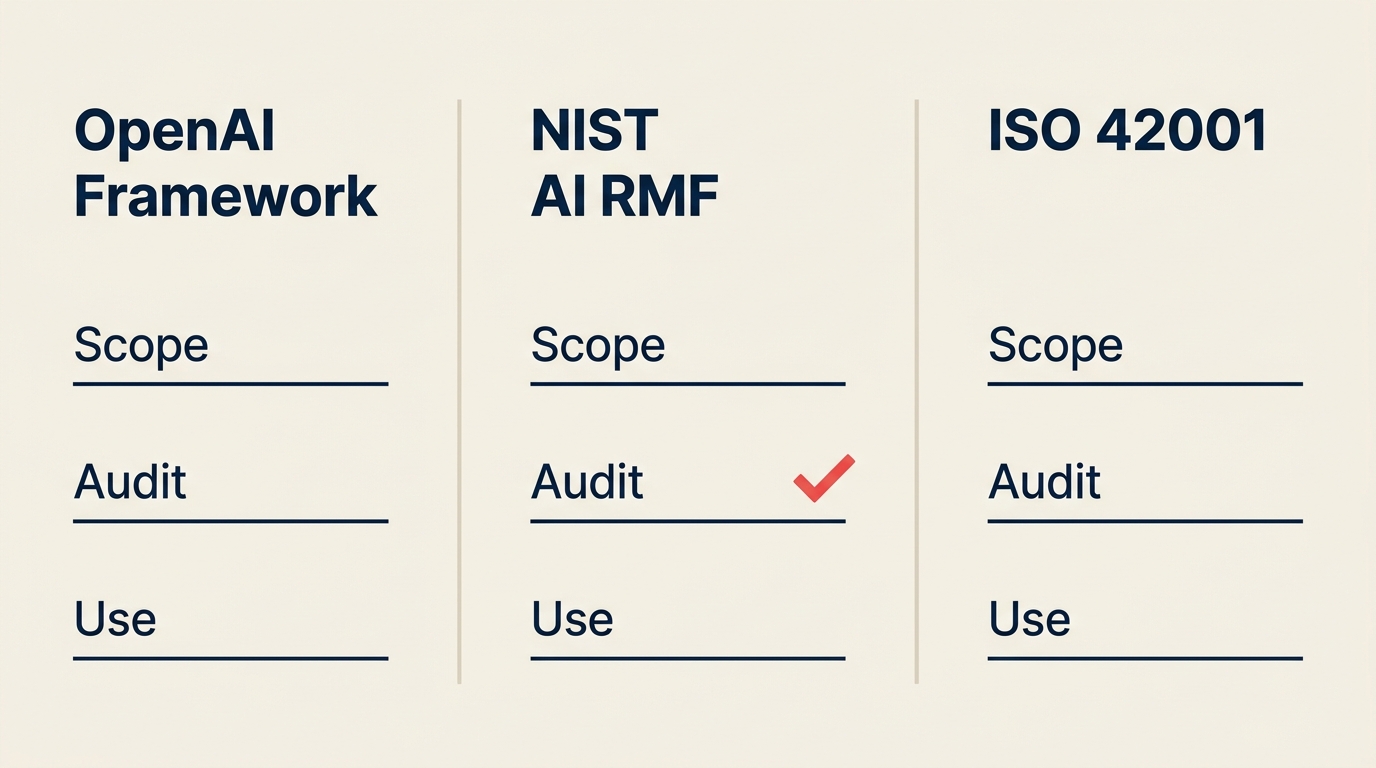
Tiga referensi tata kelola yang kemungkinan sudah diketahui tim hukum dan keamanan Anda adalah NIST AI RMF 1.0 (dengan Profil AI Generatif 2024-nya), ISO/IEC 42001:2023, dan kerangka baru OpenAI. Ketiganya melayani fungsi yang berbeda.
NIST AI RMF adalah dasar horizontal untuk sistem AI apa pun, vendor apa pun, dengan empat fungsi (Govern, Map, Measure, Manage). ISO 42001 adalah standar sistem manajemen yang dapat disertifikasi, mirip dengan ISO 27001 dalam strukturnya, cocok untuk audit pengadaan pihak ketiga. Kerangka OpenAI bersifat spesifik vendor dan lebih sempit: mendokumentasikan apa yang dikelola OpenAI di tingkat model dan infrastruktur, bukan cara Anda mengatur penggunaan API mereka sendiri.
Tabel di bawah menunjukkan di mana masing-masing cocok:
| Dimensi | NIST AI RMF | ISO 42001 | Kerangka OpenAI |
|---|---|---|---|
| Cakupan | Sistem AI apa pun, vendor apa pun | Sistem manajemen tingkat organisasi | Model frontier OpenAI saja |
| Sukarela atau wajib | Sukarela (AS) | Standar yang dapat disertifikasi | Pengungkapan vendor |
| Audiens | Risiko, kepatuhan, rekayasa | Audit, pengadaan | CTO, keamanan, hukum |
| Ambang batas insiden | Tidak | Tidak | Ya (50 kematian, kerusakan $1 miliar) |
| Cakupan CBRN/serangan siber | Tidak | Tidak | Ya |
| Keselarasan regulasi | Berfokus AS | Global | EU AI Act, California AI Act |
Baik NIST AI RMF maupun ISO 42001 tidak menetapkan ambang batas insiden. Keduanya membantu Anda membangun proses tata kelola. Dokumen OpenAI memberi tahu Anda di mana batas kegagalan katastrofik berada. Itulah kesenjangan yang diisinya.
Untuk informasi lebih lanjut tentang membangun proses tinjauan vendor AI yang terstruktur, lihat AI Approval Gates dan Vendor Review dan Kerangka Evaluasi Vendor untuk Alat AI.
3 Pilihan Nyata bagi CTO Saat Ini
Inilah Peta Adopsi Kerangka OpenAI untuk CTO. Tiga opsi, tiga postur operasional yang berbeda.
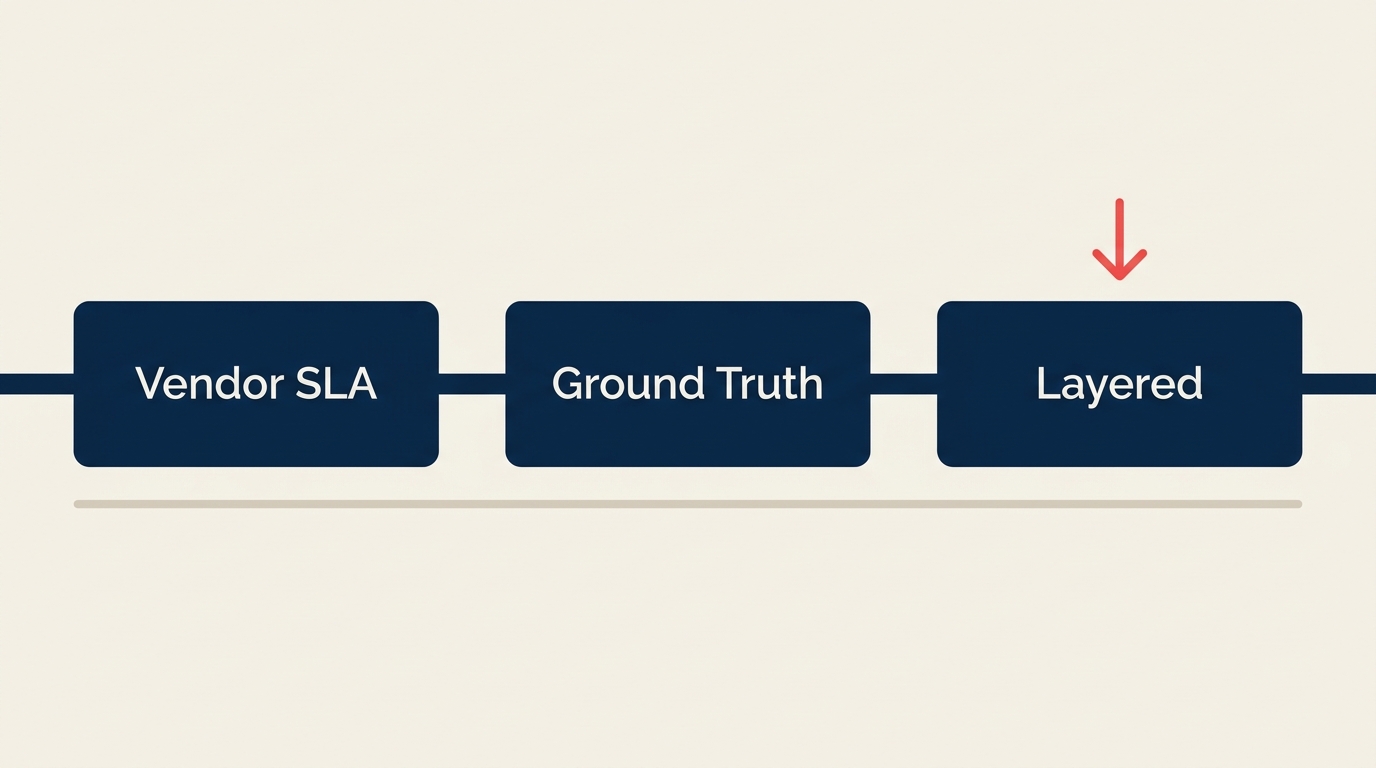
Opsi 1: Pengungkapan SLA vendor saja. Ajukan kerangka ke bagian hukum bersama perjanjian layanan Anda. Tata kelola Anda tetap pada NIST AI RMF dan ISO 42001, dan tidak ada yang berubah dalam register risiko atau playbook respons insiden Anda. Pilihan tepat jika OpenAI adalah salah satu dari banyak vendor dan postur kepatuhan Anda sudah tersertifikasi ISO 42001. Pilihan yang salah jika kategori risiko CBRN atau serangan siber bersifat material pada model ancaman Anda dan kebijakan saat ini tidak mencakupnya.
Opsi 2: Adopsi sebagai kebenaran dasar tata kelola. Restrukturisasi kebijakan tata kelola AI internal Anda di sekitar sembilan domain OpenAI dan gunakan ambang batas risiko sistemik mereka sebagai tolok ukur eskalasi insiden. Pilihan tepat jika OpenAI adalah satu-satunya vendor frontier Anda. Pilihan yang salah jika Anda menjalankan Anthropic, Google, atau model open-source bersama OpenAI, karena kerangka ini tidak mencakup sistem tersebut dan mengadopsinya sebagai kebenaran dasar menyisakan kesenjangan yang tidak tertangani.
Opsi 3: Jalankan keduanya (tata kelola berlapis). Pertahankan NIST AI RMF sebagai tulang punggung tata kelola, gunakan ISO 42001 sebagai target audit eksternal, dan tambahkan ambang batas insiden OpenAI serta gerbang risiko siber/CBRN di atasnya sebagai adendum model frontier. Register risiko Anda mendapat dua baris baru (serangan siber, CBRN). Playbook respons insiden Anda mendapat pemicu $1 miliar atau 50 kematian sebagai ambang batas tingkat 1. Anda mengaudit seluruh stack setiap tahun terhadap ISO 42001. Ini adalah jalur yang direkomendasikan untuk perusahaan mana pun yang menjalankan stack AI frontier multi-vendor. Lebih banyak pekerjaan di awal, tetapi satu-satunya opsi tanpa kesenjangan cakupan.
Playbook Respons Insiden AI adalah titik awal praktis untuk mengintegrasikan ambang batas baru. Dan jika Anda memikirkan kematangan AI jangka panjang, 5 tahap kematangan AI memberikan kerangka di mana investasi tata kelola cocok dalam roadmap penskalaan.
Jalur Keputusan
Tiga pertanyaan mempersingkat prosesnya: Apakah OpenAI satu-satunya vendor frontier Anda? (Tidak berarti Opsi 3.) Apakah ada kasus penggunaan yang menyentuh alat keamanan atau domain yang berdekatan dengan sintesis informasi berbahaya? (Ya berarti Anda tidak dapat memperlakukan ini sebagai pengungkapan vendor semata.) Apakah sertifikasi ISO 42001 masuk dalam cakupan? (Ya berarti Opsi 3 memberikan jejak audit yang paling bersih.)
Dokumen vendor memberi tahu Anda apa yang mereka kelola. Tata kelola Anda memberi tahu Anda apa yang Anda kelola. Kesenjangannya adalah risiko residual, dan menutupnya adalah tugas CTO.
Lihat juga: kesenjangan tata kelola agentic AI untuk apa yang terjadi ketika perusahaan menerapkan agen tanpa kebijakan tata kelola yang sepadan, dan pola tata kelola Snowflake/Natoma/MCP untuk pertanyaan tingkat infrastruktur yang berdampingan dengan dokumen tingkat model OpenAI.
Langkah Minggu Ini
Unduh PDF Kerangka Tata Kelola Frontier OpenAI dan baca bagian CBRN dan serangan siber terlebih dahulu. Periksa apakah kebijakan tata kelola AI Anda saat ini menyebutkan domain tersebut. Jika tidak, itulah kesenjangan yang kini Anda ketahui.
Tambahkan dua baris ke register risiko AI Anda: "risiko serangan siber (model frontier)" dan "risiko CBRN (model frontier)." Petakan masing-masing ke kontrol yang diterbitkan OpenAI sebagai dasar yang dikelola vendor.
Periksa playbook respons insiden Anda untuk ambang batas eskalasi AI tingkat 1. Jika belum ada, mulailah dengan definisi $1 miliar atau 50 kematian dari kerangka OpenAI.
Pilih opsi dari Peta Adopsi Kerangka OpenAI dan briefing CISO serta kepala bagian hukum Anda agar tata kelola, keamanan, dan hukum selaras.
Tandai ini untuk siklus tinjauan ISO 42001 atau NIST AI RMF berikutnya sebagai pengungkapan vendor yang material.
Pertanyaan yang Sering Diajukan
Apakah Kerangka Tata Kelola Frontier OpenAI mengikat secara hukum?
Tidak. Ini adalah pengungkapan publik sukarela, bukan komitmen kontraktual dalam perjanjian layanan Anda. OpenAI mendokumentasikan praktik internal dan keselarasannya dengan Undang-Undang Transparansi AI California dan Kode Praktik EU AI Act. Memperlakukannya sebagai SLA yang mengikat tidak tepat. Tetapi memperlakukannya sebagai pengungkapan risiko material dari vendor utama adalah postur yang benar, terutama jika program tata kelola internal Anda mewajibkan vendor mendokumentasikan kontrol risiko AI mereka.
Apakah mengadopsi kerangka OpenAI menggantikan NIST AI RMF?
Tidak. NIST AI RMF mengatur cara organisasi Anda mengelola AI di semua sistem dan vendor. Kerangka OpenAI mendokumentasikan apa yang dilakukan OpenAI di tingkat model untuk sistemnya sendiri. Model mental yang tepat: NIST AI RMF mencakup proses tata kelola Anda; kerangka OpenAI mencakup kontrol satu vendor dalam proses tersebut. Keduanya saling melengkapi, bukan menggantikan.
Kerangka mana yang paling penting jika perusahaan Anda sedang mempersiapkan kepatuhan EU AI Act?
Sertifikasi ISO 42001 adalah jalur paling langsung untuk menunjukkan sistem manajemen AI yang kredibel kepada regulator EU. Keselarasan eksplisit OpenAI dengan Kode Praktik EU AI Act adalah konteks yang berguna tetapi tidak menggantikan pekerjaan kesesuaian Anda sendiri. Lihat Empat Bulan Menuju Pemberlakuan Penuh EU AI Act: Yang Perlu Diketahui Setiap CEO untuk konteks strategis yang lebih luas.
