More in
Berita AI di Tempat Kerja
OpenAI Membuka Iklan ChatGPT untuk Bisnis Kecil dengan Anggaran Berapa Pun
Jun 6, 2026
AI Ada di Mana-mana di Tempat Kerja. Hanya 1 dari 10 yang Menyatakan AI Benar-benar Mengubah Pekerjaan Mereka
Jun 6, 2026
Momen $10,5 Miliar Vibe Coding: AI Kini Memulai Sebagian Besar Pembangunan Perangkat Lunak Baru
Jun 6, 2026
AI Agent Kini Memiliki Akses Sistem Lebih Besar dari Karyawan Anda. Sedikit yang Sudah Diamankan
Jun 5, 2026
Bangun atau Beli AI Anda? Perhatikan Apa yang Dibeli Para Raksasa.
Jun 5, 2026
Uber Membatasi Pengeluaran AI Karyawan di $1.500 per Kursi Setelah Anggaran Jebol
Jun 5, 2026
Perintah Eksekutif AI Trump Bersifat Deregulasi. Risiko Kepatuhan Anda Tidak Berubah
Jun 4, 2026
AI Mendorong 220 Unicorn Turun di Bawah $1 Miliar. Perusahaan Pra-ChatGPT Menghadapi Tantangan Besar
Jun 4, 2026
Harga Token Turun 67% Tahun Ini. Tagihan AI Anda Tetap Naik
Jun 3, 2026
Bisnis Kecil yang Menggunakan AI Melaporkan Pendapatan Lebih Tinggi dan Jam Kerja Lebih Singkat
Jun 3, 2026
Bahasa Indonesia
Microsoft Membangun Model AI Sendiri untuk Mengurangi Ketergantungan pada OpenAI
Turn this article into takeaways for your work.


Each assistant summarizes the article only for you and suggests best practices for your work.
Vendor perangkat lunak terbesar Anda baru saja berhenti menjadi reseller murni dan beralih menjadi produsen model AI. Pergeseran itu terjadi pada 2 Juni 2026, di Build 2026, dan sebagian besar ringkasan eksekutif akan melewatkan inti strategisnya begitu saja.
Liputan biasa akan berfokus pada spesifikasi teknis: jumlah parameter, ukuran context window, tabel harga per token. Namun bukan itu yang paling penting bagi Anda sebagai CEO. Yang terpenting adalah bahwa Microsoft, sekaligus investor terbesar OpenAI sekaligus saluran distribusi terbesarnya, memutuskan untuk membangun model sendiri. Keputusan itu seharusnya memengaruhi cara Anda memandang setiap hubungan vendor AI yang Anda miliki saat ini.
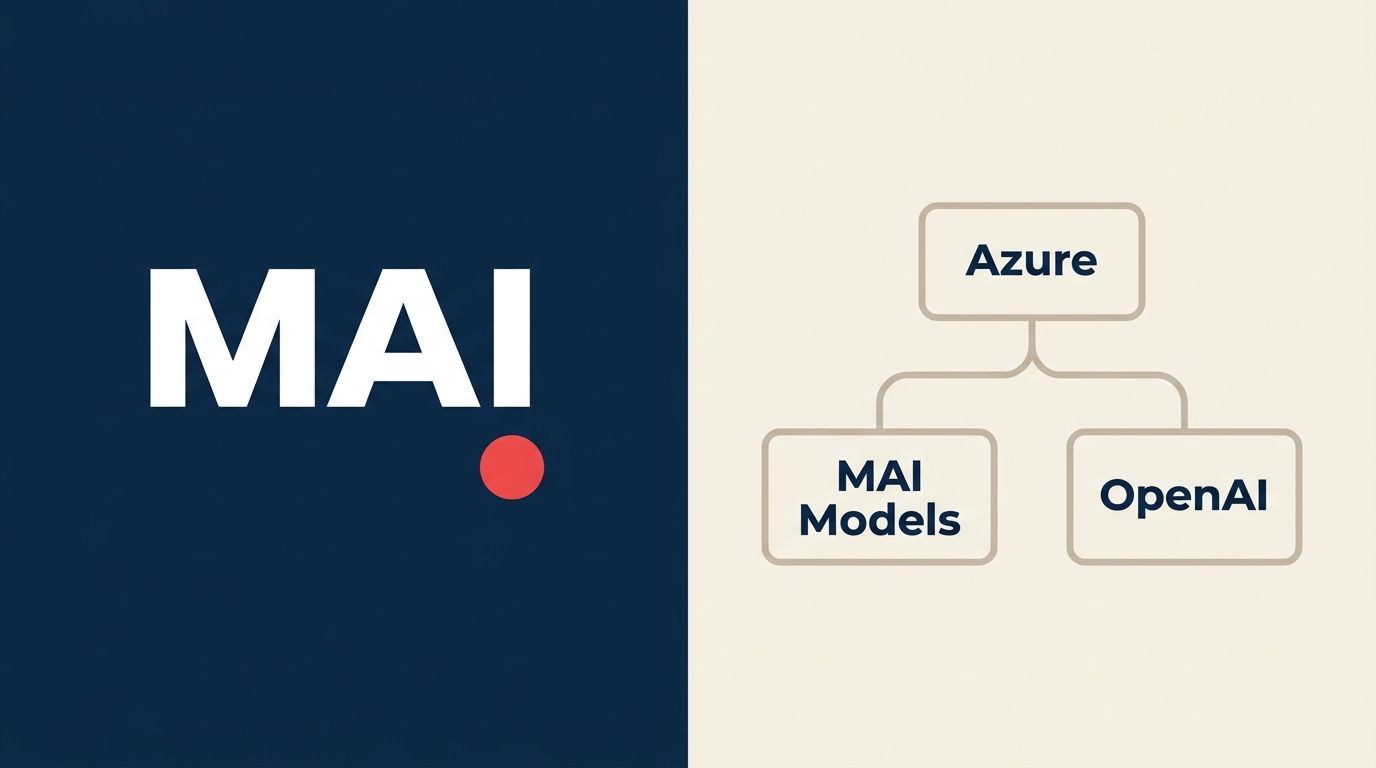
Berdasarkan laporan CNBC tanggal 2 Juni 2026 tentang pengumuman ini, Microsoft memperkenalkan tujuh model "MAI" first-party di Build 2026, termasuk MAI-Thinking-1, model reasoning pertama yang dikembangkan secara internal. Tujuan yang dinyatakan: mengurangi ketergantungan pada OpenAI dan menekan biaya bagi para developer yang membangun di Azure.
Apa yang Sebenarnya Dikirimkan Microsoft
Model utamanya adalah MAI-Thinking-1. Model ini berjalan pada arsitektur Mixture of Experts (MoE), artinya hanya sebagian model yang aktif untuk setiap tugas. Model ini memiliki 35 miliar parameter aktif dan context window 256.000 token. Yang penting, model ini dilatih sepenuhnya dari data berlisensi komersial tanpa distilasi dari OpenAI atau model pihak ketiga mana pun. Microsoft membangunnya dari nol.
Fakta Utama
- Microsoft meluncurkan 7 model MAI first-party di Build 2026, 2 Juni 2026 (CNBC)
- MAI-Thinking-1 memiliki 35 miliar parameter aktif, dengan harga sekitar 40% lebih rendah dari OpenAI o3 yang setara di Azure (Microsoft Foundry)
- MAI-Code-1-Flash, model coding yang terintegrasi ke GitHub Copilot, dihargai $0,75 per juta token input dan $4,50 per juta token output (GitHub)
Selain MAI-Thinking-1, jajaran ini mencakup MAI-Code-1-Flash (model coding berparameter 5 miliar yang sudah ada di dalam GitHub Copilot dan VS Code), MAI-Image-2.5, MAI-Voice-2, dan MAI-Transcribe-1.5. MAI-Thinking-1 saat ini berada dalam private preview di Microsoft Foundry, dengan general availability (GA) yang ditargetkan pada Q4 2026. Model-model lainnya diluncurkan secara bertahap sebelum tanggal tersebut.
Sinyal harga adalah angka yang mencerminkan gambaran sebenarnya. Microsoft memposisikan MAI-Thinking-1 sekitar 40% lebih murah dibandingkan penggunaan OpenAI o3 yang setara di Azure. Itu bukan diskon kecil. Itu adalah jarak struktural antara apa yang dibayar Microsoft kepada OpenAI dan apa yang dapat dikenakan kepada pelanggan ketika beban kerja setara dialihkan melalui tumpukan internalnya sendiri.
Lapisan Model Semakin Terkomoditas
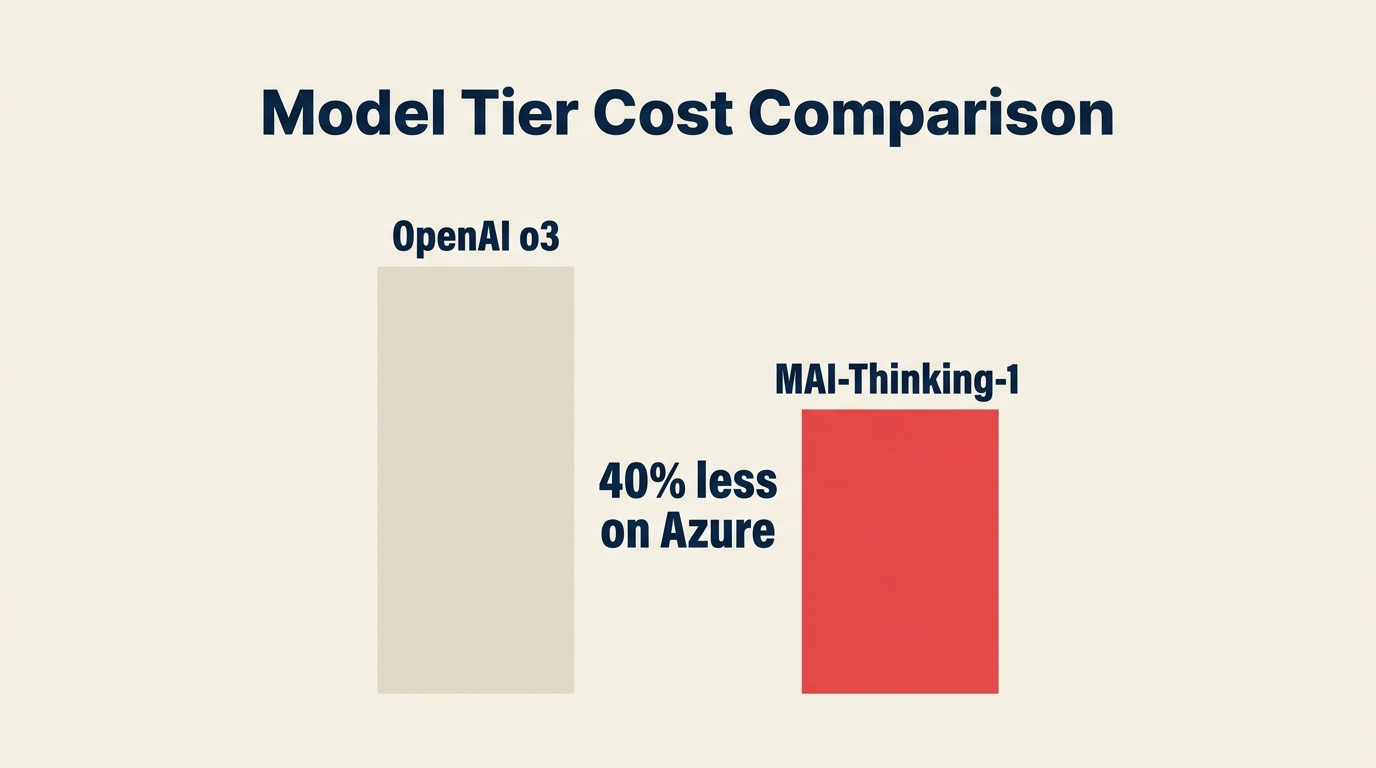
Inilah cara membacanya dari sudut pandang CEO: lapisan model sedang berubah menjadi tier biaya, bukan lagi pembeda.
Ketika Microsoft, dengan modal tak terbatas dan kemitraan satu dekade dengan OpenAI, masih memutuskan perlu membangun modelnya sendiri untuk mengendalikan biaya, pesannya bagi semua pihak lain sudah jelas. Membayar premi untuk satu model dasar mana pun, untuk pekerjaan bervolume tinggi yang rutin, semakin sulit dibenarkan. Pertanyaannya bukan lagi apakah model berkemampuan murah itu ada. Memang ada. Pertanyaannya adalah apakah proses pengadaan dan kontrak vendor Anda memungkinkan Anda menggunakannya.
Microsoft melakukan persis apa yang akan dilakukan pembeli yang disiplin: mengalihkan tugas bervolume tinggi yang lebih sederhana ke model yang lebih hemat, dan menyimpan kapasitas reasoning premium untuk masalah yang benar-benar rumit. MAI-Code-1-Flash untuk autocompletion kode di Copilot. MAI-Thinking-1 untuk tugas reasoning kompleks di mana kedalaman tambahan membenarkan biayanya (yang tetap lebih rendah dari o3). Logika tiered routing itu adalah template yang layak ditiru, bukan sekadar catatan kaki tentang strategi internal Microsoft.
Biaya AI enterprise terus naik meski harga per token turun justru karena sebagian besar perusahaan belum menerapkan tiered routing semacam ini. Mereka membayar harga model reasoning untuk pekerjaan yang bisa ditangani model lebih murah dengan hasil sama baiknya.
Apa yang Sebenarnya Ditandakan oleh Ketegangan Microsoft-OpenAI
Microsoft dan OpenAI masih bermitra. Investasi miliaran dolar Microsoft di OpenAI nyata adanya, dan model-model OpenAI tetap tersedia melalui Azure. Namun arah perjalanannya telah bergeser.
Ketika mitra distribusi terbesar Anda mulai membangun alternatif atas produk Anda, itu adalah sinyal tentang ke mana kemitraan itu menuju. Bukan krisis, melainkan rekalibrasi. Pemotongan harga permanen 75% dari DeepSeek telah mereset lantai harga AI. Kini Microsoft menambahkan bobotnya sendiri pada lantai tersebut.
Pengajuan IPO Anthropic yang menilai perusahaan itu sebesar $96,5 miliar adalah titik data lain dalam pola yang sama: setiap vendor besar dalam tumpukan AI berlomba membangun posisi yang independen dari yang lain. Asumsi "model enterprise default," bahwa Anda memilih satu vendor dan bertahan dengannya, semakin berubah menjadi kewajiban.
Laporan BCG AI Radar 2026 menemukan bahwa CEO kini menjadi pengambil keputusan AI utama di 72% perusahaan, yang berarti ini bukan waktunya untuk menyerahkan keputusan sepenuhnya ke CTO Anda. Pertanyaan strategis tentang bauran vendor mendarat di meja Anda.
Mengapa Ini Mengubah Negosiasi Perpanjangan Kontrak Anda Berikutnya
Implikasi praktisnya bukan bahwa Anda harus segera mengganti model OpenAI. Melainkan bahwa Anda kini memiliki posisi negosiasi yang lebih kuat saat perpanjangan, dan seharusnya Anda memanfaatkannya.
Langkah Microsoft adalah validasi eksplisit bahwa kemampuan reasoning yang setara dapat diberikan dengan harga 40% di bawah o3. Inovasi inferensi NVIDIA telah secara konsisten menekan biaya AI agent yang andal ke tingkat lebih rendah. Ini bukan alternatif hipotetis. Ini adalah opsi produksi yang diketahui vendor Anda.
Ketergantungan pada vendor di lapisan model sedang melemah. Biaya peralihan untuk mengganti model dasar pada API standar sebagian besar berupa pekerjaan integrasi, bukan rekonstruksi platform. Jika kontrak Anda saat ini tidak mencerminkan substitutabilitas itu, perpanjangan berikutnya adalah tempat yang tepat untuk memperbaikinya.
Pertanyaan yang Sering Diajukan
Apakah ini berarti Microsoft akan meninggalkan OpenAI?
Tidak. Investasi Microsoft di OpenAI tetap berlaku, dan model-model OpenAI tetap menjadi inti jajaran produk Microsoft, termasuk Copilot dan Azure OpenAI Service. Yang berubah adalah Microsoft tidak lagi mengalihkan segalanya melalui OpenAI ketika modelnya sendiri dapat melakukan pekerjaan dengan biaya lebih rendah. Anggap ini bukan perpisahan, melainkan diversifikasi pemasok. Kemitraan berlanjut, tetapi Microsoft kini memiliki opsi tambahan.
Haruskah ini mengubah strategi vendor AI saya?
Ya, secara arah. Jika distributor AI enterprise terbesar di dunia menyusun penggunaan modelnya sendiri berdasarkan kompleksitas tugas dan biaya, itu adalah playbook yang telah tervalidasi untuk perusahaan mana pun. Tinjau berapa bagian pengeluaran AI Anda saat ini yang menggunakan model reasoning premium untuk tugas-tugas rutin. Jika bagian itu besar, Anda memiliki peluang pengurangan biaya jangka pendek tanpa mengorbankan kemampuan. Pengumuman Microsoft memberi Anda tolok ukur konkret untuk dibawa ke dalam percakapan tersebut.
Apakah MAI-Thinking-1 benar-benar setara dengan OpenAI o3?
Microsoft mengklaim performa yang sebanding pada benchmark reasoning dengan biaya sekitar 40% lebih rendah di Azure. MAI-Thinking-1 tidak dibangun di atas teknologi OpenAI; ini adalah model terpisah yang dilatih dari data berlisensi komersial. Saat ini dalam private preview, dengan general availability pada Q4 2026. Benchmark independen akan menjadi ujian nyata, namun sinyal harga ini kredibel mengingat skala infrastruktur Microsoft.
Yang Perlu Dilakukan Kuartal Ini
Audit bauran tier model Anda. Berapa persen beban kerja AI Anda saat ini yang memerlukan reasoning premium? Tandai setiap tugas rutin bervolume tinggi (parsing dokumen, autocompletion kode, peringkasan) yang dapat berjalan di model tier menengah atau lebih hemat tanpa penurunan kualitas yang berarti.
Tambahkan "tolok ukur Microsoft" ke persiapan perpanjangan kontrak Anda berikutnya. MAI-Thinking-1 dengan harga 40% di bawah o3 di Azure kini merupakan referensi pasar yang terdokumentasi. Gunakan itu. Jika vendor Anda saat ini tidak bisa menandingi atau membenarkan selisih tersebut, negosiasikan sesuai kondisi tersebut.
Berhenti mengasumsikan hubungan vendor saat ini stabil. Microsoft dan OpenAI menunjukkan bahwa bahkan kemitraan bernilai miliaran dolar pun tidak mencegah para pihak membangun produk yang bersaing. Jangan terlalu menggantungkan roadmap AI Anda pada satu vendor yang terus berada di jalurnya saat ini.
Tetapkan penanda untuk Q4 2026. General availability MAI-Thinking-1, jika benchmark terbukti, berpotensi menggeser pengadaan model reasoning enterprise secara signifikan. Buat pemicu tinjauan sekarang agar Anda tidak membuat keputusan reaktif saat diluncurkan.
Pelajari Lebih Lanjut
- Tagihan AI enterprise terus naik meski harga token turun (paradoks biaya)
- Pemotongan harga 75% dari DeepSeek yang mereset lantai harga AI
- IPO Anthropic dan implikasinya terhadap kalkulasi vendor AI
- Inferensi lebih hemat dari NVIDIA dan era multi-model
- BCG: CEO kini menjadi pengambil keputusan AI utama
Sumber: CNBC, "Microsoft unveils new AI models to lessen reliance on OpenAI, lower costs," 2 Juni 2026. Pelaporan tambahan: Microsoft Foundry / TechCommunity, WinBuzzer, TechTimes.

Co-Founder, Rework.com