Bahasa Indonesia
Need-Based Aid Optimization: Menyeimbangkan Access dan Net Revenue dalam Financial Aid Strategy
Turn this article into takeaways for your work.


Each assistant summarizes the article only for you and suggests best practices for your work.
CFO Anda menginginkan net revenue growth. President Anda berbicara tentang access dan mission. Enrollment VP Anda perlu hit class size targets. Dan Anda yang mengelola financial aid packages, mencoba satisfy everyone sambil protecting institutional budget.
Selamat datang di need-based aid optimization challenge-di mana math perlu work untuk both mission dan margin Anda.
Need-Based Aid sebagai Strategic Enrollment Tool
Need-based financial aid traditionally follows federal methodology atau institutional methodology untuk determine student eligibility. Expected Family Contribution (EFC),sekarang disebut Student Aid Index (SAI) under new FAFSA rules-establishes how much families should theoretically contribute. Gap antara cost of attendance dan SAI represents demonstrated need.
Tetapi di sinilah strategy matters. Institusi Anda decides how to meet that need. Anda dapat cover it fully dengan grants, partially dengan mix grants dan loans, atau leave significant unmet need yang students must bridge melalui work atau outside scholarships.
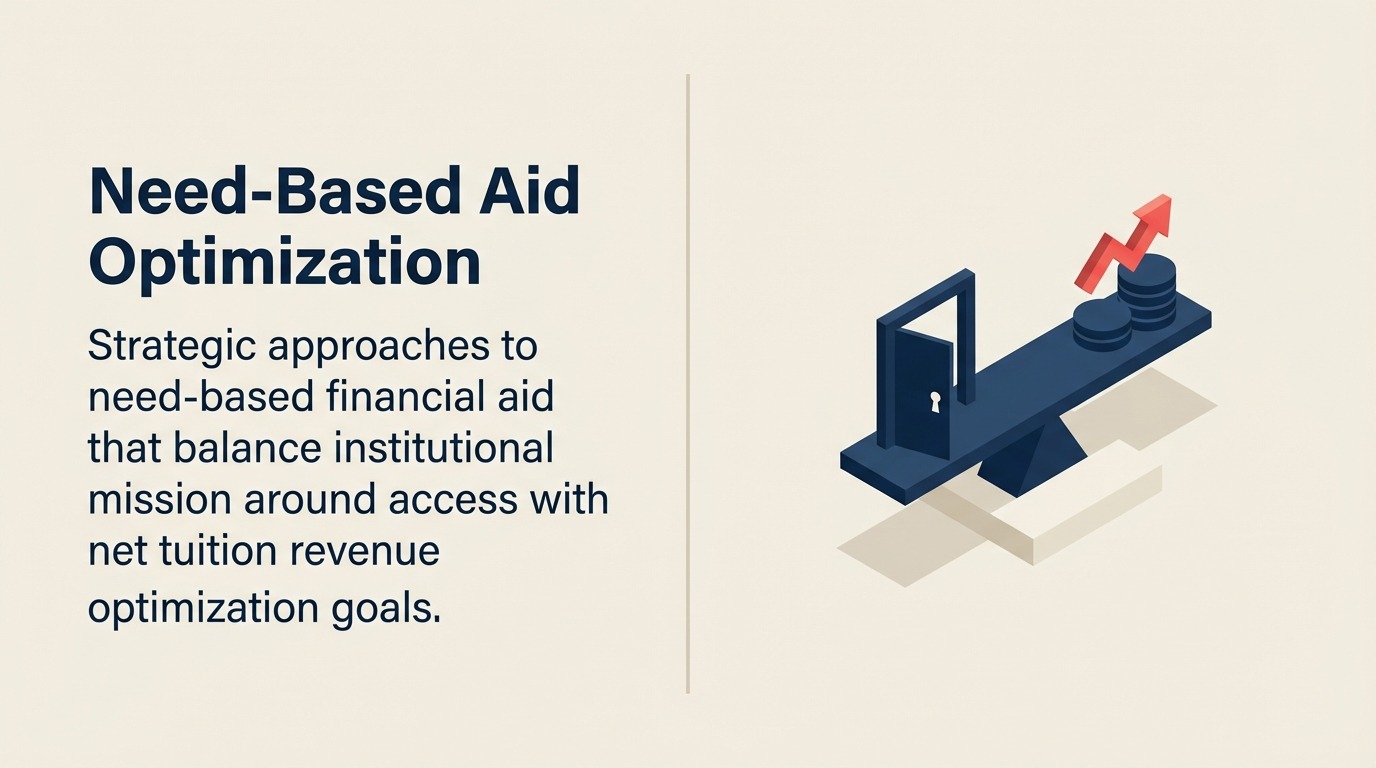
Packaging philosophy tersebut directly impacts dua critical outcomes: who enrolls dan how much net tuition revenue they generate. High-need students yang receive generous grant packages lebih likely untuk enroll dan persist. Tetapi packages yang sama reduce net tuition revenue per student. Tension antara access dan revenue sits di heart dari need-based aid strategy.
Federal methodology uses standardized formula berdasarkan family income, assets, household size, dan number dalam college. Institutional methodology allows colleges untuk consider additional factors-home equity, retirement savings, non-custodial parent income-untuk determine aid eligibility. Many selective private colleges use institutional methodology melalui CSS Profile untuk make packaging decisions yang differ dari federal calculations.
Strategic question bukan which methodology untuk use. Ini how to use need analysis untuk inform packaging decisions yang advance institutional goals sambil serving students effectively.
Need-Based Aid Strategy Framework
Data-driven need-based aid strategy starts dengan segmentation. Divide applicant pool Anda berdasarkan income bands-typically 0-30K, 30-60K, 60-100K, 100-150K, dan 150K+. Within each band, analyze historical enrollment behavior, retention rates, dan net revenue contribution.
Anda likely discover patterns. Students di lowest income bands may show strong academic preparation tetapi lower yield rates jika aid packages tidak provide sufficient support. Middle-income families often face the greatest affordability challenges,too much income untuk significant federal aid, not enough wealth untuk pay full price. Upper-middle-income students might yield pada high rates regardless dari aid levels, making them less price-sensitive.
Packaging philosophy Anda should reflect these patterns sambil aligning dengan institutional mission. Start dengan defining approach Anda untuk meeting need:
Full-need institutions commit untuk meeting 100% demonstrated need untuk all admitted students, typically melalui grants daripada loans. Approach ini maximizes access tetapi requires significant endowment resources dan usually applies hanya ke highly selective privates.
High-need-meeting institutions target 90-95% need coverage untuk priority populations sambil leaving small gaps untuk others. Approach ini balances access dengan affordability constraints, requiring strategic decisions tentang which students receive most generous packages.
Gap institutions meet 60-80% demonstrated need on average, leaving significant unmet need yang students bridge melalui loans, work, atau family resources. Approach ini protects net revenue tetapi may limit access untuk lower-income students.
Next, determine grant-to-loan ratio Anda berdasarkan income level. Best practice typically provides grant-heavy packages untuk lowest-income students (90-100% grants) sambil incorporating more self-help-loans dan work-study-untuk students dengan higher EFCs. Approach ini recognizes bahwa absolute debt burden matters more untuk lower-income families daripada higher-income ones.
Self-help expectations should increase gradually as family income rises. Student dari 20K family might receive package dengan zero loan expectation dan 2.000 dollar dalam work-study. Student dari 100K family might see 5.000 dollar dalam loans dan 3.000 dollar dalam work-study sebagai part dari aid package mereka. Tiered expectations ini allow institutions untuk direct grant dollars di mana they have greatest impact pada access sambil managing overall aid budgets.
Optimization Techniques untuk Enrollment dan Revenue
Income band modeling reveals opportunities untuk optimize both enrollment dan net revenue melalui strategic aid allocation. Start dengan calculating average net price-sticker price minus institutional grant aid-berdasarkan income band. Compare net price Anda ke competitor institutions menggunakan federal College Scorecard data dan own cross-admit research Anda.
Anda likely find specific bands di mana competitive position Anda weak. Perhaps net price Anda untuk 50-75K income families adalah 10.000 dollar higher daripada primary competitors Anda. Gap tersebut directly impacts yield rates dan enrollment dalam segment tersebut.
Model impact dari different packaging strategies berdasarkan income level. What happens ke enrollment jika Anda reduce average net price sebesar 2.000 dollar untuk 40-60K band? How many additional students would you enroll? What's net revenue impact dari incremental enrollment tersebut versus cost dari higher aid per student?
Run scenarios yang account untuk enrollment probability berdasarkan aid level. Historical data typically shows bahwa enrollment likelihood increases as packages become more generous, tetapi relationship isn't linear. Marginal impact dari additional 1.000 dollar dalam grant aid matters more pada higher net prices daripada lower ones. Student facing 35.000 dollar dalam net price might respond significantly ke 3.000 dollar grant improvement. Student dengan 10.000 dollar net price might enroll either way.
Models ini should inform packaging guidelines Anda berdasarkan need level. Anda might discover bahwa boosting aid untuk highest-need students (0-30K income) sebesar 2.000 dollar improves enrollment enough untuk generate positive net revenue despite higher aid investment per student. Atau Anda might find bahwa small aid adjustments untuk middle-income students (60-100K) yield better enrollment ROI melalui improved conversion daripada large investments dalam lowest-income bands.
Tetapi jangan let numbers alone drive decisions. Institutional mission Anda matters. Jika access adalah core value, Anda cannot simply optimize untuk net revenue tanpa considering enrollment composition dan socioeconomic diversity. Goal adalah informed decision-making yang balances mission dan margin, bukan pure financial optimization yang abandons institutional values.
Implementation untuk Operational Excellence
Packaging timeline matters enormously untuk need-based aid effectiveness. Late packages reduce yield. Students yang receive financial aid offers after competing institutions have already sent theirs operate pada significant disadvantage dalam enrollment funnel Anda.
Build aid packaging calendar Anda around admission release dates. Untuk early decision dan early action programs, packages should go out simultaneously dengan admission decisions-not weeks later. Untuk regular decision, aim untuk have packages dalam students' hands within days dari admission release, not weeks.
Professional judgment protocols give aid officers flexibility untuk adjust packages ketika special circumstances warrant review. Tetapi flexibility tanpa structure creates consistency problems, budget overruns, dan equity concerns. Establish clear guidelines untuk when professional judgment applies:
Financial changes since FAFSA was filed-job loss, medical expenses, divorce. One-time income events yang inflate EFC-home sales, retirement account withdrawals, business sales. Family circumstances not captured dalam federal methodology-high medical costs, eldercare responsibilities, private school tuition untuk siblings.
Document every professional judgment decision dengan clear rationale dan approval workflow. Discipline ini protects institutional budget, ensures equitable treatment, dan provides data untuk policy refinement over time.
Special circumstance review should happen proactively, bukan just when families request it. Train financial aid Anda dan admission counselors untuk identify situations yang warrant review sebelum packages go out. Student dari 200K income family yang lost parent mid-year should not receive package berdasarkan outdated financial information just karena family didn't know untuk request review.
Transparency dalam need-based aid communication builds trust dan improves yield. Students dan families need untuk understand how package mereka was calculated, what net price mereka akan be, dan what remaining costs they'll need untuk cover. Avoid aid letters yang list sticker price prominently sambil burying actual out-of-pocket cost dalam fine print.
Lead dengan net price-what family actually pays after grant aid-not gross price minus long list dari aid components yang confuse daripada clarify. Break down remaining costs clearly: tuition dan fees, room dan board, books dan supplies, personal expenses. Show breakdown dari grant aid (free money), work-study (earned money), dan loans (borrowed money) so families understand what they're committing to.
Strategic Need-Based Aid sebagai Enrollment dan Access Tool
Need-based aid optimization bukan about maximizing net revenue at any cost. Ini about using data untuk make strategic decisions yang advance institutional mission sambil protecting financial sustainability.
Institutions yang doing this well tidak treat need-based aid sebagai purely financial calculation. They see it sebagai enrollment strategy yang shapes class composition, advances access goals, dan positions institution competitively. They use sophisticated modeling untuk understand trade-offs antara enrollment volume, student mix, dan net revenue. Dan they adjust packaging philosophy berdasarkan data tentang what works, not just what they've always done.
Need-based aid strategy Anda should evolve as market conditions change, competitive dynamics shift, dan institutional priorities develop. Review packaging outcomes annually-who enrolled, who didn't, what net revenue resulted-dan refine approach Anda berdasarkan evidence. Test new packaging strategies dengan small cohorts sebelum scaling institution-wide. Benchmark results Anda against competitors dan national tuition discount norms untuk understand where you stand.
Dual mandate dari access dan financial sustainability isn't easy. Tetapi dengan disciplined strategy, clear goals, dan data-driven optimization, need-based aid dapat advance both effectively.
Learn More
