More in
Noticias sobre empleos y habilidades en IA
El sector financiero sigue perdiendo empleos mientras la economía contrata: la advertencia para el trabajo de cuello blanco
jun. 6, 2026
Las habilidades en IA se convirtieron en la contratación más difícil del mundo: no podrá salir de esto solo reclutando
jun. 6, 2026
¿Está la IA realmente destruyendo empleos? Los datos de contratación de mayo dicen que no tan rápido
jun. 5, 2026
Pusiste tus AI agents en el organigrama y la rendición de cuentas desapareció silenciosamente
jun. 5, 2026
Todos culpan a la IA de la crisis laboral de la Generación Z: la Fed apunta al trabajo remoto
jun. 5, 2026
La pérdida neta de empleos atribuida a la IA cayó a 11.000 al mes: la construcción está ocultando la verdad
jun. 4, 2026
La IA es responsable de un récord del 40% de los despidos en EE. UU. en mayo, el tercer mes consecutivo
jun. 4, 2026
Cuatro futuros para el empleo de aquí a 2030: el balance a mitad de 2026 para los CEO
jun. 3, 2026
¿Pueden los programas de aprendizaje federales en IA resolver su brecha de competencias a menor costo que contratar externamente?
jun. 3, 2026
La remuneración de los AI Engineers se divide en dos mercados: solo la cima es una burbuja
jun. 3, 2026
ICIMS Confirma el Desajuste en la Contratación de Nivel Inicial. El Manual del CHRO para Reescribir la Descripción de Puesto
Turn this article into takeaways for your work.


Each assistant summarizes the article only for you and suggests best practices for your work.
La descripción de puesto de nivel inicial está mintiendo. No de manera intencional, pero esa mentira le cuesta a las organizaciones candidatos reales, confianza real y salud real en el pipeline.
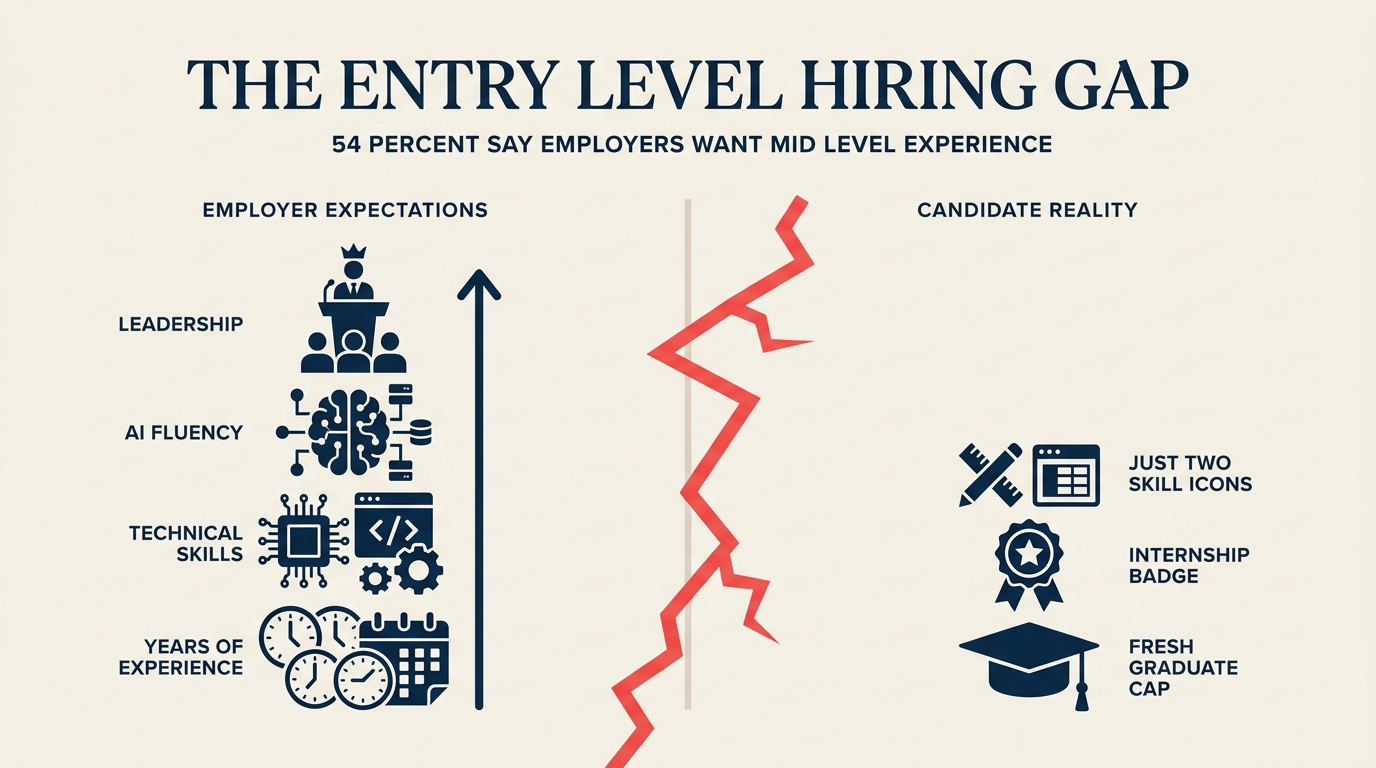
El Informe de Fuerza Laboral de iCIMS de mayo 2026 encuestó a 1.000 buscadores de empleo en Estados Unidos y se basó en datos de más de 3 millones de usuarios de la plataforma a nivel global y 691 millones de perfiles de candidatos. Lo que encontró no fue una escasez de talento. Fue un problema de descripción: los empleadores publican puestos de nivel inicial mientras esperan candidatos de nivel medio, y los candidatos leen esa señal con claridad.
El cincuenta y cuatro por ciento de los buscadores de empleo de nivel inicial en el informe de iCIMS afirmó que los empleadores ahora exigen experiencia de nivel medio para puestos que se publican explícitamente como de nivel inicial. Casi tres de cada cuatro (78%) aseguran que la IA y la automatización están cambiando tanto el número como la naturaleza de esos puestos. Y solo el 19% afirma sentirse "muy confiado" respecto a sus perspectivas profesionales para 2026. Esa brecha de confianza no es un problema de los candidatos. Es un problema de descripción de puesto que recae directamente en la cartera del director de recursos humanos (CHRO).
El Desajuste que iCIMS Confirmó
Este artículo es distinto del artículo sobre el colapso de empleos de nivel inicial que cubrimos anteriormente, el cual se centró en la desaparición estructural de los puestos junior a medida que la IA absorbe las tareas para las que fueron diseñados. Ese artículo trata sobre empleos que desaparecen. Este trata sobre los empleos que permanecen, y sobre por qué están descritos tan deficientemente que los candidatos auténticos de nivel inicial se descartan antes de que un reclutador vea su currículum.
Datos clave
- El 54% de los buscadores de empleo de nivel inicial cree que los empleadores exigen experiencia de nivel medio para puestos de nivel inicial (Informe de Fuerza Laboral de iCIMS, mayo 2026)
- Solo el 19% de los candidatos de nivel inicial se siente "muy confiado" en sus perspectivas profesionales para 2026, mientras que el 29% reporta poca o ninguna confianza (iCIMS)
- El 37% de los candidatos de nivel inicial muestra reticencia a confiar en la IA en los procesos de selección, siendo la naturaleza impersonal del proceso la razón principal citada (iCIMS)
La brecha entre las expectativas del empleador y la realidad del candidato no es una percepción. Se refleja en resultados concretos de sourcing. Cuando un candidato genuinamente preparado para un puesto de nivel inicial lee una descripción de puesto (JD) diseñada para alguien con tres a cinco años de experiencia, no piensa "voy a postular y explicar la diferencia". Sigue adelante. El empleador interpreta el pipeline débil como escasez de talento. No lo es. Es un problema de filtrado causado por una plantilla que el equipo de contratación no ha revisado desde 2021.
Los datos de iCIMS también muestran que el 37% de los candidatos de nivel inicial muestra reticencia a confiar en la IA en el proceso de selección, señalando la naturaleza impersonal del cribado por IA como su principal preocupación. Por lo tanto, además de una JD mal descrita, muchos candidatos auténticos sospechan que serán filtrados por un algoritmo antes de que un ser humano llegue a leer su postulación. El funnel de sourcing tiene fugas por ambos extremos.
El Proceso de Revisión de la JD de Nivel Inicial: Una Auditoría en 4 Pasos para CHROs
La causa raíz es predecible. Cuando las herramientas de IA tomaron las tareas que antes realizaban los empleados junior, los responsables de contratación actualizaron sus expectativas sin actualizar las descripciones de puesto. O las actualizaron, pero añadieron requisitos (dominio de la IA, coordinación interfuncional, gestión de procesos) sin eliminar los que la IA ya maneja. El resultado es un documento acumulativo: una JD junior de 2019 con los requisitos de herramientas de 2024 y el nivel de experiencia de 2026 superpuestos.
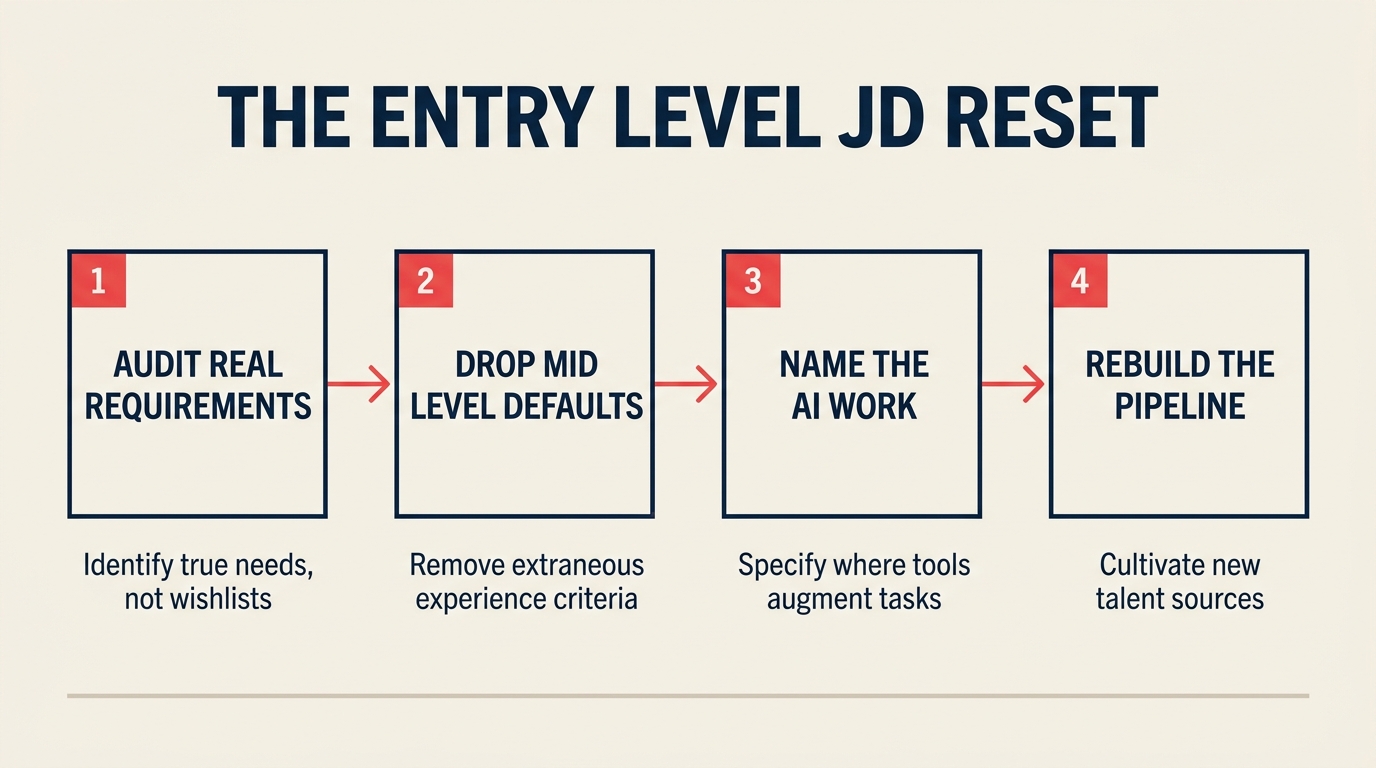
La solución es una auditoría estructurada. A continuación se presentan cuatro pasos que los CHROs pueden aplicar a cualquier plantilla de descripción de puesto de nivel inicial:
Paso 1: Auditar los requisitos reales. Revise los últimos cinco candidatos contratados para este puesto que tuvieron éxito dentro de los primeros 12 meses. ¿Qué sabían realmente desde el primer día? ¿Qué aprendieron en el puesto durante los primeros 90 días? Esa lista, no la plantilla, es su conjunto de requisitos de nivel inicial.
Paso 2: Eliminar los criterios de nivel medio predeterminados. Revise línea por línea la sección de requisitos y marque todo lo que describe una competencia que un empleado de nivel medio normalmente aporta desde su experiencia previa. "Capacidad demostrada para gestionar relaciones con stakeholders" pertenece a una JD de director. "Comodidad para aprender nuevas herramientas en un entorno estructurado" pertenece a una de nivel inicial. Elimine los criterios predeterminados. Los responsables de contratación tienden a copiar de una plantilla heredada, y las plantillas acumulan requisitos al alza con el tiempo.
Paso 3: Nombrar explícitamente el trabajo con IA. No escriba "dominio de la IA". Describa qué hace realmente la IA en el puesto y qué hará el candidato junto a ella. "Revisa los mensajes redactados por IA para verificar su precisión y tono" es un requisito real que los candidatos de nivel inicial pueden evaluar honestamente. "Aprovecha las herramientas de IA para impulsar la productividad" es texto de marketing que no le dice nada al candidato y señala que ni siquiera el empleador sabe en qué consiste el trabajo.
Paso 4: Reconstruir el pipeline de sourcing en torno a la descripción correcta. Una vez corregida la JD, la señal de sourcing cambia. Los candidatos que se descartaron porque la versión anterior parecía un puesto de dirección ahora se verán reflejados en ella. El lenguaje de las referencias cambia. El lenguaje de la captación en campus cambia. La brecha en el apoyo a la mejora de competencias que revelan los datos de LinkedIn 2026, donde las empresas invierten en herramientas de IA pero no en la formación necesaria, agrava el problema cuando su JD atrae candidatos que esperan un entorno de aprendizaje de IA estructurado pero no lo encuentran.
Por Qué la Confianza de los Candidatos Es un Asunto del CHRO
Casi tres de cada diez buscadores de empleo de nivel inicial reportan poca o ninguna confianza en sus perspectivas profesionales. Ese dato parece una estadística de sentimiento del mercado laboral. También es una estadística de sourcing.
La confianza impulsa el comportamiento de postulación. Un candidato con poca confianza no aplica a puestos en los que tiene alguna duda. Aplica a puestos donde el ajuste es evidente. Cuando una JD está redactada para un candidato de nivel medio, el candidato auténtico de nivel inicial lee incertidumbre, no oportunidad. El candidato con alta confianza, que puede estar sobrecalificado, aplica porque el lenguaje le resulta familiar. Así el pipeline se invierte: el empleador que diseñó el puesto para nivel inicial recibe postulaciones de nivel medio, no puede convertirlas al salario deseado y concluye que el mercado está ajustado.
Los datos sobre la brecha de preparación de la fuerza laboral para la IA de Mercer y otras fuentes muestran que el 98% de los ejecutivos quiere trabajo rediseñado con IA, pero menos de la mitad se siente preparado para ejecutarlo. La JD de nivel inicial es uno de los artefactos más visibles de esa brecha de preparación. Es donde el desafío abstracto de "qué cambia la IA en este puesto" se responde en 500 palabras que un joven de 22 años leerá para decidir si vale la pena invertir 45 minutos en postular.
Los datos de SHRM sobre la brecha de conciencia de IA en líderes de HR añaden otra dimensión: el 67% de los profesionales de HR afirma que no comprende completamente cómo la IA está cambiando los puestos para los que contratan. No es una crítica; es un problema estructural. Si HR no sabe qué requiere ahora el puesto de un ser humano, la JD reflejará lo que el puesto solía requerir. Ese es el mecanismo que produce el desajuste.
Qué Significa el 37% para su ATS
El 37% de los candidatos de nivel inicial expresa reticencia ante la IA en los procesos de selección. No es una preocupación marginal. Es más de uno de cada tres candidatos que entran en su funnel con un déficit de confianza antes de hacer clic en "enviar".
La mayoría de los sistemas de seguimiento de candidatos (ATS) empresariales utilizan IA para cribar currículums antes de que ningún revisor humano los vea. Si los candidatos lo saben, y los candidatos de la Generación Z lo saben cada vez más, los que más tienen que demostrar son los que más tiempo dedicarán a adaptar el formato en lugar de describir sus habilidades reales. O directamente no envían la postulación.
La implicación práctica para los CHROs: la transparencia sobre el papel de la IA en su proceso de selección no es un valor añadido opcional. Es una palanca de sourcing. Los candidatos que entienden cómo se utiliza la IA, y qué sucede después del cribado automatizado, tienen más probabilidades de postular. Las personas confían en los sistemas que comprenden, y eso aplica tanto a los candidatos como a los empleados que aprenden a trabajar junto a herramientas de IA.
Qué Deben Hacer los CHROs Esta Semana
Tres acciones concretas, no principios:
Revise sus tres JDs de nivel inicial más publicadas y aplique la auditoría del Paso 2. Marque cada requisito que describe una competencia de nivel medio. Si más del 30% de la sección de requisitos debería estar en una JD de dirección, la plantilla necesita una revisión antes de que se abra la próxima vacante.
Informe a su equipo de adquisición de talento sobre los hallazgos del informe de fuerza laboral de iCIMS antes de su próximo ciclo de captación en campus. La brecha de confianza de los candidatos (solo el 19% muy confiado) es un problema de comunicación tanto como de mercado. Sus reclutadores deberían comenzar con "esto es lo que hará concretamente en el primer mes" en lugar de "esto es lo que buscamos": esta última formulación invita a la autodescalificación.
Añada una línea de divulgación sobre el proceso de IA en cada JD de nivel inicial. Algo como: "Las postulaciones son revisadas primero por nuestro ATS y luego por un reclutador en un plazo de cinco días hábiles." El 37% de los candidatos muestra reticencia porque el proceso parece opaco. La transparencia no tiene coste y cambia las tasas de conversión.
Preguntas Frecuentes: El Desajuste en la Contratación de Nivel Inicial
¿Por qué se produce el desajuste en las JDs de nivel inicial?
Es un problema de copiar y pegar, agravado por el incremento de expectativas. Los responsables de contratación heredan plantillas de descripciones de puesto y las actualizan añadiendo nuevos requisitos a medida que el puesto evoluciona, pero rara vez eliminan los que ya no aplican o que las herramientas de IA ahora gestionan. En tres a cinco años, un puesto genuinamente de nivel inicial acumula lenguaje que describe a un empleado de carrera media. Nadie lo señala porque la plantilla es simplemente la plantilla.
¿En qué se diferencia este artículo del artículo sobre el colapso de empleos de nivel inicial?
El artículo sobre el colapso de empleos de nivel inicial cubrió un problema distinto: empleos que desaparecen porque la IA absorbe las tareas para las que fueron creados. Este artículo cubre los empleos que aún existen pero están descritos tan deficientemente que candidatos calificados se descartan. Uno es un problema de eliminación estructural. El otro es un problema de documentación y comunicación. Ambos son asuntos del CHRO, y resolver uno no resuelve el otro.
¿Cuál es el indicador más rápido de que una JD tiene un problema de desajuste?
Revise el tiempo de cobertura de vacante y la tasa de rechazo de ofertas para puestos de nivel inicial. Si el tiempo de cobertura aumenta y el rechazo de ofertas se mantiene estable o sube, es probable que tenga un problema de calidad del funnel, no de oferta de candidatos. Aplique la auditoría del Paso 2 a cualquier JD donde el tiempo de cobertura haya aumentado más de un 15% en comparación con el ciclo de contratación anterior.
Más Información
- La IA Está Afectando los Empleos de Nivel Inicial: El Riesgo en el Pipeline de Talento que Nadie Está Calculando
- La Brecha de Preparación de la Fuerza Laboral para la IA en 2026: Qué Significan los Datos de Mercer para los CHROs
- Datos SHRM: El 67% de los Líderes de HR Tiene una Brecha de Conciencia sobre la IA
- LinkedIn 2026: La Brecha en el Apoyo a la Mejora de Competencias de Ingenieros de IA
Fuente principal: Informe de Fuerza Laboral de iCIMS, mayo 2026. Cobertura complementaria: PR Newswire, Inc..

On this page
- El Desajuste que iCIMS Confirmó
- El Proceso de Revisión de la JD de Nivel Inicial: Una Auditoría en 4 Pasos para CHROs
- Por Qué la Confianza de los Candidatos Es un Asunto del CHRO
- Qué Significa el 37% para su ATS
- Qué Deben Hacer los CHROs Esta Semana
- Preguntas Frecuentes: El Desajuste en la Contratación de Nivel Inicial
- ¿Por qué se produce el desajuste en las JDs de nivel inicial?
- ¿En qué se diferencia este artículo del artículo sobre el colapso de empleos de nivel inicial?
- ¿Cuál es el indicador más rápido de que una JD tiene un problema de desajuste?
- Más Información